 How to resolve AdBlock issue?
News
The district, or LCTID, does business as Visit Lake County CA and is now authorized to continue operating until Dec. 31, 2033.
Consent hearings were held in January with both the Lakeport City Council and the Clearlake City Council. Both councils unanimously approved resolutions supporting the extension.
The new management district plan increases the room night assessment from 1.5% to 2.5% beginning in January 2024.
“We are excited about the future of tourism marketing in Lake County.” said Lynne Butcher, owner of The Tallman Hotel and Blue Wing Saloon and current treasures of the LCTID. “We clearly saw that the current 1.5% assessment did not fully fund the district. We are confident the new plan will continue to give us the resources needed to increase visitors to Lake County.”
Since its founding in 2018, Visit Lake County CA has increased visitor-interested website traffic from 6,000 unique users viewing accommodation pages to over 86,000 in the current year.
Social media platforms under the guidance of Visit Lake County CA have exploded from just under 16,000 Facebook followers in 2018 to over 34,000 in the current year.
Additionally, Visit Lake County CA hosted travel reporters from The San Francisco Chronicle, Lonely Planet, 7X7 Bay Area, and several social media influencers.
“Tourism in Lake County is a vital industry,” said Brian Fisher, Executive Director of Visit Lake County CA, “for every $1 a visitor spends in accommodations they spend an additional $3 in other county businesses.”
Lodging revenue has increased every year since the establishment of Visit Lake County CA.
“We are excited about new accommodations coming online in 2023,” said Fisher, “Huttopia, a glamping resort at Six Sigma Ranch will have over 60 tents ready by this summer. It is a great product targeting a growing demographic for Lake County.”
Lake County also has a little more than 300 short-term rental properties available for visitors.
Anyone renting a home, cabin, room or tent is required to obtain an accommodation permit from the county or city they are renting in and pay the required taxes and assessments.
“We are seeing greater compliance of short-term rental operators in meeting their tax and assessment requirements" said County Treasurer-Tax Collector Patrick Sullivan. “These funds are vital to the future of tourism in Lake County.”
Lake County Tourism Improvement District meets quarterly and operates the trade website, www.discoveryourlake.com.
You can find the new management district plan at this website.

CLEARLAKE, Calif. — The Clearlake Police Department is asking for the community’s assistance in locating a missing boy.
Police are working to locate 11-year-old John Clements, who was last seen on Sunday in Clearlake.
He is described as a white male juvenile, 5 feet and 110 pounds, with dirty blonde short hair and blue eyes.
John was last seen wearing a black champion sweatshirt, black sweatpants and brown shoes.
If you have information regarding his whereabouts please contact the Clearlake Police Department at 707-994-8251, Extension 1.

The 2022 stock market plunge has taken a toll on some of the nation’s largest state and municipal pension funds, making it harder for governments to pay for future retirement benefits to millions of K-12 teachers and other public employees.
Here, Michael Addonizio, an education policy expert at Wayne State University, provides insight on how teacher pensions are affecting K-12 school budgets overall and what, if anything, can be done to better manage pension systems and close funding gaps.
1. Is there enough money to pay teacher pensions?
Yes and no. There is enough money to pay pension benefits to current retirees. But there is not enough money to pay all promised benefits to future retirees.
U.S. teacher pension funds collectively manage about US$3 trillion in assets. These dollars are invested in various ways – stocks, bonds, real estate, foreign currency, and other ways. But these assets held by the retirement plans are generally less than the plans’ liabilities – that is, the projected cost of benefits promised to future retirees. As of 2022, this gap between assets and liabilities is about $878 billion. Put another way, the ratio of assets to liabilities is about 77%. This ratio is down from about 84% in 2021, but is higher than any other year since 2008.
The amount spent on teacher retirement costs in 2020 – $65.9 billion – represented 5.5% of total state and local K-12 spending.
The problem is that these retirement costs have been growing faster than total K-12 expenditures for decades. In 2001, retirement costs amounted to only 1.3% of total state and local school spending.
The growth in teacher retirement costs is due mostly to an increase in payments for unfunded pension liabilities, often referred to as pension debt. This is the amount of money that states and municipalities pay annually into their retirement systems to cover previously unfunded liabilities – that is, the shortfall that a pension fund needs to pay all future promised benefits.
2. How do these pension funding shortfalls occur?
Every year, pension planners have to make assumptions about how fast teacher salaries will grow, how many teachers will teach long enough to qualify for a pension, how long qualified retired teachers will live and collect benefits and how the pension fund’s investments will perform. If all these assumptions are correct and the plan’s expected assets cover its expected liabilities, the plan is considered fully funded.
But the typical teacher pension plan has not been fully funded at any point since about the year 2000. Overly optimistic investment assumptions are often the biggest part of unfunded liabilities. In response, states or big cities often redirect money from school operating budgets into the pension funds. But these governments often fail to make these payments in full.
States and cities face fiscal pressures from other spending demands and from tax collections that fail to keep pace. Pushing some unfunded pension liability costs into the future is often seen as less painful than cutting current government programs or raising taxes. But skimping on covering costs for future retirees often compounds the system’s liability problem over time.
In 2021, fully 69% of teacher retirement costs went to cover unfunded pension liabilities, up from 17% in 2001. In other words, the cost of future benefits is growing faster than the cost of current-year benefits.
Could it be due to increasingly generous retirement benefits? No. A recent report by the Equable Institute, a bipartisan nonprofit that studies public pensions and advises employees, communities and policymakers, concludes that the average value of lifetime benefits for new teachers is about $100,000 less than for their more senior colleagues.
Rather, unfunded pension liabilities can rise because of downturns in the financial market, lowering the systems’ investment earnings. Also, they may increase when schools hire more teachers and support staff, increasing the numbers of workers in the pension system. It can also be due to the rising cost of borrowing,
3. What does this mean for education funding?
As more public dollars flow to teacher retirement systems, fewer resources are available for schools and classrooms. From 2002 to 2020, total state and local K-12 spending rose 33%, while teacher retirement spending rose 220%. Nationally, and in most states, teacher pension costs have been rising faster than K-12 spending for the past two decades. States then take money from state funds normally dedicated to school operations and move them to the pension fund. The result has been less spending for school operations, in the form of either spending cuts or a smaller share of a growing spending pie.
For example, in the 2022-23 fiscal year, my state of Michigan will pay nearly $3 billion from the state School Aid Fund into the state-administered Public School Employees Retirement System to cover future pension costs. However, while this move will lower the amount of unfunded liabilities in the system, these dollars will come directly from state funds intended to support general K-12 school operations.
This practice has been repeated in many states over the past two decades. According to the Equable Institute study, the “hidden cuts” of using K-12 funds to cover pension costs have risen from $457 per student in 2001 to $1,290 per student in 2021 – a 182% increase in constant 2021 dollars.
4. How can the problem be solved?
The solutions rest with the states, and there is no “one size fits all” remedy. Each state has its own K-12 funding system and teacher retirement plans, which are governed by many rules that are embedded in state constitutions and laws. These state laws vary. For example, teachers in 15 states, including California and Texas, aren’t covered by the Social Security system. But there are some common issues and ways to address them.
One common problem is transparency. While it’s usually relatively easy to see how much states, districts and schools are spending for operations, it’s much more difficult to find public data on teacher retirement costs, particularly pension liability costs, because the data is remarkably scarce.
Pension dollars are as much a part of public education budgets as spending on teacher and staff salaries, books, buses and the rest. Careful monitoring and reporting of pension costs, both payments and liabilities, may improve management of these costs before they inflict more damage on budgets for teaching and learning.
Secondly, many states have reduced their financial support for K-12 schools in recent years. The share of personal income given to K-12 schools has steadily declined since the 2007-2009 Great Recession in 39 states.
States could protect school operating budgets by using general fund revenue to pay pension liability costs, not dedicated K-12 aid. Local districts could be responsible for the cost of current-year retirement benefits but cannot do much to manage unfunded pension liabilities. States could cover pension debt costs without reducing state aid for school operations, but it would require raising taxes or cutting programs in other areas.
To begin moving in this direction, states could restore their pre-recession levels of tax effort for K-12 education. A recent study by researchers from Rutgers University, the University of Miami and the Albert Shanker Institute concluded that had all states done this by 2016, schools would have reaped $288 billion in added funding.
Trading off pension support against school operating funds is not an inevitable result of rising pension costs. Whether states have the economic means or political will to address this problem effectively remains to be seen.
Michael Addonizio, Professor of Educational Leadership and Policy Studies, Wayne State University
This article is republished from The Conversation under a Creative Commons license. Read the original article.
Call Lake County Animal Care and Control at 707-263-0278 or visit the shelter online for information on visiting or adopting.
The following cats at the shelter have been cleared for adoption.
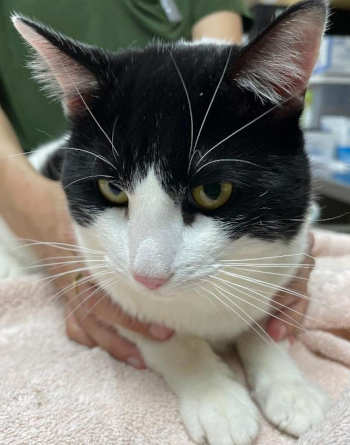
‘Prince’
“Prince” is a 1 and a half year old male domestic shorthair with black and white coat.
He is in cat room kennel No. 118, ID No. LCAC-A-4833.

Male domestic shorthair kitten
This 5-month-old male domestic shorthair kitten has an orange tabby coat.
He is in cat room kennel No. A13a, ID No. LCAC-A-4824.

Male domestic shorthair kitten
This 5-month-old male domestic shorthair kitten has an orange tabby coat.
He is in cat room kennel No. A13b, ID No. LCAC-A-4825.
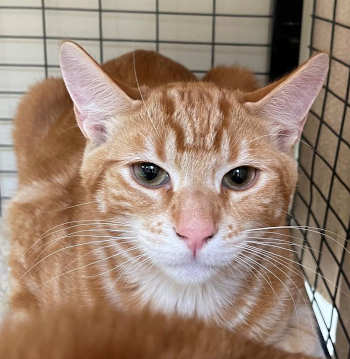
Male domestic shorthair kitten
This 5-month-old male domestic shorthair kitten has an orange tabby coat.
He is in cat room kennel No. A13c, ID No. LCAC-A-4826.
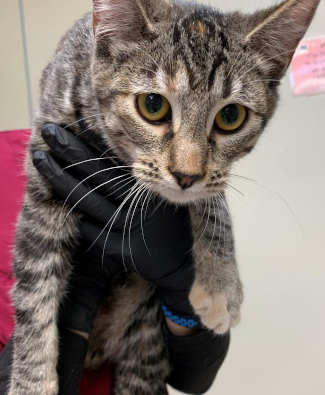
Female domestic shorthair kitten
This 5-month-old female domestic shorthair kitten has a gray tabby coat.
She is in cat room kennel No. 56, ID No. LCAC-A-4827.

‘Boots’
“Boots” is a 1 and a half year old male domestic shorthair with gray and white coat.
He is in cat room kennel No. 118, ID No. LCAC-A-4831.
Email Elizabeth Larson at
The victim of the shooting was identified by police as 19-year-old Brandon Horner.
A department statement issued late Sunday night said that at approximately 7:45 p.m. Saturday Clearlake police officers were dispatched to the 15300 block of Lakeshore Drive for a report of a gunshot victim.
Officers along with personnel from the Lake County Fire Protection District arrived a short time later, police said.
The report said Horner was pronounced deceased at the scene.
Detectives responded to the location and began an investigation into the circumstances regarding the shooting.
At this time, police said it appears the shooting occurred at a different location.
If you have information regarding the incident please contact Det. Leonardo Flores by email at
The flood watch will be in effect from 2 p.m. Monday through 5 a.m. Wednesday, while the wind advisory is for 6 a.m. to 5 p.m. Tuesday.
The National Weather Service reported that multiple waves of rain are expected through Tuesday night as an atmospheric river aims at the region.
“Heavier rain will begin in the northern part of the region Monday morning and then spread south into Mendocino and Lake counties that afternoon. Another round of rain will move through Northwest California on Tuesday which will also result in flooding concerns for some main stem rivers,” the agency reported.
Scott Creek and Clear Lake are “points of interest” in the forecast due to rising water levels.
Early Monday, Clear Lake’s level was at 7.03 feet Rumsey, the special measure for Clear Lake. The lake is full at 7.56 feet Rumsey.
The National Weather Service said Clear Lake may approach monitor state — which is 8 feet Rumsey — within the next several days.
That’s because up to 3 inches of rain are forecast to fall in Lake County through Tuesday, with chances of more rain through next Sunday.
Regarding the wind advisory, south winds of 25 to 35 miles per hour with gusts of up to 60 miles per hour are expected on Tuesday throughout Lake County.
The forecast also says temperatures this week will hover in the 50s during the day and the high 30s to low 40s at night.
Email Elizabeth Larson at