 How to resolve AdBlock issue?
News

When my oldest son was born in July of 2008, I thought I could easily balance my career and my desire to be far more engaged at home than my father and his generation were. I was wrong.
Almost immediately, I noticed how social policies, schools and health care systems all make it difficult for dads to be highly involved and engaged at home. Contradictory expectations about work and family life abound.
As a fatherhood researcher with four kids of my own, I am convinced that fathers are transformative figures for children, families and communities.
But a man’s mere presence, paycheck and willingness to punish misbehaving children is not nearly enough. Many of the benefits of fathering for children come from dads being nurturing, loving and engaged in all aspects of parenting.
When fathers are caregivers – when they provide emotional support and act affectionately toward their kids – the effects go well beyond growth, development, good health and solid grades. My research shows the benefits also include having children who value emotional intelligence, gender equality and healthy competition.
Nurturing versus stoic dads
Thinking about the broad impact fathers have, I analyzed how fathering affects different social values – such as a belief in gender equality – in May 2021.
Surveying more than 2,500 American fathers 18 and older, I found that involved fathering has a long-lasting impact on the personal principles and cultural perspectives of children.
In my survey, the differences between the least nurturing and the most nurturing fathers are stark.
Surveyed fathers who reported that their own fathers were highly withdrawn tended to be hypercompetitive, emotionally stoic and unappreciative of women’s contributions outside the home.
In contrast, surveyed fathers who said they had highly nurturing dads were much more likely to achieve their goals in a healthy manner, be more emotionally open and believe in equitable partnership.
How dads instill values
Several decades ago, many fathers were unwilling or unable to provide their children with emotional support or physical care. Instead, they focused on bread-winning, children’s discipline and simply being present in the home.
These traditional norms left many contemporary fathers ill-equipped for modern parenthood. Contemporary social norms set broad expectations for fathers: rule enforcement and economically supporting the family while also providing for children’s physical and emotional needs.
Broad paternal involvement with kids is important because dads have unique effects on kids. Children’s values, beliefs, emotional expression and social development are strongly associated with fathering. Kids are better regulated emotionally, more resilient and more open-minded when their fathers are involved in their education and socialization.
Boys, for better and worse, often mirror the habits, interests and values of their own fathers.
My colleague Scott Easton and I found that how one’s father behaves is especially powerful given that cultural, social and institutional norms about fatherhood are much weaker than they are for motherhood.
For example, mothers have traditionally been known for showing children affection and providing emotional support. Social expectations for these behaviors are not well defined among fathers. As a result, dads have a much larger impact on their sons’ fathering behaviors than moms have on their daughters’ mothering behaviors.
Positively, this means that a sizable portion of men replicate the best attributes of their own fathers – such as being loving and affectionate. Negatively, this means bad behaviors – such as extremely harsh discipline – are sometimes repeated across generations.
However, some men compensate for their own fathers’ poor or nonexistent parenting by forming their own ideas and values about parenting.
Benefits for all
The findings from my survey build on decades of research on the benefits of positive fathering. And these advantages aren’t just for children.
Mothers and other parenting partners are healthier and happier when fathers are highly engaged with their kids. Men who care for and support their kids benefit too – with improved self-image, life purpose and relationships. And communities gain increased trust and safety from the relationships built when fathers positively participate in their kids’ activities, schooling and social networks.
Valuing supportive fathers
How can American society ensure that healthy competition, emotional openness and respect for women are widespread among future generations of men and fathers? Part of the answer is by valuing loving, supportive fathering.
That means more support for fathers in workplaces, public policy and institutions. Paid family leave, flexible work arrangements and integration of fathers into prenatal and postnatal care are all effective ways to encourage fathers to be more involved.
Many fathers increased their share of child care tasks during the COVID-19 pandemic. These shifts may become permanent, ultimately changing cultural values around parenting and gender roles.
Society also needs to provide clearer messaging to fathers about what does and does not work in parenting. For example, my colleagues and I have shown that men who believe they should be nurturing parents are more involved in their children’s lives. Fathers who demonstrate healthy masculine traits like assertiveness and strong goal orientation also tend to be sensitive, engaged parents.
Thus, there are many routes to transformative fathering. And this is not simply behavior for biological fathers. Fatherhood is broadly defined, and people often look to nonbiological father figures like relatives, stepfathers, foster fathers and unrelated mentors.
All men who support and care for children have a critical role to play in instilling positive social values in future generations.
Kevin Shafer, Associate Professor of Sociology and Director of Canadian Studies, Brigham Young University
This article is republished from The Conversation under a Creative Commons license. Read the original article.
The United States Geological Survey said the 4.4-magnitude quake occurred at 8:44 p.m. and was centered 5.2 miles southeast of Talmage, 7.6 miles east southeast of Ukiah and 26.5 miles west northwest of Clearlake, at a depth of nearly 5 miles.
The quake was felt around Lake County. This reporter felt it as a sharp jolt.
As of 1 a.m. Sunday, the USGS had received 425 shake reports from around Lake County, the North Coast region and all of California.
The USGS reported the quake was felt as far away as Oxnard and Bakersfield.
Email Elizabeth Larson at
Dogs available for adoption this week include mixes of Anatolian shepherd, Catahoula leopard dog, German shepherd, husky, Labrador retriever, mastiff, pit bull, plott hound and terrier.
Dogs that are adopted from Lake County Animal Care and Control are either neutered or spayed, microchipped and, if old enough, given a rabies shot and county license before being released to their new owner. License fees do not apply to residents of the cities of Lakeport or Clearlake.
The following dogs at the Lake County Animal Care and Control shelter have been cleared for adoption.
Call Lake County Animal Care and Control at 707-263-0278 or visit the shelter online for information on visiting or adopting.
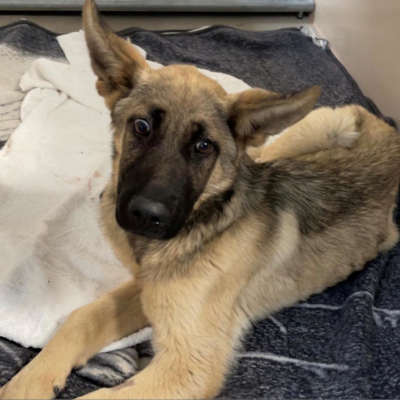
Male German shepherd puppy
This 6-month-old male German shepherd puppy has a black and tan coat.
He is in kennel No. 2, ID No. LCAC-A-5315.
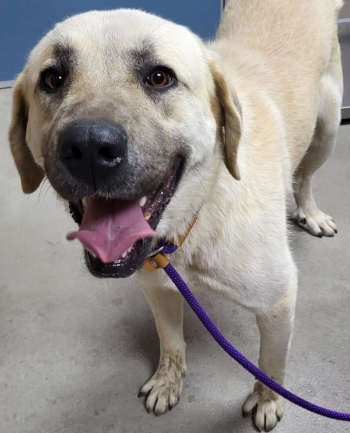
Anatolian shepherd-mastiff mix
This 3-year-old male Anatolian shepherd-mastiff mix has a short fawn coat.
He is in kennel No. 5, ID No. LCAC-A-5276.
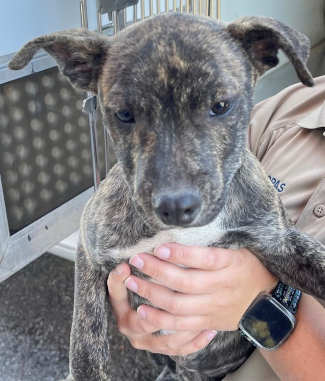
Male pit bull puppy
This 3-month-old male pit bull puppy has a short brindle coat.
He is in kennel No. 6, ID No. LCAC-A-5266.
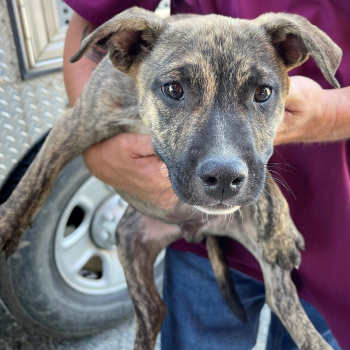
Male pit bull terrier
This 3-month-old male pit bull terrier has a short brindle coat.
He is in kennel No. 7, ID No. LCAC-A-5265.
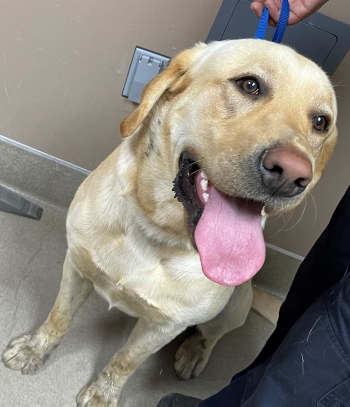
Male yellow Labrador retriever
This male yellow Labrador retriever is a year and a half old.
He is in kennel No. 8, ID No. LCAC-A-5361.
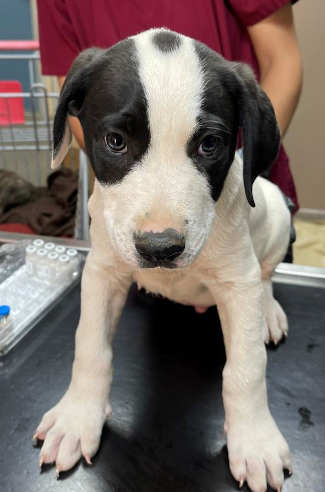
Male Catahoula leopard dog
This 2-month-old male Catahoula leopard dog has a short black and white coat.
He is in kennel No. 9a, ID No. LCAC-A-5249.
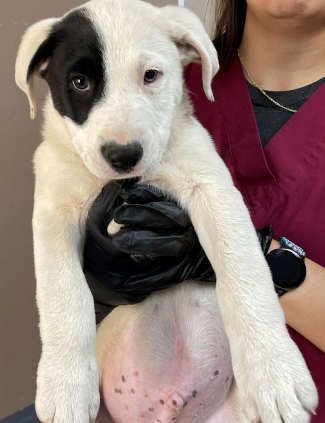
Male Catahoula leopard dog
This 2-month-old male Catahoula leopard dog has a short black and white coat.
He is in kennel No. 9b, ID No. LCAC-A-5247.
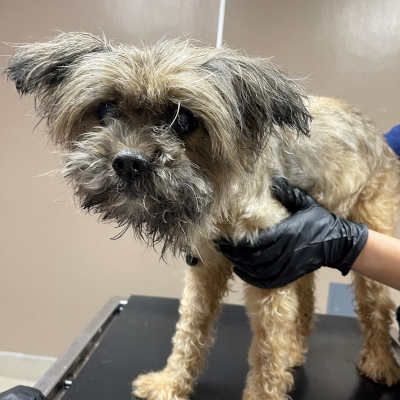
Female terrier
This 12-year-old female terrier has a brown and black coat.
She is in kennel No. 10, ID No. LCAC-A-5327.
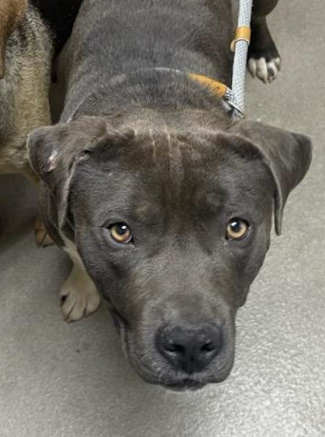
Male pit bull
This 1-year-old male pit bull terrier has a short black coat.
He is in kennel No. 11, ID No. LCAC-A-5258.
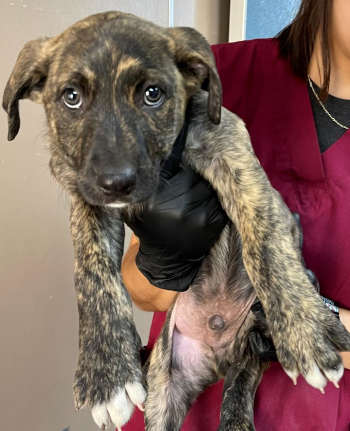
Male Catahoula leopard dog puppy
This 2-month-old male Catahoula leopard dog puppy has a short brindle coat with white markings.
He is in kennel No. 12b, ID No. LCAC-A-5245.
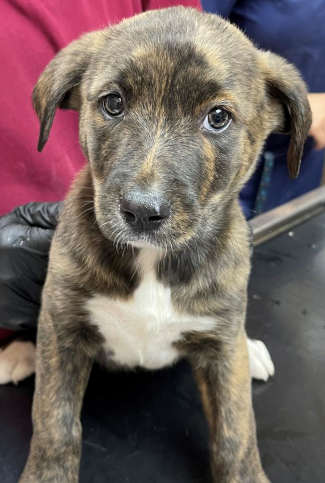
Female Catahoula leopard dog puppy
This 2-month-old female Catahoula leopard dog puppy has a short brindle coat with white markings.
She is in kennel No. 12c, ID No. LCAC-A-5246.
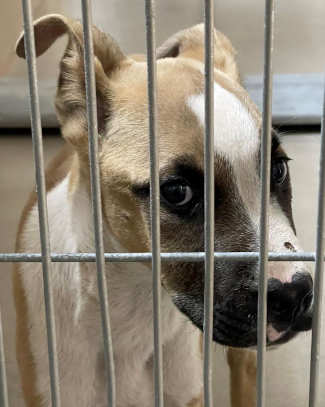
Male Catahoula leopard dog puppy
This 3-month-old male Catahoula leopard dog puppy has a short tan and white coat.
He is in kennel No. 13, ID No. LCAC-A-5354.
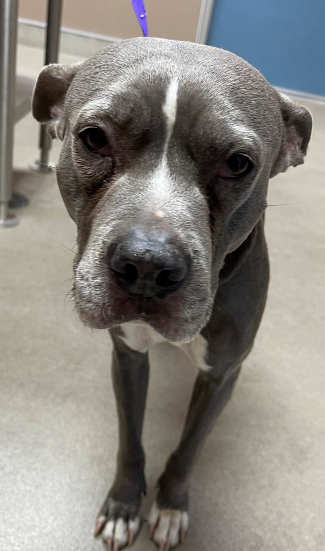
Female pit bull
This 9-year-old female pit bull has a gray coat.
She is in kennel No. 14, ID No. LCAC-A-5349.
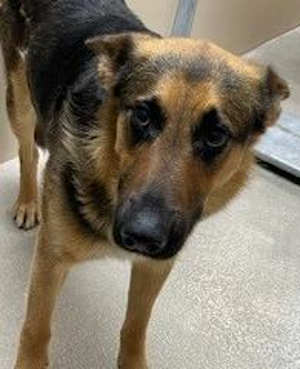
Male German shepherd
This two and a half year old male German shepherd has a black and tan coat.
He is in kennel No. 16, ID No. LCAC-A-5337.
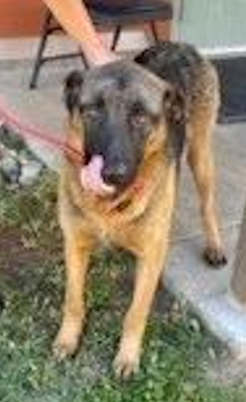
Male German shepherd
This 1 year old male German shepherd has a black and tan coat.
He is in kennel No. 17, ID No. LCAC-A-5324.
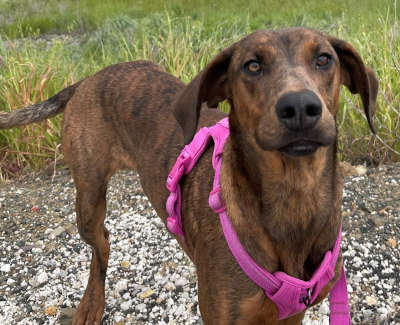
Male plott hound
This 2-year-old male plott hound has a short brown coat.
He is in kennel No. 18, ID No. LCAC-A-5143.

Female pit bull terrier
This 5-year-old female pit bull terrier has a short gray and white coat.
She is in kennel No. 19, ID No. LCAC-A-5321.
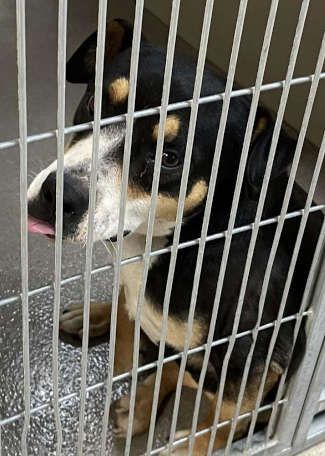
‘Jojo’
“Jojo” is a one and a half year old female pit bull terrier with a short tricolor coat.
She is in kennel No. 20, ID No. LCAC-A-5312.
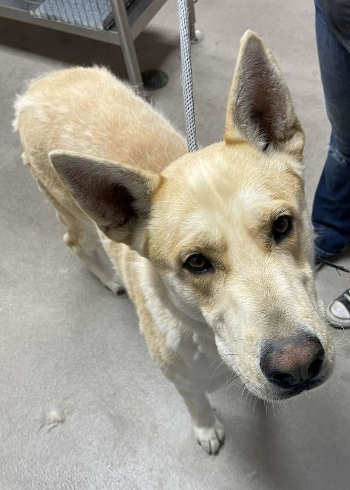
Male shepherd
This 2-year-old male shepherd has a tan and white coat.
He is in kennel No. 22, ID No. LCAC-A-5223.
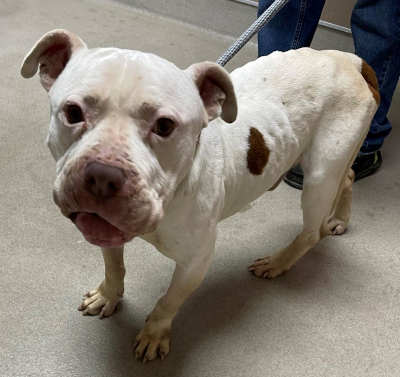
Male pit bull terrier
This 5-year-old male pit bull terrier has a short white coat with red markings.
He is in kennel No. 23, ID No. LCAC-A-5322.
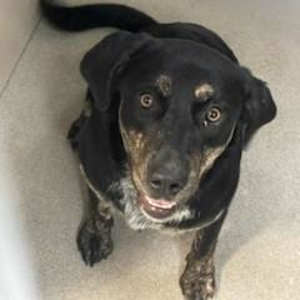
Female pit bull terrier
This 2-year-old female pit bull terrier has a short tricolor coat.
She is in kennel No. 24, ID No. LCAC-A-5333.

Male shepherd
This 1-year-old male shepherd has a tan coat.
He is in kennel No. 25, ID No. LCAC-A-5303.

Male pit bull terrier
This 1-year-old male pit bull terrier has a black coat with white markings.
He is in kennel No. 27, ID No. LCAC-A-5203.

Male pit bull terrier
This 1-year-old male pit bull terrier has a black coat with white markings.
He is in kennel No. 28, ID No. LCAC-A-5334.
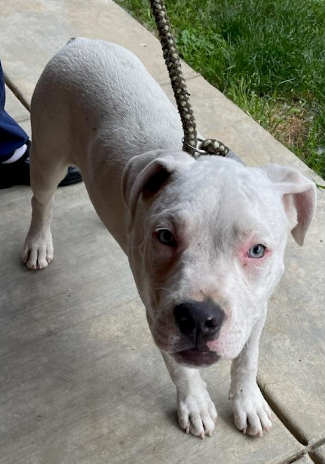
Male pit bull puppy
This 5-month-old male pit bull puppy has a white coat.
He is in kennel No. 29, ID No. LCAC-A-5325.

‘Luna’
“Luna” is a 1-year-old female husky with a red, tan and white coat.
She is in kennel No. 30, ID No. LCAC-A-5270.
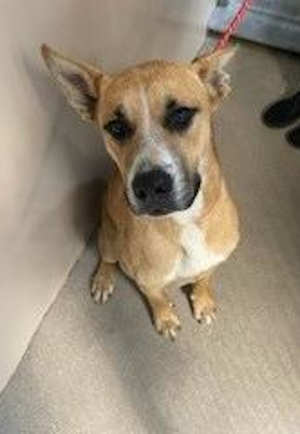
Male shepherd
This 2-year-old male shepherd has a short tan coat with white markings.
He is in kennel No. 31, ID No. LCAC-A-5344.
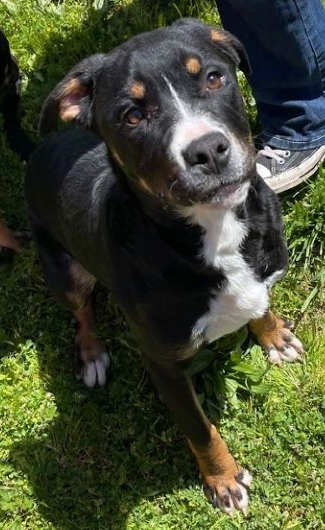
Female pit bull-shepherd puppy
This 5-month-old female pit bull-shepherd puppy has a short tricolor coat.
She is in kennel No. 32, ID No. LCAC-A-5072.

Male shepherd
This 1-year-old male shepherd has a tricolor coat.
He is in kennel No. 33, ID No. LCAC-A-5310.

Female shepherd
This 10-month-old female shepherd has a tricolor coat.
She is in kennel No. 34, ID No. LCAC-A-5323.
Email Elizabeth Larson at
Each winter, the Geminid meteors light up the sky as they race past Earth, producing one of the most intense meteor showers in the night sky. Now, NASA’s Parker Solar Probe mission is providing new evidence that a violent, catastrophic event created the Geminids.
Most meteor showers come from comets, which are made of ice and dust. When a comet travels close to the Sun, the ice evaporates and releases gas, dislodging small pieces of the comet and creating a trail of dust. Slowly, this repeated process fills the comet’s orbit with material that produces a meteor shower when Earth passes through the stream.
However, the Geminid stream seems to originate from an asteroid — a chunk of rock and metal — called 3200 Phaethon. Asteroids like Phaethon are not typically affected by the Sun’s heat the way comets are, leaving scientists to wonder what caused the formation of Phaethon’s stream across the night sky.
“What’s really weird is that we know that Phaethon is an asteroid, but as it flies by the Sun, it seems to have some kind of temperature-driven activity. Most asteroids don’t do that,” said Jamey Szalay, a research scholar at Princeton University. Szalay was an author, with Wolf Cukier as the lead author, on the science paper recently published in The Planetary Science Journal.
The research builds on previous work by Szalay and several of his Parker Solar Probe mission colleagues, including the Geminids direct images captured by Karl Battams’ team, to assemble a picture of the structure and behavior of the large cloud of dust that swirls through the innermost solar system.
Taking advantage of Parker’s flight path — an orbit that swings it just millions of miles from the Sun, closer than any spacecraft in history — the scientists were able to get the best direct look yet at the dust grains shed from passing comets and asteroids.
Built and operated by the Johns Hopkins Applied Physics Laboratory (APL) in Laurel, Maryland, Parker Solar Probe does not carry a dedicated dust counter that would give it accurate readings on grain mass, composition, speed, and direction.
However, dust grains pelt the spacecraft along its path, and the high-speed impacts create unique electrical signals, or plasma clouds. These impact clouds produce unique electrical signals that are picked up by several sensors on the probe’s FIELDS instrument, which measures electric and magnetic fields near the Sun.
To learn about the origin of the Geminid stream, the scientists used this Parker data to model three possible formation scenarios, and then compared these models to existing models created from Earth-based observations.
They found that violent models were most consistent with the Parker data. This means it was likely that a sudden, powerful event – such as a high-speed collision with another body or a gaseous explosion, among other possibilities – that created the Geminid stream.
Parker Solar Probe is part of NASA’s Living with a Star program to explore aspects of the Sun-Earth system that directly affect life and society. The program is managed by NASA’s Goddard Space Flight Center for the Heliophysics Division of NASA’s Science Mission Directorate. APL manages the Parker Solar Probe mission for NASA.
Desiree Apodaca works for the Goddard Space Flight Center in Greenbelt, Maryland.
The parade will start at Redbud Park at 11 a.m. and will proceed down Lakeshore Drive to Austin Park.
The theme of this year’s parade is “Lake County Proud.”
This year, they will feature local marchers, a marching band, decorated floats, vintage cars, parade and show horses, fire and police vehicles, and much more.
Grand marshals of this year’s parade are Bob and Joan Mingori.
The Mingoris moved to Clearlake in 1983 after purchasing Joan’s father's weekend office of John N. Shelley OD, which had been there since 1951.
Their first involvement with the city of Clearlake was to be active members of the first Lakeshore Design Committee and creating the first spring clean-up days including a push broom parade in 1987.
Joan Mingori served on the City Planning Commission in 1986 through 1989 while Bob Mingori served on the board of directors of the then Redbud Hospital.
In 1993 Bob Mingori authored Measure P, the half-cent sales tax to improve policing service in Clearlake then afterward was elected to the Clearlake City Council and served as Mayor in 2000.
Joan Mingori began working for the Konocti Unified School District in 1996 until elected to the school board in 2018.
The Mingoris published the Lake County Visitor Guide from 1990 to 2002, during which time Bob was on the Clearlake Chamber Board of Directors and was president of the Lake County Chamber.
Today, Bob Mingori does some graphic work but mostly draws home plans while Joan, after the past two years managing the Clear Lake Chamber of Commerce, is now focusing on Bob, home and family.
During the July 1 celebration, the Lakeshore Lions Club also will sponsor the firework display at dark, so please stay and enjoy.
The city of Clearlake will be hosting a free concert showcasing Def Leppard Revisited and Journey Revisited at 7 p.m.
The Midway of Fun Carnival presale tickets are available at Clearlake Automotive, Bob’s Vacuum and A+B Collision. For ticket information call 707-350-7100.
At Austin Park, the Lakeshore Lions and Lakeshore Lioness will feature an assortment of food, cold drinks and beer.
There also will be arts and craft vendors, games and entertainment for all.
The Clearlake Chamber of Commerce will sponsor the International Worm Races.
This is the largest fundraiser for the Lakeshore Lions Club, so show your community spirit and support by helping them raise money for all the many causes Lakeshore Lions Club aids in the community.
The Lions support the eyeglasses and vision care for the needy, high school sports, sober graduation, scholarships and many other school activities, as well as the fire and police departments, the senior center, South Shore Little League and many other very notable causes.
Anyone who wishes to enter the parade can pick up an entry form at the Clearlake Chamber of Commerce office, Bob’s Vacuum, Clearlake Automotive and Kevin Ness Jewelers.
Any and all arts and craft vendors interested in booths, please call Nan Shields at Bob’s Vacuum at 707-994-9752.
To gather all the information you need for the parade, please call Alvaro Valencia at 707-350-7100.
DAVIS — California Attorney General Rob Bonta and Rep. Mike Thompson, along with state and local leaders, stood together on Friday in solidarity to address the need for bold state and federal action to address gun violence.
The call to action is part of Gun Violence Awareness Month, a month to bring awareness to the urgent need for stronger gun violence protections nationwide.
California has long been a national leader in effectively preventing gun violence — with one of the lowest rates of gun deaths in the country.
“There have been more mass shootings than days in 2023, and gun violence is now the leading cause of death for American children. Enough has long-been enough.” said Attorney General Bonta. “Gun safety laws work, and yet time and time again, they’ve been stopped or delayed from being implemented on a national scale by the gun lobby and the politicians in their pockets. I stand with leaders, including Representatives Thompson and Bera, as we call for bold and decisive action against gun violence. A crisis of this magnitude deserves creative and collaborative solutions, including investing in lifesaving violence intervention programs that work to break cycles of retaliatory shootings. Whether by seizing firearms from potentially dangerous individuals, holding the gun industry accountable in court, or seeking a constitutional amendment, California is committed to ending gun violence and keeping our people safe.”
“Gun violence is an epidemic that requires a response from every level of government, including local, state, and federal level,” said Rep. Thompson. “As Chairman of the Gun Violence Prevention Task Force, I am working in Congress to advance commonsense gun violence prevention legislation that will save lives and help keep our communities safe. I am proud to have stood with leaders like Attorney General Bonta who are leading efforts in California to keep firearms out of the hands of dangerous individuals and modeling how sensible gun laws can reduce gun violence.”
Despite efforts at the state level, in 2020, firearms were the leading cause of death for children in the United States. Gun violence is a true public health crisis that requires immediate and proactive attention.
Attorney General Bonta in 2022 established the Office of Gun Violence Prevention within the California Department of Justice, or DOJ, to advance California’s efforts to adopt a more holistic approach to reducing gun violence, inviting stakeholders from throughout California to assist in these efforts.
Attorney General Bonta is committed to ending gun violence through collaborative and holistic approaches. Through ongoing gun violence reduction efforts led by the Office of Gun Violence Prevention, DOJ’s Bureau of Firearms and several litigation teams, the Department of Justice has seized firearms from dangerous individuals using the Armed and Prohibited Persons System, prosecuted firearms trafficking cases, and advanced and defended California’s commonsense gun laws.
Gun violence remains a growing threat to public safety throughout the nation. On average, there are over 110 gun deaths each day and nearly 41,000 each year in the U.S. Guns are the leading cause of death among children and adolescents; with U.S. children being more likely to die from gun violence than in any other comparable country.
California continues its efforts to advance laws and policies that save lives and prevent gun deaths. In 2021, California saw a 37% lower gun death rate than the national average. According to the Centers for Disease Control and Prevention, California has one of the lowest rates of firearm mortality in the country — 44th out of 50, with 8.5 gun deaths per 100,000 people — compared to 13.7 deaths per 100,000 nationally, 28.6 in Mississippi, 20.7 in Oklahoma, and 14.2 in Texas.
Children in California are less likely to be killed by guns, with California’s gun death rate for children lower than other states, and 58% lower than the national average.
Despite this, there is much work to do. While Californians are less likely to die as a result of a firearm, too many Californians still suffer the harm of gun violence:
• Someone is killed with a gun every three hours in California.
• Californians who live with handgun owners are more than twice as likely to die of homicide.
• California women living with handgun owners are more likely to die by suicide.
• More than half of those killed by firearms in California die as a result of suicide.
• From hiring police to detect and investigate gun crime to paying medical expenses for gun injuries, gun violence is expensive. Annually, gun violence costs the state approximately $18 billion — just under $500 per Californian.
More about Attorney General Bonta’s Office of Gun Violence Prevention can be found here.