 How to resolve AdBlock issue?
News
“The climate crisis is one of the most pressing issues facing our world today and it demands our immediate attention,” said Thompson. “Last Congress, we made significant strides towards taking on the climate crisis through the Bipartisan Infrastructure Law and the Inflation Reduction Act. Now, we are seeing the direct impact of these laws through investments in climate and grid resilience programs in California and across our country. The successes of the last Congress are just a first step, and I am committed to continuing this progress so we can protect the planet for generations to come.
The funding announced by President Biden and Gov. Newsom is part of a first-ever Climate Resilience Regional Challenge to help coastal and Great Lakes communities, including tribal communities in those regions, become more resilient to extreme weather and other impacts of the climate crisis.
The funding will support innovative coastal resilience and adaptation solutions, such as building natural infrastructure, planning and preparing for community-led relocation, and protecting public access to coastal natural resources, that protect communities and ecosystems from sea level rise, tidal flooding, hurricanes and storm surge, among other severe climate impacts.
The challenge is part of the $2.6 billion in resilience funding for NOAA included in the Inflation Reduction Act.
In addition, the Bipartisan Infrastructure Law is investing $2.3 billion in states, territories, tribes and the District of Columbia over the next five years to bolster grid resilience across the country.
As part of this investment, California is set to receive $67.4 million in the coming days, with the ability to apply for additional funding in the future, to modernize its electric grid to reduce impacts from extreme weather, natural disasters, and wildfires, and to ensure the reliability of the state’s power sector.
On Monday, President Biden and Gov. Newsom visited the Baylands Nature Preserve, one of the largest tracts of undisturbed marshland remaining in the San Francisco Bay.
The preserve is part of the Strategy to Advance Flood protection, Ecosystems and Recreation along the San Francisco Bay Project, a flood and sea-level resilience project that will protect almost 1,600 properties and will enable the restoration of approximately 600 acres of marsh from former salt ponds.
Thompson represents California’s Fourth Congressional District, which includes all or part of Lake, Napa, Solano, Sonoma and Yolo counties.
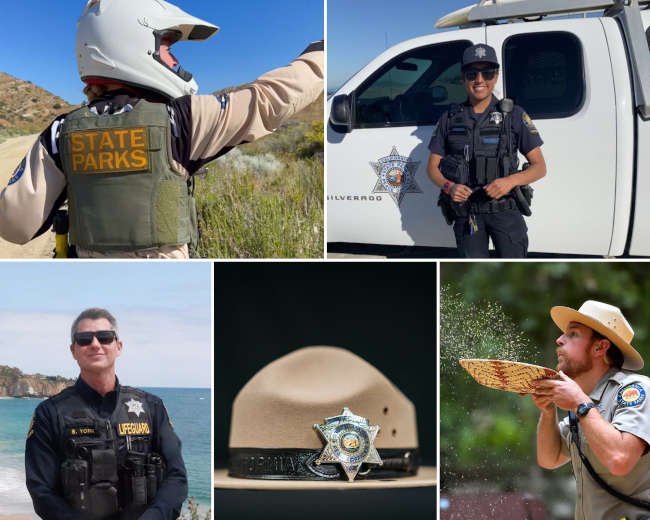
California State Parks has reopened the application period for the State Park peace officer cadet exams.
The department invites individuals to “Live the Parks Life” as rangers or lifeguards in the nation’s largest state park system.
The new deadline to apply is Monday, July 31.
Cadet academy graduates can serve the state as rangers and lifeguards to safeguard both visitors and the historical, cultural and natural resources found in 280 state park units.
Offices are located near beaches or waterways, or in deserts, parks, museums, historic parks and state vehicular recreation areas.
“I know firsthand how rewarding it is to be a ranger to not only ensure public safety, but to educate our visitors about the rich history and amazing state parks available here in California,” said California State Parks Director Armando Quintero. “We invite you to Live the Parks Life by applying to the State Park Peace Officer Cadet Academy.”
The minimum age to be a peace officer is 21 years old. Candidates are required to have a valid California driver’s license and have 60 units of college credits, with 21 units being general education.
The entire selection process for becoming a ranger or lifeguard takes approximately 15 months.
The first step in the selection/examination process is to mail, email or hand deliver an application during the open application period. The application is used to determine if the candidate meets the minimum qualifications for admission into the examination, which consists of the Peace Officer Standards and Training, or POST, Entry Level Law Enforcement Test Battery written exam.
This exam is used to admit the candidate into the next phases of the selection process, which include the physical agility test, background investigation, oral interview, and medical and psychological evaluations.
Successful applicants will be sent a notification to attend the eight-month-long POST-certified law enforcement academy.
The academy instruction prepares cadets physically, mentally and emotionally to enter the workforce as a state park peace officer ranger or lifeguard.
Rangers and lifeguards are sworn officers equipped with a firearm and badge. Cadets will learn how to conduct investigations, make physical arrests, use firearms and perform emergency responses.
Training also includes how to actively protect park resources, assist visitors and run interpretive programs.
Below are some frequently asked questions regarding the State Park Peace Officer Cadet Academy:
Do I have to carry a firearm to serve as a ranger or lifeguard?
Yes. Cadet training includes how to conduct investigations, make physical arrests, use firearms and perform emergency responses.
What is the age minimum and age maximum to apply?
Candidates must be at least 21 years of age to become a peace officer. State Park Peace Officer's mandatory retirement age is 65 years, but there is no maximum application age.
I have not completed two years of college yet. Can I still apply while I am still taking classes?
Candidates may be enrolled in college at the time of application but must have at least 21 units of general education credits satisfying general education curriculum standards with courses (which may include courses in natural science, social science, mathematics, language and humanities). By the time of appointment, a candidate must have completed 60 semester units of study at a state-accredited college or university. A degree in park administration, natural sciences, social sciences, law enforcement or a related field is desirable.
Where is the Cadet Academy located?
Most cadets attend training at Butte College Law Enforcement Academy (Butte County). However, the department may utilize several academy sites, including Mott Training Center at Asilomar in Pacific Grove, South Bay Regional Public Safety Academy at Fort Ord in Monterey, and the Ben Clark Law Enforcement Training facility in Riverside. It is at the department's discretion to determine an academy location for each class.
Do I get paid while at the academy?
Yes. Cadets earn a salary; currently, the monthly salary range is $3,930 to $5,300. Most cadets start at the low end of the range unless they are a current state employee with a salary within the range.
To hire a workforce reflective of California’s diverse population, California State Parks is committed to ensuring equal access and connecting all job seekers to opportunities through fair hiring and employment practices. For more information on the cadet exams, minimum qualifications, additional frequently asked questions and a timeline of the recruitment cycle, please visit LiveTheParksLife.com.
Please send questions regarding other employment opportunities at California State Parks to the Workforce Planning and Recruitment Office at

Millions of Americans struggle to afford healthy meals and nutritious food. Known as “food insecurity,” this problem was already rising when Supplemental Nutrition Assistance Program, or SNAP, benefits – previously called food stamps – were cut in 35 states this spring. SciLine interviewed Hilary Seligman, professor of medicine at the University of California, San Francisco, on rising grocery prices, the misconceptions about hunger in the U.S., and how food insecurity diminishes school and work performance.
Below are some highlights from the discussion. Answers have been edited.
What is food insecurity?
Hilary Seligman: Food insecurity is defined by the U.S. Department of Agriculture as the limited or uncertain access to enough food for a healthy life.
What are the trends in food insecurity rates?
Hilary Seligman: The most recent data suggests that about 1 in 10 households in the U.S. are food insecure. And this rate is even higher among certain groups, like Black and brown households and households with children.
What factors cause food insecurity?
Hilary Seligman: Food insecurity is an inability to access enough resources for your basic needs. So it’s not having sufficient money in the household to meet a food budget. And that may be because of disability, because of unemployment, because of inadequate educational opportunities, or all of these root causes.
How does inflation affect food insecurity rates?
Hilary Seligman: It’s clear that when food prices rise, households have to stretch a food budget even more. People have to make difficult choices about the kind of food they eat, and the amount of food they eat.
In many cases, when household budgets are stretched thin, people have to shift their purchases toward foods that are cheaper. And in the U.S., cheaper foods are almost always less healthy for you, more caloric and more deficient in vitamins and nutrients.
How does food insecurity affect people’s health?
Hilary Seligman: Over the last couple of decades, we’ve seen that food insecurity can have a profound impact on physical health and mental health, whether children, adults or older adults.
These cheaper foods tend to be really highly processed, nutritionally poor, shelf-stable foods. And we know these foods are bad for people’s health in the long term. They predispose people toward weight gain, diabetes, cardiovascular disease and even cancer.
We also know that when you live in a food-insecure household, it makes it difficult to afford other things that are good for your health. For example, it would make it more difficult to afford your copayment to see your primary care doctor, or your medications.

How does food insecurity affect success at work or school?
Hilary Seligman: We know that food insecurity is associated with poor academic performance among children.
Parents are probably really familiar with the way that their children behave when they’re hungry. And those same things happen in school environments when kids show up to school having not had the opportunity to eat a healthy breakfast.
The evidence is clear that food insecurity is associated with behavioral problems in school, absenteeism from school and poor academic performance. And this can have lifelong consequences for children.
A similar thing plays out with adults. Adults who are living in food-insecure households are less likely to be able to hold down a sufficient number of work hours to meet their household budget needs. They’re less likely to be able to devote a lot of hours to finding employment, because finding food takes a lot of time and a lot of energy.
Are there any common misconceptions about hunger?
Hilary Seligman: One of the misconceptions is that people who are experiencing food insecurity don’t want access to a healthier diet.
In many, many cases, if not most cases, the evidence is clear that people at all income levels often want access to a healthier diet. But in a household experiencing food insecurity, a healthier diet is simply out of reach financially.
Many people living in food-insecure households will tell you they perceive fruits and vegetables to be luxury items. They only splurge on fruits and vegetables when they have extra money in their budget. And so one of the things that we have to guard against is an assumption that people with lower incomes don’t want to eat a healthy diet.
What else works to reduce or eliminate food insecurity?
Hilary Seligman: The best solution for food insecurity is SNAP, which used to be called the food stamps program.
It is very, very clear that SNAP is enormously effective at supporting food security in U.S. households. And anything that reduces access to SNAP or makes it more difficult to enroll in SNAP is going to have the effect of increasing food insecurity rates in the United States.
An example of this would be the work requirements that will push people out of the SNAP program and likely increase food insecurity rates.
Things like earned income tax credits protect families against food insecurity. Emergency stimulus checks like we saw during the COVID pandemic also protect families.
Watch the full interview to hear more.
SciLine is a free service based at the nonprofit American Association for the Advancement of Science that helps journalists include scientific evidence and experts in their news stories.
Hilary Seligman, Professor of Medicine, University of California, San Francisco
This article is republished from The Conversation under a Creative Commons license. Read the original article.
The $20 million allocated for the “Prescribed Fire Liability Claims Fund Pilot” will cover losses in the rare instance that a prescribed or cultural burn escapes control.
State Sen. Bill Dodd authored the 2022 bill (Senate Bill 926) that made this fund possible, continuing his many years of leadership on wildfire and prescribed fire-related legislation. Dodd formerly represented Lake County in the State Assembly.
“Prescribed fire is a cost-effective way to minimize the scope and severity of wildfires,” said Sen. Bill Dodd, D-Napa. “It’s a tool that has been used for millennia by Native American tribes and one that will continue to play a big role in wildfire prevention. The rollout of this fund is a big step toward keeping California communities safe.”
The use of prescribed fire and cultural burning — sometimes collectively called “good” or “beneficial” fire — is a key component of wildfire risk management in California.
These projects reduce hazardous fuels, help restore ecological and cultural values, and make our communities safer and our ecosystems more resilient to wildfire.
However, lack of liability insurance for practitioners has been a major barrier to increasing the use of prescribed fire, even as firefighters, fire scientists, at-risk communities, and state, federal and tribal leaders call for more.
“The Prescribed Fire Claims Fund pilot project removes a significant barrier to obtaining insurance for potential damages from a prescribed fire or cultural burn conducted by a certified prescribed fire burn boss or a cultural fire practitioner,” said Cal Fire Director/Chief Joe Tyler. “As we continue to focus on increasing the resiliency of the state’s forests, creating a pathway for private burn bosses to have the significant protection this claims fund provides is a critical step toward reaching the goals of the Governor’s Wildfire and Forest Resilience Action Plan.”
The fund will provide up to $2 million in coverage for prescribed fire projects led by a qualified burn boss or cultural practitioner.
It is meant to demonstrate that prescribed fire, when carefully planned, resourced, and implemented, is a low-risk land management tool that mitigates the larger, more damaging risks of high-severity wildfires.
The fund is the first of its kind nationally and is the result of several years of collaboration by a diversity of partners working with Sen. Dodd’s Office, including the Nature Conservancy, Cal Fire, the University of California Cooperative Extension, the California Department of Insurance, tribal representatives and many others.
“Launching this program is a key step in scaling ecologically based forest management to reduce the risk of megafires. We appreciate Sen. Dodd’s leadership and the expedient work of Cal Fire and beneficial fire practitioners to develop this fund as the next fire season quickly approaches,” said Dan Porter, the Nature Conservancy’s Forest Program director.
The fund will also advance cultural burning, helping Indigenous Californians restore their connection to fire.
“Cultural burning is an essential practice to meet diverse objectives, including biodiversity stewardship, ecological health, and community safety. The availability of this pilot fund provides cultural fire practitioners a safeguard against financial risk in the unlikely event of an escaped burn. This is a significant incentive to support revitalization of burning traditions following the legacy of policies banning such practices,” said Don Hankins, professor of geography and planning at California State University, Chico, and co-founder of the Indigenous Stewardship Network.
This fund is part of a larger vision for restoring beneficial fire across California’s fire-adapted Ecosystems.
Last year, the state released its Strategic Plan for Expanding the Use of Beneficial Fire, which identified this claims fund as a priority.
The state has also rolled out a state-certified burn boss program, changed the liability standard for prescribed fire, and made investments in prescribed burn associations, agency staffing, and other related efforts.
“We are using every tool to protect Californians, including using prescribed fire to fight wildfires,” said Insurance Commissioner Ricardo Lara. “The Prescribed Fire Claims fund will be critical to assisting our tribal groups, nonprofits and private landowners who are leading the way. This is an example of government being innovative and leading by example. The data that we get from the claims fund is going to be essential to our ongoing education with insurance companies to support insuring this important work.”
Lenya Quinn-Davidson, Fire Network Director for the University of California’s Division of Agriculture and Natural Resources, said the recent momentum is unparalleled.
“Californians are desperate to have a better relationship with fire, and only with innovative approaches like this Claims Fund will we be able to unleash the good work that needs to happen,” said Quinn-Davidson. “It’s a challenging time to be working on fire in California, but also an incredibly inspiring time.”
More information about the Pilot Prescribed Fire Claims Fund can be found on the Cal Fire website, including frequently asked questions and an enrollment form for practitioners.
The Bipartisan Infrastructure Act allocated $62 billion to improve nationwide broadband availability and access, with an emphasis on unserved and underserved communities.
The more input, feedback, and involvement is shown by residents, the more likely California counties will receive the maximum available broadband dollars from the federal government.
Part of the state of California’s community engagement effort involves distribution and participation in a brief digital equity survey.
To meet statewide goals, at least 250 Lake County residents must complete the survey by June 30.
The survey is anonymous and takes about 10 minutes to complete.
To participate, visit the Broadband For All website.

Gov. Gavin Newsom joined President Biden and a California Climate Action Corps volunteer in Palo Alto on Monday for the president’s announcement of more than $600 million in federal grant funding for climate resilience projects across the country.
President Biden also announced that California will receive $67 million in federal funding to help build power lines and transmission infrastructure, supporting the state’s transition to 100% clean electricity by 2045.
President Biden and Governor Newsom visited the Baylands Nature Preserve, one of the largest tracts of undisturbed marshland remaining in the San Francisco Bay.
The preserve is part of the Strategy to Advance Flood protection, Ecosystems and Recreation along the San Francisco Bay, or SAFER Bay, Project, a flood and sea-level resilience project that will protect almost 1,600 properties and will enable the restoration of approximately 600 acres of marsh from former salt ponds.
“California’s wildfires, heat waves, and extreme swings from drought to flooding show how climate change is impacting our communities,” Newsom said. “There is no better partner in the fight against climate change than President Biden, who is making unprecedented investments and approaching this crisis with urgency. This new federal funding will support our ongoing climate action to protect our coastal communities from rising oceans and build the clean energy we need.”
“Throughout our history, we’re the only nation in the world to come out of crisis stronger than we went into it,” President Biden said. “We’re doing it again here on the climate crisis. When I think of climate, I think of jobs. When I think of climate, I think of innovation. When I think of climate, I think of turning peril into progress.”

Historic state investments
California’s Climate Commitment, the $48 billion climate budget, includes $4.1 billion in climate resilience funding:
• $1.4 billion in investments over multiple years for nature-based solutions.
• $1.6 billion in investments over multiple years to promote community resilience.
• $734 million in investments over multiple years for coastal resilience.
• On June 1, the Coastal Conservancy awarded $78 million for climate resilience, public access, habitat restoration and wildfire resilience projects.
• $444 million over multiple years to address extreme heat.
California’s sea level rise action plan
Last year, California finalized an action plan to tackle sea level rise with a coordinated roadmap including priority investments, programs and policies for 17 state agencies and departments.
The State Agency Sea Level Rise Action Plan includes over 80 actions grounded in the best available science, tribal and local partnerships equity, and other guiding principles.
California Climate Action Corps
As a part of California’s comprehensive strategy to address the climate crisis, Governor Newsom launched the country’s first state-level, climate service corps to empower all Californians to take meaningful action to safeguard the climate.
You can take meaningful action today to help communities across our state by serving in a year-long fellowship, volunteering or taking action at home.
Apply here with California Volunteers.