 How to resolve AdBlock issue?
News


Antibodies to SARS-CoV-2, the virus that causes COVID-19, were present in the blood of 96.4% of Americans over the age of 16 by September 2022. That’s according to a serosurvey – an analysis testing for the presence of these immune defense molecules – conducted on samples from blood donors.
A serosurvey like this one helps researchers estimate how many people have been exposed to any part of the coronavirus, whether via vaccination or infection. Both can trigger the generation of antibodies to SARS-CoV-2. And by identifying which kind of antibodies someone has in their blood, researchers can break down the 96.4% into different types of immunity: infection-derived, vaccine-derived and hybrid.
COVID-19 vaccines used in the United States are based on only one part of the virus – the spike, or S, protein. Researchers can tell that a person has been vaccinated and has not been infected if their blood has only anti-S antibodies that target that spike protein. If someone has anti-N antibodies, which target the virus’s nucleocapsid protein, it’s a sign that they’ve been infected by SARS-CoV-2. To reliably identify someone with hybrid immunity, a researcher would need to match someone who has anti-N antibodies to an official vaccination database.
What about the 3.6% without antibodies?
Immunologists know that antibody levels decrease in the months after a COVID-19 infection or vaccination, and this is true for many pathogens. It’s possible some people did have antibodies at one point, but they’re no longer detectable. And not every infection leads to a detectable antibody response, particularly if the case was mild or asymptomatic.
Another factor is the accuracy of the antibody test. No test is perfect, so a small percentage of people who truly have antibodies might come up negative.
Together, these considerations mean that the 96.4% number is likely an underestimate. It seems reasonable to conclude that almost no one in this population has neither been infected by SARS-CoV-2 nor received a COVID-19 vaccine.
A clearer picture of a virus’s spread
Serosurveys are useful for understanding how likely different types of people – of varying ages or races, for example – were to have been infected. For this purpose, a serosurvey can be much more reliable than using data on people who received a positive PCR test, or who report having had a positive rapid antigen test, because getting a positive test is heavily influenced by access to care, health care behavior and how severe your illness is. These are sources of what is called bias.
This bias has two effects: It leads to large underestimation of the proportion of the overall population infected, and it can lead to spurious differences between groups. For example, people with mild symptoms are less likely to get tested and are also likely to be younger. Researchers might draw the wrong conclusion that because they’re not getting tested these people aren’t actually catching the virus.
Looking at antibodies as a marker of infection is not biased by such behavioral factors. Many serosurveys, including ones that we worked on in Chennai, India, and Salvador, Brazil, found similar or even higher seroprevalence in children compared with young adults, contradicting an early narrative that children were less susceptible to the virus. Instead, our results suggested that infections in children were less likely to be detected.
What does this statistic mean for future waves?
Antibodies are not just a marker of previous infection; part of their job is to help prevent future infection with the same pathogen. So, serosurveys can be used to understand levels of immunity in the population.
For some diseases, like measles, immunity is essentially lifelong, and having antibodies means you are protected. However, for SARS-CoV-2 this is not the case, because the virus has continually evolved new variants that are able to reinfect people despite their antibodies.
Nevertheless, many studies have shown that individuals with hybrid immunity will be more protected against future infection and variants than those with vaccine- or infection-derived immunity alone. It may be useful to know the proportion of the population with single-source immunity in order to target certain groups with vaccination campaigns.
Matt Hitchings, Assistant Professor of Biostatistics, University of Florida and Derek Cummings, Professor of Biology, the Emerging Pathogens Institute, University of Florida
This article is republished from The Conversation under a Creative Commons license. Read the original article.
The Cal Fire Sonoma-Lake-Napa Unit said the procession for Capt. Ronnie Boyd will take place on Tuesday from the Napa County Coroner’s Office to Jones and Lewis Clear Lake Memorial Chapel in Lower Lake.
Boyd, 51, of Clearlake, died on June 11 following the crash in Napa County. His wife, Dena Boyd, 52, died of her injuries two days later.
Cal Fire’s Sonoma-Lake-Napa Unit, or LNU, will begin the procession for Capt. Boyd at 9:30 a.m. Tuesday at the Napa County Coroner’s Office.
The procession will use Highway 29 through Napa and the city of St Helena, and turn to go through downtown Calistoga on the way to Lake County.
Once they reach Twin Pine Casino in Lake County there will be a procession pass-off by the Napa County resources to Cal Fire LNU’s Lake County Crews, South Lake Fire Protection District, and Lake County Fire District.
Once the procession has transitioned to the Lake County resources it will continue down Highway 29 through Middletown, passing the community of Hidden Valley Lake, and proceeding to the destination in Lower Lake.
Throughout the route you can expect delays and traffic in these areas.
“We ask if you would like to pay your respects to Capt. Boyd, please do not block the road, stay on the sidewalks, and do not approach the procession at any time,” Cal Fire said.
Cal Fire said Boyd started his career with Cal Fire in 2003 as a firefighter I in the Sonoma-Lake-Napa Unit and was promoted to a limited-term fire apparatus engineer in 2007.
In 2009, Capt. Boyd was promoted to a permanent fire apparatus engineer position in the Sonoma-Lake-Napa Unit followed by a promotion to a limited-term fire captain position in the Shasta-Trinity Unit.
In 2016, he was promoted to a permanent fire captain position in the Humboldt-Del Norte Unit where he worked up to his passing.
“Capt. Boyd was well known for his glee for life, contagious smile, and willingness to serve the public,” Cal Fire said.
The statement added, “Please keep Capt. Boyd and his family, and the Cal Fire family that knew him, in your thoughts as they grieve through this tragic loss.”
Information regarding memorial services will be provided by the Boyd family at a later date.
CLEARLAKE, Calif. — The Clearlake Police Department is asking for the public’s help in locating a missing 12-year-old girl.
Kianii Hill was last seen in Clearlake, authorities said.
She is described as a black female juvenile, with long black hair and brown eyes.
She is 5 feet, 4 inches tall and weighs 140 pounds.
When last seen, Kianii was wearing a black shirt, black shorts and multi-colored Crocs.
If you have any information regarding her whereabouts, please contact the Clearlake Police Department at 707-994-8251, Extension 1.
The council will meet at 6 p.m. Tuesday, June 20, in the council chambers at Lakeport City Hall, 225 Park St.
The agenda can be found here.
The council chambers will be open to the public for the meeting. Masks are highly encouraged where 6-foot distancing cannot be maintained.
If you cannot attend in person, and would like to speak on an agenda item, you can access the Zoom meeting remotely at this link or join by phone by calling toll-free 669-900-9128 or 346-248-7799.
The webinar ID is 973 6820 1787, access code is 477973; the audio pin will be shown after joining the webinar. Those phoning in without using the web link will be in “listen mode” only and will not be able to participate or comment.
Comments can be submitted by email to
On Tuesday, Assistant City Manager/Finance Director Nick Walker will present to the council the proposed 2023-24 fiscal year budget.
The report gives the bottom line number for the budget as $29,798,367.
As part of its budgeting matters, the council also will consider approving the annual appropriations limit, or Gann limit, for the city in the form of a resolution.
Also on the agenda Tuesday are public hearings to approve a resolution adopting revised personnel rules and introduction of an ordinance amending Chapter 2.48, Personnel System, of the Lakeport Municipal Code and schedule a second reading and adoption on July 18.
The council also will consider adopting a resolution to cause a written report to be prepared and filed with the city clerk regarding delinquent water, sewer and solid waste user charges, fees and penalties for the period of June 1, 2022, through May 31, 2023 and setting a public hearing on the written report prior to collection on the tax roll.
In other business, Police Chief Brad Rasmussen will present a report on police statistics for 2022.
On the consent agenda — items considered noncontroversial and usually accepted as a slate on one vote — are warrants, ordinances; minutes of the regular council meeting on June 6; approval of application 2023-020, with staff recommendations, for the Dickens’ Faire; authorization for the city manager to execute amendment No. 1 to the PSA with JJACPA; and approval of an amendment to the city manager contract with Colantuono, Highsmith & Whatley, PC.
Email Elizabeth Larson at

Whenever I tell high school students in classes I visit that I appreciated learning about slavery as a child growing up in the Caribbean, they often look confused.
Why, they ask, did I like learning about slavery given that it was so horrible and harsh? How could I value being taught about something that caused so much hurt and harm?
That’s when I tell them that my teachers in St. Thomas – and my fourth grade history textbook – didn’t focus just on the harsh conditions of slavery. Rather, they also focused on Black freedom fighters, such as Moses Gottlieb, perhaps better known as General Buddhoe, who is credited with leading a nonviolent revolt that led to the abolishment of slavery in the Danish-ruled West Indies on July 3, 1848. The historic date is now observed and celebrated in the United States Virgin Islands as Emancipation Day.
The holiday – and the lessons I learned about it – instilled in me a sense of cultural pride and gave me a better appreciation for the sacrifices that Black people made for freedom. It also encouraged me to always push on when faced with challenges.
The reason I bring this up is because I believe Juneteenth – which commemorates the date in 1865 when Union troops notified the last remaining slaves in Texas that they were free – holds similar promise for Black students throughout the United States.
Students often tell me that they’re not learning much about slavery beyond the suffering and harsh conditions that it involved. As a historian who specializes in how slavery is taught in K-12 classrooms, I believe there are several ways educators can incorporate Juneteenth into their instruction that will give students a broader understanding of how Black people resisted slavery and persevered in spite of it. Below are just a few.
Start early, but keep it positive
As early childhood experts assembled by the National Museum of African American History point out in a guide they created to help develop lessons about Juneteenth, children in the U.S. will probably hear about slavery by age 5. But lessons about slavery at that age should avoid the pain and trauma of slavery. Instead, the lessons should celebrate and teach stories of Black culture, leadership, inventions, beauty and accomplishments. This, the authors of the guide say, will better equip children to later hear about, understand and emotionally process the terrible truths about slavery.
“Juneteenth events can be wonderful opportunities to introduce the concepts of slavery with a focus on resilience and within an environment of love, trust, and joy,” the guide states.
Focus on Black resistance
Many Juneteeth celebrations not only commemorate the end of slavery, but they also honor the generations of Black men and women who have fought to end slavery and for racial justice. As Black history education professor LaGarett King puts it, Black people have always “acted, made their own decisions based on their interests, and fought back against oppressive structures.” Stressing this can help students to see that although Black people were victimized by slavery, they were not just helpless victims.
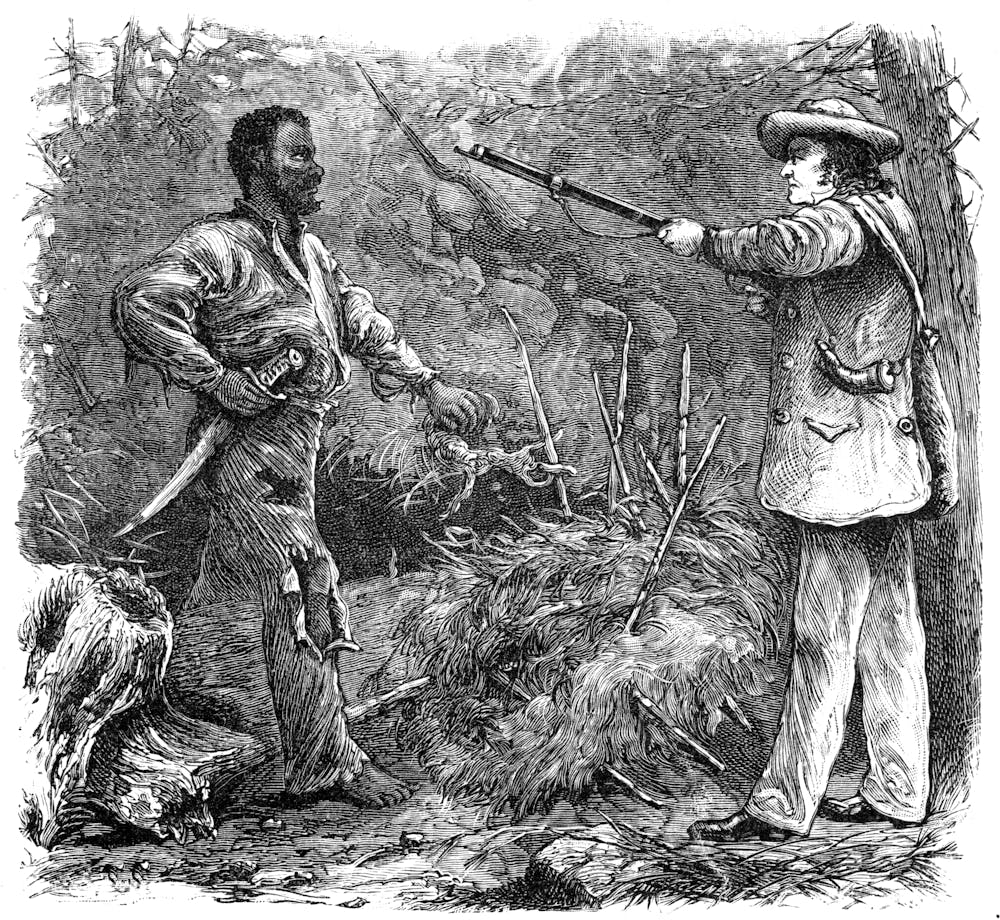
Juneteenth provides opportunities to acknowledge and examine the legacies of Black freedom fighters during the time of slavery. These freedom fighters include – but are not necessarily limited to – Frederick Douglass, Gabriel Prosser, Denmark Vesey, Harriet Tubman, Nat Turner and Sojourner Truth.
Connect Juneteenth to current events
Juneteenth can also be a way for educators to help students better understand contemporary demands for racial justice. That’s what George Patterson, a former Brooklyn middle school principal, did a few years back at the height of protests that took place under the mantra of Black Lives Matter.
Patterson has said he believes that when students study Juneteenth, they are “better equipped to understand the historical underpinnings of what’s going on in the streets and to put the demands being made in context.”
Teachers need not wait for Juneteenth to be included in textbooks in order to draw lessons from the holiday.
“If it’s not in the textbook, then we need to introduce it, we need to teach it,” Odessa Pickett, a teacher at the Barack Obama Learning Academy in Markham, Illinois, stated during an interview about teachers infusing Juneteenth into their lessons. “We need to bring it to the forefront.”
Educators can make Juneteenth about so much more than the end of slavery. Teaching lessons about the holiday offers an abundance of opportunities about what it means to fight for freedom and maintain a sense of self-determination in the face of oppression.
Raphael E. Rogers, Professor of Practice in Education, Clark University
This article is republished from The Conversation under a Creative Commons license. Read the original article.
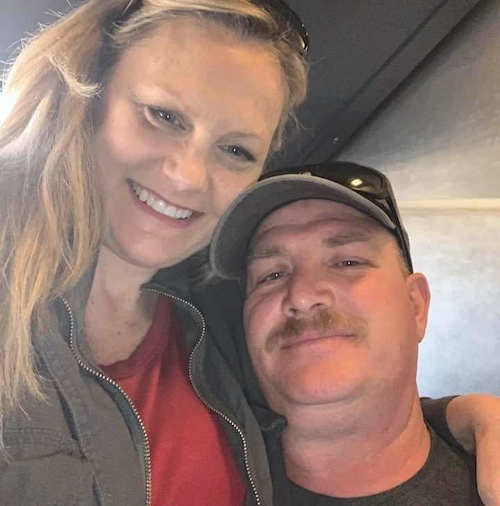
LAKE COUNTY, Calif. — Friends and family are remembering a Clearlake couple for their contributions to the community after both died last week as the result of a motorcycle crash in Napa County.
Ronnie Boyd Jr., 51, died at the scene of the crash on Sunday, June 11, and his wife, Dena Boyd, 52, died two days later.
They’ve been memorialized this past week with a moment of silence at the Clearlake City Council meeting, a remembrance post on Facebook from Cal Fire, Ronnie Boyd’s employer, and in numerous social media posts by friends and family.
“We extend our deepest sympathies to Captain Boyd's family, friends, and colleagues during this difficult time. #neverforget,” Cal Fire headquarters and the Cal Fire Humboldt-Del Norte Unit posted on their Facebook pages on June 12, the day after his death.
“Ronnie and Dena were a huge part of this community for many years, and great friends to many,” said friend and neighbor Pastor Tee Stacy.
A procession is planned for Tuesday to bring Ronnie Boyd’s body home to Lake County from Napa County, said his daughter, Rachel Weidner. Additional details will be released early in the week.
Those who knew them are struggling with the loss of a vibrant, involved and loving couple, who took pride in their family and their community, and had a lot left to do.
The couple also were preparing to celebrate their 10th wedding anniversary in August, said Weidner.
They had gone for an afternoon motorcycle ride last Sunday when something went wrong.
The California Highway Patrol’s Napa Area office reported that the couple was riding a 2015 Harley Davidson motorcycle northbound on Butts Canyon Road north of James Creek Road at an unknown speed when, for reasons that remain under investigation, the motorcycle went off the east edge of the roadway and down a hillside, where it crashed.
The Boyds were thrown from the motorcycle. Ronnie Boyd died at the scene and Dena Boyd was airlifted to Santa Rosa Memorial Hospital with major injuries. She died on Tuesday.
A passion for firefighting
Ronnie Boyd spent nearly 30 years working his way up through the firefighting ranks before becoming a captain with Cal Fire in the Humboldt area.
Boyd began his firefighting career as a volunteer at Lakeshore Fire in Clearlake, before it became Lake County Fire, in March of 1995.
“At the time he worked at Homestake Mine but that was just his job, firefighting was always his passion. He was eventually promoted to a volunteer captain,” Weidner said.
“Growing up our lives revolved around the station, it was a second home and family not just for my dad but the whole family,” Weidner said.
After the Homestake Mine closed at the end of 2001, Weidner said her father decided he wanted to make firefighting his career.
In 2003, he joined Cal Fire — before it changed its name from the California Department of Forestry — as a seasonal firefighter in the Sonoma-Lake-Napa Unit during the summer, working construction jobs through the winter and continuing to volunteer at the local fire department anytime he was home, Weidner said.
Cal Fire reported that Boyd was promoted to a limited-term fire apparatus engineer in 2007, was promoted to a permanent fire apparatus engineer position in the Sonoma-Lake-Napa Unit in 2009 and then moved to a limited-term fire captain position in the Shasta-Trinity Unit.
Eventually, Boyd was hired by Cal Fire as a permanent employee and in 2015 he decided to step back from volunteering in the Lake County Fire Protection District, Weidner said.
“He still loved the department and very much thought of it as family but being a full-time firefighter and then serving during his limited time off was nearly impossible,” she said.
It was as a Cal Fire employee that Boyd became friends with Greg Bertelli, who later became a Cal Fire division chief before retiring in February 2021.
Bertelli told Lake County News that he and Boyd worked together at the Cal Fire Middletown station for almost four years.
“I could tell you how dependable he was, how he always had a calm demeanor at an incident, how he had an infectious smile and laugh. He never would try to sugar coat an opinion. All of these would be true,” said Bertelli.
“What I remember most is how much he loved and was proud of his children. I would get an update on what colleges his son was looking at. He would have a smile from ear to ear talking about him. I remember coming back from a fire call at 2 a.m. listening to Alicia Keys singing ‘No One’ mainly because Ronnie said how much his daughter enjoyed the song. That is how I remember Ronnie,” Bertelli added.
In 2016, Boyd was promoted to a permanent fire captain position in the Humboldt-Del Norte Unit where he worked for the rest of his life.
Great neighbors, proud grandparents
Stacy said she doesn’t remember when she met Ronnie Boyd, but he and his younger brothers, Jessie and Guy were just youngsters, about the same ages as Stacy’s own three sons.
“I remember Ronnie acting like he was more of a dad than a big brother. He made an impression on me, and I will never forget that,” she said.
“Years passed and I lost track of Ronnie, until I married my husband, and we bought a house in Clearlake. And Ronnie lived down the street from us. Through the many years of being neighbors we became pretty good friends. I watched his children grow, witnessed Ronnie’s work ethic, kindness to others, and his service to the community as a firefighter,” Stacy said.
She recalled Boyd having a wonderful sense of humor, being a redneck and set in his ways. He loved to hunt and to be outdoors, and was a great neighbor who looked out for others.
Stacy said she and her husband Jim didn’t know Dena Boyd as well as they did her husband, however, they liked her very much. “She was always smiling, and she too had a great sense of humor. She loved Ronnie, and he loved her very much.”
Stacy said the Boyds were wonderful grandparents to Weidner’s little girl Raegan. “Ronnie would light up with pride every time he talked about Raegan and being Papa Ronnie. And Dena loved being Raegan’s ‘Mimi.’”
Weidner added, “Of all their titles, Papa Ronnie and Mimi were their favorite. They loved being grandparents and it brought them endless joy. Dena's favorite thing to do was shop for the grandkids, making sure they all had the perfect Christmas or birthday gift or even putting together a little something for each holiday or new season.”
“My husband and I miss them terribly and will never forget them. Our hope is to see them again one day,” Stacy said.
Weidner said Saturday that the timeline for the Tuesday processing was still being finalized, with Cal Fire expected to release additional details soon.
Email Elizabeth Larson at