 How to resolve AdBlock issue?
News
The committee, or LEDAC, will meet via Zoom from 7:30 to 9 a.m. Wednesday, Sept. 13, in the council chambers at Lakeport City Hall, 225 Park St.
The meeting is open to the public.
Chair Wilda Shock said there will be three short information presentations, planning for the Business Walk program this fall, and updates on LEDAC and city projects.
Police Chief Brad Rasmussen will discuss the homelessness and mental illness town hall later this month and National Night Out.
Nicole Flora, executive director of the Lake County Economic Development Corp., will discuss the comprehensive economic development strategy.
Benjamin Rickelman, Lake County’s deputy county administrative officer on economic development will offer broadband and economic development updates.
LEDAC’s next meeting will be Nov. 8.
LEDAC advocates for a strong and positive Lakeport business community and acts as a conduit between the city and the community for communicating the goals, activities and progress of Lakeport’s economic and business programs.
Members are Chair Wilda Shock, Vice Chair Denise Combs and Secretary JoAnn Saccato, along with Bonnie Darling, Jeff Davis, Candy De Los Santos, Bill Eaton, Monica Flores, Pam Harpster, Laura McAndrews Sammel, Bob Santana and Tim Stephens. City staff who are members include City Manager Kevin Ingram and Community Development Department representatives.
Email Elizabeth Larson at
Call Lake County Animal Care and Control at 707-263-0278 or visit the shelter online for information on visiting or adopting.
The following cats at the shelter have been cleared for adoption.

Female brown tabby
This cute 2-year-old female brown tabby has green eyes and a short coat.
She is in kennel No. A4, ID No. LCAC-A-5491.

“Star” is a 2-month-old female domestic shorthair with a tuxedo coat.
She is in kennel No. A26c, ID No. LCAC-A-5580.

“Ranger” is a 3-month-old male Siamese kitten with blue eyes and a short coat.
He is in kennel No. A96a, ID No. LCAC-A-5392.

Domestic shorthair kitten
This 5-month-old female domestic shorthair cat has a gray tabby coat.
She is in kennel No. A#96b, ID No. LCAC-A-5464.

Female shorthair kitten
This 3-month-old female domestic shorthair cat has a gray coat.She is in kennel No. A96c, ID No. LCAC-A-5641.
Email Elizabeth Larson at

Secondhand smoke may be an important but overlooked source of chronic lead exposure in kids and adolescents. That is the key finding of our recent study, published in the journal BMC Public Health.
We analyzed national data on blood lead levels and secondhand smoke exposure in 2,815 U.S. children and teenagers ages 6 to 19 from 2015 to 2018. We looked at levels of lead and a nicotine metabolite – a substance known as cotinine produced in the body’s chemical process that forms when tobacco smoke is inhaled. Levels of cotinine indicate exposure to tobacco smoke.
We found that the average blood lead levels in the intermediate and high tobacco smoke exposure groups were 18% and 29% higher, respectively, than those in the group with the lowest tobacco smoke exposure. The lowest lead exposure group was comparable to the U.S. average. A greater number of boys had detectable lead levels in their blood, as did a greater number of Black children and adolescents, compared with the other ethnic groups we studied.
Elevated blood levels were more common in children ages 6 to 10 than in older participants. Notably, children from low-income households showed 27% higher blood lead levels compared with those from high-income households.
Why it matters
Lead, unlike many other toxins, does not get diluted when exposure decreases. Nor does the body excrete it naturally. Instead, it accumulates in the bones and leaches into blood. The only way to remove it is through an oral medical treatment.
Exposure to lead can cause numerous and severe neurological problems, including nerve damage, cognitive problems, loss of IQ points and possibly even conditions such as Alzheimer’s disease and schizophrenia.
Lead exposure is more harmful to younger children than older children and adults because their bodies are still developing and they are growing so rapidly.
Children at high-exposure risk often come from low-income households in older homes built before 1978, when lead paint was still used. Young children’s frequent hand-to-mouth activity provides a pathway for lead exposure at home. Lead-containing water pipes in these older, low-income housing areas also contribute to the issue.
Children and others can also be exposed to lead through a variety of everyday household items, including some ceramic cookware and dishes, some vinyl lunchboxes – especially those manufactured outside the United States – many common spices and some toys, hair-coloring products and cosmetics. Lead exposure has even been traced to some candies from Mexico.
Over the past four decades, U.S. regulators have banned lead-based paint for residential use and leaded gasoline. This has led to a significant decrease in lead exposure from major traditional sources.
Despite continued efforts, lead exposure continues to pose a risk. Our findings help create awareness of the link between secondhand tobacco smoke and lead exposure, especially for young people. Approximately 35% of U.S. children, or over 23 million, were exposed to secondhand smoke between 2013 and 2016, according to the Centers for Disease Control and Prevention.
What’s next
We are working within our local areas to educate parents and school administrators about the dangers of lead poisoning, including exposure from secondhand smoke. Our efforts include encouraging individuals and communities to test their drinking water for lead and to take actions to reduce children’s lead exposure from drinking water.
We plan to conduct further studies to quantify the contribution of various sources to lead exposure. We believe that this research will enhance our understanding of children’s exposure and contribute to the improvement of environmental health disparities.
The Research Brief is a short take on interesting academic work.
Genny Carrillo, Associate Professor of Environmental and Occupational Health, Texas A&M University and Taehyun Roh, Assistant Professor of Epidemiology, Texas A&M University
This article is republished from The Conversation under a Creative Commons license. Read the original article.

This article has been updated regarding the asking price.
LAKEPORT, Calif. — Nearly nine years after they opened their popular brewery and restaurant, two Lake County brothers say they have decided to put the business up for sale.
Alex and Tim O’Meara opened O'Meara Bros. Brewing Co. at 901 Bevins St. in Lakeport in December 2014, after three years of developing the business.
The restaurant has been a popular eatery since its opening, with the brothers running one of only two local breweries, which came from Tim O'Meara’s years of homebrewing.
However, the brothers said they have decided to sell the business because they want to spend more time with family.
They said their goal is to find a buyer for their turn-key restaurant and beer manufacturing facility.
The brothers would prefer to find a local entrepreneur interested in picking up where they leave off in the hopes of keeping the ownership in the community.
They also want to help foster a smooth transition for new management – helping in any way they can to ensure the business carries forward without delay.
In their announcement, the O’Meara’s did not state the asking price for the business located in the 4,400-square-foot restaurant, bar and brewery facility, which also hosts live music and entertainment.
An online listing with Santa Rosa Business and Commercial, the company who is selling the business for the O’Mearas, showed an asking price of $1.9 million for the property and business.
However, the O’Meara’s said Sunday that the actual asking price is $349,000 and does not include the property, which they do not own. They said the total asking amount in the online listing that bundled the property and business is incorrect.
Tim O’Meara said the listing incorrectly shows sales revenue as ranging between $250,000 and $500,000, with net profit of between $50,000 and $100,000. He said revenue is consistently over $1 million annually.
The O’Mearas said they are asking their friends and neighbors in Lake County to keep their ears open for a business-minded and service-oriented person to take over, someone who would continue the tradition of great food, great beer and great service at this location.
Those interested in purchasing the business may call Santa Rosa Business and Commercial at 707-526-1050 for further details.
Email Elizabeth Larson at
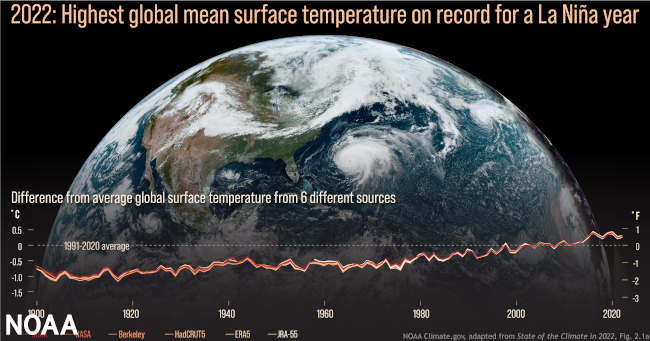
Greenhouse gas concentrations, global sea level and ocean heat content reached record highs in 2022, according to the 33rd annual State of the Climate report.
The international annual review of the world’s climate, led by scientists from NOAA’s National Centers for Environmental Information, or NCEI, and published by the Bulletin of the American Meteorological Society, or AMS, is based on contributions from more than 570 scientists in over 60 countries.
It provides the most comprehensive update on Earth’s climate indicators, notable weather events and other data collected by environmental monitoring stations and instruments located on land, water, ice and in space.
“This report is a truly international effort to more fully understand climate conditions around the globe and our capacity to observe them,” said NCEI Director Derek Arndt. “It is like an annual physical of the Earth system, and it serves present and future generations by documenting and sharing data that indicate increasingly extreme and changing conditions in our warming world.”
“People are causing the largest known change in global climate since our transition to agriculture thousands of years ago,” said Paul Higgins, associate executive director of the American Meteorological Society. “The State of the Climate in 2022 report — an ongoing collaboration between NOAA and AMS — helps us understand the climate system, the impact people are having on climate and the potential consequences. The report can help inform the decisions needed to enable humanity and all life to thrive for generations to come.”
Notable findings from the international report include:
• Earth’s greenhouse gas concentrations were the highest on record. Carbon dioxide, methane and nitrous oxide — Earth’s major atmospheric greenhouse gases — once again reached record high concentrations in 2022. The global annual average atmospheric carbon dioxide concentration was 417.1 parts per million (ppm). This was 50% greater than the pre-industrial level, 2.4 ppm greater than the 2021 amount, and the highest measured amount in the modern observational records as well as in paleoclimatic records dating back as far as 800,000 years.
The annual atmospheric methane concentration also reached a record high, which was a 165% increase compared to its pre-industrial level and an increase of about 14 parts per billion (ppb) from 2021. The annual increase of 1.3 ppb for nitrous oxide in 2022, which was similar to the high growth rates in 2020 and 2021, was higher than the average increase during 2010–2019 (1.0 ± 0.2 ppb), and suggests increased nitrous oxide emissions in recent years.
• Warming trends continued across the globe. A range of scientific analyses indicate that the annual global surface temperature was 0.45 to 0.54 of a degree F (0.25 to 0.30 of a degree C) above the 1991–2020 average. This places 2022 among the six warmest years since records began in the mid-to-late 1800s. Even though the year ranked among the six warmest years on record, the presence of La Nina in the Pacific Ocean had a cooling effect on the 2022 global temperatures in comparison to years characterized by El Nino or neutral El Nino–Southern Oscillation (ENSO) conditions.
Nonetheless, 2022 was the warmest La Nina year on record, surpassing the previous record set in 2021. With the re-emergence of El Nino in 2023, globally-averaged temperatures this year are expected to exceed those observed in 2022. All six major global temperature datasets used for analysis in the report agree that the last eight years (2015–2022) were the eighth warmest on record. The annual global mean surface temperature has increased at an average rate of 0.14 to 0.16 of a degree F (0.08 to 0.09 of a degree C) per decade since 1880, and at a rate more than twice as high since 1981.
• Ocean heat and global sea level were the highest on record. Over the past half-century, the ocean has stored more than 90% of the excess energy trapped in Earth’s system by greenhouse gases and other factors. The global ocean heat content, measured from the ocean’s surface to a depth of 2,000 meters (approximately 6,561 ft), continued to increase and reached new record highs in 2022. Global mean sea level was record high for the 11th-consecutive year, reaching about 101.2 mm (4.0 inches) above the 1993 average when satellite altimetry measurements began.
• La Nina conditions moderated sea surface temperatures. La Nina conditions in the equatorial Pacific Ocean that began in mid-2020, with a short break in 2021, continued through all of 2022. The three consecutive years of La Nina conditions — an unusual “triple-dip” — had widespread effects on the ocean and climate in 2022. The mean annual global sea-surface temperature in 2022 equaled 2018 as sixth-highest on record, but was lower than both 2019 and 2020 due in part to the long-lasting La Nina. Approximately 58% of the ocean surface experienced at least one marine heatwave in 2022, which is defined as sea-surface temperatures in the warmest 10% of all recorded data in a particular location for at least five days.
• Heatwaves shattered temperature records across the planet. In July, a 14-day heatwave swept through western Europe. A weather station in England recorded a temperature of 104 degrees F (40 degrees C) for the first time ever, over 100 stations in France broke all-time temperature records and stations in at least six other European countries set all-time heat records. The extreme high summer temperatures over Europe resulted in unprecedented melting of glaciers in the Alps, with over 6% of their volume — a record loss — lost in Switzerland in 2022 alone. Record-breaking summer heat in central and eastern Asia, particularly in the Yangtze River basin, led to a devastating drought that affected more than 38 million people and caused a direct economic loss of $4.75 billion U.S. dollars.
• The Arctic was warm and wet. The Arctic had its fifth-warmest year in the 123-year record. 2022 marked the ninth-consecutive year that Arctic temperature anomalies were higher than the global mean anomalies, providing more evidence of the process known as Arctic amplification, when physical processes cause the Arctic to warm more quickly than the rest of the planet. The seasonal Arctic minimum sea-ice extent, typically reached in September, was the 11th-smallest in the 43-year record. The amount of multiyear ice — ice that survives at least one summer melt season — remaining in the Arctic continued to decline. Since 2012, the Arctic has been nearly devoid of ice that is more than four years old. Annual average Arctic precipitation for 2022 was the third-highest total since 1950, and three seasons (winter, summer and autumn) ranked among the 10 wettest for their respective season.
• Although tropical cyclone activity was near average, storms brought devastation to many areas across the globe. There were 85 named tropical storms during the Northern and Southern Hemisphere storm seasons last year, which was near the 1991–2020 average of 87. Three tropical cyclones reached Category 5 intensity on the Saffir–Simpson Hurricane Wind Scale, which was the fewest Category 5 storms globally since 2017. The accumulated cyclone energy for the globe was the lowest since reliable records began in 1981. Despite this, several storms caused massive damage. In the North Atlantic, Hurricane Fiona became the most intense and most destructive tropical or post-tropical cyclone in Atlantic Canada’s history. Hurricane Ian, a major hurricane, killed more than 100 people and became the third costliest disaster in the U.S., with damage estimated at $113 billion U.S. dollars. In the South Indian Ocean, Tropical Cyclone Batsirai dropped 2,044 mm of rain at Commerson Crater in Réunion. The storm also led to 121 fatalities in Madagascar.
The State of the Climate report is a peer-reviewed series published annually as a special supplement to the Bulletin of the American Meteorological Society. The journal makes the full report openly available online. NCEI’s high-level overview report is also available online.
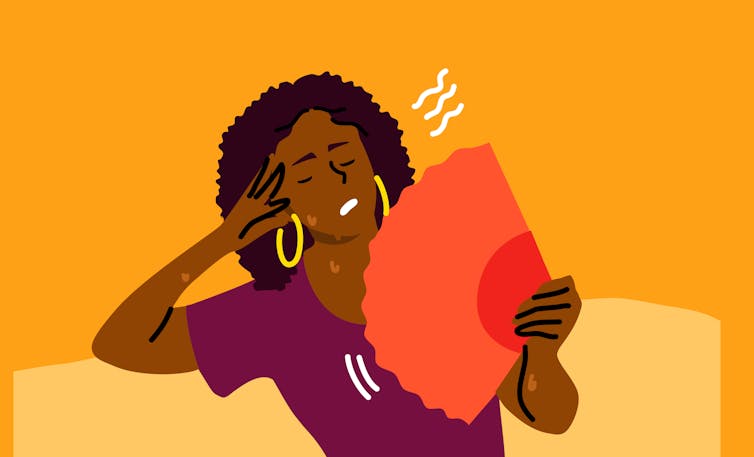
While she was interviewing Jennifer Aniston and Adam Sandler in March 2023, Drew Barrymore suddenly exclaimed: “I’m so hot … I think I’m having my first hot flash!”
She took off her blazer and fanned herself dramatically.
While most hot flashes aren’t televised, the entertainer’s experience was far from unique. Barrymore, age 48, is one of approximately 15 million U.S. women from 45 to 60 who work full time and may experience menopausal symptoms.
Unlike Barrymore, most women are silent about their menopausal symptoms. Yet their symptoms, even when concealed from employers and co-workers, are a burden on them, their workplaces and on the overall U.S. economy. Lost work productivity due to menopausal symptoms – measured by missed work hours, job losses and early retirement – add up to about $1.8 billion annually, the Mayo Clinic estimates.
The three of us write and teach about employment discrimination and feminism, and two of us have written a book about menstruation. Because of our shared interests, we are currently writing a book about menopause and the law. We’ve observed that although Gwyneth Paltrow, Oprah Winfrey, Michelle Obama and other celebrities are speaking out about their own menopausal transitions, work accommodations are rare and employers typically don’t even acknowledge this stage of life.
Stigma and silence
In the lead-up to menopause, which typically begins between the ages of 45 and 55, levels of reproductive hormones change, and menstrual cycles become irregular and then eventually cease. This transition, called perimenopause, typically lasts for seven years.
Common symptoms of perimenopause include hot flashes, sleep disturbances, heart palpitations, excessive bleeding and irregular periods. Technically, menopause occurs after women don’t have a period for an entire year, and postmenopause is the stage after that. Transgender men and nonbinary people assigned female at birth can experience menopause too.
Employees who experience menopausal symptoms are often reluctant to talk about them at all, let alone tell their bosses. They may feel stigma and shame, and they may worry that it could hurt their chances for a promotion, their co-workers will see them as less capable or that their status at work will be otherwise jeopardized. These concerns are not unfounded.
In a series of studies, researchers asked workers and college students to describe their initial impressions of potential co-workers, including “a menopausal woman.” The participants described her as “less confident and less emotionally stable” than the non-menopausal women.
No legal protections
Employees who do speak up and seek accommodations for their menopausal symptoms, which might include dress code adjustments to deal with hot flashes, are often out of luck.
No federal law requires employers to accommodate menopausal symptoms.
Although the Americans with Disabilities Act requires employers to provide “reasonable accommodations” for workers with disabilities, U.S. courts have consistently held that menopause, by itself, is not a disability, even when its symptoms are seriously affecting someone’s ability to do their job.
That’s what happened to Georgia Sipple, a food product demonstrator who had a doctor’s note requesting permission to break a dress code by wearing short sleeves on the job. When Crossmark, her employer, refused, Sipple felt that she had no choice but to quit. She sued the company, but the Eastern District of California federal court dismissed her case.
Sometimes, employees even get punished for their menopausal symptoms or status.
When 911 operator Alisha Coleman experienced heavy perimenopausal bleeding that seeped through onto the office carpet, she was fired for failing to “maintain high standards of personal hygiene”. She sued, but the Middle District of Georgia dismissed her case, refusing to recognize her termination as a form of sex discrimination.
Instead, the judge drew a specious distinction, saying that Coleman had been fired for “being unable to control the heavy menstruation.” With the help of the American Civil Liberties Union, she appealed, later obtaining a confidential settlement.

Pregnancy and breastfeeding accommodations
Employees have far fewer legal protections for menopause today than for pregnancy and breastfeeding.
Congress first directly addressed pregnancy discrimination in the workplace in 1978 with the Pregnancy Discrimination Act. That law made it clear that pregnancy discrimination is a form of sex discrimination. This means that an employee who was fired because her water broke and she went into labor at work would, unlike Coleman, have a winning sex discrimination claim.
Congress also passed the Pregnant Workers Fairness Act in December 2022, which goes into effect on June 27, 2023. That law requires reasonable accommodations for pregnancy, childbirth and related medical conditions unless doing so would impose an undue hardship on employers.
Since 2010, Congress has required most employers to provide breastfeeding employees with reasonable break times to pump milk for one year after their children’s births, and also to provide them with a private place that isn’t a bathroom to do so. Most recently, in December 2022, the Providing Urgent Maternal Protections for Nursing Mothers Act expanded those protections.
Why not menopause?
In our view, pregnancy and breastfeeding offer a potential model for protecting workers from menopause-related discrimination and providing reasonable accommodations. Until Congress is ready to pass such legislation, there are other possibilities.
First, the Equal Employment Opportunity Commission, the agency responsible for enforcing anti-discrimination laws, could issue “best practices” guidelines.
These guidelines can be modeled on practices in the United Kingdom, where many business have adopted menopause policies. Climate-controlled break spaces, dress codes that incorporate short-sleeve options and breathable fabrics, dedicated menopause support and the like can all make a positive difference. The Equal Employment Opportunity Commission could also issue guidance highlighting menopause-based discrimination as a form of sex or age discrimination.
Additionally, even if the commission does not act, companies can adopt these kinds of policies on their own. That is already starting to happen, as U.S. businesses like the tech company Nvidia and the drugmaker Bristol Myers Squibb begin to establish some accommodations for menopause, including help with finding treatments.
New York Mayor Eric Adams has promised “more menopause-friendly workplaces,” at least for city workers.
To be sure, it can be risky to discuss symptoms at work, as this can undercut perceptions about women’s competence at work.
Given these symptoms’ prevalence, though, and the millions of workers experiencing them, we believe that breaking the silence can challenge and dispel these stereotypes – increasing the chances that they’ll remain on the job for many more years.
Naomi Cahn, Professor of Law, University of Virginia; Bridget J. Crawford, Professor of Law, Pace University , and Emily Gold Waldman, Professor of Law; Associate Dean for Faculty Development, Pace University
This article is republished from The Conversation under a Creative Commons license. Read the original article.