 How to resolve AdBlock issue?
News
MATH will meet at 7 p.m. Thursday, Dec. 14, in the Middletown Community Meeting Room/Library at 21256 Washington St., Middletown. The meeting is open to the public.
To join the meeting via Zoom click on this link; the meeting ID is 832 1989 2440. Call in at 669-900-6833.
On Thursday, the group will welcome guest speaker Lucas Bingham, who is running for the office of Lake County sheriff.
MATH also will discuss cannabis issues, the MATH Board election and the January candidate forum to be hosted by Lake County News.
MATH’s next meeting will take place on Jan. 11.
The MATH Board includes Chair Monica Rosenthal, Vice Chair Todd Fiora, Secretary Ken Gonzalez, Rosemary Córdova and Bill Waite, and alternates Julia Bono and Tom Darms.
MATH — established by resolution of the Lake County Board of Supervisors on Dec. 12, 2006 — is a municipal advisory council serving the residents of Anderson Springs, Cobb, Coyote Valley (including Hidden Valley Lake), Long Valley and Middletown.
For more information email
Email Elizabeth Larson at
The California Department of Alcoholic Beverage Control, or ABC, said it has been awarded a $3.7 million grant from the California Office of Traffic Safety.
It will use those funds to support 26 law enforcement agencies with up to $40,000 each for alcoholic beverage compliance check operations for licensees and delivery services to make sure only people of legal drinking age purchase alcohol, as well as enforcement throughout the state during holiday periods where people are more likely to be drinking alcohol.
“ABC is grateful for the partnership and support from OTS and NHTSA,” said ABC Director Joseph McCullough. “The resources provided to us through this grant will help reduce youth access to alcohol and increase safety in communities throughout California.”
At its Nov. 7 meeting, the Lakeport City Council approved Police Chief Brad Rasmussen’s request to enter into an agreement with ABC for the grant. Rasmussen said the city had requested $10,000.
The grant is important for Lakeport because, as Officer Todd Freitas — the Lakeport Police Department’s school resource officer noted — the city has approximately 34 licensees.
For the year to date at that point, Freitas said the police department had 100 arrests for alcohol-related statute violations alone, which doesn’t include those who became involved in fights while intoxicated.
He estimated that a quarter of the calls for service in Lakeport involve alcohol.
The funds will help the department meet its goals of voluntary compliance through education. A big part of the grant is working with merchants to follow the rules for alcohol sales.
It will also help address the problem of youth acquiring alcohol.
The grant will run through the end of September 2024. ABC programs funded through the grant include Minor Decoy and Shoulder Tap operations, fake identification enforcement, compliance checks involving alcohol delivery services, designated special events where alcohol is served, underage retail theft, Informed Merchants Preventing Alcohol-Related Crime Tendency (IMPACT) inspections, Licensee Education on Alcohol and Drug (LEAD) trainings and Target Responsibility for Alcohol-Connected Emergencies (TRACE) investigations.
In addition to Lakeport, the law enforcement agencies who have been selected by ABC to receive grant funding include the police departments for Corona, Costa Mesa, Davis, Emeryville, Escondido, Folsom, Gardena, Hermosa, Hollister, Milpitas, National City, Oxnard, Pasadena, Pomona, Redlands, Rio Del, San Jose, San Luis Obispo, Sanger, Santa Maria, Soledad, Turlock and Westminser, and the sheriff’s offices for Riverside and Tulare counties.
Human remains were located on Sunday, but so far officials have not been able to confirm if they are those of 63-year-old Scott William Graves, whose family had last heard from him on Dec. 4.
The Mendocino County Sheriff’s Office said deputies received a missing person’s report on Graves on Dec. 7.
His family reported that on Dec. 4 he had tried to leave his property in the 73000 block of Island Mountain Road in Piercy, but it was too wet and the roads were unsafe for travel. He said at that time he planned to leave on Dec. 5.
When his family didn’t hear from him by Dec. 7, they went to his property to look for him. Officials said they couldn’t find him, but that it didn’t appear Graves had left the property as the majority of his personal belongings and vehicle were at the property.
A three-day search ensued, with search and rescue personnel from California Search and Rescue, the Governor’s Office of Emergency Services, Bay Area Mountain Rescue Unit, Napa County Sheriff’s Office SAR, California Rescue Dog Association, Marin County Sheriff’s Office, Mendocino County Sheriff’s Office, Sonoma County Sheriff’s Office, Lake County Sheriff’s Office, California National Guard Blackhawk Crew, San Mateo County Sheriff’s Office and Santa Clara County Sheriff’s Office joining the effort.
On Sunday, the searchers located a deceased person in the missing person investigation established search area.
As of Monday, the person was unidentified due to the condition of the body.
Mendocino County Sheriff's detectives are actively conducting investigations in an attempt to determine the identity of the person along with the cause and manner of death.
Anyone who might have information that could assist Sheriff's Detectives in this investigation are urged to contact the Sheriff's Office Tip-Line by calling 707-234-2100 or the WeTip Anonymous Crime Reporting Hotline by calling 800-782-7463.
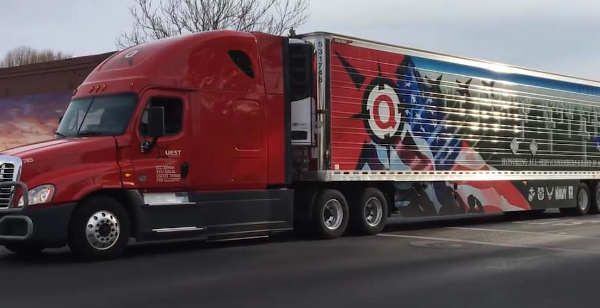
LAKEPORT, Calif. — On Monday, the Wreaths Across America truck will make its annual visit to Lakeport.
Beginning at around noon on Monday, the Lakeport Police Department and Lakeport Fire Protection District will conduct an emergency vehicle escort of the Wreaths Across America truck, which is carrying wreaths to be placed on local veterans graves.
The route starts on South Main Street at Highway 29 and travels north to 11th Street then west on 11th to SR 29.
Community members are invited to come out and line the streets.
Wreaths Across America’s goal is to remember, honor and teach.
Funds for Middle Creek project utility design, efforts to fight opioid crisis on supervisors’ agenda
The board will meet beginning at 9 a.m. Tuesday, Dec. 12, in the board chambers on the first floor of the Lake County Courthouse, 255 N. Forbes St., Lakeport.
The meeting can be watched live on Channel 8, online at https://countyoflake.legistar.com/Calendar.aspx and on the county’s Facebook page. Accompanying board documents, the agenda and archived board meeting videos also are available at that link.
To participate in real-time, join the Zoom meeting by clicking this link.
The meeting ID is 863 5025 6447, pass code 549060. The meeting also can be accessed via one tap mobile at +16694449171,,86350256447#,,,,*549060#.
In an untimed item, the board will consider allocating funds for the design portion of Pacific Gas and Electric Co. transmission and distribution line relocation within the Middle Creek Restoration Project.
The project is required to elevate the seven transmission towers that reside within the project area as well as the relocation of distribution poles within the project area, at a potential cost of $7.5 million.
It’s being proposed that the board allocate $200,000 from cannabis taxes for the PG&E Deposit needed for the Middle Creek Restoration Project.
In other business, at 10:30 a.m., the board will get an update on the multi-agency effort to combat the opioid crisis in Lake County.
The full agenda follows.
CONSENT AGENDA
5.1: Approve continuation of emergency proclamation declaring a shelter crisis in the county of Lake.
5.2: Approve continuation of proclamation of the existence of a local emergency due to low elevation snow and extreme cold.
5.3: Approve continuation of an emergency declaration for drought conditions.
5.4: Approve continuation of proclamation of the existence of a local emergency due to pervasive tree mortality.
5.5: Approve continuation of proclamation declaring a Clear Lake hitch emergency.
5.6: Approve Board of Supervisors meeting minutes from Nov. 7, 2023.
5.7: Approve county of Lake Community Corrections Partnership Plan 2023-2024.
5.8: Approve purchase order for the conversion of a van to a Mobile Services Unit from VanCo of Northern California in the amount of not to exceed $85,000 and authorize the chief probation officer to sign the purchase order.
5.9: Approve the Purchase of two Trail King Tilt-bed trailers for the ISF Heavy Equipment Division, and authorize the Public Works director/assistant purchasing agent to sign purchase orders to Pape’ Machinery in the amount of $52,731.50 for each trailer.
5.10: Approve late travel claims for the period 7/30/2023-8/2/2023 and 7/23/2023-7/28/2023 for Correctional Deputy Sara Vierra.
5.11: a) Approve the Department of Boating and Waterways 2024/25 application for financial aid in the amount of $467,625.94 and authorize the sheriff to sign the application; and b) adopt resolution for authorization to apply for and accept, if awarded, Fiscal Year 2024/25 Boating Safety And Enforcement Financial Aid Program funding from the state of California, Department of Parks And Recreation, Division of Boating and Waterways, in the authorized amount of $315,312, and authorization to participate in the program.
5.12: Sitting as the Board of Directors for the Lake County Watershed Protection District, approve amendment two to the agreement between the county of Lake and Monument Inc for a total not to exceed $229,800 for appraisal and acquisition services for the Middle Creek Flood Damage Reduction and Ecosystem Restoration Project and authorize the chair of the board of directors to sign the amendment.
TIMED ITEMS
6.2, 9:07 a.m.: Pet of the Week.
6.3, 9:08 a.m.: New and Noteworthy at the Library.
6.4, 9:15 a.m.: Presentation of the 2022 Crop Report.
6.5, 9:45 a.m.: Public hearing, consideration of an ordinance amending Article X of Chapter Two of the Lake County Code.
6.6, 10 a.m.: Consideration of rescission of tax deed hearing for property located at 4402 Ridge Rd, Clearlake, CA 95422 (APN 040-121-070) — Petitioner Robert Agoado.
6.7, 10:15 a.m.: Public hearing, consideration of closing of the CDBG Cobb Water System Improvement Grant.
6.8, 10:30 a.m.: Consideration of an update on recent multi-agency engagement to combat the opioid crisis in Lake County.
6.9, 2:30 p.m.: Consideration of presentation and update on the California Department of Insurance overview and Safer from Wildfires Framework.
UNTIMED ITEMS
7.2: Consideration of allocating funds for the design portion of PG&E transmission and distribution line relocation within the Middle Creek Restoration Project.
7.3: Consideration of revocable license agreement between county of Lake - Behavioral Health Services Department and city of Lakeport.
CLOSED SESSION
8.1, 1 p.m.: Public employee appointment pursuant to Gov. Code Section 54957(b) (1): Interviews for Health Services director; appointment of Health Services director.
8.2: Conference with legal counsel: Significant exposure to litigation pursuant to Gov. Code section 54956.9(d)(2), (e)(1) – One potential.
8.3: Public employee evaluation: Director of Child Support Services.
Email Elizabeth Larson at
Every year, Americans buy somewhere between 35 million and 50 million Christmas trees, and many more pull an artificial tree out of storage for the season. In all, about three-quarters of U.S. households typically have some kind of Christmas tree, surveys show.
People often ask which is more sustainable – a real tree or an artificial one? It’s a big debate, and the answer depends on who you ask and which factors you consider.
A more useful question is: How do I find the most sustainable tree of the kind I want to get?
I’m a forestry professor who works on issues of sustainability. There are advantages and disadvantages to both cut trees and artificial trees. Here are some tips to consider for each.

If you’re buying a live Christmas tree
When Christmas trees are alive and growing, they pull carbon dioxide from the air and use it as the building blocks of their wood. That keeps the greenhouse gas out of the atmosphere, where too much carbon dioxide contributes to global warming.
This process stops once the tree is harvested. And at some point, the cut tree begins to decompose and releases that carbon again.
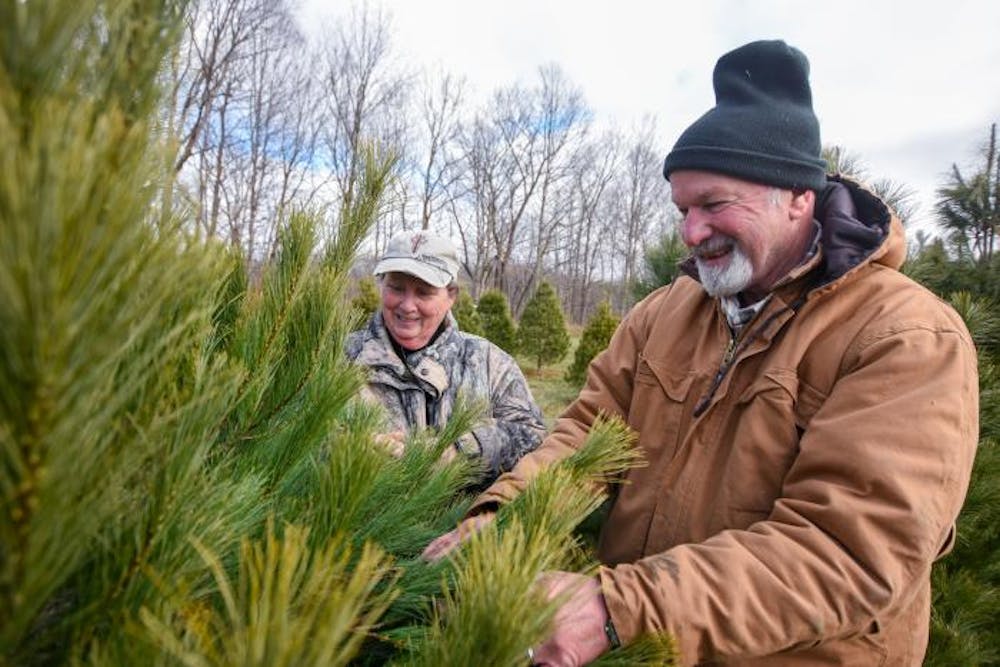
On the positive side, the tree’s root systems will continue to store carbon for some time, and new trees are typically planted to continue the cycle.
So, how do you find the most sustainable live tree?
Think about the tree’s origin
If you live in Mississippi, like I do, buying a noble fir (Abies procera) means your tree probably came from the Pacific Northwest. That’s a long drive, and transportation is a major source of greenhouse gas emissions. However, in a truck with several hundred trees, each individual tree’s transportation emissions are pretty minor.
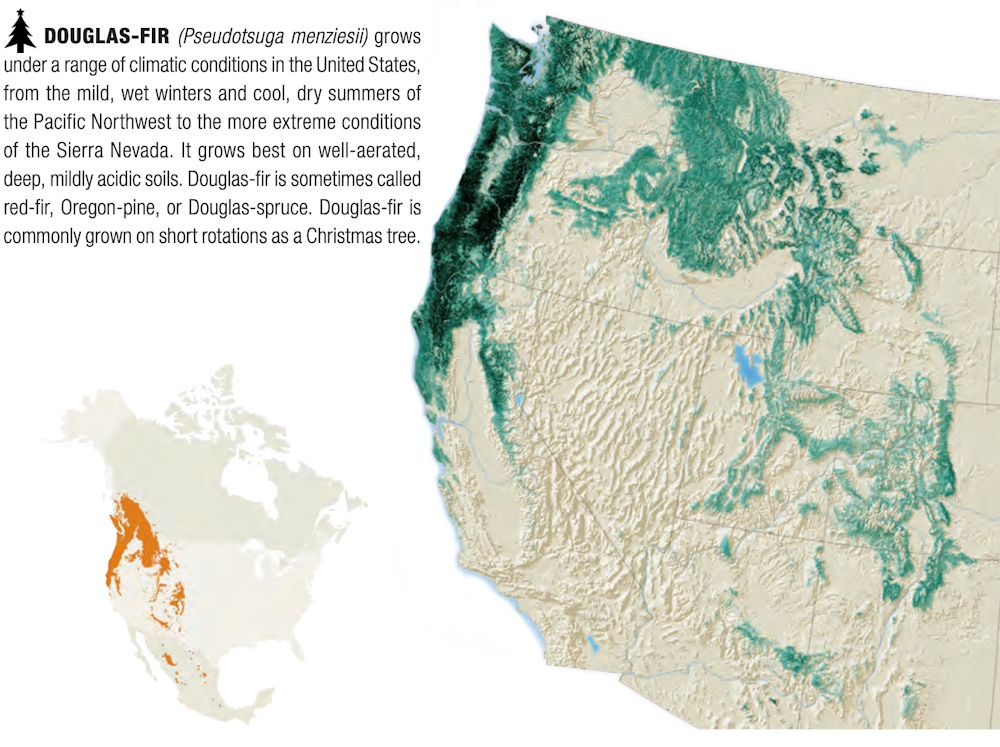
The most common Christmas tree varies by region: Douglas-fir is also common throughout the Mountain West. Scotch pine and balsam fir are regularly grown in the Great Lakes states. Fraser fir is also popular there but dominant in North Carolina. Leyland cypress and Virginia pine are common in the Southeast.
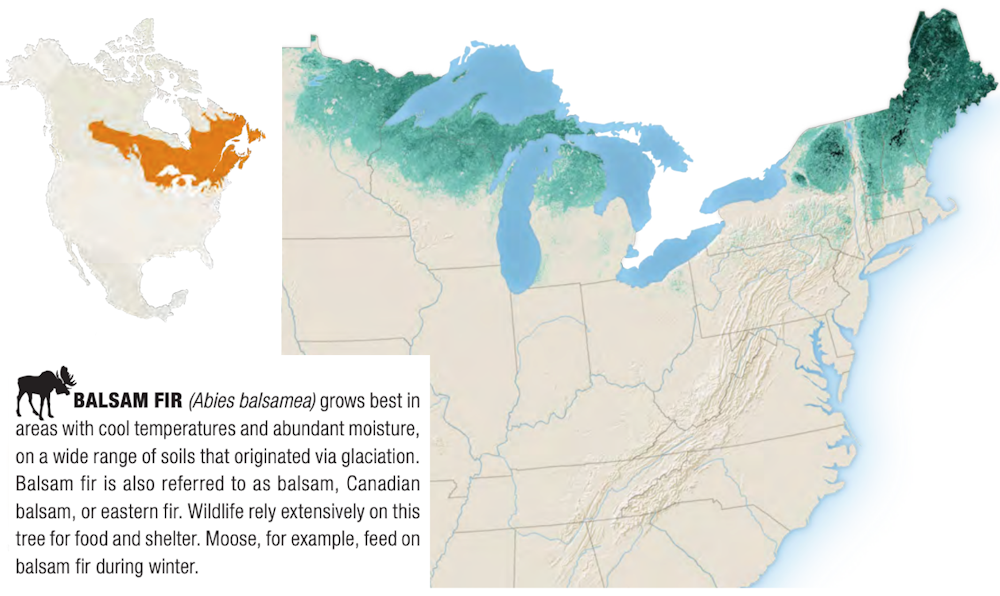
There are many other wonderful species grown locally. Of course, the lowest-impact cut tree is the one you cut from your own yard.
Also, look for local nurseries that protect their soils from erosion and minimize harm to surface and groundwater from runoff that can include fertilizers or pesticides.
Disposing of your live tree
What you do with your tree after the holidays also matters.
Recycling is far better than leaving the wood to decompose in a landfill. Because of the nature of most landfills, anaerobic conditions will ultimately exist, and decomposition will result in the release of methane gas, which is many times more potent than carbon dioxide at warming the atmosphere.
Look for a community or retailer that offers to chip the tree or shred it to create mulch or for use in animal stalls. This keeps it out of landfills and serves a purpose.
Composting is another option. Trees can be used as an erosion barrier for sand or soil or as fish habitat in lakes. They can even be donated whole to zoos, where the trees provide entertainment for animals while eventually decaying outside of a landfill, or they can be tossed into a bio-burner to provide heating for buildings. Some people even feed trees to goats.
Alternatively, consider cutting the tree into smaller pieces and letting it rot in the open, placing it in an out-of-the-way place in your yard. It will provide a temporary home for many insects, birds and wildlife.
Artificial trees have different pros and cons
Artificial trees also have advantages – they can last for years and require almost no maintenance. However, they are mostly a petroleum-based product, and when you throw one out, it can take hundreds of years to decompose.
If you plan to buy an artificial Christmas tree – maybe you have allergies like I do, or you’re concerned about cost – here are some suggestions to reduce your carbon footprint.

Reuse, reuse, reuse
The No. 1 way to reduce emissions with an artificial tree is to reuse it for years. Reuse avoids the carbon impact of producing, packaging and shipping a new one. The break-even point – when your artificial tree’s emissions match the emissions of buying a live tree each year – varies from as little as four years to as many as 20 years, depending on the factors considered.
Many artificial trees are built to last 30 years or more. My family has had one for 25 years. To lengthen its life span, take care when putting it up and storing it. If the tree gets damaged, see if you can find replacement parts rather than replacing the entire tree.

Pay attention to the source
About 80% of artificial Christmas trees are manufactured in China. Shipping is pretty efficient, but the tree still needs to get to and from the ports. You can also look for one manufactured nearby instead.
Some manufacturers are making trees out of recycled materials, at least in part, which helps reduce the tree’s carbon footprint. Shorter artificial trees, or designs with less foliage, also use less plastic.
The type of plastic used also affects the amount of petroleum used. Some research has suggested that plastic foliage made from polyethylene plastic molds may have a lower impact than traditional foliage made out of polyvinyl chloride, or PVC.
Give the fake tree a second life
If you no longer like your artificial tree – maybe it’s too big for a new home – try reselling the tree or donating it to a charity, thrift store or nursing home so that others can continue to use it.
You can also get creative and repurpose the old tree limbs into decorative wreaths, garlands or toy trees for a hobby train set.
Lighting also matters
With any holiday tree, be judicious about turning off lights when no one is around and at night. Consider using fewer lights. LED lights are more energy efficient than incandescent lights.

In the grand scheme of the holidays, with people traveling and buying and returning gifts through the mail, the carbon footprint of your Christmas tree is a lesser concern. A round-trip flight from Los Angeles to Boston can produce more than 30 times the lifetime emissions of a typical artificial Christmas tree. Still, it’s fairly easy to make more sustainable choices and reduce your carbon footprint when you can.
Curtis VanderSchaaf, Assistant Professor of Forestry, Mississippi State University
This article is republished from The Conversation under a Creative Commons license. Read the original article.