 How to resolve AdBlock issue?
News

Holiday shopping is in full swing, but city dwellers may have fewer options for buying in person than they did a few years ago. That’s because many large chain stores are pulling out of central cities.
This trend has been building for several years. Target made national headlines in 2018 when it closed its store in a predominantly Black Baltimore neighborhood after just 10 years of operation. COVID-19 sped things up by cutting foot traffic in city centers and boosting online commerce.
Target has closed additional stores in Chicago, Milwaukee, New York, San Francisco, Seattle and Portland, Oregon. Walmart, CVS, Rite Aid and Walgreens have also closed many urban stores.
Closures have spread to many suburbs and small towns. Retailers saddled with high debt, overexpansion, shoplifting losses, slumping sales and online competition are shedding stores fast. But this contraction lopsidedly affects city dwellers, who often lack the shopping options and price competition suburbanites enjoy.
Many news reports, particularly from conservative outlets, have blamed lawlessness and weak leadership by progressive city governments. In my view, however, there’s another important factor: flawed corporate strategies.
The self-service revolution
The concept of letting shoppers serve themselves dates back to 1879, when Frank W. Woolworth opened his first store in Utica, New York. Its successors grew into the F.W. Woolworth chain of “five-and-dime” discount dry goods stores, which became fixtures of hundreds of cities, suburbs and small towns in the early 20th century.
Food stores followed suit in the early 1900s, beginning with the Alpha Beta chain in California in 1914 and Piggly Wiggly in Tennessee in 1916. Instead of having clerks gather customers’ orders from store shelves, these stores let shoppers loose in the aisles, then allowed them to pay at the end of their visit.
This approach seeded the meteoric rise of “big box” stores like Walmart and Target in the mid-20th century. With their low manufacturing costs, streamlined logistics, minimally staffed stores, national advertising and vast inventories, big-box chains drove many small retailers out of business – and most Woolworth stores, too.
Self-service came to rule the suburbs, where big chains could build mega-stores with plenty of parking. But they were rare in central cities for most of the 20th century, except for a few affluent enclaves, such as West Los Angeles or Chicago’s North Side. Generally, these chains avoided poor neighborhoods and many downtowns altogether.
As shoppers increasingly gravitated to suburban malls, many urban neighborhoods became retail deserts, with few vendors meeting local needs. Those that endured, often run by small-scale entrepreneurs, typically were businesses that offered a single type of product, such as grocery stores, delicatessens or pharmacies.
Chains discover downtowns
Harvard management professor Michael Porter drew attention to the lack of retail services in densely populated urban neighborhoods in a seminal 1995 article, “The Competitive Advantage of the Inner City.” Economic development, Porter argued, was key to revitalizing inner cities – and these zones housed a lot of potential customers.
“Even though average inner city incomes are relatively low, high population density translates into an immense market with substantial purchasing power,” Porter wrote. “Ultimately, what will attract the inner city consumer more than anything else is a new breed of company that is not small and high-cost but a professionally managed major business employing the latest in technology, marketing, and management techniques.”
Chains of many kinds began to rediscover the central city market in the early 2000s. Tax breaks and subsidized redevelopment projects often greased the wheels. Urban gentrifiers were reliably drawn to new urban chain stores like Target, Walmart and Whole Foods.
Many small retail shops now faced a juggernaut of national chains. One example was independent pharmacies: Between 2009 and 2015, 1 in 4 urban pharmacies in low-income neighborhoods closed.
And chain stores often failed to generate major benefits for their new neighborhoods. Employees had few chances for advancement beyond minimum-wage hourly work. Clustering of chain stores in prosperous neighborhoods and business districts failed to address “food deserts” in impoverished areas.
Broken big boxes
Certain qualities that made chains so successful – national sales strategies, self-service stores and brand awareness – are proving to be liabilities in today’s more complicated and divided urban context.
Retail executives and their trade associations have cited excessive shoplifting losses and weak law enforcement as factors in urban store closures, even though they have conspicuously failed to provide shoplifting data by location. There are signs, moreover, that shoplifting is receding, except for in a few large cities like New York.
In my opinion, there are three reasons why city chain stores are closing at such a high rate compared with those in suburbs.
First, despite job recovery in many cities since the pandemic, low-income urban households remain in crisis, with high rents and inflation driving up the cost of essentials. According to the nonprofit Brookings Institution, 9.6% of suburban residents lived in poverty in 2022, compared with about 16.2% in primary cities. Widespread poverty in a city like Baltimore, for instance, is reflected in the concentration of food banks on the west and east sides.
Less disposable income, compounded by shoplifting losses, can lead to store closures – especially since national chains like Target and Walmart expect the dollar value of sales from stores that have been open for more than a year to increase steadily over time.
Second, urban chains clustered too many of their own branches close together or too near other chains – usually in high-income residential or business districts. Manhattan below 96th Street is a clear example of this pattern. With affluent customers shifting to online shopping, and reduced foot traffic overall thanks to remote work, this aggressive strategy has failed.
Third, widely distributed media images of rampant shoplifting send a message at odds with these chains’ powerful brand images of order, safety and standardization. A small but rising share of shoplifting incidents since 2019 have involved assaults or other crimes. These events have the potential to scare executives concerned about employee lawsuits. Chains want urban locations but not “urban” reputations.
Retail flight
Large retail chains have finally figured out that cities aren’t suburbs. Those that remain are adding staff, scaling back self-checkout, checking receipts at exits and locking down higher-priced goods – essentially, abandoning the self-service model. However, these costly measures won’t bring back online-addicted shoppers or daily commuters, nor will they put more money in struggling consumers’ pockets.
Responding to retail association pressure, some city and state governments are imposing stricter punishments for shoplifting and cracking down on black-market vending on sites like Amazon and eBay. However, it isn’t clear that this get-tough approach can or should rescue the big-box model, since these stores failed to create safe, secure shopping environments in the first place.
As I see it, the urban chain store implosion raises questions about whether suburban-style retail really does much for cities. These stores are mediocre job creators, undercut local entrepreneurs, often pay relatively low property taxes and build ugly parking lots. They also don’t provide the kind of “eyes on the street” local security that small-scale shopkeepers do. In fact, their parking lots and open aisles seem to attract disorder.
Shoehorning suburban-style stores into urban neighborhoods now looks like a Band-Aid for much deeper urban problems. In my view, city leaders would do better to focus on building local capacity and protecting smaller stores that usually have greater local wealth-building potential, more reasonable growth expectations and the kind of personal service that naturally deters shoplifting.
Nicholas Dagen Bloom, Professor of Urban Policy and Planning, Hunter College
This article is republished from The Conversation under a Creative Commons license. Read the original article.
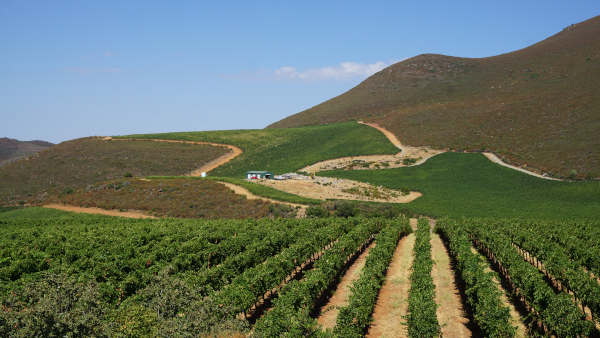
LAKE COUNTY, Calif. — Lake County’s latest crop report shows the continued dominance of winegrapes, with cannabis numbers included in the report for the first time.
Agricultural Commissioner Katherine VanDerWall presented the new report to the Board of Supervisors at its meeting Tuesday morning.
For Lake County, which has agriculture among its key industries, the report gives an in-depth view of top crops, valuations and changes in acreage.
The estimated gross production value for agriculture in Lake County in 2022 totaled $107,098,745, a 28% increase from 2021. VanDerWall said nursery and timber production was down and there were no participants in industrial hemp; in 2021, there had been three hemp growers and eight acres harvested.
New this year was the first-ever inclusion of cannabis-related statistics, which while basic are meant to be a starting point for further information and study in the coming year, VanDerWall told the board.
That cannabis insert did not give values for the county’s crop. It represented the square footage for both mixed light and outdoor cultivation, information that VanDerWall thanked the tax collector and Community Development Departments for helping the ag department gather.
VanDerWall also looked back through old crop reports over 50 years to offer a comparison of how Lake County’s agriculture and its main commodities have changed over the years.
Looking at the main commodities over the past five decades, VanDerWall said that in 1972, there were 7,025 acres of pears, 270 acres of winegrapes, 9,643 acres of walnuts, 181,022 acres of field and seed crop — which includes pasture, hay, grain crops — and 9,505 head of cows and calves.
In 2022, pears were down to 1,376 acres, winegrapes had grown to 10,987 acres, walnuts totaled 3,485 acres, field and seed crops were at 91,150 acres, and there were 1,624 heads of cattle and calves.
VanDerWall’s report showed that, last year, the top five commodities by value were as follows:
1. Winegrapes: $84,756,086; increase of 43% from 2021. The total tonnage was 45,637 and the total grape acreage was 10,987 acres.
2. Pears: $16,286,443; decrease of 8%. The total tonnage was 16,371 and total pear acreage was 1,375.5 acres.
3. Field and seed crops: $2,294,500; 28% increase.
4. Cattle and calves: $1,509,610; 5.8% increase.
5. Miscellaneous livestock (goats, sheep, hogs, meat birds, etc.): $763,354; 6.4% decrease.
VanDerWall reported that there were increases in livestock and poultry products, 41%; livestock production, 11%; and vegetables, 20%.
There were decreases in walnuts, 65%; nursery production, 45%; and timber production, 91%.
For the next crop report, VanDerWall said her office is looking forward to working with the cannabis industry to expand on the data that we’re going to include and provide. She hopes to mirror traditional agriculture with reporting on production values and different categories, rather than just square footage.
The 2022 cannabis production in Lake County totaled 330,758 square feet, or 7.6 acres, for mixed light cultivation and 7,757,765 square feet, or 178 acres, for outdoor cultivation.
Supervisor Michael Green said that, although it’s bare bones, he was excited to see the cannabis information in the crop report, noting it’s a first step.
Green said he doesn’t know how other industries report, but he hoped the cannabis industry would help with getting that information.
Noting the size of the acreage, he said he would like to see the numbers higher, adding that Lake County’s discretionary use permit process has made this a slow growth industry.
He said he would love to see future reporting formatted so that there can be comparisons to other crops and to signal that cannabis is not out of control, as some have suggested it is.
“It is just a fraction of acreages that are devoted to traditional crops in this county and probably will remain that way for some time,” he said.
VanDerWall noted that her office is doing surveys and reaching out to growers, and so they’re reporting the information they can get.
Supervisor Bruno Sabatier said it’s difficult to track cannabis because there are so many ways it’s sold. He said he’s looking forward to seeing what additional information VanDerWall can get in the future.
VanDerWall’s report also showed that pest detection activities resulted in no trapping of key pests, ranging from Mediterranean fruit fly to European grapevine moth and vine mealybug, among numerous others.
During public comment at Tuesday’s meeting, Eric McCarrick, vice president of the Lake County Cannabis Alliance, thanked the county for the numbers, adding she was glad to see cannabis being integrated into the annual report.
Regarding the crop acres for cannabis, she said it’s only about 1% of winegrapes.
Sabatier moved to approve the crop report as presented, with Vice Chair Moke Simon seconding and the board approving it 5-0.
Email Elizabeth Larson at
2022 Crop Report by LakeCoNews on Scribd
The ceremonies will take place at five cemeteries around Lake County beginning at 9 a.m. sharp on Saturday, Dec. 16.
They will be held at the Hartley, Kelseyville, Lower Lake, Middletown and St. Mary’s cemeteries.
This year the theme is, “Serve and Succeed.”
Wreaths Across America has three goals: To remember the fallen, honor those who serve and their families, and teach children the value of freedom.
Youth and veterans organizations have volunteered to conduct the Wreaths Across America ceremonies this year.
Eight ceremonial wreaths will be placed to remember all soldiers, sailors, airmen and marines who served, honor their sacrifices and teach our younger generations about the high cost of our freedoms.
Wreaths Across America pursues its mission with nationwide wreath-laying events amid the holiday season, and year-round educational outreach inviting all Americans to appreciate our freedoms and the cost at which they are delivered.
Specially designated wreaths for the Army, Marines, Navy, Air Force, Coast Guard, Merchant Marine, Space Force and POW/MIA will be placed on memorials during a ceremony that will be coordinated simultaneously at over participating locations all across the country and overseas.
In 2022, more than 2.7 million veteran wreaths were placed on headstones at 3,702 participating cemeteries around the country in honor of the service and sacrifices made for our freedoms, with each name said out loud.
More than 644 truckloads of wreaths were delivered across the country by hundreds of volunteer professional truck drivers.
Every person has something to give, whether it is their time, ideas, compassion or resources. Mother Teresa said it best: “The greatest good is what we do for one another.”
Take an hour amid the hustle and bustle of this holiday season, bring your families to one of these heartfelt ceremonies on Saturday and help lay a wreath as part of remembering and honoring our veterans and teaching our children the value of the sacrifices that have been made.
The PG&E Foundation has awarded $500,000 to five grantees — one in each of PG&E’s five regions — through its Better Together Nature Positive Innovation Grant Program.
The projects selected are meant to preserve California’s unique biodiversity, focusing on land, air quality and water stewardship.
On the North Coast, Middletown Rancheria of Pomo Indians is receiving a Better Together Nature Positive Innovation grant to develop and implement a project to protect native plants and animals on tribal land in Lake County.
“Middletown Rancheria looks forward to bringing increased community engagement, cultural understanding, respect, and protection of its ancestral territories' native species and habitats, and providing local environmental stewardship, through the tribe's Natural Biodiversity Project’s goals of education, outreach, and promotion of cultural keystone species and habitats in the region,” said Tribal Chair Moke Simon, who also serves on the Lake County Board of Supervisors.
“Tribal ecological knowledge sharing and outreach in our vulnerable communities can lead to a better understanding of the human effects on the natural landscape and its plants and animals. With the funding opportunity provided by The PG&E Corporation Foundation, the tribe will continue to work in support of a more comprehensive understanding of the region's biodiversity needs and struggles through this project,” Simon said.
Other Better Together program award recipients are Farm Discovery at Live Earth of Watsonville, Little Manila Foundation of Stockton, Maidu Summit Consortium of Chester and the Marine Science Institute of Redwood City.
These grants are funded by The PG&E Corporation Foundation. Charitable donations come from PG&E shareholders and other sources, not PG&E customers.
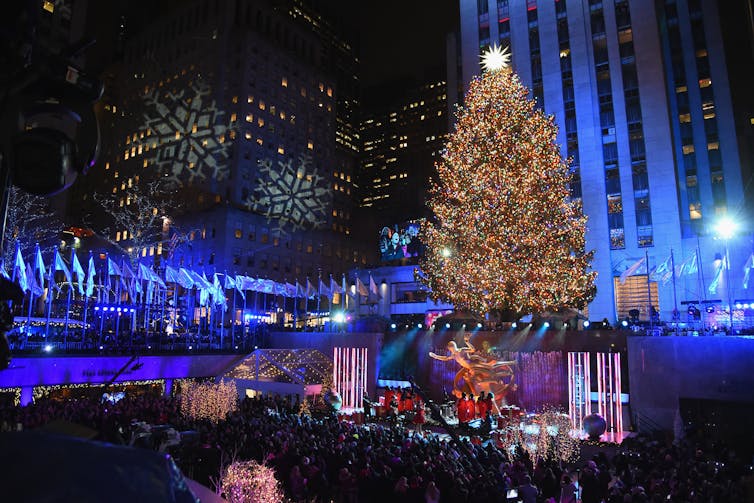
Why, every Christmas, do so many people endure the mess of dried pine needles, the risk of a fire hazard and impossibly tangled strings of lights?
Strapping a fir tree to the hood of my car and worrying about the strength of the twine, I sometimes wonder if I should just buy an artificial tree and do away with all the hassle. Then my inner historian scolds me – I have to remind myself that I’m taking part in one of the world’s oldest religious traditions. To give up the tree would be to give up a ritual that predates Christmas itself.
A symbol of life in a time of darkness
Almost all agrarian societies independently venerated the Sun in their pantheon of gods at one time or another – there was the Sol of the Norse, the Aztec Huitzilopochtli, the Greek Helios.
The solstices, when the Sun is at its highest and lowest points in the sky, were major events. The winter solstice, when the sky is its darkest, has been a notable day of celebration in agrarian societies throughout human history. The Persian Shab-e Yalda, Dongzhi in China and the North American Hopi Soyal all independently mark the occasion.
The favored décor for ancient winter solstices? Evergreen plants.
Whether as palm branches gathered in Egypt in the celebration of Ra or wreaths for the Roman feast of Saturnalia, evergreens have long served as symbols of the perseverance of life during the bleakness of winter, and the promise of the Sun’s return.
Christmas slowly emerges
Christmas came much later. The date was not fixed on liturgical calendars until centuries after Jesus’ birth, and the English word Christmas – an abbreviation of “Christ’s Mass” – would not appear until over 1,000 years after the original event.
While Dec. 25 was ostensibly a Christian holiday, many Europeans simply carried over traditions from winter solstice celebrations, which were notoriously raucous affairs. For example, the 12 days of Christmas commemorated in the popular carol actually originated in ancient Germanic Yule celebrations.
The continued use of evergreens, most notably the Christmas tree, is the most visible remnant of those ancient solstice celebrations. Although Ernst Anschütz’s well-known 1824 carol dedicated to the tree is translated into English as “O Christmas Tree,” the title of the original German tune is simply “Tannenbaum,” meaning fir tree. There is no reference to Christmas in the carol, which Anschütz based on a much older Silesian folk love song. In keeping with old solstice celebrations, the song praises the tree’s faithful hardiness during the dark and cold winter.
Bacchanal backlash
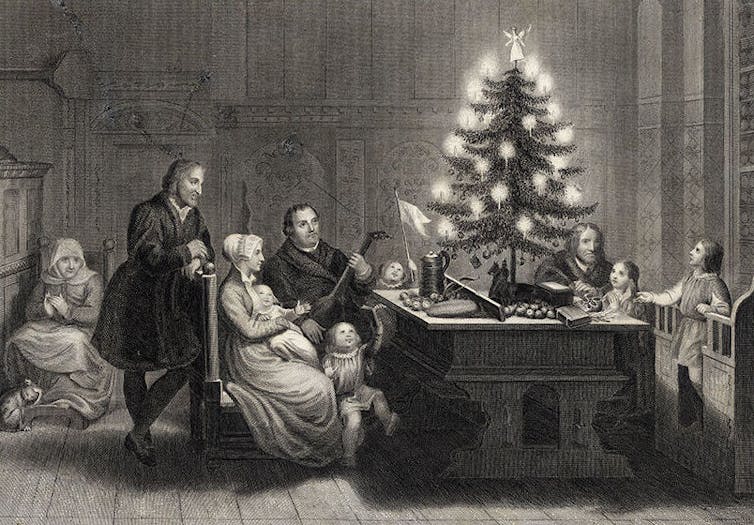
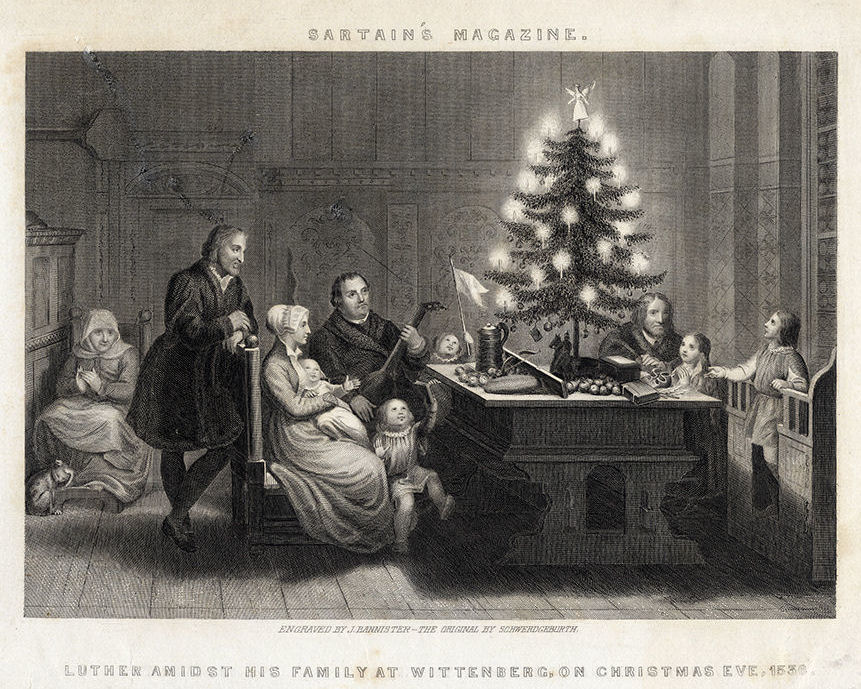
Sixteenth-century German Protestants, eager to remove the iconography and relics of the Roman Catholic Church, gave the Christmas tree a huge boost when they used it to replace Nativity scenes. The religious reformer Martin Luther supposedly adopted the practice and added candles.
But a century later, the English Puritans frowned upon the disorderly holiday for lacking biblical legitimacy. They banned it in the 1650s, with soldiers patrolling London’s streets looking for anyone daring to celebrate the day. Puritan colonists in Massachusetts did the same, fining “whosoever shall be found observing Christmas or the like, either by forbearing of labor, feasting, or any other way.”
German immigration to the American colonies ensured that the practice of trees would take root in the New World. Benjamin Franklin estimated that at least one-third of Pennsylvania’s white population was German before the American Revolution.
Yet, the German tradition of the Christmas tree blossomed in the United States largely due to Britain’s German royal lineage.
Taking a cue from the queen
Since 1701, English kings had been forbidden from becoming or marrying Catholics. Germany, which was made up of a patchwork of kingdoms, had eligible Protestant princes and princesses to spare. Many British royals privately maintained the familiar custom of a Christmas tree, but Queen Victoria – who had a German mother as well as a German grandmother on her father’s side – made the practice public and fashionable.
Victoria’s style of rule both reflected and shaped the outwardly stern, family-centered morality that dominated middle-class life during the era. In the 1840s, Christmas became the target of reformers like novelist Charles Dickens, who sought to transform the raucous celebrations of the largely sidelined holiday into a family day in which the people of the rapidly industrialized nation could relax, rejoice and give thanks.
His 1843 novella, “A Christmas Carol,” in which the miserly Ebenezer Scrooge found redemption by embracing Dickens’ prescriptions for the holiday, was a hit with the public. While the evergreen décor is evident in the hand-colored illustrations Dickens specially commissioned for the book, there are no Christmas trees in those pictures.
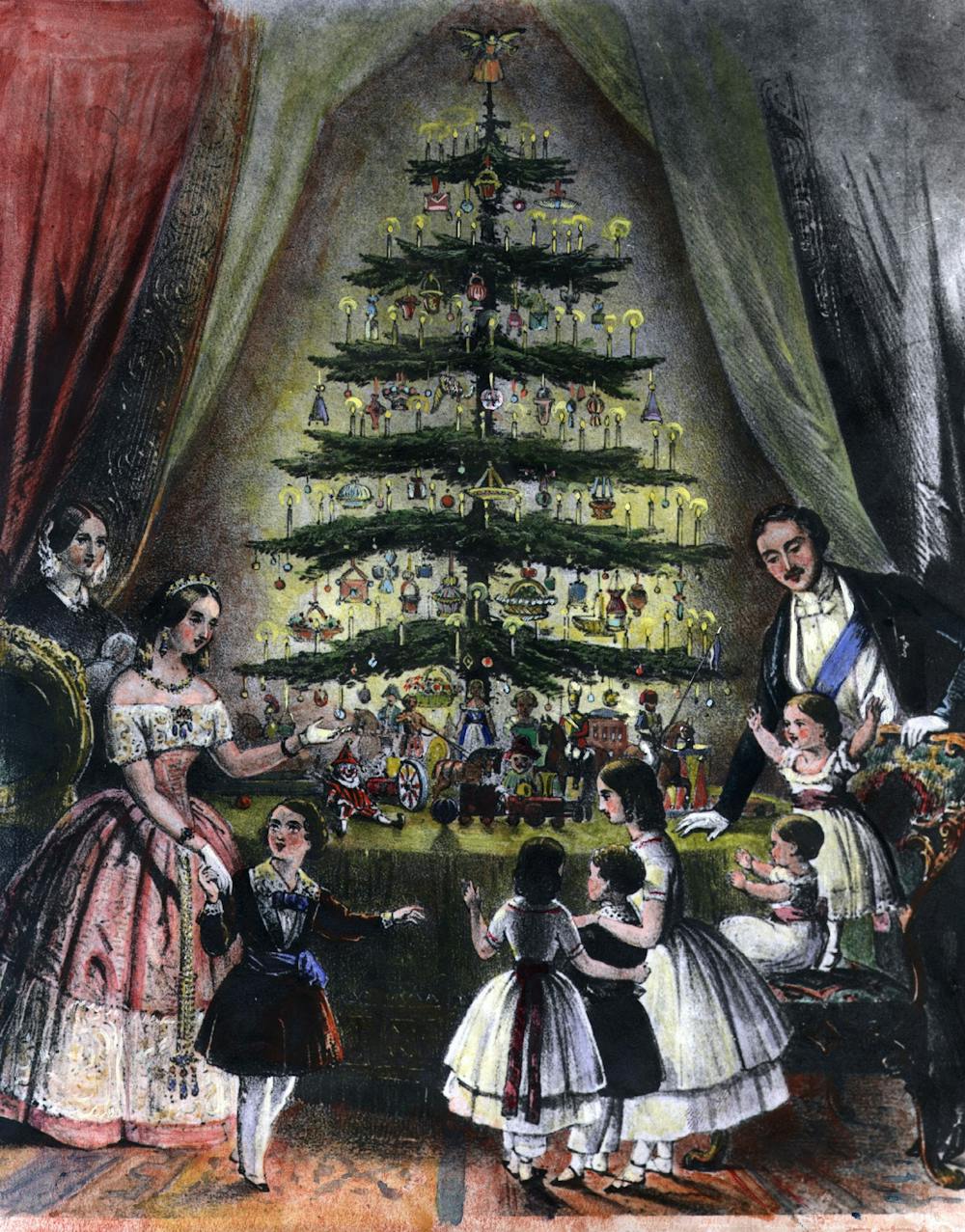

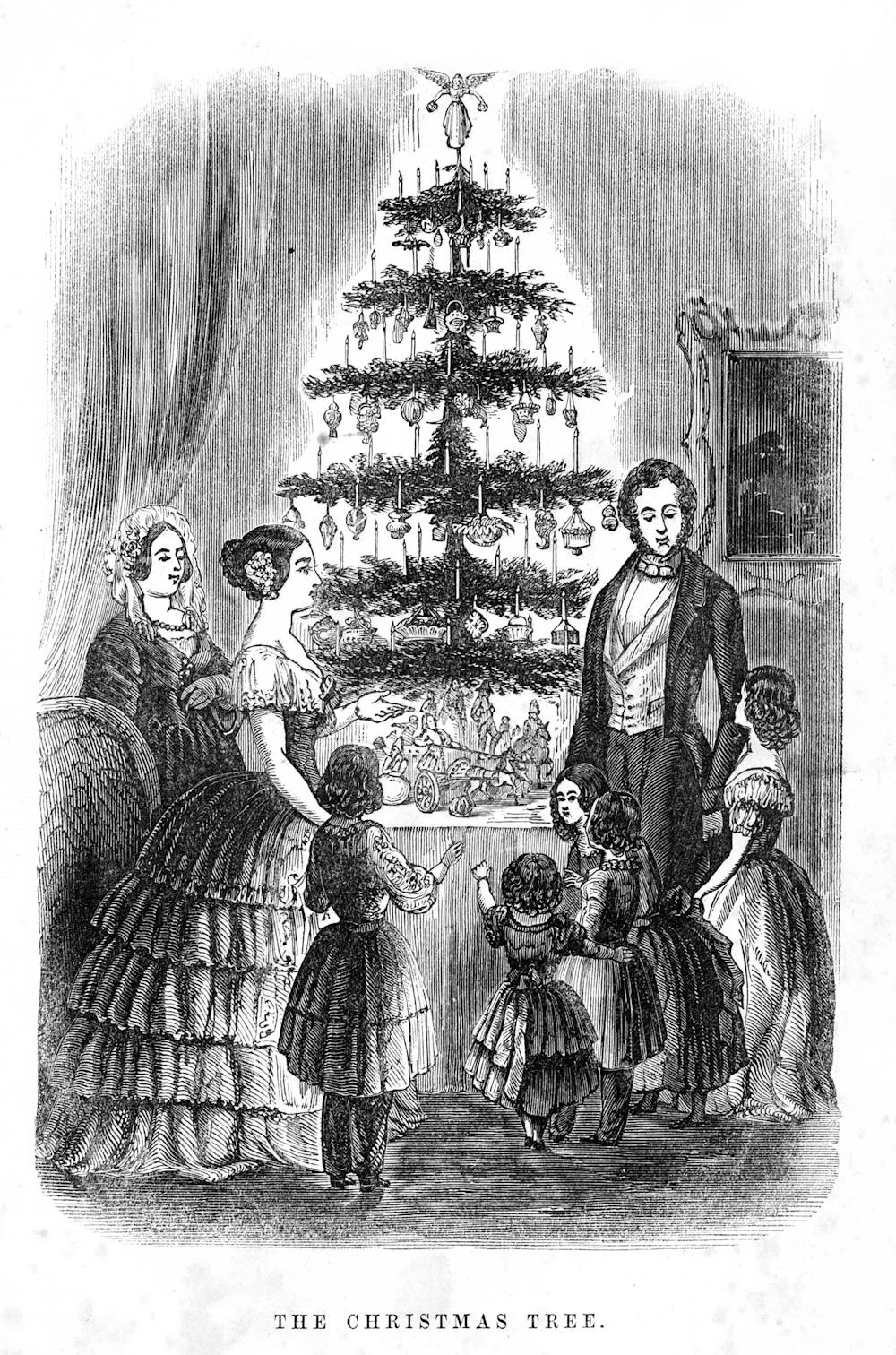
Victoria added the fir tree to family celebrations five years later. Although Christmas trees had been part of private royal celebrations for decades, an 1848 issue of the London Illustrated News depicted Victoria with her German husband and children decorating one as a family at Windsor Castle.

The cultural impact was almost instantaneous. Christmas trees started appearing in homes throughout England, its colonies and the rest of the English-speaking world. Dickens followed with his short story “A Christmas Tree” two years later.
Adopting the tradition in America
During this period, America’s middle classes generally embraced all things Victorian, from architecture to moral reform societies.
Sarah Hale, the author most famous for her children’s poem “Mary had a Little Lamb,” used her position as editor of the best-selling magazine Godey’s Ladies Book to advance a reformist agenda that included the abolition of slavery and the creation of holidays that promoted pious family values. The adoption of Thanksgiving as a national holiday in 1863 was perhaps her most lasting achievement.

It is closely followed by the Christmas tree.
While trees sporadically adorned the homes of German immigrants in the U.S., it became a mainstream middle-class practice when, in 1850, Godey’s published an engraving of Victoria and her Christmas tree. A supporter of Dickens and the movement to reinvent Christmas, Hale helped to popularize the family Christmas tree across the pond.

Only in 1870 did the United States recognize Christmas as a federal holiday.
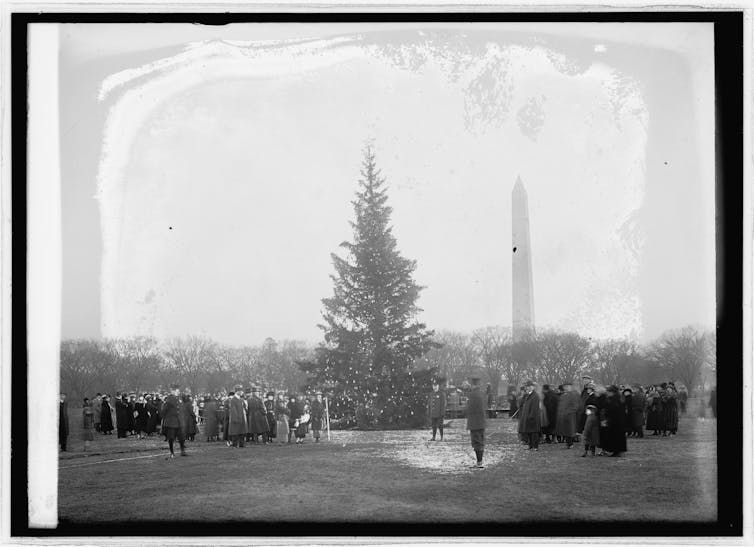
The practice of erecting public Christmas trees emerged in the U.S. in the 20th century. In 1923, the first one appeared on the White House’s South Lawn. During the Great Depression, famous sites such as New York’s Rockefeller Center began erecting increasingly larger trees.

Christmas trees go global
As both American and British cultures extended their influence around the world, Christmas trees started to appear in communal spaces even in countries that are not predominately Christian. Shopping districts in Dubai, United Arab Emirates, Hong Kong and Tokyo now regularly erect trees.
The modern Christmas tree is a universal symbol that carries meanings both religious and secular. Adorned with lights, they promote hope and offer brightness in literally the darkest time of year for half of the world.
In that sense, the modern Christmas tree has come full circle.
Troy Bickham, Professor of History, Texas A&M University
This article is republished from The Conversation under a Creative Commons license. Read the original article.

NORTHERN CALIFORNIA — This week, the Yuba Community College District Board is set to discuss the contract with the new president of Woodland Community College, a selection which is expected to have a significant impact on the district’s campus in Lake County.
The board will meet in closed session at 3 p.m. Thursday, Dec. 14, with the board holding an annual organization meeting at 4:45 p.m. to select its leadership for the new year before the regular meeting begins at 5 p.m. at Yuba College, 2088 N. Beale Road, Building 300-Flavors, Marysville.
Members of the public can attend the meeting virtually through this Zoom link.
The Zoom Meeting ID is 846 7971 9357; the call-in number is 1-669-900-6833.
The agenda can be found here.
Last month, Dr. Lizette Navarette accepted the job of Woodland Community College president, as Lake County News has reported.
The selection of the new president has been cited as key by district leadership in setting the course not just for Woodland Community College but for the campuses aligned with it, including the Lake County Campus in Clearlake.
Community leaders, students and faculty — past and present — voiced their concerns to the board in early November about how Woodland's administration has starved the Lake County Campus of critical resources.
The Full-time Faculty Association of Yuba Community College District has issued a welcome to Navarette and is hopeful that they can work with her to rebuild trust and morale throughout the district.
The contract calls for Navarette to receive a base salary of $205,569 plus a doctoral stipend of $3,300 for a total contractual salary of $208,869.
Email Elizabeth Larson at