 How to resolve AdBlock issue?
News
While the majority of the 330,000-acre monument is located in Lake County, no meeting on the expansion is planned here. Nor will it be live-streamed.
The meeting in Woodland will take place from 2 to 4 p.m. Wednesday, Dec. 13, at the Community Services Department, 2001 East St. in Woodland.
Speakers will include Nada Wolff Culver, principal deputy director, Bureau of Land Management; Karen Mouritsen, Bureau of Land Management — California director; and Wade McMaster, Mendocino National Forest Supervisor, representing Regional Forester Jennifer Eberlien.
The community meeting responds to requests from local, county, state and tribal officials, as well as pending legislation in Congress, calling for the protection of the landscape as Berryessa Snow Mountain National Monument’s expansion area to be managed by the BLM and USFS.
In September, Secretary of the Interior Deb Haaland visited Berryessa Snow Mountain National Monument and the proposed expansion area to meet with tribal leaders, local elected officials, and community members to hear about their vision for conserving the natural- and cultural-resources on BLM-managed public lands in Lake County.
The community meeting is part of the Biden-Harris administration’s commitment to support locally led conservation efforts across the country.
The Training, Retention, and Investment Now, or TRAIN, Act expands and makes permanent the Strengthening Community Colleges Training Grants program at the Department of Labor, or DOL, which provides funding to community colleges for partnerships with local employers.
“Workforce training programs help put students on a track to good-paying careers in in-demand fields,” said Thompson. “I am proud to co-author the TRAIN Act to create a competitive grant program so that schools like the Santa Rosa Junior College receive the funding they need to train workers for careers in good-paying jobs. I look forward to ensuring that workforce training programs receive the funding they deserve to set more Americans on a path to a successful career.”
“It’s important that our students are ready to pursue the steps along their desired paths when they graduate, and our community colleges need equal access to resources to support the next generation of American workers,” said McBath. “The Strengthening Community Colleges Training Grants are making monumental change in our communities, and the TRAIN Act takes an important step to protect them. I am proud to support our workforce by protecting and expanding these vital programs, and I thank my colleagues for their partnership.”
“In Connecticut, our 14 community colleges serve as an affordable bridge to higher education and long-term success for students of all ages. The TRAIN Act expands the Department of Labor Strengthening Community Colleges Training Grants they rely on to provide quality services to communities. These grants increase the capacity of community colleges in offering equitable access to training for in-demand industries,” said Hayes. “I am a graduate of Naugatuck Valley Community College and know how impactful these institutions are in increasing access to career training and education for low-income students. This legislation is the next step forward in providing more Americans a pathway toward a good-paying job and rewarding career.”
“Our vision for a better and more equitable future starts with making real investments in people and opportunities,” said Bowman. “With the TRAIN for a Better America Act introduced by Congresswoman McBath, we are connecting students to transformative educational and workforce development opportunities to prepare them for success in their careers. Solving our nation’s most pressing issues will take deep collaboration and intentional policymaking that recognizes the untapped potential in our communities and the importance of establishing and supporting local partnerships that uplift workers, students, and families. As a lifelong educator, I've seen just how impactful our schools — especially our community colleges — can be when they serve as holistic centers of growth and development for students, families, and the community at large. This legislation is a critical step forward as we seek to bring investments and resources to ensure access to high quality workforce development aligned to local needs.”
“Community colleges are essential to developing a robust workforce to meet the needs of future industries,” said Takano. “As a public school teacher for 24 years and a community college trustee for more than two decades, I understand how impactful the Department of Labor’s Strengthening Community Colleges Training Grants can be in developing career pathways and fill in gaps in barriers to completing a student’s education. I am proud to co-lead the Training, Retention, And Investment Now (TRAIN) for a Better America Act with my colleagues to codify and expand this funding for years to come.”
Community colleges have long provided vital access to higher education for low-income and nontraditional learners.
However, community colleges struggle to build the capacity they need, and many students face difficulties finding employment after graduating.
Under the Workforce Innovation and Opportunity Act’s, or WIOA, demonstration authority, DOL has begun awarding Strengthening Community Colleges Training Grants to expand online and technology-enhanced learning in industries such as health care, logistics, and cybersecurity.
These grants expand the capacity of community colleges to collaborate with employers and the public workforce development system to meet local and regional labor market demand for a skilled workforce.
DOL has awarded tens of millions of dollars in grants to community colleges around the country in 2023.
The TRAIN Act codifies and expands the Department of Labor’s Strengthening Community Colleges Training Grants, authorizing a competitive grant program that aims to build community colleges’ capacity to provide employment and training programs leading to post‐secondary credentials for in‐demand industries or occupations.
The grants provide for:
• Developing or scaling up career training, career pathways, or work‐based learning options like apprenticeships.
• Assisting individuals with barriers to employment with accessing programs.
• Providing support services to help participants complete education and training.
This bill is endorsed by the National Skills Coalition, Third Way, Progressive Policy Institute and the Association of Community College Trustees.
Thompson represents California’s Fourth Congressional District, which includes all or part of Lake, Napa, Solano, Sonoma and Yolo counties.
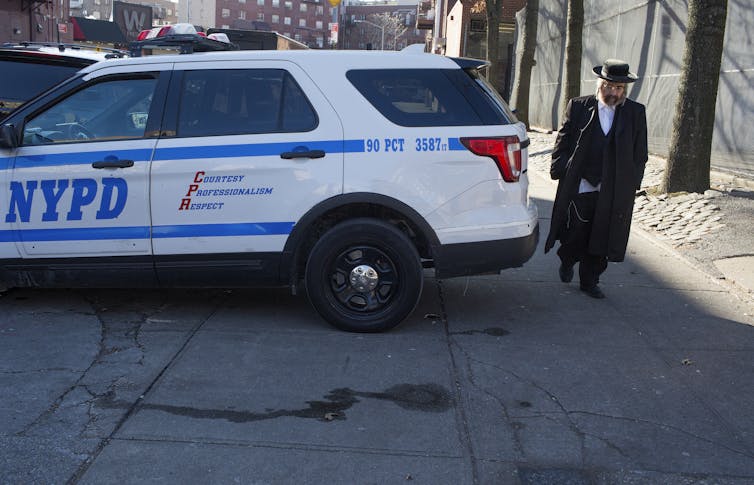
With hate crimes, context is everything, and events outside of the United States – like the war between Israel and Hamas – can have far-reaching and potentially tragic consequences.
Vermont police arrested a man in Burlington on Nov. 27, 2023, for allegedly shooting three 20-year-old Palestinian American men, seriously wounding them. Two of the men wore Palestinian keffiyehs, a traditional scarf that has come to symbolize Palestinian identity.
Jason James Eaton, the New York resident charged with the crime, has pleaded not guilty. Authorities are still investigating whether Eaton should be charged with a hate crime.
People often think an incident is a hate crime right away because of key characteristics of the people involved, but police tend to be reluctant to make such a quick declaration.
Hate crimes and hate murders are rising across the U.S., but long-term polling data suggests that most Americans are horrified by bias-motivated violence. They also support hate crime legislation, an effort to deter such attacks.
Yet officials often resist the quick classification of incidents as a hate crime.
For instance, the shooting of the three Palestinian Americans in Vermont has yet to be classified as a hate crime. Several days later, authorities are still conducting an investigation into what prompted the shooting. Investigations like this are required because hate crimes have precise qualities, which must be met in order to satisfy legal requirements. And even when police and prosecutors believe the elements of a hate crime are present, such crimes can be difficult to prove in court.
A rise in hate since October
The Vermont shooting followed a landlord in Chicago allegedly fatally stabbing a 6-year-old Palestinian American tenant 26 times in October 2023, following a brief discussion with the child’s mother about the war in the Middle East. The assailant, who has pleaded not guilty, was charged with a hate crime.
There has been a sharp spike in attacks on both Jews and Palestinians since Hamas’ attack on Israeli communities on Oct. 7, 2023, and Israel’s subsequent ground invasion of Gaza.
The Anti-Defamation League, an advocacy group that tracks antisemitism, reported at the end of October 2023 that antisemitic incidents increased 388% in the week after Oct 7. These include physical assaults and violent online messages.
In New York City, for example, a man punched a 29-year-old woman in the face before he told her, “You are Jewish.”
The advocacy group Council on American-Islamic Relations has also documented a 216% increase in requests for help and bias incidents compared with 2022 figures.

What is a hate crime?
I have studied hate crime and police for over 20 years.
Hate crimes are crimes motivated by bias on the basis of race, religion, sexual orientation or ethnicity. In some states, gender, age and gender identity are also included. Hate crime laws have been passed by 47 states and the federal government since the 1980s, when activists first began to press state legislatures to recognize the role of bias in violence against minority groups. Today, only Indiana, Mississippi, New Hampshire and South Carolina do not have any hate crime laws.
Both Illinois and Vermont have laws that impose more severe penalties if an alleged offender’s crime is motivated by someone’s race, religion or ethnicity.
In order to be charged as a hate crime, attacks – whether assault, killings or vandalism – must be directed at individuals because of the prohibited biases. Hate crimes, in other words, punish motive; the prosecutor must convince the judge or jury that the victim was targeted because of their race, religion, sexual orientation or other protected characteristic.
If the defendant is found to have acted with bias motivation, hate crimes often add an additional penalty to the underlying charge. Charging people with a hate crime, then, presents additional layers of complexity to what may otherwise be a straightforward case for prosecutors. Bias motivation can be hard to prove, and prosecutors can be reluctant to take cases that they may not win in court.
It can and does happen, though. In June 2020, Shepard Hoehn placed a burning cross and a sign with racial slurs and epithets facing the construction site where his new neighbor, who is Black, was building a house. Hoehn was charged with and later pleaded guilty to federal hate crime charges in Indiana.
A few months later, Maurice Diggins was convicted by a federal jury of a 2018 hate crime for breaking the jaw of a Sudanese man in Maine while shouting racial epithets.

How to charge a hate crime
The first use of the term “hate crime” in federal legislation was the Hate Crime Statistics Act of 1990. This was not a criminal statute but rather a data-gathering requirement that mandated that the U.S. attorney general collect data on crimes that “evidenced prejudice based on race, religion, sexual orientation, or ethnicity.”
Soon, states began passing their own laws recognizing bias crimes. But hate crime legislation has not led to as many charges and convictions as activists may have hoped.
Law enforcement struggles to identify hate crime and prosecute the offenders. Even though 47 states have hate crime laws, 86.1% of law enforcement agencies reported to the FBI that not a single hate crime had occurred in their jurisdiction in 2019, according to FBI data.
In many cases, police have received inadequate training in making hate crime classification.
“What weights do you give to race, dope, territory? These things are 90% gray – there are no black-and-white incidents,” said one 20-year veteran police officer in a 1996 study of hate crime.
But I’ve also found that police departments are rarely organized in a way that allows them to develop the expertise necessary to effectively investigate hate crimes. When police departments have specialized police units and prosecutors who are committed to taking on hate crime, they can develop the routines that allow them to investigate hate crime in a manner that supports victims.
Even law enforcement officers specifically trained in bias crime identification still may not name incidents as hate crime that, to the general public, seem obviously bias-driven. This may be the result of police bias.

Limits of the law
Advocates for hate crime victims maintain that police and prosecutors can do much more to identify and punish hate crimes.
Empirical evidence supports their claims.
The FBI’s latest report on hate crimes, from 2022, found that hate crime incidents rose from 10,840 in 2021 to 11,634 in 2022. But past National Crime Victimization Surveys, in which victims self-report hate crimes, tend to include more incidents than the government documents.
Distrust of police, especially in Black communities, may dissuade minorities from even calling the police when they are victimized by hate crime for fear they could also become victims of police violence.
All this means that perpetrators of hate crimes may not be caught and can re-offend, further victimizing communities that are meant to be protected by hate crime laws.
Hate crime laws reflect American ideals of fairness, justice and equity. But if crimes motivated by bias aren’t reported, well investigated, charged or brought to trial, it matters little what state law says.
This article was updated from a Conversation story originally published on March 19, 2021.
Jeannine Bell, Professor of Law, Loyola University Chicago
This article is republished from The Conversation under a Creative Commons license. Read the original article.

LAKE COUNTY, Calif. — Lake County is now home to two newly approved American Viticultural Areas, or AVAs.
The county, which winegrape advocates say is continuing to raise the bar of quality wine production in California, has welcomed the Long Valley-Lake County AVA and the Upper Lake Valley AVA.
The approval of the two new AVAs is one of many recent achievements for the Lake County region.
Lake County, known for its high-elevation, mountainous terrain within the prestigious North Coast AVA, is gaining traction as the market looks for high-end, California wines at an accessible price point.
With its volcanic terroir, the region is being recognized for its capacity to produce quality winegrapes that result in wines that are complex and distinct.
The wines offer great aromatic and flavor intensity alongside noticeable aging potential. The region has become a go-to source for high-end sauvignon blanc and cabernet sauvignon.
“These two new AVAs further demonstrate the vast potential of Lake County,” said Debra Sommerfield, president of the Lake County Winegrape Commission, an organization of the region’s winegrowers that actively fosters local viticultural innovation through projects such as the bilingual Lake County Pruning School in English and Spanish, now in its second year.
“The establishment of these AVAs builds on the discovery of these as distinct sub-appellations and on the long history of farming in the region while the Lake County Pruning School builds on the long-standing viticultural expertise of the region’s growers,” Sommerfield said.
Stretching across 7,674 acres, the Long Valley-Lake County Valley AVA consists of a long, narrow valley floor and surrounding foothills, which sits on a geologic formation known as the Cache Formation.
The formation comprises lake deposits and consists of tuffaceous and diatomaceous sands and silts, limestone, gravel and intercalated volcanic rocks.
This AVA is known for producing red winegrapes such as cabernet sauvignon, Cabernet Franc, Petite Sirah and Syrah.
The first record of vineyards in Long Valley was a family vineyard planted on land near the southern end of the valley by John Bonham in 1883. This was followed in 1885 when N.E. Hanson planted a vineyard on his ranch with 2,000 vines called “The Crags.”
Modern viticulture in the area started with the planting of a block of vines by David James, using cuttings from the Fay vineyard that won the 1976 “Judgment of Paris.”
James and his wife moved to Lake County in 1978 and purchased Pomo Ranch, located on the western shelf along the southern end of Long Valley. The vines were planted on their own rootstock and are still in production.
Today, this property is the location of Stonehouse Cellars, a licensed Lake County wine producer.
Upper Lake Valley AVA is approximately 20,187 acres and consists of four identified water-bearing formations: Quaternary alluvium; Pleistocene terrace deposits; Pleistocenelake and flood plain deposits; and Plio — Pleistocene cache creek.
These formations comprise the Upper Lake Groundwater Basin, which covers the majority of the AVA.
Soils belong to three groups. The Millsholm — Skyhigh-Bressa are formed by sandstone and shale and are primarily loams and clay loams. The Still — Lupoyoma occur on the nearly-level valley floors and consist of very deep, moderately well- to well-drained loams and silt loams.
Finally, soils from the Tulelake — luvaquentic — Haplawuolls map unit are very deep, poorly drained silty clay loams. This AVA is suitable for growing a variety of grapes, including sauvignon blanc.

LAKE COUNTY, Calif. — Lake County’s state senator is set to take on the leadership of the Senate early next year.
This week, the Senate ProTem’s Office released a memo in which it was announced that the ceremony to formally elect Senate ProTem Designee Mike McGuire as the Senate Leader will take place on Feb. 5, 2024.
The memo from McGuire and Senate President pro Tempore Toni Atkins said the ceremony will take place on the Senate floor, during a Senate floor session.
Additional details will be released in the coming weeks, the memo said.
“We’re looking forward to this momentous occasion!” Atkins and McGuire said in the joint memo.
In addition to McGuire’s ascent to Senate leadership, Lake County’s Assembly representative, Cecilia Aguiar-Curry, was appointed Assembly majority leader in November, as Lake County News has reported.
Gov. Gavin Newsom and First Partner Jennifer Siebel Newsom hosted the 92nd annual California State Capitol tree lighting ceremony Wednesday evening alongside special guest Harley Goodpasture — marking the 40th year a child from a Department of Developmental Services regional center has helped light the State Capitol tree.
Five-year-old Harley, who is the first California Native American child to assist with the ceremony, receives services from the Inland Regional Center and represents over 400,000 Californians with intellectual and developmental disabilities who receive services from the state’s nonprofit regional centers.
Harley's story is one of joy and resilience. Her first word was "love," and her appreciation of outdoor activities, singing, dancing and learning reflects her vibrant spirit.
Her mother is a member of Susanville Indian Rancheria, while Harley, her siblings, and her father belong to the Pala Band of Mission Indians, located in Southern California.
Her parents, Season and James Goodpasture, founded Acorns to Oak Trees, the first regional center vendor service provider on tribal land, in partnership with San Diego Regional Center.

“As Harley steps into this historic role, she not only illuminates the Capitol Holiday Tree but also shines a light on the strength, diversity, and inclusivity California represents,” said DDS Director Nancy Bargmann. “Her infectious spirit and light inspire us all to embrace the magic within each child, during this holiday season and throughout the year."
The Capitol Tree Lighting festivities have been a tradition since the 1930s. For the past four decades, a child from a regional center has lit the tree.
As part of this cherished tradition, individuals with intellectual and developmental disabilities from all over California created ornaments that will adorn this year's majestic 60-foot red fir tree.
Also, a first this year, the 21 regional centers each had their own individual 6- to 7-foot tree set up near the Capitol tree, providing a unique opportunity for regional centers to showcase the work of the individuals they serve in celebration of the holiday season.
This year, California expanded the long-standing tradition of individuals with intellectual and developmental disabilities creating ornaments for the State Capitol tree.
The celebration also included a blessing from the Chairman of the Wilton Rancheria and a performance from the Oakland Interfaith Gospel Choir.