How to resolve AdBlock issue?
News
NORTHERN CALIFORNIA – Storms are lightly blanketing the Sierra with fresh snow, but Department of Water Resources (DWR) snow surveyors today reported that snowpack water content remains far below what will be needed by cities and farms this summer.
“We welcome the late storms but they are not enough to end the drought,” said DWR Director Mark Cowin. “We can’t control the weather but we can control the amount of water we use. This drought is a wake-up call that we all have to take water conservation seriously and make it a way of life.”
Although freshly fallen snow brightened the scenery this morning as DWR and cooperating agencies trekked into the mountains to conduct the winter’s third manual snow survey, the state’s drought has left the Sierra largely bare for much of the winter.
And reservoirs are low.
On Tuesday, before the current storm system reached the area, water content in the statewide snowpack was 22 percent of normal for the date and only 19 percent of the average reading in early April when snow begins to melt into streams and reservoirs.
These readings were just above the 1991 record lows of 18 percent for the date and 15 percent of the April 1 average. These records go back to 1960.
Manual and electronic readings today record the snowpack’s statewide water content just slightly improved at 24 percent of average for the date, still far below normal but with more snow expected. That is 21 percent of the average April 1 reading.
Electronic readings indicate that water content in the northern mountains is 15 percent of normal for the date and 13 percent of the April 1 average.
Electronic readings in the central Sierra show 32 percent of normal for the date and 28 percent of the April 1 average.
The numbers for the southern Sierra are 24 percent of average for the date and 20 percent of the April 1 average.
Surveyors from DWR and cooperating agencies manually measure snowpack water content on or about the first of the month from January through May to supplement and check the accuracy of real-time electronic readings.
The snowpack – often called California’s largest reservoir – normally provides about a third of the water used by cities and farms as it melts into streams and reservoirs in spring and early summer.
California’s major reservoirs, mostly bereft of both snow and rain this winter as the drought pushes through its third year, are dangerously low.
Lake Oroville in Butte County, the State Water Project’s (SWP) principal reservoir, is at only 39 percent of its 3.5 million acre-foot capacity (57 percent of its historical average for the date).
Shasta Lake north of Redding, California’s and the federal Central Valley Project’s (CVP) largest reservoir, is at 38 percent of its 4.5 million acre-foot capacity capacity (52 percent of its historical average).
San Luis Reservoir, a critical south-of-Delta reservoir for both the SWP and CVP, is at a mere 33 percent of its 2 million acre-foot capacity (39 percent of average for this time of year).
With no end to the drought in sight, DWR on Jan. 31 set its allocation of State Water Project water at zero. The only previous zero percent allocation (water delivery estimate) was for agriculture in the drought year of 1991, but cities that year received 30 percent of requested amounts. This is the first time the allocation has been set at zero across the board.
Despite the “zero” allocation, water essential for health and safety will still be delivered. And nearly all people and areas served by the State Water Project also have other sources of water, but most of these also are stressed by three successive dry years.
Deliveries will be boosted if storms produce enough rain and snow to boost reservoir storage and the snowpack.
The final State Water Project (SWP) allocation for calendar year 2013 was 35 percent of the slightly more than 4 million acre-feet of water collectively requested by the 29 public agencies that deliver water to more than 25 million Californians and just under a million acres of irrigated agricultural land.
In 2012, the final allocation was 65 percent of the requested 4 million acre-feet. It was 80 percent in 2011, up dramatically from an initial allocation of 25 percent. The final allocation was 50 percent in 2010, 40 percent in 2009, 35 percent in 2008, and 60 percent in 2007.
The last 100 percent allocation – difficult to achieve even in wet years because of Delta pumping restrictions to protect threatened and endangered fish – was in 2006.
California Attorney General Kamala Harris on Thursday filed a petition in the Ninth Circuit Court of Appeals, on behalf of the State of California, urging the court to review and reverse its decision in Peruta v. County of San Diego.
In its Feb. 13 Peruta decision, the Ninth Circuit ruled that San Diego County violates the Second Amendment by requiring individuals to show “good cause,” beyond a mere desire to carry a gun, when applying for a concealed-carry weapons permit.
“Local law enforcement must be able to use their discretion to determine who can carry a concealed weapon,” Attorney General Harris said. “I will do everything possible to restore law enforcement's authority to protect public safety, and so today am calling on the court to review and reverse its decision.”
California state law currently requires individuals to show “good cause” to carry a concealed weapon, but gives local law enforcement control over the permit process.
If the Ninth Circuit’s ruling is allowed to take effect, officials throughout the state could be required to issue concealed-carry permits to individuals based on nothing more than the applicant’s assertion that they wish to carry a gun for self-defense.
In San Diego County, concealed-carry permit applicants have, until now, been required to show “good cause” by demonstrating “a set of circumstances that distinguish the applicant from the mainstream and causes him or her to be placed in harm’s way.”
On Feb. 21 San Diego Sheriff Bill Gore announced he would not seek further review of the Ninth Circuit’s ruling.
NORTHERN CALIFORNIA – A bipartisan coalition of state legislators led by Sen. Lois Wolk (D-Yolo County) and Jim Nielsen (R-Gerber) have introduced legislation which will appropriate monies to California counties for outstanding obligations relating to payment in lieu of taxes, or PILT, payments.
In addition to requesting $19 million in general fund dollars for outstanding obligations, Senate Bill 1410 (Wolk/Nielsen) also would appropriate $2 million in annual funding for PILT.
The Rural County Representatives of California (RCRC), which has lobbied for the payments to be made, applauded Wolk and Nielsen for introducing the bill.
“This has been an ongoing issue for 13 years, during which time counties have struggled to fill the hole left in their budgets when the state stopped making PILT payments,” said Wolk. “Small, rural counties throughout the state have particularly felt the weight of this burden. This measure will appropriate $19 million to the Department of Fish and Wildlife to make past due PILT payments to counties, paying off this debt once and for all.”
The California Department of Fish and Wildlife (DFW) owes 36 counties more than $17 million in past due PILT payments, all while local governments are doing everything within their power to reduce expenses and tighten budgets in order to fund critical programs and services for residents.
RCRC has long advocated for the payment of these past due payments and continued annual payments to counties as obligated, most recently urging the governor to include the payments in the 2014-15 state budget.
“Rural counties have unique needs and challenges; these payments are needed for rural counties to more adequately provide services to residents,” said Nielsen.
California PILT was established in 1949 to offset adverse impacts to county property tax revenues that result when the state acquires private property for wildlife management areas.
The California Department of Fish and Wildlife has neglected to make annual PILT payments in more than a decade.
Of the $17 million in past PILT obligations, RCRC reported that Lake County is owed approximately $199,579 for the 10-year period, and $16,883 for the current fiscal year.
“While the administration has indicated that paying off debts is one of their top priorities, we have yet to see them live up to their obligations to our counties,” said Nate Beason, RCRC chair and Nevada County supervisor. “RCRC extends its thanks to Senators Wolk and Nielsen for authoring legislation to fight for these monies owed to California counties.”
SB 1410 is coauthored by a bipartisan group of 18 other legislators from many of the counties impacted by this issue.
On Wednesday, Congressman John Garamendi (D-Fairfield, Calif.) joined the effort to take action to force an up-or-down vote on key legislation that would give at least 25 million Americans a pay raise.
Congressman Garamendi joined his colleagues in signing a discharge petition, led by Congressman Tim Bishop (D-NY), to bring to the House floor a vote on the Fair Minimum Wage Act (H.R. 1010).
The bill increases the minimum wage over three years from $7.25 to $10.10 per hour, Garamendi's office reported.
The bill also indexes future annual increases to inflation thereafter, and gradually increases the tipped minimum wage to 70 percent of the minimum wage. The discharge petition’s current signatories is available here.
“Increasing the minimum wage is one of the most effective methods we have to lift millions of Americans out of poverty, helping struggling families become more self-sufficient and make ends meet,” said Garamendi. “Many minimum wage earners are parents, breadwinners, and caregivers. They deserve our support.”
He added, “I’m convinced the votes exist in the House to pass this bill, but since the House Republican Leadership controls all votes on the House floor, this discharge petition is the best tool available to Democrats to force action on this needed legislation. Let’s show the American people that this Congress is able to get something important done. Let’s raise the minimum wage together.”
The current minimum wage pays only $14,500 per year, so this increase would lift between 1 million and 4.5 million Americans out of poverty and is critical to those working hard to support their families, according to Garamendi.
Garamendi's office reported that nearly two-thirds of minimum wage workers are women and the average worker who would get this raise is 35 years old.
In California, the effective minimum wage will be $9 per hour by July 1, 2014 and $10 per hour by January 1, 2016.
“It’s time for the rest of the nation to follow California’s lead,” Garamendi added.
Garamendi said increasing the minimum wage will help all Americans by growing the economy and creating jobs, generating some $22 billion in increased economic activity.
Businesses, like Gap and Costco, have embraced paying a higher minimum wage because they believe it will strengthen their bottom line, with more productive employees, less turnover, and more customers who have more money to spend.
Republicans in Congress have refused to give the minimum wage issue vote, and so on Wednesday Democrats launched a discharge petition to force action on the legislation.
The Fair Minimum Wage Act was introduced by Congressman George Miller on March 6, 2013, and has 194 cosponsors, but Republicans have failed to schedule a hearing or a mark-up on the bill, Garamendi's office reported.
The discharge petition will require the House to consider the minimum wage legislation once a majority of Members of Congress – 218 – have signed the petition.
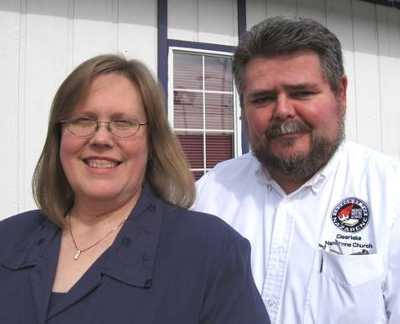
CLEARLAKE, Calif. – A man who has dedicated himself to the Christian ministry and caring for others will welcome retirement March 1, after 22 years as pastor of Clearlake Church of the Nazarene.
Pastor Richard Bean said while he is looking forward to a bit more leisurely time, to fish and play the guitar, his commitment of service to people will continue.
“As I look back over the years of my pastoral ministry I have had the joy of helping many children, youth, and adults grow in their understanding of God through a relationship with Jesus Christ,” he said, adding he has found a deep personal satisfaction in serving the spiritual needs of Lake County.
Bean was born in Stuttgart, Germany while his father was stationed there in his service with the military.
Upon returning to the United States, Bean grew up on the Presidio of San Francisco where he attended elementary and junior high school.
His family moved to Lucerne, where he lived until he graduated from Upper Lake High School in 1969.
After a year of attending Yuba College in Marysville, Bean enlisted in the U.S. Army and served three years, which included a tour of duty in Vietnam.
After being honorably discharged, Bean said he used his military training to work in computer operations in the accounting department of a Redwood City corporation.
Soon after, he said he returned with his family to Lake County and began an accounting career with Clearlake Oaks County Water District.
Bean said he was sensing a lack of fulfillment in his job with the water district when he had a spiritual awakening.
“I got a really clear indication through reading scriptures that God was calling me to preach His word full-time and care for people,” Bean said. “The calling is not something that you just decide to do because there are a lot of challenges and heartbreak. You are walking into peoples' lives sometimes during despair, pain and turmoil but you're also sharing the joys.”
Bean lightheartedly added that financial reward is certainly not a motivation.
He said most of the churches in the area barely get by and that many of their leaders hold other employment.
Bean said he was fortunate the Clearlake Church of the Nazarene could employ him full-time, adding, “I would do this if I wasn't paid at all, which is what I will be doing after I'm retired.”
Bean has been involved in a myriad of programs instituted at the church, from those serving youth to those assisting adults.
He said an English as a Second Language course was recently added to the church's long list of services. The group meets on Fridays and currently welcomes about a dozen people.
Another program Bean particularly appreciates is Celebrate Recovery, a Christian 12-Step program that he said continues to effectively help people overcome addictive behaviors.
He said the program is really about helping people find a better place of health and wholeness so they may better fulfill other relationships in their lives.
“Anytime you can help people with hurts, habits and hang-ups and get them to enjoy life rather than living a self-destructive one, it's better,” he said. “Life is better when you are spiritually and emotionally healthy.”
Bean, who is a Clearlake Rotarian, said though he welcomes retirement, he and his wife Sharon intend to remain in the community and continue to contribute to its betterment.
He said he looks forward to having the time to travel, visit with friends and family, and spend more time with their four grandchildren and son, Edward.
Bean said he's going to be working on bettering his guitar playing, too. “I'm letting out the musician in me,” he chuckled. “I want to go fishing, too. I can't tell you how many years I bought a fishing license and didn't get to use it one time.”
Bean invites anyone who would like to learn more about the ministry programs at Clearlake Church of the Nazarene to leave a message in the church office at 707-994-4008.
Email Denise Rockenstein at

CLEARLAKE, Calif. – There were 26 pots “boiling with Rotarians” at the Rotary Club of Clearlake's 11th annual Seafood Boil and Auction Saturday at the Clearlake Senior Center.
The club, with the assistance of students from Carle and Lower Lake high schools, served 1,000 pounds of seafood to the 208 guests it welcomed to its primary fundraiser of the year.
Though what he meant to convey was Rotarians were boiling 26 pots of seafood in preparation of the night's dinner, club president/co-auctioneer Peter Ventura's welcoming remarks kicked off the event with an uproar of laughter.
The event featured an entertainment lineup filled with live and silent auctions, sponsorship drives, 50/50 raffle and wine tasting courtesy of Steele Wines.
Ventura said while the support in ticket sales is appreciated, the majority of profits garnered from the event are raised through the auctions, and as such, he encouraged guests to bid generously.
More than 100 donors contributed to the live and silent auctions. Diamond jewelry, oil paintings, garden art, pet gifts, wine, a vintage record player, Jagermeister barbecue and a multitude of other items filled the silent auction.
“I came in here (the day before the event) and every table was piled with donations. About an hour later, all the silent auction tables were set up. These kids are wonderful,” club member Carl Webb said with regard to the student volunteers.
With eight items up for grabs Ventura, and his co-auctioneer Terry Stewart, upped bids to total $5,900 in live auction funds.
The top bid was put up by Karen Slooten, who donated $2,100 in exchange for a customized jungle adventure in Costa Rica with host and tour guide Bill MacDougall, former superintendent of the Konocti Unified School District.
The second-highest bid, which was for the first item of the auction, bought premium seats at a Giants baseball game. After the auction closed on the $1,000 bid, Stewart advised buyer Gene Renner not to tell the auctioneer he was going to buy an item no matter what.
In addition to proceeds raised in the live auction, another $1,550 was raised in sponsorship drives supporting the club's community Christmas dinner program and its “The Children are the Future” program, which provides a new dictionary to every third grade student in the Konocti Unified School District.
The Rotary Club of Clearlake was founded in 1973. Its motto of “Service Above Self” is realized through contributions in education, healthcare, youth, veterans and other community programs.
Email Denise Rockenstein at