How to resolve AdBlock issue?
News
Recent rains across California are not enough to end the drought, but they are enough to eliminate the need to water landscaping for several weeks.
Experts with the California Department of Water Resources, University of California Cooperative Extension and University of California, Davis, together urge all residents, business owners, and government agencies to shut off sprinkler and irrigation systems until soils dry again.
Depending upon local conditions and near-term weather, irrigation may not be needed for a month or more.
“We can reap twice as much from the latest storms if people take full advantage of the natural precipitation and shut off sprinklers,” said Department of Water Resources Director Mark Cowin. “Three dry years in a row have left our major reservoirs low, and we need to conserve those supplies in case drought conditions persist into the next rainy season. There's no need to water lawns, parks, median strips, or any landscaping already soaked by these recent storms.”
On Jan. 17, Gov. Edmund G. Brown Jr. declared a drought emergency in California and called on all residents to conserve water by 20 percent in their homes and businesses.
Typically more than half of the water used by homeowners is used outdoors. Californians can go a long way toward meeting the governor's goal by shutting down sprinklers until soil several inches deep appears dry or plants appear stressed.
People who resume landscape irrigation should do so only according to the water schedules set by their local water districts.
More than 100 such districts around the state have imposed voluntary or mandatory conservation measures that restrict the days and times when residents can run sprinklers.
At a press event in the residential Curtis Park neighborhood of Sacramento Thursday, Director Cowin, local water leaders, and UC Cooperative Extension landscape experts demonstrated how to shut off a typical homeowner's sprinkler system.
Tom Gohring, executive director of the Water Forum, a diverse group of Sacramento regional interests working to resolve water issues, hosted the event at his home and switched off the sprinkler system controller in his garage to encourage others to do the same.
“Many people think they use more water in their house than they do in their yard,” said Gohring. “The opposite is typically true. In the Sacramento region, about 65 percent of water used by homeowners goes to irrigate landscaping. We always want people to adjust their sprinklers based on the season and weather, but now, after a record dry year, there's real urgency.”
While recent storms have boosted the Sierra Nevada snowpack and runoff into reservoirs, it would take half an inch of rain every day of March from Redding to Bakersfield to bring the state to average precipitation for the year in the watersheds that supply much of California's drinking and irrigation water.
Even average precipitation would not be enough to avert water shortages, because major reservoir storage is now so far below typical storage for this time of year.
“Storms in the last couple of weeks have delivered a couple of inches or more of precipitation to most parts of California,” said Chuck Ingels, UC Cooperative Extension advisor in Sacramento County. “Trees, shrubs, flowers, and lawns naturally use less water in winter's cool temperatures, and so an inch of rain provides enough moisture to forego the need for sprinklers for up to several weeks depending on temperatures.”
Sprinkler systems are controlled by a device, called an irrigation controller, that triggers the irrigation system when to turn on and off.
People who do not know how to program their controllers can get links to manuals published by major manufacturers at the Save Our Water Webite, www.saveourH20.org . Look under the "Sprinklers 101" section of the Web site, http://www.saveourH20.org/sprinklers101 .
Sacramento residents can find their water provider, information on the latest water restrictions, and water-saving tips at the Regional Water Authority’s “Be Water Smart” Web site at http://www.bewatersmart.info/residential-customers/ .
University of California master gardeners offer tips for gardening during a drought at http://cagardenweb.ucanr.edu .
The California Center for Urban Horticulture, UC Davis, also has information for conserving water in the landscape, http://ccuh.ucdavis.edu , as does the UC Davis Arboretum http://publicgarden.ucdavis.edu/public-garden/drought-resources .
Other smart watering tips detailed at the Save Our Water Web site:
- Water only in the early morning or late evening. Cooler temperatures reduce evaporation.
- Check your sprinkler system frequently and adjust so that you are not watering the hose, sidewalk, or street.
- Put mulch around trees and plants to cool soil and reduce evaporation.
- Consider installing a drip irrigation system, which applies water precisely, with less waste.
- Choose plants based on their adaptability to your climate. Check the Sunset Plant Finder to learn about water-wise plants that thrive in your region: plantfinder.sunset.com/plant-home.jsp.
- If you find yourself walking on your lawn only to mow it, consider replacing it with water-wise landscaping that reduces the need for water and maintenance.
- Check with your local water district for a free visit from a water conservation specialist, rebates on water-wise appliances, or "cash for grass" incentives to replace lawn with water-wise landscaping.
CLEARLAKE OAKS, Calif. – A Lakeport woman led law enforcement on a lengthy vehicle pursuit early Thursday morning, hitting two spike strips before finally stopping her car near Clearlake Oaks.
The 50-year-old woman attempted to evade police for close to 40 minutes before pulling her car over and being taken into custody shortly before 2 a.m., according to radio traffic.
The pursuit began shortly after 1:20 a.m. in the area of north Lakeport, based on scanner reports.
Sheriff's deputies indicated that they believed the woman was drunk, and was weaving in and out of both lanes of traffic.
The pursuit crossed the Nice-Lucerne Cutoff, went through the roundabout and Nice, and between Nice and Lucerne reached speeds of about 90 miles per hour, according to radio reports.
Sheriff's deputies placed a spike strip just west of Glenhaven Drive that the car hit, but it continued on, with the driver traveling all over the road, causing deputies to request that the California Highway Patrol close the highway near Clearlake Oaks to protect other drivers.
The woman continued driving at about 20 to 30 miles per hour, with all of her tires – except for her left rear tire – flat, reports indicated.
The CHP set up another spike strip near Keys Boulevard in Clearlake Oaks. After the car continued eastbound, deputies asked over the air if CHP would use the “pursuit intervention technique” or “PIT maneuver” to bump the vehicle and spin it out of control, but CHP declined.
Authorities reported that the car, now only on rims, slowed to between 5 and 10 miles per hour as it traveled uphill outside of Clearlake Oaks.
The chase finally ended at approximately 1:56 a.m. at the “Y” intersection of Highway 20 and Highway 53, scanner traffic indicated.
The deputies took the woman into custody, with a Clearlake Police Department K9 that had been requested on hand to assist. The roadway was reopened a short time later, based on radio reports.
Medics were requested to come to the scene shortly after 2 a.m., but it was not clear why they were summoned.
Additional details – including confirmation of the suspect's name – will be posted as they become available.
Email Elizabeth Larson at
LAKEPORT, Calif. – New data reveals that Lake County ranks higher than the state in percentage of stores that sell e-cigarettes.
This finding is part of new data released Wednesday on the availability and marketing of tobacco, alcohol and unhealthy and healthy food products in stores that sell tobacco – the first time all three categories of products have been analyzed together.
The large survey collected information from more than 7,300 diverse retail stores – including convenience, supermarket, liquor, tobacco, small market, discount, drug and big-box stores – in all 58 counties, with the goal of shedding light on what products are available and promoted in our communities.
Nearly 700 public health representatives, community volunteers and youth participated in the survey, which was conducted from July through October 2013.
While Lake County have made important progress in reducing tobacco smoking among youth, the county still has room for improvement.
Data from the California Health Interview Survey showed a decline in smoking among youth from 17 percent to 9 percent between 2007 and 2009. More recent data from 2011 estimates that 10 percent of Lake County youth in grades ninth through twelfth smoke.
As youth transition to adulthood, smoking rates increase. Smoking among adults in Lake County is estimated at 28 percent – dramatically higher than the statewide rate of 13.8 percent of the adult population.
According to Lake County Health Officer Dr. Karen Tait, tobacco use is a major risk factor for the majority of health conditions that account for Lake County’s poor rankings in California’s county health profiles. These include a wide variety of cancers as well as cardiovascular disease.
“Reducing tobacco use is among the most important interventions we can make to improve our population’s health,” said Tait. “Although reducing smoking at any age is beneficial, we think that working with youth to promote healthful behaviors is the most effective way of influencing lifelong patterns that define health.”
Research shows that children are highly influenced by marketing of products like tobacco and alcohol, even more so than peer pressure. Their choices now could lead to either a healthy lifestyle or to obesity, chronic disease and even death, according to health officials.
The findings also show that electronic cigarettes are widely available in Lake County, concerning health officials and community partners.
More than 47 percent of stores sell e-cigarettes. Statewide, the number of stores selling e-cigarettes quadrupled in the last two years, from 11.5 percent in 2011 to 45.7 percent in 2013.
The survey includes state, regional and county level data with new insights on the density of stores selling tobacco and their proximity to schools; types of tobacco and alcohol products being sold; advertising and placement of such products in stores; the availability of e-cigarettes; and the availability and promotion of unhealthy and healthy food options including low- or non-fat milk and fresh fruits and vegetables.
Additional survey findings in Lake County include:
- 71.1 percent of stores have unhealthy exterior advertising while only 5.7 percent have healthy exterior advertising.
- Flavored non-cigarette tobacco products available in 92.5 percent of stores.
- 42.3 percent of stores are selling good quality fresh fruits and vegetables.
- Alcohol ads are being placed three feet and below at 47.1 percent of stores.
The data release also marks the launch of Healthy Stores for a Healthy Community, a statewide campaign – formed by tobacco prevention, nutrition and alcohol prevention partners working in collaboration – to improve the health of Californians by informing them about the impacts of unhealthy product marketing in the retail environment.
For state, regional and county specific data and more information on Healthy Stores for a Healthy Community, visit www.HealthyStoresHealthyCommunity.com .
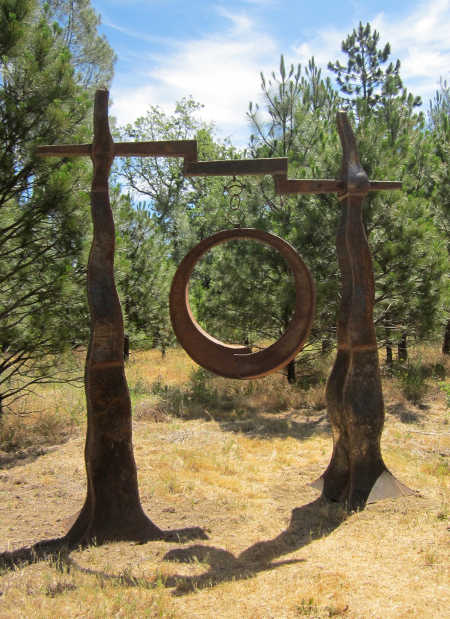
MIDDLETOWN, Calif. – EcoArts of Lake County invites artists to apply to install and exhibit sculptural work in the 12th annual EcoArts: Lake County Sculpture Walk.
The Sculpture Walk has a large audience and beautiful venue within the 107-acre Middletown County Trailside Park.
Each year temporary works with strong artistic merit made from and/or relating to nature will be chosen.
The sculptures are sited along both sides of a 3/8-mile central trail through meadows and woodland.
Submission applications must be received by March 15.
Approved works will be installed from Friday, May 16, through Tuesday, May 27, and be removed Oct. 14 through Oct. 20.
More than 300 sculptures by local, national and international artists have been installed over the past 11 years.
Public attendance is approximately 3,000 viewers per exhibit season.
EcoArts encourages local schools and community groups to apply and waives application fees for nonprofits.
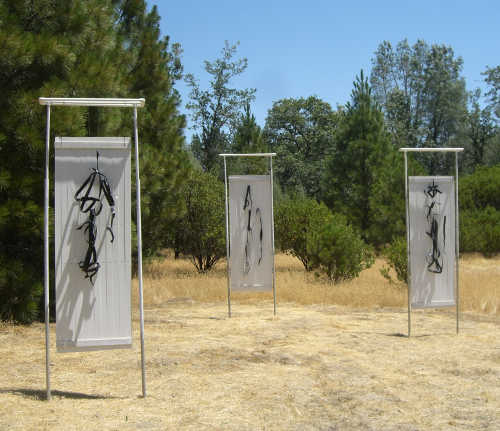
Applications are available at www.EcoArtsofLakeCounty.org . You also can get an application by emailing
Each year a free public reception is held to meet the artists, enjoy a great exhibit, make music, hear poetry and of course, make art. This is a free community event open to the public and fun for all ages.
This year the reception is 11 a.m. to 1:30 p.m. Sunday, June 8, at the Middletown County Trailside Park.
Please visit www.EcoArtsofLakeCounty.org for information on the submission process and installation criteria.
There is a $25 submission fee for each entry. Submission paperwork and fees are due by March 15 and can be submitted via email or US post. Applications will be acknowledged upon receipt. Contact EcoArts directly for late submission information.
EcoArts of Lake County is a nonprofit dedicated to promoting the visual arts through exhibits, education, and ecological stewardship for artists, residents, and visitors to the county. For more information, visit www.ecoartsoflakecounty.org .
NORTHERN CALIFORNIA – Covered California and the California Department of Health Care Services have released the latest health care insurance enrollment numbers through Dec. 31.
From Oct. 1, 2013, to Dec. 31, 2014, under the Patient Protection and Affordable Care Act, 27,853 consumers in mostly rural Northern California counties enrolled in subsidized and nonsubsidized Covered California health insurance plans.
The new total represents a 41-percent increase from the 19,732 enrollments recorded through Dec. 31, 2013.
The improving pace of enrollments in the northern counties is due in part to enhanced aspects of Covered California’s customer service.
The agency has increased staff to answer consumer calls, added phone lines, improved its website efficiency, expanded its live Web chat function and upgraded its Spanish-language Web pages.
The Northern California counties of Alpine, Amador, Butte, Calaveras, Colusa, Del Norte, Glenn, Humboldt, Lake, Lassen, Mendocino, Modoc, Nevada, Plumas, Shasta, Sierra, Siskiyou, Sutter, Tehama, Trinity, Tuolumne and Yuba represent about 4 percent of the statewide enrollment.
The local total includes 25,188 consumers eligible for financial subsidies. These counties encompass Covered California pricing region 1.
For the four-month period, which is two-thirds of the open-enrollment period for 2014 coverage, 728,410 consumers enrolled in plans statewide.
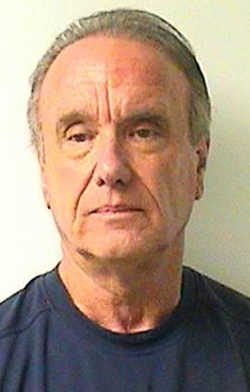
LAKEPORT, Calif. – A Lakeport man was arrested last week on charges related to marijuana cultivation and sale following the service of a search warrant at his home.
Phillip Stephen Sees, 68, a retired principal, was arrested on Wednesday, February 26, according to Lt. Steve Brooks.
Brooks said narcotics detectives secured a search warrant for Sees' residence and property, located in the 4000 block of Scotts Valley Road in Lakeport, on Feb. 24, serving the warrant two days later at 9 a.m.
Upon entry into the residence, detectives located and detained Sees without incident, along with three other people they found on the property. The other three subjects later were released, Brooks said.
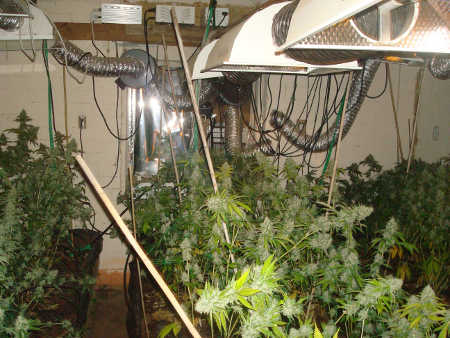
During the search detectives located multiple bedrooms inside the residence and an outbuilding which were converted to cultivate marijuana indoors, Brooks said.
Brooks said detectives located and eradicated a total of 247 marijuana plants which were in different stages of growth. Each room being used to cultivate marijuana contained several 1000-watt high pressure sodium lights. Detectives reported each room also contained a complex ventilation and electrical system.
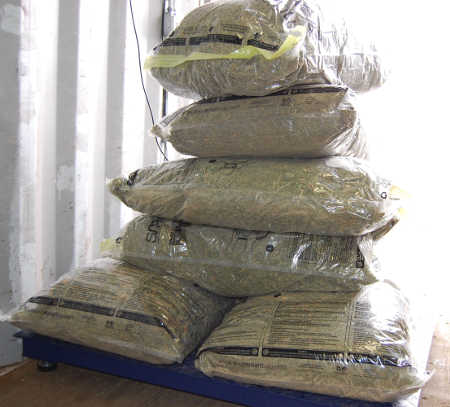
Approximately 116 pounds of processed marijuana shake was located in the trunk of a vehicle and seized as evidence. It was vacuum packed in six large bags. Brooks said shake is the byproduct or what’s leftover after trimming the marijuana buds and is used for manufacturing concentrated cannabis.
Sees was arrested for the cultivation of marijuana, possession of marijuana for sale and for maintaining a drug house. He was transported to the Lake County Hill Road Correctional Facility and booked.
Sees' bail was set at $15,000, according to jail records. He later posted the required percentage of bail and was released.
The Sheriff’s Narcotics Task Force can be reached through its anonymous tip line at 707-263-3663.