 How to resolve AdBlock issue?
News
LOWER LAKE, Calif. – The Anderson Marsh Interpretive Association (AMIA) will receive the Underserved Communities Merit Award at the California Trails & Greenways Conference to be held on April 9 in Palm Springs.
Nominations for the award were made on behalf of organizations throughout the state.
The California Trails & Greenways Conference is sponsored each year by the DPR and the California Trails Conference Foundation.
The Conference Awards Program is designed to recognize organizations that have made outstanding contributions that promote public awareness and use of trails and greenways in California.
AMIA is the all-volunteer nonprofit organization cooperating with the California Department of Parks and Recreation that provides educational activities at Anderson Marsh State Historic Park, located in Lake County.
AMIA also funds park projects that the state would otherwise be unable to provide.
The organization recently entered into a partnership agreement with Department of Parks and Recreation that insures that the park will remain open to the public and that the important cultural, historic and natural resources found there will remain protected.
The Underserved Communities Merit Award will be given to AMIA in recognition of its outstanding work in organizing both its school field trip programs for local elementary school children and its senior tour programs, and AMIA’s work to repair and maintain the boardwalk on the ADA-accessible Cache Creek Nature Trail.
AMIA was nominated by Gigi Stahl, trails coordinator for Lake County’s Konocti Regional Trails System, a series of rural connections designed to promote community health by offering paddling, hiking, horse and bike riding opportunities between communities and major recreational areas in the region such as Anderson Marsh State Historic Park.
“AMIA is thrilled to receive this prestigious Merit Award from the California Trails and Greenways Conference,” said AMIA President Roberta Lyons. “The real credit goes to the many AMIA volunteers and to our generous Lake County supporters and members whose financial contributions make our educational programs possible.”
For information about AMIA and its programs, go to www.andersonmarsh.org or contact AMIA at either
MIDDLETOWN, Calif. – While investigating an unrelated case last Wednesday night, deputies arrested a Burbank man for weapons violations.
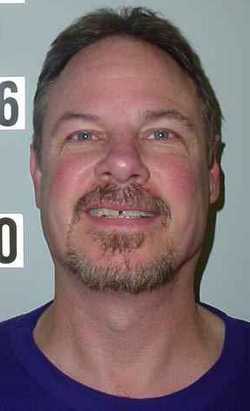
Lt. Steve Brooks of the Lake County Sheriff's Office said deputies arrested Geoffrey Robert Chang, 57.
At 10:30 p.m. March 5 deputies were investigating an unrelated case in the Middletown area and were looking for a male subject who had reportedly been involved in a domestic disturbance, Brooks said.
The information provided was that the subject was at Hardester’s Market in Middletown. No physical description of the subject was given, according to Brooks.
Brooks said deputies conducted a search of the area and noticed a male subject, later identified as Chang, standing in the parking lot of Hardester’s Market.
When the deputy approached him, Chang reached into the right cargo pocket of his pants, Brooks said. The deputy asked him to remove his hand from the pocket, which he did. Chang provided the deputy with consent to search him for weapons and admitted to having a knife on his belt.
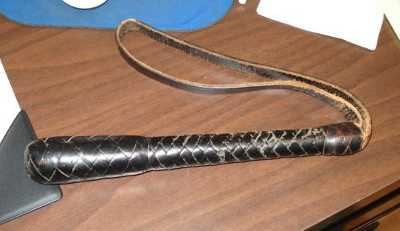
While searching the outer clothing of Chang’s right cargo pocket, the deputy located a solid object which felt heavy. Brooks said the deputy reached into the pocket and retrieved a black leather sap, which is a lead-filled impact weapon.
Chang told the deputy that he carried the sap for personal protection from the methamphetamine users. The sap was seized as evidence, Brooks said.
Brooks said Chang was arrested for the sap, which is a felony to possess.
Chang told deputies that he had two dogs in his car and some personal items he wanted a friend to retrieve. When the friend showed up to retrieve the items, she was unable to open the door and asked the deputy for assistance, Brooks said.
When the deputy opened the door he discovered a loaded semiautomatic pistol in plain view between the seat and the door, which was seized as evidence. Brooks said Chang also was arrested for having a loaded firearm in the vehicle.
Chang was transported to the Lake County Hill Road Correctional Facility and booked. Bail was set at $5,000, and jail records indicated he later posted the required percentage of bail and was released.

As part of ongoing work to improve California’s drought preparedness and better adapt to climate change, the Department of Water Resources on Monday released a report examining tree-ring data to help better understand historic periods of drought.
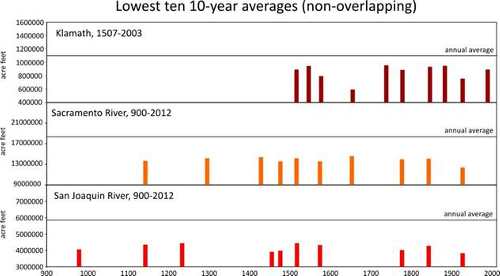
The report helps develop long-term reconstructions of streamflow or precipitation for the Klamath, Sacramento, and San Joaquin river basins.
The report, prepared for DWR by researchers at the University of Arizona, is available at http://www.water.ca.gov/waterconditions/docs/tree_ring_report_for_web.pdf .
Funding for part of the Klamath Basin work was provided by the U.S. Bureau of Reclamation under its WaterSMART program.
Initial work on the reconstruction project began in 2010, at a time when California was just emerging from the 2007-09 drought.
Completion of the final report coincides with a new three-year drought and a Water Year 2014 that so far is one of the driest years in the historical record.
California’s roughly 100 years of observed data are, however, only a small subset of the hydrologic record that can be reconstructed by measuring tree rings and calibrating them to observed data.
The tree-ring measurements made for this project allowed development of reconstructions that begin in the year 900 for the Sacramento River and San Joaquin River systems, and in the 1500s for various sites in the Klamath Basin.
“Streamflow reconstruction from tree rings takes advantage of the great longevity and climate sensitivity of several tree species in California and Oregon,” said lead author David Meko, a University of Arizona research professor of dendrochronology. “The tree-ring patterns record unusual climate events and modes of variability that occurred before the short period of gaged streamflow.”
Drought is a recurring part of California’s climate. The report’s reconstructions show numerous periods of four or more years when streamflows were below median conditions.
In addition, the report reveals that all three river basins share common major periods of extreme low flow conditions, although the degree of severity varies from river to river.
The most severe shared periods were the 1100s (20-50 year sustained dry periods), 1570 to early 1580s (up to decades-long periods), and 1920s -1930s (up to 20-year periods).
The Sacramento and San Joaquin basins shared 1580 as the single driest year of record. The driest single year for Klamath River streamflow was 1655 (1580 was 17th driest).
Paleoclimate information such as these reconstructed streamflows captures a broader range of hydrologic variability than provided in the historical record, thereby putting our short period of observed droughts in perspective.
A repeat of the “Dustbowl Drought” of the 1920s and 1930s (our most severe historical event in terms of duration) with today’s urban and agricultural development would sorely challenge California’s infrastructure and institutional framework for water management.
That challenge would pale in comparison to the time of the Medieval Climate Anomaly, when sustained severe drought gripped much of the western United States.
Paleoclimate information is useful in helping to understand and model natural variability in the climate system that may provide clues for improving drought prediction at the seasonal time scales important for water management.
Jeanine Jones of DWR said, “Drought prediction skillful enough to use for water management decision-making remains a research challenge for the science community. Having improved climate forecasting capabilities at time scales of months to a year in advance would provide great benefit for drought preparedness.”
Looking into the future, the reconstructions also help provide context for expected impacts of climate change.
The report compares drought durations seen in the paleoclimate record with those projected by downscaled global climate change models run to simulate conditions by the end of the century.
The results indicate that the paleoclimate data may be useful for assessing future climate projections in the context of past centuries
Report co-author Connie Woodhouse, professor and interim head of the University of Arizona School of Geography and Development, said, “These tree-ring records document the range of drought characteristics, including duration, that have occurred in the past, under natural climate variability. These droughts could occur in the future, but under warmer temperatures that will further exacerbate their impacts.”
California Attorney General Kamala D. Harris has announced a package of legislation to help local school districts and communities address California’s elementary school truancy crisis.
Each year, an estimated one million elementary school students are truant and 250,000 elementary school students miss 18 or more school days at a cost of $1.4 billion in lost funds to California school districts.
Joined by State Superintendent of Public Instruction Tom Torlakson, State Senator Bill Monning and Assemblymembers Raul Bocanegra, Rob Bonta, Joan Buchanan, Isadore Hall and Chris Holden, Attorney General Harris announced her sponsorship of five bills that will help schools, parents and government effectively intervene when children are chronically absent, and improve local school districts’ and counties’ ability to track attendance patterns.
“California’s Constitution guarantees our children the right to an education, yet our elementary schools face a truancy crisis,” Attorney General Harris said. “When children in kindergarten through sixth grade miss school, they fall behind and too many never catch up. The consequences for California’s economy and public safety are very serious. These bills modernize attendance monitoring and build the support schools, parents and communities need to get California’s children to class.”
The legislation will:
- Assist schools and counties as they work with parents to address the core reasons behind truancy and chronic absence.
- Provide local school districts and counties tools to comply with attendance tracking requirements in the Local Control Funding Formula (LCFF), state truancy mandates and state and federal reporting requirements.
- Modernize state and local systems to track and prevent truancy and chronic absence.
- Ensure that schools, districts, counties and the state can evaluate the success of interventions to combat truancy and chronic absence.
“It is an honor to be able to partner with Attorney General Harris on SB 1107. We have long known the importance of early childhood education, and that full attendance of elementary school students is one of the keys to later academic success. By mandating the annual tracking and reporting by the Attorney General, we will be able to offer local school districts additional tools in tackling this very complex issue,” Sen. Monning said.
“I’m proud to stand with Attorney General Harris to unveil this package of legislation that will help to address the truancy crisis here in California. AB 1866 will allow educators and stakeholders to identify students at risk of becoming truants earlier in the process, which will allow preventative steps to be taken to ensure these students get back to school and back on track. Hundreds of thousands of our young men and women are truant from school each and every year. That is simply unacceptable and I applaud Attorney General Harris for helping to shine a spotlight on this critical issue,” Assemblymember Bocanegra said.
“Putting our children on the right path starts with making sure they are in school, and requires that we all work together to ensure that happens. That means developing the lines of communication between schools, parents and law enforcement to address the issue – which is what AB 2141 does. Additionally, this package of bills being put forward by the Attorney General will help stakeholders intervene early when students are not in class,” Assemblymember Bonta said.
“With the right individuals at the table, such as mental health or social service agencies, we can work with students and families to find a positive solution to attendance challenges. By requiring every county to have a SARB, we guarantee that this important tool is available across the state,” said Assemblymember Buchanan.
“A student's chronic truancy is a symptom of larger problems in a young person's life. Our efforts to reduce student truancy mean very little when we don't know which programs work and which ones don't. My AB 2141 is an important tool in helping to identify successful outcomes which will help us to better coordinate state and local efforts needed to keep students on track and in the classroom,” Assemblymember Hall said.
“I am proud to author a bill that will help more students stay in the classroom and out of the courtroom. If schools aren’t tracking what students are missing you won’t be able to effectively fix the problem. Second graders are missing school and arriving late for very different reasons than 11th graders. Requiring County Offices of Education to forward the complete reports to the Department of Education will allow the State to identify trends and find best practices to address this crisis,” Assemblymember Holden said.
In School +On Track also made the point that elementary school truancy is at the root of the state’s chronic criminal justice problems. Missing large amounts of school is one of the strongest predictors of falling behind academically and dropping out, even in early grades.
According to one study, students who missed 10 percent of their kindergarten and first grade years scored, on average, 60 points below similar students with good attendance on third-grade reading tests.
And, students who don’t read proficiently by the third grade are four times more likely not to receive a high school diploma than proficient readers, which puts them at risk of becoming a victim or perpetrator of crime.
An increase of graduation rates by just 10 percent would result in a 20 percent drop in violent crime, and prevent 500 murders and more than 20,000 aggravated assaults per year in California.
Annually, dropouts cost California taxpayers an estimated $46.4 billion in incarceration, lost productivity and lost taxes.
As the District Attorney of San Francisco, Attorney General Harris started a citywide truancy initiative in 2006. Over a two-year period, then-District Attorney Harris’ initiative reduced truancy among elementary students in San Francisco by 23 percent, according to the San Francisco Unified School District.
The initiative also served as a model for SB 1317 (Leno), which defined “chronic truancy” for the first time under state law and established the initiative’s model of combining meaningful services with smart sanctions in the California Penal Code. The bill was sponsored by then-District Attorney Harris and was enacted into law in 2010.
Attorney General Harris’ Truancy Legislation Package
SENATE BILL 1107 – Mandated Annual Report Legislation
Author: Senator Bill Monning
Mandate that the California Attorney General issue an annual report on elementary school truancy and chronic absenteeism similar to 2013’s In School + On Track report. This will help track truancy and chronic absence rates and highlight effective programs to improve attendance across the state.
ASSEMBLY BILL 1866 – Statewide Attendance Data System
Author: Assemblymember Raul Bocanegra
Enhance the state Department of Education’s student record system to include fields on truancy and absenteeism. California is one of only four states in the country that does not collect student attendance data. This will allow local school districts to monitor and analyze attendance patterns, as required under the LCFF.
ASSEMBLY BILL 1672 – Enhanced SARB (Student Attendance Review Board) Reports
Author: Assemblymember Chris Holden
Require that local SARBs (School Attendance Review Boards) report annually on referral rates to county offices of education and expand these reports to include information on student enrollment, absence and truancy rates, district attorney referrals and SARB intervention outcomes. Current annual SARB reports provide minimal information about intervention outcomes, so it is difficult to get the full picture of SARB efforts around the state. This bill ensures schools, districts and counties can evaluate the success of truancy intervention efforts.
ASSEMBLY BILL 1643 – Mandatory SARBs
Author: Assemblymember Joan Buchanan
Require that every county create a SARB. Forty years ago, the legislature created SARBs in order to divert students who were having school attendance issues from the juvenile justice system. County SARBs are a great local tool to provide training, guidance and oversight to local SARBs within a county to ensure consistency and achievement of the SARB’s core mission: improved attendance.
ASSEMBLY BILL 2141 – District Attorney Referral Outcome Reports
Authors: Assemblymember Isadore Hall, Assemblymember Rob Bonta
Require that when a parent or student is referred to district attorney’s office or any other agency engaged in prosecution or charges are considered to enforce state school attendance laws, the prosecuting agency must provide a report on the outcome of the referral. This helps school officials determine which outcomes are effective and guarantees baseline information sharing between referring agencies and prosecutors.
LOWER LAKE, Calif. – A Saturday evening vehicle stop resulted in a Sacramento man's arrest, the seizure of cocaine, methamphetamine, U.S. Currency and a firearm.
Solomon Schumaker, 30, was taken into custody, according to Lt. Steve Brooks of the Lake County Sheriff's Office.
At 5 p.m. March 8 a patrol deputy conducted an enforcement stop of a Ford pickup in the area of Spruce Grove Road and Old Spruce Grove Road in Lower Lake, Brooks said.
Brooks said the reason for the enforcement stop was due to the vehicle not having the license plates properly displayed.
The deputy noticed that the driver, identified as Schumaker, was exhibiting signs of being under the influence of a central nervous system stimulant and had him exit the vehicle, Brooks said.
Brooks said the deputy administered a series of tests to determine if Schumaker was currently under the influence, which he failed, and Schumaker was arrested for being under the influence of a controlled substance.
The deputy conducted a search of Schumaker and located a plastic bag containing approximately 1 gram of a white crystalline substance, which he immediately recognized as being methamphetamine. Brooks said the methamphetamine was seized as evidence.
Deputies conducted a search of Schumaker’s vehicle and located 16 ounces of crystal methamphetamine, packaging materials and a digital scale. With the methamphetamine, deputies also located 1.75 ounces of cocaine, Brooks said.
Wedged between the driver’s seat and the center console, deputies located a .32-caliber semiautomatic pistol which was loaded. Brooks said a records check of Schumaker revealed he also was a convicted felon.
Hidden inside a towel under the vehicle’s seat, deputies located several bundles of cash, which Brooks said totaled more than $5,500.
Schumaker also was arrested for the possession of a controlled substance for sale, transportation of a controlled substance, possession of a controlled substance while armed, possession for sales / transportation of a specific controlled substance and being a prohibited person in possession of a firearm, Brooks said.
Brooks said Schumaker was transported to the Lake County Hill Road Correctional Facility and booked.
Bail was set at $35,000. Jail records indicated Schumaker posted the required percentage of bail and was released.
The Sheriff’s Narcotics Task Force can be reached through its anonymous tip line at 707-263-3663.
LAKE COUNTY, Calif. – The Clear Lake hitch run is under way in local creeks, with conditions for the fish appearing to have improved thanks to recent rains.
The hitch is a minnow native to Clear Lake.
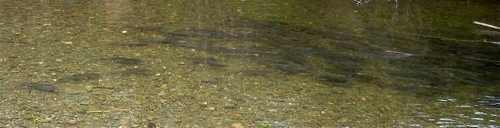
Over the weekend the Chi Council for the Clear Lake Hitch reported that its members spotted hitch at the mouth of Adobe Creek last Monday, with hitch also seen near the detention structure on Kelsey Creek on Saturday.
Finley resident Phil Murphy reported seeing about 300 hitch – in one larger group and several smaller ones – below the Kelsey Creek detention structure.
Murphy noted that all of the fish are very small, and he didn't see any older females.
The Clear Lake hitch currently is being considered for Endangered Species Act listing status under state and federal law, as Lake County News has reported.
Email Elizabeth Larson at