 How to resolve AdBlock issue?
News
In California married persons owe each other, “a duty of the highest good faith and fair dealing” (section 721 of California’s Family Code).
This duty of “good faith and fair dealing” is likened to a trustee’s duty to a beneficiary. How does that lofty duty apply to the conduct of married persons?
It applies to both interspousal transactions (i.e., transfers) and to the management of community property.
Specifically, “each spouse must provide the other spouse access to books at all times regarding any inter spousal transaction,” and “upon request provide true and full information of all things affecting any transaction which concerns the community property.”
The duty is most commonly relevant in the context of community property assets. “… [A]ll property, real or personal, wherever situated, acquired by a married person during the marriage while domiciled in this state which is [presumed to be] community property.” Marital earnings and anything purchased with marital earnings is community property.
Thus, a participant spouse’s retirement account, to the extent of contributions from marital earnings, is community property, even though the account is titled solely in the name of the participant spouse.
Any change of death beneficiaries requires the written consent of the non participant spouse in order to be effective with respect to one hundred percent of the community property retirement account.
Accordingly, if a participant spouse withdraws money from his or her 401(k) retirement account, which included marital earnings, for his or her sole pleasure or benefit and without the non-participant spouse’s knowledge and consent then such conduct would likely violate the duty.
Next, the duty also applies to transactions between spouses, such as when one spouse transfers his or her one-half interest in a community property – like the family home – to the other spouse to make the asset the other spouse’s sole and separate property.
A statutory presumption then applies that that the recipient spouse used undue influence over the transferring spouse to make the other spouse transfer title. An interspousal transfer of a family residence can be set aside by a court unless the presumption is overcome.
What happens when the duty is violated? A claim arises and, “a court may order an accounting of the property and obligations of the parties to a marriage and may determine the rights of ownership in, the beneficial enjoyment of, or access to, community property, and the classification of all property of the parties to a marriage.”
Moreover, even if the spouse who breached the duty subsequently files for bankruptcy the aggrieved innocent spouse’s claim against the bankruptcy estate over the violation may not be discharged.
This is because California’s inter spousal duty of fair dealing creates a trustee relationship between the spouses and a violation of such as duty is non dischargeable if the spouse has, “a culpable state of mind involving knowledge of, or gross recklessness” regarding such duty.
In sum, spouses are each other’s trustees when it comes to how they conduct themselves with respect to any dealings between themselves and the management of community property assets.
Anyone seeking guidance with respect to particular facts should consult an attorney.
Dennis A. Fordham, attorney (LL.M. tax studies), is a State Bar Certified Specialist in Estate Planning, Probate and Trust Law. His office is at 870 S. Main St., Lakeport, California. Fordham can be reached by e-mail at
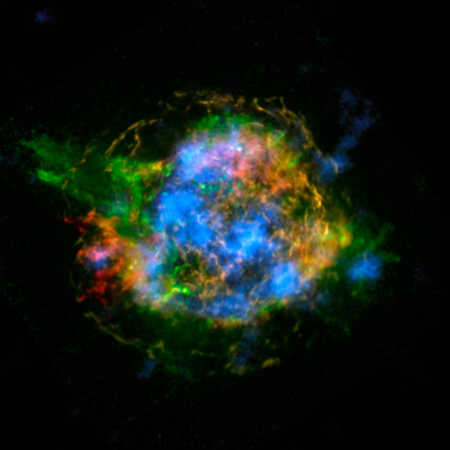
Astronomers for the first time have peered into the heart of an exploding star in the final minutes of its existence.
The feat is one of the primary goals of NASA's NuSTAR mission, launched in June 2012 to measure high-energy X-ray emissions from exploding stars, or supernovae, and black holes, including the massive black hole at the center of our Milky Way Galaxy.
The NuSTAR team reported in this week's issue of the journal Nature the first map of titanium thrown out from the core of a star that exploded in 1671. That explosion produced the beautiful supernova remnant known as Cassiopeia A (Cas A).
The well-known supernova remnant has been photographed by many optical, infrared and X-ray telescopes in the past, but these revealed only how the star's debris collided in a shock wave with the surrounding gas and dust and heated it up.
NuSTAR has produced the first map of high-energy X-ray emissions from material created in the actual core of the exploding star: the radioactive isotope titanium-44, which was produced in the star's core as it collapsed to a neutron star or black hole.
The energy released in the core collapse supernova blew off the star's outer layers, and the debris from this explosion has been expanding outward ever since at 5,000 kilometers per second.
"This has been a holy grail observation for high energy astrophysics for decades," said coauthor and NuSTAR investigator Steven Boggs, UC Berkeley professor and chair of physics. "For the first time we are able to image the radioactive emission in a supernova remnant, which lets us probe the fundamental physics of the nuclear explosion at the heart of the supernova like we have never been able to do before."
"Supernovae produce and eject into the cosmos most of the elements are important to life as we know it," said UC Berkeley professor of astronomy Alex Filippenko, who was not part of the NuSTAR team. "These results are exciting because for the first time we are getting information about the innards of these explosions, where the elements are actually produced."
Boggs says that the information will help astronomers build three-dimensional computer models of exploding stars, and eventually understand some of the mysterious characteristics of supernovae, such as jets of material ejected by some.
Previous observations of Cas A by the Chandra X-ray telescope, for example, showed jets of silicon emerging from the star.
"Stars are spherical balls of gas, and so you might think that when they end their lives and explode, that explosion would look like a uniform ball expanding out with great power,” said Fiona Harrison, the principal investigator of NuSTAR at the California Institute of Technology. "Our new results show how the explosion's heart, or engine, is distorted, possibly because the inner regions literally slosh around before detonating."
Expanding supernova remnant
Cas A is about 11,000 light years from Earth and the most studied nearby supernova remnant. In the 343 years since the star exploded, the debris from the explosion has expanded to about 10 light years across, essentially magnifying the pattern of the explosion so that it can be seen from Earth.
Earlier observations of the shock-heated iron in the debris cloud led some astronomers to think that the explosion was symmetric, that is, equally powerful in all directions.
Boggs noted, however, that the origins of the iron are so unclear that its distribution may not reflect the explosion pattern from the core.
"We don't know whether the iron was produced in the supernova explosion, whether it was part of the star when it originally formed, if it is just in the surrounding material, or even if the iron we see represents the actual distribution of iron itself, because we wouldn't see it if it were not heated in the shock," he said.
The new map of titanium-44, which does not match the distribution of iron in the remnant, strongly suggests that there is cold iron in the interior that Chandra does not see. Iron and titanium are produced in the same place in the star, said UC Berkeley research physicist Andreas Zoglauer, so they should be similarly distributed in the explosive debris.
"The surprising thing, which we suspected all along, is that the iron does not match titanium at all, so the iron we see is not mapping the distribution of elements produced in the core of the explosion," Boggs said.
He and his UC Berkeley colleagues also launch balloon-borne high-energy X-ray and gamma-ray detectors to record the radioactive decay of other elements, including iron, in supernovae to learn more about the nuclear reactions that take place during these brief, catastrophic explosions.
"The radioactive nuclei act as a probe of supernova explosions and allow us to see directly into densities and temperatures where nuclear processes are going that we don't have access to in terrestrial laboratories," Boggs said.
NuSTAR continues to observe radioactive titanium-44 emissions from a handful of other supernova remnants to determine if the pattern holds for other supernovae as well. These supernova remnants must be close enough to Earth for the debris structure to be seen, yet young enough for radioactive elements like titanium – which has a 60-day half-life – to still be emitting high-energy X-rays.
This work was supported under NASA No. NNG08FD60C, and made use of data from the Nuclear Spectroscopic Telescope Array (NuSTAR) mission, a project led by Caltech, managed by the Jet Propulsion Laboratory, and funded by the National Aeronautics and Space Administration.
NuSTAR mission instrument manager William Craig of UC Berkeley's Space Sciences Laboratory is also a coauthor of the Nature paper. Zoglauer conducted computer simulations of NuSTAR's detectors before launch, and continues to monitor the radioactive background in the detectors to correct observations.
Robert Sanders writes for the UC Berkeley News Center.
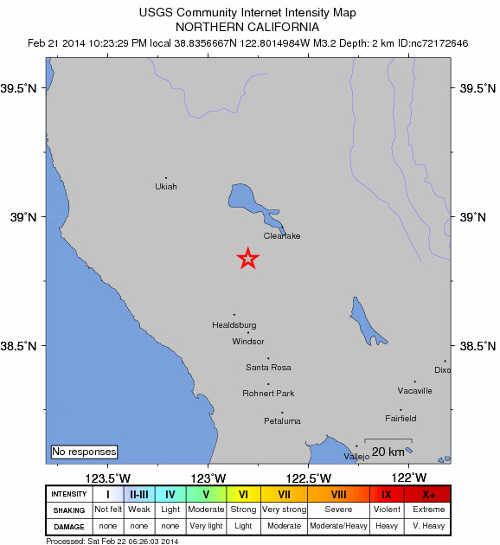
COBB, Calif. – A 3.2-magnitude earthquake was reported in the Cobb area on Friday night.
The US Geological Survey's preliminary report said the quake was recorded at 10:23 p.m.
The epicenter was located three miles west northwest of Cobb and 12 miles southwest of Clearlake, at a depth of 1.7 miles, the US Geological Survey reported.
As of just before 11 p.m., the US Geological Survey had received shake reports from Kelseyville and Middletown, as well as Geyserville and South San Francisco.
A 3.7-magnitude quake occurred near The Geysers geothermal steamfield on Jan. 21, as Lake County News has reported.
Email Elizabeth Larson at
CLEARLAKE OAKS, Calif. – A fire early Friday morning destroyed a Clearlake Oaks home.
The fire was first dispatched at around 5 a.m., according to Northshore Fire Protection District Deputy Chief Pat Brown.
Brown said when firefighters arrived minutes later, the second story of the home already was well involved.
He said the woman living in the home had been on the first floor when the fire broke out. She woke up and was able to safely get out of the structure.
Brown said firefighters worked on protecting other nearby structures from the blaze.
He said there was also an issue at the scene regarding access to water, which required bringing in two Northshore Fire water tenders and a water tender from Lake County Fire Protection District.
In addition to the water tenders, there were three Northshore Fire engines and a total of 12 firefighters, three chiefs and six personnel from the Northshore Fire support team, Brown said.
The house was “a total loss,” with Brown estimating damages totaled $100,000.
As for the cause, “We have an idea but it's still under investigation,” Brown said.
Email Elizabeth Larson at
KELSEYVILLE, Calif. – Lake County wines are among the top award winners at this year’s American Fine Wine (AFW) Competition, one of the most prestigious wine contests in the nation, held this month in southern Florida.
The honors include best of class captured by Sol Rouge Winery’s “Gypsy Rouge” and several double gold, gold and silver awards to Lake County vintages.
The wins caught the eye of the competition’s co-founder Monty Preiser, a wine and food writer and co-publisher of Preiser Keys to Napa and Sonoma.
“Over the years, we have had a number of world-class wines from Lake County win high medals at the American Fine Wine Competition. While the earliest wines were usually Sauvignon Blancs, the winemakers in the county have matured and are producing other quality varietals,” Preiser said.
“To my mind, this area may be the best Rhône-producing region in the country – just witness the double gold medals of the VIE Roussanne, the Sol Rouge Red Rhone Blend (Gypsy Rouge), and the luscious Sol Rouge Petite Sirah. Kudos to winemaker Bryan Kane, who made all three and is taking Lake County to another level,” Preiser added.
Sol Rouge, a Lake County winery, won the second highest number of medals in the seventh annual AFW competition, according to winemaker Kane. V. Sattui Winery of Napa, which makes more than twice as many wines as Sol Rouge, was the only winery to garner more medals.
“I went to the award ceremony in Napa with all the Napa and Sonoma winemakers,” said Kane, “and I was called up to the podium almost every other category. It was a bit embarrassing – a little unknown Lake County winemaker winning the second most number of medals, including the best in class for Red Rhône Blends for our 2010 Gypsy Rouge, which also came in fourth place for best in show.”
Four Lake County wineries garnered double gold medals with their wines: Sol Rouge’s 2010 Petite Sirah, Moshin Vineyards’ 2011 Late Harvest, Robledo Family Winery’s 2009 Late Harvest and VIE Winery’s 2011 Roussanne.
The Winery SF’s 2010 Cabernet Sauvignon – technically a Lake County wine, according to winemaker Kane – won double gold and was selected Best Cabernet Sauvignon in America under $25, which also happens to be the same award it captured in the San Francisco Chronicle Wine Competition this January.
The list of additional winners included Cache Creek Vineyards’ 2010 Cabernet Sauvignon (gold), 2010 Petite Sirah (silver) and 2012 Celebration Chardonnay (silver); Langtry Estate & Vineyards’ 2012 Sauvignon Blanc (silver); Robledo Family Winery’s “Mamma Maria’s” (silver); Saddleback Cellars’ 2009 “Black Rock” Zinfandel (gold) and 2009 “Black Rock” Petite Sirah (silver); and The Winery SF’s Reserve Chardonnay (silver).
Sol Rouge Winery’s awards, in addition to the Best of Class, included gold medals for its 2010 Cabernet Franc and 2011 Gypsy Blanc, as well as silver medals for its 2010 Cabernet Sauvignon, 2011 Viognier, 2010 Syrah and 2010 Zinfandel.
Complete results from the American Fine Wine Competition are online at www.americanfinewinecompetition.org .
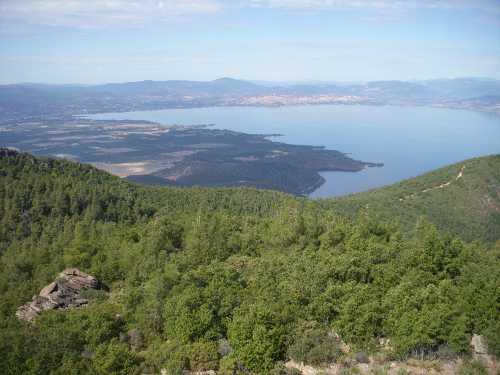
LAKE COUNTY, Calif. – Lake County Public Services Director Caroline Chavez has announced the schedule for the 2014 docent-led hikes at the Mount Konocti County Park.
The dates are:
- Saturday, March 29;
- Saturday, April 12;
- Saturday, April 26;
- Saturday, May 10;
- Sunday, May 18;
- Sunday, June 8.
Tom Nixon, retired State Parks ranger and member of the Konocti Trails Team, leads the docent tour program.
Docent guides will lead the hikes which will include visits to the historic Downen Cabin and the top of Wright Peak.
The docent guides are knowledgeable about the mountain and its geology, history, flora, fauna and even folklore.
There also will be an optional climb to the top of the Cal Fire lookout tower for hikers 18 years or older who sign a release of liability form.
This moderately strenuous hike lasts approximately four hours and will cover six miles. Hikers are encouraged to wear sturdy shoes, bring a lunch, water, daypack and binoculars/camera. Minors are welcomed when accompanied by a responsible adult.
Hikers will meet at 8 a.m. at the Mount Konocti County Park parking lot, which can be accessed from Konocti Road in Kelseyville. Hikes will be canceled if inclement weather occurs.
Reservations are required due to limited space and must be made by March 14 for the first scheduled hike. April 1 is the reservation deadline for the remaining hikes. Reservations can be made by calling the Public Services Department at 707-262-1618.
In its monumental 2011 acquisition, the county of Lake purchased 1,520 acres of land on top of Mount Konocti to create the new Mount Konocti County Park. This land is now placed in public hands for perpetuity.
The county-owned land is contiguous with an additional 821 acres of public lands managed by the Bureau of Land Management.
For more information on Mount Konocti County Park, or to access a downloadable map, visit www.konoctitrails.com .