 How to resolve AdBlock issue?
News
California Attorney General Rob Bonta, together with local and federal law enforcement partners, on Tuesday announced the eradication of 774,829 illegally cultivated cannabis plants and 106,141 pounds of processed cannabis, as well as 282 arrests in 36 different counties across California as part of Eradication and Prevention of Illicit Cannabis, or EPIC, program.
The total underground market price for these seizures is valued at approximately $353 million.
EPIC is an interagency task force focused on combating the illegal cannabis market, cannabis enforcement work, and investigating and prosecuting civil and criminal cases with a focus on environmental, economic and labor impacts from illegal cultivation.
“California has the largest safe, legal, and regulated cannabis market in the world, but unfortunately illegal and unlicensed grows continue to proliferate,” said Attorney General Rob Bonta. “The EPIC program was forged out of our recognition of the need for a more comprehensive approach that addresses the broader implications of the underground cannabis market. This includes tackling the environmental damage caused by these illicit activities, as well as the economic ramifications that arise from unregulated cultivation. Furthermore, there is a growing concern about labor exploitation within this underground market, where workers may face unsafe conditions and unfair treatment. I want to express my gratitude to the various partners involved in this effort, including local, state, and federal law enforcement agencies. Together, we are working toward a solution that not only curtails illegal activities but also promotes a sustainable and equitable cannabis industry in the state.”
“California has the largest state park system in the country with 1.59 million acres of park land to protect," said California State Parks Law Enforcement Assistant Chief Jeremy Stinson. "Unfortunately, illegal cannabis cultivation is a serious threat to that land with more than 400 sites documented. California State Parks appreciates being a partner agency within EPIC to help address this issue. Protecting our state’s natural resources for all Californians and future generations is an important part of our mission. We look forward to continuing this valuable partnership to preserve and protect California’s state parks system.”
“California cannabis enforcement has a long way to go to ensure that the illicit cannabis doesn’t make it into the legal market," said San Bernardino County Sheriff Shannon Dicus. "Partnerships like EPIC are a major step forward in tackling this problem.”
Over the course of the 2024 season, EPIC teams operating in Northern, Central, and Southern California, conducted 665 operations, recovered 201 weapons, and removed infrastructure, including dams, water lines, and containers of toxic chemicals, such as carbofuran, methyl parathion, aluminum phosphate, zinc phosphide, and illegal fertilizers. Carbofuran, in particular, poses untold risks to public health. A lethal insecticide that is effectively banned in the United States, carbofuran remains on plants after application and seeps into soil and nearby water sources.
In 2024, EPIC operations were conducted in the following 36 counties:
Alameda: 1 site, 751 plants eradicated
Butte: 5 sites, 4,397 plants eradicated
Colusa: 3 sites, 10 plants eradicated
Contra Costa: 2 sites, 5,010 plants eradicated
El Dorado: 8 sites, 2,174 plants eradicated
Fresno: 31 sites, 52,796 plants eradicated
Glenn: 1 site, 747 plants eradicated
Kern: 60 sites, 89,819 plants eradicated
Kings: 1 site, 539 plants eradicated
Lake: 48 sites, 42,776 plants eradicated
Lassen: 1 site, 7,359 plants eradicated
Los Angeles: 3 sites, 3,684 plants eradicated
Madera: 3 sites, 1,230 plants eradicated
Mariposa: 2 sites, 1,368 plants eradicated
Mendocino: 116 sites, 133,702 plants eradicated
Nevada: 33 sites, 28,428 plants eradicated
Riverside: 79 sites, 136,601 plants eradicated
Sacramento: 13 sites, 46,042 plants eradicated
San Bernardino: 23 sites, 27,845 plants eradicated
San Diego: 7 sites, 9,301 plants eradicated
Santa Barbara: 1 site, 362 plants eradicated
Santa Clara: 2 sites, 1,012 plants eradicated
Shasta: 67 sites, 51,289 plants eradicated
Siskiyou: 98 sites, 67,943 plants eradicated
Stanislaus: 6 sites, 5,103 plants eradicated
Trinity: 38 sites, 32,381 plants eradicated
Tulare: 7 sites, 5,468 plants eradicated
Tuolumne: 2 sites, 7,637 plants eradicated
Ventura: 3 sites, 7,891 plants eradicated
Yuba: 2 sites, 1,164 plants eradicated
Monterey: reconnaissance only
Napa: reconnaissance only
San Benito: reconnaissance only
San Luis Obispo: reconnaissance only
Santa Cruz: reconnaissance only
Solano: reconnaissance only
The EPIC program focuses on the investigation and prosecution of civil and criminal cases relating to illicit cannabis cultivation with a focus on environmental and economic harms and labor exploitation.
EPIC is a multi-agency collaboration led by DOJ in partnership with the U.S. Department of Agriculture’s U.S. Forest Service; the U.S. Department of the Interior's Bureau of Land Management and National Park Service; the California Department of Fish and Wildlife; the U.S. Department of Justice’s Drug Enforcement Administration; the California National Guard, Counter Drug Task Force; the Central Valley High Intensity Drug Trafficking Areas program; California State Parks; California Environmental Protection Agency; and other local law enforcement departments.
The total underground market price for these seizures is valued at approximately $353 million.
EPIC is an interagency task force focused on combating the illegal cannabis market, cannabis enforcement work, and investigating and prosecuting civil and criminal cases with a focus on environmental, economic and labor impacts from illegal cultivation.
“California has the largest safe, legal, and regulated cannabis market in the world, but unfortunately illegal and unlicensed grows continue to proliferate,” said Attorney General Rob Bonta. “The EPIC program was forged out of our recognition of the need for a more comprehensive approach that addresses the broader implications of the underground cannabis market. This includes tackling the environmental damage caused by these illicit activities, as well as the economic ramifications that arise from unregulated cultivation. Furthermore, there is a growing concern about labor exploitation within this underground market, where workers may face unsafe conditions and unfair treatment. I want to express my gratitude to the various partners involved in this effort, including local, state, and federal law enforcement agencies. Together, we are working toward a solution that not only curtails illegal activities but also promotes a sustainable and equitable cannabis industry in the state.”
“California has the largest state park system in the country with 1.59 million acres of park land to protect," said California State Parks Law Enforcement Assistant Chief Jeremy Stinson. "Unfortunately, illegal cannabis cultivation is a serious threat to that land with more than 400 sites documented. California State Parks appreciates being a partner agency within EPIC to help address this issue. Protecting our state’s natural resources for all Californians and future generations is an important part of our mission. We look forward to continuing this valuable partnership to preserve and protect California’s state parks system.”
“California cannabis enforcement has a long way to go to ensure that the illicit cannabis doesn’t make it into the legal market," said San Bernardino County Sheriff Shannon Dicus. "Partnerships like EPIC are a major step forward in tackling this problem.”
Over the course of the 2024 season, EPIC teams operating in Northern, Central, and Southern California, conducted 665 operations, recovered 201 weapons, and removed infrastructure, including dams, water lines, and containers of toxic chemicals, such as carbofuran, methyl parathion, aluminum phosphate, zinc phosphide, and illegal fertilizers. Carbofuran, in particular, poses untold risks to public health. A lethal insecticide that is effectively banned in the United States, carbofuran remains on plants after application and seeps into soil and nearby water sources.
In 2024, EPIC operations were conducted in the following 36 counties:
Alameda: 1 site, 751 plants eradicated
Butte: 5 sites, 4,397 plants eradicated
Colusa: 3 sites, 10 plants eradicated
Contra Costa: 2 sites, 5,010 plants eradicated
El Dorado: 8 sites, 2,174 plants eradicated
Fresno: 31 sites, 52,796 plants eradicated
Glenn: 1 site, 747 plants eradicated
Kern: 60 sites, 89,819 plants eradicated
Kings: 1 site, 539 plants eradicated
Lake: 48 sites, 42,776 plants eradicated
Lassen: 1 site, 7,359 plants eradicated
Los Angeles: 3 sites, 3,684 plants eradicated
Madera: 3 sites, 1,230 plants eradicated
Mariposa: 2 sites, 1,368 plants eradicated
Mendocino: 116 sites, 133,702 plants eradicated
Nevada: 33 sites, 28,428 plants eradicated
Riverside: 79 sites, 136,601 plants eradicated
Sacramento: 13 sites, 46,042 plants eradicated
San Bernardino: 23 sites, 27,845 plants eradicated
San Diego: 7 sites, 9,301 plants eradicated
Santa Barbara: 1 site, 362 plants eradicated
Santa Clara: 2 sites, 1,012 plants eradicated
Shasta: 67 sites, 51,289 plants eradicated
Siskiyou: 98 sites, 67,943 plants eradicated
Stanislaus: 6 sites, 5,103 plants eradicated
Trinity: 38 sites, 32,381 plants eradicated
Tulare: 7 sites, 5,468 plants eradicated
Tuolumne: 2 sites, 7,637 plants eradicated
Ventura: 3 sites, 7,891 plants eradicated
Yuba: 2 sites, 1,164 plants eradicated
Monterey: reconnaissance only
Napa: reconnaissance only
San Benito: reconnaissance only
San Luis Obispo: reconnaissance only
Santa Cruz: reconnaissance only
Solano: reconnaissance only
The EPIC program focuses on the investigation and prosecution of civil and criminal cases relating to illicit cannabis cultivation with a focus on environmental and economic harms and labor exploitation.
EPIC is a multi-agency collaboration led by DOJ in partnership with the U.S. Department of Agriculture’s U.S. Forest Service; the U.S. Department of the Interior's Bureau of Land Management and National Park Service; the California Department of Fish and Wildlife; the U.S. Department of Justice’s Drug Enforcement Administration; the California National Guard, Counter Drug Task Force; the Central Valley High Intensity Drug Trafficking Areas program; California State Parks; California Environmental Protection Agency; and other local law enforcement departments.
The Department of Alcoholic Beverage Control, in partnership with the California Office of Traffic Safety and the National Highway Traffic Safety Administration, reminds all young drivers to focus on the road to help increase safety for everyone.
Oct. 20 to 26 is National Teen Driver Safety Week, and it is a great time for California parents to talk to their teenagers about safe driving, including the importance of driving sober.
The greatest dangers for teen drivers are alcohol consumption, not wearing a seat belt, distracted driving, speeding, and driving with passengers in the vehicle.
For National Teen Driver Safety Week, parents are encouraged to talk with their teens about the important rules they need to follow to stay safe.
According to the California Highway Patrol:
• Traffic crashes are the leading cause of death among teens 16-19 years old.
• A teen driver was determined to be at fault in approximately 66 percent of those crashes.
“ABC encourages parents to talk to their children about the dangers of consuming alcohol and driving,” said ABC Director Joseph McCullough. “Underage drinking causes a disproportionate amount of preventable deaths every year.”
Parents can be the biggest influencers on teens’ driving habits if they take the time to talk with their teens about some of the biggest driving risks.
To help reduce risks for teen drivers, follow these basic rules:
• Impaired driving: All teens are too young to legally buy, possess, or consume alcohol. However, nationally in 2022, 22 percent of young drivers involved in fatal crashes had alcohol in their system, and 84 percent of those involved exceeded a .08 percent blood alcohol content or BAC. The number of teen drivers involved in fatal crashes with alcohol in their system has nearly doubled since 2017, according to figures from NHTSA.
• Seat belt safety: Wearing a seat belt is one of the simplest ways for teens to stay safe in a vehicle. Yet too many teens aren’t buckling up — 50 percent of teen passenger vehicle drivers who died in 2022 were unbuckled.
• Distracted driving: Cell phone use while driving is not only dangerous, but it is also illegal. Distracted driving accounted for eight percent of all teen motor vehicle crashes in 2021. Drivers under 18 are not allowed to use a phone for any reason, including hands-free.
• Speed limits: Speeding is a critical safety issue for all drivers, especially for teens. In 2022, fatal crashes involving teens 15 to 18 were speeding more than any other demographic.
• Passengers: The likelihood of teen drivers engaging in risky behavior triples when traveling with multiple passengers.
OTS funds multiple ABC programs designed to help keep California youth safe including Target Responsibility for Alcohol Connected Emergencies, or TRACE, Minor decoy, and shoulder tap decoy operations that are used to reduce youth access to alcohol.
TRACE involves in-depth ABC investigations of serious incidents involving alcohol-related car crashes.
The minor decoy and shoulder tap programs reduce youth access to alcohol by performing compliance checks on licensees and the public to ensure they don’t furnish alcohol to underage youth.
For more information about National Teen Driver Safety Week and to learn safe driving tips to share with teens, visit the NHTSA Website.
Oct. 20 to 26 is National Teen Driver Safety Week, and it is a great time for California parents to talk to their teenagers about safe driving, including the importance of driving sober.
The greatest dangers for teen drivers are alcohol consumption, not wearing a seat belt, distracted driving, speeding, and driving with passengers in the vehicle.
For National Teen Driver Safety Week, parents are encouraged to talk with their teens about the important rules they need to follow to stay safe.
According to the California Highway Patrol:
• Traffic crashes are the leading cause of death among teens 16-19 years old.
• A teen driver was determined to be at fault in approximately 66 percent of those crashes.
“ABC encourages parents to talk to their children about the dangers of consuming alcohol and driving,” said ABC Director Joseph McCullough. “Underage drinking causes a disproportionate amount of preventable deaths every year.”
Parents can be the biggest influencers on teens’ driving habits if they take the time to talk with their teens about some of the biggest driving risks.
To help reduce risks for teen drivers, follow these basic rules:
• Impaired driving: All teens are too young to legally buy, possess, or consume alcohol. However, nationally in 2022, 22 percent of young drivers involved in fatal crashes had alcohol in their system, and 84 percent of those involved exceeded a .08 percent blood alcohol content or BAC. The number of teen drivers involved in fatal crashes with alcohol in their system has nearly doubled since 2017, according to figures from NHTSA.
• Seat belt safety: Wearing a seat belt is one of the simplest ways for teens to stay safe in a vehicle. Yet too many teens aren’t buckling up — 50 percent of teen passenger vehicle drivers who died in 2022 were unbuckled.
• Distracted driving: Cell phone use while driving is not only dangerous, but it is also illegal. Distracted driving accounted for eight percent of all teen motor vehicle crashes in 2021. Drivers under 18 are not allowed to use a phone for any reason, including hands-free.
• Speed limits: Speeding is a critical safety issue for all drivers, especially for teens. In 2022, fatal crashes involving teens 15 to 18 were speeding more than any other demographic.
• Passengers: The likelihood of teen drivers engaging in risky behavior triples when traveling with multiple passengers.
OTS funds multiple ABC programs designed to help keep California youth safe including Target Responsibility for Alcohol Connected Emergencies, or TRACE, Minor decoy, and shoulder tap decoy operations that are used to reduce youth access to alcohol.
TRACE involves in-depth ABC investigations of serious incidents involving alcohol-related car crashes.
The minor decoy and shoulder tap programs reduce youth access to alcohol by performing compliance checks on licensees and the public to ensure they don’t furnish alcohol to underage youth.
For more information about National Teen Driver Safety Week and to learn safe driving tips to share with teens, visit the NHTSA Website.
An inaugural Native American Parade running down Capitol Mall to the state Capitol’s West Steps is being sponsored by tribes and the California Native American Legislative Caucus from 10 a.m. to 3 p.m on Saturday, Nov. 9.
Eighty entries are confirmed with participants represented by floats, vehicles, walkers, performers and others taking part in this first Sacramento cavalcade celebrating California Native Americans during National Native American Month.
Also planned as part of the November festivities is a Friday, Nov. 8, cultural exchange for 150 third and fourth grade students with classes in traditional crafts and performances such as dancing or bird singing. The student program is scheduled from 9:45 a.m. to 1:30 p.m. on the Capitol grounds.
Tribal artisans and performers will teach the classes in Capitol Park in the Native American monument area or in Capitol hearing rooms, depending on the weather.
This program is modeled after a successful project more than 20 years old held for elementary students in the Inland Empire at California State University, San Bernardino.
That student gathering is coordinated annually in September during California Native American Month and was founded and organized by Assemblymember James C. Ramos (D-San Bernardino), the first and only California Native American elected to the state Legislature, along with area tribes and the university.
More than 5,000 native and nonnative young students have participated in the San Bernardino event.
Eighty entries are confirmed with participants represented by floats, vehicles, walkers, performers and others taking part in this first Sacramento cavalcade celebrating California Native Americans during National Native American Month.
Also planned as part of the November festivities is a Friday, Nov. 8, cultural exchange for 150 third and fourth grade students with classes in traditional crafts and performances such as dancing or bird singing. The student program is scheduled from 9:45 a.m. to 1:30 p.m. on the Capitol grounds.
Tribal artisans and performers will teach the classes in Capitol Park in the Native American monument area or in Capitol hearing rooms, depending on the weather.
This program is modeled after a successful project more than 20 years old held for elementary students in the Inland Empire at California State University, San Bernardino.
That student gathering is coordinated annually in September during California Native American Month and was founded and organized by Assemblymember James C. Ramos (D-San Bernardino), the first and only California Native American elected to the state Legislature, along with area tribes and the university.
More than 5,000 native and nonnative young students have participated in the San Bernardino event.
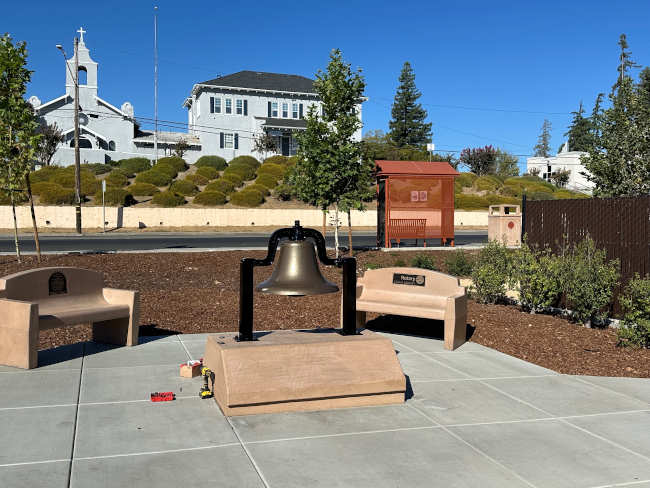
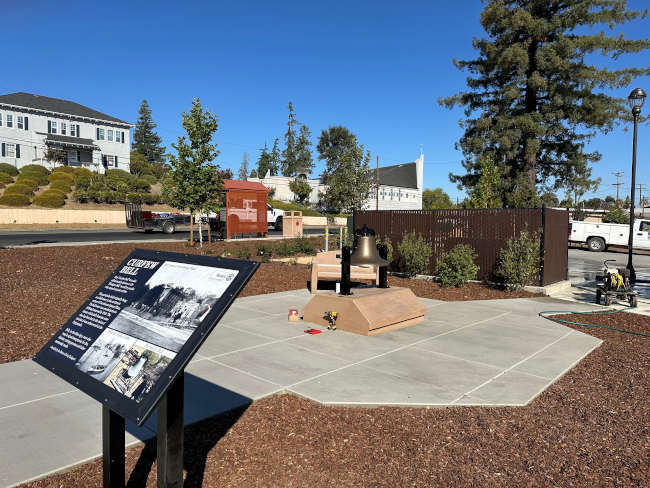
LAKEPORT, Calif. — The effort to preserve a piece of unique Lakeport history will be celebrated this week.
The Lakeport curfew bell is at the heart of a new monument to be dedicated at Xabatin Park in a “Rotary After Dark” event planned for 5:30 to 7:30 p.m. Wednesday, Oct. 23.
The project, a collaboration between the city of Lakeport and the Lakeport Rotary, focused on taking the historic Lakeport “curfew” — or “hooligan” — bell, which had sat in storage for many years, and placing it at the center of a new monument at the park, which opened a year ago this month.
The bell once was used to alert children to return home for the night.
During the June meeting in which the Lakeport City Council gave its final approval on the project, Lakeport Public Works Director Ron Ladd credited Public Works Superintendent Jim Kennedy for finding the bell sitting in storage on the Lake County Fairgrounds property.
Mark Lipps, a local businessman and Rotary District 5130 Area governor who took the club’s lead on the project during his term as president that ended earlier this year, reported that the bell has been installed at the park.
He said the bell originally was installed downtown just after the historic Lakeport courthouse was built in the 1870s.
“This has been a Lakeport Rotary labor of love for the last year,” he told fellow Rotarians in an email update on the bell project.
The Rotary reported that the bell display, commemorative plaque and accompanying benches are located near the parking lot and the bathrooms.
The monument’s completion comes as the Lakeport Rotary itself is planning to celebrate its 100th anniversary in 2025.
“This club is a part of the history and legacy of this community. I am excited that our club plans to continue telling the stories of ‘days gone by’ in celebrating our 100th Anniversary. Stay tuned for those details. We will continue the sweat equity in leaving more footprints around town for today and upcoming generations,” Lipps reported in his email update.
The community is encouraged to attend the Wednesday celebration.
Email Elizabeth Larson at
LAKE COUNTY, Calif. — The U.S. Department of Agriculture has announced an investment of more than $46 million in projects aimed to tackle food and nutrition insecurity in underserved communities, as well as support healthy diets by providing access to fruits and vegetables for eligible families.
These funds support efforts across the USDA National Institute of Food and Agriculture’s Community Food Projects Competitive Grants Program and Gus Schumacher Nutrition Incentive Program.
Among the grantees in this round of funding is Lake County Tribal Health and its Food as Medicine Program.
The program will receive $480,440 through the Produce Prescription, which awarded $5.2 million to 11 awardees.
The USDA said these projects will demonstrate and evaluate the impact of fresh fruit and vegetable prescriptions.
The goals of the Produce Prescription Program are to increase purchase and consumption of fruits and vegetables, reduce individual and household food insecurity, and reduce healthcare use and associated costs.
Tribal Health did not immediately respond to a request for comment about its project.
“Healthy, safe, and affordable food is essential for a strong start for children and a healthy life for all of us,” said Deputy Secretary of Agriculture Xochitl Torres Small. “Through these investments, the Biden Harris Administration is investing in healthy food options for people no matter where they live and supporting stronger local and regional food systems.”
The investment provides funding to 20 CFPCGP projects , which bring together stakeholders from distinct parts of the food system and fosters understanding of national food security trends and how they might work together to improve local food systems.
This investment is expected to catalyze small production agriculture, increase food access in low-income communities, increase community engagement in planning for food security solutions, and bridge gaps in local foods systems.
Named in honor of the former USDA Under Secretary of Agriculture for Farm and Foreign Agricultural Services (1997 to 2001) Gus Schumacher, GusNIP grant programs include Nutrition Incentives and Produce Prescriptions. By bringing together stakeholders from various parts of the food and healthcare systems, GusNIP projects help foster understanding to improve the health and nutrition of participating households, facilitate growth in underrepresented communities and geographies, and aggregate data to identify and improve best practices on a broad scale.
Fourteen awardees are receiving GusNIP Nutrition Incentive funding totaling $36.3 million. These projects increase the purchase of fruits and vegetables by providing incentives at the point of purchase among income-eligible households participating in the USDA Supplemental Nutrition Assistance Program and Nutrition Assistance Program Block Grants. The awards include Pilot Projects, Standard Projects and Largescale Projects.
These investments answer the call to the White House Challenge to End Hunger and Build Healthy Communities, which is an extension of the National Strategy on Hunger, Nutrition, and Health that aims to end hunger and increase healthy eating.
These funds support efforts across the USDA National Institute of Food and Agriculture’s Community Food Projects Competitive Grants Program and Gus Schumacher Nutrition Incentive Program.
Among the grantees in this round of funding is Lake County Tribal Health and its Food as Medicine Program.
The program will receive $480,440 through the Produce Prescription, which awarded $5.2 million to 11 awardees.
The USDA said these projects will demonstrate and evaluate the impact of fresh fruit and vegetable prescriptions.
The goals of the Produce Prescription Program are to increase purchase and consumption of fruits and vegetables, reduce individual and household food insecurity, and reduce healthcare use and associated costs.
Tribal Health did not immediately respond to a request for comment about its project.
“Healthy, safe, and affordable food is essential for a strong start for children and a healthy life for all of us,” said Deputy Secretary of Agriculture Xochitl Torres Small. “Through these investments, the Biden Harris Administration is investing in healthy food options for people no matter where they live and supporting stronger local and regional food systems.”
The investment provides funding to 20 CFPCGP projects , which bring together stakeholders from distinct parts of the food system and fosters understanding of national food security trends and how they might work together to improve local food systems.
This investment is expected to catalyze small production agriculture, increase food access in low-income communities, increase community engagement in planning for food security solutions, and bridge gaps in local foods systems.
Named in honor of the former USDA Under Secretary of Agriculture for Farm and Foreign Agricultural Services (1997 to 2001) Gus Schumacher, GusNIP grant programs include Nutrition Incentives and Produce Prescriptions. By bringing together stakeholders from various parts of the food and healthcare systems, GusNIP projects help foster understanding to improve the health and nutrition of participating households, facilitate growth in underrepresented communities and geographies, and aggregate data to identify and improve best practices on a broad scale.
Fourteen awardees are receiving GusNIP Nutrition Incentive funding totaling $36.3 million. These projects increase the purchase of fruits and vegetables by providing incentives at the point of purchase among income-eligible households participating in the USDA Supplemental Nutrition Assistance Program and Nutrition Assistance Program Block Grants. The awards include Pilot Projects, Standard Projects and Largescale Projects.
These investments answer the call to the White House Challenge to End Hunger and Build Healthy Communities, which is an extension of the National Strategy on Hunger, Nutrition, and Health that aims to end hunger and increase healthy eating.
On Monday, Gov. Gavin Newsom announced the start of an ambitious new service year for the California Service Corps, with 10,000 service members expected to provide over five million service hours in 2025.
“As we launch this new service year with the nation’s largest service corps, we reaffirm that service to others is the highest form of civic duty. These paid opportunities embody the best of California’s values — a commitment to each other, mutual understanding, and the belief that when we lift others, we all rise together,” Newsom said.
California leads the way in national service
In 2025, California Service Corps programs will be over 10,000 members strong and will help communities by:
• Tutoring and mentoring K-12 students.
• Supporting communities experiencing and recovering from disasters.
• Combating food insecurity and connecting vulnerable people to resources and services.
• Taking climate action — planting trees, preventing wildfires, and installing solar panels.
California Service Corps programs include:
• #CaliforniansForAll College Corps.
• Youth Service Corps.
• California Climate Action Corps.
• AmeriCorps California.
“Service members have stepped up to bridge divides and help their communities by serving in the California Service Corps,” said California Chief Service Officer Josh Fryday. “These members are the state’s future leaders, and we need their energy and enthusiasm to address our greatest challenges.”
California Service Corps members gain skills and experience while effecting positive change in their communities. Members receive living stipends, and many can receive up to $10,000 toward higher education after completing their service to be used for college, trade school or to pay back student loans.
To learn more about applying to the California Climate Action Corps, Youth Service Corps and AmeriCorps California, visit www.CAServiceCorps.com.
“As we launch this new service year with the nation’s largest service corps, we reaffirm that service to others is the highest form of civic duty. These paid opportunities embody the best of California’s values — a commitment to each other, mutual understanding, and the belief that when we lift others, we all rise together,” Newsom said.
California leads the way in national service
In 2025, California Service Corps programs will be over 10,000 members strong and will help communities by:
• Tutoring and mentoring K-12 students.
• Supporting communities experiencing and recovering from disasters.
• Combating food insecurity and connecting vulnerable people to resources and services.
• Taking climate action — planting trees, preventing wildfires, and installing solar panels.
California Service Corps programs include:
• #CaliforniansForAll College Corps.
• Youth Service Corps.
• California Climate Action Corps.
• AmeriCorps California.
“Service members have stepped up to bridge divides and help their communities by serving in the California Service Corps,” said California Chief Service Officer Josh Fryday. “These members are the state’s future leaders, and we need their energy and enthusiasm to address our greatest challenges.”
California Service Corps members gain skills and experience while effecting positive change in their communities. Members receive living stipends, and many can receive up to $10,000 toward higher education after completing their service to be used for college, trade school or to pay back student loans.
To learn more about applying to the California Climate Action Corps, Youth Service Corps and AmeriCorps California, visit www.CAServiceCorps.com.