How to resolve AdBlock issue?
Refresh this page
How to resolve AdBlock issue?

Refresh this page
Lake County News,California
  • Home
    • Registration Form
  • News
    • Education
    • Veterans
    • Community
      • Obituaries
      • Letters
      • Commentary
    • Police Logs
    • Business
    • Recreation
    • Health
    • Religion
    • Legals
    • Arts & Life
    • Regional
  • Calendar
  • Contact us
    • FAQs
    • Phones, E-Mail
    • Subscribe
  • Advertise Here
  • Login

News

Helping Paws: New small dogs

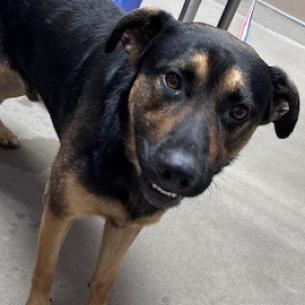
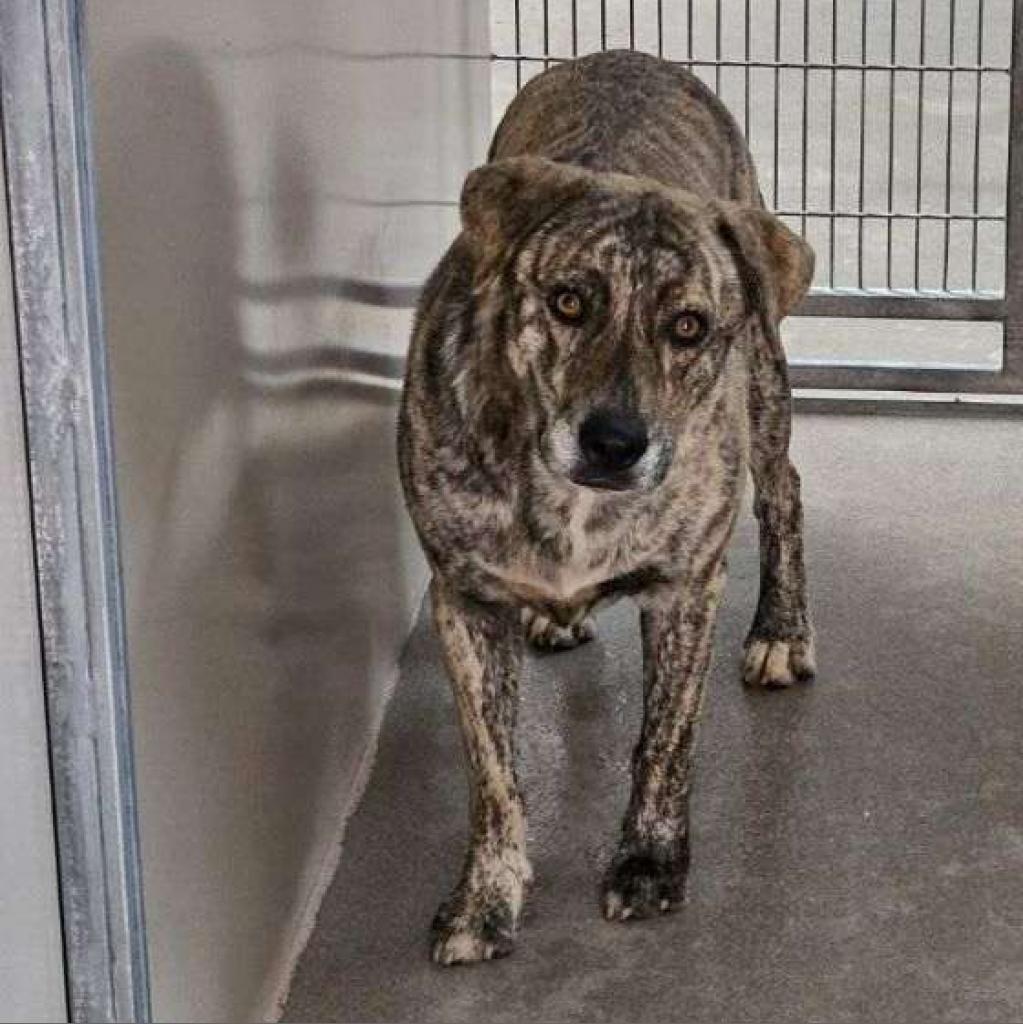
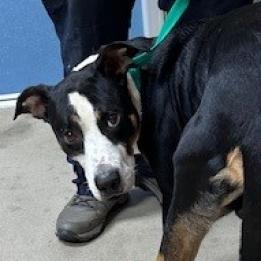
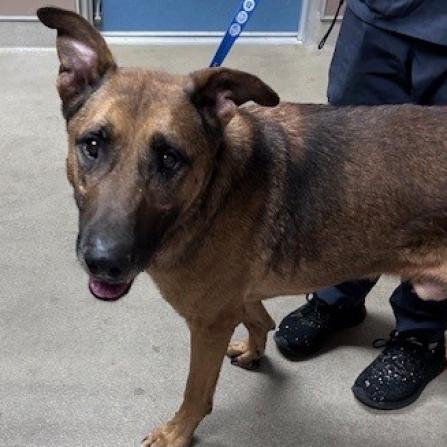
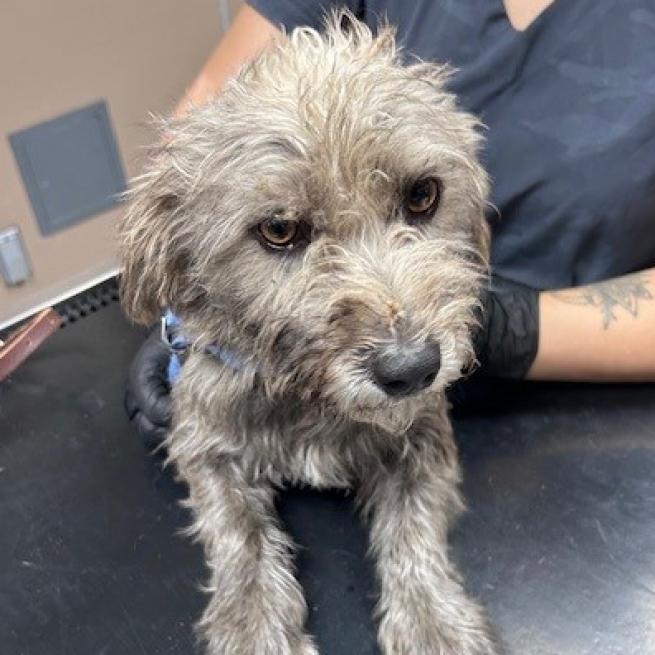
LAKE COUNTY, Calif. — Lake County Animal Care and Control has more new dogs, including small breeds and terriers, available for adoption.

The dogs available for adoption this week include mixes of Australian shepherd, border collie, boxer, Brussels griffon, cane corso, Chihuahua, Dogo Argentino, German shepherd, husky, Labrador Retriever, pit bull terrier, pug, and terrier.

Dogs that are adopted from Lake County Animal Care and Control are either neutered or spayed, microchipped and, if old enough, given a rabies shot and county license before being released to their new owner. License fees do not apply to residents of the cities of Lakeport or Clearlake.

Those dogs and the others shown on this page at the Lake County Animal Care and Control shelter have been cleared for adoption.

Call Lake County Animal Care and Control at 707-263-0278 or visit the shelter online for information on visiting or adopting.

The shelter is located at 4949 Helbush in Lakeport.

Email Elizabeth Larson at This email address is being protected from spambots. You need JavaScript enabled to view it.. Follow her on Twitter, @ERLarson, or Lake County News, @LakeCoNews.


Kennel#21's preview photo
Kennel#21

Kennel#33's preview photo
Kennel#33

Kennel#2's preview photo
Kennel#2

Kennel#22's preview photo
Kennel#22

Kennel#18's preview photo
Kennel#18


Kennel#19(Otis)'s preview photo
Kennel#19(Otis)

Kennel#3's preview photo
Kennel#3


Kennel#28's preview photo
Kennel#28

  
Kennel#9's preview photo
Kennel#9

Kennel#32a's preview photo
Kennel#32a

Kennel#29's preview photo
Kennel#29

Kennel#31a's preview photo
Kennel#31a

Kennel#31b's preview photo
Kennel#31b

Kennel#32b's preview photo
Kennel#32b

Kennel#34's preview photo
Kennel#34

Kennel#6's preview photo
Kennel#6

Kennel#15's preview photo
Kennel#15

Kennel#17's preview photo
Kennel#17

Kennel#10's preview photo
Kennel#10


Kennel#16's preview photo
Kennel#16

Kennel#23's preview photo
Kennel#23


Presidential elections provide opportunities to teach about power, proportions and percentages


The complex voting system in the U.S. requires a sophisticated understanding of math. bamlou/DigitalVision Vectors

To American voters, the process of electing a president and other officials may be difficult to explain and understand. For America’s math teachers, the system represents a gold mine for real-life lessons on ratios, statistics and data.

And by basing the lessons on elections, teachers can help put students on the path to becoming informed and engaged voters later in life, according to a 2020 survey of 2,232 young adults ages 18-21.

Americans don’t vote directly for the president. Instead, a group of electors vote for the candidate who wins the popular vote in that state. In most states, whoever wins the most votes wins all the state’s electors, or “electoral votes.”

Not all states have the same number of electors. Each state starts with two electoral votes, based on the two U.S. senators in each state. States receive additional electors based on the number of representatives they have in the House of Representatives, which depends on a state’s population. The number of representatives in the House, however, has been set at 435 since 1929, despite a huge and varied increase in the population. This means the number of people represented by each member of the U.S. House – the ratio of people to representative – varies considerably, as shown in a table from the U.S. Census Bureau.

Armed with this background, math teachers can use the census data on population and ratios to teach students the following math – and voting – topics.

Topic 1: Ratio

To calculate a state’s representative ratio, the number of people for every one representative, divide the population by the number of the state’s representatives in the U.S. House. In 2020, for example, Montana had two congressional representatives and a population of 1,085,407. The representative ratio was 542,704:1 – 1,085,407 divided by 2 – or 542,704 residents for each representative.

Topic 2: Minimum and maximum

In any set of numbers, the minimum is the smallest number in the set and the maximum is the largest number. For example, using the representative ratios from the 2020 census data, Montana’s ratio of 542,704:1 is the smallest – the minimum – and Delaware’s ratio of 990,837:1 is the largest, or the maximum.

Topic 3: The shape, center and spread of data

Shape means how data, such as the ratios of residents to representatives, looks on a chart or graph. Teachers can use a histogram, a kind of graph used to illustrate how data is distributed: evenly, skewed to one side, or with some numbers as outliers, at a distance from the other numbers.

The ratios can also be used to explain how to find the “center” of data, its mean or median. The mean is the average, found by adding all the numbers in the set and dividing by how many there are. For example, adding the ratios for all the states and dividing by 50. The median is the middle number when all numbers are placed in order from minimum to maximum. Simple spreadsheet formulas are available online to help students find both.

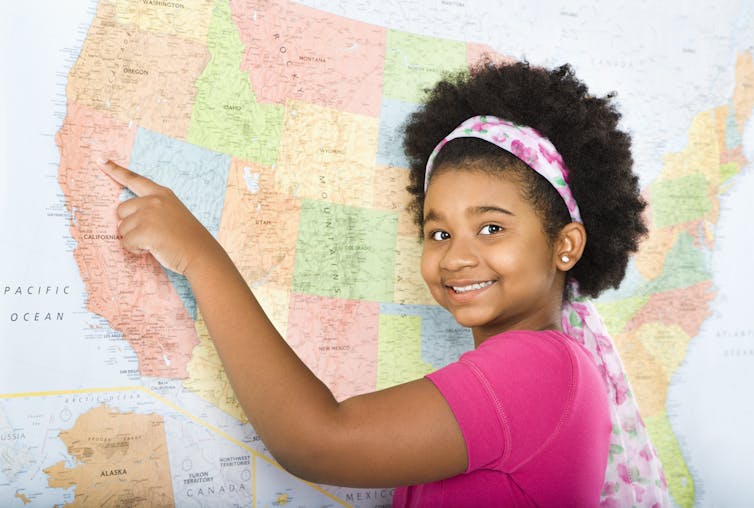
A girl points to California on a U.S. map.
Students can examine ratios of residents to representatives for all 50 states. iofoto via Getty Images

The “spread” of a set of numbers tells how much the numbers are different from the center. One measure of spread is called the range, which is the difference between the maximum and the minimum. For example, the range in representative ratios among the states is 448,133: the maximum, Delaware’s 990,837, minus the minimum, Montana’s 542,704.

When students understand how ratios – and elections – work, teachers can ask questions such as, “Montana has fewer people per representative than Delaware. Where would your vote count more?” Answer: Montana, because fewer people per representative means each vote counts more.

Topic 4: Gerrymandering

Each state is divided into districts; residents of each district vote for their state and federal representatives. Gerrymandering occurs when the borders of voting districts are drawn to favor one party at the expense of another. The political party in power often draws these district lines to make it easier for that party to win in the future.

Imagine a state has 10 representatives, and Party X gets 60% of the votes. With 60% of the votes, it seems fair that Party X should get 6 of the state’s 10 seats for representatives.

There is no rule that says the percentage of votes cast for a party in a state has to line up with the number of seats the party wins. And Party X wants more. To keep control of as many seats as possible, the politicians in Party X would like to manipulate – or gerrymander – each of 10 districts to make sure it would win 60% of the vote in each. With a majority in each district, Party X would win all 10 seats. Gerrymandering to this extreme is not always possible because districts must consist of adjoining areas, and voters who favor one party might not live in areas that can be easily connected.

Lessons on gerrymandering can vary by grade level. For example, elementary students can get hands-on experience manipulating borders with the Julia Robinson Mathematics Festival “puzzles” tool. The puzzle, which can be tied to lessons about shapes, percents and area, allows children to change boundaries on a graph to increase or decrease the number of yellow or green squares – representing voters – in each “district.” There are fewer green squares than yellow squares in each puzzle. Students win when they successfully gerrymander, changing the borders so the green voters are in the majority in most, or all, of the districts.

High school students, who already understand the basics of gerrymandering, can use a tool called Districtr to draw real voting districts. The site uses actual data about where voters live and which political party won in which area. Using this tool, students cannot only try to gerrymander districts, they can also try to create districts that are more fairly balanced. After trying to draw their own “fair” districts, students might be interested in some states’ use of independent groups to draw fairer district lines.

By using elections as a learning tool, students can gain a better understanding of ratios, means and range, and they might also start thinking about what they can do to improve the process.The Conversation

Liza Bondurant, Associate Professor of Secondary Math Education, Mississippi State University and Stephanie Somersille, Independent Researcher

This article is republished from The Conversation under a Creative Commons license. Read the original article.

Space News: Sun reaches maximum phase in 11-year solar cycle


In a teleconference with reporters on Tuesday, representatives from NASA, the National Oceanic and Atmospheric Administration, or NOAA, and the international Solar Cycle Prediction Panel announced that the Sun has reached its solar maximum period, which could continue for the next year.

The solar cycle is a natural cycle the Sun goes through as it transitions between low and high magnetic activity. Roughly every 11 years, at the height of the solar cycle, the Sun’s magnetic poles flip — on Earth, that’d be like the North and South poles swapping places every decade — and the Sun transitions from being calm to an active and stormy state.

NASA and NOAA track sunspots to determine and predict the progress of the solar cycle — and ultimately, solar activity. Sunspots are cooler regions on the Sun caused by a concentration of magnetic field lines. Sunspots are the visible component of active regions, areas of intense and complex magnetic fields on the Sun that are the source of solar eruptions.

“During solar maximum, the number of sunspots, and therefore, the amount of solar activity, increases,” said Jamie Favors, director, Space Weather Program at NASA Headquarters in Washington. “This increase in activity provides an exciting opportunity to learn about our closest star — but also causes real effects at Earth and throughout our solar system.”

Solar activity strongly influences conditions in space known as space weather. This can affect satellites and astronauts in space, as well as communications and navigation systems — such as radio and GPS — and power grids on Earth. When the Sun is most active, space weather events become more frequent. Solar activity has led to increased aurora visibility and impacts on satellites and infrastructure in recent months.

During May 2024, a barrage of large solar flares and coronal mass ejections (CMEs) launched clouds of charged particles and magnetic fields toward Earth, creating the strongest geomagnetic storm at Earth in two decades — and possibly among the strongest displays of auroras on record in the past 500 years.

“This announcement doesn’t mean that this is the peak of solar activity we’ll see this solar cycle,” said Elsayed Talaat, director of space weather operations at NOAA. “While the Sun has reached the solar maximum period, the month that solar activity peaks on the Sun will not be identified for months or years.”

Scientists will not be able to determine the exact peak of this solar maximum period for many months because it’s only identifiable after they’ve tracked a consistent decline in solar activity after that peak. However, scientists have identified that the last two years on the Sun have been part of this active phase of the solar cycle, due to the consistently high number of sunspots during this period. Scientists anticipate that the maximum phase will last another year or so before the Sun enters the declining phase, which leads back to solar minimum. Since 1989, the Solar Cycle Prediction Panel — an international panel of experts sponsored by NASA and NOAA — has worked together to make their prediction for the next solar cycle.

Solar cycles have been tracked by astronomers since Galileo first observed sunspots in the 1600s. Each solar cycle is different — some cycles peak for larger and shorter amounts of time, and others have smaller peaks that last longer.

“Solar Cycle 25 sunspot activity has slightly exceeded expectations,” said Lisa Upton, co-chair of the Solar Cycle Prediction Panel and lead scientist at Southwest Research Institute in San Antonio, Texas. “However, despite seeing a few large storms, they aren’t larger than what we might expect during the maximum phase of the cycle.”

The most powerful flare of the solar cycle so far was an X9.0 on Oct. 3 (X-class denotes the most intense flares, while the number provides more information about its strength).

NOAA anticipates additional solar and geomagnetic storms during the current solar maximum period, leading to opportunities to spot auroras over the next several months, as well as potential technology impacts. Additionally, though less frequent, scientists often see fairly significant storms during the declining phase of the solar cycle.

NASA and NOAA are preparing for the future of space weather research and prediction. In December 2024, NASA’s Parker Solar Probe mission will make its closest-ever approach to the Sun, beating its own record of closest human-made object to the Sun. This will be the first of three planned approaches for Parker at this distance, helping researchers to understand space weather right at the source.

NASA is launching several missions over the next year that will help us better understand space weather and its impacts across the solar system.

Space weather predictions are critical for supporting the spacecraft and astronauts of NASA’s Artemis campaign. Surveying this space environment is a vital part of understanding and mitigating astronaut exposure to space radiation.

NASA works as a research arm of the nation’s space weather effort. To see how space weather can affect Earth, please visit NOAA’s Space Weather Prediction Center, the U.S. government’s official source for space weather forecasts, watches, warnings, and alerts.

Abbey Interrante writes for NASA’s Goddard Space Flight Center in Greenbelt, Maryland.


Oct. 23 meeting to discuss housing project for individuals following incarceration

LAKE COUNTY, Calif. — A housing project for formerly incarcerated individuals will be the subject of a public meeting to be held next week.

The Lake County Probation Department and Rural Communities Housing Development Corp., or RCHDC, will hold the community meeting on Wednesday, Oct. 23.

It will take place from 5:30 to 7:30 p.m. in the Board of Supervisors chambers at the Lake County Courthouse, 255 N. Forbes Street, Lakeport.

The Board of Supervisors gave the go-ahead to the project in August.

The Lake County Probation Department reported the project is needed for “justice-involved individuals to deal with the large amount of this population that are homeless in Lake County following incarceration.”

Chief Probation Officer Wendy Mondrans told Lake County News that the project has a cost of over $24 million and will be a new build, not a retrofit of an existing building.

At the Oct. 23 meeting, topics will include the housing project plan, potential locations for it and the resources that will be available for individuals who will be housed in the project.

Mondrans will be at the meeting, as will Ryan LaRue, chief executive officer for RCHDC. The organization also is building an apartment complex for Behavioral Health clients and low-income families on Collier Avenue in Nice.

Email Elizabeth Larson at This email address is being protected from spambots. You need JavaScript enabled to view it.. Follow her on Twitter, @ERLarson, or Lake County News, @LakeCoNews.

Clearlake Animal Control: ‘Rain’ and the dogs

CLEARLAKE, Calif. — Clearlake Animal Control has dozens of dogs deserving of new homes.

The shelter has 39 adoptable dogs listed on its website.

“Rain.” Photo courtesy of Clearlake Animal Control.

This week’s dogs include “Rain,” a 3-month-old female American pit bull terrier mix with a gray and white coat.

The shelter is located at 6820 Old Highway 53. It’s open from 9 a.m. to 6 p.m. Tuesday through Saturday.

For more information, call the shelter at 707-762-6227, email This email address is being protected from spambots. You need JavaScript enabled to view it., visit Clearlake Animal Control on Facebook or on the city’s website.

This week’s adoptable dogs are featured below.

Email Elizabeth Larson at This email address is being protected from spambots. You need JavaScript enabled to view it.. Follow her on Twitter, @ERLarson, or Lake County News, @LakeCoNews.

CDPH reports 13 confirmed human cases of bird flu

The California Department of Public Health, or CDPH, reports a total of 13 human bird flu cases have been confirmed in California.

All 13 cases are Central Valley individuals who had direct contact with infected dairy cattle and were confirmed after additional testing by the Centers for Disease Control and Prevention, or CDC.

Beginning next week, CDPH will report newly confirmed cases on its bird flu website. The website will be updated three times a week on Monday, Wednesday, and Friday.

Given the amount of exposure individuals with bird flu infections have with infected cows, evidence continues to suggest only animal-to-human spread of the virus in California.

Additionally, based on CDC’s genomic sequencing of three California bird flu cases, there is no evidence to suggest an increased ability for the virus to infect or spread between people and no known reduced susceptibility to antiviral medications.

All individuals have experienced mild symptoms, including eye redness or discharge (conjunctivitis), and have been treated according to CDC guidance. None of the individuals have been hospitalized.

While the risk to the general public remains low, additional, sporadic human cases of bird flu are expected to be identified and confirmed in California among individuals who have regular contact with infected dairy cattle.

CDPH continues to work closely with local health jurisdictions to identify, track, test, confirm, and treat possible and confirmed human cases of bird flu.

Additional Information on bird flu

Risk remains low: The risk to the general public remains low, but people who interact with infected animals, like dairy or poultry farm workers, are at higher risk of getting bird flu. CDPH recommends that personal protective equipment, or PPE, such as eye protection (face shields or safety goggles), respirators (N95 masks), and gloves be worn by anyone working with animals or materials that are infected or potentially infected with the bird flu virus. Wearing PPE helps prevent infection. Please see CDPH’s Worker Protection from Bird Flu for full PPE guidance.

Pasteurized milk and dairy products continue to be safe to consume, as pasteurization is fully effective at inactivating the bird flu virus. As an added precaution, and according to longstanding state and federal requirements, milk from sick cows is not permitted in the public milk supply.

What CDPH is doing: CDPH has helped coordinate and support outreach to dairy producers and farm workers on preventive measures that have helped keep human cases low in other states with bird flu outbreaks. CDPH continues to support local health departments in distributing PPE from state and federal stockpiles directly to affected dairy farms, farmworker organizations, poultry farm workers, those who handle raw dairy products, and slaughterhouse workers. To protect California farm workers from bird flu, during the last four months CDPH has distributed more than 400,000 respirators, 1.4 million gloves, 170,000 goggles and face shields, and 168,000 bouffant caps.

In addition, CDPH is working closely with local public health laboratories and local health departments to provide health checks for exposed individuals and ensure testing and treatment are available when needed. As one of the 14 states with infected dairy herds, California also received 5,000 additional doses of seasonal flu vaccine for farm workers from the CDC. Those doses will go to local health departments with the highest number of dairy farms.

CDPH has been tracking bird flu and making preparations for a possible human infection since the state’s first detection in poultry in 2022. CDPH partners closely with the California Department of Food & Agriculture (CDFA) on a broad approach to protect human and animal health. CDPH and the CDC use both human and wastewater surveillance tools to detect and monitor for bird flu, and work closely with local health departments to prepare, prevent, and lessen its impact on human health.

What Californians can do: People exposed to infected animals should monitor for the following symptoms for 10 days after their last exposure: eye redness (conjunctivitis), cough, sore throat, runny or stuffy nose, diarrhea, vomiting, muscle or body aches, headaches, fatigue, trouble breathing, and fever. If they start to feel sick, they should immediately isolate, notify their local public health department, and work with public health and health care providers to get timely testing and treatment.

CDPH recommends that all Californians — especially workers at risk for exposure to bird flu — receive a seasonal flu vaccine. Although the seasonal flu vaccine will not protect against bird flu, it can decrease the risk of being infected with both viruses at the same time and reduce the chance of severe illness from seasonal flu.

For the latest information on the national bird flu response, see CDC’s Bird Flu Response Update.
  • 338
  • 339
  • 340
  • 341
  • 342
  • 343
  • 344
  • 345
  • 346
  • 347

Community

  • Lake County Wine Alliance offers sponsor update; beneficiary applications open 

  • Mendocino National Forest announces seasonal hiring for upcoming field season

Public Safety

  • Lakeport Police logs: Thursday, Jan. 15

  • Lakeport Police logs: Wednesday, Jan. 14

Education

  • Woodland Community College receives maximum eight-year reaffirmation of accreditation from ACCJC

  • SNHU announces Fall 2025 President's List

Health

  • California ranks 24th in America’s Health Rankings Annual Report from United Health Foundation

  • Healthy blood donors especially vital during active flu season

Business

  • Two Lake County Mediacom employees earn company’s top service awards

  • Redwood Credit Union launches holiday gift and porch-to-pantry food drives

Obituaries

  • Rufino ‘Ray’ Pato

  • Patty Lee Smith

Opinion & Letters

  • The benefits of music for students

  • How to ease the burden of high electric bills

Veterans

  • CalVet and CSU Long Beach team up to improve data collection related to veteran suicides

  • A ‘Big Step Forward’ for Gulf War Veterans

Recreation

  • Wet weather trail closure in effect on Upper Lake Ranger District

  • Mendocino National Forest seeking public input on OHV grant applications

  • State Parks announces 2026 Anderson Marsh nature walk schedule 

  • BLM lifts seasonal fire restrictions in central California

Religion

  • Kelseyville Presbyterian to host Ash Wednesday service and Lenten dinner Feb. 18

  • Kelseyville Presbyterian Church to hold ‘Longest Night’ service Dec. 21

Arts & Life

  • Auditions announced for original musical ‘Even In Shadow’ set for March 21 and 28

  • ‘The Rip’ action heist; ‘Steal’ grounded in a crime thriller

Government & Politics

  • Lake County Democrats issue endorsements in local races for the June California Primary

  • County negotiates money-saving power purchase agreement

Legals

  • March 3 hearing on ordinance amending code for commercial cannabis uses

  • Feb. 12 public hearing on resolution to establish standards for agricultural roads

How to resolve AdBlock issue?
Refresh this page