How to resolve AdBlock issue?
News
LAKE COUNTY, Calif. – Lake County's March employment numbers showed improvement over the previous month, as did those for the rest of California.
The California Employment Development Department released its latest unemployment report on Friday.
Lake County's unemployment rate in March was 7.8 percent, down from a revised 8.3 percent in February and 10.3 percent in March 2014, according to the report.
The report said that California’s unemployment rate decreased to 6.5 percent in March, down slightly from 6.7 percent in February and 7.9 percent in March 2014.
The unemployment rate is derived from a federal survey of 5,500 California households.
Nationally, unemployment remained flat in March, at 5.5 percent, the same rate reported in February. The nationwide unemployment rate the previous March was 6.6 percent, according to the Bureau of Labor Statistics.
Lake County's March unemployment rate – the same as was registered in October – is the lowest jobless rate since September 2007, according to historical data.
Its March rate earned it a statewide ranking of No. 32 out of California's 58 counties.
Neighboring counties ranked as follows: Colusa, 20.6 percent, No. 58; Glenn, 9.5 percent, No. 40; Mendocino, 6.3 percent, No. 20; Napa and Sonoma were tied at 4.6 percent for a No. 6 ranking; and Yolo, 7 percent, No. 27.
San Mateo County had the lowest unemployment in the state in March, 3.4 percent.
Lake County's March labor force totaled 29,990 people, with 2,300 unemployed. That's compared to 30,140 people and 2,500 unemployed in February, and 30,000 people and 3,080 unemployed in March 2014.
Unemployment rates for March were as follows in Lake County's communities, from lowest to highest: Nice, 1.9 percent; Cobb, 3.7 percent; north Lakeport, 4.8 percent; Hidden Valley Lake, 5.2 percent; city of Lakeport, 5.3 percent; Middletown, 6.1 percent; Upper Lake, 6.3 percent; Clearlake Oaks, 7.5 percent; Kelseyville, 7.7 percent; city of Clearlake, 11.5 percent; Lucerne, 13.4 percent; and Lower Lake, 14.9 percent.
Amongst Lake County industries that showed changes in March, durable goods manufacturing had an 11-percent increase, while total farm showed a change of -5.3 percent.
The statewide picture
California’s nonfarm payroll jobs increased by 39,800 during the month – following a gain of 22,400 jobs in February – for a total gain of 1,860,700 jobs since the recovery began in February 2010, according to the report.
Nonfarm jobs in California totaled 15,982,000 in March, an increase of 39,800 jobs over the month, according to a survey of 58,000 California businesses.
The year-over-year change, March 2014 to March 2015, showed an increase of 481,900 jobs, a 3.1-percent increase.
The federal survey of 5,500 households that is used as the basis for the unemployment rate also showed an increase in the number of employed people.
That survey estimated that the number of Californians holding jobs in March was 17,713,000, an increase of 45,000 from February, and up 457,000 from the employment total in March of last year.
The number of people unemployed in California was 1,223,000 – down by 53,000 over the month, and down by 250,000 compared with March of last year.
Seven categories – construction; manufacturing; trade, transportation and utilities; professional and business services; educational and health services; other services; and government – added jobs over the month, gaining 48,800 jobs. Professional and business services posted the largest increase over the month, adding 16,900 jobs, according to the report.
The state said four categories – mining and logging; information; financial activities; and leisure and hospitality – reported job declines over the month, down 9,000 jobs. Information posted the largest decrease over the month, down 3,200 jobs.
Ten categories – construction; manufacturing; trade, transportation and utilities; information; financial activities; professional and business services; educational and health services; leisure and hospitality; other services; and government – posted job gains over the year, adding 482,800 jobs, the report said.
Professional and business services posted the largest gains on a numerical basis, adding 123,900 jobs, or a 5.2-percent increase, the Employment Development Department said.
Construction posted the largest gains on a percentage basis, up 6.9 percent, adding 46,300 jobs, based on the report.
One category, mining and logging, posted job declines over the year and was down by 900 jobs, a 2.9-percent decrease, the state said.
In other employment news, the Employment Development Department reported that there were 464,530 people receiving regular Unemployment Insurance benefits during the March survey week, compared with 426,874 in February and 510,919 in March of last year.
New claims for Unemployment Insurance were 44,502 in March, compared with 43,302 in February and 52,755 in March of last year, according to the report.
Email Elizabeth Larson at

Martian weather and soil conditions that NASA's Curiosity rover has measured, together with a type of salt found in Martian soil, could put liquid brine in the soil at night.
Perchlorate identified in Martian soil by the Curiosity mission, and previously by NASA's Phoenix Mars Lander mission, has properties of absorbing water vapor from the atmosphere and lowering the freezing temperature of water.
This has been proposed for years as a mechanism for possible existence of transient liquid brines at higher latitudes on modern Mars, despite the Red Planet's cold and dry conditions.
New calculations were based on more than a full Mars year of temperature and humidity measurements by Curiosity.
They indicate that conditions at the rover's near-equatorial location were favorable for small quantities of brine to form during some nights throughout the year, drying out again after sunrise.
Conditions should be even more favorable at higher latitudes, where colder temperatures and more water vapor can result in higher relative humidity more often.
“Liquid water is a requirement for life as we know it, and a target for Mars exploration missions,” said the report's lead author, Javier Martin-Torres of the Spanish Research Council, Spain, and Lulea University of Technology, Sweden, and a member of Curiosity's science team. “Conditions near the surface of present-day Mars are hardly favorable for microbial life as we know it, but the possibility for liquid brines on Mars has wider implications for habitability and geological water-related processes.”
The weather data in the report published Monday in Nature Geosciences come from the Cuirosity's Rover Environmental Monitoring Station, or REMS, which was provided by Spain and includes a relative-humidity sensor and a ground-temperature sensor.
NASA's Mars Science Laboratory Project is using Curiosity to investigate both ancient and modern environmental conditions in Mars' Gale Crater region. The report also draws on measurements of hydrogen in the ground by the rover's Dynamic Albedo of Neutrons (DAN) instrument, from Russia.
“We have not detected brines, but calculating the possibility that they might exist in Gale Crater during some nights testifies to the value of the round-the-clock and year-round measurements REMS is providing,” said Curiosity Project Scientist Ashwin Vasavada of NASA's Jet Propulsion Laboratory, Pasadena, California, one of the new report's co-authors.
Curiosity is the first mission to measure relative humidity in the Martian atmosphere close to the surface and ground temperature through all times of day and all seasons of the Martian year.
Relative humidity depends on the temperature of the air, as well as the amount of water vapor in it. Curiosity's measurements of relative humidity range from about five percent on summer afternoons to 100 percent on autumn and winter nights.
Air filling pores in the soil interacts with air just above the ground. When its relative humidity gets above a threshold level, salts can absorb enough water molecules to become dissolved in liquid, a process called deliquescence.
Perchlorate salts are especially good at this. Since perchlorate has been identified both at near-polar and near-equatorial sites, it may be present in soils all over the planet.
Researchers using the High Resolution Imaging Science Experiment (HiRISE) camera on NASA's Mars Reconnaissance Orbiter have in recent years documented numerous sites on Mars where dark flows appear and extend on slopes during warm seasons.
These features are called recurring slope lineae, or RSL. A leading hypothesis for how they occur involves brines formed by deliquesence.
“Gale Crater is one of the least likely places on Mars to have conditions for brines to form, compared to sites at higher latitudes or with more shading. So if brines can exist there, that strengthens the case they could form and persist even longer at many other locations, perhaps enough to explain RSL activity,” said HiRISE Principal Investigator Alfred McEwen of the University of Arizona, Tucson, also a co-author of the new report.
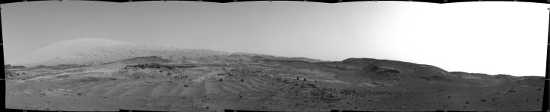
In the 12 months following its August 2012 landing, Curiosity found evidence for ancient streambeds and a lakebed environment more than 3 billion years ago that offered conditions favorable for microbial life.
Now, the rover is examining a layered mountain inside Gale Crater for evidence about how ancient environmental conditions evolved.
For more information about Curiosity, visit http://www.nasa.gov/msl and http://mars.jpl.nasa.gov/msl/ .
Complications arise when administering the estate of a deceased California resident who was once a citizen of a foreign nation or the estate of a deceased non-resident of California who owns real property in California.
Consider a deceased California resident whose last will was validly executed outside California, be it in another state or nation.
California law recognizes a will executed in another state or nation to be valid (enforceable here) if it was executed in accordance with the laws of the place of its execution, California law or the Uniform International Wills Act.
Thus, a validly executed foreign will can be probated in California. If the will is not written in English it needs to be translated to be admitted in court.
A California court probate order can distribute all real property within California and all personal property anywhere within the United States.
However, any real property located outside California and all property located outside of the United States is controlled by the laws of the state or foreign nation where it is located.
Consider, for example, a German citizen who moves to California, establishes a new permanent residence, i.e., becomes a U.S. citizen or resident alien, acquires real and personal property in California but still retains some real and personal property back in Germany.
What are the possibilities when he or she dies?
If the decedent’s last will was the one he or she validly executed in Germany then that German will may be probated both in California and in Germany.
If the decedent, however, executed a new will in California and revoked the prior German will, then the California will controls the transfer of all real property located in California and all personal property located anywhere within the United States.
The laws of Germany, however, would still apply to the disposition of property located in Germany and to the admissibility of any California will in German courts. Therefore, a court proceeding in Germany is required to transfer title to property over there.
Moreover, German laws regarding inheritance rights of family members will override any gifts made in the decedent’s California will that may violate such German laws.
Specifically, the German law requires that a certain percentage of a decedent’s estate go to the decedent’s issue whereas California has no such requirement; a person can leave all of his or her property to whomever he or she pleases.
Thus, German law would override the California will and redirect some property inside Germany if necessary.
Now consider a deceased person who was not a California resident but who owned some real property in California.
That person’s foreign will can be admitted to probate in California if an authenticated copy of the foreign will and, if relevant, the foreign court’s probate order are properly introduced in the California Superior Court.
Furthermore, a nonresident of the U.S. cannot serve as the administrator of a deceased person’s estate in California, where the decedent did not leave a will or did leave a will but no one nominated under the will as executor is willing to serve.
However, a nonresident of the U.S. may serve as executor if they were named as executor in the decedent’s will.
Thus, where an administrator is needed, because there is no executor, a California licensed private fiduciary is typically appointed by the court to administer the decedent’s estate.
Most people, of course, wish to avoid probate. A California resident with real property located elsewhere in the U.S. can usually avoid probate issues anywhere in the United States by transferring title to all real properties into a trust.
A trust created under California laws will be respected in all states.
In sum, a California resident with real property in outside the U.S. needs attorneys in both California and in that foreign country to assist them with their estate planning.
The same applies to a California resident who is also a foreign national who has real and/or personal property outside the U.S.
Dennis A. Fordham, attorney (LL.M. tax studies), is a State Bar Certified Specialist in estate planning, probate and trust law. His office is at 870 S. Main St., Lakeport, California. Fordham can be reached by e-mail at
The California measles outbreak that began in December has ended, according to Dr. Karen Smith, director of the California Department of Public Health and state health officer.
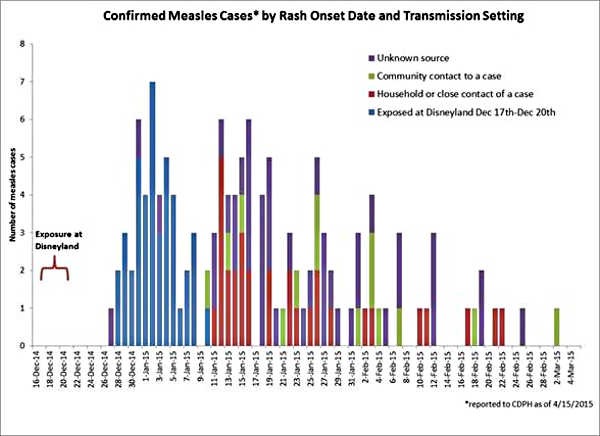
No new outbreak-related measles cases have been reported to the California Department of Public Health, or CDPH, for two 21-day incubation periods, allowing public health officials to declare the outbreak that infected 131 Californians to be over.
“We are pleased this outbreak is over, but caution that measles can be reintroduced in California at any time when an infected person brings it to the state,” said Dr. Smith. “The best defense for protection against the highly infectious measles is vaccination.”
Since December, 131 measles cases have been reported to CDPH that are likely linked to this outbreak.
No cases were in Lake County, according to county Public Health Officer Dr. Karen Tait.
There also were no cases in neighboring counties, based on CDPH surveillance reports.
The California measles patients in this outbreak reside in 14 local health jurisdictions: Alameda, Los Angeles, Marin, Merced, Orange, Riverside, San Bernardino, San Diego, San Mateo, Santa Clara, Solano, and Ventura counties and the cities of Long Beach and Pasadena.
Patients ranged in age from six weeks to 70 years.
Vaccination status is documented for 81 of the 131 cases. Of these 81, 56 – or 70 percent – were unvaccinated, and 25 had received one or more doses of MMR vaccine.
In addition to the 131 measles cases in the outbreak, there were an additional five unrelated measles cases reported during the same time period.
Measles is not endemic in California, but can circulate when a contagious, infected person enters the state and exposes others.
Forty-two cases were directly linked to an initial exposure in December at Disneyland or Disney California Adventure Park in Anaheim. Additional cases were secondary to those.
Forty-four other cases have an unknown exposure source. It is possible, but unlikely, that some of the cases with unknown exposure sources are unrelated importations of the B3 strain into the state, CDPH said.
Because of their epidemiologic and genotyping links, CDPH considers them part of the same outbreak, although the B3 strain is also known to circulate in a number of other countries and additional importations during the outbreak were possible.
While this outbreak is over, CDPH said it does not mean that there will not be future measles cases reported in California.
People can be infectious for four days prior to developing the rash associated with measles and may feel well enough to be out and about, potentially exposing others.
Because measles is a highly infectious, airborne disease, public health officials are pleased to have contained the spread of this outbreak to a relatively few individuals, and that no related deaths occurred.
“Government at all levels – federal, state and local – worked together to educate health care providers and the public about potential exposures and the risks of the disease. Prompt investigation of cases, interviewing hundreds of contacts of infected people, vaccinating hundreds of at risk people, and increasing awareness among health care providers about measles, helped to control this outbreak,” said Dr. Smith.
The public health investigation into this measles outbreak was significant. Thousands of measles contacts in California were identified. Exposures occurred in public places including health care settings, schools, malls, and airports.
Babies and preschool children, pregnant women, schoolchildren of all ages, health care workers, teachers, and other adults were exposed to measles during this outbreak. Lab tests in state and local laboratories were conducted for over 1,000 patients.
Measles symptoms typically begin with fever, cough, runny nose and red eyes, and within a few days a red rash appears, usually first on the face and then spreading downward to the rest of the body.
Two doses of measles-containing vaccine (MMR vaccine) are more than 97 percent effective in preventing measles. If you are unsure of your vaccination status, check with your doctor to have a test to check for measles immunity or to receive vaccination.
More information about measles can be found at www.cdph.ca.gov .
CLEARLAKE, Calif. – A Clearlake Police officer's followup this week on a report of illegal dumping in the city ultimately led to the service of a search warrant and seizure of a number of weapons from the home of a convicted felon.
Just before 10 a.m. on Wednesday the Clearlake Police Department began an illegal dumping investigation, according to Sgt. Rodd Joseph.
Joseph said a witness reported seeing a vehicle illegally dumping trash in Clearlake Park on Tuesday. The witness was able to obtain a license plate of the vehicle, described as Ford Explorer.
On Wednesday the witness spotted the same Ford Explorer vehicle parked in a driveway located in the 2900 block of Fifth Street in Clearlake Park, and again notified police, Joseph said.
The investigation was assigned to Clearlake Police Officer Elvis Cook, who made contact with two persons – a male and a female – at the front door of the Fifth Street residence, according to Joseph.
Joseph said the male subject contacted was identified as 26-year-old Clearlake resident David Randell Russell.
From outside of the residence on the porch, Cook could clearly see a short-barreled shotgun inside the home. Joseph said Cook believed the shotgun to be an illegal weapon due to its short length and detained the two persons contacted.
During the investigation, it was determined that the illegal shotgun actually belonged to 30-year-old Clearlake resident Edward Dallas Gutierrez, who also is the resident of the home, Joseph said.
Gutierrez is a convicted felon and may not possess firearms. Joseph said evidence located at the scene showed that Gutierrez may have fled the home out a back door upon Officer Cook’s initial arrival.
Russell was found to have an outstanding misdemeanor arrest warrant out of the Clearlake Police Department and was arrested without incident, Joseph said. The female subject later was released without charges.
Due to the fact that neither Russell nor the other female lived at the home, Joseph said officers decided to seek a search warrant to enter the home and seize the illegal firearm.
Clearlake Police Investigator Mark Barnes obtained a search warrant authorized by a Lake County Superior Court judge for the residence. Joseph said the search warrant was served and the firearm was seized.
In addition to the illegal firearm, several other illegal items were located and ultimately seized from inside the home during the service of the search warrant, which Joseph said included ammunition, an illegal “billy club,” an illegal “brass knuckle” knife combination and drug paraphernalia.
Due to the fact that Gutierrez has not yet been located, Joseph said the case will be referred to the Lake County District Attorney’s Office in the hopes that an arrest warrant will be issued for Gutierrez with charges to include possession of an illegal short-barreled shotgun, felon in possession of a firearm, felon in possession of ammunition, possession of brass knuckles, possession of a billy club and possession of drug paraphernalia.
The initial illegal dumping complaint appears to be unfounded as the investigation indicated that the vehicle was used to rummage through already dumped trash, looking for items of use, Joseph said.
The Clearlake Police Department welcomes and regularly follows up on crime tips, Joseph said. These crime tips often lead to more in-depth investigations, such as this incident illustrates.
Anyone with information on this case is asked to contact Officer Elvis Cook at 707-994-8251, Extension 508.
Though the Clearlake Police Department prefers named witnesses as it makes cases earlier to investigate and prosecute, witnesses may remain anonymous.
A new study quantifying the amount of carbon stored and released through California forests and wildlands finds that wildfires and deforestation are contributing more than expected to the state’s greenhouse gas emissions.
The findings, published online on Wednesday in the journal Forest Ecology and Management, came from a collaborative project led by the National Park Service and UC Berkeley.
The results could have implications for California’s efforts to meet goals mandated by the state Global Warming Solutions Act, or AB 32, to reduce greenhouse gas emissions to 1990 levels by the year 2020.
The bill, which passed in 2006, assumed no net emissions for wildland ecosystems by 2020.
The researchers noted that the information available at the time the bill was passed may have underestimated the release of carbon through landmass conversions and wildfires, which are projected to increase in intensity in the western United States due to climate change.
The authors pointed out that California is one of the few jurisdictions in the world to set mandatory greenhouse gas emissions targets.
“Determining the balance between carbon storage and emissions is essential for tracking the role of ecosystems in climate change. Growing vegetation naturally removes carbon from the atmosphere, reducing the magnitude of climate change,” said study lead author Patrick Gonzalez, the National Park Service climate change scientist. “Conversely, burned or dead vegetation releases carbon into the atmosphere, exacerbating climate change.”
Gonzalez worked with forest ecologist John Battles, a professor in UC Berkeley’s Department of Environmental Science, Policy and Management and the principal investigator on the project to quantify carbon storage and emissions in the state’s wildlands.
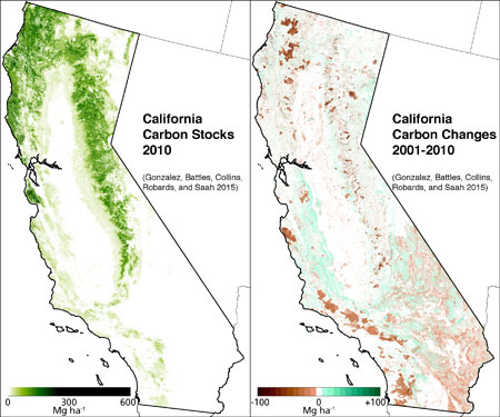
The study, funded by the California Air Resources Board, used 2001 to 2010 data from multiple public sources, including plot-level carbon stocks from the U.S. Department of Agriculture’s Forest Inventory and Assessment Program and U.S. Landfire remote sensing data of vegetation at a 30-meter spatial resolution.
The analysis confirmed that California’s forests are huge carbon reservoirs for the state.
Previous research has found that redwood forests near Redwood National Park contain the most carbon per hectare on the ground of any ecosystem in the world.
One hectare of redwood forest can store an amount of carbon equivalent to the annual greenhouse gas emissions generated by more than 500 Americans.
The giant sequoia forests of Sequoia and Kings Canyon National parks come in second.
Altogether, the forests and vegetation of state wildlands stored an estimated 850 million tons of carbon in 2010. However, those areas also accounted for approximately 69 million tons of carbon emitted between 2001 and 2010.
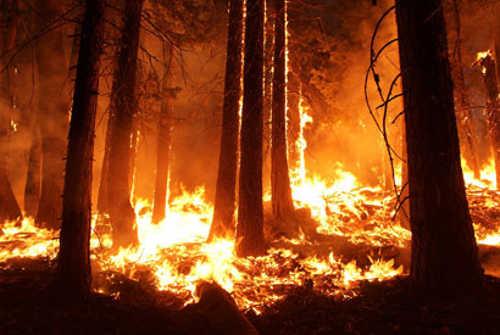
Two-thirds of the carbon loss came from fires that burned just 6 percent of the area of wildlands in nine years.
Annual carbon losses from forests and wildlands in California represent as much as 5 to 7 percent of state carbon emissions from all sectors between 2001 and 2010, according to the study.
“National parks and other protected areas clearly provide an important function in removing carbon from the atmosphere and storing it,” said Battles. “But we also know from previous research that a century of fire suppression has contributed to a potentially unsustainable buildup of vegetation. This buildup provides abundant fuel for fires that contribute to carbon emissions. Projections of more wildfires in the West mean that we need to account for this source of carbon emissions. Meeting the state greenhouse gas targets for 2020 might require a reconsideration of wildland management policies.”
This research is among the latest examples of the long, productive partnership between UC Berkeley and the National Park Service, highlighted in the recent “Science for Parks, Parks for Science” summit commemorating the centennial of the National Park Service.
Other co-authors of the study include researchers from the U.S. Forest Service, the Spatial Informatics Group in Pleasanton, Calif., and the University of San Francisco.
Sarah Yang writes for the UC Berkeley News Center.