 How to resolve AdBlock issue?
News
Citizen scientists scanning images from NASA’s Spitzer Space Telescope, an orbiting infra-red observatory, recently stumbled upon a new class of curiosities that had gone largely unrecognized before: yellow balls.
“The volunteers started chatting about the yellow balls they kept seeing in the images of our galaxy, and this brought the features to our attention,” said Grace Wolf-Chase of the Adler Planetarium in Chicago.
The Milky Way Project is one of many “citizen scientist” projects making up the Zooniverse Web site, which relies on crowdsourcing to help process scientific data.
For years, volunteers have been scanning Spitzer's images of star-forming regions – places where clouds of gas and dust are collapsing to form clusters of young stars.
Professional astronomers don't fully understand the process of star formation; much of the underlying physics remains a mystery. Citizen scientists have been helping by looking for clues.
Before the yellow balls popped up, volunteers had already noticed green bubbles with red centers, populating a landscape of swirling gas and dust.
These bubbles are the result of massive newborn stars blowing out cavities in their surroundings. When the volunteers started reporting that they were finding objects in the shape of yellow balls, the Spitzer researchers took note.
The rounded features captured by the telescope, of course, are not actually yellow, red, or green – they just appear that way in the infrared, color-assigned images that the telescope sends to Earth.
The false colors provide a way to humans to talk about infrared wavelengths of light their eyes cannot actually see.
“With prompting by the volunteers, we analyzed the yellow balls and figured out that they are a new way to detect the early stages of massive star formation,” said Charles Kerton of Iowa State University, Ames. “The simple question of 'Hmm, what's that?' led us to this discovery.”
A thorough analysis by the team led to the conclusion that the yellow balls precede the green bubbles, representing a phase of star formation that takes place before the bubbles form.
“Basically, if you wind the clock backwards from the bubbles, you get the yellow balls,” said Kerton.
Researchers think the green bubble rims are made largely of organic molecules called polycyclic aromatic hydrocarbons (PAHs).
PAHs are abundant in the dense molecular clouds where stars coalesce. Blasts of radiation and winds from newborn stars push these PAHs into a spherical shells that look like green bubbles in Spitzer's images.
The red cores of the green bubbles are made of warm dust that has not yet been pushed away from the windy stars.
How do the yellow balls fit in?
“The yellow balls are a missing link,” said Wolf-Chase. They represent a transition “between very young embryonic stars buried in dense, dusty clouds and slightly older, newborn stars blowing the bubbles.”
Essentially, the yellow balls mark places where the PAHs (green) and the dust (red) have not yet separated. The superposition of green and red makes yellow.
So far, the volunteers have identified more than 900 of these compact, yellow features. The multitude gives researchers plenty of chances to test their hypotheses and learn more about the way stars form.
Meanwhile, citizen scientists continue to scan Spitzer's images for new finds. Green bubbles. Red cores. Yellow balls.
What's next? You could be the one who makes the next big discovery. To get involved, go to https://www.zooniverse.org/ and click on “The Milky Way Project.”
Rachel Molina works for the National Aeronautics and Space Administration.
NICE, Calif. A single vehicle crash briefly blocked a portion of Hwy 20 Westbound Friday evening.
At approximately six p.m. Friday a single vehicle non-injury crash was reported near the intersection of Hwy 20 Westbound and Stokes Avenue in Nice.
The vehicle collided with a light pole, shearing it off completely, before stopping.
Additional details were not immediately available.
LAKE COUNTY, Calif. – A new state report shows that while California has, as a whole, improved in national health goals for several conditions, Lake County continues to be ranked near the bottom for numerous health issues.
The California Department of Public Health released the County Health Status Profiles 2015 as part of National Public Health Week, which takes place April 6 through 12.
The report – which covers the years 2011 to 2013 – provides statewide and county-level data to help guide the course of health promotion and preventive services.
Lake County Public Health Officer Dr. Karen Tait said that, unfortunately, there weren't many surprises in the report, as Lake County has for some time shown poor outcomes. She added that she didn't expect to see large changes on a year-to-year basis.
CDPH's analysis of the numbers reveals that, overall, California has shown improvement in reducing infant mortality, AIDS, cancers and coronary heart disease.
California achieved goals established in the Healthy People 2020 national objectives – which serve as a guide to improve the health of people across the nation – for many of the diseases and conditions.
“The stories told by these data are quite encouraging, but we must remember that not all communities have benefited equally from these improvements,” said CDPH Director and State Health Officer Dr. Karen Smith. “Too many people in California still face chronic diseases related to factors such as poor diet, lack of physical activity and the use of tobacco.”
Statewide, AIDS incidence among Californians aged 13 and older decreased, showing an improvement of nearly 28 percent.
All cancers age-adjusted death rates – including female breast cancer, colorectal and prostate cancer – improved, with the lung cancer death-rate improving nearly 10 percent, and coronary heart disease age-adjusted death rate improved 9 percent, the report showed.
Based on the report, infant mortality during the two-year period decreased for all races. Asian/Pacific Islander improved 21 percent; black, 17 percent; white, 13 percent; and Hispanic, 7 percent. Likewise, births to teen mothers – ages 15 to 19 – showed a 28-percent decrease.
The report also showed that California met Healthy People 2020 national objectives for reductions in motor vehicle crashes, homicide, firearm-related deaths, suicide, first trimester prenatal care and breastfeeding initiation.
However, the data revealed that some chronic conditions failed to show an improvement, including age-adjusted death rates for diabetes, Alzheimer’s disease and chronic liver disease.
Lake County's specific rankings
On the county level, Lake fared poorly in the overall rankings. Compared to the 2014 report, Lake County's most recent outcomes showed a number of worsening rankings along with some notable improvements, which can be seen in the comparison chart below.
“We’ve typically ranked at the bottom or near the bottom on most measures,” said Tait. “It’s a reiteration of the same conversations we’ve had about why are we always so close to the bottom.”
Because there is always a little bit of a backlog in the data – in this case, the latest report data is for two years ago – the kinds of wellness efforts under way in the county that are generating interest and excitement “won't show up at all,” Tait said.
Lake County ranked at the bottom – No. 58 out of 58 counties – for all causes of death, drug-induced deaths and all cancers, as well as lung cancer specifically and accidents.
It received a No. 57 ranking for chronic liver disease and cirrhosis and chronic lower respiratory disease, was No. 56 for motor vehicle traffic crashes, and No. 55 for homicide and coronary heart disease.
Among Lake County's other low rankings for major health status indicators are the following: cerebrovascular disease (stroke) and suicide, No. 54; influenza/pneumonia, No. 51; and firearm-related deaths, No. 50.
The report also found that Lake County ranked No. 58 for infant mortality for Asians/Pacific Islanders, was No. 54 for adequate prenatal care and No. 50 for first trimester prenatal care.
For persons under age 18 in poverty, Lake County ranked No. 48.
Among the areas showing improvement in this most recent report were colorectal cancer, female breast cancer – which showed a significant drop from a No. 45 ranking in 2014 to No. 28 this year – as well as prostate cancer, diabetes and influenza/pneumonia.
Tait said it's important to look at the asterisks that appear next to many of the crude case and death rates in the report. She explained, “Some of our numbers are so small that the data is just not reliable,” thus the notations.
“That’s not to deny that we have issues,” she said.
Lake County's health status indicators that the report notes have small numbers and rates that “are deemed unreliable” based on fewer than 20 data elements are colorectal cancer, female breast cancer, prostate cancer, diabetes, influenza/pneumonia, motor vehicle traffic crashes, suicide, homicide, firearm-related deaths and infant mortality rates for all groups.
Regarding factors she believes that influence the county's low rankings, Tait said, “I know people don't like to talk about it, but we have a high smoking rate.”
The vast majority of the deaths from the factors where the county is ranked the lowest have ties to smoking, Tait said. “As long as our smoking rate is as high as it is, we’re going to continue to see things like that.”
Lake County's rural nature also contributes to the high rate of accidents, and the poor condition of many of the county's roads impact the high rate of collisions, she said.
“I feel optimistic that there's a lot of momentum in the community to turn these around,” Tait said, noting there's momentum in other counties, too, to make improvements.
Tait said county officials and those involved with working to improve health conditions are aware of Lake County's problems and working to address them.
“I think we may make some inroads on some of these things, it’s just going to take a really long time,” she said.
Using the data to improve outcomes
Lake County's two hospitals look at the state-compiled data in their approaches to responding to Lake County's unique health concerns.
“Sutter Lakeside Hospital uses the Lake County health data to continually assess our community’s health needs and adjust our services accordingly,” said Chief Administrative Officer Siri Nelson.
“In January, we were certified by the Joint Commission on Hospital Accreditation for our Stroke program and were awarded Primary Stroke Certification. By improving our processes we have been able to reduce our stroke patient morality, saving lives,” Nelson said.
Breast cancer is another example of how Sutter Lakeside focuses its efforts to improve lives in Lake County, Nelson said. “This year we received a $250,000 Sutter Health match grant for new 3D mammography technology that will help us detect and treat breast cancer earlier.”
Nelson said Sutter Lakeside also sees opportunities to improve diabetes and influenza outcomes and is taking action.
On April 15, Diabetes Education Day, the hospital will host an event offering free diabetes screenings, nutrition education and counseling, diabetes self-management resources, and healthy snack samples and recipes.
In October, Sutter Lakeside – in partnership with Lake County Public Health – administered more than 400 free flu vaccinations at the Heroes of Health and Safety Fair. “We hope to double that number in 2015,” Nelson said.
At St. Helena Hospital Clear Lake, the hospital recently created a new position, director of community wellness.
Shelly Mascari, formerly with the Lake County Office of Education, took the position and has been on the job since mid-March.
Mascari said one of the goals of her job is to start “moving the dials” on those poor health statistics that haunt the county. “We're hoping that it shows the public that the hospital is wanting to invest in turning this around in a significant way.”
She said the fact that she's in her new job is “a pretty big statement” from the hospital that it's time to focus the energy and resources on improving the county's health picture.
Mascari said she's now in the process of creating a strategic plan, and will use some of the content and data from the state report in building that document as well as determining what new wellness programs the hospital can create.
Working to transform a community of 60,000 is a big task, Mascari acknowledged, and in approaching it she's looking at a combination of education and outreach, new programs, the focus on individuals and inspiring them to make positive changes, and supporting programs that already are successful.
“It’s going to take all of us really working together, maybe like we've never done before,” Mascari said.
Email Elizabeth Larson at

LAKEPORT, Calif. – The Lake County Arts Council's Main Street Gallery introduced new artists and publicized its new exhibition and contest during the gallery's monthly “First Friday Fling” meet and greet last week.
Leszek Forczek’s painting “Blue Pieta,” inspired by Michelangelo’s “Pietà” sculpture, was awarded as the door prize early on in the evening.
When asked about the mission of the gallery, local instructor and painter Richard Seisser said: “Simple. We’re local. We only do local because we need to support our locals.”
Lake County hosts 10 art galleries. The ongoing exhibition offers another opportunity for talented residents to show off their personal flair while bringing in more patrons to Main Street Gallery.
Several artists from around the lake are currently featured there.
New artist Linda Marshbanks uses acrylic paint on paper towels, applies them to recycled wood pallets, and then glosses them over with a finish.
Patty Theis uses the skills she learned in a cake decorating class to create textured impressionistic landscapes and stills with frosting.
Marilyn Crayton makes dream catchers out of hollowed out gourds.
New contributor C.B. Lippincott, who started painting later in life, painted his first portrait – one of his wife – when he was 50 years old.
“My whole goal in the beginning was like a caveman decorating his cave,” Lippincott said. “So I was just painting to decorate my house and when my house got full I just kept going. Now I have over 200 paintings.”
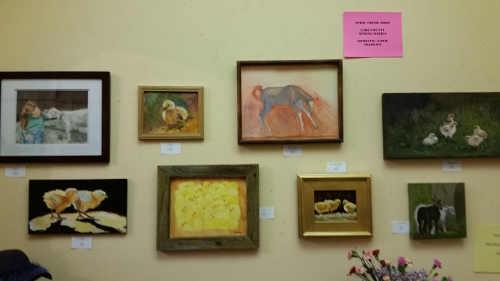
The Main Street Gallery began its April themed exhibition and contest featuring local artists’ paintings of “Lake County Spring Babies.”
Ray Farrow’s painting of Grace Church won March’s contest featuring historic Lake County architecture.
Artists submitted their work to the exhibition for an opportunity to win free wall space in the gallery’s prime slots looking out onto Main Street, where passersby also can get a good glimpse of the works inside.
Patrons can vote for who they would like to win this month’s exhibition contest in person at Main Street Gallery throughout the entire month of April.
Main Street Gallery’s First Friday Fling is a great opportunity for anyone interested to meet the county’s visual artists and get inspired – many of the artists who have work on display also are teachers.
The Main Street Gallery is located at 325 N. Main St., Lakeport, telephone 707-263-6658, http://www.lakecountyartscouncil.com . Hours are Tuesday through Saturday, 11 a.m. to 3 p.m.
Email Shari Shepard at
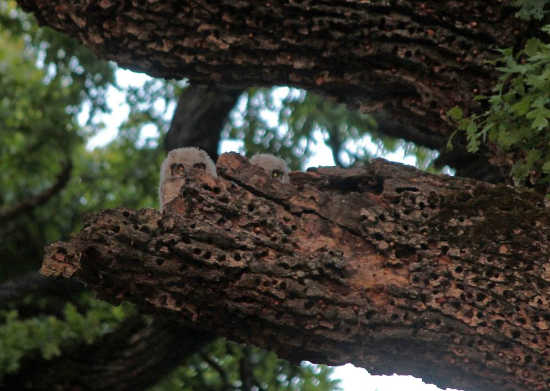
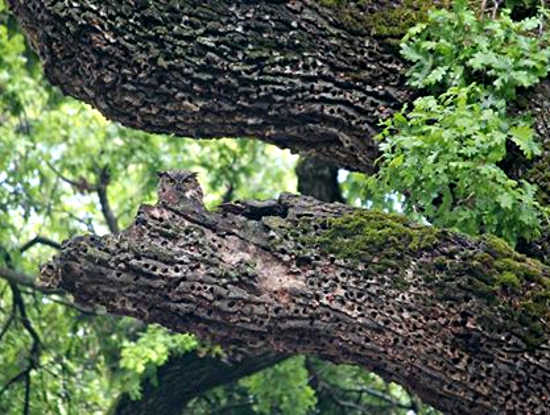
LAKE COUNTY, Calif. – Spring brings with it all sorts of brand new flowers and baby creatures.
Olivia Hansen of Lakeport took the pictures, shown above and below, that captured owlets and their mother separately peering out of their tree home.
Hansen wrote, “Spring is in the air and so are babies! So exciting and how fortunate we are to experience this in our backyard. Lake County is full of such beautiful creatures!”
Pictures can be shared by emailing
LAKE COUNTY, Calif. – U.S. Reps. Mike Thompson (CA-5) and John Garamendi (CA-3) announced a $939,062 Department of Health and Human Services grant has been awarded to Lake Family Resource Center.
The funding will be used for the center’s Early Head Start program, which provides expectant mothers and low-income families with children up to 3 years old with services and resources such as child development, prenatal education, family services and parent involvement activities.
“Through Early Head Start, the Lake Family Resource Center provides a wide array of benefits to young children and parents, all of which help to make sure families have a foundation for success that’s rooted in education and strong, healthy development,” said Thompson. “This grant will allow our resource center to continue its important work and I am proud to support its funding efforts.”
“Head Start programs are already transforming lives in Lake County and across the country, and this grant for the Lake Family Resource Center is going to much good for parents and children in our community,” Garamendi said. “This grant will give our children a greater chance to excel at an early age and help make families stronger.”
“Lake Family Resource Center is thrilled to receive funding to continue provision of services that help children and families to thrive,” said the center's executive director, Gloria Flaherty. “The agency is committed to strengthening families and Early Head Start builds a wonderful foundation in establishing that parents are the first and best teachers of their children.”
The reauthorization of the Head Start Act in 1994 made it possible to establish Early Head Start as a program to serve infants and toddlers under the age of 3 and pregnant women.
Early Head Start provides early, continuous, intensive and comprehensive child development and family support services to low-income infants, toddlers, pregnant women and their families.
The goals of Early Head Start are:
· To provide safe and developmentally enriching caregiving which promotes the physical, cognitive, social and emotional development of infants and toddlers, and prepares them for future growth and development;
· To support parents, both mothers and fathers, in their role as primary caregivers and teachers of their children, and families in meeting personal goals and achieving self-sufficiency across a wide variety of domains;
· To mobilize communities to provide the resources and environment necessary to ensure a comprehensive, integrated array of services and support for families;
· To ensure the provision of high quality responsive services to family through the development of trained and caring staff.
Visit Lake Family Resource Center online at http://www.lakefrc.org/ .