 How to resolve AdBlock issue?
News
Annotated animation showing hidden galaxies discovered in the 'Zone of Avoidance' from ICRAR on Vimeo.
Hundreds of hidden nearby galaxies have been studied for the first time, shedding light on a mysterious gravitational anomaly dubbed the Great Attractor.
Despite being just 250 million light years from Earth – very close in astronomical terms – the new galaxies had been hidden from view until now by our own galaxy, the Milky Way.
Using CSIRO's Parkes radio telescope equipped with an innovative receiver, an international team of scientists were able to see through the stars and dust of the Milky Way, into a previously unexplored region of space.
The discovery may help to explain the Great Attractor region, which appears to be drawing the Milky Way and hundreds of thousands of other galaxies towards it with a gravitational force equivalent to a million billion Suns.
Lead author Professor Lister Staveley-Smith, from The University of Western Australia node of the International Centre for Radio Astronomy Research (ICRAR), said the team found 883 galaxies, a third of which had never been seen before.
“The Milky Way is very beautiful of course and it's very interesting to study our own galaxy but it completely blocks out the view of the more distant galaxies behind it,” he said.
Professor Staveley-Smith said scientists have been trying to get to the bottom of the mysterious Great Attractor since major deviations from universal expansion were first discovered in the 1970s and 1980s.
“We don't actually understand what's causing this gravitational acceleration on the Milky Way or where it's coming from,” he said.
“We know that in this region there are a few very large collections of galaxies we call clusters or superclusters, and our whole Milky Way is moving towards them at more than two million kilometers per hour.”
The research identified several new structures that could help to explain the movement of the Milky Way, including three galaxy concentrations (named NW1, NW2 and NW3) and two new clusters (named CW1 and CW2).
University of Cape Town astronomer Professor Renée Kraan-Korteweg said astronomers have been trying to map the galaxy distribution hidden behind the Milky Way for decades.
“We've used a range of techniques but only radio observations have really succeeded in allowing us to see through the thickest foreground layer of dust and stars,” she said.
“An average galaxy contains 100 billion stars, so finding hundreds of new galaxies hidden behind the Milky Way points to a lot of mass we didn't know about until now.”
Dr. Bärbel Koribalski from CSIRO Astronomy and Space Science said innovative technologies on the Parkes Radio telescope had made it possible to survey large areas of the sky very quickly.
“With the 21-centimeter multibeam receiver on Parkes we're able to map the sky 13 times faster than we could before and make new discoveries at a much greater rate,” she said.
The study involved researchers from Australia, South Africa, the US and the Netherlands, and was published Feb. 9 in the Astronomical Journal.
The International Centre for Radio Astronomy Research (ICRAR) is a joint venture between Curtin University and The University of Western Australia with support and funding from the State Government of Western Australia.
NORTHERN CALIFORNIA – U.S. Rep. Mike Thompson (CA-5) has introduced the Lake Berryessa Recreation Enhancement Act, H.R. 4521, legislation to transfer recreation management at Lake Berryessa from the Bureau of Reclamation to the Bureau of Land Management.
“I introduced this legislation to put the right federal agency in charge of managing recreation at Lake Berryessa,” said Thompson.
He said that, as it is currently structured, the Bureau of Reclamation – an agency tasked with managing water resources – is responsible for managing concessions and recreation at Lake Berryessa.
However, Thompson said the Bureau of Reclamation shouldn’t be responsible for recreation at the lake because that agency doesn’t do recreation, BLM does.
“This legislation has strong support in the local community and has over 150 bipartisan cosponsors in Congress because transferring management to BLM is the right thing to do,” Thompson said.
Transferring recreational management authority from the Bureau of Reclamation to BLM will allow for more effective management of concessions and recreation activities, which is needed to enhance the visitor experience, increase tourism and revitalize the local economy, Thompson said.
BLM, the agency charged with managing outdoor recreation on public lands, has extensive experience managing outdoor recreational activities, such as hiking, fishing, camping and boating. BLM is the federal agency best-suited to manage recreation at Lake Berryessa, according to Thompson.
The Lake Berryessa Recreation Enhancement Act gives BLM the ability to implement a management plan that is appropriate for the lake. Thompson said the bill also provides protections for recreational uses and water rights, while allowing the Bureau of Reclamation to continue managing the Monticello Dam and its related facilities.
The Lake Berryessa Recreation Enhancement Act is supported by the Napa County Sheriff's Office and the county of Napa, and has more than 150 bipartisan cosponsors in the House of Representatives. The bill has been referred to the House Committee on Natural Resources.
Thompson represents California’s Fifth Congressional District, which includes all or part of Contra Costa, Lake, Napa, Solano and Sonoma counties.
UPPER LAKE, Calif. – The Upper Lake Unified School District Board took action to hire another employee, discussed a recent board workshop and got an update on new legislation regarding student vaccinations this week.
The meeting took place Tuesday evening at Upper Lake High School.
In January the board of the new unified district – which in July will absorb the high school and elementary school districts – held a Saturday workshop for the purposes of training and discussing goals.
Wally Holbrook and Richard Smith of Education Leadership Solutions, the consulting firm the board hired to assist with training and working on the unification transition, did a wrap up of the meeting with the board on Wednesday.
Smith presented a rundown of statements the board members made about where they want to see the district in five years.
Those statements included that the district would be better for having been consolidated, the board and administration would work well together, the district would be in a good financial position, the community would be more involved, there would be more enrichment opportunities and more students would be attending school.
Holbrook urged the board members to review those statements in five years to see if they ring true.
The consultants also discussed the use of committees to both involve the community and work through important issues in order to help the board save time and be more efficient.
Smith said the board decided at the workshop to form four temporary committees relating to the budget, organization, policy, and community and communications.
The consultants suggested that three additional ad hoc committees be formed to look at curriculum and instruction, student programs, and facilities, maintenance and operations.
Holbrook said other work done at the workshop included establishing timelines for critical tasks. One such task is the March 15 date for giving layoff letters to teachers, if needed.
The new district's interim Superintendent Patrick Iaccino – who also continues to fulfill his duties as principal and superintendent of the soon-to-be-dissolved Upper Lake Union High School District – updated the board on the organization of the new district.
He said there will be a principal at each of the school sites – elementary, middle and high school – with Valerie Gardner, the elementary district's superintendent, set to retire at the end of the school year.
He said recruitment is about to open on the elementary school principal position, with a committee of teachers and parents to help make the selection.
Iaccino said they also are looking at establishing an alternative school rather than continuing to send students to the Hance Community School, which is run by the Lake County Office of Education, a move that could save the district money.
Becky Jeffries, the elementary district's chief business officer, also gave an update on the business side of finalizing the unification of the high school and elementary school districts, with administrative staff working on necessary paperwork and reports.
In his regular report, Iaccino recounted visiting the middle school, congratulated the high school's Academic Decathlon team – which won the county competition on Saturday – and noted upcoming Mock Trial and robotics competitions.
He said the employees' unions also have met as part of the process for moving forward in completing the unification. A staffer in the audience noted that they have started meeting officially as a union.
In other business, the board unanimously approved a memorandum of understanding with the Upper Lake Union High School District to have Dina McCrea provide administrative secretarial support to the new district at no additional cost. She becomes the district's second employee, after Iaccino.
A similar agreement with the elementary district to have Jeffries serve as the new district chief business official was tabled temporarily.
The board also approved new bylaws, and the job description and salary scheduled for the elementary school principal's job.
Iaccino additionally updated the board on SB 277, “something that hit our desk last week.”
The bill, signed by Gov. Jerry Brown, takes effect in the next school year and requires all students be vaccinated. “It puts schools in a dilemma to a degree,” Iaccino said, adding that the district has been told that school districts will be held harmless.
He said staff will bringing more information on the legislation to the board in the weeks ahead.
Email Elizabeth Larson at
NORTHERN CALIFORNIA – On Wednesday Sen. Mike McGuire introduced the Marijuana Value Tax Act, a bill that would place a 15-percent tax at the point of sale on medical marijuana.
“We made a commitment last year as we were working through the huge undertaking of setting statewide regulations for medical marijuana that we would follow up on a statewide excise tax,” McGuire said. “This needed revenue will make our communities stronger by focusing on the impacts of cultivation and use of marijuana, including funding local law enforcement and neighborhood improvement programs, state parks, drug and alcohol treatment and environmental rehabilitation.”
The state Board of Equalization estimates the total sales of medical marijuana in California at well over $1 billion statewide, and they expect that to soar once the new rules and regulations that Sen. McGuire authored last year begin to kick in.
The 15-percent Marijuana Value Tax Act is expected to bring in more than $100 million in new revenue, which will likely grow substantially in a short period of time.
Under SB 987, 30 percent of all revenue from the Marijuana Value Tax will go to the Bureau of Medical Marijuana Regulation to distribute via grant programs designed specifically for local agencies who oversee the regulation of cultivation, processing, manufacturing, distributing and sale of marijuana.
The funds would be available to any city or county agency/department including law enforcement. Per the legislation, no more than 5 percent of these funds may be used for administration of the grant program by Bureau of Medical Marijuana or the local agency.
Additionally, 30 percent of funds will go to the state’s General Fund; 20 percent of all revenue from the Marijuana Value Tax will go directly to State Parks for operations and to tackle their $1 billion deferred maintenance backlog; 10 percent to the California Natural Resource Agency for the restoration and remediation of public and private lands and watersheds damaged by marijuana cultivation; and 10 percent to counties for drug and alcohol treatment programs.
“Now that there is a long overdue regulatory framework put into place, it’s time to help fund the areas that are most affected by the cultivation – those communities that have long been paying the price of the negative effects of cultivation brought on by the ‘bad actors’ who destroy the environment and bring in crime,” McGuire said.
While McGuire’s legislation would only apply to medical marijuana, the 15 percent excise tax rate mimics the tax rate that is in the leading recreational marijuana ballot initiative.
Other states, including Colorado, Oregon, Washington and Alaska already have sales taxes in place for medical marijuana. SB 987 also ensures that cities and counties will continue to be able to enact their own local taxes and fees.
Last year, McGuire passed SB 643 – The Medical Marijuana Regulation and Safety Act – that was part of a historic three-bill package covering every aspect of the commercial medical marijuana industry which will be regulated and subject to licensure.
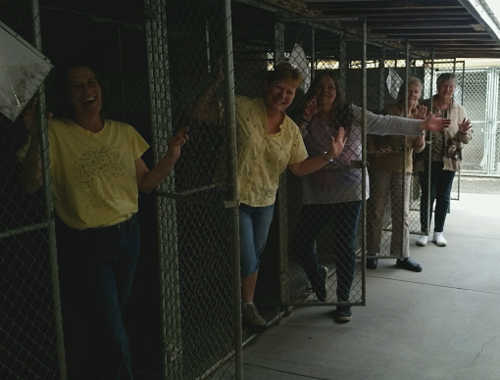
KELSEYVILLE, Calif. – The SPCA of Clear Lake reported on Tuesday that the last of the animals that were in its shelter have been moved to another rescue as it seeks to refocus its efforts on low-cost spaying and neutering services.
In a Tuesday statement, the organization said it has adopted or placed in rescues 43 cats and 29 dogs, the majority of them pit bulls, and in the first 40 days of the year had a euthanasia rate of zero.
Adopters came from near and far to give the animals homes, the SPCA said.
The last three of the dogs were transferred this week to Petaluma Animal Services Foundation, the SPCA reported.
In early January the organization announced it was immediately stopping intake of animals and was closing its shelter, which occurred on Jan. 30, as Lake County News has reported.
At the same time, the SPCA announced that it planned to focus its resources on reestablishing a low-cost spay/neuter clinic rather than animal adoption.
Executive Director Mary Jane Montana told Lake County News that the SPCA Board of Directors made the decision due to a significant reduction in the donations that fund the organization.
Up until the fall of 2015, the SPCA had provided animal control services to the city of Clearlake, but terminated the contract because it said it could not continue to operate on the less than $1,700 per month the city was paying it for the services.
While it was hoped that dropping those services would help the SPCA get back to its core mission of animal rescue, Montana said donations dropped in the wake of the Valley fire and the SPCA's volunteer veterinarian had to retire, which put on hold another key source of revenue in the form of the spay/neuter clinic.
In order to refocus its mission, the SPCA closed the shelter and laid off all of its employees, but has plans to continue offering services to the community.
Montana said the SPCA is closing in on hiring a new veterinarian to get the spay/neuter clinic back up and running, with the board still to decide other future uses for the organization's facility, located at 8025 Highway 29 in Kelseyville.
In the meantime, the SPCA worked over the past month to rehome the animals in its care when the shelter closed last month.
In addition to recognizing Petaluma Animal Services Foundation for its efforts, the SPCA also thanked the other rescues that helped rehome the animals – Animal Outreach of the Mother Lode, Animal Rescue Foundation, Copper’s Dream Animal Rescue, Forgotten Felines, Humane Society of Inland Mendocino County, Mendocino Coast Humane Society and Sonoma Humane Society.
The SPCA is continuing its monthly vaccination clinics, with the next to take place from 9 to 11 a.m. Sunday, Feb. 21.
Visit the SPCA of Clear Lake online at www.spcaofclearlake.com or email
Email Elizabeth Larson at
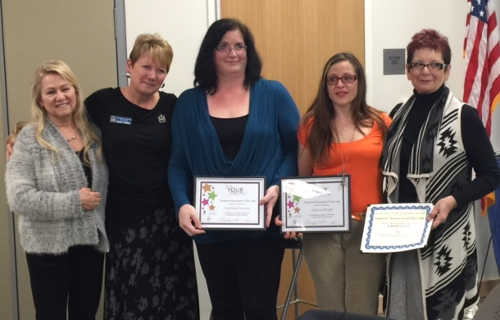
CLEARLAKE, Calif. – Soroptimist International of Clear Lake honored three Lake County women with scholarships at its annual luncheon Jan. 28 in Clearlake.
Live Your Dream Award winners Kimberly Carreno and Susanna Wright each received $2,000, while Ruby Award winner Barbara Flynn received a $300 donation for the nonprofit Cobb Mountain Tree Project.
The Live Your Dream is a program that supports the educational pursuits of women who are primary wage earners.
Carreno, the top award winner, now advances to the regional level and a chance to win up to $10,000.
“Kimberly and Susanna were only three points apart. It was a very close call so we elected to divide the money equally,” said Brenda Crandall, the Live Your Dream Committee chair and club vice president.
The Ruby Award is presented to women who make significant contributions to their community, professionally or as volunteers.
“Our board of directors chose Barbara for her extraordinary efforts in support of the community during and after the Valley fire,” said club President Olga Martin Steele.
Jennifer Malinowski, last year’s top Live Your Dream winner, was on hand to support the award recipients.
Malinowski was raising two children, going to school and trying to find a means of support for her family when she applied for a Live Your Dream Award.
Fresh out of culinary school, Malinowski decided to open a boutique restaurant while continuing her education. Things were moving along when she hit a wall – the electrical system in the storefront she was renting had to be updated.
“The $2,000 award I received allowed me to open my restaurant, The Wholly Bowl, as planned and continue my schooling. I couldn’t have made it otherwise. Thanks to the Soroptimists, today, I’m living the dream,” Malinowski said.
For the 2015-16 award winners, the cash awards were equally important.
Carreno has four grandchildren. She is motivated by the will to make sure they have a better life. To help her daughter, Kimberly takes care of her grandson while she works.
Before turning her life around, Carreno endured domestic violence, substance abuse and the loss of her son, Steven, who was born with severe health issues and diagnosed with cerebral palsy and epilepsy.
After years as sole advocate and caregiver, losing her only son proved to be an unbearable burden. Grief stricken and depressed, Carreno turned to drugs. She lost her health, livelihood and her home before finally hitting rock bottom.
Today Carreno is enrolled in college, maintaining a 4.0 grade point average. She is pursuing an associate's degree in human services and behavioral science. Ultimately, she plans to pursue a master's degree in social work.
“It’s a financial struggle, and this award will help more than I can explain,” Carreno said.
Here teachers report she is highly motivated, consistently scoring above other students on tests and assignments. “Having overcome so many obstacles, her courage is inspiring,” said Crandall.
Wright is a single mother of two – a new baby boy and a 2-year-old daughter. She found help from Soroptimist member Cindy Lawler, who she met while she was in an abusive relationship and struggling to care for her daughter and schizophrenic twin brother.
“Her drive to move forward convinced me that she would succeed in overcoming her challenges,” said Lawler.
Just three years ago, Wright was homeless, living on the streets of Richmond and dealing with substance abuse issues. Today, she is enrolled in college, pursuing a bachelor's degree in social work.
A busy mom and student, Wright also finds time to volunteer at a local mental health peer support center. “Raising a family while going to school is a financial challenge and this $2,000 award will help so much,” she said.
Having suffered the loss of two family members to gun violence, Wright is motivated to give her children a better life. “I will do everything in my power to provide the best possible future for my children and keep them from harm.”
Flynn is a native of Lake County and an entrepreneur who has supported her community professionally and as a volunteer for many years.
She has served on boards and committees, promoting economic development and supporting programs that provide needed services to the less fortunate in our community, a point that resonated with the Soroptimist board.
When the Valley fire hit Cobb Mountain, Flynn gave freely of her time and resources, providing food and comfort to firefighters, emergency personnel and residents of the devastated community.
Then, when the disaster turned to restoration, she started the Cobb Mountain Tree Project, a nonprofit organization with a goal of providing large trees to those who lost their homes.
The Valley fire destroyed over more than homes and thousands of beautiful trees in the Cobb Mountain community. “In the midst of all the ruins, the loss of our trees is almost too much for our people to bear,” Flynn said. “We needed something green and beautiful for our home sites and, fortunately, an Oregon nursery stepped up with a donation of hundreds of large evergreens.”
Accepting her award, Flynn said, “This fire has hit me hard and, like my fellow honorees, I understand what it is to hit bottom.”
Flynn is raising money to help defray the costs of hauling and storing the donated trees until replanting efforts commence. The cash award will go toward that effort.
Along with the cash awards, the recipients were presented with certificates of appreciation and flowers.
“I’m very proud to be a Soroptimist and to recognize extraordinary women who are making a difference for themselves, their families and the community,” said Arlene Grimes, a longtime club member and organizer of the awards luncheon.
Soroptimist International of Clear Lake is dedicated to improving the lives of women and girls in local communities and throughout the world.
To attend a meeting, become a member, or for more information on any of our projects, call Soroptimist International of Clear Lake President Olga Martin Steele at 707-998-1302.