Oct. 24 to 31 is Bat Week, an annual, international celebration of the role bats play in the natural world.
Bats are truly amazing creatures. There are more than 1,400 species of bats in the world, about 20 percent of all mammal species.
About two-thirds of bats are insectivorous. They consume between 50 and 100 percent of their own weight every night. They protect our food crops and timber industry-worth more than $57 billion per year-and if it weren't for bats, farmers would surely use more chemical pesticides than they do now.
Nationwide, the service bats provide by suppressing insect populations has been estimated worth something between $4 billion and $50 billion per year to American agriculture.
CDFW Senior Environmental Scientist Scott Osborn notes, "Even the low end of that broad estimate, $4 billion, is an impressive amount. Bats are an important part of integrated pest management systems."
Some bat species pollinate many species of plants throughout the world, including agave, the main ingredient in tequila. Even their guano (feces) is valuable. It provides rich fertilizer across the landscape and is important for cave ecosystems. Without bats, the invertebrates and microorganisms that live in caves and depend on bat guano-and the amphibians that depend on them-couldn't thrive.
Bats have contributed to human well-being in other ways, too. Stroke victims have been saved by a synthesized anti-clotting enzyme found in bat spit. Research conducted on bats has also led to advancements in vaccine development, sonar, and more.
Unfortunately, population declines have caused 17 of California's 25 native bat species to receive some level of state or federal protection.
In eastern North America, white-nose syndrome, or WNS, has killed more than six million bats. It is caused by a fungus-Pseudogymnoascus destructans-that grows in and on bats' skin during winter hibernation and spreads quickly through bat colonies.
The 2016 discovery of a bat with WNS in the State of Washington suddenly brought this unprecedented wildlife health crisis close to home.
The fungus has since been found at more sites in Washington. CDFW and its partners continue to do surveillance and response planning for the disease, which almost inevitably will be here in California before long.
Bats need our help. You can be a hero for bats by joining in the celebrations during Bat Week 2018 and beyond.
Things a bat hero can do:
– Learn more about bats and teach others about how important they are; – Take action to help protect bats and their habitat; – If you drink tequila, keep an eye out for bat-friendly brands; – Build and install a bat box on your property; – Add bat-friendly plants to your garden; or – Join a citizen-science bat monitoring project in your area.
There are many ideas for how you can be a Bat Hero at the Bat Week 2018 Web site, http://batweek.org. Look under the "Take Action" tab.
Gov. Edmund G. Brown Jr. also has issued a letter regarding Bat Week 2018, which can be seen here.
California Governor Edmund G. Brown Jr. on Friday announced the appointment of Gabriel P. Sanchez as associate justice, Division One, Carin T. Fujisaki as associate justice, Division Three and Justice Stuart R. Pollak as presiding justice, Division Four of the First District Court of Appeal; Peter A. Krause as associate justice of the Third District Court of Appeal; and Frank J. Menetrez as associate justice, Division Two of the Fourth District Court of Appeal.
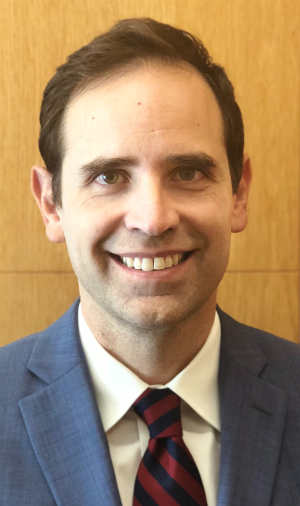
Gabriel P. Sanchez. Courtesy photo. First District Court of Appeal, Division One
Gabriel P. Sanchez, 42, of Oakland, has been appointed associate justice, Division One of the First District Court of Appeal.
Sanchez has served as a deputy legal affairs secretary in the Office of Governor Edmund G. Brown Jr. since 2012. He served as a deputy attorney general at the California Department of Justice, Office of the Attorney General from 2011 to 2012 and was an associate at Munger, Tolles and Olson LLP from 2006 to 2011. He served as a law clerk for the Honorable Richard A. Paez at the U.S. Court of Appeals, Ninth Circuit from 2005 to 2006.
He earned a Juris Doctor degree from Yale Law School, a Master of Philosophy degree from the University of Cambridge and a Bachelor of Arts degree from Yale College.
Sanchez will fill the vacancy created by the retirement of Justice Robert L. Dondero effective October 31, 2018.
This position requires confirmation by the Commission on Judicial Appointments. The commission consists of Chief Justice Tani Cantil-Sakauye, Attorney General Xavier Becerra and Senior Presiding Justice J. Anthony Kline. Subject to being confirmed, Sanchez plans to continue serving in his current position in the Governor’s Office until the end of the year.
He will be the first male Latino justice ever appointed to the First District Court of Appeal, if confirmed.
Sanchez is a Democrat.
Carin T. Fujisaki. Courtesy photo. First District Court of Appeal, Division Three
Carin T. Fujisaki, 59, of Walnut Creek, has been appointed associate justice, Division Three of the First District Court of Appeal.
Fujisaki has served as principal attorney to the chief justice at the California Supreme Court since 2015, where she was a judicial staff attorney from 1991 to 2014 and a staff attorney from 1990 to 1991.
She was an associate at Howard, Rice, Nemerovski, Canady, Robertson and Falk from 1986 to 1990 and a research attorney at the San Francisco County Superior Court from 1985 to 1986.
Fujisaki earned a Juris Doctor degree from the University of California, Hastings College of the Law and a Bachelor of Arts degree from the University of California, Los Angeles.
She fills the vacancy created by the elevation of Justice Peter J. Siggins to presiding justice, Division Three of the First District Court of Appeal.
This position requires confirmation by the Commission on Judicial Appointments. The Commission consists of Chief Justice Tani Cantil-Sakauye, Attorney General Xavier Becerra and Senior Presiding Justice J. Anthony Kline.
Fujisaki is a Democrat.
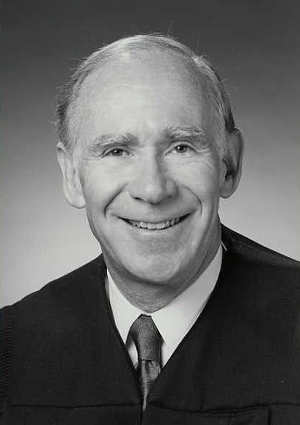
Justice Stuart R. Pollak. Courtesy photo. First District Court of Appeal, Division Four
Stuart R. Pollak, 81, of San Francisco, has been appointed presiding justice, Division Four of the First District Court of Appeal.
Pollak has served as an associate justice in Division Three of the First District Court of Appeal since 2002.
He served as a judge at the San Francisco County Superior Court from 1982 to 2002 and held several positions at Howard, Rice, Nemerovski, Canady and Pollak from 1965 to 1982, including partner and associate.
He served as an attorney at the U.S. Department of Justice from 1963 to 1966 and served as a law clerk for the Honorable Earl Warren, the Honorable Stanley Reed and the Honorable Harold Burton at the U.S. Supreme Court from 1962 to 1963.
Pollak earned a Juris Doctor degree from Harvard Law School and a Bachelor of Arts degree from Stanford University.
He fills the vacancy created by the retirement of Presiding Justice Ignazio J. Ruvolo. This position requires confirmation by the Commission on Judicial Appointments. The Commission consists of Chief Justice Tani Cantil-Sakauye, Attorney General Xavier Becerra and Senior Presiding Justice J. Anthony Kline.
Pollak is a Democrat.
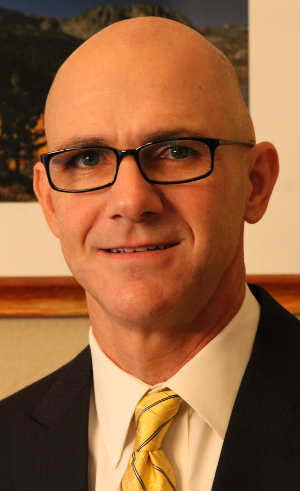
Peter A. Krause. Courtesy photo. Third District Court of Appeal
Peter A. Krause, 49, of Sacramento, has been appointed associate justice of the Third District Court of Appeal.
Krause has served as legal affairs secretary in the Office of Governor Edmund G. Brown Jr. since 2014, where he was chief deputy legal affairs secretary from 2013 to 2014.
He served in several positions at the California Department of Justice, Office of the Attorney General from 2007 to 2013, including supervising deputy attorney general and deputy attorney general.
Krause was an attorney at the Judicial Council of California, Office of the General Counsel from 2005 to 2007 and an associate at Sheppard, Mullin, Richter and Hampton from 1996 to 2005.
He earned a Juris Doctor degree from Loyola Law School, Los Angeles and a Bachelor of Arts degree from the University of California, Berkeley. He fills the vacancy created by the retirement of Justice George W. Nicholson.
This position requires confirmation by the Commission on Judicial Appointments. The Commission consists of Chief Justice Tani Cantil-Sakauye, Attorney General Xavier Becerra and Presiding Justice Vance W. Raye.
Subject to being confirmed, Krause plans to continue serving in his current position in the Governor’s Office until the end of the year.
Krause is registered without party preference.
Frank J. Menetrez. Courtesy photo. Fourth District Court of Appeal
Frank J. Menetrez, 52, of Claremont, has been appointed associate justice, Division Two of the Fourth District Court of Appeal.
Menetrez has served as a judge at the Los Angeles County Superior Court since 2015. He served as an appellate judicial attorney at the Second District Court of Appeal from 2005 to 2015. He was an associate at Horvitz and Levy from 2004 to 2005 and at Sidley Austin from 2001 to 2004. Menetrez served as a law clerk for the Honorable A. Wallace Tashima at the U.S. Court of Appeals, Ninth Circuit from 2000 to 2001.
He earned a Juris Doctor degree from the University of California, Los Angeles School of Law, Doctor of Philosophy and Master of Arts degrees from the University of California, Los Angeles and a Bachelor of Arts degree from Johns Hopkins University.
He fills the vacancy of a new position created on July 1, 2018.
This position requires confirmation by the Commission on Judicial Appointments. The Commission consists of Chief Justice Tani Cantil-Sakauye, Attorney General Xavier Becerra and Senior Presiding Justice Manuel A. Ramirez.
Menetrez is a Democrat.
The compensation for each of these positions is $228,918.
What does our planet look like from space? Most are familiar with beloved images of the blue marble or pale blue dot – Earth from 18,000 and 3.7 billion miles away, respectively.
But closer to home, at the boundary between Earth and space, you might encounter an unfamiliar sight.
If you were to peer down on Earth from just 300 miles above the surface, near the orbit of the International Space Station, you could see vibrant swaths of red and green or purple and yellow light emanating from the upper atmosphere.
This light is airglow.
Airglow occurs when atoms and molecules in the upper atmosphere, excited by sunlight, emit light to shed their excess energy. Or, it can happen when atoms and molecules that have been ionized by sunlight collide with and capture a free electron.
In both cases, they eject a particle of light – called a photon – in order to relax again. The phenomenon is similar to auroras, but where auroras are driven by high-energy particles originating from the solar wind, airglow is energized by ordinary, day-to-day solar radiation.
Unlike auroras, which are episodic and fleeting, airglow constantly shines throughout Earth’s atmosphere, and the result is a tenuous bubble of light that closely encases our entire planet. (Auroras, on the other hand, are usually constrained to Earth’s poles.)
Just a tenth as bright as all the stars in the night sky, airglow is far more subdued than auroras, too dim to observe easily except in orbit or on the ground with clear, dark skies and a sensitive camera. But it’s a marker nevertheless of the dynamic region where Earth meets space.
Stretching from roughly 50 to 400 miles above the surface, this region, called the ionosphere, is an electrified layer of the upper atmosphere, cooked by extreme ultraviolet radiation from the Sun until molecules break apart, giving rise to a mix of charged ions and electrons.
It’s neither fully Earth nor fully space, and instead, reacts to both terrestrial weather – the weather we experience on Earth – rippling up from below and solar energy streaming in from above, forming a complex space weather system of its own.
Turbulence in this ever-changing sea of charged particles can manifest as disruptions that interfere with orbiting satellites or communication and navigation signals used to guide airplanes, ships and self-driving cars.
Understanding the ionosphere’s extreme variability is tricky because it requires disentangling interactions between the different factors at play – interactions of which we don’t have a clear picture. That’s where airglow comes in.
“Each atmospheric gas has its own favored airglow color depending on the gas, altitude region, and excitation process, so you can use airglow to study different layers of the atmosphere,” said Doug Rowland, an astrophysicist at NASA’s Goddard Space Flight Center in Greenbelt, Maryland. “We’re not studying airglow per se, but using it as a diagnostic.”
Airglow carries information on the upper atmosphere’s temperature, density, and composition, but it also helps us trace how particles move through the region itself.
Vast, high-altitude winds sweep through the ionosphere, pushing its contents around the globe – and airglow’s subtle dance follows their lead, highlighting global patterns.
Two NASA missions take advantage of our planet’s natural glow to study the upper atmosphere: ICON, short for Ionospheric Connection Explorer, and GOLD — Global-scale Observations of the Limb and Disk.
ICON focuses on how charged and neutral gases in the upper atmosphere interact, while GOLD observes what’s driving change – the Sun, Earth’s magnetic field or the lower atmosphere – in the region.
By watching and imaging airglow, the two missions enable scientists to tease out how Earth’s weather and space intersect, dictating the region’s complex behavior.
Lina Tran works for NASA’s Goddard Space Flight Center in Greenbelt, Md.
LAKE COUNTY, Calif. – County officials reported this week that the work to clean up properties damaged by the Pawnee and Mendocino Complex fires is continuing.
On Tuesday, the Board of Supervisors approved requests from Lake County Public Health officials to continue proclamations of local emergencies for both the Pawnee fire and Mendocino Complex due to the health hazards that remain because the cleanup is not complete.
Lake County Environmental Health Director Jesse Kang told the board that, as of Oct. 20, debris removal was completed on five parcels out of 12 for the Pawnee fire.
For the Mendocino Complex, Kang said that as of Oct. 20 153 rights-of-entry forms had been submitted by property owners to participate in the state-sponsored cleanup program.
Of those, debris removal had been completed for 44 sites through the state program, seven sites were approved for private cleanup and 13 were approved for modified cleanup, which he said was for outbuildings or barns.
The California Department of Toxic Substances Control is one of the agencies involved in the state cleanup program.
Its Emergency Response Program is assessing and sweeping household hazardous waste and easily transferable pieces of asbestos from homes and other structures destroyed by the Mendocino Complex.
As of early Friday, the agency said that 198 parcels had been assessed and, of those, 190 were identified by the county of Lake and Cal Fire as having been damaged by the fire.
The map above was created using a list of damaged properties created by Cal Fire. About two dozen properties are not shown on this version of the map due to incomplete addresses that the mapping program would not recognize.
Email Elizabeth Larson at This email address is being protected from spambots. You need JavaScript enabled to view it.. Follow her on Twitter, @ERLarson, or Lake County News, @LakeCoNews.
CLEARLAKE, Calif. – The Clearlake City Council on Thursday voted to join litigation over the Sulphur fire, met the city’s newest police officer and approved the grant-funded purchase of gym equipment for the police department.
After the council convened in open session, City Attorney Ryan Jones reported on action taken in the closed session that preceded the beginning of the meeting.
Jones said the council voted unanimously to retain the services of law firm Baron and Budd related to the Sulphur fire litigation, an action which will be subject to entering into a written contract with the firm.
Earlier this year, the county of Lake also retained Baron and Budd for the Sulphur fire litigation, as Lake County News has reported.
At the start of the meeting Clearlake Police Chief Andrew White introduced to the council new police Officer Shane Audiss, who has been with the department for about two weeks.
White said Audiss graduated from high school in Santa Rosa in 2008, and later attended the police academy at Santa Rosa Junior College, graduating in 2017.
“It’s great to be here,” said Audiss, who added he’s enthusiastic about working for the city.
Audiss thanked Chief White and added he’s grateful for being welcomed into the community.
On Thursday’s agenda was consideration of a request from Casitas De Mendota LLC to be allowed to withdraw from its interest in the partnership of “O” Village Investors, related to the development of Olympic Village Apartments, a request the council ultimately decided to table in order to get more information and assurances from the other partners.
Assistant City Manager Alan Flora explained that in 2009 the Clearlake Redevelopment Agency entered into an agreement to provide a $700,000 loan to the partnership to develop 54 affordable housing units at Olympic Village.
He said it’s a 25-year loan term that’s supposed to start being repaid in 2023, 14 years after it was made.
“There’s sort of a complex arrangement with the partners that are involved in the structure of the loan but one of the partners, Casitas De Mendota, is requesting to be removed as one of the administrative general partners from Global Premier Development,” Flora said.
As part of the agreement signed in 2009, the city has to provide its consent to allow them to withdraw their partnership. Flora said no money was changing hands as part of this agreement.
Staff recommended consenting to the withdrawal and authorizing the mayor to sign it, Flora said.
During the city’s discussion with the law firm representing the partnership’s general partner, they informed the city that Fannie Mae, the primary owner on the development’s note, wants the city to sign a subordination agreement, Flora said.
That meant that the city would be required to change its deed of trust to a lien. Flora said that if it came down to some type of default, the city probably would not be ahead of Fannie Mae, adding that staff didn’t see how it’s in the city’s best interest to sign a subordination agreement that turns the deed into a lien against the property that may be more difficult to fulfil.
Flora said it was staff’s recommendation not to sign the the subordination agreement.
Councilman Russ Cremer asked if the city’s deed of trust is the first. Flora said the city is both a lender and a partner in the project. Other partners also have provided financing.
“That makes no sense whatsoever. If you’re in first position, you stay in first position,” said Cremer.
Councilmembers raised concerns about other partners potentially wanting to withdraw. Flora said that, at that point, the city didn’t have any reason to be concerned about it, and that any other withdrawals also would require council approval.
“I’m sorry, I don’t think this makes sense to me,” said Councilwoman Joyce Overton.
Mayor Bruno Sabatier pointed out that the other partners would still be required to repay the loan to the city, which Flora confirmed.
“All the other partners are agreeing to this so far,” said Flora, with Jones adding that Casitas De Mendota can’t ultimately be released from the partnership if the other partners also don’t approve it.
Overton said she wanted a legal document saying the other partners are still responsible for the loan and letters from remaining partners to ensure the city’s security.
Other council members noted similar concerns and the decision was made to table the item so staff could further research it and follow up with other partners.
However, the council did unanimously vote to deny the request to sign the subordination agreement to turn the city’s deed of trust into a lien.
In other business, the council approved a resolution approving the commitment of Community Development Block Grant program income funds totaling $200,000 and a $500,000 CDBG grant for Code Enforcement activities for the next two years, and possibly a third.
Jones and White also presented the first reading of amendments to the Clearlake Municipal Code adopting building code sections.
Jones said they went through areas of city code where there holes. Some of the updates give the city more code enforcement tools. He said they plan go go over the city code every few years to make ongoing updates.
White said the proposed changes were in response to a discussion of red-tagged homes about two months ago. “This is one piece of a larger legislative puzzle that we’re putting together to address all of these issues.”
The council also approved White’s request to purchase gym equipment for the police department thanks to a $37,543.13 grant from the Redbud Health Care District, which will cover the entire purchase.
He said the department doesn’t currently have an exercise facility, and the new equipment will benefit the employees as well as the city, as keeping officers in shape reduces injuries and stress and improves morale.
A former storage room in the department will house the equipment. It was noted during the discussion that police personnel helped renovate the space, which White said made the entire plan possible.
Email Elizabeth Larson at This email address is being protected from spambots. You need JavaScript enabled to view it.. Follow her on Twitter, @ERLarson, or Lake County News, @LakeCoNews.
This story has been updated with additional facilities information.
LAKE COUNTY, Calif. – The California Department of Water Resources Division of Safety of Dams recently released updated information on the 1,246 dams under the state’s jurisdiction, listing each dam’s downstream hazard classification, condition assessment, and reservoir restriction status.
The 2018 update reflects several changes, including adjustments to some hazard classifications based on inundation maps submitted by dam owners as required by Senate Bill 92 (Committee on Budget and Fiscal Review).
The downstream hazard is based solely on potential downstream impacts to life and property should the dam fail when operating with a full reservoir. This hazard is not related to the condition of the dam or its appurtenant structures.
The report lists numerous dams in Lake County, including several owned by the county of Lake and a Yolo County agency, and the Hidden Valley Lake Association.
County-owned facilities include two owned and operated by Lake County Sanitation District, located in Clearlake Oaks and Upper Lake, as well as the Adobe Creek and Highland Creek dams, operated by the Lake County Watershed Protection District, and the Spring Valley dam east of Clearlake Oaks.
There also is the Cache Creek Dam near Lower Lake, owned by Yolo County Flood Control and Water Conservation District, and the Coyote Creek dam owned by the Hidden Valley Lake Association.
In addition, there are numerous privately owned dams.
All but one of of Lake County’s dams are listed as being in “satisfactory” condition in the report. One of the dams owned by Langtry Farms is listed as “fair.”
Division of Safety of Dams, or DSOD, engineers and engineering geologists assess dam conditions based on annual physical inspections and comprehensive re-evaluation studies, as well as technical analyses submitted by dam owners.
This information can change from year to year as new deficiencies are identified and others are remediated.
If DSOD identifies an issue that presents a significant dam safety concern, it may place restrictions on a reservoir’s operations until deficiencies are corrected.
“Public safety is the foundation of DSOD’s independent dam safety oversight,” said Sharon Tapia, chief of DSOD. “With California’s infrastructure aging, we take our job very seriously, inspecting each jurisdictional dam annually and working closely with dam owners to correct identified issues on an ongoing basis.”
The 2018 update also includes dams taken out of, or brought into DSOD’s jurisdiction. Over the past year, five dams became non-jurisdictional by either being completely removed or reduced to less than jurisdictional size. Two existing dams were added into DSOD’s inventory.
California continues its efforts in the statewide bolstering of dam safety. New legislation requires inundation maps and emergency action plans for all significant, high, and extremely high hazard dams and their critical appurtenant structures.
In addition to continuous reevaluations since the 1960s, currently under way is a focused reevaluation of spillways of 93 dams similar to Oroville.
DSOD also continues its efforts on seismic reevaluations of dams and their appurtenances, which located near active faults and in densely populated areas.
More comprehensive than physical inspections, reevaluations are used to identify dam deficiencies, which often take many years and hundreds of millions of dollars to address.
Recently, the seismic rehabilitation of DWR’s Perris Dam was completed after four years of construction at a cost of $122 million.
The project resulted in the dam’s condition assessment improving from fair to satisfactory.
 How to resolve AdBlock issue?