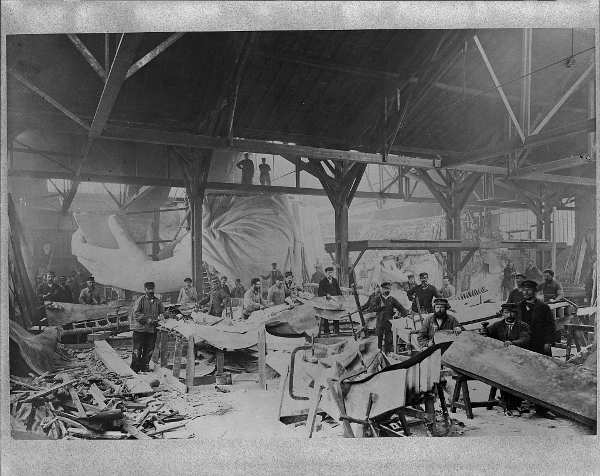
Workmen constructing the Statue of Liberty in Frederic Auguste Bartholdi's Parisian warehouse workshop; first model; left hand; and quarter-size head-. Possibly winter of 1882. Library of Congress Prints and Photographs Division Washington, D.C. 20540 USA http://hdl.loc.gov/loc.pnp/pp.print. On Oct. 28, 1886, President Grover Cleveland dedicated the Statue of Liberty on an island in New York Harbor, declaring, “We will not forget that Liberty has here made her home; nor shall her chosen altar be neglected.”
The president’s speech was just the end of a journey that stretched over two decades, encompassed two continents and spanned the Atlantic Ocean.
It had begun in the summer of 1865, when a group of men sat around a table in the suburbs of Paris. In attendance was Edouard Rene de Laboulaye, the owner of the house and a well-known author; noted historian Henri Martin; Oscar and Edmond de Lafayette, grandsons of the Marquis de Lafayette of American Revolution fame; and a young artist from the Alsace region, Frederic Auguste Bartholdi.
It was reportedly Laboulaye who first off-handedly remarked how wonderful it would be for France to present the American people with a monument to memorialize the friendship between the two nations, two sister republics and bastions of freedom. Although no action would be taken for some years, the idea of a monument germinated in the creative mind of the young artist Bartholdi, where it found fertile ground.
Following the disastrous 1870 conclusion to the Franco-Prussian War, the time seemed ripe for France to reconnect with America.
In 1871, the plan for the as-yet-unnamed monument was rejuvenated, with Laboulaye garnering support for the project at home and Bartholdi raising interest in America.
The artist attended dinner gatherings of wealthy socialites in New York City and elsewhere along the eastern seaboard. His marketing work paid off and it was decided that America would finance the construction of the pedestal and France that of the statue itself.
The plan was to erect the monument by July 4, 1876 – the centennial anniversary of the signing of the Declaration of Independence.
The iconic monument took form as a resolute lady liberty. In one hand she held a tablet bearing the date of July 4, 1776, in the other, a blazing torch of enlightenment. The statue’s symbolism, as well as its actual name, "Liberty Enlightening the World," reflected the emotions behind her formation. To the values of liberty, freedom and knowledge would Lady Liberty stand at the entrance to America, proclaiming their superiority over all others. Her very genealogy would be a testament to the deep kinship between France and America.
In her left hand, she held a tablet containing the date July 4, 1776 in Roman numerals. The seven rays of her crown represent the light of liberty shining across the seven seas and continents.
All in all, it was a spectacular monument, but an extraordinarily expensive one.
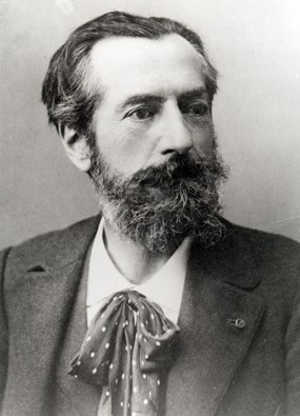
Frederic Auguste Bartholdi. Photo courtesy of the National Park Service. Despite raising a significant amount of money for both the pedestal and the actual statue, Lady Liberty arose from the heaps of bronze, copper and iron only incrementally.
Rather than unveiling her in all her glory on July 4, 1876, Bartholdi and his compatriots could only show her extended arm, clutching the torch.
They built the rest of Lady Liberty over the next eight years. When the French finally finished their part of the bargain in 1884, they looked to the Americans to uphold theirs.
With the ceremonial cornerstone laying on August 5, 1884, construction of the pedestal began in earnest.
It still took two years to complete. In that time, Lady Liberty had been disassembled into 350 pieces, packed into 214 crates aboard a French ship and unloaded in New York, only to wait while workers finished construction of her pedestal.
Rather than a hindrance to the project, the old star-shaped Fort Wood that had sat on the island for almost a century had been incorporated into Liberty’s base.
Finally, in 1886 all was ready for assembling her in her final place. The work proceeded rapidly and by Oct. 28, 1886 – just 10 years and three months late – Bartholdi himself drew back the French flag covering Liberty’s face to the sounds of whistles, the roar of guns and the applause of those below.
The Statue of Liberty, as the striking monument was popularly nicknamed, stood 151 feet tall. Bartholdi had designed the statue, but Gustave Eiffel, who had built the Eiffel Tower in Paris (which would be unveiled several months later) had designed the structural metal skeleton. Although first envisioned as a monument to democracy and enlightenment, the symbolism of the statue evolved with the nation.
When, in 1903, officials placed a bronze plaque bearing Emma Lazarus’ now-famous poem, "The New Colossus," Liberty became an emblem of America’s promise to the world’s poor. With her austere gaze, she commanded the entry into the port of New York.
She still stands there today, a testament to the value of freedom so greatly cherished by the democracies that birthed her. "Give me your tired, your poor; Your huddled masses yearning to breathe free… I lift my lamp beside the golden door!"
Antone Pierucci is curator of history at the Riverside County Park and Open Space District and a freelance writer whose work has been featured in such magazines as Archaeology and Wild West as well as regional California newspapers.
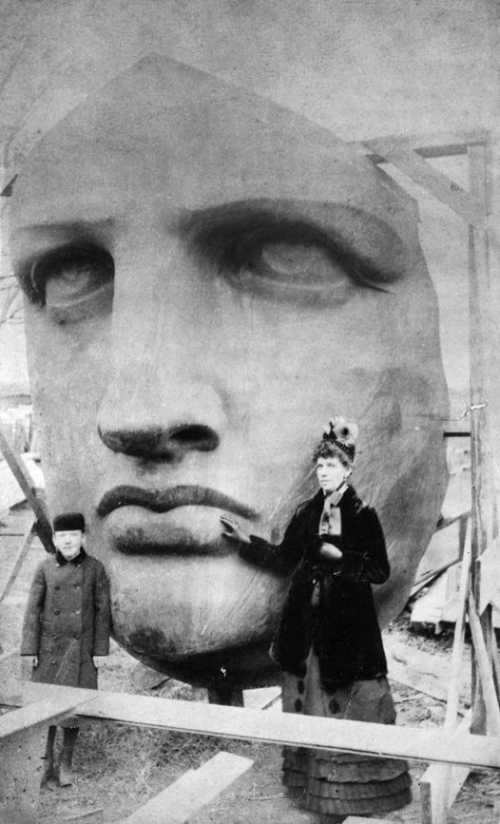
Unpacking the head of the Statue of Liberty. Public domain photo.
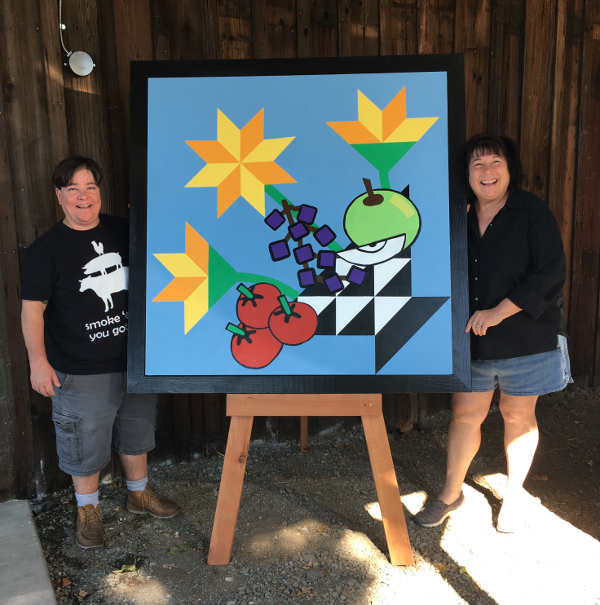
Dancing Poly's Basket has joined the Lake County Quilt Trail in Lake County, Calif. Shown here are Bess Giannakakis and Blaise Bahara. Photo courtesy of the Lake County Quilt Trail. LAKEPORT, Calif. – “Dancing Poly’s Basket” is the latest quilt block on the Lake County Quilt Trail.
It’s located at Dancing Poly Farm & Food, located at 2550 Soda Bay Road, Lakeport.
This 4-foot by 4-foot quilt block joining the Lake County Quilt Trail, which now has more than 100 blocks, belongs to Blaise Bahara and Bess Giannakakis, owners, founders and food experts of Dancing Poly Farms.
Bahara and Giannakakis offer their abundance of culinary skills, years of professional food, hospitality and business experience through lessons and demonstrations at their farm.
They also travel the county offering catering at local farmers markets and other Lake County events, such as the Pear Festival and Wine & Chocolate.
The Lake County Quilt Trail is an agricultural and tourism project designed to promote community pride.
The quilt block was drawn and painted by the Lake County Quilt Trail team, a group of dedicated volunteer quilters, graphic artists, painters, writers and carpenters.
LAKE COUNTY, Calif. – Lake County Animal Control has a mix of big and little dogs waiting for new homes this week.
Dogs available for adoption this week include mixes of American Bulldog, Australian Shepherd, Chihuahua, German Shepherd, hound, Labrador Retriever, McNab, miniature pinscher, Pekingese, pit bull, terrier and Shiba Inu.
Dogs that are adopted from Lake County Animal Care and Control are either neutered or spayed, microchipped and, if old enough, given a rabies shot and county license before being released to their new owner. License fees do not apply to residents of the cities of Lakeport or Clearlake.
If you're looking for a new companion, visit the shelter. There are many great pets hoping you'll choose them.
The following dogs at the Lake County Animal Care and Control shelter have been cleared for adoption (additional dogs on the animal control Web site not listed are still “on hold”).
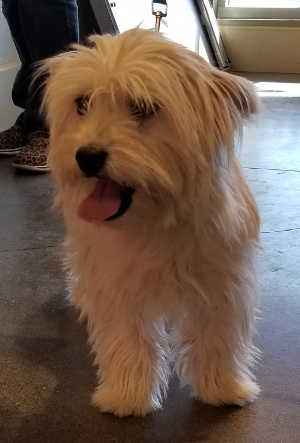
This male terrier mix is in kennel No. 2, ID No. 11286. Photo courtesy of Lake County Animal Care and Control. Male terrier mix
This male terrier mix has a long white coat.
He’s in kennel No. 2, ID No. 11286.
“Lucky” is a senior dog in kennel No. 4a, ID No. 11274. Photo courtesy of Lake County Animal Care and Control. ‘Lucky’
“Lucky” appears to be a miniature pinscher mix.
He is a senior with a short black and brown coat.
He’s already been neutered.
Lucky is in kennel No. 4a, ID No. 11274.
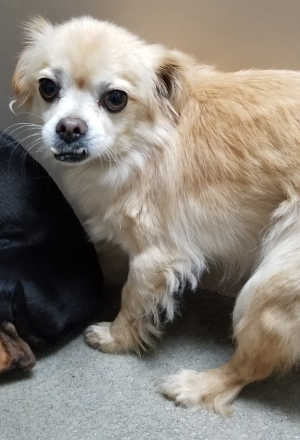
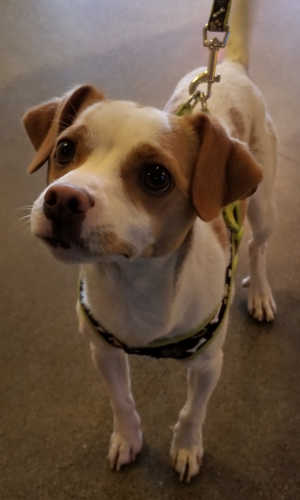
“Pookey” is a male Pekingese-Chihuahua mix in kennel No. 4b, ID No. 11273. Photo courtesy of Lake County Animal Care and Control. ‘Pookey’
“Pookey” is a male Pekingese-Chihuahua mix.
He already has been neutered and has a medium-length tan coat.
He’s in kennel No. 4b, ID No. 11273.
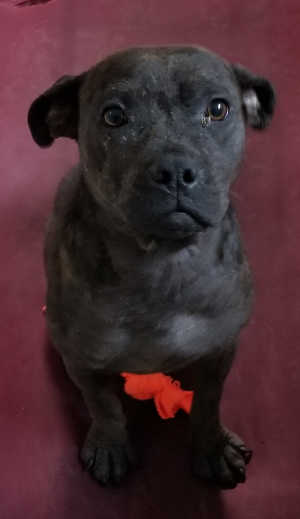
This female pit bull terrier is in kennel No. 5, ID No. 11287. Photo courtesy of Lake County Animal Care and Control. Female pit bull terrier
This female pit bull terrier has a short brindle coat.
She already has been spayed.
She is in kennel No. 5, ID No. 11287.
This male pit bull is in kennel No. 6, ID No. 11224. Photo courtesy of Lake County Animal Care and Control. Male pit bull
This male pit bull has a short brindle coat.
He already has been neutered.
He’s in kennel No. 6, ID No. 11224.
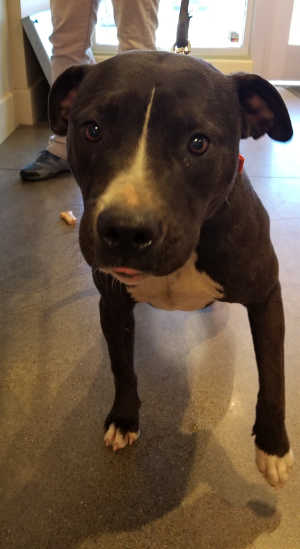
“Crow” is a male pit bull terrier in kennel No. 7, ID No. 11275. Photo courtesy of Lake County Animal Care and Control. ‘Crow’
“Crow” is a male pit bull terrier with a short black and white coat.
He already has been neutered.
He’s in kennel No. 7, ID No. 11275.
This male terrier is in kennel No. 8, ID No. 11293. Photo courtesy of Lake County Animal Care and Control. Male terrier
This male terrier has a short white and tan coat.
He’s in kennel No. 8, ID No. 11293.
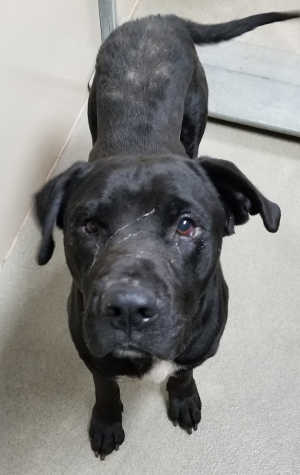
This male Labrador Retriever is in kennel No. 11, ID No. 11257. Photo courtesy of Lake County Animal Care and Control. Male Labrador Retriever
This male Labrador Retriever has a short black coat with white markings.
He’s in kennel No. 11, ID No. 11257.
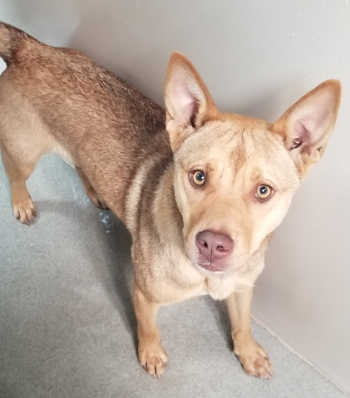
This female Shiba Inu mix is in kennel No. 19, ID No. 11198. Photo courtesy of Lake County Animal Care and Control. Shiba Inu mix
This female Shiba Inu mix has a short red and brown coat.
She already has been spayed.
She’s in kennel No. 19, ID No. 11198.
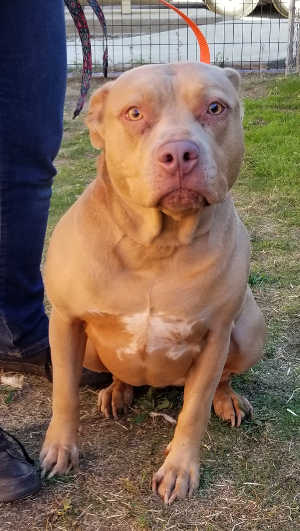
This female pit bull terrier is in kennel No. 22, ID No. 11192. Photo courtesy of Lake County Animal Care and Control. Female pit bull terrier
This female pit bull terrier has a short brown coat.
She’s in kennel No. 22, ID No. 11192.
This female pit bull terrier is in kennel No. 23, ID No. 10226. Photo courtesy of Lake County Animal Care and Control. Female pit bull terrier
This female pit bull terrier has a short brown coat.
She already has been spayed.
She’s in kennel No. 23, ID No. 10226.
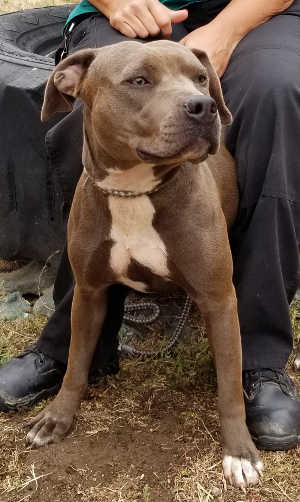
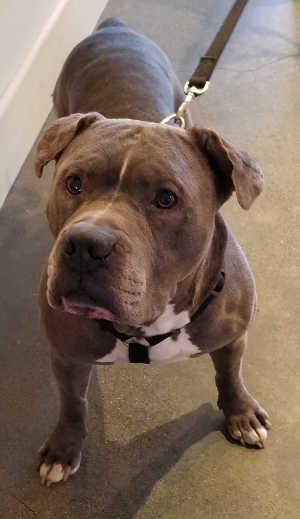
“Saint” is a male American Bulldog-pit bull terrier mix in kennel No. 24, ID No. 11236. Photo courtesy of Lake County Animal Care and Control. ‘Saint’
“Saint” is a male American Bulldog-pit bull terrier mix.
He has a short blue and brindle coat.
He’s in kennel No. 24, ID No. 11236.
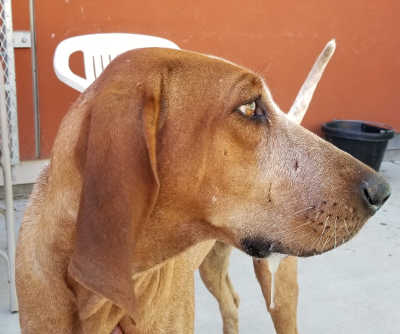
This female hound is in kennel No. 26, ID No. 11116. Photo courtesy of Lake County Animal Care and Control. Female hound
This female hound has a brown and white coat.
She already has been spayed.
She’s in kennel No. 26, ID No. 11116.
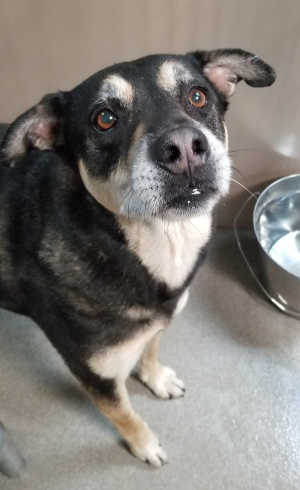
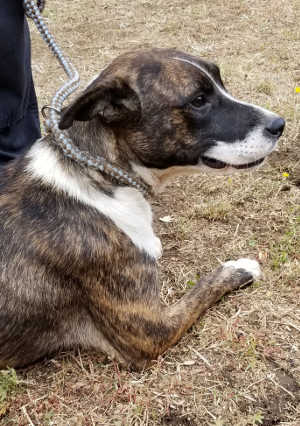
This male German Shepherd mix is in kennel No. 28, ID No. 11223. Photo courtesy of Lake County Animal Care and Control. Male German Shepherd mix
This male German Shepherd mix has a short brown and black coat.
He already has been neutered.
He’s in kennel No. 28, ID No. 11223.
This female Australian Shepherd is in kennel No. 30, ID No. 11152. Photo courtesy of Lake County Animal Care and Control. Female Australian Shepherd
This female Australian Shepherd has a short brindle and white coat.
She has already been spayed.
She’s in kennel No. 30, ID No. 11152.
This male terrier-McNab mix is in kennel No. 33, ID No. 11211. Photo courtesy of Lake County Animal Care and Control. Male terrier-McNab mix
This male terrier-McNab mix has a short black coat.
He’s in kennel No. 33, ID No. 11211.
Lake County Animal Care and Control is located at 4949 Helbush in Lakeport, next to the Hill Road Correctional Facility.
Office hours are Monday through Friday, 11 a.m. to 5 p.m., and 11 a.m. to 3 p.m., Saturday. The shelter is open from 11 a.m. to 4 p.m. Monday through Friday and on Saturday from 11 a.m. to 3 p.m.
For more information call Lake County Animal Care and Control at 707-263-0278.
Email Elizabeth Larson at This email address is being protected from spambots. You need JavaScript enabled to view it. . Follow her on Twitter, @ERLarson, or Lake County News, @LakeCoNews.
Lightning is as beautiful as it is powerful – a violent, hotter than the surface of the sun electrical marvel. But might lightning on other planets be even more astonishing?
Consider this. When Voyager 1 flew by Jupiter in 1979, its imager captured areas nearly as big as the U.S. lit up by lightning in Jupiter’s clouds.
Voyager also captured other, less ‘flashy’ signs of lightning. University of Iowa physicist Don Gurnett is one of the scientists whose Voyager instrument detected radio waves called whistlers -- signs of lightning.
New Horizons cameras captured lightning flashes on Jupiter ten times as powerful as anything ever recorded on Earth.
And recently Juno, flying closer to Jupiter than any previous mission, found that most of Jupiter’s lightning is around the planet’s higher latitudes, unlike Earth, where lightning strikes primarily over land and most intensely at the equator. Juno detected peak rates of four strikes per second -- similar to rates on Earth.
On Earth, lightning forms because colliding ice crystals and water drops inside clouds create positive and negative electric charges which become separated by convective forces. When the charges become separated enough, a lightning bolt discharges. Something similar happens on Jupiter. Gases, including water vapor, rise from deep within the planet. As they freeze, ice particles become separated from the water drops by convection, building a charge, which is discharged as lightning.
Lightning has also been observed on gas giant Saturn. In 1980-81, Voyager detected radio signals called sferics, which like whistlers are signs of lightning.
Gurnett says, “On Earth, you can hear these high-frequency radio emissions on your car’s AM radio as ‘radio static’ during a nearby lightning storm.”
Cassini recorded similar emissions at Saturn, revealing that, for strong storms, lightning occurred as many as ten times per second!
Gurnett has been involved in the search for lightning on other planets across the solar system as well.
Venus, for example, has a hot, dry atmosphere made up mostly of carbon dioxide suffused with sulfuric acid. Could this brew become electrically charged and generate lightning? When Cassini flew by Venus twice in 1998 and 1999 Gurnett did a search for lightning with a radio instrument perfect for detecting signs of lightning sferics. However the instrument picked up no signs at all. That same instrument easily detected sferics during a similar flyby of Earth two months later, leading him to believe that there is no Earth-like lightning present on Venus.
The European Space Agency’s Venus Express orbiter has picked up bursts of electromagnetic waves some scientists attribute to whistlers, but others argue that the instrument’s frequency range was too low to detect the usual forms of whistlers.
Gurnett has used Mars Express’s radar system receiver to conduct a five year search for lightning associated with dust storms on Mars. That search didn’t find lightning, however, images from the Mars Global Surveyor show bright flashes in dust storms, as well as craters on Mars that some scientists believe to be evidence of lightning strikes on the planet’s surface.
Pictured, clockwise, from top left, Joshua Billy Holden, 24, Jocia Nicole McCloskey, 34, of Clearlake, George Meszaros, 32, and Maranda Dawn Medina, 38, all of Clearlake, Calif., are suspects in a forgery case in Lake County, Calif.
LAKE COUNTY, Calif. – The Lake County Sheriff’s Office is currently conducting an investigation related to several forged checks that have been used within Lake County.
Lt. Corey Paulich said the suspects have been identified as Joshua Billy Holden, 24, of Clearlake; George Meszaros, 32, of Clearlake; Maranda Dawn Medina, 38, of Clearlake; and Jocia Nicole McCloskey, 34, of Clearlake.
The suspects made fictitious checks that were made to look as if they were issued to them from Rainbow Ag and the Travelodge in Clearlake as well as other businesses outside of Lake County, Paulich said.
Paulich said that on Oct. 19, deputies – with the assistance of officers from the Clearlake Police Department, conducted a probation search at Meszaros’ residence on Eureka Avenue in Clearlake.
Holden was located and arrested at the residence. Paulich said deputies located several items of evidence confirming the suspect’s involvement with the forged checks.
Meszaros, Medina and McCloskey are believed to have fled Lake County. Paulich said Meszaros is currently on probation related to drug offenses.
Medina is on post release community supervision probation, or PRCS, for drug and weapons offenses and has an active warrant for violating that probation, Paulich said.
Paulich said the case was forwarded to the District Attorney’s Office and arrest warrants were issued for Meszaros, Medina and McCloskey.
The sheriff’s office believes there may be more unreported cases related to the forgeries, Paulich said.
If you are a victim please file a report with the law enforcement agency responsible for your location. If you are located in the city of Lakeport or the unincorporated areas of the county you can contact Central Dispatch at 707-263-2690.
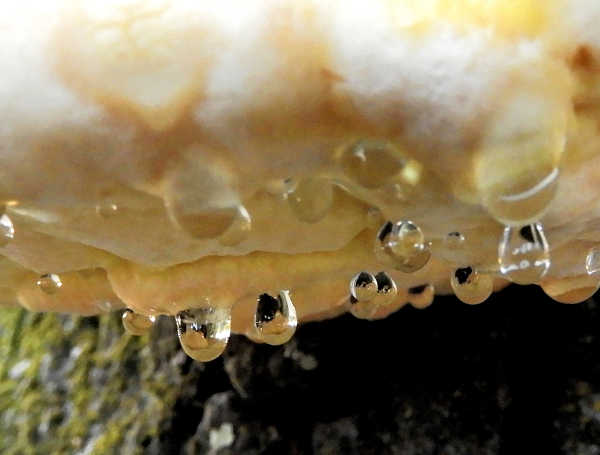
These droplets of nearly clear liquid aren’t dew; they’re actually beads of excess moisture the fungus exudes when its growing. The phenomenon, known as guttation, is common in plants, but less understood in fungi although many forms of fungi do exhibit it. Photo by Mary K. Hanson. NORTHERN CALIFORNIA – Before most of the other fungi make their appearance in the Berryessa Snow Mountain National Monument region, specimens of sulphur shelf fungus (Laetiporus gilbertsonii) appear like bright yellow-orange halos on the sides of trees.
They’re unmistakable, large and very colorful.
Different species of sulphur shelf fungus used to be lumped under the old classification name of Laetiporus sulphureus, but in 2001 they were separated out into their own distinct classifications based on DNA evidence.
Laetiporus gilbertsonii is the one we find in California, mostly growing on hardwoods like oaks and eucalyptus trees. There’s another species in California called Laetiporus conifericola that grows on conifers trees like fir and redwoods.
The fungus can grow on any part of the tree, from the base to the high trunk, wherever its spores have settled in. Most often, it is found on dead or dying trees. It’s a kind of “saprotroph,” which means it’s a decomposer, getting nutrients from decaying organic matter. But it’s also considered a “weak parasite” that can also grow on living trees and slowly sap nutrients from them.
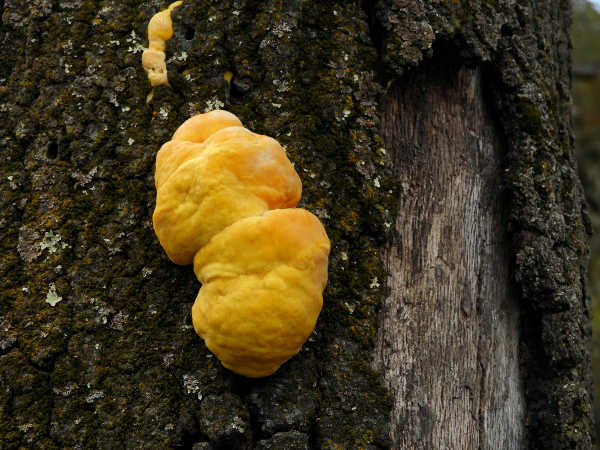
Sulphur shelf doesn’t like it when it’s very wet outside, so it usually shows up around October or November before the rainy season starts. At first, you don’t see the fungus at all as it’s living inside the tree and bark, doing its thing as a web of tiny hair-like mycelium. When the fruiting body of the fungus finally emerges onto the surface of the tree, it looks like small yellow-orange swellings that over a period of a few days turn into larger lumps with lobes, like small brains.
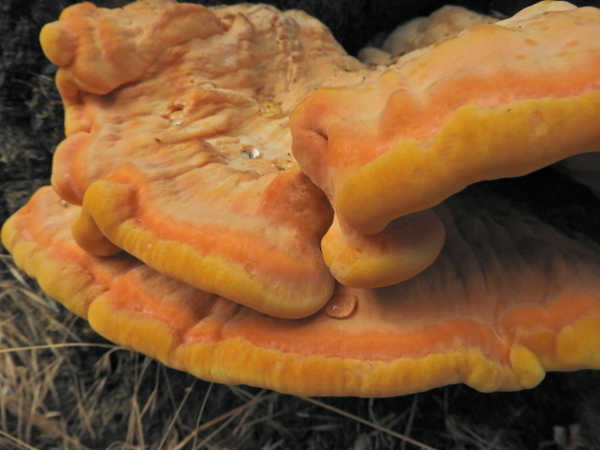
In about a week the lobes expand, thin out, and stretch into half-moon shaped shelf-like structures. Sometimes you’ll see a single shelf; sometimes the shelves are stacked up one on top of the other in groups of two to 12 or more.
The shelves are somewhat thick and fleshy and feel something like cork. Sulphur shelf is a kind of bracket polypore, so if you look at the underside of the shelves you’ll see their surfaces are riddled with hundreds of tiny pores. It’s in these pores that the fungus’s white spores are produced.
You may also see what look like tears or sweat coming from the fungus. These droplets of nearly clear liquid are actually beads of excess moisture the fungus exudes when its growing.
The phenomenon, known as guttation, is common in plants, but less understood in fungi although many forms of fungi do exhibit it. In some fungi, this guttation can appear as clear sweat, as it does in sulphur shelf, or as black, orange or even red tears (as in the Bleeding Tooth fungus, Hydnellum peckii.)
When the fruiting body of the fungus finally emerges onto the surface of the tree, it looks like small yellow-orange swellings that over a period of a few days turn into larger lumps with lobes, like small brains. Photo by Mary K. Hanson. As the sulphur shelf fungus ages, it loses its bright yellow-orange coloring and all evidence of guttation vanishes. It turns dry, chalky white and can crumble in your hand.
Sulphur shelf is known by many different common names including crab of the woods and chicken of the forest, which reflect its supposedly edible nature. Some say it tastes like chicken, others say it tastes like lobster.
Old chalky specimens are inedible, however, so stick to the bright, young ones that show a lot of guttation if you’re inclined to try a sample. Keep in mind, however, that whether the fungus is truly, safely, completely edible is widely disputed.
Some reports suggest that much depends on what sort of substrate of the fungus is growing on. If it’s growing on oak trees, for example, it’s supposed to be more edible than specimens growing on conifers or eucalyptus trees.
Other studies suggest that it’s edible, no matter what the substrate, but can cause mild to severe gastrointestinal distress in people who are sensitive to it.
Regardless, all of the studies say that the chicken of the forest – as is true of the barnyard fowl – should never be eaten raw (sautéing it or boiling it are suggested). And if you’re not sure about your level of sensitivity to fungi in general, you shouldn’t risk your health by trying it out.
Maybe the best way to enjoy this large, beautiful, native fungus is just to take photos of it and leave it where it is.
Mary K. Hanson is a Certified California Naturalist, author, nature photographer and blogger (https://chubbywomanwalkabout.com/). She also teaches naturalist classes through Tuleyome, a501(c)(3) nonprofit conservation organization based in Woodland, Calif. For more information, visit www.tuleyome.org .
After emerging, the fungus stretches out into half-moon shaped shelf-like structures. Sometimes you’ll see a single shelf; sometimes the shelves are stacked up one on top of the other in groups of two to twelve or more. It’s at this stage when the Sulphur Shelf is most edible. Be aware, however, that it should never be eaten raw and should be avoided by people who are sensitive to fungi. Photo by Mary K. Hanson.
 How to resolve AdBlock issue?