 How to resolve AdBlock issue?
News

LAKEPORT, Calif. – Police have taken a Lakeport man into custody after an investigation that began in the summer revealed that he was in possession of child pornography.
Justin Daniel Sylva, 37, was arrested on Tuesday on a felony warrant, according to Lakeport Police Chief Brad Rasmussen.
Rasmussen said that on July 4 his officers received information that Sylva was in possession of child pornography.
The investigation was turned over to Lakeport Police’s Detective Division. Rasmussen said Det. Dale Stoebe developed probable cause to believe Sylva was in possession of the pornography at his residence and authored an affidavit for a search warrant which was authorized by a Lake County Superior Court judge.
Det. Stoebe and other LPD Officers served the search warrant on Sylva’s residence and recovered digital evidence and devices believed to be connected to the possession of child pornography. Silva was not home at the time, Rasmussen said.
Rasmussen said that on July 5, officers located Silva in Lakeport and served the search on his person and vehicle. Additional evidence was recovered, Silva was interviewed and made admissions about the possession of child pornography.
Due to the fact that extensive further investigation was needed before presenting a case to the District Attorney’s Office for review, Sylva was not arrested at the time, Rasmussen said.
Rasmussen said Det. Stoebe authored an additional search warrant for forensic examination of the seized items of evidence which was again authorized by a Lake County Superior Court judge. The evidence and search warrant were turned over to the Northern California Computer Crimes Task Force, or NCCCTF, for examination.
On Jan. 16, Det. Stoebe received the report of findings from the NCCCTF, which Rasmussen said revealed Sylva was in possession of over 100 digital images consistent with child exploitation.
Rasmussen said the investigation was presented to the Lake County District Attorney’s Office, which filed felony charges against Sylva for possession of matter depicting a person under 18 engaging in or simulating sexual conduct. A felony arrest warrant was signed by a Lake County Superior Court judge.
On Jan. 18, Lakeport Police Department officers began conducting surveillance to locate and arrest Sylva, Rasmussen said.
On Tuesday, officers located Sylva and placed him under arrest. Rasmussen said Sylva was transported and booked into the Lake County Correctional Facility.
Jail records early Friday showed that Sylva is no longer in custody.
LAKE COUNTY, Calif. – A new report from the Lake County Association of Realtors, or LCAOR, says that the median sales price for single family residences in 2018 rose by 10 percent over the 2017 median.
The 2018 median price was $262,200 compared to $242,000 in 2017, the report showed.
While prices increased, the total number of sales decreased by 8.4 percent. The association said there were 851 sales reported in 2018 and 929 sales in 2017.
For all property types, including land, the total dollar volume of sales was $343.5 million, compared to the 2017 volume of $334.5 million, LCAOR said.
LCAOR said the total volume sold for just single family residences remained virtually the same – $248.5 million in 2018 and $248.9 million in 2017.
“In addition to the sale of single family residences, often called stick built homes, the Lake County real estate market also includes manufactured homes,” said Mary Benson, LCAOR’s 2019 president. “In most years this class of home will make up 20 percent of the overall residential sales and this year was no different with a total of 210 homes selling.”
The makeup of financing remained relatively the same between the two years, LCAOR said. Cash sales accounted for 23.6 percent of the 2018 financing and 25.4 percent in 2017. Conventional loans rose to 43.4 percent compared to 37.2 percent in 2017. FHA loans in 2018 were used in 15.9 percent of transactions in 2018 and 16.6 percent in 2017.
On a statewide level the California Association of Realtors, or CAR, reported that existing, single-family home sales totaled 372,260 in December on a seasonally adjusted annualized rate, down 2.4 percent from November and down 11.6 percent from December 2017.
December’s median home price for the state was $557,600, up 0.5 percent from November and up 1.5 percent from December 2017, LCAOR reported.
The statewide Unsold Inventory Index was 3.5 months in December. In Lake County, LCAOR said inventory levels were at 5.6 months. The industry norm is considered six to seven months.
The 30-year, fixed-mortgage interest rates averaged 4.45 percent for the week of Jan 17, according to Freddie Mac. The five-year, adjustable mortgage interest rate averaged 3.88 percent for the same period.
During the week of Nov. 15, 2018, both fixed-mortgage rates and five-year adjustable interest rates peaked at 4.94 percent and 4.14 percent, respectively, LCAOR said.
NUMBERS AT A GLANCE
2018
Median price: $262,200
Units sold: 851
Median days to sell: 47
2017
Median price: $242,000
Units sold: 929
Median days to sell: 43
The 2018 median price was $262,200 compared to $242,000 in 2017, the report showed.
While prices increased, the total number of sales decreased by 8.4 percent. The association said there were 851 sales reported in 2018 and 929 sales in 2017.
For all property types, including land, the total dollar volume of sales was $343.5 million, compared to the 2017 volume of $334.5 million, LCAOR said.
LCAOR said the total volume sold for just single family residences remained virtually the same – $248.5 million in 2018 and $248.9 million in 2017.
“In addition to the sale of single family residences, often called stick built homes, the Lake County real estate market also includes manufactured homes,” said Mary Benson, LCAOR’s 2019 president. “In most years this class of home will make up 20 percent of the overall residential sales and this year was no different with a total of 210 homes selling.”
The makeup of financing remained relatively the same between the two years, LCAOR said. Cash sales accounted for 23.6 percent of the 2018 financing and 25.4 percent in 2017. Conventional loans rose to 43.4 percent compared to 37.2 percent in 2017. FHA loans in 2018 were used in 15.9 percent of transactions in 2018 and 16.6 percent in 2017.
On a statewide level the California Association of Realtors, or CAR, reported that existing, single-family home sales totaled 372,260 in December on a seasonally adjusted annualized rate, down 2.4 percent from November and down 11.6 percent from December 2017.
December’s median home price for the state was $557,600, up 0.5 percent from November and up 1.5 percent from December 2017, LCAOR reported.
The statewide Unsold Inventory Index was 3.5 months in December. In Lake County, LCAOR said inventory levels were at 5.6 months. The industry norm is considered six to seven months.
The 30-year, fixed-mortgage interest rates averaged 4.45 percent for the week of Jan 17, according to Freddie Mac. The five-year, adjustable mortgage interest rate averaged 3.88 percent for the same period.
During the week of Nov. 15, 2018, both fixed-mortgage rates and five-year adjustable interest rates peaked at 4.94 percent and 4.14 percent, respectively, LCAOR said.
NUMBERS AT A GLANCE
2018
Median price: $262,200
Units sold: 851
Median days to sell: 47
2017
Median price: $242,000
Units sold: 929
Median days to sell: 43
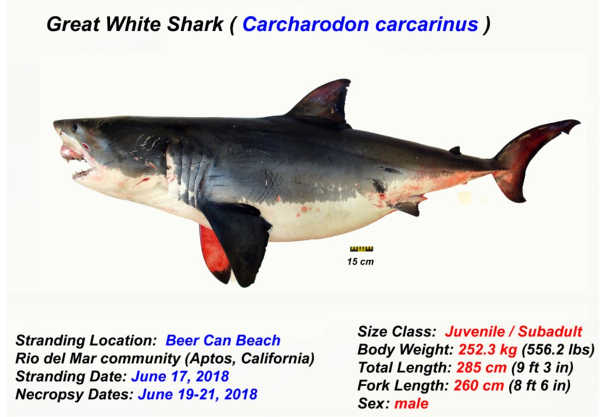
A San Jose man was recently convicted in Santa Cruz Superior Court for unlawfully killing a great white shark – also known as a white shark – in Santa Cruz County last summer.
Vinh Pham, 41, was fined $5,000 and placed on conditional probation for two years. The court also ordered his firearm to be destroyed.
Wildlife officers from the California Department of Fish and Wildlife began their investigation on June 17, 2018, immediately after the 9-foot male white shark washed up on Beer Can Beach in Aptos.
A necropsy or animal autopsy performed on the shark confirmed that it had been killed by multiple shots from a .22 caliber firearm.
Soon after, CDFW received a tip on its CalTIP reporting line that a member of a commercial fishing boat crew may have been responsible for the shark’s death.
Officers investigated the tip that night and observed the vessel fishing after dark near where the shark was discovered.
Two wildlife officers contacted the crew as the vessel returned to Santa Cruz Harbor early the next morning.
A regular commercial fishing inspection uncovered multiple violations involving their catch for that day, including possession of undersize halibut, no landing receipts, failure to weigh their commercial catch and failure to turn in landing receipts.
During this investigation, the officers located a fully loaded .22 caliber rifle concealed behind the seat of the truck the suspect was using to transport his commercial catch to markets.

Officers seized the rifle as evidence, then submitted both the rifle and the .22 bullets extracted during the shark necropsy to the California Department of Justice crime lab to see if they matched.
As the investigation progressed, Pham confessed, claiming he shot the shark after seeing it swimming near the wings of his deployed fishing net.
On Jan. 14, Pham pled to multiple charges including wanton waste of the white shark, possessing a loaded rifle in his vehicle, possessing undersize halibut, failing to accurately weigh his catch, failing to complete landing receipts and failing to submit landing receipts.
CDFW thanked Assistant District Attorney Ed Browne of the Santa Cruz County District Attorney’s Office for prosecuting the case.
If you witness a poaching or polluting incident or any fish and wildlife violation, or have information about such a violation, immediately dial the toll free CalTIP number, (888) 334-2258, 24 hours a day, seven days a week.
Tips may also be submitted to CDFW using tip411, an internet-based tool that enables wildlife officers respond directly to the reporting party, initiating a two-way conversation.
Tipsters may remain anonymous if they choose. Tips can be sent to CDFW by texting “CALTIP,” followed by a space and the message, to 847411 (tip411).

NORTH COAST, Calif. – On Thursday Cal Fire said that, after an extensive and thorough investigation, it has determined the Tubbs fire in Sonoma County, which occurred during the October 2017 Fire Siege, was caused by a private electrical system adjacent to a residential structure.
Cal Fire said its investigators did not identify any violations of state law, Public Resources Code, related to the cause of this fire.
The Tubbs fire started on the evening of Oct. 8, 2017, and burned a total of 36,807 acres, destroying 5,636 structures and resulting in 22 civilian fatalities and one firefighter injury.
In total, the October 2017 Fire Siege involved more than 170 fires and burned at least 245,000 acres in Northern California. Approximately 11,000 firefighters from 17 states and Australia helped battle the blazes.
Last year, Cal Fire released findings that concluded that some of the other fires in the fire siege – including Lake County’s Sulphur fire, the Redwood fire in Mendocino County, the Atlas fire in Napa County, and the Nuns and Pocket fires in Sonoma County – as well as nearly a dozen other wildland incidents across Northern California in 2017 were the result of failure of Pacific Gas and Electric Co. equipment, as Lake County News has reported.
Cal Fire investigators are dispatched with the initial attack resources to the wildfires in Cal Fire jurisdiction and immediately begin working to determine their origin and cause.
The redacted Tubbs Fire Investigation Report is here.
Cal Fire said its investigators did not identify any violations of state law, Public Resources Code, related to the cause of this fire.
The Tubbs fire started on the evening of Oct. 8, 2017, and burned a total of 36,807 acres, destroying 5,636 structures and resulting in 22 civilian fatalities and one firefighter injury.
In total, the October 2017 Fire Siege involved more than 170 fires and burned at least 245,000 acres in Northern California. Approximately 11,000 firefighters from 17 states and Australia helped battle the blazes.
Last year, Cal Fire released findings that concluded that some of the other fires in the fire siege – including Lake County’s Sulphur fire, the Redwood fire in Mendocino County, the Atlas fire in Napa County, and the Nuns and Pocket fires in Sonoma County – as well as nearly a dozen other wildland incidents across Northern California in 2017 were the result of failure of Pacific Gas and Electric Co. equipment, as Lake County News has reported.
Cal Fire investigators are dispatched with the initial attack resources to the wildfires in Cal Fire jurisdiction and immediately begin working to determine their origin and cause.
The redacted Tubbs Fire Investigation Report is here.
LAKEPORT, Calif. – Last week Lake County’s agriculture commissioner presented the 2017 crop report to the Board of Supervisors, a document that shows an overall increase in agriculture’s gross value, which he said may be the last increase for some time.
At the Jan. 15 meeting, Agriculture Commissioner Steve Hajik said that for 2017 the gross value of agriculture in Lake County totaled approximately $120,753,532, an increase of 6 percent over 2016.
“Probably be the last increase for a while, which I’ll explain later,” he said.
In 2017, Lake County’s No. 1 agricultural commodity was winegrapes, with a gross value of $85.2 million, Hajik said. Production was down 7 percent, the price per ton rose 5 percent.
He said there were 9,508 total acres, an increase of only 88 acres, which is low considering trends.
The No. 2 commodity was pears, with a gross value of $26.9 million. Hajik said the commodity value was up 25 percent, with production also up 25 percent. However, the price per ton was down 3 percent and acres stayed the same.
He said in the next crop report there will be a significant difference in the pear acreage.
Supervisor Rob Brown asked about impacts of smoke from wildland fires on winegrapes. Hajik said he didn’t have reports of smoke taint in 2017.
Brown said he wondered how much impact the fires over the past four years have had on winegrapes, which have been hit the hardest. The fires haven’t impacted pears and walnuts.
He said he heard there were 1,500 tons of winegrapes left on the vines in 2018 due to smoke damage. “I think it’s important to find out what that cumulative impact has been on the economy,” Brown said.
Hajik agreed. He said that if growers accepted a lesser price for grapes in 2018, it would impact prices per ton in future years. “If they don't pick, that’s actually better for the price in the future.”
For 2018, Hajik said he expects a $10 million hit on winegrapes.
Board Chair Tina Scott asked if it’s known how many growers chose not to pick their grapes.
“Quite a few,” said Hajik.
Brown said it wasn’t that they decided not to pick, but that those contracted to buy their grapes wouldn’t accept them.
Hajik said he received a lot of calls during grape season about grapes and smoke taint. “I’m an official agency. If I was to respond to those questions, it’s going to impact the grape industry, so I purposefully stayed out of it, ‘cause if I get figures, I have to give them to the public.” He said he told the winegrape commission, which will do its own survey.
Brown added that the county didn’t have accurate information because those who had purchasing contracts did their own independent testing and wouldn't release the information.
Supervisor Bruno Sabatier pointed out that the hottest points of the fire season coincide with harvest season. “The difficulties of dealing with harvest while dealing with the fires is also another cost that is attributed to agriculture that we don’t see that report, so I agree that we need to protect our commodities if we can.”
Hajik said that he didn’t hear anyone speaking of smoke taint in 2017. In 2018, “That was all I heard about.”
In reporting other top commodities, Hajik said walnuts were No. 3, with $3.6 million in gross value, a production decline of 9 percent, an 11 percent increase in price per ton, and acreage of 3,550, which he said is dropping.
Cattle came in at No. 4, at $1.5 million, down 20 percent. That year saw a selloff of cattle from the drought, with ranchers wanting to build up their herds again, Hajik reported.
The only other commodity that went up in 2017 was nursery production, which rose to $980,891, while Hajik said the timber harvest dropped significantly, dropping to $143,447 from $5.1 million in 2016.
Brown said there has never been more timber harvested than the last three years, which he said wasn’t shown the report.
Hajik said the timber market was flooded by lumber and legitimate growers “got killed.”
Other notable commodities and their gross value reported by Hajik included livestock and poultry products, $45,000; field and seed crops, $1.8 million; vegetables, $210,000; miscellaneous fruits and nuts, $103,500; and miscellaneous livestock, $45,100.
In 2017, the county had 90 organic farms, with 2,028 acres and $5.4 million in gross value. Making up roughly two-thirds of organic production are walnuts, with organic walnuts valued at $2.1 million from 1,688 acres, according to Hajik.
In 2018, pears, walnuts and grapes were down, which Hajik said will be reflected in the next report.
Hajik said Washington state this year had its earliest pear growing season ever, and beat local pears to market.
Brown explained that Lake County has long been known for its Bartlett pears. However, over the past four decades, more pears have been planted in the Sacramento area along the river, in Mendocino and in Washington.
Because of the climate, the pears in those other areas are harvested about two weeks to a month ahead of Lake County’s. “Our pears are actually higher quality, but the market’s flooded,” Brown said.
That has contributed to the decline of Lake County’s pear industry, as has the influx of Chilean fruit over the past 30 years. Brown said Lake County today probably has 20 percent of the market that it had 40 years ago.
Hajik said California is down to one cannery and acreage also is dropping in neighboring Mendocino County.
He said there were 2,011 pear acres in Lake County in 2018, but that will probably drop 200 to 300 acres because of a large number of trees that were pulled, with grapes planted in their stead.
“I like variety. I like having grapes, pears and walnuts. I really do,” Hajik said, adding he wouldn’t want to be like Napa, with just grapes.
“It depends which constituents you ask,” said Supervisor Moke Simon.
Simon asked if it would be possible to do a review of the value agriculture has for Lake County’s economy. Hajik said such a study is expected to cost about $13,000, and he didn’t think he had the money to do it.
Simon also asked about the one organic hop grower included in the report. Hajik said he couldn’t give a lot of specifics, but that the grower’s production remained the same compared to the previous year.
Brown suggested there may be a way to partner with organizations to pay for getting that information to study the economics of agriculture in the crop report. Hajik said he could suggest it to pear and winegrape growers.
Email Elizabeth Larson atThis email address is being protected from spambots. You need JavaScript enabled to view it. . Follow her on Twitter, @ERLarson, or Lake County News, @LakeCoNews.
At the Jan. 15 meeting, Agriculture Commissioner Steve Hajik said that for 2017 the gross value of agriculture in Lake County totaled approximately $120,753,532, an increase of 6 percent over 2016.
“Probably be the last increase for a while, which I’ll explain later,” he said.
In 2017, Lake County’s No. 1 agricultural commodity was winegrapes, with a gross value of $85.2 million, Hajik said. Production was down 7 percent, the price per ton rose 5 percent.
He said there were 9,508 total acres, an increase of only 88 acres, which is low considering trends.
The No. 2 commodity was pears, with a gross value of $26.9 million. Hajik said the commodity value was up 25 percent, with production also up 25 percent. However, the price per ton was down 3 percent and acres stayed the same.
He said in the next crop report there will be a significant difference in the pear acreage.
Supervisor Rob Brown asked about impacts of smoke from wildland fires on winegrapes. Hajik said he didn’t have reports of smoke taint in 2017.
Brown said he wondered how much impact the fires over the past four years have had on winegrapes, which have been hit the hardest. The fires haven’t impacted pears and walnuts.
He said he heard there were 1,500 tons of winegrapes left on the vines in 2018 due to smoke damage. “I think it’s important to find out what that cumulative impact has been on the economy,” Brown said.
Hajik agreed. He said that if growers accepted a lesser price for grapes in 2018, it would impact prices per ton in future years. “If they don't pick, that’s actually better for the price in the future.”
For 2018, Hajik said he expects a $10 million hit on winegrapes.
Board Chair Tina Scott asked if it’s known how many growers chose not to pick their grapes.
“Quite a few,” said Hajik.
Brown said it wasn’t that they decided not to pick, but that those contracted to buy their grapes wouldn’t accept them.
Hajik said he received a lot of calls during grape season about grapes and smoke taint. “I’m an official agency. If I was to respond to those questions, it’s going to impact the grape industry, so I purposefully stayed out of it, ‘cause if I get figures, I have to give them to the public.” He said he told the winegrape commission, which will do its own survey.
Brown added that the county didn’t have accurate information because those who had purchasing contracts did their own independent testing and wouldn't release the information.
Supervisor Bruno Sabatier pointed out that the hottest points of the fire season coincide with harvest season. “The difficulties of dealing with harvest while dealing with the fires is also another cost that is attributed to agriculture that we don’t see that report, so I agree that we need to protect our commodities if we can.”
Hajik said that he didn’t hear anyone speaking of smoke taint in 2017. In 2018, “That was all I heard about.”
In reporting other top commodities, Hajik said walnuts were No. 3, with $3.6 million in gross value, a production decline of 9 percent, an 11 percent increase in price per ton, and acreage of 3,550, which he said is dropping.
Cattle came in at No. 4, at $1.5 million, down 20 percent. That year saw a selloff of cattle from the drought, with ranchers wanting to build up their herds again, Hajik reported.
The only other commodity that went up in 2017 was nursery production, which rose to $980,891, while Hajik said the timber harvest dropped significantly, dropping to $143,447 from $5.1 million in 2016.
Brown said there has never been more timber harvested than the last three years, which he said wasn’t shown the report.
Hajik said the timber market was flooded by lumber and legitimate growers “got killed.”
Other notable commodities and their gross value reported by Hajik included livestock and poultry products, $45,000; field and seed crops, $1.8 million; vegetables, $210,000; miscellaneous fruits and nuts, $103,500; and miscellaneous livestock, $45,100.
In 2017, the county had 90 organic farms, with 2,028 acres and $5.4 million in gross value. Making up roughly two-thirds of organic production are walnuts, with organic walnuts valued at $2.1 million from 1,688 acres, according to Hajik.
In 2018, pears, walnuts and grapes were down, which Hajik said will be reflected in the next report.
Hajik said Washington state this year had its earliest pear growing season ever, and beat local pears to market.
Brown explained that Lake County has long been known for its Bartlett pears. However, over the past four decades, more pears have been planted in the Sacramento area along the river, in Mendocino and in Washington.
Because of the climate, the pears in those other areas are harvested about two weeks to a month ahead of Lake County’s. “Our pears are actually higher quality, but the market’s flooded,” Brown said.
That has contributed to the decline of Lake County’s pear industry, as has the influx of Chilean fruit over the past 30 years. Brown said Lake County today probably has 20 percent of the market that it had 40 years ago.
Hajik said California is down to one cannery and acreage also is dropping in neighboring Mendocino County.
He said there were 2,011 pear acres in Lake County in 2018, but that will probably drop 200 to 300 acres because of a large number of trees that were pulled, with grapes planted in their stead.
“I like variety. I like having grapes, pears and walnuts. I really do,” Hajik said, adding he wouldn’t want to be like Napa, with just grapes.
“It depends which constituents you ask,” said Supervisor Moke Simon.
Simon asked if it would be possible to do a review of the value agriculture has for Lake County’s economy. Hajik said such a study is expected to cost about $13,000, and he didn’t think he had the money to do it.
Simon also asked about the one organic hop grower included in the report. Hajik said he couldn’t give a lot of specifics, but that the grower’s production remained the same compared to the previous year.
Brown suggested there may be a way to partner with organizations to pay for getting that information to study the economics of agriculture in the crop report. Hajik said he could suggest it to pear and winegrape growers.
Email Elizabeth Larson at

NICE, Calif. – Orphan Dog Rescue, which has the goal of fixing more than 150 cats and dogs on one weekend, will bring its second “FIX” event to Lake County on Saturday, Feb. 2, and Sunday, Feb. 3.
The event will be held at the Robinson Rancheria gym.
The veterinary team from International Veterinary Outreach, or IVO, will provide the Veterinary services with support from students at U.C. Davis.
“We cannot adopt our way out of the pet overpopulation problem in Lake County. We’ve tried for over 15 years and it does not work,” Karen Schaver, executive director of Orphan Dog Rescue, explained. “Our solution is to bring no-cost/low-cost spay and neuter clinics to Lake County.”
The first FIX event was in June of 2017. At that time, Orphan Dog and IVO fixed about 120 cats and dogs.
With the ambitious goal of 2020 fixes in 2020, Orphan Dog is reaching out to the community for support.
For the Feb. 2 and 3 event, Orphan Dog needs to raise about $10,000, or $70 per spay and $50 per neuter.
Donations toward the event can be made online at www.OrphanDog.org or by mail to Orphan Dog, P.O. Box 662, Lakeport, CA 95453. Donors will be acknowledged on the Orphan Dog FB page and on the Web site.
Orphan Dog understands, in Lake County where the residents and businesses are struggling financially, this is a big ask. Orphan Dog also knows that fixing the problem begins with a Big FIX of all the community pets.
To apply to have your pet become a part of the event, go to http://orphandogbigfix.org/ and fill out the sign-up form. Space is limited and the deadline to sign up is Friday, Jan. 25. There will be a waiting list.
Donations for the spay/neuter service will be requested from the pet parents to help defray the cost of this event and toward the next event, even if it is just $1.
Everyone may sign up for services and services will be provided to the lowest income earners first with remaining spaces assigned to higher incomes. Proof of income will be required.
Incomes over $50,000 will be required to pay $50 for neuter and $70 for a spay.