 How to resolve AdBlock issue?
News
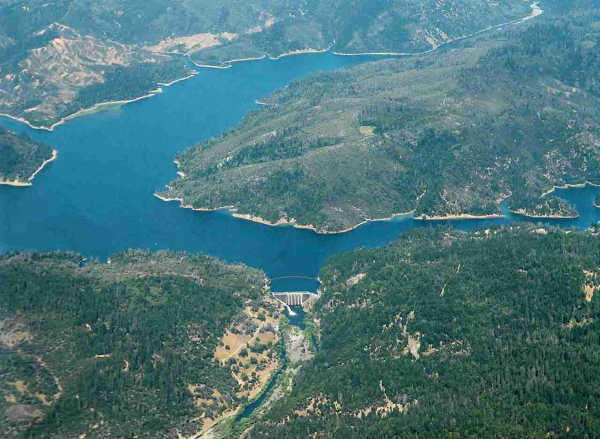
NORTH COAST, Calif. – Nearly two weeks after it said it planned to file for bankruptcy, Pacific Gas and Electric has announced that it will not relicense its Potter Valley Hydroelectric Project in Lake and Mendocino counties and will end an auction for the facility, which is expected to trigger a federal process.
On Friday, PG&E submitted a letter to the Federal Energy Regulatory Commission, or FERC, providing its “Notice of Withdrawal of Notice Of Intent to File License Application and Pre-Application Document” for the Potter Valley Project.
PG&E has owned the project since 1930.
The project’s current FERC license expires in 2022, PG&E reported.
In September, PG&E started the process for auctioning off the hydroelectric project, which consists of two dams along the upper Main Stem Eel River, a powerhouse in Potter Valley in Mendocino County, and about 5,600 acres of land, including Lake Pillsbury in Lake County.
This fall, PG&E said it already was two years into a minimum five-year process of obtaining a new operating license for the Potter Valley Project from FERC.
PG&E said Friday it will “expeditiously cease all activities related to the relicensing of the Project.” That decision to cease the project’s relicensing will also result in the the company stopping its efforts to sell the project through a request for offers process.
The company said that it anticipates FERC will initiate its “Orphan Project” process, in which it will provide interested parties the opportunity to submit an application for a new project license.
“We believe this path will allow interested parties more time to prepare for the acquisition of the Project and the ability to submit a License Application on their own terms rather than assuming PG&E’s current application,” PG&E said in a Friday statement. “If the Orphan process does not result in the issuance of a new Project License, it is expected FERC will order PG&E to prepare and submit a Surrender Application and Decommissioning Plan.”
Meanwhile, PG&E said it will continue to own and operate the Potter Valley Project in accordance with the terms and conditions of the current license “and all laws, rules, and regulations governing the operation of the Project until a new license is issued or the Project is decommissioned.”
PG&E said it also intends to support the orphan process through provision of work products and information developed to date in the relicensing process to those who apply to FERC for a new project license.
The company said it “recognizes that many stakeholders have invested significant effort in the relicensing process and we are very appreciative. We apologize for any challenges or inconvenience this action might cause.”
Email Elizabeth Larson at
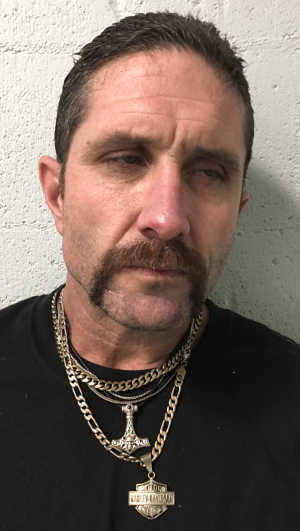
CLEARLAKE, Calif. – Police took a Clearlake man into custody on Thursday after finding a large amount of methamphetamine in his vehicle.
Peter Hart, 46, was arrested on Thursday afternoon, according to Sgt. Elvis Cook of the Clearlake Police Department.
On Thursday afternoon, Clearlake Police Officer Britanya Shores responded to a suspicious vehicle blocking a driveway in the 3500 block of Madrone Street, Cook said.
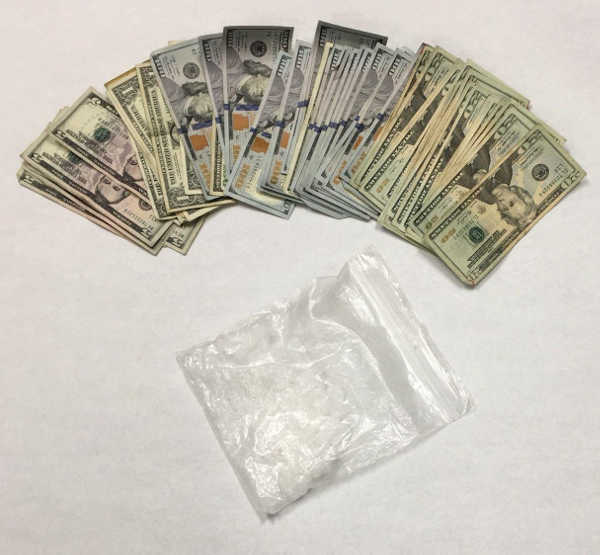
Cook said that during the incident, Officer Shores located a significant quantity of methamphetamine in Hart's vehicle, which was later determined to be over 2.5 ounces.
Hart also was in possession of more than $2,700 in cash, Cook said.
Shores arrested Hart for possession of methamphetamine for sales and transportation of methamphetamine for sales, Cook said.
Cook said Hart later was booked into the Lake County Jail on the above charges. Jail records show that he has since been released.
The estimated value and usage for the methamphetamine is 280 dosages with a street value of more than $4,000, Cook said.
When possible, California law prefers to avoid intestacy – that is, where all or a portion of a decedent’s estate goes to the decedent’s surviving heirs, and not to beneficiaries named under the decedent’s will or trust.
What happens then when gifts made in a testamentary instrument, such as a will or a trust, lapse (fail) because the beneficiary is either deceased or is deemed to be deceased (such as with an ex-spouse)?
If the will names an alternative beneficiary the gift does not lapse but goes to the alternative beneficiary. Naming alternative beneficiaries is the preferred approach used when drafting wills and trust.
Otherwise, if the deceased beneficiary was either the decedent’s kindred or was kindred of the decedent’s surviving spouse, deceased spouse, or even former spouse – then California’s Anti-Lapse Statute (section 21110(a) of the Probate Code) applies, unless a contrary intention is indicated. Kindred includes a person’s blood relatives, adopted children, stepchildren and foster children.
Under the Anti-Lapse Statute, a gift to a deceased kindred beneficiary goes, by right of representation, to the kindred beneficiary’s own descendants.
The gift, “… is divided into as many equal shares as there are living members of the nearest generation of issue [i.e., descendants] then living and deceased members of that generation who leave issue [i.e., descendants] then living, … .”
The share of a deceased descendant of the kindred beneficiary may, if necessary, likewise be further divided by right of representation.
Consider a father who makes a gift to his daughter Alice. Alice predeceases her father. Alice herself has two surviving daughters and also two grandchildren from a predeceased son.
The father’s gift to his daughter Alice is divided by right of representation into three equal shares: one share for each of Alice’s two surviving daughters and one share for Alice’s deceased son because he has two surviving children.
The share allocated to Alice’s deceased son is, therefore, divided equally between his children by right of representation at that generation.
Next, when there is no alternative beneficiary to inherit and the Anti-lapse statute also does not apply the gift then becomes subject to any residuary clause.
A residuary clause says how the balance (remainder) of a decedent’s estate is distributed after any specific gifts of assets and monetary gifts are made. It is also, unlike specific gifts and monetary gifts, first in line to be decreased by any debts and taxes to be paid from the estate.
When there are no specific or monetary gifts, the residuary clause distributes the decedent’s entire estate, and otherwise it distributes the remainder.
Consider a decedent’s will that leaves $20,000 to a close friend who predeceases him. The Anti-Lapse statute would not apply because the friend is not kindred. The will, however, has a residuary clause giving the remainder of the estate to the decedent’s own children equally. It applies.
Recently, in Estate of Cheryl D. Stockbird, California’s Court of Appeal, First Appellate District, decided a dispute regarding the will of Cheryl Stockbird, deceased.
The will divided Ms. Stockbird’s estate as follows: 65 percent to her life partner and 35 percent to her aunt by marriage, who was not kindred (i.e., no Anti-Lapse Statute).
The aunt predeceased her. Cheryl Stockbird’s will, however, did not say what happened to the aunt’s 35 percent share. Did it lapse and pass by intestacy to the decedent’s heir, or did it go to the decedent’s life partner as the sole residuary beneficiary?
The appellate Court applied California Probate Code Section 21111(b): If a gift in a residuary clause is made to a deceased beneficiary, and no alternative beneficiary is named, then, unless the Anti-Lapse Statute applies, the gift is divided proportionately amongst any other surviving residuary beneficiaries; based on the relative percentages of each beneficiary’s share in the estate. The court did not accept the heir’s contrary argument that the gift lapsed.
The foregoing shows why updating one’s testamentary documents and naming alternative beneficiaries are necessary. Unfortunately, by not naming alternative death beneficiaries, the handwritten will was deficient and otherwise avoidable litigation followed.
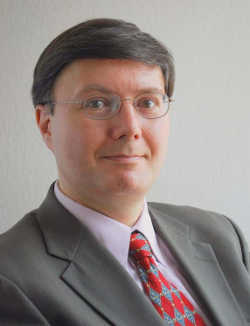
Dennis A. Fordham, attorney, is a State Bar-Certified Specialist in estate planning, probate and trust law. His office is at 870 S. Main St., Lakeport, Calif. He can be reached at
The California Department of Water Resources on Friday announced a statewide increase in State Water Project allocations for 2019.
The majority of SWP contractors now stand to receive 15 percent of their requests for the 2019 calendar year, up from the initial 10 percent announced in December.
Allocations are based on conservative assumptions and may change depending on rain and snow received this winter.
“The adjustment in allocations is the result of increased precipitation in December and January, which is good news,” said DWR Director Karla Nemeth. “However, we must continue to account for climate change and the variability of California’s weather and balance the need for flood capacity during the winter while maintaining reserves in anticipation of future dry periods.”
Thanks to the recent winter storms, most of the state’s major reservoirs are at or above their historical averages for this time of year, as is the state’s snowpack.
Lake Oroville, the SWP’s largest reservoir, has been managed conservatively to provide additional flood capacity to ensure public safety while the spillways have been under construction.
Currently, Lake Oroville is at 38 percent of capacity and 59 percent of average for this time of year. Shasta Lake, the Central Valley Project’s largest reservoir, is at 62 percent of capacity and 94 percent of average.
San Luis Reservoir, the largest off-stream reservoir in the United States where water is stored for the SWP and CVP, is at 83 percent of capacity and 109 percent of average.
Several CVP reservoirs serving the San Joaquin Valley are near or above 100 percent of their averages for this time of year. In Southern California, SWP’s Castaic Lake is 94 percent of average.
Next week, on Jan. 31, DWR will conduct the season’s second snow survey at Phillips Station, part of the comprehensive assessment of California’s Sierra Nevada snowpack.
On average, the snowpack supplies about 30 percent of California’s water needs as it melts in the spring and early summer.
The greater the snowpack water content, the greater the likelihood California’s reservoirs will receive ample runoff as the snowpack melts to meet the state’s water demand in the summer and fall. Allocations often change as hydrologic and water supply conditions change.
DWR’s California Data Exchange Center Web site shows current water conditions at the state’s largest reservoirs and weather stations and measures current rain and snow precipitation.
The majority of SWP contractors now stand to receive 15 percent of their requests for the 2019 calendar year, up from the initial 10 percent announced in December.
Allocations are based on conservative assumptions and may change depending on rain and snow received this winter.
“The adjustment in allocations is the result of increased precipitation in December and January, which is good news,” said DWR Director Karla Nemeth. “However, we must continue to account for climate change and the variability of California’s weather and balance the need for flood capacity during the winter while maintaining reserves in anticipation of future dry periods.”
Thanks to the recent winter storms, most of the state’s major reservoirs are at or above their historical averages for this time of year, as is the state’s snowpack.
Lake Oroville, the SWP’s largest reservoir, has been managed conservatively to provide additional flood capacity to ensure public safety while the spillways have been under construction.
Currently, Lake Oroville is at 38 percent of capacity and 59 percent of average for this time of year. Shasta Lake, the Central Valley Project’s largest reservoir, is at 62 percent of capacity and 94 percent of average.
San Luis Reservoir, the largest off-stream reservoir in the United States where water is stored for the SWP and CVP, is at 83 percent of capacity and 109 percent of average.
Several CVP reservoirs serving the San Joaquin Valley are near or above 100 percent of their averages for this time of year. In Southern California, SWP’s Castaic Lake is 94 percent of average.
Next week, on Jan. 31, DWR will conduct the season’s second snow survey at Phillips Station, part of the comprehensive assessment of California’s Sierra Nevada snowpack.
On average, the snowpack supplies about 30 percent of California’s water needs as it melts in the spring and early summer.
The greater the snowpack water content, the greater the likelihood California’s reservoirs will receive ample runoff as the snowpack melts to meet the state’s water demand in the summer and fall. Allocations often change as hydrologic and water supply conditions change.
DWR’s California Data Exchange Center Web site shows current water conditions at the state’s largest reservoirs and weather stations and measures current rain and snow precipitation.
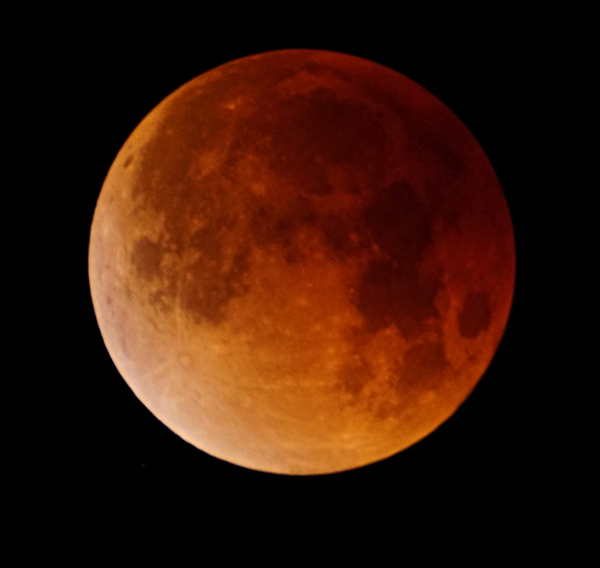
"Can moons have moons?"
This simple question – asked by the 4-year-old son of Carnegie Institution for Science's Juna Kollmeier – started it all.
Not long after this initial bedtime query, Kollmeier was coordinating a program at the Kavli Institute for Theoretical Physics, or KITP, on the Milky Way while her one-time college classmate Sean Raymond of Université de Bordeaux was attending a parallel KITP program on the dynamics of Earth-like planets.
After discussing this very simple question at a seminar, the two joined forces to solve it. Their findings are the basis of a paper published in Monthly Notices of the Royal Astronomical Society.
The duo kicked off an Internet firestorm late last year when they posted a draft of their article examining the possibility of moons that orbit other moons on a preprint server for physics and astronomy manuscripts.
The online conversation obsessed over the best term to describe such phenomena with options like moonmoons and mini-moons being thrown into the mix.
But nomenclature was not the point of Kollmeier and Raymond's investigation (although they do have a preference for submoons). Rather, they set out to define the physical parameters for moons that would be capable of being stably orbited by other, smaller moons.
"Planets orbit stars and moons orbit planets, so it was natural to ask if smaller moons could orbit larger ones," Raymond explained.
Their calculations show that only large moons on wide orbits from their host planets could host submoons. Tidal forces from both the planet and moon act to destabilize the orbits of submoons orbiting smaller moons or moons that are closer to their host planet.
They found that four moons in our own Solar System are theoretically capable of hosting their own satellite submoons. Jupiter's moon Callisto, Saturn's moons Titan and Iapetus, and Earth's own moon all fit the bill of a satellite that could host its own satellite, although none have been found so far. However, they add that further calculations are needed to address possible sources of submoon instability, such as the non-uniform concentration of mass in our moon's crust.
"The lack of known submoons in our Solar System, even orbiting around moons that could theoretically support such objects, can offer us clues about how our own and neighboring planets formed, about which there are still many outstanding questions," Kollmeier explained.
The moons orbiting Saturn and Jupiter are thought to have been born from the disk of gas and dust that encircle gas giant planets in the later stages of their formation.
Our own moon, on the other hand, is thought to have originated in the aftermath of a giant impact between the young Earth and a Mars-sized body.
The lack of stable submoons could help scientists better understand the different forces that shaped the satellites we do see.
Kollmeier added: "And, of course, this could inform ongoing efforts to understand how planetary systems evolve elsewhere and how our own Solar System fits into the thousands of others discovered by planet-hunting missions."
For example, the newly discovered possible exomoon orbiting the Jupiter-sized Kepler 1625b is the right mass and distance from its host to support a submoon, Kollmeier and Raymond found. Although, the inferred tilt of its orbit might make it difficult for such an object to remain stable. However, detecting a submoon around an exomoon would be very difficult.
Given the excitement surrounding searches for potentially habitable exoplanets, Kollmeier and Raymond calculated that the best case scenario for life on large submoons is around massive stars. Although extremely common, small red dwarf stars are so faint and their habitable zones so close that tidal forces are very strong and submoons (and often even moons themselves) are unstable.
Finally, the authors point out that an artificial submoon may be stable and thereby serve as a time capsule or outpost.
On a stable orbit around Earth’s moon – such as the one for NASA's proposed Lunar Gateway – a submoon would keep humanity's treasures safe for posterity long after Earth became unsuitable for life.
Kollmeier and Raymond agree that there is much more work to be done (and fun to be had) to understand submoons (or the lack thereof) as a rocky record of the history of planet-moon systems.
This research was supported by a grant from the Agence Nationale pour la Recherche, the NASA Astrobiology Institute's Virtual Planetary Laboratory Lead Team, and the National Science Foundation.
Sean Raymond maintains a science blog where more details and illustrations (including a poem he wrote about the article) can be found. The Carnegie Institution for Science is a private, nonprofit organization headquartered in Washington, D.C., with six research departments throughout the U.S. Since its founding in 1902, the Carnegie Institution has been a pioneering force in basic scientific research. Carnegie scientists are leaders in plant biology, developmental biology, astronomy, materials science, global ecology, and Earth and planetary science.
KELSEYVILLE, Calif. – Lake County Special Olympics will hold its annual “Polar Plunge” into Clear Lake on Saturday, Feb. 23, at Lakeside County Park in Kelseyville.
Registration begins at 10 a.m., costume judging will be at 11:45 a.m. and the plunge will take place at noon.
A post plunge luncheon will be hosted by the Kelseyville Lions Club after the plunge.
This event is held nationwide as a fundraiser for Special Olympic athletes.
Every dollar donated is used to benefit local athletes. The money is used for equipment, uniforms and transportation to out-of-county tournaments.
By participating in Special Olympics athletes gain self confidence, discipline and other important life skills.
Special Olympics is an all-volunteer organization, and everyone can help.
You can be a plunger, a chicken (and still earn prizes) or make a donation.
To participate one must raise $125 and then you receive a long sleeve t-shirt. More prizes are earned as one raises more money.
To register or for more information visit www.LakeCountyPolarPlunge.com or a donation can be mailed to Lake County Special Olympics, P.O. Box 94, Lakeport CA 95453.
Registration begins at 10 a.m., costume judging will be at 11:45 a.m. and the plunge will take place at noon.
A post plunge luncheon will be hosted by the Kelseyville Lions Club after the plunge.
This event is held nationwide as a fundraiser for Special Olympic athletes.
Every dollar donated is used to benefit local athletes. The money is used for equipment, uniforms and transportation to out-of-county tournaments.
By participating in Special Olympics athletes gain self confidence, discipline and other important life skills.
Special Olympics is an all-volunteer organization, and everyone can help.
You can be a plunger, a chicken (and still earn prizes) or make a donation.
To participate one must raise $125 and then you receive a long sleeve t-shirt. More prizes are earned as one raises more money.
To register or for more information visit www.LakeCountyPolarPlunge.com or a donation can be mailed to Lake County Special Olympics, P.O. Box 94, Lakeport CA 95453.