 How to resolve AdBlock issue?
News
Joel Harrison, 62, of Redwood Valley was the man who died in the crash, according to Capt. Greg Van Patten of the Mendocino County Sheriff’s Office.
The other drivers involved were 37-year-old Lakeport resident Kathryn Lanier-Smith and Timothy David Klee, 53, of Ukiah, said Officer Olegario Marin of the California Highway Patrol’s Ukiah Area office.
The CHP’s initial report said the crash occurred shortly before 5 p.m. Thursday in the area of Highway 20 and Marina Drive, near Lake Mendocino.
The report said Harrison, who was traveling westbound, rode his 2004 Harley Davidson into the path of the 2018 Toyota Camry driven by Lanier-Smith, who was traveling eastbound. She collided with him head-on.
Klee, who was traveling behind Lanier-Smith in a 2001 Chevrolet Coronado, swerved to the left to avoid the crash and the right side of his vehicle hit the left front of Lanier-Smith’s Camry, according to the CHP.
Harrison died at the scene, the CHP said.
The CHP said Lanier-Smith was taken to Adventist Health Ukiah Valley for treatment of moderate injuries and Klee was uninjured.
Officials said the crash remains under investigation.
Email Elizabeth Larson at

Suppose you were told that there is something responsible for nearly 1 of every 5 deaths of Americans, and that it is completely avoidable. Would you believe – today – that “something” is cigarette smoking?
If you’re a college graduate, you might not believe it. You don’t smoke. Your friends and colleagues don’t smoke. You never see smoke in your workplace, nor in the restaurants and bars you frequent. Like many of the nation’s most educated citizens, you may well regard the problem of smoking as largely solved. Because the educated population is also the most politically engaged, cigarette smoking has virtually disappeared from the nation’s health policy agenda.
I’m not a smoker, although like many of you I was one (45 years ago, in my case). As a student of tobacco policy for over 40 years, I have helped to document the remarkable progress we have made against smoking. But I also appreciate why smoking remains our nation’s most avoidable cause of disability and premature death. The lack of policy attention to smoking is a public health tragedy.
The good news and the bad news
No one can deny the extraordinary victories against smoking. Since the 1964 Surgeon General’s report on smoking and health, adult smoking prevalence has dropped by two-thirds, from 43 percent to 14 percent.
The decrease among young people has been even more substantial. For example, since smoking peaked among high school seniors 20 years ago, smoking prevalence in the past 30 days has plummeted by nearly 80 percent.
Prompted by tobacco control initiatives, Americans’ decisions to quit smoking and not to start in the first place avoided 8 million premature deaths from 1964 to 2012. The Centers for Disease Control and Prevention considers tobacco control one of the 10 greatest public health achievements of the 20th century and of the first decade of the 21st.
That’s the good news. The bad news is that 1 of every 7 adults still smokes. And smoking kills nearly 500,000 Americans every year. That number exceeds – by a lot – the sum total of all deaths caused by the opioids and other drugs, alcohol, motor vehicle injuries, homicide, suicide, HIV/AIDS and fires.
Who smokes now? The role of education
What accounts for the divergence between common perceptions about smoking and the dismal reality? In large part it is remarkable changes in who is smoking. Increasingly, today’s smokers are those with lower education, lower income and - importantly - a higher incidence of mental illness.
Consider this: In 1966, the smoking rate of Americans who hadn’t graduated high school was just 20 percent greater than that of college grads. By 2017, in contrast, the smoking prevalence of the least educated was nearly four times greater than that of the most educated.
Smoking has declined substantially at both ends of the education spectrum but to a much higher degree among college graduates: by half among Americans lacking a high school degree, but by 85 percent among college graduates.
For college grads, the rate of smoking in 2017 was vanishingly small. For those without a high school degree, and indeed for high school grads too, fully 1 out of 5 remain smokers. The difference matters. Research attributes a fifth to a third of a large education-related gap in life expectancy to differences in smoking.
Money matters
A similar pattern of smoking holds with respect to income classes, themselves highly correlated with educational attainment. According to the latest data, Americans who live below the federal poverty level were three times more likely to smoke than Americans with incomes at least 400 percent above the federal poverty level. The gap has widened since the early 1990s.
There is an enormous difference in life expectancies between the nation’s richest and poorest citizens. Smoking is again a significant factor in this disparity.
Mental health does, too
An enormously important factor in smoking today is that the smoking prevalence of people suffering from serious mental illness is more than double that of the population not so afflicted (28 percent and 13 percent, respectively, in 2014). People with mental health problems or substance use disorders constitute a quarter of the U.S. population but consume 40 percent of all cigarettes smoked. They have more difficulty quitting smoking.
Rates differ by mental illness condition. In 2007, nearly 60 percent of schizophrenics smoked. That was three times the rate of the general population. Smokers with serious psychological distress (SPD) lose 15 years of life expectancy. Nonsmoking victims of SPD lose five years. Research has thus attributed up to two-thirds of the life expectancy reduction of SPD victims who smoke to their consumption of cigarettes.
Sexual orientation, race and ethnicity
Smoking also disproportionately afflicts members of the LGBT community. Among racial/ethnic groups, American Indians and Alaskan Natives had the highest smoking rates in 2016, while Asian Americans and Pacific Islanders had the lowest.
In general, women have substantially lower smoking rates than men. The exceptions are American Indians/Alaska Natives, among whom women have slightly higher smoking prevalence than men, and non-Hispanic whites, among whom men smoke at slightly higher rates.
Marginalized smokers
As these data indicate, the principal victims of smoking are members of marginalized populations. Despite the enormous continuing importance of smoking in U.S. health, the issue is submerged. Smoking no longer afflicts the nation’s most economically advantaged population, and those it does burden lack an effective voice in the nation’s political life.
Besides, smokers tend to blame themselves for the behavior.
In point of fact, smoking is a tenacious addiction, one that the vast majority of smokers acquired in their youth. They were assisted in so doing by an avaricious tobacco industry that marketed aggressively to young people. Kids have been referred to as “replacement smokers,” the new smokers needed to replenish the industry’s customer base as its most loyal customers succumb to smoking-produced diseases.
Restoring tobacco control to the nation’s public health agenda
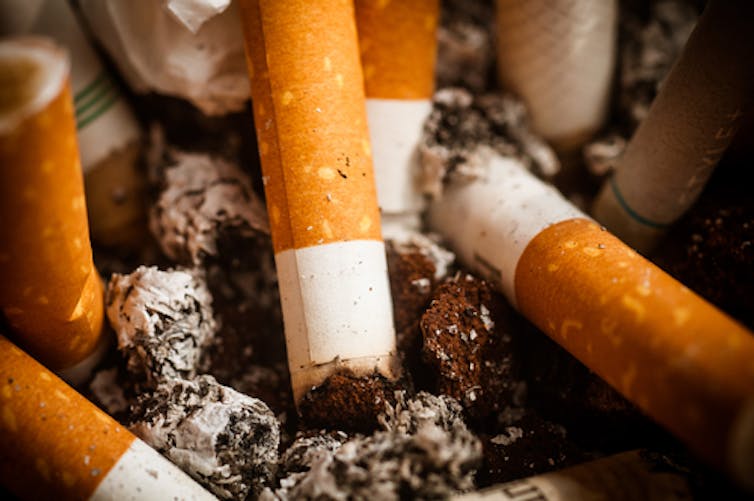
What can be done? The simple – and incomplete – answer is “more of the same.” Public education has contributed to decreased smoking, as have policy interventions: cigarette taxation, smoke-free workplace laws, prohibitions on product advertising and promotion, and media anti-smoking campaigns. Evidence-based smoking cessation treatments can help as well. Interventions increasingly need to be targeted to specific high-risk groups.
These evidence-based measures are unlikely to be enough, however. A potentially complementary tool may lie in a highly controversial recent development: the emergence of e-cigarettes. Novel reduced-risk nicotine delivery products like e-cigarettes may serve as alternatives to smoking, especially for those smokers otherwise incapable of quitting cigarettes.
Vaping may hold the potential to help significant numbers of Americans to quit smoking. The risks of vaping are clearly substantially less than those of smoking. At the same time, however, there are concerns about the attraction of e-cigarettes to young people and uncertainty about the health effects of long-term vaping.
While the ultimate impacts of e-cigarettes and other novel non-combusted tobacco products remain to be seen, there is widespread agreement that it is the burning of tobacco – primarily in the form of cigarette smoking, with its 7,000 chemicals – that is by far the most deadly method of consuming tobacco.
The enormous successes of tobacco control notwithstanding, smoking remains Public Health Enemy No. 1. Today, the burden of smoking falls primarily on marginalized populations – the poor, the poorly educated, and those suffering from mental health problems. A compassionate public would renew the battle against smoking with a vigor not seen in decades.
Kenneth E. Warner, Professor Emeritus of Public Health, University of Michigan
This article is republished from The Conversation under a Creative Commons license. Read the original article.
“From the first indications that PG&E would file for bankruptcy, my Administration’s intentions have been clear – we will look out for the interests of this state,” said Gov. Gavin Newsom in announcing the letter. “As this case unfolds, the state will continue working to ensure that Californians have access to safe, reliable and affordable service, that victims and employees are treated fairly, and that any bankruptcy outcome will preserve a strong renewable energy sector and maintain forward progress on the state's clean energy goals."
The governor added, “Wildfire survivors, employees and customers deserve to have a seat at the table during this bankruptcy process. These groups don’t have the resources of many of PG&E’s Wall Street creditors, but they will be directly impacted by the bankruptcy’s results and deserve to have substantial representation in bankruptcy court.”
Citing the profound impacts that the proceedings will have on wildfire survivors, employees, and customers, the administration’s letter asked the court to give these groups meaningful representation on the court’s official bankruptcy committee or committees – the official entities that serve as watchdogs within bankruptcy proceedings.
As the letter states, the composition of the creditors’ committee is critically important and must be led by stakeholders who have a long-term interest in California.
This action would help ensure that that the reorganization plan does not come at the expense of these important California constituencies.
“Most vulnerable in this process are the wildfire victims who were uninsured, underinsured or have potential claims against the company for personal injury and wrongful death,” the letter reads. “These individual victims should not be left to fend for themselves in a creditor class outnumbered by sophisticated and deep-pocketed financial institutions and insurance companies.”
The administration's letter can be found here.
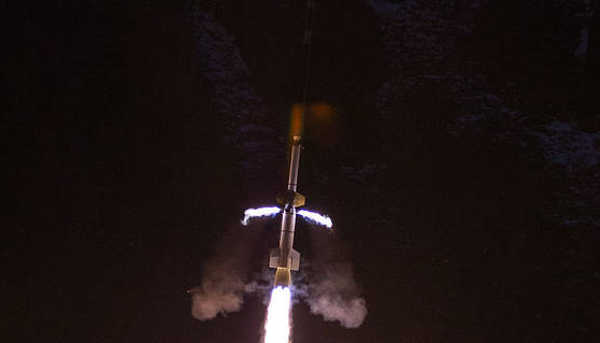
On Jan. 4, 2019, at 4:37 a.m. EST the CAPER-2 mission launched from the Andøya Space Center in Andenes, Norway, on a 4-stage Black Brant XII sounding rocket.
Reaching an apogee of 480 miles high before splashing down in the Arctic Sea, the rocket flew through active aurora borealis, or northern lights, to study the waves that accelerate electrons into our atmosphere.
CAPER-2, short for Cusp Alfvén and Plasma Electrodynamics Rocket-2, is a sounding rocket mission — a type of spacecraft that carries scientific instruments on short, targeted trips to space before falling back to Earth.
In addition to their relatively low price tags and quick development time, sounding rockets are ideally suited for launching into transient events – like the sudden formation of the aurora borealis, or northern lights.
For CAPER-2 scientists, flying through an aurora provides a peek into a process as fundamental as it is complex: How do particles get accelerated throughout space?
NASA studies this phenomenon in an effort to better understand not only the space environment surrounding Earth – and thus protect our technology in space from radiation – but also to help understand the very nature of stars and atmospheres throughout the solar system and beyond.
“Throughout the universe you have charged particles getting accelerated – in the Sun’s atmosphere, in the solar wind, in the atmospheres of other planets, and in astrophysical objects,” said Jim LaBelle, space physicist at Dartmouth College in Hanover, New Hampshire, and principal investigator for the CAPER-2 mission. “An aurora presents us with a local laboratory where we can observe these acceleration processes close at hand.”
Technically, the CAPER-2 team is interested in what happens just before an aurora starts glowing. Electrons, pouring into our atmosphere from space, collide with atmospheric gases and trigger the aurora’s glow. Somehow, they pick up speed along the way.
“By the time they crash into our atmosphere, these electrons are traveling over 10 times faster than they were before,” said Doug Rowland, space physicist at NASA’s Goddard Space Flight Center in Greenbelt, Maryland, who also studies particle acceleration. “We still don’t understand the fundamental physics of how that happens.”
The CAPER-2 team focused on a special kind of aurora that forms during the day. Unlike the nighttime aurora, the daytime aurora is triggered by electrons that stream in directly from the Sun – and we know far less about them.
“There’s been a huge amount of research done on the regular nighttime aurora, but the daytime aurora is much less studied,” said Craig Kletzing, space physicist at the University of Iowa in Iowa City and coinvestigator for the mission. “There are good indications that there are some similarities and there are also some differences.”
The team is focusing on how the electrons that create daytime auroras are jostled around by waves, in ways that may or may not differ from nighttime auroras. Two kinds of waves are of special interest, and have opposite effects.
Alfvén waves, named after Swedish Nobel laureate Hannes Alfvén who first predicted their existence in 1942, are thought to accelerate the electrons. These huge waves – measuring tens to hundreds of miles long from peak to peak – propagate along Earth’s magnetic field lines, whipping electrons to and fro.
On the other side are Langmuir waves, which are generated by the electrons themselves – a process that steals some of the electrons’ energy and slows them down. CAPER-2 will carry a high-resolution wave-particle correlator to measure them, the first sounding rocket mission to do so for the daytime aurora.
“This is very data-intensive,” said LaBelle. “It’s unique to sounding rockets to be able to look at this mechanism in this level of detail.”
For the launch, the CAPER-2 team traveled to northern Norway, one of the few places that can put a rocket within range of the daytime aurora. Every day, northern Norway rotates under an opening in Earth’s magnetic field known as the northern polar cusp, where particles from the Sun can funnel into our upper atmosphere.
Meeting the aurora right where they form is the best way to understand physical processes that are far too large to replicate in a lab.
“It’s a kind of natural laboratory,” LaBelle added. “We take our experiment to two different environments, where the variables are different, and then test the theory and answer the questions.”
CAPER-2 was the third of nine sounding rocket missions taking part in the Grand Challenge Initiative – Cusp, an international campaign to explore the northern polar cusp. The VISIONS-2 and TRICE-2 missions launched in early December, and the fourth mission, G-CHASER, launched on Jan. 13.
The window for AZURE, the next mission in the Grand Challenge Initiative – Cusp, opens on March 23, 2019.
Miles Hatfield works for NASA’s Goddard Space Flight Center in Greenbelt, Maryland.
LAKE COUNTY, Calif. – A series of storms heading to Northern California are forecast to bring more rain and high mountain snow across the region.
The National Weather Service issued a winter weather warning for the northern portion of Lake County and other parts of the North State, including the Sierras, in response to the storm, set to arrive on Friday.
The National Weather Service’s Sacramento office said Thursday that the series of storms will bring rain and snow from Friday through Monday.
The agency’s short range forecast said that most of the heavy precipitation expected over Northern California will occur on Friday as a frontal system moves over the region, with snow also expected in higher elevations.
An aggressive cold front will be associated with the first storm, which also will bring with it gusty winds and heavy bands of rain and mountain snow on Friday night through Saturday, the agency reported.
That forecast includes a significant increase in rain on Saturday with thunderstorms also possible that day. That raises concern for flash flooding and debris flows, particularly in areas where there are burn scars, such as the Mendocino Complex footprint in Lake County.
The National Weather Service’s forecast estimates up to 3 inches of rain across much of Lake County through Sunday night.
The specific Lake County forecast calls for up to half an inch of rain on Friday, and then on Friday night totals ranging from an inch to as much as 2 inches, particularly in Clearlake, on the Northshore and in the Cobb area. There also will be wind gusts in to the 20s around the county that night.
On Saturday, up to another inch of rain with wind gusts into the 40s are forecast, with more wind and rain expected on Saturday night.
On Sunday, showers are likely, with chances of both again on Monday, as well as possible snow showers on the Northshore, the forecast said.
Daytime temperatures on Friday are expected to be in the low 50s, dropping into the 40s from Saturday through Tuesday, and rising back into the 50s Wednesday and Thursday, when sunny skies return.
Nighttime temperatures will hover in the low 40s on Friday and Saturday, dropping into the mid-30s on Sunday and the high 20s on Monday night, with those lower temperatures expected on the Northshore. Tuesday and Wednesday nights are forecast to have a nighttime low at around 30 degrees.
Email Elizabeth Larson at
The California Highway Patrol said the three-vehicle wreck occurred at 4:50 p.m. on Highway 20 near Lake Mendocino and east of Calpella.
The CHP’s Ukiah Area office did not release the name of the 62-year-old man who died or the drivers of the other two vehicles involved.
The report said a silver 2018 Toyota Camry driven by a 37-year-old Lakeport woman was traveling eastbound on Highway 20 west of Marina Drive at approximately 55 miles per hour, followed by a white 2001 Chevrolet Colorado driven by a 59-year-old Ukiah man.
The motorcyclist was traveling westbound in the eastbound lane, directly in front of the Camry, at a high rate of speed, the CHP said.
The CHP said the Harley Davidson and the Camry collided head-on. The Chevy driver swerved to the left to avoid the crash and the right side of his vehicle hit the left front of the Camry.
The Harley Davidson’s driver sustained fatal injuries and died at the scene, according to the report.
The Lakeport woman driving the Camry sustained moderate injuries and was transported by ambulance to Adventist Health Ukiah Valley. The CHP said the Chevy driver was injured.
The highway was completely closed for about a half hour, then opened to one-way traffic before being completely reopened just after 6:45 p.m., at which time the CHP said emergency vehicles were still at the scene.
The CHP said there were no passengers involved, and all of the drivers were using their safety equipment.
The crash remains under investigation, the CHP said.
Email Elizabeth Larson at