 How to resolve AdBlock issue?
News
LOWER LAKE, Calif. – With the Konocti Unified School District’s superintendent planning to retire at the end of the school year, the board is preparing to begin the recruitment to find her successor.
Donna Becnel, now in her seventh year with the district and in the 35th year of her K-12 educational career, told Lake County News that she’s retiring in June.
On Jan. 11, during a special meeting, the district’s board of trustees considered information about three search firms and decided to hire Education Leadership Solutions – a locally based company – to lead the recruitment, Becnel said.
Becnel said the firm charges hourly, and it’s estimated that the maximum cost will be $12,000.
She explained that, once the consulting firm is hired, it will meet with the board to develop goals for the recruitment.
The district will then hold meetings at which Becnel said community members and employees can give input on what they would like to see in a new superintendent. Those meetings should be taking place within the next month.
From that input, Becnel said the board will create a list of final characteristics they’re seeking in a new superintendent, and then will develop an employment advertisement.
Becnel said she will work with the consultant on a recruitment timeline to bring back to the board at its Feb. 6 meeting.
She said the goal is that by the end of May a contract with a new superintendent will go to the board.
Becnel said the district is the biggest in the county by student population, now around 3,550 pupils. It’s also one of the county’s biggest employers, with more than 400 employees. The district has a $40 million annual budget.
During Becnel’s tenure, the district established a magnet medical high school and Konocti Education Center, both of which are doing great, she said. The magnet medical high school, working in conjunction with Woodland Community College, received a middle college grant which allows students to get associate degrees.
In the last seven years, the district also has undertaken major modernization projects, including new buildings and upgrades to existing facilities.
The district is just now in the process of its second issuance of bond funds, according to Becnel.
“We are continuing to grow and so we are continuing add on additional classrooms,” Becnel said.
Email Elizabeth Larson atThis email address is being protected from spambots. You need JavaScript enabled to view it. . Follow her on Twitter, @ERLarson, or Lake County News, @LakeCoNews.
Donna Becnel, now in her seventh year with the district and in the 35th year of her K-12 educational career, told Lake County News that she’s retiring in June.
On Jan. 11, during a special meeting, the district’s board of trustees considered information about three search firms and decided to hire Education Leadership Solutions – a locally based company – to lead the recruitment, Becnel said.
Becnel said the firm charges hourly, and it’s estimated that the maximum cost will be $12,000.
She explained that, once the consulting firm is hired, it will meet with the board to develop goals for the recruitment.
The district will then hold meetings at which Becnel said community members and employees can give input on what they would like to see in a new superintendent. Those meetings should be taking place within the next month.
From that input, Becnel said the board will create a list of final characteristics they’re seeking in a new superintendent, and then will develop an employment advertisement.
Becnel said she will work with the consultant on a recruitment timeline to bring back to the board at its Feb. 6 meeting.
She said the goal is that by the end of May a contract with a new superintendent will go to the board.
Becnel said the district is the biggest in the county by student population, now around 3,550 pupils. It’s also one of the county’s biggest employers, with more than 400 employees. The district has a $40 million annual budget.
During Becnel’s tenure, the district established a magnet medical high school and Konocti Education Center, both of which are doing great, she said. The magnet medical high school, working in conjunction with Woodland Community College, received a middle college grant which allows students to get associate degrees.
In the last seven years, the district also has undertaken major modernization projects, including new buildings and upgrades to existing facilities.
The district is just now in the process of its second issuance of bond funds, according to Becnel.
“We are continuing to grow and so we are continuing add on additional classrooms,” Becnel said.
Email Elizabeth Larson at
LAKE COUNTY, Calif. – Five dams across California – including one in Lake County that forms Lake Pillsbury – have been listed as key for removal by an advocacy group in the effort to stop the extinction of native salmon and steelhead.
In response to what it calls a “statewide fish extinction crisis,” which indicates 74 percent of California’s native salmon, steelhead and trout species are likely to be extinct in the next century, the fish and watershed conservation nonprofit organization California Trout on Tuesday released its list of the top five dams prime for removal in the golden state.
CalTrout said the dams identified in the report were carefully selected based on scientific criteria. The facilities were chosen provide the least benefit for people and caused the greatest hazards for imperiled native fish rose to the top.
“With the majority of California’s native salmonids at significant risk of extinction in the next 100 years, it’s imperative that we look for low-hanging fruit opportunities to improve conditions for fish, especially when we can do so without compromising public safety or water security for people,” said Curtis Knight, executive director of CalTrout. “The top five dams identified in the report provide only marginal value for people, while their removal would provide significant ecosystem and economic benefits.”
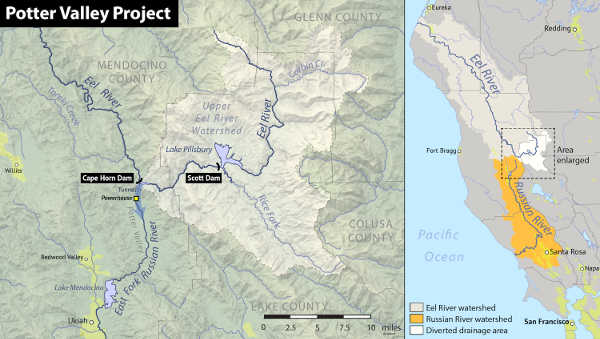
Among the listed dams is the Scott Dam in Lake County, which forms Lake Pillsbury. It’s one of two dams that make up the Potter Valley Hydropower Project, which provides hydroelectricity, water storage and diversions into the Russian River.
The project also includes the Cape Horn dam in Mendocino County, along with two reservoirs – the major one being Lake Pillsbury – and a diversion tunnel that sends water south to the Russian River watershed.
CalTrout said species that would benefit from the dam’s removal including California Coast Chinook salmon, Southern Oregon/Northern California Coast coho salmon, Northern California summer steelhead and Northern California winter steelhead.
The project, licensed through 2022 through the Federal Energy Regulatory Commission, has over the last few years been in the midst of a relicensing process. CalTrout that process is likely to call for fish passage over dam, which would be cost prohibitive.
Pacific Gas and Electric owns the project. On Tuesday, the same day that CalTrout released its list of dams to remove, PG&E filed for bankruptcy.
PG&E put the project up for sale in September and last week announced it wouldn’t relicense the project with FERC, as Lake County News has reported.
When PG&E’s decision to not relicense the project went public, CalTrout Executive Director Curtis Knight said that, while PG&E’s withdrawal does affect the process, it will not change CalTrout’s continued efforts to achieve a two-basin solution, and that in recent weeks it has put its resources toward building “a tangible plan that would remove Scott Dam and keep the water interests in the Russian River whole.”
The organization said that for the last several years, it has been conducting studies in the upper Eel River basin, commissioned dam removal and fish passage assessments above Scott Dam, and spent significant resources in analyzing the water rights and water delivery aspects of the Project in preparation for the Project’s FERC relicensing process.
CalTrout said it has worked with several other stakeholders in an ad hoc committee convened by Rep. Jared Huffman, and has assessed the fish passage options and water delivery options that will best meet the needs of water users and endangered native fish.
As a result of PG&E’s decision not to relicense, it’s expected that FERC will initiate its “Orphan Project” process, in which it will allow potential buyers to submit an application for a new project license.
In response to a question from Lake County News about whether PG&E’s decision to sell and not relicense the project had any impact on its listing of the Scott Dam, CalTrout said that the Eel River has long been a priority area for it, but its involvement in the Potter Valley Project started during the license amendment process in 1995. Since then, they have viewed the habitat above Scott Dam as high-quality potential rearing and spawning needed to restore salmonid abundance on the Eel River.
CalTrout’s said its primary goal is to open up the 150 plus miles of habitat above Scott Dam and ensure the release of cold consistent water during the spring and summer months into the Eel River.
“What is promising and what would likely be reflected in a settlement agreement, is that we can achieve those goals while diverting enough water from the Eel to the Russian River in Potter Valley during the high winter flows to satisfy the water users in Potter Valley and Sonoma County,” the organization said in a statement released to Lake County News.
“Simply put, the removal of Scott Dam opens up pristine spawning and cold-water rearing habitat in the headwaters of the Eel River, which we believe holds the greatest opportunity to return salmon and steelhead populations to historical abundance. Combine this with a FERC orphan process and hydro facility that has historically lost between $5 and $10 million a year and you have got a great opportunity for the conservation and water users to both get the type of water security they need,” the organization’s statement said.
CalTrout said it’s studied the dam removal impacts on flow regimes on the Eel and Russian Rivers, salmon and steelhead populations, and is producing a peer-reviewed study of the Scott Dam Decommissioning and Removal study conducted by Sonoma Water. “We expect to make this study available for all interested parties and we will continue to analyze the potential impacts and feasibility of the removal of Scott Dam. Nothing in our research has shown that the removal of Scott Dam is not a real and feasible potential outcome of this FERC process.”
The organization said removing the Scott Dam can have positive impacts on fish, the Eel river watershed as a whole and tribal interests, all the while keeping the necessary flows to the Russian River to support Potter Valley and Sonoma Water interests. “We have yet to analyze the effects of this project on groundwater interests, although we are analyzing the potential for groundwater recharge opportunities in Potter Valley as an opportunity for water storage on the Russian River side of this equation.”
CalTrout said its Top Five California DAMS OUT Report is a natural next step to its 2017 “State of the Salmonids II: Fish in Hot Water” report, which was completed in partnership with UC Davis.
That report detailed the status of 32 types of salmon, steelhead, and trout that are native to California and offered data about the threat of near-term extinction facing each of these fish populations. It also identified opportunities for stabilizing and even recovering many of the state’s native fish species.
Restoring access to upstream habitat through efforts like dam removal is a priority action in the drive to prevent a mass extinction of California’s native fish.
More than 1,400 dams block California rivers, creeks and streams. Many of these structures block access to salmon and steelhead spawning and rearing habitat.
CalTrout said studies have shown access to upstream habitat is critical for promoting self-sustaining populations of migratory fish.
While a great number of the state’s dams provide critical water supply, flood control and hydroelectric power, CalTrout said many others have outlived their functional lifespan and could be removed without impacting human health and safety.
In addition to the Scott Dam, the other four dams in the top 5 that CalTrout suggests for removal are:
Matilija Dam, Ventura River in Ojai: Built in 1947 for water storage and flood control, now essentially defunct due to excessive sedimentation. Widespread support for removal among locals and public agencies. Species to benefit: Southern California California steelhead.
Searsville Dam, Corte Madera Creek/San Francisquito Creek watershed in Redwood City: Built in 1892, has lost more than 90 percent of its original water storage capacity due to sedimentation. The dam does not provide potable water, flood control, or hydropower. Removal would allow steelhead to access historical spawning grounds. Species to benefit: Central California Coast steelhead.
Rindge Dam, Malibu Creek in Malibu: Located in Malibu Creek State Park about three miles upstream from the coastline, the concrete dam was completed in 1926 to provide water for irrigation and household use. The reservoir filled entirely with sediment by the 1940s. Removal would provide access to high-quality steelhead habitat. Species to benefit: Southern California steelhead.
Klamath Dams (Iron Gate Dam, Copco Dam No. 1, Copco Dam No. 2) in Siskiyou County: Four aging hydroelectric dams, three of which are in California, block salmon and steelhead fish from reaching more than 300 miles of spawning and rearing habitat. Dam removal is now expected to proceed in 2021, pending a dam license transfer to the non-profit Klamath River Renewal Corporation. Species to benefit: Southern Oregon/Northern California Coast Chinook salmon, Upper Klamath-Trinity Rivers fall-run Chinook salmon, Upper Klamath-Trinity Rivers spring-run Chinook salmon, Southern Oregon/Northern California Coast coho salmon, Chum salmon, Klamath Mountains Province summer steelhead and Klamath Mountains Province winter steelhead.
CalTrout identified the dams as ripe for removal by analyzing information found in several studies to assess the overall benefits that removal would present to native fish, water, and people.
Every dam considered for inclusion in the list blocks access to habitat for salmon and steelhead species listed as critical or of high concern in the State of Salmonids II report.
CalTrout said these dams also no longer serve the purpose for which they were built and, in some cases, may now pose a public safety threat. Dams that currently provide flood control or water supply for people were not considered for inclusion in the list, nor were any dams that are part of the State Water Project or federal Central Valley Project due to their vital role in securing water for residents throughout the state.
“CalTrout’s priority is always to find a middle ground that protects the water needs of people while improving conditions for native salmon, steelhead and trout where possible,” said Knight. “Removing these five dams would be a significant step in the right direction for imperiled native fish without having a significant impact on people. It would also be a step in the right direction for the overall health of our watersheds, which is especially important in this era of climate change.”
Read the full report here.
CLEARLAKE, Calif. – The Clearlake Police Department said it has arrested a Newark man on suspicion of sexually assaulting a child.
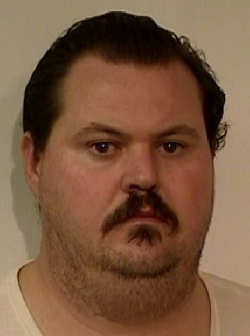
David Anthony Johnson, 31, was arrested on Saturday, the agency reported.
On Jan. 1, Clearlake Police Officer Michael Perreault initiated an investigation into the sexual assault of a child under the age of 10. Police said Johnson was identified as a suspect.
The case was turned over to Det. Ryan Peterson who conducted additional investigation. Police said the case was then sent to the Lake County District Attorney’s Office which requested a warrant for Johnson’s arrest through the Lake County Superior Court.
The Clearlake Police Department requested the assistance of the Newark Police Department with locating and arresting Johnson, police said.
On Saturday, police said Johnson was contacted at his residence, placed under arrest for the warrant and booked into the Santa Rita Jail. On Sunday, Det. Peterson responded to the Santa Rita Jail and transported and booked Johnson at the Lake County Jail.
Jail records show that Johnson remained in custody on Tuesday, with bail set at $1 million. He’s due to appear in Lake County Superior Court on Feb. 5.
The Clearlake Police Department thanked the Newark Police Department for its assistance with the case.
Anyone with information in regard to this case is encouraged to contact Det. Peterson at 707-994-8251, Extension 320.
NORTHERN CALIFORNIA – New data released by the California Department of Water Resources measure changes in land subsidence in the Sacramento Valley over the past nine years, finding the greatest land surface declines near the city of Arbuckle in Colusa County.
According to the Sacramento Valley GPS Subsidence Network Report and accompanying fact sheet, most of the valley has experienced little to no subsidence, however, land in the Arbuckle area has sunk 2.14 feet compared with baseline measurements recorded in the same location in 2008.
The report was led by the California Department of Water Resources, in coordination with 19 state and local agencies.
“We’ve long known that excessive groundwater pumping causes subsidence, which is one of the many reasons we’ve pushed for sustainable groundwater management and pursued innovative tools to better manage and report subsidence throughout the state,” said DWR Director Karla Nemeth. “Data provided by studies like this inform water managers and owners of large infrastructure so they can plan for and prevent against subsidence.”
Land subsidence can damage critical infrastructure, including water delivery systems, levees, roads, and bridges.
In 2017, DWR worked with NASA to release a report on San Joaquin Valley subsidence citing areas along the California Aqueduct that have experienced almost two feet of subsidence over three years.
The Sacramento Valley survey results were collected as groundwater levels were recovering from the severe drought of 2012-16, which saw groundwater levels in much of the state reach historic lows. Compared with 2011 pre-drought groundwater levels, the largest decreases were observed in Glenn and Colusa counties at 58 to 43 feet, respectively.
Field work indicates that groundwater levels have recovered an average of seven feet, but more frequent and more comprehensive monitoring is needed to more accurately detail the impacts of droughts and high-water years on groundwater levels and subsidence.
The Sacramento Valley GPS Subsidence Monitoring Network, launched by DWR in 2008, surveyed 300 measurement locations in 11 counties from Shasta County in the north to Solano and Sacramento counties in the south.
The 2017 resurvey effort was led by DWR’s Division of Integrated Regional Water Management Northern Region Office, with the assistance of 19 state, county and local entities.
“The data provided in this report are an example of the technical assistance we provide and the collaborative effort needed to facilitate successful and sustainable groundwater plans at the local level,” said Taryn Ravazzini, DWR deputy director of Special Initiatives.
DWR offers several tools that assist groundwater agencies and the public assess aquifer conditions and plan for sustainable management, including:
· Land Use Viewer: Allows local agencies and the public to access land use survey datasets for the past 30 years.
· Well Completion Report Viewer: Provides information about wells collected during the drilling and construction of water wells.
· SGMA Data Viewer: Compiles many groundwater related datasets that can be used to look at groundwater levels and subsidence.
The Sacramento Valley subsidence report also concludes that areas of Yolo County experienced the most widespread subsidence, in terms of geographic area affected by subsidence, with 31 survey sites measuring a land surface decline between .3 and 1.1 feet.
Other statistically significant levels of subsidence were observed at three survey sites in Glenn County (between 0.44 and 0.59 feet of subsidence) and five survey sites in Sutter County (between 0.20 and 0.36 feet of subsidence).
According to the Sacramento Valley GPS Subsidence Network Report and accompanying fact sheet, most of the valley has experienced little to no subsidence, however, land in the Arbuckle area has sunk 2.14 feet compared with baseline measurements recorded in the same location in 2008.
The report was led by the California Department of Water Resources, in coordination with 19 state and local agencies.
“We’ve long known that excessive groundwater pumping causes subsidence, which is one of the many reasons we’ve pushed for sustainable groundwater management and pursued innovative tools to better manage and report subsidence throughout the state,” said DWR Director Karla Nemeth. “Data provided by studies like this inform water managers and owners of large infrastructure so they can plan for and prevent against subsidence.”
Land subsidence can damage critical infrastructure, including water delivery systems, levees, roads, and bridges.
In 2017, DWR worked with NASA to release a report on San Joaquin Valley subsidence citing areas along the California Aqueduct that have experienced almost two feet of subsidence over three years.
The Sacramento Valley survey results were collected as groundwater levels were recovering from the severe drought of 2012-16, which saw groundwater levels in much of the state reach historic lows. Compared with 2011 pre-drought groundwater levels, the largest decreases were observed in Glenn and Colusa counties at 58 to 43 feet, respectively.
Field work indicates that groundwater levels have recovered an average of seven feet, but more frequent and more comprehensive monitoring is needed to more accurately detail the impacts of droughts and high-water years on groundwater levels and subsidence.
The Sacramento Valley GPS Subsidence Monitoring Network, launched by DWR in 2008, surveyed 300 measurement locations in 11 counties from Shasta County in the north to Solano and Sacramento counties in the south.
The 2017 resurvey effort was led by DWR’s Division of Integrated Regional Water Management Northern Region Office, with the assistance of 19 state, county and local entities.
“The data provided in this report are an example of the technical assistance we provide and the collaborative effort needed to facilitate successful and sustainable groundwater plans at the local level,” said Taryn Ravazzini, DWR deputy director of Special Initiatives.
DWR offers several tools that assist groundwater agencies and the public assess aquifer conditions and plan for sustainable management, including:
· Land Use Viewer: Allows local agencies and the public to access land use survey datasets for the past 30 years.
· Well Completion Report Viewer: Provides information about wells collected during the drilling and construction of water wells.
· SGMA Data Viewer: Compiles many groundwater related datasets that can be used to look at groundwater levels and subsidence.
The Sacramento Valley subsidence report also concludes that areas of Yolo County experienced the most widespread subsidence, in terms of geographic area affected by subsidence, with 31 survey sites measuring a land surface decline between .3 and 1.1 feet.
Other statistically significant levels of subsidence were observed at three survey sites in Glenn County (between 0.44 and 0.59 feet of subsidence) and five survey sites in Sutter County (between 0.20 and 0.36 feet of subsidence).
LAKEPORT, Calif. – With the Lakeport Unified School District Board of Trustees officially approving his contract, interim Superintendent Patrick Iaccino is getting to work to meet with staff, teachers and students, planning recruitments for teachers and a new superintendent, and looking for ways to bring the divided district together.
The school board voted to hire Iaccino, a veteran educator who retired a year and a half ago as superintendent of the Upper Lake Unified School District, at a special meeting on Jan. 14, as Lake County News has reported.
Five days earlier, the board voted to end the contract of Superintendent April Leiferman, an action which resulted in the resignation of Board member Lori Holmes the following day.
On Wednesday, the board held another special closed session, emerging after about 15 minutes to announce they had approved Iaccino’s contract.
Iaccino told Lake County News this week that the contract runs through June 30, the end of the school year. Because he is a retiree who is limited in how much time he can work, the contract is limited to 75 days of work and can’t exceed $45,000. The district also has agreed to pay for his benefits.
Already, Iaccino has gotten to work on a lengthy list of priorities needed to stabilize the district and move it forward.
At Wednesday’s meeting, both certificated and classified employees said they had spoken to Iaccino and they were ready to start – or resume – negotiations with the district.
Rob Alves, the representative for the teachers union, said he hopes the district can look through its budget and find the money for raises. He said they have a long way to go together and a lot to learn as they try to find solutions for students.
Iaccino said he is looking at making amendments to the district’s Local Control and Accountability Plan as part of finding that funding.
He said he’d had a cordial meeting with both unions the previous day, and he’s optimistic and very hopeful about working with them. He added that they would do everything they could to resolve all of the issues so the district can move forward, and energy can be put where it belongs – on students.
Iaccino’s plans include meeting in small groups with teachers and classified staff at each of the school sites. He said he wants to go over what’s in front of them in terms of the major tasks to be accomplished in a very short period of time.
Iaccino told Lake County News that he has upcoming meetings in February with the elementary, middle and high schools, where he wants to have candid conversations about the situation. “Let’s see what we can accomplish.”
He said he believes the district is having growing pains, not unlike what happened when he led the effort to consolidate the Upper Lake elementary and high school districts into Upper Lake Unified School District.
Moving forward, Iaccino told Lake County News that the list of major tasks in front of him includes, first and foremost, the hiring of a new chief business officer as Lynn Thomasson, Lakeport Unified’s current chief business officer, is set to depart in February.
He said he’s working on a contract with a consultant who could fill that position. She assists a number of districts in similar situations and comes highly recommended. Iaccino said the consultant also knows how to go through district budgets and is aware Lakeport Unified is about to start employee negotiations.
Iaccino said this week that the other big item on his docket includes the hiring of a new superintendent.
The timeline he has so far includes advertising the job in early to mid February. He proposes to do the job search in-house, rather than hiring a search firm.
The process will include putting together a committee with numerous stakeholders, from union representatives to parents, students, board members and community interest groups, he said.
That large group will then help do paper screenings of applicants to arrive at the final group of candidates who they will interview. Iaccino said he hopes interviews will take place from mid to late March, with an announcement of a new superintendent to be made in April and that individual joining the district in May or by the end of the year.
With Holmes leaving the board, Iaccino said he also needs to recruit for a new board member, a process that must be completed within 60 days of her resignation.
There also is the need to recruit for credentialed teachers, who are now at a premium. Iaccino said at last week’s meeting that Lakeport Unified isn’t the only district in dire straights, noting that California is short 21,000 credentialed teachers.
Clear Lake High School Principal Jill Falconer recounted going to job fairs and having a table next to districts that were handing out $5,000 signing bonuses to new teachers.
Iaccino agreed with Falconer that it’s hard to compete with big districts for teachers. That’s why he said the district needs to sit down with county leaders to find ways to entice teachers to come to Lake County.
Board Chair Dan Buffalo said they need to be aggressive with recruitment, especially in this year’s tight labor market. He suggested borrowing the city of Lakeport’s recruitment flier as a model.
Buffalo said at Wednesday’s meeting that he wanted placed on a future agenda a proposal for an ad hoc committee to address the loss of teachers. It was an idea he and fellow board members Carly Alvord and Jen Hanson discussed during their run in the fall election.
Iaccino told Lake County News this week that he hopes to get to 10 recruitment fairs ahead of the new school year.
Other priorities for Iaccino include addressing and turning around declining enrollment.
Twenty six students have left Lakeport Unified since the start of the year. That equates to lost revenue for the district totaling between $7,000 and $9,000 per student, a number that Iaccino said he won’t be able to refine until he sits down with a chief business officer to understand how the district structures its financing.
“It’s critical that kids go to school,” he said, adding that the district doesn’t receive any funding if children are absent for any reason. Previously, they had been paid if students were sick.
On Wednesday, Clear Lake High School Assistant Principal Jennifer Scheel said they needed to heal the community, and Iaccino agreed that the healing process needed to start.
Iaccino said this week that he is planning to put together a “state of the district” report for an upcoming meeting.
The board next meets on Feb. 13.
Email Elizabeth Larson at
More California drivers are using their cell phone behind the wheel, but less than previous years, a 2018 observational study by the California Office of Traffic Safety, or OTS, and California State University, Fresno found.
The study, which was done between August and September of 2018, revealed fewer than five percent (4.52 percent) of California drivers were seen picking up and using their cellphones, compared to less than four percent (3.58 percent) in 2017. As part of the study, surveyors examined driver behavior at 204 locations across 17 counties statewide.
The 2018 numbers are three percent less than 2016 (7.6 percent), a year before the most recent cell phone law went into effect.
“Our goal is to end distracted driving, and there’s still work to be done,” OTS Director Rhonda Craft said. “This observational survey gives us an idea on where we stand getting drivers’ attention away from their phones and where we still have work to do.”
Other key findings from the study include:
• Cell phone use was more than 8 times higher (5.55 percent) among drivers with no passengers versus with at least one passenger (less than one percent).
• Cell phone use was higher on local roads than on freeways or highways.
• The most common cell phone use by drivers was to perform a function on the phone. This could be anything from texting, email, GPS, using an app or social media.
• Less than two percent of drivers were observed using their phone with a child passenger.
Under the 2017 hands-free cell phone law, drivers are not allowed to hold their phone for any reason. The phones must be mounted on the dashboard, windshield or center console.
The mounted phone can only be touched once with the swipe or tap of a finger to activate or deactivate a function.
If cited, drivers face a $162 fine for a first offense and at least $285 for a second offense.
Since the first cell phone laws went into effect more than 10 years ago, the OTS has been urging people to put down their phones and focus on the road.
The study, which was done between August and September of 2018, revealed fewer than five percent (4.52 percent) of California drivers were seen picking up and using their cellphones, compared to less than four percent (3.58 percent) in 2017. As part of the study, surveyors examined driver behavior at 204 locations across 17 counties statewide.
The 2018 numbers are three percent less than 2016 (7.6 percent), a year before the most recent cell phone law went into effect.
“Our goal is to end distracted driving, and there’s still work to be done,” OTS Director Rhonda Craft said. “This observational survey gives us an idea on where we stand getting drivers’ attention away from their phones and where we still have work to do.”
Other key findings from the study include:
• Cell phone use was more than 8 times higher (5.55 percent) among drivers with no passengers versus with at least one passenger (less than one percent).
• Cell phone use was higher on local roads than on freeways or highways.
• The most common cell phone use by drivers was to perform a function on the phone. This could be anything from texting, email, GPS, using an app or social media.
• Less than two percent of drivers were observed using their phone with a child passenger.
Under the 2017 hands-free cell phone law, drivers are not allowed to hold their phone for any reason. The phones must be mounted on the dashboard, windshield or center console.
The mounted phone can only be touched once with the swipe or tap of a finger to activate or deactivate a function.
If cited, drivers face a $162 fine for a first offense and at least $285 for a second offense.
Since the first cell phone laws went into effect more than 10 years ago, the OTS has been urging people to put down their phones and focus on the road.