 How to resolve AdBlock issue?
News

UPPER LAKE, Calif. – Lake County’s Academic Decathlon on Saturday once again challenged some of the brightest young minds in the county, with Willits High and Upper Lake High advancing to the state competition in March.
The public portion of the event, including the Super Quiz and awards ceremony, took place in the cafeteria at Upper Lake High School.
For several years, Willits High has traveled to Lake County to participate in the competition, as no other high schools from Mendocino County have Academic Decathlon teams.
This year, Willits’ team put on a winning performing, topping both Upper Lake and Clear Lake High School and racking up dozens of medals for its students.
Mary Colvig, now in her third year coaching Willits High’s Academic Decathlon team, said her team has strong students in each of the 10 disciplines, and that they were very focused on winning.
She said they’ve been very motivated and worked hard all year to be ready for Saturday’s competition.
They were definitely ready, and in some categories, such as economics and essay, all of the medals went to Willits High students.
Savanna Hofmaister was one of Willits’ most decorated competitors, and she repeated her title this year as the top scoring student from her school. Overall, she earned the highest number of points of any academic decathlete, 8,526 points.
Sarah Williams of Upper Lake High School, also a returning academic decathlete, was the highest point earner in her school overall and second highest for the scholastic category, which is a 3.0 to 3.74 grade point average, while Katelyn Rolfe was the high scorer for Clear Lake High School.

Moving to the state competition along with Willits is Upper Lake High School, which won the Lake County title for the fourth year running.
Coach Anna Sabalone brought to this year’s competition a young team, more than a third of which were freshmen.
Adding to the mix was a large portion of last year’s team members who had competed at the state level, and the freshmen members had the chance to work with, and learn from, the upper class members.
“Fingers crossed, this will be the beginning of a good cycle,” she said.
Usually, Sabalone gives the team a week or so to rest up before diving back into the preparation for competition.
But not this year, she said.
Nodding toward her friend Colvig and the Willits team, Sabalone said that, considering the tough level of competition they will encounter at state, it’s back to work immediately.
The California Academic Decathlon will take place March 21 to 24 in Sacramento.
For information on making a donation to help the Upper Lake team travel to the state competition, call Upper Lake High at 707-275-2338.
The full results of the competition are below.
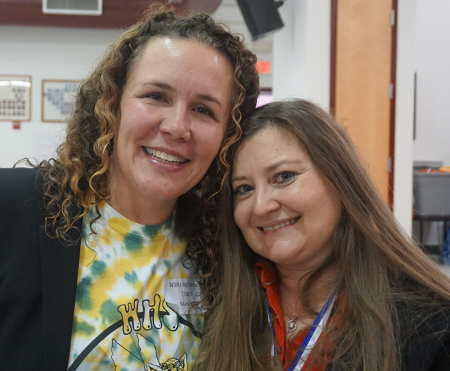
Clear Lake High School
Superintendent Patrick Iaccino, Principal Jill Falconer, Coach Becky Lawler
Team members: Nicabec Casido, Anna DelBosco, Trinity Ingersoll, Robert Lasher, Jacob Lopez, Mackenzie Markham, Edward Medina, Stacey Partridge, Breana Pierce, Nathaniel Porter, Oscard Quilala, Neydi Rodriguez, Katelyn Rolfe, Rosa Ruiz, Cole Saiz, Felix Salinas, Allison Scott
Upper Lake High School
Superintendent Giovanni Annous, Principal Sandy Coatney, Coaches Anna Sabalone, Angel Hayenga and Christal Coatney
Team members: William Cromwell, Jeff Fannon, Jasmine Haro, Jenaya Horne, Jisel Horne, Joslyn Huntley, Deeya Kalan, Jessica Lee, Emily McKelvey, Kehlani McKelvey, Diana Mendoza-Razo, Katlyn Minnis, Robert Porterfield, Hugh Ramos, Isabel Sanchez, Annalise Smith, Seneca Snow, Maria Tinoco, Sarah Williams, Amantae Wyman
Willits High School
Superintendent Mark Westerburg, Principal Michael Colvig, Coach Mary Colvig
Team members: Amy Andrade, Jacob Arms,Tyler Bailey, Joscelyn Beebe, Mikayla Blake, Jaeva Cash, Spencer Copperfield, Brieana Evans, MaKenzie Hansen, Elizabeth Henning, Karen Hernandez, Savanna Hofmaister, Teophil Labus, McKenna McNelley, Mara Moratti, Ariel Reyes, Logan Simms, Micah Stamps, Lillian Turner, Emerald Water, Ian Watson, Grady Williams
TEAM PLACEMENT
Lake County
First place: Upper Lake High School, 36,628 points
Second place: Clear Lake High School, 33,356 points
Mendocino County
First place: Willits High School, 42,474 points
AWARDS
Super Quiz
First place: Willits High School, 63
Second place: Upper Lake High School, 46
Third place: Clear Lake High School, 37
SUBJECTS
Art
First place: Savanna Hofmaister, Willits High School
Second place: Ian Watson, Willits High School
Third place: Kehlani McKelvey, Upper Lake High School
Economics
First place: Grady Williams, Willits High School
Second place: Jaeva Cash, Willits High School
Third place: (tie) Logan Simms, Elizabeth Henning and Brieana Evans, all of Willits High School
Essay
First place: Ian Watson, Willits High School
Second place: Savanna Hofmaister, Willits High School
Third place: McKenna McNelley, Willits High School
Interview
First place: (tie) Nicabec Casido, Clear Lake High School; Savanna Hofmaister, Willits High School
Second place: Mikayla Blake, Willits High School
Third place: Micah Stamps, Willits High School
Language and Literature
First place: Savanna Hofmaister, Willits High School
Second place: Brieana Evans, Willits High School
Third place: Sarah Williams, Upper Lake High School
Mathematics
First place: (tie) Ian Watson, Willits High School
Second place: Jacob Mars, Willits High School
Third place: Stacey Partridge, Clear Lake High School
Music
First place: Savanna Hofmaister, Willits High School
Second place: Ian Watson, Willits High School
Third place: (tie) Sarah Williams and Maria Tinoco, both of Upper Lake High School
Science
First place: Savanna Hofmaister, Willits High School
Second place: Nicabec Casido, Clear Lake High School
Third place: Emerald Walters, Willits High School
Social Sciences
First place: Katelyn Rolfe, Clear Lake High School
Second place: Savanna Hofmaister, Willits High School
Third place: Ian Watson, Willits High School
Speech
First place: (tie) Jeff Fannon, Upper Lake High School; Spencer Copperfield, Willits High School
Second place: Brieana Evans, Willits High School
Third place: Mikayla Blake, Willits High School
TOP FINISHERS FOR EACH ACADEMIC LEVEL
Honors category (3.75-4.00 grade point average)
First place: Savanna Hofmaister, Willits High School, 8,526 points
Second place: Ian Watson, Willits High School, 7,663 points
Third place: Brieana Evans, Willits High School, 7,475 points
Scholastic category (3.00-3.74 GPA)
First place: Logan Simms, Willits High School, 6,980 points
Second place: Sarah Williams, Upper Lake High School, 6,953 points
Third place: Micah Stamps, Willits High School, 6,503 points
Varsity category (2.99 GPA or below)
First place: Grady Williams, Willits High School, 5,855 points
Second place: Mikayla Blake, Willits High School, 5,689 points
Third place: Jeff Fannon, Upper Lake High School, 5,407 points
HIGHEST SCORING STUDENTS, PER SCHOOL
Clear Lake High School: Katelyn Rolfe
Upper Lake High School: Sarah Williams
Willits High School: Savanna Hofmaister
SECOND HIGHEST SCORING STUDENTS, PER SCHOOL
Clear Lake High School: Mackenzie Markham
Upper Lake High School: Maria Tinoco
Willits High School: Ian Watson
The Lodge at Blue Lakes provided $100 scholarships for each of the schools' top-scoring students, along with additional gift certificates to the lodge.
Correction: A previous version of the article said Sarah Williams of Upper Lake was the highest scorer in the varsity category. She actually was the second-highest scorer in the scholastic category.
Email Elizabeth Larson at
The watch is in place through 6 p.m. Monday, particularly for the Mendocino Complex burn area in Lake, Glenn and Colusa counties, and the Camp fire burn area in Butte County.
The National Weather Service issued the watch in response to a forecast of heavy rain for interior Northern California through the weekend.
The forecast calls for thunderstorms every afternoon and evening through Monday, with concerns that heavy rain from thunderstorms over a burn area can generate life-threatening debris flows.
Lake County already has had a few days of rainfall. As of 1 a.m. Sunday, 36-hour rainfall totals, in inches, recorded by National Weather Service stations around Lake County were as follows:
– Bartlett Springs: 2.41;
– Boggs Mountain: 3.35;
– Colusa County line: 1.77;
– Hidden Valley Lake: 1.96;
– High Glade Lookout: 1.15;
– Indian Valley Reservoir: 1.20;
– Kelseyville: 1.28;
– Knoxville Creek: 1.68;
– Lakeport: 0.98;
– Lower Lake: 3.55;
– Lyons Valley: 1.39;
– Soda Creek (near Lake Pillsbury): 1.37;
– Upper Lake: 1.04;
– Whispering Pines: 2.52.
Looking ahead, the Lake County forecast predicts a chance of rain and snow on Monday night and into early Tuesday, with total accumulation estimated to be under an inch and a half. Overnight temperatures are expected to hover around 30 degrees.
Email Elizabeth Larson at
Dogs available for adoption this week include mixes of Boston Terrier, Chihuahua, French Bulldog, German Shepherd, Labrador Retriever, pit bull, shepherd, Shih Tzu and terrier.
Dogs that are adopted from Lake County Animal Care and Control are either neutered or spayed, microchipped and, if old enough, given a rabies shot and county license before being released to their new owner. License fees do not apply to residents of the cities of Lakeport or Clearlake.
If you're looking for a new companion, visit the shelter. There are many great pets hoping you'll choose them.
The following dogs at the Lake County Animal Care and Control shelter have been cleared for adoption (additional dogs on the animal control Web site not listed are still “on hold”).

Male Chihuahua-terrier
This male Chihuahua-terrier mix has a short brown coat.
He’s in kennel No. 2, ID No. 11661.
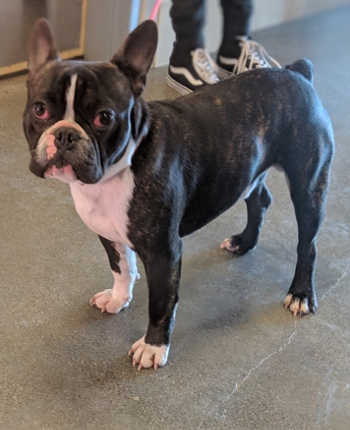
French Bulldog
This young male French Bulldog has a short brindle and white coat.
He’s in kennel No. 5a, ID No. 11709.

Boston Terrier
This young female Boston Terrier has a short black and white coat.
She’s in kennel No. 5b, ID No. 11710.

Female shepherd mix
This female shepherd mix has a medium-length red and white coat.
She’s in kennel No. 6, ID No. 11689.

Female shepherd
This female shepherd has a medium-length black and tan coat.
She’s in kennel No. 10, ID No. 11685.
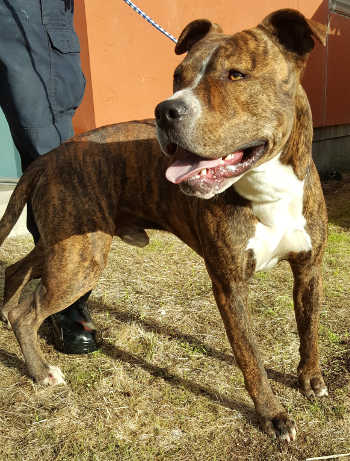
‘Alaki’
“Alaki” is a male pit bull terrier.
He has a short brindle coat with white markings. He already has been neutered.
He’s in kennel No. 11, ID No. 6386.
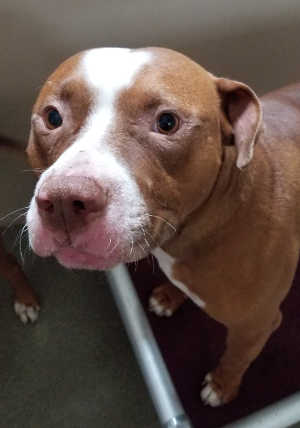
‘Cash’
“Cash” is a male pit bull terrier with a short red and white coat.
He already has been neutered.
He’s in kennel No. 13a, ID No. 11700.

Female pit bull terrier
This female pit bull terrier has a short red and white coat.
She’s in kennel No. 13b, ID No. 11701.

‘Truely’
“Truely” is a female pit bull with a short white and tan coat.
She’s in kennel No. 15, ID No. 11645.
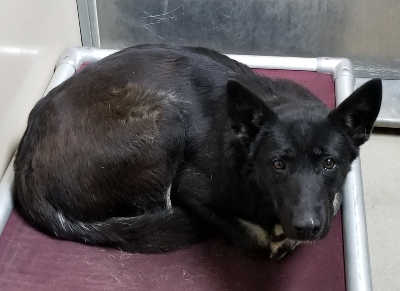
Female shepherd
This female shepherd has a medium-length black and brown coat.
She’s in kennel No. 17, ID No. 11602.
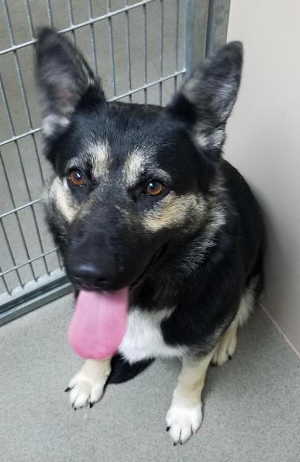
Female shepherd
This female shepherd has a short black and tan coat.
Shelter staff said she is good with other dogs.
She’s in kennel No. 18, ID No. 11641.

‘Marley’
“Marley” is a male terrier with a short black and brown coat.
He already has been neutered.
He’s in kennel No. 19, ID No. 11697.

Female pit bull terrier
This young female pit bull terrier has a short black coat.
She’s in kennel No. 20, ID No. 11712.

‘Tank’
“Tank” is a male pit bull terrier with a short brown brindle coat.
He already has been neutered.
He’s in kennel No. 21, ID No. 7002.

Male Shih Tzu
This male Shih Tzu has a shaved white and brown coat.
He’s in kennel No. 22c, ID No. 11679.
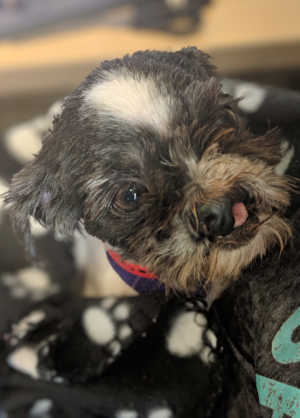
‘Peanut’
“Peanut” is a male Shih Tzu.
He has a shaved black and white coat and has been altered.
He’s in kennel No. 22d, ID No. 11680.
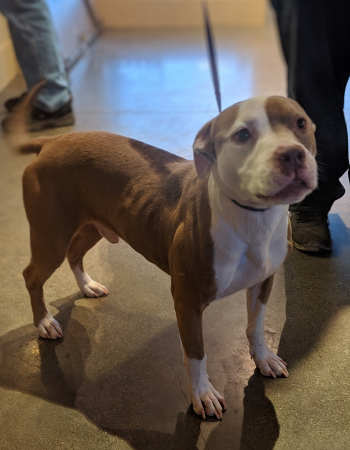
‘Smokey’
“Smokey” is a male pit bull terrier with a short fawn and white coat.
He already has been neutered.
He’s in kennel No. 28, ID No. 11646.

Male German Shepherd
This male German Shepherd has a medium-length tricolor coat.
He’s in kennel No. 33, ID No. 11564.
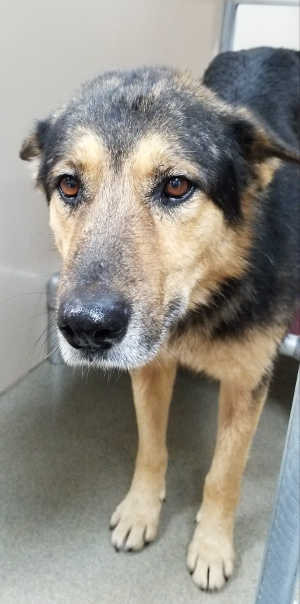
Male German Shepherd
This male German Shepherd as a medium-length black and tan coat.
He has been neutered.
He’s in kennel No. 34, ID No. 11605.
Lake County Animal Care and Control is located at 4949 Helbush in Lakeport, next to the Hill Road Correctional Facility.
Office hours are Monday through Friday, 11 a.m. to 5 p.m., and 11 a.m. to 3 p.m., Saturday. The shelter is open from 11 a.m. to 4 p.m. Monday through Friday and on Saturday from 11 a.m. to 3 p.m.
Visit the shelter online at http://www.co.lake.ca.us/Government/Directory/Animal_Care_And_Control.htm.
For more information call Lake County Animal Care and Control at 707-263-0278.
Email Elizabeth Larson at
According to legend, if the groundhog sees his shadow on February 2nd, there will be six more weeks of winter; if not, an early spring is predicted.
Of course groundhogs – also known as woodchucks – don’t emerge at this time just to be furry weather predictors. So what’s the real reason? Research into groundhog biology shows they have other priorities in early February than mingling with the people of Punxsutawney, Pennsylvania.
It’s Groundhog Day!
Groundhog Day appears to have European roots. Early February is midway between the winter solstice and the spring equinox, and throughout history this seasonal crossroads has been celebrated. The ancient Greeks and Romans observed a mid-season festival on February 5th in anticipation of spring. In the Celtic tradition, this period was celebrated as the festival of Imbolog to mark the beginning of spring. Early Christians in Europe embraced this tradition and celebrated Candlemas Day on February 2nd, to commemorate the purification of the Virgin Mary. Customarily on this day, clergy would bless candles and distribute them to the people in the dark of winter in anticipation of spring.
In northern Europe, farmers needed some indication when to start spring planting. They looked for the emergence of hibernators, such as the hedgehog or badger, to signal the coming of spring. Since their emergence occurred in early February, it was believed that if Candlemas Day was sunny, and the hibernator saw its shadow, more wintry weather was ahead. But if it rained or snowed on Candlemas Day, the rest of the winter would be mild.
This tradition was brought to America by the Germans who migrated to eastern Pennsylvania. They found groundhogs in profusion in many parts of the state and decided this mammal was a perfect replacement for the hibernators they’d left behind in Europe. Thus, the tradition continued in America.
Hibernation helps survival
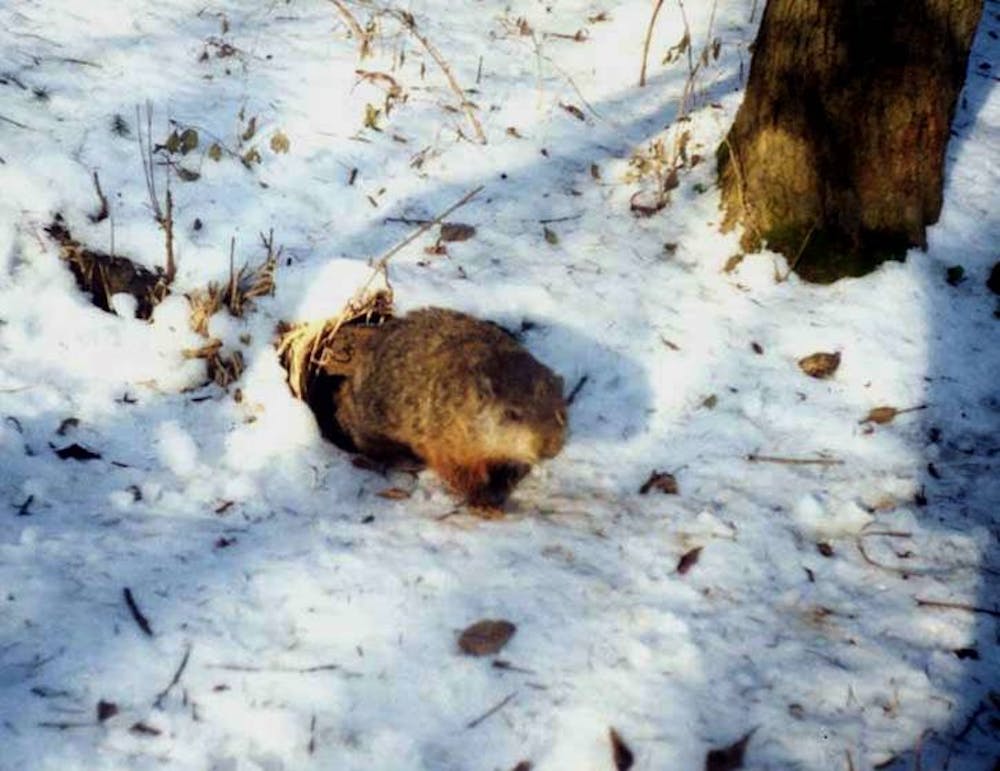
In my study area in southeastern Pennsylvania, the average date groundhogs emerge from their burrows is February 4. This fits the folklore and the timing of Groundhog Day. However, predicting the weather is not their objective.
The real reason is related to Darwinian fitness – a measure of an organism’s ability to contribute its genes to the next generation. The process defines natural selection and is based on an organism’s ability to survive and to reproduce successfully. High Darwinian fitness suggests an individual will pass on its genes to many healthy offspring.
Hibernation contributes to Darwinian fitness value. It enhances survival by saving energy during times of limited food availability. The ability to hibernate is found in several mammalian groups, including all marmots, many species of ground squirrels, chipmunks, hamsters, badgers, lemurs, bats and even some marsupials and echidnas. Curled up in their burrows, they pass the winter months, when food would be hard to come by.
Hibernation: alternating torpor and arousal
Hibernation is characterized by a significant drop in body temperature and metabolic function. This process is commonly called torpor. During torpor, body functions including heart rate, breathing rate, and brain activity are reduced. The overall benefit for the animal is saving metabolic energy at a time when it isn’t eating.
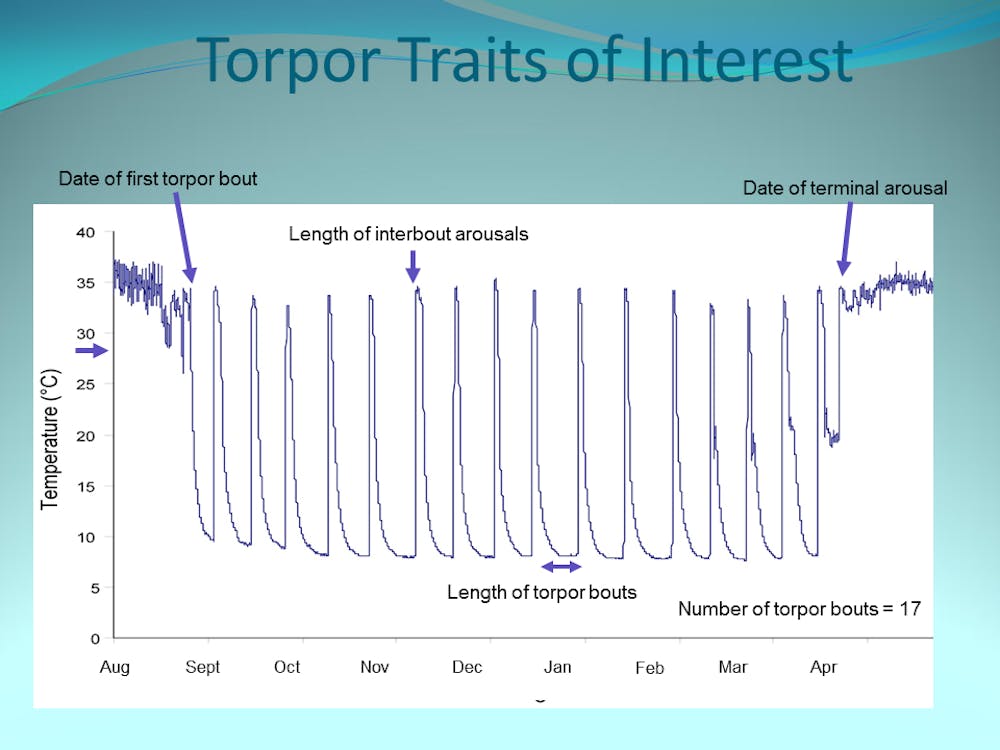
However, for some still unexplained reason, hibernators arouse periodically during their hibernating season. These arousals come at a great energy cost. Therefore, arousing must be critical to survival in some way or animals wouldn’t waste the energy on it. Some possibilities include maintaining cellular functions or disposing of bodily wastes.
In Pennsylvania, these bouts of torpor and arousal continue throughout the hibernation season, starting on average in mid-November and ending by the beginning of March; a total of about 110 days. In one study, an average of 15 bouts of torpor occurred during this period, with arousals in between. Groundhogs aroused for about 41 hours and then returned to torpor for about 128 hours for males and 153 hours for females.
In a 2010 study, we determined that the hibernation periods for groundhogs increase in length with increasing latitude. The hibernation period matches winter’s duration. The celebration of Groundhog Day would need to change by latitude in order to perfectly match groundhog emergence.
It all boils down to sex
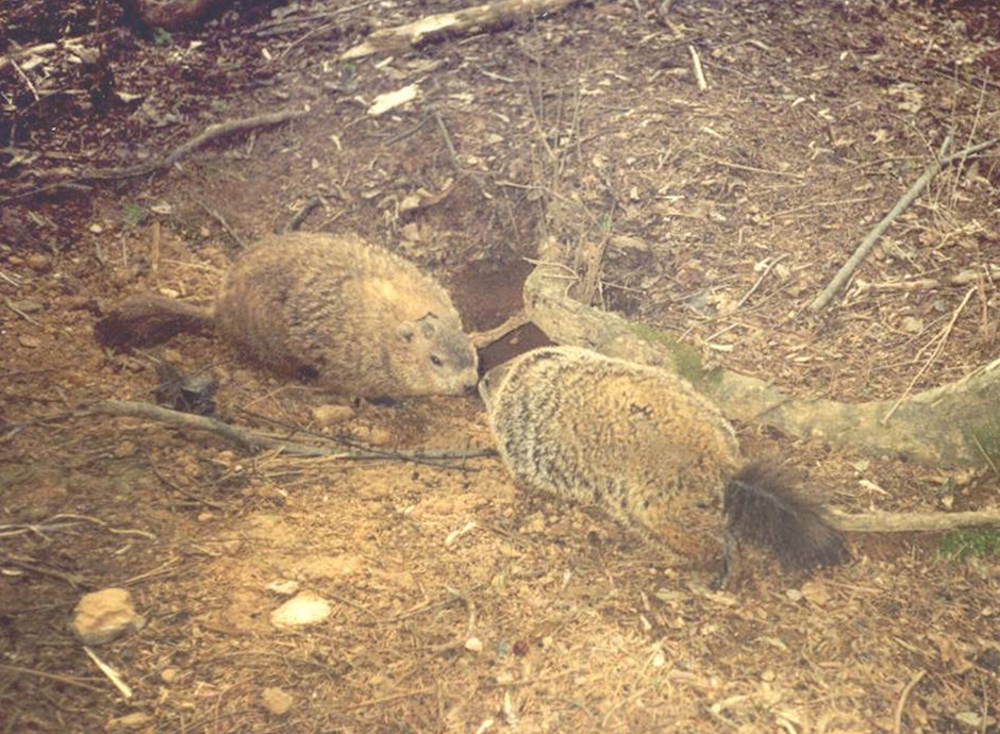
One of the drawbacks of hibernation is the reduced time available for reproduction. Thus, hibernators have developed mating strategies to maximize reproductive success. Groundhog mating strategies involve temporary emergence in early February, mating in early March during during their final arousal, and giving birth in early April. This behavior enhances reproductive success because young are born as early as possible (but not too early) and are able to start feeding in May when lots of food is available. That way they have enough time to gain sufficient weight to survive their first winter hibernation.
But why do groundhogs emerge in February, when mating won’t occur until next month? The answer lies in their social structure. Most of the year, male and female groundhogs are solitary and antagonistic against each other. They aggressively maintain a feeding territory around their burrows and rarely have any contact with each other. February is used to reestablish the bonds necessary for mating and ensures that mating can then proceed without delay in early March.
So for the animals themselves, Groundhog Day is more like Valentine’s Day. On February 2nd, groundhogs don’t emerge to predict the weather, but to predict whether their own mating season will be a success!
Stam Zervanos, Emeritus Professor of Biology, Pennsylvania State University
This article is republished from The Conversation under a Creative Commons license. Read the original article.

Apollo 17 astronauts drove a moon buggy across the lunar surface in 1972, measuring gravity with a special instrument.
There are no astronauts on Mars, but a group of clever researchers realized they have just the tools for similar experiments with the Martian buggy they're operating.
In a new paper in Science, the researchers detail how they repurposed sensors used to drive the Curiosity rover and turned them into gravimeters, which measure changes in gravitational pull.
That enabled them to measure the subtle tug from rock layers on lower Mount Sharp, which rises 3 miles (5 kilometers) from the base of Gale Crater and which Curiosity has been climbing since 2014.
The results? It turns out the density of those rock layers is much lower than expected.
Just like a smartphone, Curiosity carries accelerometers and gyroscopes. Moving your smartphone allows these sensors to determine its location and which way it's facing.
Curiosity's sensors do the same thing but with far more precision, playing a crucial role in navigating the Martian surface on each drive. Knowing the rover's orientation also lets engineers accurately point its instruments and multidirectional, high-gain antenna.
By happy coincidence, the rover's accelerometers can be used like Apollo 17's gravimeter. The accelerometers detect the gravity of the planet whenever the rover stands still.
Using engineering data from the first five years of the mission, the paper's authors measured the gravitational tug of Mars on the rover.
As Curiosity ascends Mount Sharp, the mountain adds additional gravity – but not as much as scientists expected.
"The lower levels of Mount Sharp are surprisingly porous," said lead author Kevin Lewis of Johns Hopkins University. "We know the bottom layers of the mountain were buried over time. That compacts them, making them denser. But this finding suggests they weren't buried by as much material as we thought."
Science from a Mars buggy
The Apollo 17 astronauts drove their buggy across the Moon's Taurus-Littrow Valley, periodically stopping to capture 25 measurements. Lewis has studied Martian gravity fields using data collected by NASA's orbiters and was familiar with Apollo 17's gravimeter.
The Science paper uses over 700 measurements from Curiosity's accelerometers, taken between October 2012 and June 2017. These data were calibrated to filter out "noise," such as the effects of temperature and the tilt of the rover during its climb. The calculations were then compared to models of Mars' gravity fields to ensure accuracy.
The results were also compared to mineral-density estimates from Curiosity's Chemistry and Mineralogy instrument, which characterizes the crystalline minerals in rock samples by using an X-ray beam. That data helped inform how porous the rocks are.
Mountain of Mystery
There are many mountains within craters or canyons on Mars, but few approach the scale of Mount Sharp. Scientists still aren't sure how the mountain grew inside of Gale Crater.
One idea is that the crater was once filled with sediment. How much of it was filled remains a source of debate, but the thinking is that many millions of years of wind and erosion eventually excavated the mountain.
If the crater had been filled to the brim, all that material should have pressed down, or compacted, the many layers of fine-grained sediment beneath it.
But the new paper suggests Mount Sharp's lower layers have been compacted by only a half-mile to a mile (1 to 2 kilometers) – much less than if the crater had been completely filled.
"There are still many questions about how Mount Sharp developed, but this paper adds an important piece to the puzzle," said study co-author Ashwin Vasavada, Curiosity's project scientist at NASA's Jet Propulsion Laboratory in Pasadena, California. JPL manages the Mars Science Laboratory mission that Curiosity is a part of. "I'm thrilled that creative scientists and engineers are still finding innovative ways to make new scientific discoveries with the rover," he added.
Lewis said that Mars holds plenty of mystery beyond Mount Sharp. Its landscape is like Earth's, but sculpted more by wind and blowing sand than by water. They're planetary siblings, at once familiar and starkly different.
"To me, Mars is the uncanny valley of Earth," Lewis said. "It's similar but was shaped by different processes. It feels so unnatural to our terrestrial experience."
Supervisor Rob Brown initially put forward the plan in a community meeting in the fall before bringing it to the board earlier this month.
The plan is to create the benefits zones encompassing 5,000 lots in the Clear Lake Riviera, Buckingham, Riviera West and Riviera Heights, as well as lots adjacent to them, all of which are within County Service Area No. 23.
A one-time payment of $100 per lot for properties of less than one acre, $200 for lots from one to five acres, and $300 for lots of five acres or more, would raise an estimated $500,000 that could then be used to clean up properties to prevent wildland fire. Any properties cleaned up would then be assessed liens, which would pay back the program.
While the program would cover 5,000 lots, Brown said the funds would be used on only about 50 to 100 that need to be cleaned up.
Brown said the program also is meant to protect county infrastructure, as wildland fires can significantly damage roadways. “As a result of nine major disasters in an approximate three-year period in Lake County, the County has experienced significant damage to its roadways, guardrails, and signage,” he wrote in a memo to the board.
While the board voted to move accept the resolutions, under the auspices of Proposition 218, the ultimate decision will be up to voters in the impacted areas.
Bill Groody, president of the Buckingham Homeowners Association, voiced support for the plan.
“We’ve canvassed our community and there is widespread support there,” Groody said. “In fact, the only objection was that people seem to feel we weren’t asking for enough money.”
Groody said the association has identified 18 problem lots, with owners either not reached or not able to keep in compliance. He said most are along Soda Bay Road, and they have notified six or seven other lots adjacent to community where there are enforcement problems. Groody said the program would be helpful with getting people to comply.
Brown said he and Groody met with the Bureau of Land Management and others about the proposal. As a result of the meeting, BLM is interested in putting together its own program to do maintenance and clearing in some areas, including the Black Forest.
Groody added that four of the lots that he’s identified as needing attention are owned by the government – two of them belonging to the BLM and a few others by the county.
He said automobile-related issues have been factors in four major fires along Soda Bay Road in the past five years, adding that his association considers clearing the Soda Bay Road corridor to be very important from the perspectives of escape and prevention.
Riviera Heights resident Julie Richardson had another take on the plan.
“It’s a good idea in theory, but it needs to not be limited to the homeowners associations,” she said.
Richardson was concerned that it’s a duplication of effort, as she said Riviera Heights already does annual inspections of lots and requires owners to abate any issues.
Tom Nixon, a retired park ranger and 33-year resident of the Clear Lake Riviera, is a former president of that community’s homeowners association. He said he’s been involved in fire prevention efforts for some time, and noted the association has done a lot of preventive work in the past four years. “But there’s still a whole lot that needs to be done.”
He recalled working with Brown and Public Works Director Scott De Leon several years ago on a benefit zone for roads, which fixed three and a half miles by taxing homeowners association members.
“These county service areas, these public benefit zones, work. It’s us partnering together to try to get something done. And I think it’s a blueprint for how we can get things done in this county” – not just in homeowners associations but in other communities, Nixon said.
“People are willing to do it because people are scared to death,” he added, asking for the board’s support.
Brown clarified during the discussion that no government-owned lots would be assessed, nor would funding from the assessments be used to clean them, as the government that owns those properties will be required to pay for the cleanup.
Supervisor Moke Simon questioned the cost to put the proposals before voters and the impact on county staff.
“Do I support the idea? Absolutely,” he said, adding that he thought it could be handled in collaboration with a newly formed fire risk reduction authority.
Brown said he’s asking the county for a one-time loan of $100,000 to cover the election and other startup costs that would be reimbursed out of payments if the benefit zones are approved.
He said he had put in about 120 hours on the plan, and that he was trying to minimize the use of staff time.
County Counsel Anita Grant said the benefit zone election is not through the county’s elections department, so it doesn’t carry the steep price tag of going on a formal ballot.
Supervisor Bruno Sabatier thanked Brown for bringing the idea forward and trying to do something. “I think that this is a great program to start with,” he said, adding that the program’s future scope is the entire county.
Sabatier also wanted to see the program work with the new fire risk authority as a way of guaranteeing the effort has longevity.
Grant said the board could ask the new fire joint powers authority to review the success of the program and determine whether to implement some simple programs countywide and make some recommendations to that effect. “So absolutely these things can dovetail and one entity can work with another to achieve this.”
Brown offered the resolutions for each of the four communities. Each resolution received a 4-1 vote, with Simon voting no on each.
It’s expected the ballots will begin to be sent out in the coming weeks in order to get the program under way before the summer fire season, should voters approve it.
Email Elizabeth Larson at