 How to resolve AdBlock issue?
News
The board will meet beginning at 9 a.m. Tuesday, Aug. 13, in the board chambers on the first floor of the Lake County Courthouse, 255 N. Forbes St., Lakeport.
The meeting can be watched live on Channel 8 and online. Accompanying board documents, the agenda and archived board meeting videos also are available at that link.
At 9:15 a.m., the board is scheduled to consider a request from members Eddie Crandell and Bruno Sabatier to create a standing committee to support and facilitate the Middle Creek Restoration Project.
In their report to the board, Crandell and Sabatier are asking the board to consider creating a new standing committee called the Middle Creek Restoration Coalition “to ensure that current and future leaders of Lake County are keeping their eye on and involved in this project as it is an important project to see through to completion.”
At 9:30 a.m., in a matter continued from Aug. 6, the board – sitting as Lake County Watershed Protection District Board of Directors – will consider adopting a resolution to form the Big Valley Groundwater Sustainability Agency.
Interim Water Resources Director Scott De Leon is recommending the action after the Lake County Watershed Protection District was notified by the California Department of Water Resources that the Big Valley Groundwater Basin Alternative Sustainability Plan had not been accepted, as Lake County News has reported.
“In order to maintain local and sustainable management of the Big Valley groundwater basin, it is in the best interest for the County that the Board of Directors of the Lake County Watershed Protection District approve the resolution authorizing the District to form the Big Valley Groundwater Sustainability Agency (GSA). The formation of a GSA complies with State regulations and is necessary to obtain funding for the development of a Big Valley Groundwater Sustainability Plan,” De Leon said in his report.
At 9:45 a.m., the board will discuss and consider the potential impacts to Lake Pillsbury in the event the Scott Dam is decommissioned and possible county action in response to Pacific Gas and Electric’s decision to withdraw its license application for the Potter Valley Project.
In an untimed item, the board will consider a recruitment strategy for hiring of a Public Health officer now that Dr. Erin Gustafson has tendered her resignation in order to take the public health medical director for San Bernardino County. Her last day with Lake County is Aug. 30.
The full agenda follows.
CONSENT AGENDA
5.1: Approve long distance travel from Oct. 28 to 31, 2019, for County Administrative Officer Carol Huchingson to attend meetings in Washington, D.C. with federal representatives to advocate for additional disaster recovery funds for Lake County.
5.2: Approve leave of absence request for Behavioral Health business software analyst Gary Leininger from Oct. 31, 2019, to Dec. 31, 2019, and authorize the chair to sign.
5.3: (a) Waive the formal bidding process, pursuant to Lake County Section Code 38.2, as it is not in the public interest due to the unique nature of goods or services; and (b) approve the agreement between the county of Lake and Manzanita House for adult residential support services and specialty mental health services for Fiscal Year 2019-20 for a contract maximum of $153,300 and authorize the board chair to sign the agreement.
5.4: (a) Waive the formal bidding process, pursuant to Lake County Code Section 38.2, as it is not in the public interest due to the unique nature of goods or services; and (b) approve the agreement between the county of Lake and Clover Valley Guest Home for adult residential support services and specialty mental health services for Fiscal Year 2019-20 for a contract maximum of $116,800 and authorize the board chair to sign the agreement.
5.5: (a) Waive the formal bidding process, pursuant to Lake County Code Section 38.2, as it is not in the public interest due to the unique nature of goods or services; and (b) approve the agreement between the county of Lake and Redwood Community Services Inc. for the Transitional Age Youth Peer Support Program for Fiscal Year 2019-20 for a contract maximum of $40,000 and authorize the board chair to sign the agreement.
5.6: Approve Advance Step hiring of Ms. Patricia Messner in the position of Mental Health Specialist II, at Step 5, due to candidates extraordinary qualifications.
5.7: Approve the continuation of a local emergency due to the Atmospheric River Event 2019.
5.8: Approve the continuation of a local emergency due to the Mendocino Complex fire incident (River and Ranch fires).
5.9: Approve the continuation of a local emergency due to the Pawnee fire incident.
5.10: Approve the continuation of a local emergency due to the Sulphur fire incident.
5.11: Approve the continuation of a local emergency due to the Clayton fire.
5.12: Approve the continuation of a local emergency due to the Atmospheric River Storm 2017.
5.13: Adopt resolution of the Board of Supervisors approving Amendment #A-1 to the Standard Agreement #16-5022 between the county of Lake and California Department of Social Services for resource family approval program services and authorizing the director of Social Services to sign the amendment.
5.14: Approve agreement between the county of Lake and CivicSpark in the amount of $51,000 for Two Civic Spark Fellows to develop and implement an ARCGIS-based asset management program and authorize the Special Districts administrator to sign.
TIMED ITEMS
6.2, 9:06 a.m.: Consideration of continuation of a local health emergency and order prohibiting the endangerment of the community through the unsafe removal, transportation and disposal of fire debris for the Mendocino Complex fire.
6.3, 9:15 a.m.: Consideration of creating a standing committee to support and facilitate the Middle Creek Restoration Project.
6.4, 9:30 a.m.: Continued from Aug. 6, sitting as Lake County Watershed Protection District, Board of Directors, adopt resolution to form the Big Valley Groundwater Sustainability Agency.
6.5, 9:45 a.m.: Discussion and consideration of impacts to Lake Pillsbury in the event Scott Dam is decommissioned and possible county action in response to PG&E's decision to withdraw its license application for the Potter Valley Project.
UNTIMED EVENTS
7.2: Consideration of the following appointments: Lower Lake Waterworks District One Board of Directors.
7.3: Consideration of recruitment strategy for hiring of new Public Health officer.
CLOSED SESSION
8.1: Conference with legal counsel: Significant exposure to litigation pursuant to Gov. Code section 54956.9(d)(2)(e)(3): California River Watch.
8.2: Conference with legal counsel: Decision whether to initiate litigation pursuant to Gov. Code section 54956.9(d)(4): One potential case.
8.3: Conference with legal counsel: Significant exposure to litigation pursuant to Gov. Code section 54956.9(d)(2)(e)(1): One potential case.
Email Elizabeth Larson at
The following cats at the Lake County Animal Care and Control shelter have been cleared for adoption.

Domestic short hair kitten
This male domestic short hair kitten has a buff coat and gold eyes.
He is in cat room kennel No. 39a, ID No. 12669.
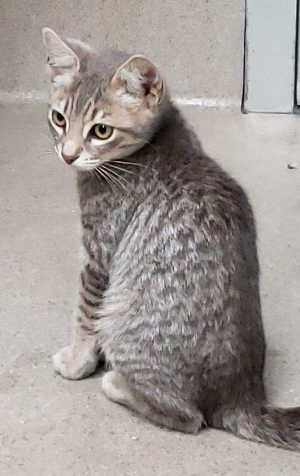
Domestic short hair kitten
This male domestic short hair kitten has a gray tabby coat and gold eyes.
He is in cat room kennel No. 39b, ID No. 12670.

Domestic short hair kitten
This female domestic short hair kitten has a tortie coat.
She is in cat room kennel No. 39d, ID No. 12679.

Domestic short hair kitten
This male domestic short hair kitten has an orange tabby coat.
He is in cat room kennel No. 39e, ID No. 12680.
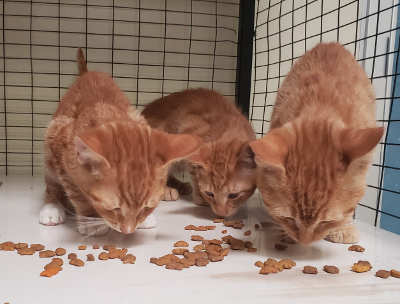
Domestic short hair kittens
These male domestic short hair kittens have orange tabby and white coats.
They are in cat room kennel No. 112a, 112b and 113c, ID Nos. 12590, 12595 and 12596.

Domestic short hair kitten
This female domestic short hair kitten has a short white coat and gold eyes.
She is in cat room kennel No. 138a, ID No. 12674.
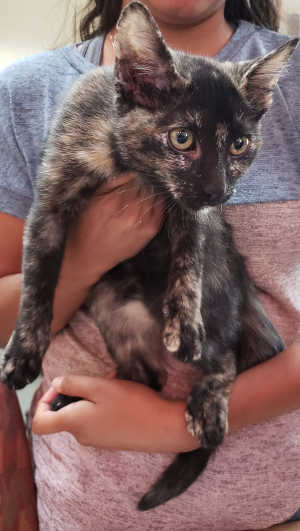
Domestic short hair kitten
This young female domestic short hair cat has a tortie coat and green eyes.
She has already been spayed.
She is in cat room kennel No. 149a, ID No. 12575.

Domestic short hair kitten
This young female domestic short hair cat has a tortie coat and green eyes.
She has already been spayed.
She is in cat room kennel No. 149b, ID No. 12576.
Lake County Animal Care and Control is located at 4949 Helbush in Lakeport, next to the Hill Road Correctional Facility.
Office hours are Monday through Friday, 11 a.m. to 5 p.m., and 11 a.m. to 3 p.m., Saturday. The shelter is open from 11 a.m. to 4 p.m. Monday through Friday and on Saturday from 11 a.m. to 3 p.m.
Visit the shelter online at http://www.co.lake.ca.us/Government/Directory/Animal_Care_And_Control.htm.
For more information call Lake County Animal Care and Control at 707-263-0278.
Email Elizabeth Larson at
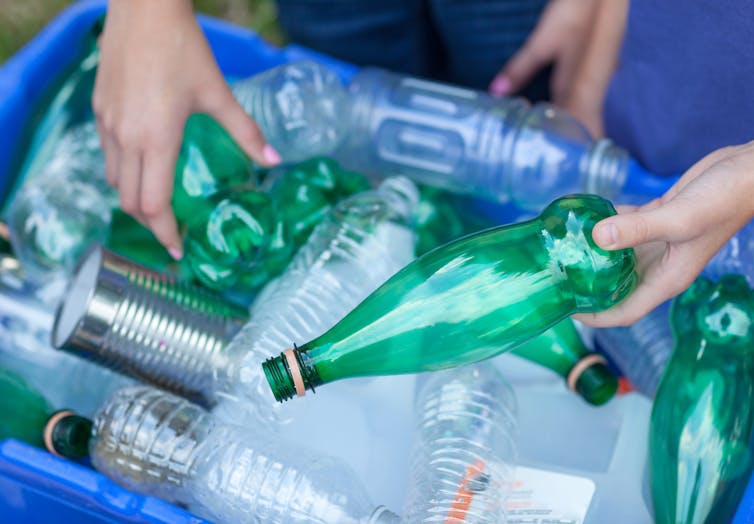
A year after China upended global materials markets by banning imports of much solid waste, the effects are still rippling around the globe. Many U.S. recyclers are awash in materials they formerly sent to China for processing. Some cities with few options are burning recyclables in incinerators.
What would it take to reduce U.S. waste management headaches? These five essential reads offer some insights.
1. Embrace the circular economy
Waste is inevitable when products are designed to be used and then thrown away. Clyde Eiríkur Hull, professor of management at Rochester Institute of Technology, offers an alternative: a circular economy in which products are used, then recycled and remanufactured into new products.
Major U.S. companies, including GM, Caterpillar and Staples, are saving money through recycling and remanufacturing. But Hull says this could be greatly scaled up if the federal government required products to be designed with future reuse in mind and taxed goods that did not comply.
“In an entirely circular economy, the U.S. would most likely still import stuff from abroad, such as steel from China. But that steel would wind up being reused in American factories, employing tax-paying American workers to manufacture new goods,” he writes.
2. Get serious about recycling plastic
Of all materials in the waste stream, plastics pose the biggest challenge. They are used in a myriad of consumer goods, including many single-use items such as straws and cutlery, and can take centuries to break down. Kate O'Neill, professor of global environmental policy at the University of California, Berkeley, compares plastic waste to J.R.R. Tolkien’s One Ring, which “can be permanently destroyed only through incineration at extremely high temperatures.”
O'Neill identifies a number of steps to boost plastic recycling in the United States. They include better consumer education about sorting and disposal; less reliance on single-stream collection, which mixes plastics with other materials; more investment in scrap processing facilities; and steps to manage specific plastic products that are hard to recycle, such as 3D printer waste.
3. Pursue plant-based plastics – and composting
Conventional plastics are derived from fossil fuel, but they can also be made from renewable biological compounds that break down more easily, such as plant sugars. A key challenge with these products is making items that are strong enough to hold up during use but still biodegradable.
“A straw and cup that disintegrate halfway through your road trip are not much use at all,” observes Michigan State University biochemist Danny Ducat, whose lab is using photosynthetic bacteria to synthesize bioplastic feedstocks.
Bioplastics also require investments at the end of their life cycles, Ducat notes. Like other plant-based materials, such as food scraps, they will only degrade readily in composting facilities, where microbes break them down in the presence of oxygen. Buried in landfills, they will persist for decades or centuries, much like conventional plastics. They also are likely to persist if they end up in other cold places with little oxygen, such as the Arctic or deep ocean waters.
“This means that any breakthroughs in materials science need to be coupled with sustainable methods for bioplastic production and a well-oiled system to direct bioplastic goods into composting facilities,” Ducat writes.
4. Recycle more steel and aluminum
Recycling is much more developed for metals than it is for plastics. In the United States, about 65 percent of old steel products and 40 to 65 percent of discarded aluminum products are recycled. But Daniel Cooper, assistant professor of mechanical engineering at the University of Michigan, asserts that more could be done.
As Cooper explains, the United States exports or throws away a lot of cheap scrap metal, and imports expensive new metal. “As an already industrialized country, the U.S. needs little new metal to meet domestic demand,” he points out. More federal support for metals recycling, he asserts, could slash new steel and aluminum imports.
In addition to saving the money and resources that go into producing new metals, such a policy would cost Americans much less than the tariffs President Donald Trump has imposed on imported steel and aluminum.
5. Reconsider waste incineration
Is burning trash instead of recycling it such a bad thing? Bucknell University economist Thomas Kinnaman thinks it’s worth a new look.
As Kinnaman acknowledges, waste incineration is much less popular in the United States than in other regions, including Japan and western Europe. Early U.S. waste combustion plants generated high levels of air pollutants, including hazardous substances such as dioxins, and often were sited in low-income and minority communities.
Incineration still has clear disadvantages. It’s more expensive than landfilling, and Kinnaman sees some evidence that once countries burn more than 40 percent of their waste, it starts to replace recycling. Nonetheless, he contends, expanding its use in the United States – which currently burns less than 13 percent of its solid waste – could be more socially responsible than shipping plastic scrap to developing countries that are ill-equipped to dispose of it.
Editor’s note: This is a roundup of previously published stories.
Jennifer Weeks, Environment + Energy Editor, The Conversation
This article is republished from The Conversation under a Creative Commons license. Read the original article.
CLEARLAKE, Calif. – The long-running effort to establish a new animal shelter for the city of Clearlake took a major step forward on Thursday, when the council approved a staff proposal for a new facility.
Aiding that proposal is a $10,000 pledge toward the project from the Animal Coalition of Lake County, whose members were credited with playing a key role in assessing shelter options as part of the city’s Animal Control Ad Hoc Committee.
Clearlake Police Chief Andrew White, whose department oversees Clearlake Animal Control, took this next phase in the “long discussed project” to the council on Thursday.
The discussion begins at the 26:20 mark in the video above. The staff report is on page 136 of the agenda packet published below.
White said a new and improved shelter was a priority project when he was hired last year, adding he was pleased to report its progress.
The city’s animal shelter is housed in an old hangar building at the Public Works Corporation Yard, located on the city’s former Pearce Field airport site.
“Clearly the facility was not built for the current use and we lack adequate space to take the volume of animals that are taken in,” said White.
The indoor areas often are doubled up over the intended capacity of eight kennels, he said. There is no space for the city’s new contract vet to do exams and lack of space for quarantine.
Over the past year the city started working with an ad hoc committee to narrow down new shelter options, and find something financially feasible and sustainable. White said the Animal Coalition has been involved in that effort, advocating both for animals and the community’s needs in a new facility.
He said the options they considered included relocating the facility to a site in Ogulin Canyon, moving to a building next door to City Hall, renovating current buildings or building new ones.
The proposal that White said was the one that the committee and city staff agreed upon is to purchase and install two modular kennel buildings with heating and cooling, a combined capacity of 18 kennel boxes and 18 runs, a storage room, cat room, exam room and lobby area, an office, proper fencing, Americans with Disabilities Act-compliant access, new pathways and walkways, and landscaping.
There would need to be some relocating of utilities and the demolition of the current office, but the cost overall, said White, is nominal for the proposed improvements.
He said the city engineer’s office helped with the site plan and project estimate, which with contingencies totals $376,000.
White said there has been a tentative allocation for the project in the city’s budget of $200,000 in Series A bond funds.
To find the remainder of the needed funding, White said the city has been speaking to the United States Department of Agriculture. The city has gotten word from the state USDA Rural Development director that it has support for the project, and the agency is looking forward to the city’s full grant application.
White said the city is eligible for $132,000 in grant funds, which leaves a $45,000 balance. The engineer’s estimate includes $30,000 for contingencies, so the overall cost could drop.
The project cost included close to $26,000 for artificial turf and installation for the animals’ outdoor exercise areas. White said the turf can be washed off and is more durable than grass.
It was also noted during the discussion that the eight existing indoor kennels would be retained in addition to the 18 new kennels in the modulars.
Asked by a community member about backup generation for the new facility during the fire season, White said the city expects to look for funding for that in the next USDA funding cycle.
Councilwoman Joyce Overton questioned the cost of the artificial turf and raised issues with potentially having to move the facility because of plans to sell some of the nearby city-owned property for a shopping center development.
City Manager Alan Flora said they shouldn’t assume the new shelter facility will need to be moved. He said he had spoken with the representative of the group that has expressed interest in buying and developing the former airport site for the shopping center and that there wasn’t concern about leaving the facility there, even if the shopping center is built.
“It remains to be determined how significant the demand is going to be for all of that property,” Flora said.
Flora said there is existing infrastructure at the current site. If the facility were moved to Ogulin Canyon, where there isn’t infrastructure, Flora said the project cost would at least double.
Overton asked why they couldn’t do grass or some other less expensive material. White said they had looked at using real grass, but it didn’t look sustainable.
He said that, if the council was inclined, parts of the project could be scaled back. However, that raised a question: “Do we keep putting duct tape and bailing wire onto a problem or do we make some sort of a meaningful step forward?”
White said there also was discussion with the ad hoc committee about the suitability of locations. He said that in Napa County, the animal shelter has a shopping center built up around it. The current shelter site also has the ability to expand.
“I am very excited to see this progress being made,” said Councilman Phil Harris, who noted it had been one of his big concerns before running for the council.
The council previously had talked about relocating the facility, but kept putting it off, he said. “Taking action to benefit the animals that we have in our care I think is imperative at this point.”
Harris said that after looking at the numbers repeatedly, he found the project to be “extraordinarily affordable.” Recognizing that artificial turf is not cheap, Harris said they need to stick with that material due to its longevity.
“I’m very excited to see this come to fruition because I think it’s way, way overdue,” Harris said.
Councilmen Dirk Slooten and Russell Perdock also agreed that the project was overdue and it needed to move forward.
While Perdock said he agreed with Overton’s concerns about costs, “We just can’t put this off any longer.”
Mayor Russ Cremer made it unanimous, saying he was very excited to see it go forward and that he thinks the artificial turf will be just fine. He called the current shelter a “pig sty.”
After Cremer told staff that there was unanimous council consensus to move forward, the audience gave the council a round of applause.
Flora told the council that, in addition to the grant funding the city plans to seek from the USDA, the city also is eligible for a USDA loan. However, he said staff didn’t think that option was worth the additional red tape and so they wanted to look at eliminating contingencies.
“Our recommendation is to move forward with just the grant and identify other available funding for any overruns,” Flora said.
White said staff intends to go out for bids and so costs could come in higher or lower than the engineer’s estimate.
At the end of the discussion, Rita Laufer, a member of the Animal Coalition, came forward to speak to the council.
“We’d like to donate $10,000 towards this project,” said Laufer.
Turning to White, she said, “We think you’re wonderful.”
White rose from his seat and came forward to give Laufer a hug.
Turning back to the council, Laufer told them, “That grass is no big thing. Let me tell you something, those animals have been waiting a long time to have a nice place. So $25,000 is nothing.”
Perdock joked that Cremer he had lost control of the meeting.
“For $10,000, we’ll live with that,” Cremer said.
Email Elizabeth Larson at
080819 Clearlake City Council agenda packet by LakeCoNews on Scribd

LAKE COUNTY, Calif. – I've only ever been a gardener, so I can only imagine the intimate and practical connections and kinship to the great Earth that a Lake County farmer must hold in order to go forward in the fields season after season.
There are a myriad of considerations a farmer must confront, for example soil erosion, water supplies, and depletion thereof. Other considerations include economic pressures and agribusiness.
A glance at the undulating hills surrounding the verdant valleys of Lake County tells us that it's easy to see the huge place agriculture plays here.
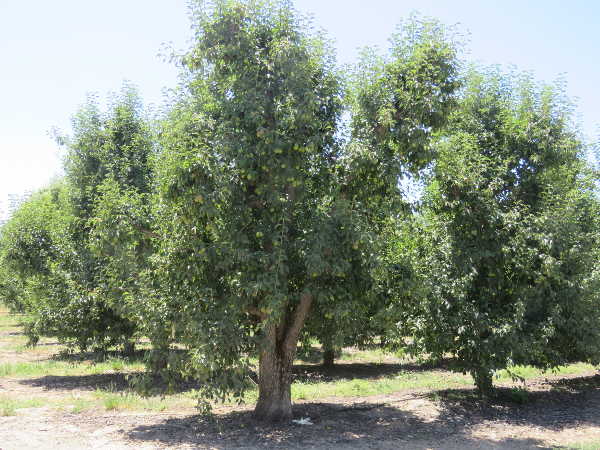
Famed pears, walnuts and winegrapes are found in abundance, and have proliferated since the Mediterranean climate attracted settlers and farmers in the 1850s.
It was due to Prohibition, in the 1920s, when the first wave of winegrapes was pulled to make room for more of our pears and walnuts.
The San Francisco Chronicle's Dec. 16, 1885, issue proclaimed, “Without doubt the finest as well as the largest exhibit of fresh fruit in the display is that made by Lake County."
Lake County's Bartlett pears became popular after the New Orleans World's Fair when, in 1889, L. P. Clendenin planted several acres of Bartlett and Winter Nellis pears.
Other farmers followed Clendenin's lead, planting and farming pears. A marketing problem soon arose, since there was no railroad to transport the delectable fruit. As they say, “Necessity is the mother of invention,” and, after much experimenting took place the farmers found that the Bartlett pears dried well, producing “slabs of amber.”
An apple and pear dryer was constructed by J.B Laughlin and E.P. Clendenin, and then more pear-drying sheds were established in Upper Lake, Scotts Valley and in Big Valley.
With the popularity of dried Lake County pears came canned pears, around 1923. There were approximately 20,000 tons of pears grown in 1928, and still production was rising.
We are lucky to have in our midst those who come from pioneer pear farmer stock, such as the Holdenrieds. Myron Holdenried's great-grandfather, Louis Henderson, had the foresight to plant pears in 1890. Those same orchards are still thriving today.
According to the Kelseyville Pear Festival's Facebook page, the first commercial orchard was planted on four acres in Big Valley by Thomas Porteus. Others soon followed suit, and by 1919 there were about 700 acres of pears in Lake County.
Known as the “Pear Capital of the World,” there were more than 85,000 tons of pears processed in Lake County, with the majority grown in Kelseyville in 1999.
Today we have the Lake County Pear Association, which was established in 2005 to thank for promoting our delicious pears.
One of agricultural highlights is the annual Kelseyville Pear Festival, in which pears and their products proliferate all day long, with thousands of festival attendees reaping the rewards of the harvest.
The Kelseyville Pear Festival and Parade occur downtown Kelseyville on the last Saturday in September, and is sponsored by the Kelseyville Business Association.
Lake County's pear orchards add greatly to our county both economically, and visually with their appealing beauty. Ukiah in Mendocino County and Clarksburg in the Sacramento River Delta area also produce pears in California along with Lake County, and altogether the three regions produce more than 150,000 tons of pears annually.
According to Scully Packing Co., the Lake County pear crop outlook is excellent this year.
The tentative harvest dates listed on the company's Web site are listed below:
– Bartlett: July 20.
– Red Crimson: July 29.
– Organic Bartlett: July 31.
– Mountain Bartlett: Aug. 5.
– Golden bosc: Aug. 10.
– French butter: Sept. 3.
– Seckel: Sept. 3.
– Comice: Sept. 3.
– Forelle: Sept. 3.
Most farming communities are close-knit, and our pear farmers are no different. They commit themselves to hale-and-hearty business relationships, friendships and labor practices by working hard to care for this rural way of life.
For more information about the Kelseyville Pear Festival visit www.pearfestival.com .
Kathleen Scavone, M.A., is a retired educator, potter, freelance writer and author of “Anderson Marsh State Historic Park: A Walking History, Prehistory, Flora, and Fauna Tour of a California State Park” and “Native Americans of Lake County.”
Dogs available for adoption this week include mixes of boxer, Cane Corso mastiff, Catahoula Leopard Dog, Chihuahua, husky, mastiff, pit bull, shepherd and terrier.
Dogs that are adopted from Lake County Animal Care and Control are either neutered or spayed, microchipped and, if old enough, given a rabies shot and county license before being released to their new owner. License fees do not apply to residents of the cities of Lakeport or Clearlake.
If you're looking for a new companion, visit the shelter. There are many great pets hoping you'll choose them.
The following dogs at the Lake County Animal Care and Control shelter have been cleared for adoption (additional dogs on the animal control Web site not listed are still “on hold”).

Female terrier
This female terrier has a medium-length tricolor coat.
She is in kennel No. 2a, ID No. 12723.

Female terrier
This female terrier has a medium-length tricolor coat.
She is in kennel No. 2b, ID No. 12724.
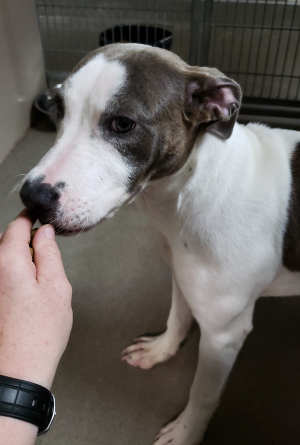
Female pit bull
This female pit bull has a short white and brindle coat.
She is in kennel No. 5, ID No. 12601.
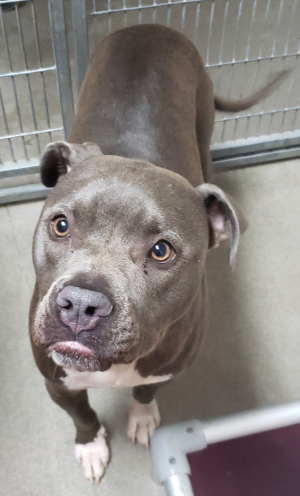
‘Lucy’
“Lucy” is a female pit bull terrier with a short gray and white coat.
She already has been spayed.
She’s in kennel No. 7, ID No. 12719.

‘Benny’
“Benny” is a young male shepherd with a short brindle coat.
He’s in kennel No. 8, ID No. 12717.

Male Chihuahua
This male Chihuahua has a short tan coat.
He’s in kennel No. 13, ID No. 12583.
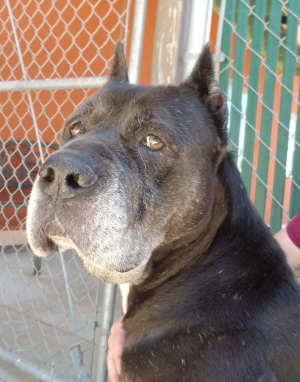
‘Nova’
“Nova” is a female Cane Corso mastiff with a short black coat.
She is in kennel No. 17, ID No. 6579.

Female husky mix
This female husky mix has a short tricolor coat.
She already has been spayed.
She’s in kennel No. 18, ID No. 12685.
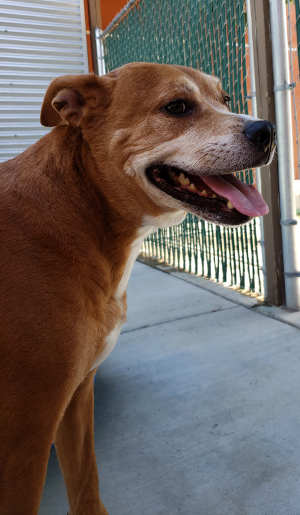
‘Koda’
“Koda” is a male pit bull terrier with a short red coat.
He already has been neutered.
He’s in kennel No. 19, ID No. 12609.

Female pit bull terrier
This female pit bull terrier has a short brown and white coat.
She already has been spayed.
She’s in kennel No. 22, ID No. 12708.
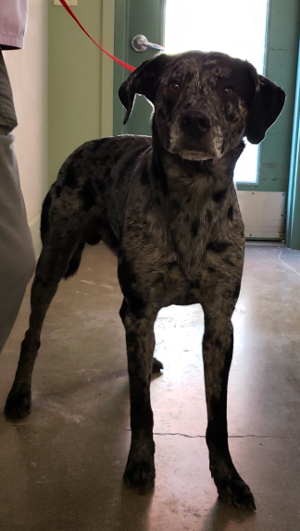
‘Beau’
“Beau” is a male Catahoula Leopard Dog with a blue merle coat.
He’s in kennel No. 24, ID No. 12677.
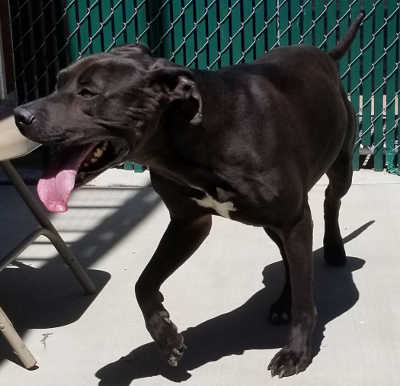
‘Cash’
“Cash” is a male pit bull terrier mix with a short black and white coat.
He has been marked as urgent because he has been at the shelter since June.
Shelter staff said Cash does well with others, loves people and walks well on a leash.
He has been neutered.
He’s in kennel No. 27, ID No. 12413.
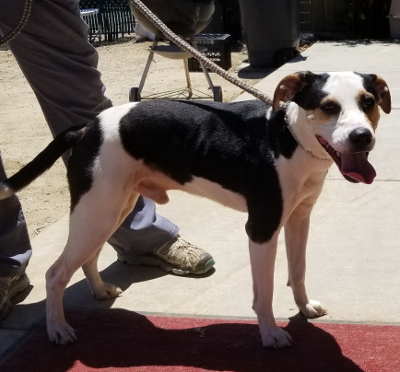
‘Buddy’
“Buddy” is a male pit bull terrier mix with a short tricolor coat.
He’s in kennel No. 31, ID No. 12508.
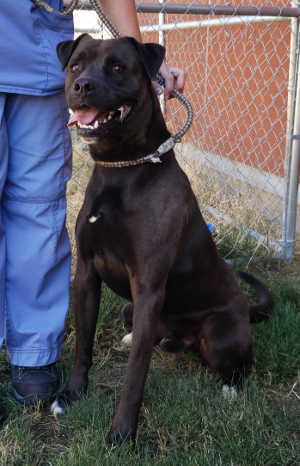
Male boxer
This male boxer has a short black coat.
He’s in kennel No. 32, ID No. 12512.
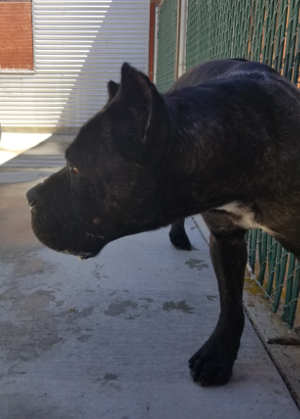
‘Bear’
“Bear” is a male Cane Corso mastiff with a short brown coat.
He is in kennel No. 34, ID No. 11456.
Lake County Animal Care and Control is located at 4949 Helbush in Lakeport, next to the Hill Road Correctional Facility.
Office hours are Monday through Friday, 11 a.m. to 5 p.m., and 11 a.m. to 3 p.m., Saturday. The shelter is open from 11 a.m. to 4 p.m., Monday through Friday and on Saturday from 11 a.m. to 3 p.m.
Visit the shelter online at http://www.co.lake.ca.us/Government/Directory/Animal_Care_And_Control.htm .
For more information call Lake County Animal Care and Control at 707-263-0278.
Email Elizabeth Larson at