 How to resolve AdBlock issue?
News
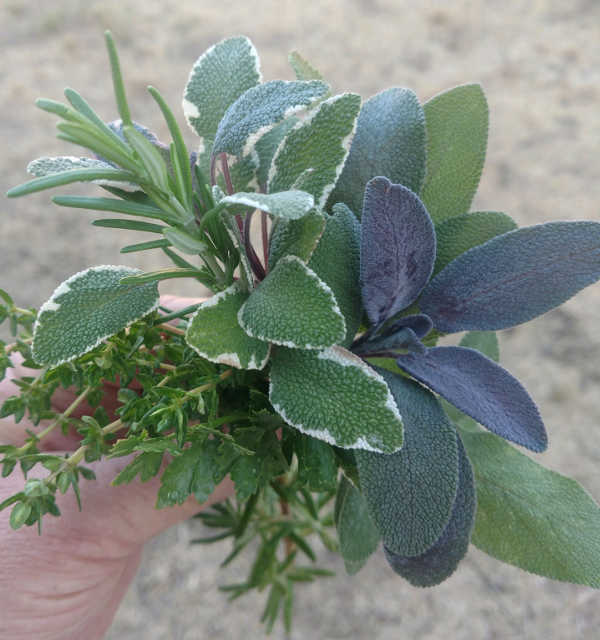
LAKE COUNTY, Calif. – Lake County has been clothed in a blanket of excessive heat over the last few days, but just a week ago a cool breeze was blowing, and it reminded me that it’s time to begin planning an autumn garden.
It’s so nice to have a bounty of fresh herbs to cook with throughout the year, and what better way to ensure this than to have them growing a few steps away from your kitchen?
You don’t need access to a garden plot, because a thriving herb garden can be created with large pots on a patio; in fact, I recommend pots for herbs in the fall and winter, and the closer to the house the better. (Against a south-facing wall is ideal, but any protected area will work.)
Fresh-chopped herbs are especially delightful on dark and chilly days; their aroma energizes me, and I love to have as many as possible available for fall and winter cooking.
While not all herbs will survive in chilly weather (think basil or tarragon), many others do. Mint, winter savory, marjoram and oregano are some that come to mind, but today I’m going to focus instead on what I call the four “musical” herbs.
As you may have guessed, my inspiration comes from a Simon and Garfunkel song, one which was played often in our restaurant kitchen while I was growing up. Their lovely medieval-sounding canticle, Scarborough Fair, celebrated the herbs parsley, sage, rosemary and thyme in its refrain.
Thankfully, all four are herbs that can survive chilly weather, so below, in the order sung, we’ll celebrate them again, this time with the written word.
Parsley
As the herbal adage states, “Parsley is the jewel of herbs, both in the pot and on the plate.”
It’s amazing how often I add copious amounts of fresh parsley to the meals I make.
Recently I’ve added a handful to pungent pasta puttanesca, tossed it in a mushroom omelet and happily devoured it in one of my favorite salad dressings, a puree of parsley with apples and ginger.
The two best known varieties of parsley are curly parsley and flat leaf or Italian parsley. While some prefer the curly variety, including as a garnish, the latter is more popular with chefs as most feel the flavor is superior.
This herb is a veritable powerhouse of nutrition, absolutely full of antioxidants, and is one of the healthiest foods you can eat.
Parsley is a component of bouquet garni, a grouping of fresh herbs tied together with kitchen string and used to flavor soups and stews.
This practice is utilized throughout southern and central Europe, particularly in France. I often tie the herbs in a cheesecloth bundle, an alternative to using the string. The herbs may be varied depending on the dish, but parsley is almost always included.
In my opinion, the bright, fresh taste of parsley purveys summer on a cold winter’s day. It can be used in cuisine in much the same way, meaning it brings a light flavor to an otherwise heavy dish.
Two recipes for parsley follow: gremolata, an Italian condiment made with fresh parsley, garlic and lemon zest, and tabbouleh, a parsley-rich Middle Eastern salad that I enjoy serving with its frequent companion, hummus.
Gremolata is wonderful on rich pasta dishes, served over fish, or added to vegetables post-roasting. It can be used to brighten and add flavor to many dishes.
If you have an abundance of garden tomatoes or cucumbers, tabbouleh is a great way to utilize them. Parsley and mint make it especially refreshing in the summer, and for those sensitive to wheat, it’s also good when made with quinoa.
Gremolata
¼ cup finely chopped Italian flat-leaf parsley
3 garlic cloves, finely chopped
Zest of one fresh lemon
Combine all ingredients in a small bowl an hour or so before you plan to serve it, so the flavors combine nicely.
It’s best made fresh and will keep up to a day in the fridge.
Tabbouleh with plenty of parsley
1 heaping cup bulgur
1 cup water
½ cup fresh lemon juice
2/3 cup extra virgin olive oil
1 cup coarsely chopped fresh mint leaves
1 cup coarsely chopped fresh Italian (flat leaf) parsley
½ cup sliced scallions, white and green parts
2 cloves finely minced garlic
½ teaspoon salt and pepper to taste
4 ripe plum tomatoes, seeded and cut into ½ inch dice
1 large cucumber, seeded and cut into ½ inch dice
Fresh mint and parsley leaves for garnish
Combine the bulgur, water, lemon juice, and 1/3 cup of the olive oil in a large bowl. Mix well and set aside for 30 minutes. Fluff the mixture with a fork. (The bulgur absorbs the liquid and softens.)
Add the mint, parsley, scallions, garlic, salt, pepper and remaining 1/3 cup olive oil. Toss well with a fork.
Add the tomatoes and cucumber and toss again.
Adjust the seasonings, if necessary, and allow to stand, loosely covered, for at least 30 minutes for the flavors to combine.
Makes six to eight portions.
Sage
The ancient Greeks, Romans and Arabs attributed sage to long life, even immortality. Its Latin name, salvare, means “to save,” a reference to its many perceived healing qualities.
I’ve got three varieties growing in an old wine barrel near our sun porch; hopefully that bodes well for a healthy life expectancy!
Sage has a strong flavor with hints of musk and camphor. It holds up well to heat and should be added at the beginning of the cooking process, unlike some herbs which quickly lose their flavor. Sage becomes even stronger when dried.
It marries well with beans, and a bundle of sage tied with cooking string can be thrown into the pot as they cook. Lentils are another good match, as is split pea soup.
Onions and sage go hand-in-hand, as do mild cheeses and all manner of poultry, evidenced by the inclusion of sage in most recipes for stuffing for fowl.
When winter gardens mature, a beautiful array of winter squashes are available and sage is a perfect match. Nearly all of them benefit from the addition of sage, and butter or olive oil is a wonderful vehicle for the impartation of its flavor.
Sage butter is easily made by combining finely chopped fresh sage to room temperature butter.
This deeply flavored compound butter is especially enticing on a warm piece of cornbread. When used for this purpose, a little honey is a nice addition.
A simple recipe for sage butter follows.
Another way to impart sage’s flavor is via crispy sage, made by tossing fresh sage leaves in simmering olive oil a handful at a time. Allow the leaves to cook until dark green and just crisp.
These crispy leaves may be crumbled over or added to a variety of dishes, including polenta, soups or stews. A dish of roasted butternut squash, apples and onions is my favorite place to use them.
The oil used to crisp them may be utilized to add sage flavor to dishes, such as drizzling atop soup. Since olive oil solidifies after a few days in the fridge, the oil in semi-solid form may be used in much the same way as sage butter.
The Kelseyville Pear Festival will be celebrated next month, and to honor our pear-growing region, I’ve included a recipe for soup made with butternut squash and Lake County pears.
Crispy sage flavors and garnishes the soup.
Sage butter
1 cube butter, soft and at room temperature (I prefer salted butter, but either can be used)
1 small bunch fresh sage, finely chopped
Combine the chopped sage and butter in a small bowl, blending well.
This compound butter stores well in the fridge and can be frozen.
To freeze, roll into a log and wrap in waxed paper. Sage butter “coins” can be cut from the log for use in recipes and on bread.
Butternut squash and pear soup with crispy sage
2 - 3 tablespoons salted butter
A healthy handful of whole, fresh sage leaves (enough to garnish each bowl, plus ten or so leaves for soup)
1 – 2 tablespoons olive oil (if needed)
1 medium onion, peeled and chopped
4 cups vegetable broth
4 cups peeled butternut squash cubes (about 1 small to medium squash)
3 large Lake County pears, such as Comice or Bartlett, peeled, cored and cubed
¾ cup chopped celery (about 2 ribs)
1 cup half and half
Salt and freshly ground pepper to taste
Melt butter in a large stock pot, allowing it to brown.
Add sage leaves and sauté until crisp. Remove leaves from pot with tongs and set aside.
Add onion (and olive oil, if needed) and sauté over medium heat until browned.
Add broth, squash, pears and celery to pot. Bring to boil, then reduce heat and simmer, covered, for about 30 minutes, until quite tender.
Let cool slightly, then add about ten sage leaves and puree the mixture until smooth with an immersion blender or in a food processor or blender.
Return back to pot and simmer for 10 minutes more. Off heat, stir in half and half and season to taste with salt and pepper.
Ladle into bowls and garnish each with a crispy sage leaf.
For a lower-fat soup, omit half and half.
Rosemary
Rosemary is native to the Mediterranean region, particularly along the coastal hills of Spain and Portugal.
Its name derives from the Latin word “rosmarinus,” which translates to “dew of the sea,” a reference to its needing no more water than the humidity from the sea to survive in many areas.
And it’s true that rosemary thrives in dry conditions. It does well in California’s Mediterranean-like climate, even in times of drought.
We’ve had many planted-in-the-ground rosemary bushes through the years, including three large ones at our current home, and I can honestly say that I’ve never seen a rosemary plant die.
An evergreen, rosemary’s pine needle-like foliage, gray-green in color, grows abundantly on woody stalks. Its hardiness and its ability to hang in pots, crawl along the ground or be used in a hedgerow make it a favorite landscaping plant.
Rosemary has a strong flavor, so is best used with a bit of caution in culinary applications, since it doesn’t take much to overpower a dish with its flavor.
While it’s a favorite for summer grilling, it also lends aromatic flavor to comforting winter dishes.
Rosemary has a special affinity for beans, particularly white beans, and throwing several sprigs of fresh rosemary into the pot will infuse such mild beans with deeply aromatic flavor.
In addition to beans, rosemary romances potatoes with its flavor. Adding rosemary, along with its friend, garlic, to potatoes before oven roasting makes for a flavorful dish, and creamy potato soup benefits from its addition.
The already heavenly smell and taste of freshly baked bread is enhanced by the addition of rosemary, whether sprinkled over the top or added to the dough. Rosemary is especially good with hearty whole grain breads.
In addition to its culinary and aromatic properties, rosemary has long been thought to improve the memory. Students in ancient Greece believed this, so wore rosemary garlands while studying for exams.
As it turns out, modern science has shown that rosemary increases the blood flow to the head and brain, thereby improving concentration.
I just might tuck a sprig of rosemary behind my ear next time I take a test!
Today’s rosemary recipes include rosemary walnuts and a recipe for rosemary salt, easily made for your own use or to be given as gifts.
The rosemary walnuts were inspired some years ago by our local bounty of walnuts and olive oil. Everything in the original recipe was from Lake County, including the rosemary from my backyard.
Rosemary walnuts
A drizzle of local olive oil for the pan
A couple cups of local walnuts
A handful of fresh rosemary, roughly chopped
Salt & pepper to taste
Heat the oil in the pan for a few seconds, and then add the walnuts, tossing them as they cook (for about 20 seconds, just to begin the process).
Add the chopped rosemary and allow the walnuts to finish toasting. Watch the plan closely and continue to toss the walnuts as they cook.
Once the walnuts are toasted to your liking, add salt and pepper to taste. This entire process will take no more than a few minutes.
Note: When roasting, nuts can go from perfect to charred in just a few seconds, so watch pan closely,
Rosemary salt
½ cup coarse sea salt
½ cup kosher salt
3 tablespoons finely chopped rosemary leaves
Optional: For rosemary-lemon salt, add the grated zest of one lemon.
Preheat the oven to 225 degrees Fahrenheit.
Add the salt and rosemary to a food processor and pulse until sea salt becomes finer and everything is well mixed.
Transfer the mixture to a baking sheet and bake for 15 - 20 minutes until dry.
Remove from oven and break apart any lumps with a food processor or fork.
Store in an airtight container or a glass jar with a tight-fitting lid. (Allow it to cool for about five minutes first.)
If possible, let it sit for a day before using so the salt becomes infused with flavor.
The flavor intensity will diminish somewhat over time, but it will generally last a year.
If desired, a full cup of either coarse sea salt or kosher salt can be used, rather than a blend.
Use in sweet or savory applications, such as sprinkled over chocolate, lemon or caramel cupcakes; when roasting vegetables; in pasta; over baked potatoes; to enhance brie or goat cheese; or as a rub for grilled meats.
Thyme
Thyme is such a nimble herb in the kitchen, lending its flavor well to so many dishes, that some have said, “When in doubt, use thyme.”
More than one gardening guru has advised that if you have only one pot to use for an herb planting, plant thyme.
In other words, thyme is a cooking staple, welcome year-round in the kitchen. Thankfully, some varieties, such as English, silver and creeping, seem to do well in winter gardens.
Thyme is one of the herbs central to the cooking of Provence, France and is featured in the popular “herbs de Provence” dried herb mixture, along with lavender, fennel and a variety of other herbs.
And, like parsley, it’s commonly used in the traditional French “bouquet garni,” a bundle of fresh herbs tied with kitchen spring or enclosed in cheesecloth and dropped into a pot of soup or stew to flavor it.
Thyme is so versatile that it might be easier to list what thyme doesn’t complement, rather than what it does.
It goes with almost all meats, including fish, beef, chicken, lamb and pork. Even some game animals, such as venison or rabbit, benefit from its flavor.
It pairs well with sweet vegetables like carrots; meaty vegetables, such as mushrooms and eggplant; and with vegetable staples onions and tomatoes.
It even has a place in sweet cuisine, working beautifully with fruits such as figs, peaches, and strawberries.
While thyme is wonderful with lighter summer fare, it’s also in its element seasoning hearty winter stews, soups and ragouts.
Thyme is a companionable herb; it lends flavor but doesn’t overpower, making it blend well with a variety of herbs and spices.
Flavors as diverse as mint, lemon, rosemary, cloves, paprika, mustard, and coriander marry well with thyme. And that’s the short list.
Even its name displays its multifaceted character. The word “thyme” may be traced to ancient Greek, where it was derived from either a word meaning “courage,” appropriate for its invigorating quality, or from one meaning “to fumigate,” since the burning of thyme was used to chase stinging insects from ancient Greek homes.
Today’s thyme recipes are for a refreshing sparkling thyme lemonade and a spiced thyme honey.
The honey is fantastic in a fruit salad (try it with grapes, melons or pineapple), as well as a wonderful companion for poached or roasted apples or pears. It can also be used as an all-purpose sweetener. (Try it in tea!)
Thyme lemonade
1-1/2 cups sugar
1 cup water
2 cups fresh lemon juice (about 10 lemons)
1 bunch fresh thyme (plus sprigs for garnish, if desired)
Sparkling water, about five cups
In a medium saucepan, bring 1 cup water, sugar and thyme to a boil.
Stir until sugar is dissolved, about 2 minutes.
Remove from heat and stir in lemon juice.
Strain into a pitcher and allow to cool in fridge for at least an hour. (It will keep in the fridge for up to a week.)
Just before serving add sparkling water to pitcher and stir to combine.
Spiced honey with thyme
½ cup honey
½ cup water
1 sprig fresh thyme
1 stick cinnamon or a star anise pod
Bring the honey and water to a gentle boil over medium heat using a small saucepan.
Remove from heat and add the thyme sprig and cinnamon stick or star anise pod.
Allow to cool, then strain mixture, discarding thyme and cinnamon or star anise.
All recipes by Esther Oertel.
Esther Oertel is a writer and passionate home cook from a family of chefs. She grew up in a restaurant, where she began creating recipes from a young age. She’s taught culinary classes in a variety of venues in Lake County and previously wrote “The Veggie Girl” column for Lake County News. Most recently she’s taught culinary classes at Sur La Table in Santa Rosa, Calif. She lives in Middletown, Calif.
Dogs available for adoption this week include mixes of Cane Corso mastiff, Catahoula Leopard Dog, Chihuahua, husky, Labrador Retriever, mastiff, pit bull, shepherd, Shih Tzu and terrier.
Dogs that are adopted from Lake County Animal Care and Control are either neutered or spayed, microchipped and, if old enough, given a rabies shot and county license before being released to their new owner. License fees do not apply to residents of the cities of Lakeport or Clearlake.
If you're looking for a new companion, visit the shelter. There are many great pets hoping you'll choose them.
The following dogs at the Lake County Animal Care and Control shelter have been cleared for adoption (additional dogs on the animal control Web site not listed are still “on hold”).

‘Nova’
“Nova” is a female Cane Corso mastiff with a short black coat.
She is in kennel No. 17, ID No. 6579.

Female husky mix
This female husky mix has a short tricolor coat.
She already has been spayed.
She’s in kennel No. 18, ID No. 12685.

‘Koda’
“Koda” is a male pit bull terrier with a short red coat.
He already has been neutered.
He’s in kennel No. 19, ID No. 12609.

Male pit bull terrier
This male pit bull terrier has a short gray and white coat.
He is in kennel No. 20, ID No. 12744.

Female terrier
This female terrier has a medium-length tricolor coat.
She is in kennel No. 21, ID No. 12723.

Female Labrador Retriever
This female Labrador Retriever has a short black.
She is in kennel No. 23, ID No. 12697.

‘Beau’
“Beau” is a male Catahoula Leopard Dog with a blue merle coat.
He’s in kennel No. 24, ID No. 12677.

Male Shih Tzu
This male Shih Tzu has a shaved tan and white coat.
He is in kennel No. 26, ID No. 12738.

‘Cash’
“Cash” is a male pit bull terrier mix with a short black and white coat.
He has been marked as urgent because he has been at the shelter since June.
Shelter staff said Cash does well with others, loves people and walks well on a leash.
He has been neutered.
He’s in kennel No. 27, ID No. 12413.

Male Chihuahua
This senior male Chihuahua has a short tan coat.
He is in kennel No. 28, ID No. 12583.

“Bear” is a male Cane Corso mastiff with a short brown coat.
He is in kennel No. 34, ID No. 11456.
Lake County Animal Care and Control is located at 4949 Helbush in Lakeport, next to the Hill Road Correctional Facility.
Office hours are Monday through Friday, 11 a.m. to 5 p.m., and 11 a.m. to 3 p.m., Saturday. The shelter is open from 11 a.m. to 4 p.m., Monday through Friday and on Saturday from 11 a.m. to 3 p.m.
Visit the shelter online at http://www.co.lake.ca.us/Government/Directory/Animal_Care_And_Control.htm.
For more information call Lake County Animal Care and Control at 707-263-0278.
Email Elizabeth Larson at
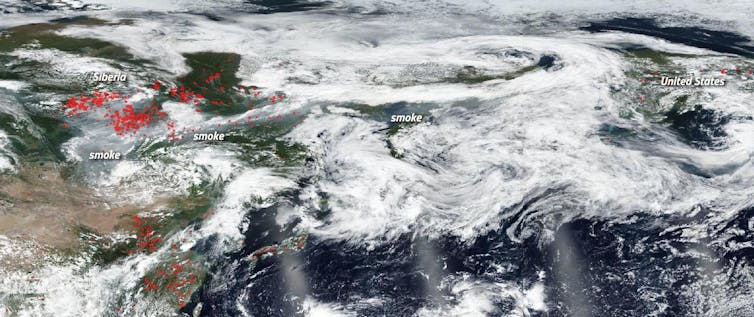
The planet’s far North is burning. This summer, over 600 wildfires have consumed more than 2.4 million acres of forest across Alaska. Fires are also raging in northern Canada. In Siberia, choking smoke from 13 million acres – an area nearly the size of West Virginia – is blanketing towns and cities.
Fires in these places are normal. But, as studies here at the University of Alaska’s International Arctic Research Center show, they are also abnormal.
My colleagues and I are examining the complex relationships between warming climate, increasing fire and shifting patterns of vegetation. Using locally focused climate data and models from the Scenarios Network for Alaska and Arctic Planning, the research group I help coordinate, we are finding evidence that is deeply worrying – not just for those of us who live within the fires’ pall of smoke, but for the world.
Recent fires are too frequent, intense and severe. They are reducing older-growth forest in favor of young vegetation, and pouring more carbon into the atmosphere at a time when carbon dioxide concentrations are setting new records.
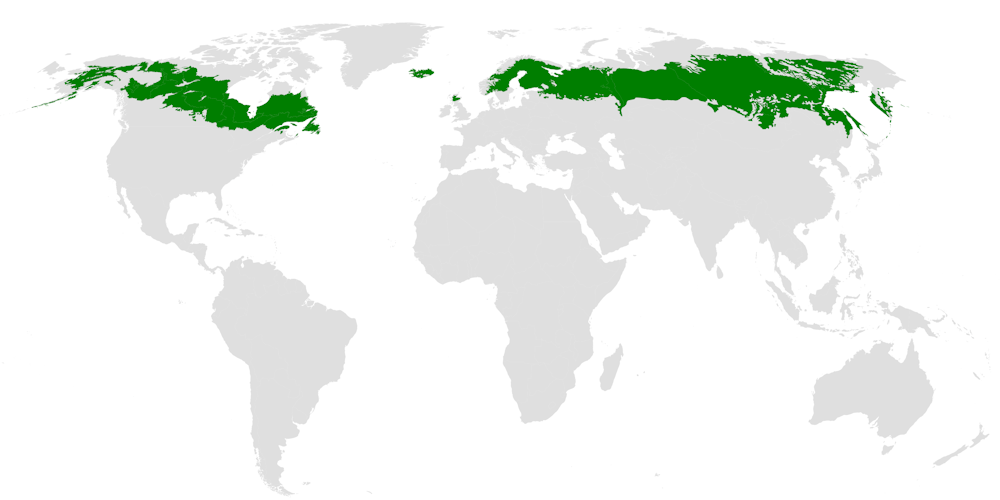
Vast sub-Arctic forests
The boreal or taiga ecosystem, a swath of northern forest that covers 17% of the globe’s land area, is adapted to fire. It has been burning regularly for thousands of years. This vast landscape is mostly free of human roads, rail lines, power lines and cities. Blazes often spread until the wind changes and the rain falls.
Here in central Alaska, our spindly spruce trees open resinous cones to jump-start new seedlings when the parent tree is scorched. Fast-growing fireweed and other flowers cover recent burn scars. Soon afterward come wild blueberries, willows and birch and aspen trees that shoot up from still-living stumps and roots. Eventually flammable conifers take over again.
Typically, the cycle resumes about every 200 years. But today the cycles are about 25% shorter than in the past, and that changes everything.
The overall increase in burning can be hard to detect and measure because of enormous natural variability. This summer’s fires in Alaska were driven by an intense early-season heat wave. The relationship between hot dry weather and fire is clear. Climate change is causing an equally clear trend toward earlier springs and longer, hotter summers.
However, our state also has some cooler, wetter summers when little or no smoke chokes the air. It isn’t always easy to tell the difference between natural year-to-year fluctuations and ominous long-term shifts.

A blazing North
Nonetheless, shifts are occurring – driven by the unprecedented warming that we are seeing in Alaska. July 2019 now stands as the hottest month ever recorded in the state.
Many of us, including climate researchers, land managers, ecologists, meteorologists, rural and indigenous residents and fire experts, have been collaborating, studying this issue, gathering data, creating simulations and computer models, using satellite imagery and getting outdoors to measure exactly what is happening. In Alaska, state and federal agencies work together to monitor and manage fires through the Alaska Interagency Coordination Center and deploy firefighters to the front lines – including a record number of smoke-jumpers this year.
The evidence shows that overall, fires in the far North are becoming bigger, hotter and more frequent. Older conifers are losing ground to younger deciduous trees, altering whole ecosystems. Torched trees are releasing carbon, along with soils rich in dead plant matter that are burning more deeply than in the past. As these releases fuel further warming, climate change is causing more climate change, which affects the entire planet.
Too close for comfort
In Fairbanks, where I live, the human impacts of this summer’s fires have been obvious. As lightning triggered blazes statewide in late June, the Shovel Creek Fire sprang up on the western outskirts of town. Air quality rapidly deteriorated to “hazardous.” Two neighborhoods were evacuated, sending residents to stay with friends or hole up in my children’s school. Displaced sled dog teams were housed at the local fairgrounds.
On some days in June and July the smoke in Fairbanks was so thick that my neighbor, who has asthma, had to wear a respirator mask. Another friend who has heart trouble had to take refuge in a small conference room at the hospital that was offered as a filtered-air safety zone.
Shouldn’t these fires be prevented, and extinguished when they occur? Unfortunately, it’s not that simple. First, the cost of firefighting across huge regions of the Arctic and sub-Arctic would be astronomical, as Russian officials have argued in response to public demands for action to control wildfires in Siberia.
Second, putting out fires now leaves that much more highly flammable fuel on the landscape for next year or the year after – a problem that many blame for catastrophic fires in other states. Fire managers in Alaska, in partnership with land owners, instead have set priorities for firefighting. Lands are grouped in four categories: limited, modified, full and critical. By far the largest fraction is classified “limited,” meaning that fires in these areas are monitored but allowed to burn freely where they don’t threaten lives or known resources.
But when fires threaten homes and lives, they are fought fiercely. After tireless efforts by fire crews from Alaska and the Lower 48, evacuated Fairbanks residents received an all-clear on July 10. People went home, and there were no injuries.
August brought rains to dampen our local fairgrounds, which were finally being used for family fun rather than housing displaced pets. I haven’t heard much complaining. Wet weather has shown up on time here, and we’re grateful. But we realize that other Arctic regions are still burning, and that fire is more than just a local problem for all of us.
[ Sign up for The Conversation’s newsletter to get insight each day ]
Nancy Fresco, SNAP Coordinator, Research Faculty, University of Alaska Fairbanks
This article is republished from The Conversation under a Creative Commons license. Read the original article.
The fire began on Monday afternoon off Moose and Bus McGall roads northwest of Hopland.
It burned a total of 225 acres within the first day, but did not damage any structures, Cal Fire said.
Cal Fire said three firefighters suffered minor injuries while working on the incident.
The fire’s cause remains under investigation, Cal Fire reported.
Email Elizabeth Larson at
"Black holes" is one of the most highly searched terms about our universe.
There’s a fascination with the idea of a region of space having a gravitational pull so strong, nothing can escape its deadly grasp, not even a sliver of light.
Well, not quite. In fact, much of what we think we know about black holes turn out to be myths.
Myth 1 – All black holes are black.
As the photograph below from the Event Horizon telescope demonstrated, light can be detected near a black hole’s event horizon. This is the boundary between normal space and the space affected by the black hole's gravity, from which no escape is possible.
Part of this light comes from the black hole’s accretion disk, a flat, pancake like structure composed of dust, gas and other debris. Friction constantly moves the disk’s material inward toward the event horizon. Light also comes from jet streams which propel matter outward along the disk’s north and south poles.

Myth 2: All black holes are about the same size.
Black holes actually come in several different sizes which are defined by their mass. Small black holes are usually the result of a relatively short and violent collapse of a star.
Recent work suggests that Intermediate black holes are found in the nuclei of some active galaxies. Super massive black holes on the other hand, are found at the center of nearly every galaxy.
Dr. Dan Evans, an Astrophysicist at NASA Headquarters said, “There’s a direct relationship between the beginning of super massive black holes and the beginning of their corresponding galaxy. This strongly suggests the two were born about the same time and slowly grew in size together over billions of years.”
Myth 3: If you get within a few thousand miles of a black hole, its super gravity will pull you into its center.
It turns out you can get surprisingly close to a black hole. If you approached a black hole with mass equal to our Sun’s for example, you could get as close as tens of miles.
So imagine if we replaced our sun with a black hole of the same mass. All of the planets would continue to revolve around it, at exactly the same speed and distance as they do now.
Myth 4: Once inside a black hole, nothing ever comes out.
Nope. It turns out that radiation can escape from a black hole. One of Stephen Hawking’s contributions was a theory that a black hole is not so dense in a quantum mechanical sense.
The slow leak of what’s now known as Hawking radiation would, over time, cause the black hole to simply evaporate.
The image from the Event Horizon telescope confirmed what Albert Einstein’s general theory of relativity predicted over 100 years ago – that a black hole’s form is that of a perfect circle. And as scientists learn even more about the properties of this gigantic cosmic mystery we call a black hole, they’ll be able to puncture even more myths.
To hear more true tales about black holes and other mysteries of the cosmos, visit http://science.nasa.gov.
On Saturday, Aug. 24, the Cobb Area Council and the Seigler Springs Community Redevelopment Association are partnering to present the inaugural Blackberry COBBler Festival.
The event will be held at Whispering Pines Resort on Cobb from noon until 5 p.m.
The festival is part of a larger plan titled “What’s Up on Cobb?” created by the Cobb Area Council’s Economic Development Ad Hoc Committee.
The plan aims to bring more visitors to the Cobb area to help stimulate growth and to support our local businesses, while reviving the tradition of festivals on Cobb Mountain.
All proceeds from this event will be used to fund more Cobb Area Council economic development projects.
The event will feature live music, barbecue, wood-fired pizza, blackberry inspired treats, beer and wine, artisan vendors and a fun zone for kids.
Most of the vendors are artists from the Cobb area, including several who were displaced after the Valley fire of 2015.
Home bakers are encouraged to enter the blackberry cobbler contest for a chance at a first-prize blue ribbon.
All blackberry cobbler entries are to be submitted from noon until 12:30 pm. Judging begins promptly at 12:45 p.m. and the winner will be announced at 3 p.m.
All parking will be off-site at the Strickler Meadow on Gifford Springs Road. Follow the signs to enter the parking area where a shuttle will take all guests to the event. No parking will be allowed at the Whispering Pines Resort. Please watch for slow traffic on Highway 175 as you turn onto Gifford Springs Road.
The Cobb Area Council is grateful for a generous donation from Calpine Corp. to ensure the success of the inaugural festival.
The group also offers thanks to the Whispering Pines Resort, PG&E, Hardester’s Market, Community Development Services, TNT Tree Care, Dixon Tree Service, Clover Lake Dairy, Boatique Winery, Kelsey Creek Brewing, Shannon Ridge Winery, South Lake Refuse, Lake County Drywall, Granite Construction, Herc Rentals, Enterprise Rent-A-Car, the Strickler Family, the McCreary Family, Farmers Insurance and many, many volunteers who have come together to help make sure this event is a success.
Visit the “What’s Up on Cobb” Facebook page to find out more about this and other upcoming events.