How to resolve AdBlock issue?
News
NORTHERN CALIFORNIA – Firefighters are making progress on a wildland fire that began burning near Redding on Thursday morning.
Cal Fire said the Mountain fire is being held at 600 acres, with 50-percent containment.
The fire is burning in Shasta County on Bear Mountain Road and Dry Creek Road, north of Bella Vista. The cause remains under investigation, Cal Fire said.
The Shasta College Campus is closed and some evacuations remain in place, according to Cal Fire.
Cal Fire said 14 structures – seven homes and seven other types – have been destroyed, and four homes and two other structures have been damaged. Damage assessment is ongoing.
There have been two injuries, both minor in nature, with the individuals treated and released, Cal Fire said.
Resources assigned include 903 firefighters and 72 overhead personnel, 79 engine companies, 31 fire crews, 12 water tenders, 12 bulldozers and two helicopters, according to Cal Fire’s report.
Cal Fire said firefighters will continue to extinguish interior hotspots and secure the containment lines.
In other state fire news, Cal Fire said the Yucca fire in Riverside County, which also began on Thursday, has burned 34 acres and is 65 percent contained.
Email Elizabeth Larson atThis email address is being protected from spambots. You need JavaScript enabled to view it. . Follow her on Twitter, @ERLarson, or Lake County News, @LakeCoNews.
Cal Fire said the Mountain fire is being held at 600 acres, with 50-percent containment.
The fire is burning in Shasta County on Bear Mountain Road and Dry Creek Road, north of Bella Vista. The cause remains under investigation, Cal Fire said.
The Shasta College Campus is closed and some evacuations remain in place, according to Cal Fire.
Cal Fire said 14 structures – seven homes and seven other types – have been destroyed, and four homes and two other structures have been damaged. Damage assessment is ongoing.
There have been two injuries, both minor in nature, with the individuals treated and released, Cal Fire said.
Resources assigned include 903 firefighters and 72 overhead personnel, 79 engine companies, 31 fire crews, 12 water tenders, 12 bulldozers and two helicopters, according to Cal Fire’s report.
Cal Fire said firefighters will continue to extinguish interior hotspots and secure the containment lines.
In other state fire news, Cal Fire said the Yucca fire in Riverside County, which also began on Thursday, has burned 34 acres and is 65 percent contained.
Email Elizabeth Larson at

Death benefits payable from a life insurance policy on the death of the insured can be considerable.
Such benefits can either be paid directly to one or more individual beneficiaries or be paid to a trust administered for their benefit.
A trust can own and/or be the death beneficiary on a life insurance policy. Unlike retirement plans, there is no income tax disadvantage to naming a trust as the death beneficiary of a life insurance policy.
Moreover, for very high net worth persons, having an irrevocable life insurance trust purchase and own the life insurance policy is a way to keep a considerable asset outside of their estate and so minimize federal estate taxes.
Nowadays, however, with the estate tax threshold at around 11.2 million dollars far fewer persons are concerned with estate tax minimization.
Nonetheless, naming a trust, including a revocable living trust, as a death beneficiary on a life insurance policy offers other advantages: It allows for more contingency planning in the event that the primary death beneficiary does not survive to inherit; it allows for cash to fund a trust that may otherwise be short on cash; it allows for the death benefits to be held in further trust in order to protect such benefits and/or the beneficiary; and it allows for the management of the death benefits by a trustee.
Naming alternative death beneficiaries, and changing one’s death beneficiaries, through the life insurance company’s own change of death beneficiary forms does not compare favorably to naming a trust as the death beneficiary.
The change of death beneficiary form provides very limited choices when it comes to naming secondary alternative death beneficiaries. That is, what happens when a first tier alternative death beneficiary does not survive the insured.
With a trust, however, a tailored plan of distribution to secondary alternative beneficiaries is possible. The trustee receives the death benefit proceeds and follows the instructions in the trust as to how such proceeds are to be administered in any eventuality.
Life insurance policies are also a good way to ensure that the trust has adequate funds to pay for debts, administration expenses and to fund shares. This will allow other non-cash assets not to be sold at unfavorable prices and to equalize inheritances when some beneficiaries receive cash and other beneficiaries receive non cash assets (like real property and stocks).
Trusts also can be drafted and administered to protect the beneficiaries, who would otherwise inherit directly from the life insurance policy, from claims by judgment creditors.
When beneficiaries receive insurance proceeds outright such money becomes subject to collections by their own judgment creditor. Inside a trust the money remains safe from the beneficiaries’ creditors.
The trustee (someone other than the beneficiary) can be authorized to make distributions to or for the benefit of the beneficiary.
In addition, the trustee can administer the death benefits according to the settlor’s instructions. Otherwise, with an outright distribution, the money may be used in ways that the settlor does not approve. Such concern is relevant when the beneficiary does not manage their own money well, makes poor choices, or is subject to control by other persons.
Lastly, naming a trust as the owner of a life insurance policy can be accomplished by declaring the transfer of the life insurance policy within the trust itself.
In Dudek v. Dudek (2019) 34 CA5th 154, California’s Fourth District Court of Appeal, addressed whether the failure of the life insurance owner to properly execute the life insurance company’s own legal forms resulted in a failed attempt to transfer the ownership in the life insurance policy.
The Dudek appellate court ruled that language of conveyance included in a deceased insured’s trust was sufficient in itself to convey ownership of a life insurance policy.
In sum, naming a trust as death beneficiary may be appropriate for a variety of non-tax reasons such as who inherits if an alternative beneficiary fails to survive, equalizing out inheritances, and protecting beneficiaries’ inheritances.
Dennis A. Fordham, attorney, is a State Bar-Certified Specialist in estate planning, probate and trust law. His office is at 870 S. Main St., Lakeport, Calif. He can be reached at

A new study using data from NASA's Spitzer Space Telescope provides a rare glimpse of conditions on the surface of a rocky planet orbiting a star beyond the sun.
The study, published this month in the journal Nature, shows that the planet's surface may resemble those of Earth's Moon or Mercury: The planet likely has little to no atmosphere and could be covered in the same cooled volcanic material found in the dark areas of the Moon's surface, called mare.
Discovered in 2018 by NASA's Transiting Exoplanet Satellite Survey, or TESS, mission, planet LHS 3844b is located 48.6 light-years from Earth and has a radius 1.3 times that of Earth. It orbits a small, cool type of star called an M dwarf – especially noteworthy because, as the most common and long-lived type of star in the Milky Way galaxy, M dwarfs may host a high percentage of the total number of planets in the galaxy.
TESS found the planet via the transit method, which involves detecting when the observed light of a parent star dims because of a planet orbiting between the star and Earth. Detecting light coming directly from a planet's surface – another method – is difficult because the star is so much brighter and drowns out the planet's light.
But during follow-up observations, Spitzer was able to detect light from the surface of LHS 3844b. The planet makes one full revolution around its parent star in just 11 hours. With such a tight orbit, LHS 3844b is most likely "tidally locked," which is when one side of a planet permanently faces the star.
The star-facing side, or dayside, is about 1,410 degrees Fahrenheit (770 degrees Celsius). Being extremely hot, the planet radiates a lot of infrared light, and Spitzer is an infrared telescope. The planet's parent star is relatively cool (though still much hotter than the planet), making direct observation of LHS 3844b's dayside possible.
This observation marks the first time Spitzer data have been able to provide information about the atmosphere of a terrestrial world around an M dwarf.
The search for life
By measuring the temperature difference between the planet's hot and cold sides, the team found that there is a negligible amount of heat being transferred between the two. If an atmosphere were present, hot air on the dayside would naturally expand, generating winds that would transfer heat around the planet. On a rocky world with little to no atmosphere, like the Moon, there is no air present to transfer heat.
"The temperature contrast on this planet is about as big as it can possibly be," said Laura Kreidberg, a researcher at the Harvard and Smithsonian Center for Astrophysics in Cambridge, Massachusetts, and lead author of the new study. "That matches beautifully with our model of a bare rock with no atmosphere."
Understanding the factors that could preserve or destroy planetary atmospheres is part of how scientists plan to search for habitable environments beyond our solar system. Earth's atmosphere is the reason liquid water can exist on the surface, enabling life to thrive. On the other hand, the atmospheric pressure of Mars is now less than 1% of Earth's, and the oceans and rivers that once dotted the Red Planet's surface have disappeared.
"We've got lots of theories about how planetary atmospheres fare around M dwarfs, but we haven't been able to study them empirically," Kreidberg said. "Now, with LHS 3844b, we have a terrestrial planet outside our solar system where for the first time we can determine observationally that an atmosphere is not present."
Compared to Sun-like stars, M dwarfs emit high levels of ultraviolet light (though less light overall), which is harmful to life and can erode a planet's atmosphere. They're particularly violent in their youth, belching up a large number of flares, or bursts of radiation and particles that could strip away budding planetary atmospheres.
The Spitzer observations rule out an atmosphere with more than 10 times the pressure of Earth's. (Measured in units called bars, Earth's atmospheric pressure at sea level is about 1 bar.)
An atmosphere between 1 and 10 bars on LHS 3844b has been almost entirely ruled out as well, although the authors note there's a slim chance it could exist if the stellar and planetary properties were to meet some very specific and unlikely criteria.
They also argue that with the planet so close to a star, a thin atmosphere would be stripped away by the star's intense radiation and outflow of material (often called stellar winds).
"I'm still hopeful that other planets around M dwarfs could keep their atmospheres," Kreidberg said. "The terrestrial planets in our solar system are enormously diverse, and I expect the same will be true for exoplanet systems."
A bare rock
Spitzer and NASA's Hubble Space Telescope have previously gathered information about the atmospheres of multiple gas planets, but LHS 3844b appears to be the smallest planet for which scientists have used the light coming from its surface to learn about its atmosphere (or lack thereof).
Spitzer previously used the transit method to study the seven rocky worlds around the TRAPPIST-1 star (also an M dwarf) and learn about their possible overall composition; for instance, some of them likely contain water ice.
The authors of the new study went one step further, using LHS 3844b's surface albedo (or its reflectiveness) to try to infer its composition.
The Nature study shows that LHS 3844b is "quite dark," according to co-author Renyu Hu, an exoplanet scientist at NASA's Jet Propulsion Laboratory in Pasadena, California, which manages the Spitzer Space Telescope. He and his co-authors believe the planet is covered with basalt, a kind of volcanic rock. "We know that the mare of the Moon are formed by ancient volcanism," Hu said, "and we postulate that this might be what has happened on this planet."
JPL manages the Spitzer Space Telescope mission for NASA's Science Mission Directorate in Washington. Science operations are conducted at the Spitzer Science Center at Caltech in Pasadena. Space operations are based at Lockheed Martin Space in Littleton, Colorado. Data are archived at the Infrared Science Archive housed at IPAC at Caltech. Caltech manages JPL for NASA.
For more information on Spitzer, visit www.nasa.gov/spitzer or www.spitzer.caltech.edu/.
CLEARLAKE, Calif. – Firefighters spent several hours early Friday battling a fire that burned structures and wildland at a Clearlake kennel facility.
The fire was first dispatched just after 2:45 a.m. Friday in the 2100 block of Ogulin Canyon Road.
Based on radio traffic, the first units at the scene found a mobile home fully involved, with the fire spreading to nearby wildland and into the nearby kennel building, where animals were trapped.
Lake County Fire Chief Willie Sapeta asked for animal control resources from the city of Clearlake or the county of Lake to respond, and also requested Pacific Gas and Electric due to fallen power lines.
Resources from Lake County Fire, Cal Fire and Northshore Fire responded, sending engines as well as water tenders due to a water supply issue, according to radio reports.
Firefighters were reported to be in the process of rescuing animals from the burning kennels. Sapeta asked for more engines, water tenders and help with animal evacuations.
Just after 3:50 a.m., Sapeta reported over the radio that they had shaky containment on the structure fires and that forward progress was stopped on the wildland.
Animal control personnel were reported to be on scene shortly after 4:20 a.m., with the safety hazards related to the downed power lines abated about 10 minutes later.
By 5 a.m., overhaul at the scene was under way and expected to last at least two hours, according to radio reports.
More information will be reported as it becomes available.
Email Elizabeth Larson atThis email address is being protected from spambots. You need JavaScript enabled to view it. . Follow her on Twitter, @ERLarson, or Lake County News, @LakeCoNews.
The fire was first dispatched just after 2:45 a.m. Friday in the 2100 block of Ogulin Canyon Road.
Based on radio traffic, the first units at the scene found a mobile home fully involved, with the fire spreading to nearby wildland and into the nearby kennel building, where animals were trapped.
Lake County Fire Chief Willie Sapeta asked for animal control resources from the city of Clearlake or the county of Lake to respond, and also requested Pacific Gas and Electric due to fallen power lines.
Resources from Lake County Fire, Cal Fire and Northshore Fire responded, sending engines as well as water tenders due to a water supply issue, according to radio reports.
Firefighters were reported to be in the process of rescuing animals from the burning kennels. Sapeta asked for more engines, water tenders and help with animal evacuations.
Just after 3:50 a.m., Sapeta reported over the radio that they had shaky containment on the structure fires and that forward progress was stopped on the wildland.
Animal control personnel were reported to be on scene shortly after 4:20 a.m., with the safety hazards related to the downed power lines abated about 10 minutes later.
By 5 a.m., overhaul at the scene was under way and expected to last at least two hours, according to radio reports.
More information will be reported as it becomes available.
Email Elizabeth Larson at
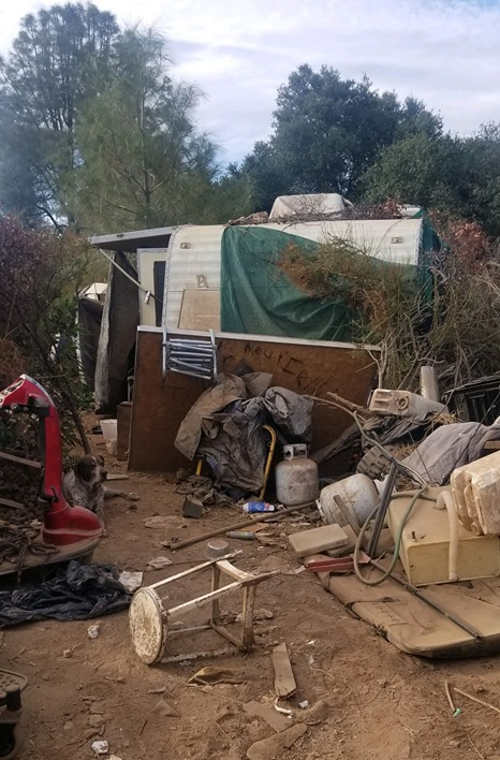
CLEARLAKE, Calif. – The Clearlake Police Department on Thursday conducted an enforcement and outreach operation focused on illegal encampments in the city and issuing dozens of citations.
The department said police officers from its patrol division as well as Code Enforcement officers partnered with representatives from Lake County Child Welfare Services, Adult Services, Social Services, Employment Services and Mental Health.
Last week, police gave advance notice to encampment occupants, the department said.
During the Thursday operation, the officers and service representatives contacted the occupants who had remained, police said.
Police said the individuals who were contacted on Thursday were counseled regarding resources.
The operation also focused on upholding local laws, with officers issuing 34 citations for various violations, with the primary violation being illegal camping, police said.
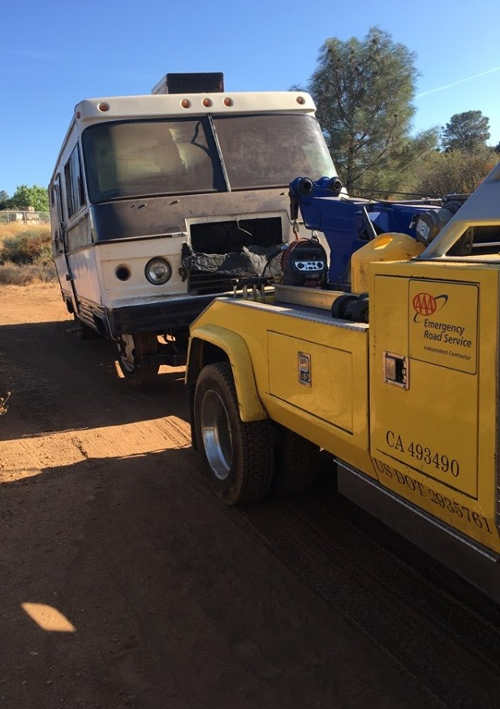
As part of the operation, the police department said a dumped motorhome was removed from the field behind Tractor Supply and the Cache Creek Apartments.
“We appreciate the support of the county agencies that participated in this operation. We are hopeful to see their continued presence in the city to help address the impacts of homelessness. We will continue to partner with them and uphold the law,” the police department said in its statement on the operation.
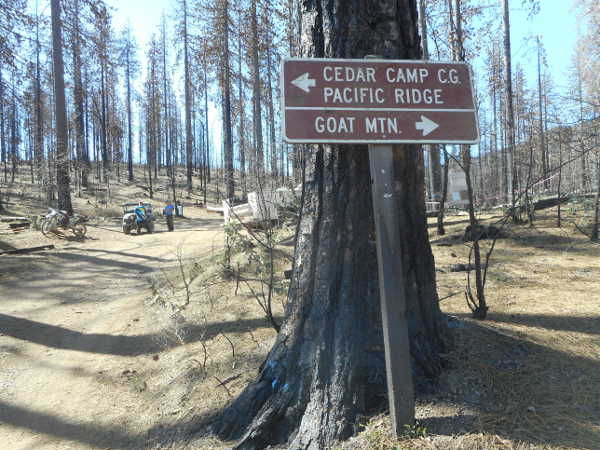
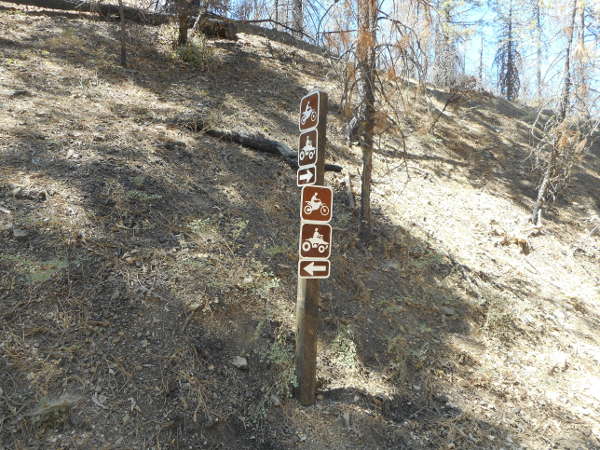
MENDOCINO NATIONAL FOREST, Calif. – A group of volunteers signed on to some tough, dirty work last week to help clean and restore the Stonyford off-highway vehicle area and campgrounds on the Grindstone Ranger District that burned in the 2018 Ranch fire.
During the week-long project, 32 volunteers cleared 40 miles of trail, installed 26 barriers in Mill Valley Campground, removed over 80 yards of burned barriers and rebar and installed 30 signs and trail markers. The volunteers contributed a total of 196 hours
“It’s hard work but very satisfying to know that we are making a difference for future generations to enjoy this area,” Grindstone OHV Program Manager Sarah Ridenour-Chamberlin said.
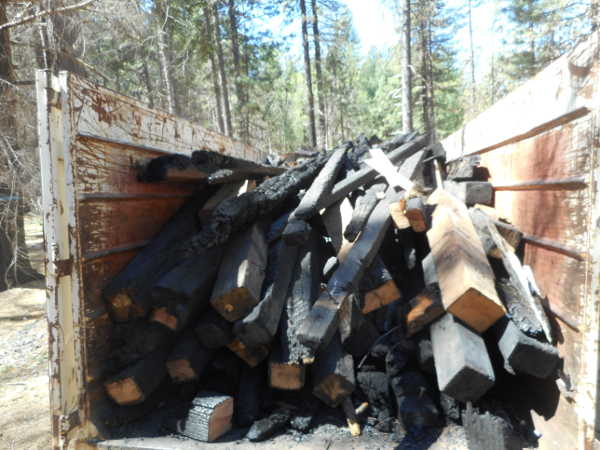
Grindstone District Ranger Christine Hill added, “The volunteers did an outstanding job and we are very appreciative of their hard work. Thank you all so much.”
The Ranch fire is the largest wildland fire in California history at 410,203 acres; around 288,000 acres are on the Mendocino National Forest.
The fire burned through the southern portion of the forest, damaging the entire off-highway vehicle trail system, destroying or compromising culverts and bridges and impacting campgrounds, day use areas, trailheads and signage.