 How to resolve AdBlock issue?
News
Approximately 271 people of all ages finished the summer reading program this year.
Parents and children alike appreciate the summer reading program. At this year’s children’s awards party at Library Park, several people expressed their appreciation for this perennial program.
Cristen Baker said that her family has loved everything about the Reading Program. “All three of my kids love getting new books and start reading as soon as we get in the car. We appreciate all the energy and time all who are involved put in.”
Victoria Newman calls the program “super fun and really thoughtful.”
Juliana Bisaccio’s family enjoyed learning about the different things the library has to offer, picking out books and participating in LEGO Club. Her daughter Annabelle “liked that you got to read a lot and got to see science books with projects.”
The library’s storytime reader, Barbara Green, drew special praise from Maria Maravilla who said, “I enjoyed the books and how Mrs. Barbara interacts with the children. My daughter Karla always looks forward for reading at the park with Mrs. Barbara. Thank you for making this possible for all kids.”
Prizes were awarded to the children included book bags, coupons for hamburgers, ice cream, doughnuts and more.
Bookplates in new library books commemorate the readers who finished the program.
Prize winners in Lakeport Library’s teen group were Joseph Marsh, Natasha Karp, Hunter Perrine, and Angelina Diaz. Viridiana Torres won the teen prize at Middletown Library. Rebecca Weller won the teen prize at Redbud Library.
Adult prize winners are Gregg Lindsley, Cindy Wilson, Jennifer Royal, Alisa Barnes at Lakeport, and Kathie Toibin at Upper Lake. Caitlin Meisle was the adult winner at Middletown Library. At Redbud Library Sharon Leonardo won the adult prize.
Unclaimed prizes will be held at library branches through August.
The Lake County Library Summer Reading Program is supported in part by the Friends of the Lake County Library and Friends of Middletown Library.
For more information contact the library at 707-263-8817 or visit the library Web site at http://library.lakecountyca.gov.
Jan Cook is a technician for the Lake County Library.
Dogs available for adoption this week include mixes of border collie, Cane Corso mastiff, Catahoula Leopard Dog, Chihuahua, Labrador Retriever, mastiff, pit bull, shepherd, Shiba Inu, Shih Tzu and wirehaired terrier.
Dogs that are adopted from Lake County Animal Care and Control are either neutered or spayed, microchipped and, if old enough, given a rabies shot and county license before being released to their new owner. License fees do not apply to residents of the cities of Lakeport or Clearlake.
If you're looking for a new companion, visit the shelter. There are many great pets hoping you'll choose them.
The following dogs at the Lake County Animal Care and Control shelter have been cleared for adoption (additional dogs on the animal control Web site not listed are still “on hold”).

‘Nova’
“Nova” is a female Cane Corso mastiff with a short black coat.
She is in kennel No. 17, ID No. 6579.

‘Koda’
“Koda” is a male pit bull terrier with a short red coat.
He already has been neutered.
He’s in kennel No. 18, ID No. 12609.
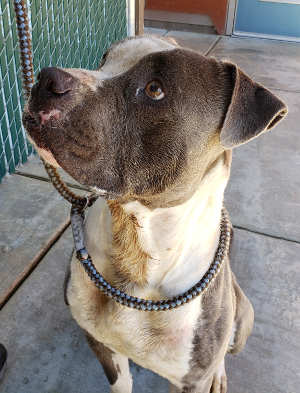
Male pit bull terrier
This male pit bull terrier has a short gray and white coat.
He is in kennel No. 20, ID No. 12744.

Female terrier
This female terrier has a medium-length tricolor coat.
She is in kennel No. 21, ID No. 12723.
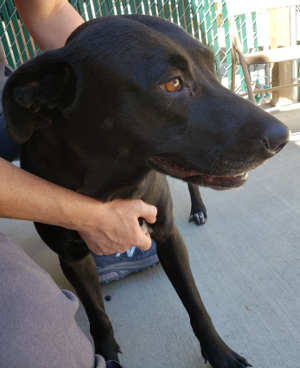
Female Labrador Retriever
This female Labrador Retriever has a short black.
She is in kennel No. 23, ID No. 12697.
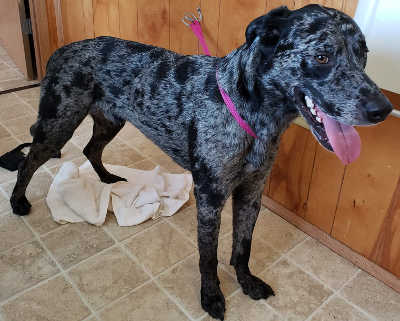
‘Beau’
“Beau” is a male Catahoula Leopard Dog with a blue merle coat.
He’s in kennel No. 24, ID No. 12677.

‘Pengen’
“Pengen” is a female Shiba Inu with a medium-length red coat.
She already has been spayed.
She’s in kennel No. 25, ID No. 12776.

‘Pete’
“Pete” is a male Shih Tzu with a shaved tan and white coat.
He has been neutered.
Pete is in kennel No. 26, ID No. 12738.

‘Cash’
“Cash” is a male pit bull terrier mix with a short black and white coat.
He has been marked as urgent because he has been at the shelter since June.
Shelter staff said Cash does well with others, loves people and walks well on a leash.
He has been neutered.
He’s in kennel No. 27, ID No. 12413.

‘Rico’
“Rico” is a senior male Chihuahua with a short tan coat.
He is in kennel No. 28, ID No. 12583.

Female Chihuahua
This female Chihuahua has a short brown and white coat.
She is in kennel No. 29, ID No. 12786.

‘Boots’
“Boots” is a male border collie and Labrador Retriever mix with a short white and brindle coat.
He is in kennel No. 30, ID No. 12739.

Female wirehaired terrier
This female wirehaired terrier has a coarse brown and black coat.
She is in kennel No. 31, ID No. 12771.
Lake County Animal Care and Control is located at 4949 Helbush in Lakeport, next to the Hill Road Correctional Facility.
Office hours are Monday through Friday, 11 a.m. to 5 p.m., and 11 a.m. to 3 p.m., Saturday. The shelter is open from 11 a.m. to 4 p.m., Monday through Friday and on Saturday from 11 a.m. to 3 p.m.
Visit the shelter online at http://www.co.lake.ca.us/Government/Directory/Animal_Care_And_Control.htm.
For more information call Lake County Animal Care and Control at 707-263-0278.
Email Elizabeth Larson at
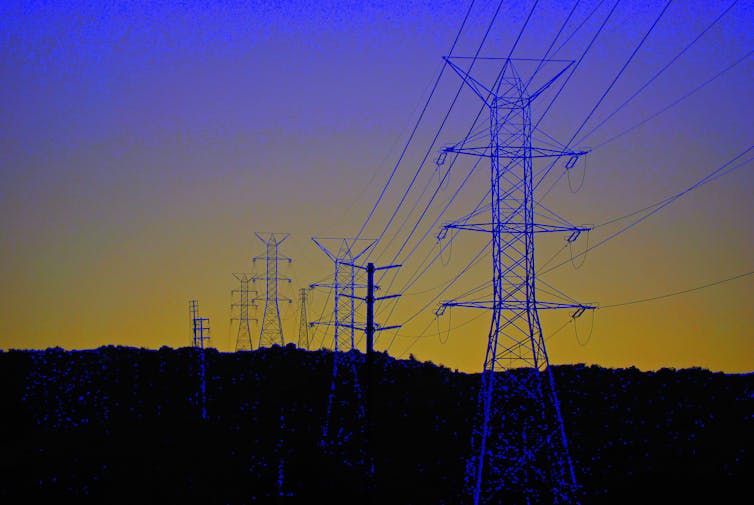
The main solution to climate change is well known – stop burning fossil fuels. How to do this is more complicated, but as a scholar who does energy modeling, I and others see the outlines of a post-fossil-fuel future: We make electricity with renewable sources and electrify almost everything.
That means running vehicles and trains on electricity, heating buildings with electric heat pumps, electrifying industrial applications such as steel production and using renewable electricity to make hydrogen (similar to natural gas) for other requirements. So the focus is on powering the electric grid with renewable sources.
There is debate, though, about whether fully renewable electricity systems are feasible and how quickly the transition can be made. Here I argue that feasibility is clear, so only the transition question is relevant.
Known technologies
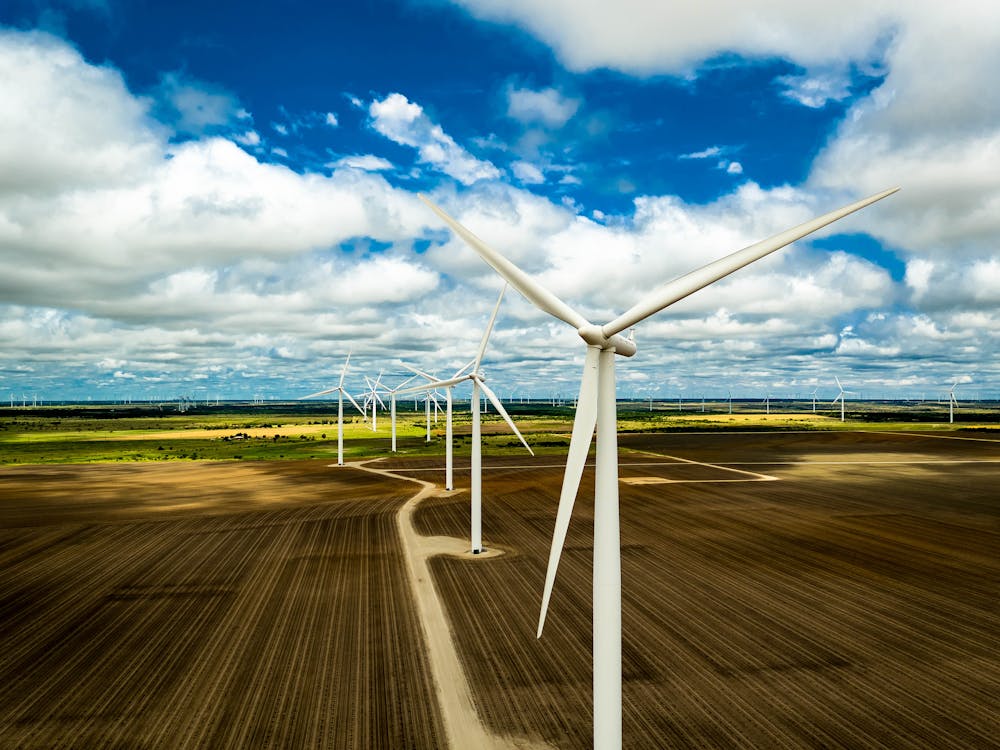
My research focuses on the economics of renewable energy. To demonstrate feasibility and estimate cost of renewable electricity systems, researchers use computer models that calculate potential production from different technologies at each point in time, based on changing weather conditions. A model reveals which combination of electricity sources and energy storage systems has the lowest cost while always meeting demand.
Many studies demonstrate that fully renewable electric grids are feasible in the United States, Europe, Australia and elsewhere. My colleagues and I recently completed a small-scale study on the island-nation of Mauritius. Islands are attractive places for initial renewable transitions because of their small scale, relative simplicity and dependence on imported fuels.
There are a number of ways to make renewable electricity: hydro, wind, solar photovoltaics, geothermal and burning various forms of biomass (plant matter), besides improving efficiency to use less energy. These are mature technologies with known costs.
Other possibilities include wave, tidal and concentrating solar power, where reflectors focus solar rays to produce power. While these may be used in the future, the need to address climate change is urgent, and in my estimation, the mature technologies suffice.
Opinions on nuclear energy run strong, which is another conversation. But models show that the United States does not need nuclear energy to retire fossil fuels.
The grid of the future
Renewable energy systems are location-specific: The best system depends on a location’s resources (is it windy?), its temporal pattern (how often is it not windy?) and availability of complementary sources (is there hydropower for backup?). Despite this location sensitivity, studies in disparate places are finding similar results.
Having a diversity of renewable sources can reduce costs. In particular, solar and wind are complementary if the sunny season is not the windy season; models find that a combination of both is typically less expensive than either alone.
For most technologies, larger scale reduces cost. For example, in the United States, large-scale solar farms can be more than 1,000 times larger than residential rooftop systems and about half the cost. To minimize cost, we build large systems.

Because solar and wind conditions vary across the landscape, system costs fall as a production area grows, so there needs to be a robust electric grid to move electricity from places where there is supply to places of demand. We also need more electricity for applications like transportation that currently use fossil fuels. This means the grid must grow.
Studies show that running an electric grid with variable renewable energy will include not using, or dumping, some energy at times, a strategy that reduces cost compared to always storing surplus energy.
Still, some form of electricity storage is needed. Batteries work well for smoothing short-term fluctuations, but for storing energy for many hours or days, pumped hydroelectric storage is less expensive. Pumped hydro uses any extra energy in the grid to pump water uphill, and when energy is needed, the water runs back down to generate power in a turbine. The United States has some existing examples and many feasible locations. With grid expansion, storage may be located at a distance from users.
Hydroelectricity and biomass power are available on demand, so having these in a renewable electric grid shrinks the energy storage need and reduces cost. Both have environmental effects that must be managed.
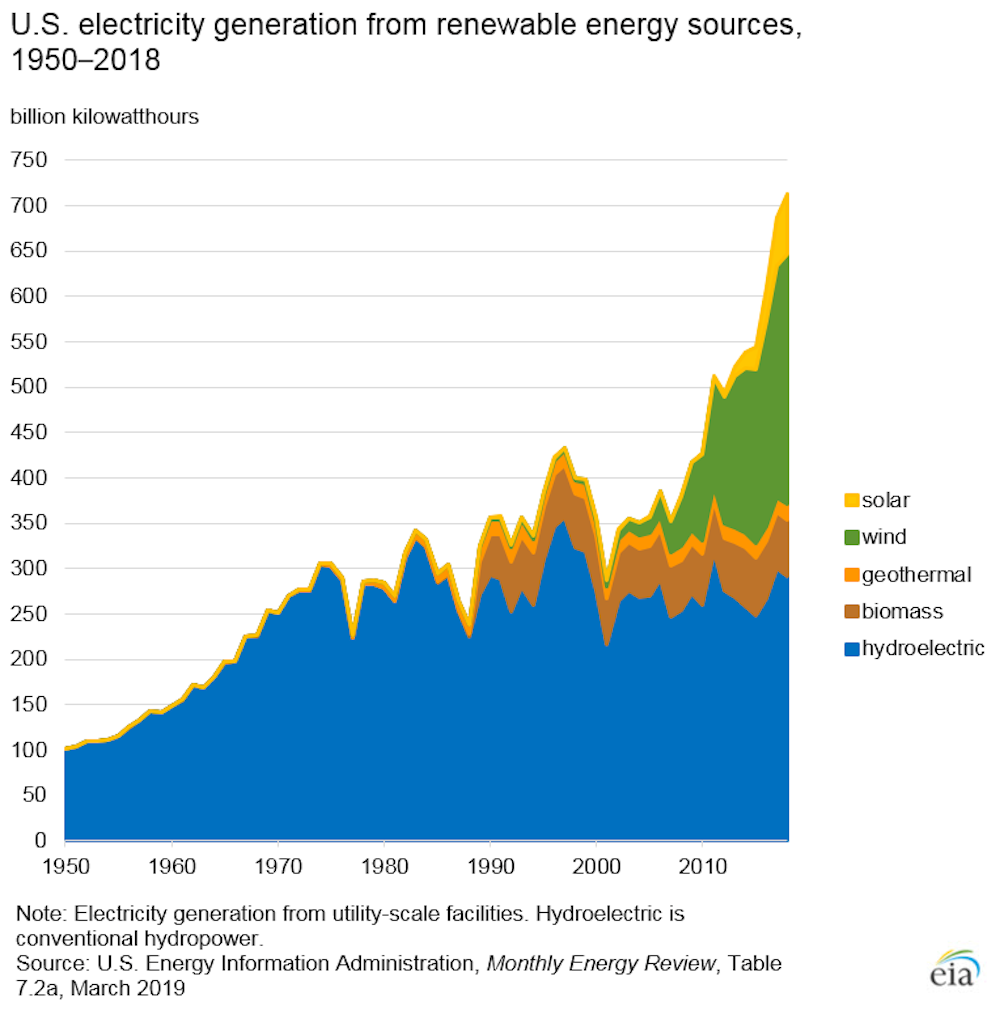
Hydropower can alter local ecosystems. Burning biomass emits carbon dioxide, but a study I worked on shows that biomass emissions are reversible and are clearly carbon-preferable to fossil-fuel emissions. Sustainability also depends critically on management of biomass fields and forests; the human track record on this has not been stellar.
Renewable energy systems require land. A U.S. study shows that supplying all electricity from wind, water and solar would need 0.42% of land area, plus 1.6% of land area for space between wind turbines. Biomass energy requires much more land than wind or solar, so biomass must be a small part of the renewable energy solution.
Real barriers are political and cultural
A future renewable electricity grid with associated electrification may or may not reduce energy costs. But avoiding the worst effects of climate change means quitting fossil fuels, whether or not this saves money. Still, the renewable transition will be faster and politically easier if it is less expensive.
In Mauritius, our study finds renewable electricity costs to be similar to present costs there, based on current capital costs for renewable energy. Some studies also find costs for future renewable electricity to be lower than present fossil-fuel costs, in the likely event that costs fall as we build more renewable energy systems and get better at doing it.
And that’s it, from a technical perspective. A combination of renewable sources and energy storage – the specific combination depending on local conditions and preferences – can supply all the electricity needed at an affordable price, and will reduce air pollution to boot.
But government policies are needed to make a transition to renewable energy. Climate change is an external cost – borne by society rather than by energy producers – so market forces alone will not make the transition. Besides putting a price on carbon (perhaps with dividends returned to the public), government could make it easier to build the needed infrastructure. And public support is needed: For example, public acceptance of transmission lines to move electricity from the windy Great Plains to city centers is another challenge for an all-renewable grid.
A project on the scale of transforming the energy system will create jobs – many jobs – which is perhaps the economic measure of most importance to the citizenry.
Research from me and others shows that fully renewable electric grids are feasible with current technology at current prices; barriers to using renewable electricity are more political and cultural than technological or economic.
[ Like what you’ve read? Want more? Sign up for The Conversation’s daily newsletter. ]
David Timmons, Associate Professor of Economics, University of Massachusetts Boston
This article is republished from The Conversation under a Creative Commons license. Read the original article.

Thirty years ago, on Aug. 25, 1989, NASA's Voyager 2 spacecraft made a close flyby of Neptune, giving humanity its first close-up of our solar system's eighth planet.
Marking the end of the Voyager mission's Grand Tour of the solar system's four giant planets – Jupiter, Saturn, Uranus and Neptune – that first was also a last: No other spacecraft has visited Neptune since.
"The Voyager planetary program really was an opportunity to show the public what science is all about," said Ed Stone, a professor of physics at Caltech and Voyager's project scientist since 1975. "Every day we learned something new."
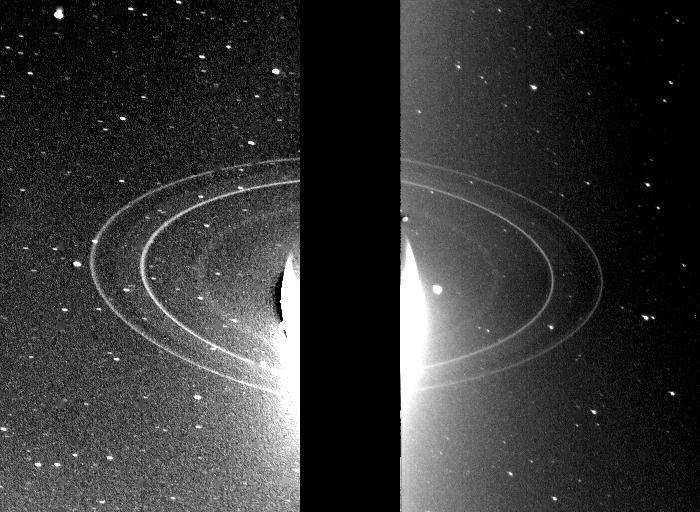
Wrapped in teal- and cobalt-colored bands of clouds, the planet that Voyager 2 revealed looked like a blue-hued sibling to Jupiter and Saturn, the blue indicating the presence of methane. A massive, slate-colored storm was dubbed the "Great Dark Spot," similar to Jupiter's Great Red Spot. Six new moons and four rings were discovered.
During the encounter, the engineering team carefully changed the probe's direction and speed so that it could do a close flyby of the planet's largest moon, Triton.
The flyby showed evidence of geologically young surfaces and active geysers spewing material skyward. This indicated that Triton was not simply a solid ball of ice, even though it had the lowest surface temperature of any natural body observed by Voyager: minus 391 degrees Fahrenheit (minus 235 degrees Celsius).
The conclusion of the Neptune flyby marked the beginning of the Voyager Interstellar Mission, which continues today, 42 years after launch. Voyager 2 and its twin, Voyager 1 (which had also flown by Jupiter and Saturn), continue to send back dispatches from the outer reaches of our solar system. At the time of the Neptune encounter, Voyager 2 was about 2.9 billion miles (4.7 billion kilometers) from Earth; today it is 11 billion miles (18 billion kilometers) from us. The faster-moving Voyager 1 is 13 billion miles (21 billion kilometers) from Earth.

Getting there
By the time Voyager 2 reached Neptune, the Voyager mission team had completed five planetary encounters. But the big blue planet still posed unique challenges.
About 30 times farther from the Sun than Earth is, the icy giant receives only about 0.001 times the amount of sunlight that Earth does. In such low light, Voyager 2's camera required longer exposures to get quality images. But because the spacecraft would reach a maximum speed of about 60,000 mph (90,000 kph) relative to Earth, a long exposure time would make the image blurry. (Imagine trying to take a picture of a roadside sign from the window of a speeding car.)
So the team programmed Voyager 2's thrusters to fire gently during the close approach, rotating the spacecraft to keep the camera focused on its target without interrupting the spacecraft's overall speed and direction.
The probe's great distance also meant that by the time radio signals from Voyager 2 reached Earth, they were weaker than those of other flybys. But the spacecraft had the advantage of time: The Voyagers communicate with Earth via the Deep Space Network, or DSN, which utilizes radio antennas at sites in Madrid, Spain; Canberra, Australia; and Goldstone, California.
During Voyager 2's Uranus encounter in 1986, the three largest DSN antennas were 64-meters (210 feet) wide.
To assist with the Neptune encounter, the DSN expanded the dishes to 70 meters (230 feet). They also included nearby non-DSN antennas to collect data, including another 64-meter (210 feet) dish in Parkes, Australia, and multiple 25-meter (82 feet) antennas at the Very Large Array in New Mexico.
The effort ensured that engineers could hear Voyager loud and clear. It also increased how much data could be sent back to Earth in a given period, enabling the spacecraft to send back more pictures from the flyby.
Being there
In the week leading up to that August 1989 close encounter, the atmosphere was electric at NASA's Jet Propulsion Laboratory in Pasadena, California, which manages the Voyager mission. As images taken by Voyager 2 during its Neptune approach made the four-hour journey to Earth, Voyager team members would crowd around computer monitors around the Lab to see.
"One of the things that made the Voyager planetary encounters different from missions today is that there was no internet that would have allowed the whole team and the whole world to see the pictures at the same time," Stone said. "The images were available in real time at a limited number of locations."
But the team was committed to giving the public updates as quickly as possible, so from Aug. 21 to Aug. 29, they would share their discoveries with the world during daily press conferences. On Aug. 24, a program called "Voyager All Night" broadcast regular updates from the probe's closest encounter with the planet, which took place at 4 a.m. GMT (9 p.m. in California on Aug. 24).
The next morning, Vice President Dan Quayle visited the Lab to commend the Voyager team. That night, Chuck Berry, whose song "Johnny B. Goode" was included on the Golden Record that flew with both Voyagers, played at JPL's celebration of the feat.
Of course, the Voyagers' achievements extend far beyond that historic week three decades ago. Both probes have now entered interstellar space after exiting the heliosphere — the protective bubble around the planets created by a high-speed flow of particles and magnetic fields spewed outward by our Sun.
They are reporting back to Earth on the "weather" and conditions from this region filled with the debris from stars that exploded elsewhere in our galaxy. They have taken humanity's first tenuous step into the cosmic ocean where no other operating probes have flown.
Voyager data also complement other missions, including NASA's Interstellar Boundary Explorer (IBEX), which is remotely sensing that boundary where particles from our Sun collide with material from the rest of the galaxy. And NASA is preparing the Interstellar Mapping and Acceleration Probe (IMAP), due to launch in 2024, to capitalize on Voyager observations.
The Voyagers send their findings back to DSN antennas with 13-watt transmitters — about enough power to run a refrigerator light bulb.
"Every day they travel somewhere that human probes have never been before," said Stone. "Forty-two years after launch, and they're still exploring."
For more information about the Voyager mission visit https://voyager.jpl.nasa.gov/.

Firefighters, police and animal control officials safely evacuate animals from Clearlake kennel fire
The fire occurred in a mobile home and a kennel in the 2100 block of Ogulin Canyon Road. The initial dispatch took place just after 2:45 a.m. Friday, with firefighting resources coming from Lake County Fire, Cal Fire and Northshore Fire, as Lake County News has reported.
Lake County Fire Chief Willie Sapeta said a total of seven engines, two water tenders – due to lack of water supply – along with two medic units and three company officers responded.
“It went real well,” he said.
Initial reports from the scene said the fire was burning a mobile home and had started into the wildland. Firefighters arriving on the scene started rescuing the animals.
Sapeta said the people in the mobile home had evacuated by the time firefighters arrived.
He said the kennel had an office building at the front that was gutted, while the kennel area itself was not enclosed. Sapeta said the animals were able to move away from the fire, and not being in a building prevented them from suffering from the smoke or heat.
Reports from the scene indicated the mobile home burned down. Sapeta said they were able to save a majority of the kennel structure.
Sapeta said some power lines fell into trees and Pacific Gas and Electric responded to deenergize them.
He said there were no injuries to personnel or animals, and investigators are continuing to try to determine cause and origin.
The Clearlake Police Department, Clearlake Animal Control, Lake County Animal Care and Control and its Lake Evacuation and Animal Protection team responded, and were instrumental in helping evacuate the dogs, cats, pigs and goats from the scene, Sapeta said.
Lake County Animal Care and Control Director Jonathan Armas told Lake County News that his team responded and arrived close to 4 a.m.
He said Animal Care and Control and LEAP had four people on scene during the event, and the regularly scheduled shelter staff assisted during intake and care.
“All animals have been brought to our shelter in Lakeport. Some animals have already been picked up by their owners and others we have been in contact to get them home,” Armas said Friday afternoon.
He confirmed there were no animals killed or burned during the fire. Only one dog suffered injuries requiring veterinarian medical attention, and that was due to two other dogs attacking it. Armas said Dr. Debi Sally examined the injured dog at the scene and then it was transferred to Wasson Memorial.
“He is back at our shelter now where he should make a full recovery. All the other animals are doing great and a few had some little cuts but nothing substantial,” Armas said.
Armas said the final animal count was 19 dogs, two cats, four kittens, two pigs and three goats.
He thanked all of the agencies involved, as well as Dr. Sally and Wasson Memorial Veterinary Clinic. “We also want to thank the rescues Coppers Dream and Bones for their help in getting our animals to create room for the displaced animals from the fire. We also saw a higher number of public looking at our animals for adoption and want to thank the community for coming to help as well.”
This was the second animal rescue for local officials in Clearlake in two days.
Early Thursday, a black bear was found in a tree in the area of Hill and West 40th. The effort to relocate the bear involved the California Department of Fish and Wildlife, Clearlake Police Department, Lake County Fire, the US Department of Fish and Wildlife and K&R Tree Service.
“It went off very, very well,” said Sapeta, noting that it was cool how all of the resources pulled together.
Sapeta said firefighters were ready to do a roof rescue rigging system to safely get the bear out of the tree, but after being hit with a tranquilizer dart it fell out of the tree, hitting an embankment on the way down, which helped break its fall.
He said wildlife biologists treated the bear and then relocated it. The bear later was reported to be fine.
“We were joking around, 'who’s going to start the IV,'” Sapeta said.
Regarding the bear, Sapeta added, “That’s a first in my career,” noting that he has dealt with bobcats and mountain lions, and years ago was involved in a rigging system for a horse rescue.
Email Elizabeth Larson at
The fire at 6101 Old Highway 53 in Clearlake was reported shortly after 7 p.m.
Lake County Fire and Cal Fire responded, finding the structure had caught nearby wildland on fire when they had arrived.
Within about 15 minutes, the wildland fire was reported to have been stopped, but radio reports indicated there were still concerns about the potential for spotting from the structure fire.
By 7:20 p.m., the structure fire was reported to have been contained, with firefighters following up with a few hours of overhaul.
The Clearlake Police Department closed Old Highway 53 from Crawford Avenue to the Galaxy Resort while the firefighting effort took place.
Just after 12:20 a.m. Saturday, a fire was once again reported at the address, according to radio reports.
Firefighters found a small rekindle of the fire in the roof area of the structure and quickly extinguished it, based on reports from the scene.
Email Elizabeth Larson at