 How to resolve AdBlock issue?
News
Dogs available for adoption this week include mixes of Cane Corso mastiff, Catahoula Leopard Dog, Chihuahua, Labrador Retriever, pit bull, Shiba Inu and wirehaired terrier.
Dogs that are adopted from Lake County Animal Care and Control are either neutered or spayed, microchipped and, if old enough, given a rabies shot and county license before being released to their new owner. License fees do not apply to residents of the cities of Lakeport or Clearlake.
If you're looking for a new companion, visit the shelter. There are many great pets hoping you'll choose them.
The following dogs at the Lake County Animal Care and Control shelter have been cleared for adoption (additional dogs on the animal control Web site not listed are still “on hold”).

Female Chihuahua-terrier mix
This female Chihuahua-terrier mix has a short tan and white coat.
She is in kennel No. 4, ID No. 12885.

‘Nova’
“Nova” is a female Cane Corso mastiff with a short black coat.
She is in kennel No. 17, ID No. 6579.

‘Koda’
“Koda” is a male pit bull terrier with a short red coat.
He already has been neutered.
He’s in kennel No. 18, ID No. 12609.

Male pit bull terrier
This male pit bull terrier has a short gray and white coat.
He is in kennel No. 20, ID No. 12744.
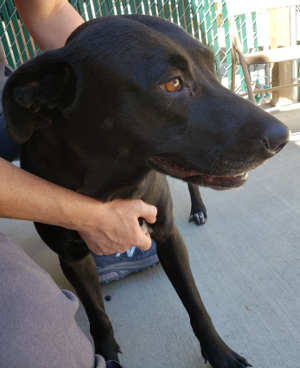
Female Labrador Retriever
This female Labrador Retriever has a short black.
She is in kennel No. 23, ID No. 12697.

‘Beau’
“Beau” is a male Catahoula Leopard Dog with a blue merle coat.
He’s in kennel No. 24, ID No. 12677.

‘Pengen’
“Pengen” is a female Shiba Inu with a medium-length red coat.
She already has been spayed.
She’s in kennel No. 25, ID No. 12776.

‘Cash’
“Cash” is a male pit bull terrier mix with a short black and white coat.
He has been marked as urgent because he has been at the shelter since June.
Shelter staff said Cash does well with others, loves people and walks well on a leash.
He has been neutered.
He’s in kennel No. 27, ID No. 12413.

Female wirehaired terrier
This female wirehaired terrier has a coarse brown and black coat.
She is in kennel No. 31, ID No. 12771.
Lake County Animal Care and Control is located at 4949 Helbush in Lakeport, next to the Hill Road Correctional Facility.
Office hours are Monday through Friday, 11 a.m. to 5 p.m., and 11 a.m. to 3 p.m., Saturday. The shelter is open from 11 a.m. to 4 p.m., Monday through Friday and on Saturday from 11 a.m. to 3 p.m.
Visit the shelter online at http://www.co.lake.ca.us/Government/Directory/Animal_Care_And_Control.htm .
For more information call Lake County Animal Care and Control at 707-263-0278.
Email Elizabeth Larson at

Just next door, cosmologically speaking, is a planet almost exactly like Earth. It’s about the same size, is made of about the same stuff and formed around the same star.
To an alien astronomer light years away, observing the solar system through a telescope, it would be virtually indistinguishable from our own planet. But to know the surface conditions of Venus – the temperature of a self-cleaning oven, and an atmosphere saturated with carbon dioxide with sulfuric acid clouds – is to know that it’s anything but Earth-like.
So how is it that two planets so similar in position, formation and composition can end up so different? That’s a question that preoccupies an ever-growing number of planetary scientists, and motivates numerous proposed Venus exploration efforts. If scientists can understand why Venus turned out the way it did, we’ll have a better understanding of whether an Earth-like planet is the rule – or the exception.
I’m a planetary scientist, and I’m fascinated by how other worlds came to be. I’m particularly interested in Venus, because it offers us a glimpse of a world that once might not have been so different from our own.
A once-blue Venus?
The current scientific view of Venus holds that, at some point in the past, the planet had much more water than its bone-dry atmosphere suggests today – perhaps even oceans. But as the Sun grew hotter and brighter (a natural consequence of aging), surface temperatures rose on Venus, eventually vaporizing any oceans and seas.
With ever more water vapor in the atmosphere, the planet entered a runaway greenhouse condition from which it couldn’t recover. Whether Earth-style plate tectonics (where the outer layer of the planet is broken into large, mobile pieces) ever operated on Venus is unknown. Water is critical for plate tectonics to operate, and a runaway greenhouse effect would effectively shut down that process had it operated there.
But the ending of plate tectonics wouldn’t have spelled the end of geological activity: The planet’s considerable internal heat continued to produce magma, which poured out as voluminous lava flows and resurfaced most of the planet. Indeed, the average surface age of Venus is around 700 million years – very old, certainly, but much younger than the multi-billion-year-old surfaces of Mars, Mercury or the Moon.


The exploration of Planet 2
The Venus-as-a-wet-world view is just a hypothesis: Planetary scientists don’t know what caused Venus to differ so much from Earth, nor even if the two planets really did start off with the same conditions. Humans know less about Venus than we do about the other inner solar system planets, largely because the planet poses several unique challenges to its exploration.
For example, radar is needed to pierce the opaque, sulfuric acid clouds and see the surface. That’s a lot trickier than the readily visible surfaces of the Moon or Mercury. And the high surface temperature – 470 degrees Celsius (880 degrees Fahrenheit) – means that conventional electronics don’t last more than a few hours. That’s a far cry from Mars, where rovers can operate for more than a decade. In part because of the heat, acidity and obscured surface, then, Venus hasn’t enjoyed a sustained program of exploration over the past couple of decades.

That said, there have been two dedicated Venus missions in the 21st century: the European Space Agency’s Venus Express, which operated from 2006 to 2014, and the Japan Aerospace Exploration Agency’s Akatsuki spacecraft currently in orbit .
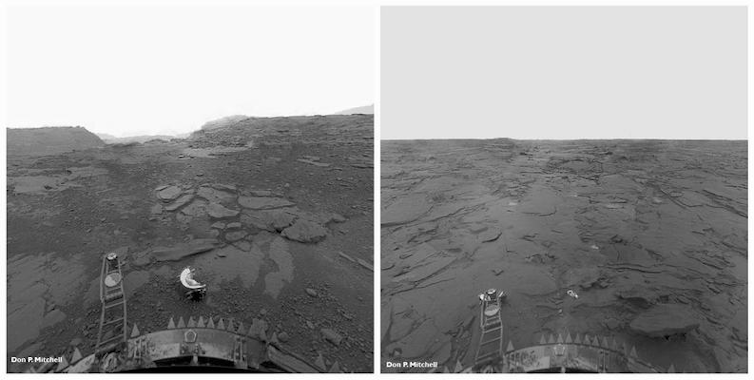
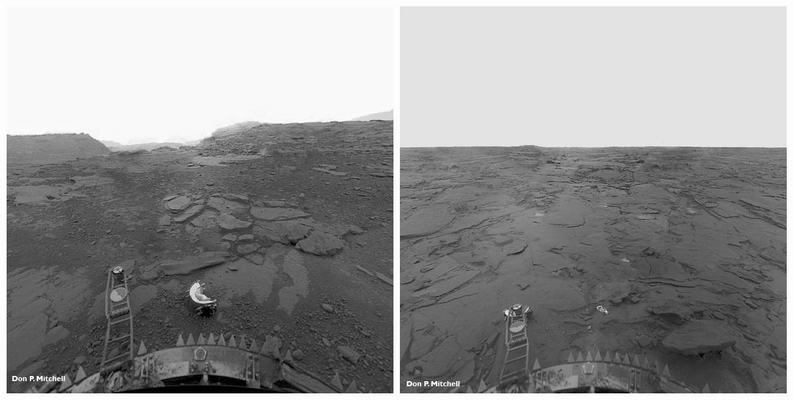
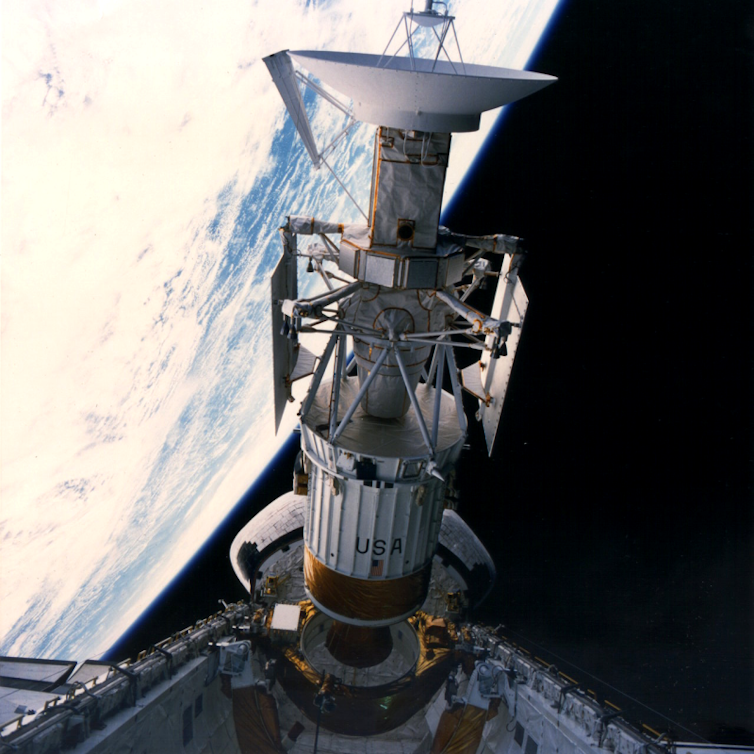
Humans haven’t always ignored Venus. It was once the darling of planetary exploration: between the 1960s and 1980s, some 35 missions were dispatched to the second planet. The NASA Mariner 2 mission was the first spacecraft to successfully carry out a planetary encounter when it flew past Venus in 1962. The first images returned from the surface of another world were sent from the Soviet Venera 9 lander after it touched down in 1975. And the Venera 13 lander was the first spacecraft to return sounds from the surface of another world. But the last mission NASA launched to Venus was Magellan in 1989. That spacecraft imaged almost the entire surface with radar before its planned demise in the planet’s atmosphere in 1994.
Back to Venus?
In the last few years, several NASA Venus missions have been proposed. The most recent planetary mission that NASA chose is a nuclear-powered craft called Dragonfly, destined for Saturn’s moon Titan. However, one proposal to measure the composition of the Venus surface was selected for further technology development.
Other missions being considered include one by the ESA to map the surface at high resolution, and a Russian plan to build on its legacy as the only country to successfully put a lander on Venus’ surface.
Some 30 years after NASA set course for our hellish neighbor, the future of Venus exploration looks promising. But a single mission – a radar orbiter or even a long-lived lander – won’t solve all the outstanding mysteries.
Rather, a sustained program of exploration is needed to bring our knowledge of Venus to where we understand it as well as Mars or the Moon. That will take time and money, but I believe it’s worth it. If we can understand why and when Venus came to be the way it is, we’ll have a better grasp of how an Earth-size world can evolve when it’s close to its star. And, under an ever-brightening Sun, Venus may even help us understand the fate of Earth itself.
[ You’re smart and curious about the world. So are The Conversation’s authors and editors. You can read us daily by subscribing to our newsletter. ]
Paul K. Byrne, Assistant Professor of Planetary Geology, North Carolina State University
This article is republished from The Conversation under a Creative Commons license. Read the original article.
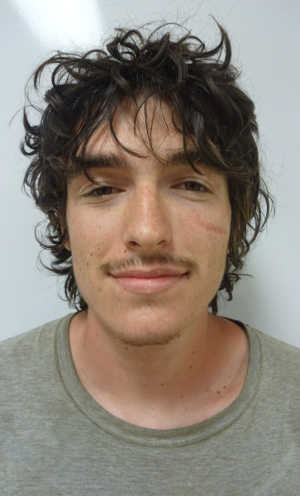
LAKEPORT, Calif. – A man who authorities said bludgeoned his traveling companion to death at a Humboldt County campground before dumping the body in Lake County has made his first appearance in Lake County Superior Court.
Mavrick William Fisher, 21, who has connections to both Elko, Nevada, and Riverside, was arraigned on Friday afternoon in Judge J. David Markham’s courtroom in Lakeport.
Fisher is charged with the murder of 25-year-old Grant David Whitaker of Mackinaw, Illinois, during an altercation that investigators say occurred in Humboldt County.
The two men, both of them deaf, were reported to be traveling cross country together to California when a disagreement occurred, leading to the fatal confrontation, according to District Attorney Susan Krones.
Authorities say Fisher later brought the body to Lake County, where it was discovered on Monday near Upper Lake, as Lake County News has reported.
Earlier this week, Fisher was taken into custody by authorities in Rosarito, Mexico, where he fled after Whitaker’s murder. They assisted with getting him back to the United States, and he was booked into the Lake County jail on Wednesday afternoon.
Krones, who appeared in court to handle the case on Friday, has charged Fisher with murder; assault with a deadly weapon, with the weapon in this case being a rock, and a special allegation of inflicting great bodily injury; willfully and maliciously removing and keeping possession of the 2011 Chevrolet Impala that Whitaker had been driving and which was on loan from his grandmother in Illinois; and unlawfully taking the car after the murder.
While the murder is believed to have occurred at Richardson Grove State Park in Humboldt County, Krones told Lake County News that Lake County has jurisdiction over the case because Whitaker’s body was located here.
She cited California Penal Code section 790, which gives jurisdiction for a murder or manslaughter case to “the county where the fatal injury was inflicted or in the county in which the injured party died or in the county in which his or her body was found.”
Krones said she has spoken to Humboldt County District Attorney Maggie Fleming, who has asked Krones to handle the case in Lake County. At the same time, both Lake County and Humboldt County investigators are working the case.
On Friday, the court assigned Tom Feimer, a defense attorney with the county’s indigent defense contract, to represent Fisher.
Fisher, wearing a jail jumpsuit and sitting in the jury box along with several other individuals awaiting arraignment, also was provided the assistance of an interpreter at Friday’s court appearance.
Outside the courtroom, two women – one older, one younger with a baby – were waving and gesturing at Fisher and holding up the baby so it could be seen through the courtroom door window. A bailiff who admitted them to the courtroom warned them against trying to communicate with Fisher, a normal admonishment for family members in attendance at court proceedings.
When Markham arrived, he took particular care to ensure that the interpreter had the assistance she needed and to ask if Fisher could understand him and the proceedings as they took place.
Markham then informed Fisher of his rights and went over the case, and asked Fisher if he understood.
“I’m just wondering when I can call my witnesses,” Fisher said through his interpreter, with Markham explaining that they weren’t yet at that point.
Feimer then asked the judge to read the full contents of the charging document, which is just over two pages in length, with Markham did.
The complaint against Fisher alleges that he committed the murder of Whitaker and the associated crimes on Aug. 20.
Krones asked Markham to continue to keep Fisher in custody on a no-bail hold, adding there is a request to increase bail due to factors include him having previously fled to Mexico.
“We believe he is an extreme flight risk,” she said, noting he has no real ties to Lake County or even to California and adding that the murder was “brutal.”
“We believe he is an extreme danger to the public if released,” she said.
Feimer reserved argument on Friday, instead asking for a review of Fisher’s bail to be set to take place at his next court appearance, along with the entry of his plea.
Markham set Fisher’s next court appearance for 8:15 a.m. Monday, Sept. 9, in Department 3.
Krones said Fisher appears to not have had a previous criminal record.
What is known so far
Krones told Lake County News that the investigation is still very much under way, and a lot of the details aren’t entirely clear yet.
What’s known so far is that Fisher and Whitaker drove west in the 2011 Chevrolet Impala loaned to Whitaker by his grandmother.
Krones said she didn’t have information about how the men came to know each other.
“I really don’t know if they had known each other growing up,” she said, adding that they had a connection in the deaf community.
Part of their interest in coming to California was to create a “deaf farming community,” she said, with the two visiting locations around the state.
Krones did not know all of the locations where they may have visited, although she said they may have been in Trinity County at some point.
Along the way, Krones said there was a disagreement. “It is unclear at this point when that disagreement started.”
She said Whitaker told Fisher that they were not on the same page about farming and they were going to separate.
Eventually, the trail led them to Richardson Grove State Park in southern Humboldt County. Authorities believe that it was there that early on the morning of Monday, Aug. 20, Fisher killed Whitaker with a rock. Krones could not say if the murder was part of a physical fight between the two or if Whitaker was hit while he was still resting.
An autopsy conducted earlier this week found that Whitaker died of blunt force trauma to the head, the Lake County Sheriff’s Office reported.
Krones said it’s unclear if the rock used to kill Whitaker has been recovered as part of the investigation.
Following the killing, Fisher left the campground and headed south to Lake County, where he knows people. It was at a property in the 7500 block of Scotts Valley Road – which Krones said may be owned by acquaintances of Fisher – that Whitaker’s body was dumped. The exact timeframe has so far not been explained.
After not hearing from Whitaker, on the morning of Saturday, Aug. 24, Whitaker’s grandmother filed a missing person’s report about her grandson in Tazewell County, Illinois, Krones said.
On the same day, the Lake County Sheriff’s Office said it received information that the Chevy Impala Whitaker had been driving was near a Dollar General store in Lake County, with deputies finding the vehicle at the Clearlake Oaks Dollar General. It was impounded and secured for processing.
After the murder, Fisher made his way to Mexico, along the way sending out emails to friends about what was going on. “We’re obviously going to analyze those,” Krones said.
Authorities received information on Sunday, Aug. 25, that Fisher had admitted to killing Whitaker and the whereabouts of Whitaker’s body.
On Monday, Aug. 26, the Sheriff’s Major Crimes Unit served a search warrant that led to the discovery of human remains in a remote area near the 7500 block of Scott’s Valley Road. That same day, the sheriff’s office received information that Fisher had been contacted in Rosarito, Mexico, by law enforcement who helped take him into custody and return him to Lake County.
An autopsy on Wednesday, Aug. 28, confirmed the body found near Upper Lake was Whitaker’s and concluded that he had been killed by a blow to the head, authorities said.
Krones said the information about Fisher admitting to killing Whitaker has come from other sources, not Fisher himself. She added that Fisher has made statements to law enforcement that are “varying.”
She said investigators are not sure how truthful Fisher was in the statements he made to either his friends of law enforcement.
There are “a lot of witnesses we need to talk to still,” she said.
Both Krones and Sheriff Brian Martin said they have received a large amount of interest in the story from the deaf community nationwide.
Anyone with information regarding this investigation is asked to contact Det. Richard Kreutzer at 707-262-4233 or
Email Elizabeth Larson at

LAKEPORT, Calif. – The Lake County Fair is promising a busy weekend, with the annual Junior Livestock Auction and grandstand events, plus music and a colorful midway.
The fair runs until Sunday at 11 p.m.
At noon on Saturday the Junior Livestock Auction will take place at the Baldwin Pavilion. The event is the culmination for many 4-H and FFA members of a year’s worth of work raising an animal.
At 7 p.m. Saturday the annual Destruction Derby will take place at the grandstand.
Sunday is Fiesta Latina Day, with features including the 4-H and FFA Award ceremony, Baldwin Pavilion at 5 p.m. and the boat races at the grandstand at 7 p.m.
Fair hours are 4 to 11 p.m. Friday, 11 a.m. to 11 p.m. Saturday and Sunday.
Regular admission prices are $12 for adults, $8 for seniors 60 and older, $8 for children ages 6 to 11, and children age 5 and under attend for free.
Tickets can be purchased at the gate or online here.
The full schedule for the remainder of the fair is published below.

SATURDAY, AUG. 31
Carnival Pay-One Price Day; the cost is $35. Purchase tickets in the carnival area.
Buildings close at 10 p.m.; the fair closes at 11 p.m.
Family Oasis in Fiesta Park: A great place for parents to relax with youngsters.
Daily features: Draft horse wagon rides, a climbing wall, Fill-Up the Strolling Balloon Sculptor, Skip Banks the Balloon Man, Magician Ken Garr and Tanna Banana.
Grandstand entertainment
7 p.m.: Destruction Derby, sponsored by Sutter Lakeside Hospital
Junior Livestock Auction
10:30 a.m.: Buyers Registration Brunch
Noon: Junior Livestock Auction, Baldwin Pavilion; major auction sponsor, American AgCredit
Livestock area
6 to 8 p.m.: Goat milking, Mather Barn
Around the grounds
1, 3, 5 and 7 p.m.: Sea Lion Splash, Fiesta Park
Free contests
1 p.m.: Create a Splash-Themed Watercolor, Fritch Hall. No preregistration; just come to Fritch Hall. All materials provided. Ribbon awards for first, second and third place winners.
Live music
11:30 a.m. and 12:45 p.m.: Michael Barrish, country soul, Gazebo Stage
Noon, 2 and 4 p.m.: Clean Sweep, R&B, funk, blues, and rock and jazz, Main Stage
2:30 and 3:45 p.m.: 2 Diamonds, 60s to 90s pop and rock, Gazebo Stage
5:15, 7 and 8:30 p.m.: American Lore, classic rock, Gazebo Stage
7 p.m.: Ranch House, country dance, Main Stage

SUNDAY, SEPT. 1
Carnival Pay-One Price Day; the cost is $35. Purchase tickets in the carnival area.
Buildings close at 10 p.m.; the fair closes at 11 p.m.
Family Oasis in Fiesta Park: A great place for parents to relax with youngsters.
Daily features: Draft horse wagon rides, a climbing wall, Fill-Up the Strolling Balloon Sculptor, Skip Banks the Balloon Man, Magician Ken Garr and Tanna Banana.
Grandstand entertainment
7 p.m.: Boat races, sponsored by Lake County Tribal Health TANF
Special attractions
Fiesta Latina Day, sponsored by Lake County Tribal Health Consortium
Livestock area
5 p.m.: 4-H and FFA Award ceremony, Baldwin Pavilion
Around the grounds
1, 3 and 7 p.m.: Sea Lion Splash, Fiesta Park
Free contests
1 p.m.: Decorate a Splashingly Delicious Cookie, Lewis Hall. No preregistration; just come to Lewis Hall. Participants are provided with all materials. Ribbon awards for first, second and third place winners.
Live music
Noon and 1:15 p.m.: Sara and Cory Cunningham w/Dorian May Trio, jazz trio plus vocals and trombone, Main Stage
12:15 p.m. and 1:30 p.m.: Majide!, trio – standard jazz classics from the Great American Songbook, Gazebo Stage
3 p.m.: Konocti Klogging Kids, clogging, Gazebo Stage
5, 7 and 9 p.m.: Austin & Owens, The NeoFlamenco Duo, Gazebo Stage
Fair closes at 11 p.m. The 2020 Fair takes place Sept. 3 to 6.
Email Elizabeth Larson at
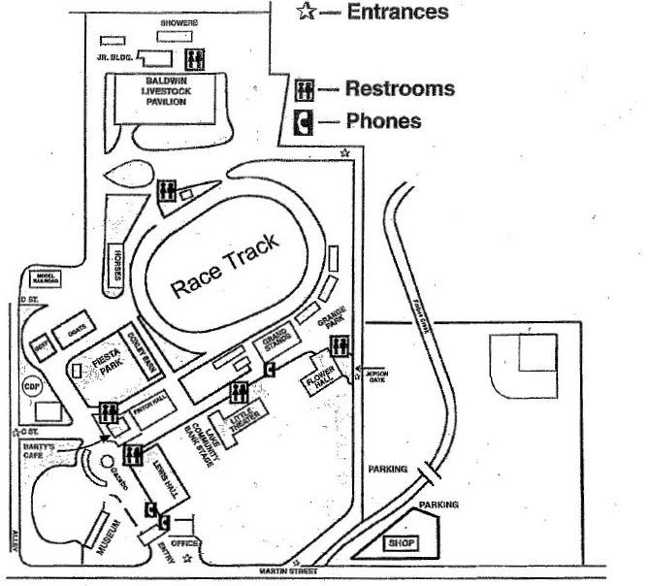
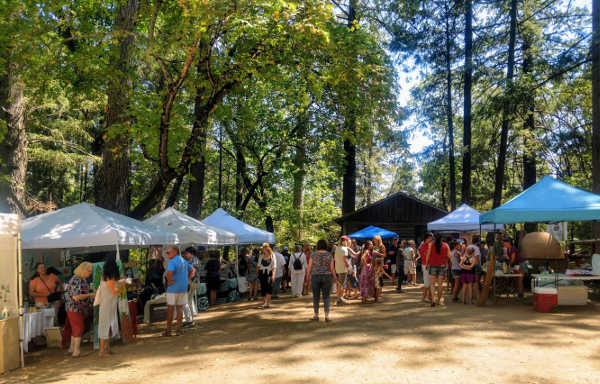
WHISPERING PINES, Calif. – Nearly 1,000 people turned out last Saturday for the inaugural Blackberry COBBler Festival, held among the pines on Cobb Mountain.
Event organizers anticipated that a few hundred locals would come out to enjoy the celebration; however, because it was widely publicized, people drove up from Napa and Sonoma counties, as well as from various corners of the Bay Area.
The designated parking areas along Gifford Springs Road were quickly filled and extra vehicles were pressed into service to shuttle attendees to the Whispering Pines Resort, where the event was held.
The level grounds of the resort were shaded by towering pines and provided cool respite on an otherwise hot day.
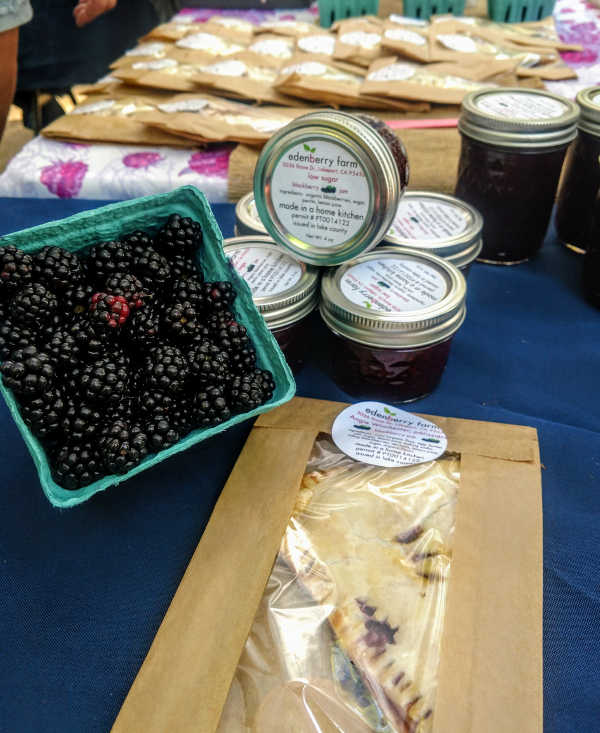
Kelly Stuckey of Cobb was the winner of the homemade blackberry cobbler contest; the judges chose her entry out of the 19 cobblers submitted.
It happens that Stuckey also baked the cobbler sold at the festival by the Cobb Mountain Lions, so those who enjoyed some that day had the privilege of eating blue ribbon cobbler.
Many who were there relaxed at tables while live music played, perhaps enjoying a glass of wine or a barbecue meal provided by the Cobb Mountain Lions Club. Others ambled along paths where local artisans and food purveyors sold their wares.
“The day was amazing and far exceeded our expectations,” said Jessica Pyska, chair of the economic development committee “What’s Up on Cobb?”, which organized the event. “It warmed my heart seeing so many people enjoying the simple pleasures of summer in a place they’d never visited.”
Many attendees had a history of vacationing at the Whispering Pines Resort and came to rekindle memories.
Pyska shared a story about a woman whose family had been vacationing for generations at a cabin there. She wanted to purchase one of the purple t-shirts worn by volunteers.
When learning they weren’t for sale, she said, “Then put me to work!”
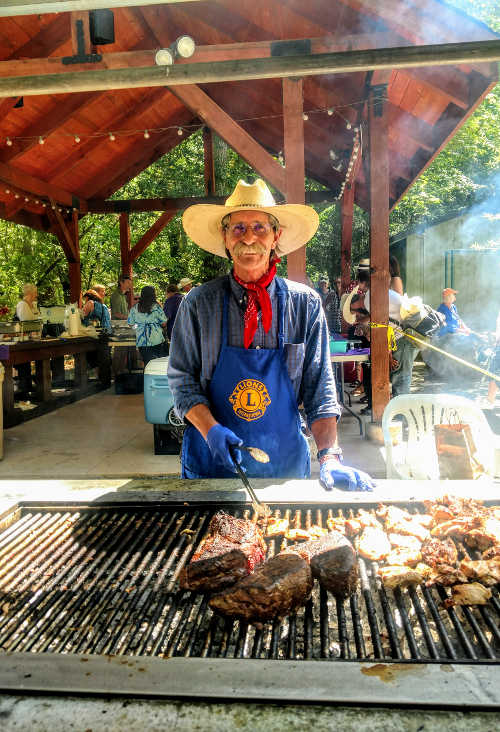
After two hours of helping with parking, she was able to sport proudly a t-shirt of her own.
As one of the musicians said while performing, “The whole point of this event is to bring people back to Cobb.”
The sheer number of people who trekked up Cobb Mountain on Saturday to enjoy blackberry cobbler and festivities among the pines indicates the great success of their goal.
According to Pyska, also vice chair of the Cobb Area Council and a candidate for Fifth District supervisor, the committee is already compiling notes for next year’s festival.
Esther Oertel is a writer and passionate home cook from a family of chefs. She grew up in a restaurant, where she began creating recipes from a young age. She’s taught culinary classes in a variety of venues in Lake County and previously wrote “The Veggie Girl” column for Lake County News. Most recently she’s taught culinary classes at Sur La Table in Santa Rosa, Calif. She lives in Middletown, Calif.

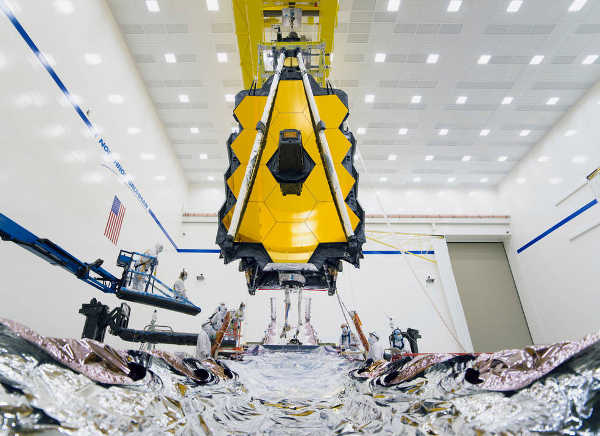
Reaching a major milestone, engineers have successfully connected the two halves of NASA’s James Webb Space Telescope for the first time at Northrop Grumman’s facilities in Redondo Beach, California.
Once it reaches space, NASA's most powerful and complex space telescope will explore the cosmos using infrared light, from planets and moons within our solar system to the most ancient and distant galaxies.
To combine both halves of Webb, engineers carefully lifted the Webb telescope (which includes the mirrors and science instruments) above the already-combined sunshield and spacecraft using a crane.
Team members slowly guided the telescope into place, ensuring that all primary points of contact were perfectly aligned and seated properly.
The observatory has been mechanically connected; next steps will be to electrically connect the halves, and then test the electrical connections.
“The assembly of the telescope and its scientific instruments, sunshield and the spacecraft into one observatory represents an incredible achievement by the entire Webb team,” said Bill Ochs, Webb project manager for NASA Goddard Space Flight Center in Greenbelt, Maryland. “This milestone symbolizes the efforts of thousands of dedicated individuals for over more than 20 years across NASA, the European Space Agency, the Canadian Space Agency, Northrop Grumman, and the rest of our industrial and academic partners.”
Next up for Webb testing, engineers will fully deploy the intricate five-layer sunshield, which is designed to keep Webb's mirrors and scientific instruments cold by blocking infrared light from the Earth, Moon and Sun. The ability of the sunshield to deploy to its correct shape is critical to mission success.
“This is an exciting time to now see all Webb’s parts finally joined together into a single observatory for the very first time,” said Gregory Robinson, the Webb program director at NASA Headquarters in Washington, D.C. “The engineering team has accomplished a huge step forward and soon we will be able to see incredible new views of our amazing universe.”
Both of the telescope’s major components have been tested individually through all of the environments they would encounter during a rocket ride and orbiting mission a million miles away from Earth.
Now that Webb is a fully assembled observatory, it will go through additional environmental and deployment testing to ensure mission success. The spacecraft is scheduled to launch in 2021.
Webb will be the world's premier space science observatory. It will solve mysteries in our solar system, look beyond to distant worlds around other stars, and probe the mysterious structures and origins of our universe and our place in it. Webb is an international project led by NASA with its partners, ESA (European Space Agency), and the Canadian Space Agency.
Thaddeus Cesari works for NASA's Goddard Space Flight Center.