 How to resolve AdBlock issue?
News
Lt. Shannon Barney of the Mendocino County Sheriff’s Office said the body of 81-year-old John Baker of Lake Hughes was discovered on Friday morning.
Barney said that just before 11 p.m. Friday, Aug. 23, the Mendocino County Sheriff's Office was contacted regarding a suspicious vehicle located on Lyme Timber Co. lands, approximately 9 air miles east of the town of Fort Bragg. The area is accessed off of Little Valley Road and the reporting party found the vehicle while cutting firewood.
The reporting party indicated the vehicle appeared stuck alongside the road, on a ditch used to turn runoff water off of the logging road. Barney said the vehicle keys were still inside but no one was around. The area was described as a logging road that crossed the Redwood Creek Drainage.
A deputy responded and found the vehicle, a 2017 burgundy Lincoln MKZ, stuck on the edge of the logging road. Barney said the deputy checked the license number in the state wanted vehicle system to learn it was flagged as belonging to Baker, an "at risk" missing adult.
Baker had been reported missing on Aug. 9 after he failed to return on a trip from Southern Oregon. Barney said Baker’s family last had contact with him on Aug. 8 when he indicated he had returned via Highway 101 as he was fond of Redwood trees.
At that time, Baker said he was in Fort Bragg but trying to find a road back to Interstate 5 so he could return to Southern California. Barney said the family described Baker as suffering the early stages of Alzheimer's disease.
On Aug. 23, deputies checked the vehicle but were unable to locate Baker and the following day a search and rescue incident was started at Baker’s vehicle, Barney said.
Barney said numerous search and rescue teams and resources responded as mutual aid resources were requested due to the extreme terrain and dense forest conditions.
Assisting agencies and organizations including the Lyme Timber Co., Lake County Search and Rescue, Marin County Search and Rescue, Napa County Search and Rescue, San Mateo County Search and Rescue, Contra Costa County Search and Rescue, Bay Area Mountain Rescue Unit, Wilderness Finders Search Dog Teams and California Rescue Dog Association took part in the search, Barney said.
Over the following week a large search was conducted utilizing trained K9 teams, ground teams, and aerial searching.
At around 11:30 a.m. Friday, ground searchers discovered human remains in a small tributary of Redwood Creek. The tributary is very steep and wooded but was approximately 900 feet, by air, from the abandoned vehicle, Barney said.
Search and rescue teams recovered the body and a coroner's investigation was initiated. The remains were positively identified as that of Baker, Barney said.
Barney said Baker’s cause of death is under investigation with a post mortem examination scheduled for Tuesday.
“Despite advances in vehicle technology that act as additional safety measures for drivers and passengers involved in a crash, pedestrians are still just as vulnerable as in years past,” OTS Director Barbara Rooney said.
“Whether we are driving or walking, we are all going places so it is important that we avoid bad habits and put safety first.”
According to a report released this year by the Governors Highway Safety Association, a projected 6,227 pedestrian deaths occurred nationwide last year, the highest number since 1990.
In California, 858 pedestrians were killed in 2017, accounting for nearly 25 percent of all traffic deaths.
It is why the OTS is working with our safety partners, state and local agencies on educating the public about safe roadway habits, regardless of how you get around.
“People should not be afraid of a car hitting them as they cross the street,” Rooney said. “Having said that, it is important that pedestrians are aware of their surroundings and think about how they would want a pedestrian to act if they were the one driving.”
The OTS offers the following tips for drivers and pedestrians to help ensure we all get to where we need to go safely.
Pedestrians
– Cross the street at crosswalks, preferably with a stop sign or signal. Do not cross the street midblock (no jaywalking).
– Make eye contact with drivers.
– Look for cars backing up. Avoid darting between parked cars.
– Wear bright color clothing during the day and use a flashlight at night.
– Do not use your cell phone or wear earbuds while walking.
Drivers
– Avoid distractions such as a cell phone.
– Never drive under the influence of alcohol and/or drugs.
– Watch for pedestrians when backing up.
– Follow the speed limit.
– Yield to pedestrians at crosswalks. Make sure the path is clear before making a turn at an intersection.
The OTS administers funding for traffic safety programs statewide with the goal of reducing crashes that result in deaths, injuries, and economic losses. The OTS is a department under the California State Transportation Agency.
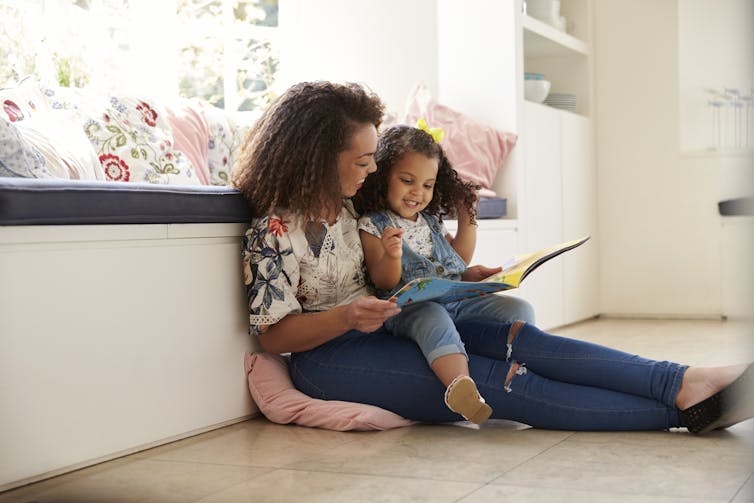
Because I conduct research about reading, parents often ask me the same question: “What can I do to help my child become a better reader?”
I always give them the same advice: “Read with your children. Enjoy books together, and whatever you do, don’t worry about teaching them to read. Leave the teaching to the teachers.”
This reply draws on my research regarding the literacy practices of high-performing teachers, as well as my experiences as a parent, teacher and literacy specialist. Ample evidence indicates that a solid foundation of reading, writing, talking and playing with words fosters a love for books at an early age and leads to later success as a reader.
But what happens when children do not learn to read, or when they struggle with reading? That problem is all too prevalent. Only about a third of all eighth-graders can read at or above grade level.
Successful teachers
I have studied how successful teachers at multiple high-performing urban schools in New York, Ohio, Missouri and Maryland are helping struggling readers dramatically improve their reading fluency. Many are getting children to read passages multiple times.
Teachers and researchers have found that doing this almost always leads to improvements for struggling readers between second grade and the end of high school.
For kids, this strategy is a lot like learning a new song by reading lyrics while singing along with a music video. When children practice reading this way, they listen to and echo a more experienced reader while tracking the print with their eyes and touching the phrases of the book as they read and reread the book together.
By activating the senses of hearing, seeing and touch, this approach makes recognizing familiar words easier and faster, increasing fluency. The strategy works best when it’s repeated regularly – ideally 10-15 minutes per day. Considering the millions of children who don’t read at grade level, it’s very important.
Digging deeper
Psychologist Robert G. Heckelman first identified this method of repeated reading in the 1960s. He encountered an adolescent whose reading level increased by three grades after being tutored using this system. Heckelman repeated the method with 24 middle and high school students who were struggling with reading.
After just 7.5 hours of instruction in what he called Neurological Impress Method, students advanced by an average of two grade levels.
Those findings were later replicated with greater numbers of children, leading to a study published in 2016. In that study, the literacy researchers Chase Young, Timothy Rasinski, and Kathleen Mohr called the method “Read Two Impress.”
This new name reflected a change in the method: Kids had to read each page aloud after their tutors finished reading it to them. In addition to making kids better readers, Read Two Impress also helps them become more confident and spend more time reading.
Empowering families
Yet the Read Two Impress method, until now, has never formally involved a child’s family. Additionally, no studies of this strategy have investigated the impact of using books that reflect student culture and language.
To see if his strategy would be effective as a tool for families to use to improve their children’s reading, I partnered with co-researchers, Joshua Michael and Kris'tina Ackerman. Together, we conducted a study over 10 weeks at a school in a large Northeastern city.
There were some hurdles. For example, the grandmother of a thoughtful and inquisitive child expressed anxiety about her lack of confidence and perceived ability to read. “I’m not much of a reader myself,” she told us during the first training. “I don’t know if I can help my grandchild with reading.”
She, along with 25 second-graders and some of their relatives, participated in five training sessions.
In the final one, the adult participants described how they were teaching this strategy to others. They told us they believed similar opportunities should be broadly available. This in turn prompted us to host an open training for the whole school and a group of teachers-in-training.
This time, the grandmother, once apprehensive, helped facilitate the training. She had gained confidence in her ability to teach this learning strategy to others.
We also found that when families read books that reflected their culture and language, they enjoyed reading together more. In particular, we learned through surveys and focus groups that parents and other guardians took pride in playing a role in helping their kids become better readers.
We will publish the results of the more expansive approach to the strategy, which we call “Read Two Impress Plus,” in an academic journal.
UMBC doctoral students Joshua Michael and Kris'tina Ackerman contributed to the study of Read Two Impress and this article.
[ Like what you’ve read? Want more? Sign up for The Conversation’s daily newsletter. ]
Kindel Turner Nash, Associate Professor of Early Childhood Education, University of Maryland, Baltimore County
This article is republished from The Conversation under a Creative Commons license. Read the original article.
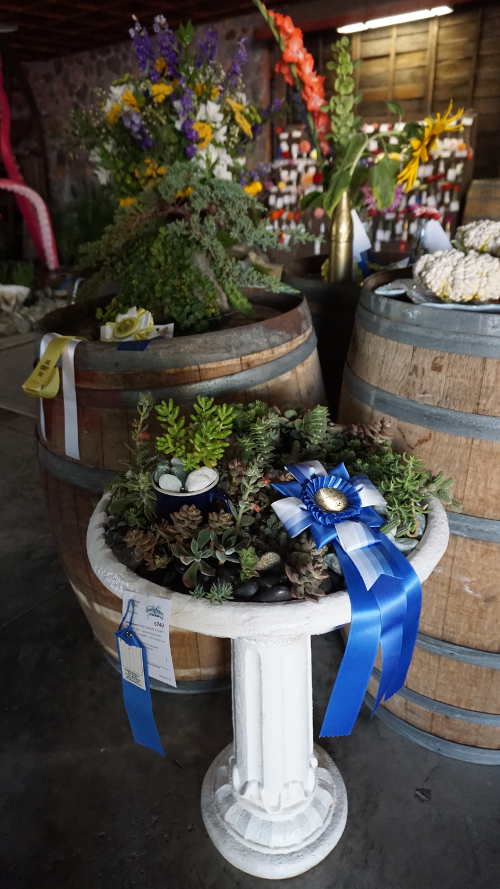
LAKEPORT, Calif. – The Lake County Fair is wrapping up its 2019 run on Sunday with a day full of activities, events and fun.
The fair hours are 11 a.m. until 11 p.m. Sunday.
Sunday is Fiesta Latina Day, with features including the 4-H and FFA Award ceremony, Baldwin Pavilion at 5 p.m. and the boat races at the grandstand at 7 p.m.
There will be a weaving demonstration from 2 to 4 p.m. Sunday in the Clothing and Textile Exhibition in the Little Theater Building.
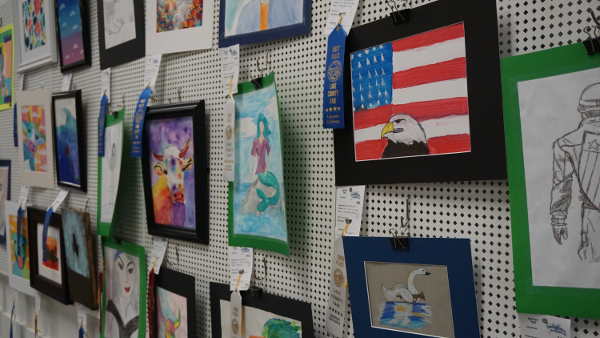
In addition to the textiles in the Little Theater Building, Lewis Hall houses home arts, Fritch Hall features fine arts, and the floral and agriculture displays are in the Garden Building.
Regular admission prices are $12 for adults, $8 for seniors 60 and older, $8 for children ages 6 to 11, and children age 5 and under attend for free.
Tickets can be purchased at the gate or online here.
The full schedule for the last day of the fair is published below.
SUNDAY, SEPT. 1
Carnival Pay-One Price Day; the cost is $35. Purchase tickets in the carnival area.
Buildings close at 10 p.m.; the fair closes at 11 p.m.
Family Oasis in Fiesta Park: A great place for parents to relax with youngsters.
Daily features: Draft horse wagon rides, a climbing wall, Fill-Up the Strolling Balloon Sculptor, Skip Banks the Balloon Man, Magician Ken Garr and Tanna Banana.
Grandstand entertainment
7 p.m.: Boat races, sponsored by Lake County Tribal Health TANF
Special attractions
Fiesta Latina Day, sponsored by Lake County Tribal Health Consortium

Livestock area
5 p.m.: 4-H and FFA Award ceremony, Baldwin Pavilion
Around the grounds
1, 3 and 7 p.m.: Sea Lion Splash, Fiesta Park
Free contests
1 p.m.: Decorate a Splashingly Delicious Cookie, Lewis Hall. No preregistration; just come to Lewis Hall. Participants are provided with all materials. Ribbon awards for first, second and third place winners.
Live music
Noon and 1:15 p.m.: Sara and Cory Cunningham w/Dorian May Trio, jazz trio plus vocals and trombone, Main Stage
12:15 p.m. and 1:30 p.m.: Majide!, trio – standard jazz classics from the Great American Songbook, Gazebo Stage
3 p.m.: Konocti Klogging Kids, clogging, Gazebo Stage
5, 7 and 9 p.m.: Austin & Owens, The NeoFlamenco Duo, Gazebo Stage
Fair closes at 11 p.m. The 2020 Fair takes place Sept. 3 to 6.
Email Elizabeth Larson at
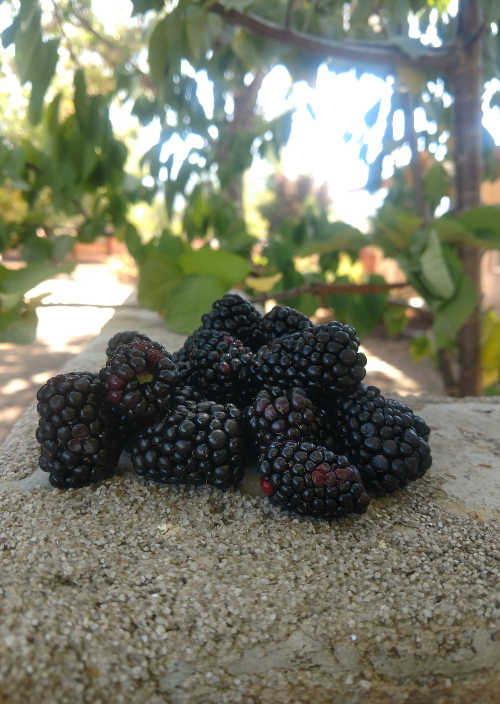
LAKE COUNTY, Calif. – It’s blackberry season! The tumble of wild brambles along roadsides or in creeks offer them in abundance at this time of year.
I spent many a summer day in childhood with friends getting my fill of these sweet berries, with plenty of scratches on my arms from the prickly brambles to show for it. They were the perfect fruit in those days: free and prolific, and the adventurous trekking to find the perfect picking spot was a joyful experience.
What I didn’t realize then was just how much nutrition is packed into those little black jewels.
Blackberries are rich in vitamin C and contain more antioxidants than most fruits and vegetables. They rank second in the effective prevention of oxidation in cells.
In addition, research shows that they inhibit the production and buildup of LDL cholesterol.
As significant as that is, it’s just the short list. Suffice it to say, they’re well worth eating for reasons beyond their flavor.
There are over 375 species of blackberries, and in the U.S. they’re most prevalent in eastern states and those that border the Pacific. They also grow abundantly in the British Isles and throughout Western Europe but are known through most of the temperate and tropical world.
In other words, they’re found on all continents except Antarctica.
Thankfully, our rural region is blessed to be full of them.
One Christmas, a favorite elderly neighbor gifted her friends and family with blackberry jam that she had made. Attached to the jar was a brief story she wrote about the mountain lion tracks she and her husband encountered in the creek bed where they were picking berries.
She ended with this line: “That’s me, risking my life for your morning jam on toast.” I still chuckle when I think of it.
Blackberries are an ancient fruit. The earliest known instance of their consumption by humans is from the naturally preserved 2,500-year-old bog body of a Danish woman. Forensic evidence showed remains of blackberries in her stomach contents.
They’ve not been cultivated long within the scope of human history, probably because of their abundance in the wild. It’s theorized that the advent of agriculture made these berries even more prevalent because of the clearing of forests.
As urbanization increased, wild blackberries became less available to city dwellers, thus fueling an effort from the late 1860s forward, especially in the U.S., to find strains of wild blackberries that would do well in the garden.
Our own Luther Burbank introduced one such variety to the U.S. from Europe: the Himalayan blackberry, which he named the Himalayan Giant for the size of its berries.
It is said that this invasive species has co-mingled with wild blackberries in the Pacific Coast region, so it’s possible that local blackberry enthusiasts have unknowingly consumed them along with native species.
Cultivated blackberries today are not that much different from their wild ancestors, except for the size of the berry, which is larger.
Blackberries ripen in stages on individual branches, so a favorite patch may be visited time and again throughout the season.
Blackberries are ripe when they’re at their darkest (a purple that’s so deep that it’s almost black). It’s said that a red blackberry is a green one, and many of us have been disappointed when we’ve tasted the sourness of blackberries in their red stage.
Once picked, they won’t last long, so use them quickly. They may mold at room temperature, so store them in the fridge, but not for more than three or four days.
If you have a prodigious harvest but aren’t prepared for copious canning or pie-making, it’ll be good news to know that fresh blackberries can be frozen.
To do so, gently cleanse them in cool water and remove any damaged berries or debris, then place berries in a single layer on a baking sheet and put in the freezer. Once berries are frozen, they may be stored in an air-tight freezer bag or other freezer-safe container.
I long to get my fingers stained purple from harvesting berries, and I plan to do it soon! If you have a favorite picking spot, now is the time to collect these healthy little gems, as they’re in the height of their season.
Enjoy the hunt and be sure to wear long sleeves and long pants to avoid those nasty scratches!
Today’s recipe is for blackberry syrup, inspired by the recent Blackberry COBBler Festival on Cobb Mountain, where blackberry sundaes were served.
The rich vanilla ice cream slathered with locally made blackberry syrup was ever-so-simple, yet mouth-wateringly delicious! I’m still thinking about it.
The syrup at the Festival was made by Jessica Pyska, chair of the “What’s Up on Cobb?” economic development committee that organized the event. She has generously shared the recipe with us for today’s column.
Pyska, also a candidate for Fifth District supervisor, is the garden teacher at Cobb Mountain Elementary School, and the blackberries used in her batch for the festival were from the garden there.
Jessica’s Blackberry Syrup
5 cups of blackberries
2 cups best quality apple juice
1 1/2 cups sugar
Mix berries, apple juice and sugar in a large pot and simmer for 1 hour, or desired consistency. Divide syrup in half and strain seeds out. Combine divided syrups and mix well. Allow to cool and refrigerate.
Esther Oertel is a writer and passionate home cook from a family of chefs. She grew up in a restaurant, where she began creating recipes from a young age. She’s taught culinary classes in a variety of venues in Lake County and previously wrote “The Veggie Girl” column for Lake County News. Most recently she’s taught culinary classes at Sur La Table in Santa Rosa, Calif. She lives in Middletown, Calif.
LAKEPORT, Calif. – Lake County Theatre Co., in collaboration with Mendocino College, will perform “Chicago,” Broadway’s biggest musical ever, this fall at the Soper Reese Theatre, but they need community support to make this happen.
LCTC has been bringing live musical theater to Lake County for decades. Last year’s “Oklahoma!” sold out by the end of the run.
“We have been cultivating local talent for some time so it is no surprise that every year the shows are more polished and professional,” said Larry Richardson, LCTC president.
The new faces at the auditions amazed John Tomlinson, director of “Chicago.”
“I was very pleased to see so many qualified performers audition. I hope everyone that comes to see the show will be pleasantly surprised,” Tomlinson said.
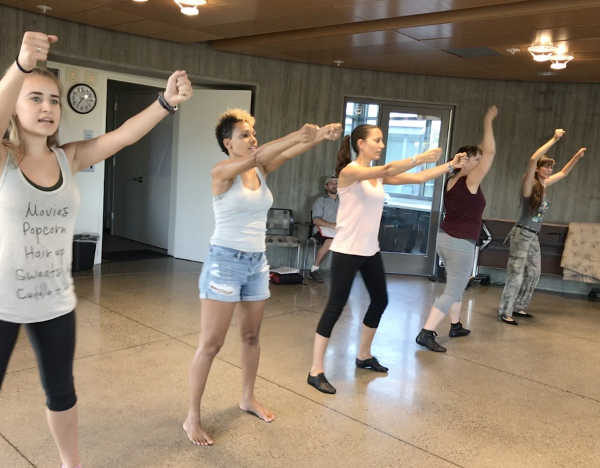
There was a huge turnout for auditions, more than 30 people. LCTC always has a place on stage for everyone in their big productions, but this is the first time they were able to pull together such a talented dance troupe.
“We also had a man walk in who has never performed with us before,” said Producer Cyndy Forbes. “His singing and acting rival many professional shows I’ve seen. And I used to live in New York City!”
These shows cost in excess of $20,000 to produce. That includes rights, music, theater rental and costumes.
“We keep ticket prices at a level that local people can afford, but that means they don’t cover the cost of the show,” Forbes said.
This year tickets are $18 for the opening Friday and Saturday, and $23 after that. All seats are assigned, but will be the same price so a front row seat costs the same as a back row seat. In a big city seats for a show like this would cost at least $100.
Show sponsors are what make it all possible. Last year’s musical was seen by more than 1,500 people. An even bigger audience is expected this year.
Sponsors are invited to a private showing on Nov. 7. They will be seated at tables and receive elegant appetizers and wine. Sponsorship includes recognition in the program and begins at $100. Those who commit before Sept. 15 will have their business listed on the posters that are displayed all around the county.
If you are interested in sponsoring you should contact Cyndy Forbes at 707-367-8179.
Tickets are on sale now at http://lctc.us.