 How to resolve AdBlock issue?
News
The incidents that qualify include the Sulphur fire in Lake County, along with the Atlas, Adobe, Blue, Camp, Cascade, Cherokee, Honey, LaPorte, Lobo, Maacama, McCourtney, Nuns, Norrbom, Partrick, Pocket, Point, Pressley, Pythian, Redwood, Tubbs and "37" fires.
PG&E’s $105 million fund, approved by the judge in PG&E’s Chapter 11 cases, is intended to help those who are either uninsured or need assistance with alternative living expenses or other urgent needs.
The court-approved independent administrator is set to file the eligibility criteria as required by the court and will open the application process.
“Our goal is to get the money to those who most need it as quickly as possible. We will prioritize wildfire victims who have urgent needs, including those who are currently without adequate shelter,” said Cathy Yanni, plan administrator.
Yanni is partnering with local agencies and community organizations to administer the fund.
“We appreciate the diligent work of the fund administrator in quickly establishing a way to distribute these funds and ensuring the program supports those with the most immediate needs. PG&E is focused on helping those impacted by the devastating wildfires in recent years and strengthening our energy system to prevent utility-caused catastrophic fires. We feel strongly that helping these communities now is the right thing to do,” said Bill Johnson, chief executive officer and president of PG&E Corp.
Applicants can request a “Basic Unmet Needs” payment of $5,000 per household for victims who establish basic eligibility requirements and self-certify that they have at least $5,000 of unmet needs that have not been compensated by the Federal Emergency Management Agency.
Payments are to support needs such as water, food, prescriptions, medical supplies and equipment, infant formula and diapers, personal hygiene items and transportation fuels beyond what FEMA covered in the days immediately following the declared disasters.
Those who receive basic payments may also qualify for a “Supplemental Unmet Needs” payment. These funds will be available only after “Basic Unmet Needs” payments have been issued. Supplemental payments will be available to individuals and families who currently face extreme or extraordinary circumstances as compared to others who were impacted by the 2017 and 2018 wildfires.
To qualify for the payments, applicants’ primary residence must have been within the boundary of the 2017 Northern California wildfires or the 2018 Camp fire.
Applicants also must establish proof of identity and certify that they are not requesting payments for an expense already paid for by FEMA.
Applicants can find more information and apply for assistance at https://www.norcalwildfireassistanceprogram.com/ .
The deadline to file for aid is Nov. 15, 2019.
The $105 million being provided by PG&E was made available from the company’s cash reserves. PG&E will not seek cost recovery from its customers.

“Organic” is more than just a passing fad. Organic food sales totaled a record US$45.2 billion in 2017, making it one of the fastest-growing segments of American agriculture. While a small number of studies have shown associations between organic food consumption and decreased incidence of disease, no studies to date have been designed to answer the question of whether organic food consumption causes an improvement in health.
I’m an environmental health scientist who has spent over 20 years studying pesticide exposures in human populations. Last month, my research group published a small study that I believe suggests a path forward to answering the question of whether eating organic food actually improves health.
What we don’t know
According to the USDA, the organic label does not imply anything about health. In 2015, Miles McEvoy, then chief of the National Organic Program for USDA, refused to speculate about any health benefits of organic food, saying the question wasn’t “relevant” to the National Organic Program. Instead, the USDA’s definition of organic is intended to indicate production methods that “foster cycling of resources, promote ecological balance, and conserve biodiversity.”
While some organic consumers may base their purchasing decisions on factors like resource cycling and biodiversity, most report choosing organic because they think it’s healthier.
Sixteen years ago, I was part of the first study to look at the potential for an organic diet to reduce pesticide exposure. This study focused on a group of pesticides called organophosphates, which have consistently been associated with negative effects on children’s brain development. We found that children who ate conventional diets had nine times higher exposure to these pesticides than children who ate organic diets.
Our study got a lot of attention. But while our results were novel, they didn’t answer the big question. As I told The New York Times in 2003, “People want to know, what does this really mean in terms of the safety of my kid? But we don’t know. Nobody does.” Maybe not my most elegant quote, but it was true then, and it’s still true now.
Studies only hint at potential health benefits

Since 2003, several researchers have looked at whether a short-term switch from a conventional to an organic diet affects pesticide exposure. These studies have lasted one to two weeks and have repeatedly shown that “going organic” can quickly lead to dramatic reductions in exposure to several different classes of pesticides.
Still, scientists can’t directly translate these lower exposures to meaningful conclusions about health. The dose makes the poison, and organic diet intervention studies to date have not looked at health outcomes. The same is true for the other purported benefits of organic food. Organic milk has higher levels of healthy omega fatty acids and organic crops have higher antioxidant activity than conventional crops. But are these differences substantial enough to meaningfully impact health? We don’t know. Nobody does.
Some epidemiologic research has been directed at this question. Epidemiology is the study of the causes of health and disease in human populations, as opposed to in specific people. Most epidemiologic studies are observational, meaning that researchers look at a group of people with a certain characteristic or behavior, and compare their health to that of a group without that characteristic or behavior. In the case of organic food, that means comparing the health of people who choose to eat organic to those who do not.
Several observational studies have shown that people who eat organic food are healthier than those who eat conventional diets. A recent French study followed 70,000 adults for five years and found that those who frequently ate organic developed 25% fewer cancers than those who never ate organic. Other observational studies have shown organic food consumption to be associated with lower risk of diabetes, metabolic syndrome, pre-eclampsia and genital birth defects.
The problem with drawing firm conclusions from these studies is something epidemiologists call “uncontrolled confounding.” This is the idea that there may be differences between groups that researchers cannot account for. In this case, people who eat organic food are more highly educated, less likely to be overweight or obese, and eat overall healthier diets than conventional consumers. While good observational studies take into account things like education and diet quality, there remains the possibility that some other uncaptured difference between the two groups – beyond the decision to consume organic food – may be responsible for any health differences observed.
What next?

When clinical researchers want to figure out whether a drug works, they don’t do observational studies. They conduct randomized trials, where they randomly assign some people to take the drug and others to receive placebos or standard care. By randomly assigning people to groups, there’s less potential for uncontrolled confounding.
My research group’s recently published study shows how we could feasibly use randomized trial methods to investigate the potential for organic food consumption to affect health.
We recruited a small group of pregnant women during their first trimesters. We randomly assigned them to receive weekly deliveries of either organic or conventional produce throughout their second and third trimesters. We then collected a series of urine samples to assess pesticide exposure. We found that those women who received organic produce had significantly lower exposure to certain pesticides (specifically, pyrethroid insecticides) than those who received conventional produce.
On the surface, this seems like old news but this study was different in three important ways. First, to our knowledge, it was the longest organic diet intervention to date – by far. It was also the first to occur in pregnant women. Fetal development is potentially the most sensitive period for exposures to neurotoxic agents like pesticides. Finally, in previous organic diet intervention studies, researchers typically changed participants’ entire diets – swapping a fully conventional diet for a fully organic one. In our study, we asked participants to supplement their existing diets with either organic or conventional produce. This is more consistent with the actual dietary habits of most people who eat organic food – occasionally, but not always.
Even with just a partial dietary change, we observed a significant difference in pesticide exposure between the two groups. We believe that this study shows that a long-term organic diet intervention can be executed in a way that is effective, realistic and feasible.
The next step is to do this same study but in a larger population. We would then want to assess whether there were any resulting differences in the health of the children as they grew older, by measuring neurological outcomes like IQ, memory and incidence of attention-deficit disorders. By randomly assigning women to the organic and conventional groups, we could be sure any differences observed in their children’s health really were due to diet, rather than other factors common among people who consume organic food.
The public is sufficiently interested in this question, the organic market is large enough, and the observational studies suggestive enough to justify such a study. Right now, we don’t know if an organic diet improves health, but based on our recent research, I believe we can find out.
[ Sign up for The Conversation’s newsletter to get insight each day ]
Cynthia Curl, Assistant Professor, Boise State University
This article is republished from The Conversation under a Creative Commons license. Read the original article.
At the close of the last century, a comet, captured into orbit around a planet, traveled too close and was shredded by its gravity into multiple pieces, some as large as a half a mile long.
Those fragments would plunge into the planet’s atmosphere in a series of impacts.
Would the impacts be spectacular? Or would the comet fragments disappear without a trace?
In July 1994, astronomers around the world watched with bated breath as the fragments of comet Shoemaker-Levy 9 slammed into the planet Jupiter.
“It was just incredible to watch,” said Dr. Kelly Fast, one of the impact’s observers, and now manager of NASA’s Near-Earth Object Observations program. “Such an impact event had never before been witnessed, let alone studied. Ground-based telescopes around the world and spacecraft like NASA’s Hubble Space Telescope and even the Galileo orbiter en route to Jupiter were used to observe the impacts. The discovery of the comet by Carolyn and Gene Shoemaker and David Levy gave us about a year to plan our observations.”
The impacts proved to be impressive: The fragments – some 21 in all – plunged into Jupiter’s atmosphere over the course of six days.
At impact, they were traveling at a speed of about 37 miles/second, heating the atmosphere to at least 53,000 degrees Fahrenheit or 30,000 degrees Celsius. Like the splash from throwing a rock into a pond, the impacts created giant plumes of material from Jupiter’s lower atmosphere which rose as high as 1,900 miles or 3,000 kilometers above the cloud tops into the stratosphere.
In the aftermath, the plume splashback scarred Jupiter’s atmosphere with dark clouds of impact debris which could be seen for months as they were gradually dispersed by Jupiter's winds.
So what were scientists able to learn about Jupiter itself as a result of the impacts? For one thing, those dark clouds of impact debris acted as tracers of the winds in Jupiter’s stratosphere, and by following their motion over time, scientists could measure those high-altitude winds.
Temporary changes in the aurora on Jupiter showed scientists that Jupiter’s magnetosphere was influenced by particles from the impacts.
“Also,” Dr. Fast noted, “We are still able to see changes in Jupiter’s atmosphere that resulted from the impacts. When the fragments of Shoemaker-Levy 9 slammed into Jupiter, they deposited their own chemical compounds, the impact processes produced some, and others were exhumed from the lower atmosphere. Some molecules, like ammonia, were destroyed by sunlight in the weeks and months after the impacts, but others, like hydrogen cyanide and water, are still seen today. All of that tells scientists about how chemistry works in Jupiter’s atmosphere.”
Comet Shoemaker-Levy 9 showed us that large impacts still happen in the Solar System, and were a factor in NASA developing programs to address the impact risk to Earth.
From comet science, to Jupiter science, to the science of impacts, the legacy of that serendipitous discovery by Carolyn and Gene Shoemaker and David Levy continues to this day and into the future.
For more impactful stories about comets and asteroids, visit http://science.nasa.gov.
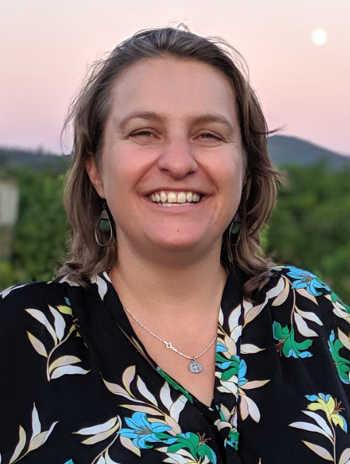
KELSEYVILLE, Calif. – Lily Woll, a lifetime resident of Kelseyville, has announced her candidacy for District 5 supervisor.
District 5 serves the Kelseyville, Riviera, Buckingham, Cobb and Loch Lomond areas. The seat has been held by Rob Brown, who has served in the position for nearly 20 years. Brown is not running for re-election.
She is the second candidate to formally enter the race. Jessica Pyska of Cobb announced her candidacy in May.
Lily Woll's roots in District 5 run deep. She grew up in Kelseyville, attending Kelseyville High School and graduating in 1999. Her parents, Dallas and Theresa Woll, owned and operated Roto Rooter of Lake County for 35 years. Woll's family also farmed walnuts for over 25 years.
Woll says that the perspective earned while growing up in a family-run small business in Lake County was invaluable.
"Respecting and being respected by the community was paramount in my family's business. I also grew up with much admiration for the workers in our orchards, who serve as the backbone of our agricultural community,” she said.
Following her bachelor’s degrees in Spanish and international studies at City College of New York, Woll served as a Peace Corps volunteer in Guyana, South America for two years. Her work primarily consisted of HIV/AIDS education and forest conservation.
Woll has a passion for serving the community and worked for Lake County Department of Social Services as a bilingual eligibility worker and a family advocate for Lake County Tribal Health.
Woll earned two master’s degrees in Spanish and education at Sonoma State University. She has also spent seven years helping students succeed as an instructor of Spanish, English as a second language, high school equivalency test preparation, and basic studies at Mendocino College and Woodland Community College.
In the fall of 2019, she will teach Spanish at Kelseyville High School.
"Having the privilege of teaching English as a second language to mostly Latinos, has greatly connected me to a culture that makes up 40 percent of Kelseyville's population," Woll said. “A large portion of District 5 is Latino and I look forward to advocating for that community and my community at large in my role as supervisor. I want to see all sides to the issues, make educated and careful decisions that provide long-term solutions to matters that affect many."
Woll says she is uniquely qualified to serve District 5 and is dedicated to addressing Lake County's continuing economic, fiscal and infrastructure challenges.
She cites changes in agriculture, associated ag-related industry, and the conservation of natural resources as key for economic growth opportunities in Lake County.
Woll also affirms that natural disaster prevention and preparation as imperative concerns facing Lake County that repeatedly need to be addressed.
Additionally, she is dedicated to supporting and improving the mental health and drug rehabilitation services around Lake County.
She attended the county’s June budget hearings to better understand the local government’s fiscal challenges and priorities.
“District 5 is a beautiful and culturally diverse area that houses a town in the agricultural heart of Lake County; an area at fire risk; a community healing and rebuilding; with residents who continue to choose Lake County as their home,” Woll said. “I understand that I am not in this alone, as the power of change lies within these communities. I honor the perspective and input of all and I want to serve our community in order to ensure all of us thrive."
To contact Woll, email her at
With only 37 days remaining until race day, its important to register and start soon or miss out on the glory of the winner’s circle.
Registration closes on Sept. 6, so hurry to the Web site and sign up.
“We are thrilled to bring the community this new event. I have been pleased with how excited kids of all ages have been to participate in the inaugural derby and look forward to the friendly rivalries play out on the track,” said Race Director Tina Viramontes.
This inaugural event will be held on the newly constructed Dam Road Extension with four race categories.
The first race will be for the Little Turtles (ages 7-12), followed by the Turbo Teens (ages 13-17), and culminating with the Awesome Adults (ages 18 and up).
The final category will be for the Art Division, where racers will be judged on creativity rather than speed on the course.
Depending on the number of racers, each division will start with timed qualifying races, and finishing with a final heat for all the glory between the top cars with the best times.
All race cars will be inspected after check-in and before they are cleared to race.
Local celebrities and dignitaries Supervisor Bruno Sabatier, Clearlake Police Chief Andrew White, Clear Lake Chamber of Commerce President Denise Loustalot and Clearlake Mayor Russ Cremer will be judging the Art Division champions.
The event is free for spectators. Bring your chair and take a seat along the course or near the finish line.
Food and novelty vendors will be located near the finish line at Konocti Education Center.
Current event sponsors include DM Compassion Center, Hillside Honda, Matt Mazzei Chevrolet, Foods Etc., Lakeside Herbal, Rotary Club of Clearlake, Community First Credit Union, Dale and Karen Valentine, Flowers by Jackie, Enterprise Towing and Konocti Unified School District.
For additional information including online registration and race rules visit https://www.downtownclearlake.com/soap-box-derby .
The kennels also have many dogs that need to be reunited with their owners. To find the lost/found pet section, click here.
The following dogs are ready for adoption.

‘Bernard’
“Bernard” is a male Staffordshire Bull Terrier mix with a short brindle and white coat.
He already has been neutered.
He is No. 280.

‘Cadbury’
“Cadbury” is a female Staffordshire Bull Terrier mix with a smooth medium-length beige coat.
She is No. 1215.

‘Casanova’
“Casanova” is a male German Shepherd mix puppy with a sort blond and gray coat.
He is No. 2457.

‘Frank’
“Frank” is a male American Staffordshire Terrier mix with a short black and white coat.
He is No. 2345.

‘Hamilton’
“Hamilton” is a male German Shepherd with a medium-length brown and black coat.
He is No. 2177.

‘Melonie’
“Melonie” is a female American Pit Bull Terrier mix with a short red and white coat.
She is No. 2428.

‘Mira’
“Mira” is a female Queensland Heeler mix with a short red and white coat.
She is No. 2412.

‘Panther’
“Panther” is a female Staffordshire Bull Terrier mix with a short black and white coat.
She is No. 2418.

‘Sturgill’
“Sturgill” is a male Labrador Retriever mix with a medium-length yellow coat.
He is No. 2460.

‘Tyson’
“Tyson” is a male American Staffordshire terrier mix with a medium-length gray and white coat.
He is No. 1863.

‘Wiley’
“Wiley” is a male German Shepherd mix with a medium-length black and brindle coat.
He is dog No. 2451.

‘Wynn’
“Wynn” is a male American Staffordshire Terrier with a short brindle coat.
Staff said he is a lovely fellow who has been at the shelter for several months.. He loves affection and is available for adoption or through the foster to adopt program.
He’s believed to be about 6 to 7 years old.
He is No. 969.
Clearlake Animal Control’s shelter is located at 6820 Old Highway 53, off Airport Road.
Hours of operation area noon to 4 p.m. Tuesday through Saturday. The shelter is closed Sundays, Mondays and major holidays; the shelter offers appointments on the days it’s closed to accommodate people.
Call the Clearlake Animal Control shelter at 707-273-9440, or email
Visit Clearlake Animal Control on Facebook or at the city’s Web site.
Email Elizabeth Larson at