 How to resolve AdBlock issue?
News
The following cats and kittens at the Lake County Animal Care and Control shelter have been cleared for adoption.

Female domestic short hair
This female domestic short hair cat has a dilute tortie coat and gold eyes.
She is in cat room kennel No. 4, ID No. 12808.

Female domestic short hair
This female domestic short hair cat has a brown tabby coat and gold eyes.
She is in cat room kennel No. 41, ID No. 12846.

Domestic short hair kitten
This female domestic short hair kitten has a black and gray tabby coat and gold eyes.
She is in cat room kennel No. 41a, ID No. 12847.

Domestic short hair cat
This female domestic short hair cat has a dilute and gray tabby coat and gold eyes.
She has already been spayed.
She is in cat room kennel No. 52, ID No. 12904.
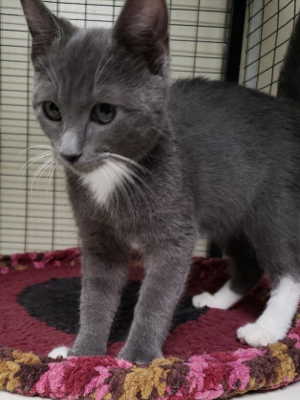
Male domestic short hair cat
This male domestic short hair cat has a gray and white coat and green eyes.
He is in cat room kennel No. 63, ID No. 12710.

Female domestic short hair cat
The female domestic short hair cat has a brown tabby coat and gold eyes.
She is in cat room kennel No. 82, ID No. 12616.

Female domestic short hair cat
This female domestic short hair cat has a gray tabby coat and gold eyes.
She is in cat room kennel No. 148, ID No. 12932.
Lake County Animal Care and Control is located at 4949 Helbush in Lakeport, next to the Hill Road Correctional Facility.
Office hours are Monday through Friday, 11 a.m. to 5 p.m., and 11 a.m. to 3 p.m., Saturday. The shelter is open from 11 a.m. to 4 p.m. Monday through Friday and on Saturday from 11 a.m. to 3 p.m.
Visit the shelter online at http://www.co.lake.ca.us/Government/Directory/Animal_Care_And_Control.htm.
For more information call Lake County Animal Care and Control at 707-263-0278.
Email Elizabeth Larson at

As the public conversation about climate change gets increasingly serious, many Americans may be wondering: How do my individual choices affect climate change?
Household consumption – food, housing, transportation, apparel and other personal services – is an important contributor to greenhouse gas emissions. Everything you eat or wear, or every time you drive, you add to the global total emissions. The typical American’s annual per capita carbon footprint is over five times the world per capita average.
A study by our research team, including Kaihui Song, Shen Qu and Sai Liang, published on September 10, sheds light on the global carbon footprint of U.S. households.
1. Some activities have a bigger impact
We looked at data from 1995 to 2014 from the U.S. Consumer Expenditure Survey, as well as the World Input-Output Database. We looked at the total global warming potential of all greenhouse gas emissions, not just carbon dioxide, as measured in their “carbon dioxide equivalent.”
We found that over 20% of all U.S. emissions are directly attributed to household consumption. If you consider indirect emissions, this figure is closer to 80%.
Let’s zoom in on the latest available annual numbers, mostly from 2009, which give a better sense of these staggering impacts.
U.S. households generate 5.43 gigatons of carbon dioxide equivalent emissions every year. About 82.3% of those emissions are produced domestically.
The remaining emissions are generated outside the U.S. These emissions come from global supply chains. For instance, the family car might have been manufactured abroad. So emissions from manufacturing of the car are created outside the U.S., but the emissions from tailpipe are domestic.
Transportation and housing contribute over 60% to the total domestic carbon footprint of U.S. households. Supply chain emissions from services – such as health care, banking and lodging – and food contribute the next largest amounts.
Food, furnishing and supplies, and clothing are the three largest drivers of overseas emissions from U.S. households.
2. China bears the brunt of overseas emissions
The overseas carbon footprint driven by the U.S. households is distributed disproportionately among countries.
The most considerable portion of overseas carbon footprint of U.S. households is actually released in China, followed by Canada, India, Russia and Mexico.
The overseas carbon footprint from Mexico is largely driven by food consumption in the U.S., while fuel consumption in the U.S. was the main driver for overseas carbon footprint from Canada and Russia, where the U.S. gets the majority of its imported oil products and natural gas in that period.
While the most substantial amount of the U.S.‘s overseas carbon footprint is from China, it is only 3.0% of China’s domestic emissions. The majority of China’s emissions comes from the activity of its inhabitants, as well as consumption in other countries beyond the U.S.
On the other hand, Canada, Mexico and Taiwan trace a sizeable proportion of their domestic emissions to U.S. household consumption.
3. Wealthier families have a larger footprint
A household’s carbon footprint generally increases with its income, ranging from 19.3 to 91.5 tons of CO2-equivalent annually.
The average carbon footprint of the wealthiest households is over five times that of the poorest.
In 2009, households with less than US$30,000 annual disposable income made up 25.7% of the total U.S. population, but were only responsible for 19.3% of U.S. households’ carbon footprint.
On the other hand, wealthy consumers with more than $100,000 annual household income accounted for 22.3% of the total population but were responsible for nearly one-third of households’ total carbon footprint.
4. The Great Recession caused a dip
U.S. households’ carbon footprint had been steadily growing from 1995 until 2005, when it began to plateau.
In 2009, the combined domestic and overseas footprint dropped by 8.5% from the previous year, mainly due to the Great Recession.
The share of overseas carbon footprint in total carbon footprint of the U.S. household consumption had been rising steadily and peaked at around 20% in 2006. After 2006, the share of overseas carbon footprint started to decrease, as imports slowed down before the recession.
5. Transportation makes the biggest difference
The variations of household carbon footprint from 1995 to 2014 were largely driven in transportation use, including emissions from vehicle manufacturing, fuel and public transportation.
Transportation emissions, both per capita and per household, have continued to rise over time. This is despite significantly reduced tailpipe emissions from vehicles and nearly 30% improvement in fuel economy of cars in this period. Mandates and standards, such as Corporate Average Fuel Economy (CAFE) at the federal level and Zero-Emission Vehicle (ZEV) at the state level, enabled this rapid progress.
So what’s causing the emissions to keep rising? People want to travel more and are more likely to own more household vehicles. Meanwhile, vehicles have a lower average number of occupants. Mass transit and active modes of transportation, like bike riding, are growing slowly.
In 2016, for the first time in history, the emissions from the U.S. transportation sector surpassed the power sector emissions. This fact along with our observation from household carbon footprint from transportation underscore the importance of policy efforts related to emissions from the transportation sector.
[ Deep knowledge, daily. Sign up for The Conversation’s newsletter. ]
Morteza Taiebat, Ph.D. Candidate in Environment and Sustainability, University of Michigan and Ming Xu, Associate Professor at School for Environment and Sustainability, University of Michigan
This article is republished from The Conversation under a Creative Commons license. Read the original article.
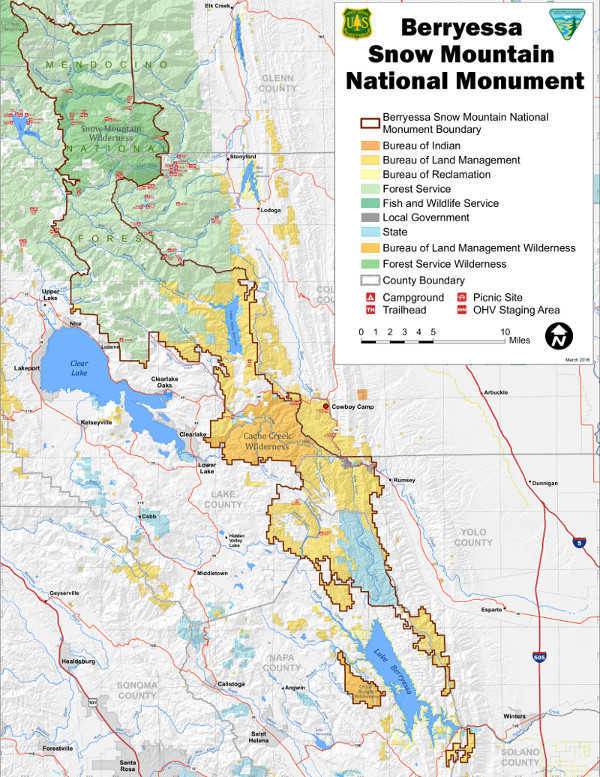
LUCERNE, Calif. – The Lucerne Town Hall has formally recognized the town of Lucerne as Gateway to the Berryessa Snow Mountain National Monument.
The unanimous vote Thursday makes Lucerne the first Northern California town adjacent to the monument to officially declare gateway status since the monument was created July 10, 2015.
“Many people are not aware that the Berryessa Snow Mountain National Monument is right behind District 3 towns,” said District 3 Supervisor EJ Crandell, who was on hand for Thursday night’s town hall meeting and himself a Northshore native who now lives in Lucerne. “This initiative provides Lucerne yet another auspicious vantage point for families and travelers to visit our beautiful town and county. “
The monument is composed of 330,780 acres of the California Coast Range in Napa, Yolo, Solano, Lake, Colusa, Glenn and Mendocino counties. The Cache Creek Wilderness is located within the monument.
Two-thirds of the monument is within Lake County’s boundaries alone, and Lucerne sits at roughly the midpoint of the monument’s vast acreage.
President Barack Obama established the monument in 2015 by presidential proclamation. The proclamation details the diversity of the area including the unique geology, flora and fauna found within its boundaries.
“Rising from near sea-level in the south to over 7,000 feet in the mountainous north, and stretching across 100 miles and dozens of ecosystems, the area's species richness is among the highest in California. This internationally recognized biodiversity hotspot is located at the juncture between California's Klamath, North Coast, and Sacramento Vallejo ecoregions and provides vital habitat and migration corridors for diverse wildlife, including several endemic plant and animal species,” the proclamation states.
Its formation gained the support of local organizations and governments, including the Board of Supervisors, which approved a proclamation in June 2017 reaffirming its support when President Donald Trump signed an executive order to review the formation of the Berryessa Snow Mountain National Monument and 21 others across the nation – six of them in California – that had been formed by previous president under the Antiquities Act, as Lake County News has reported.
The national monument was championed by the nonprofit organization Tuleyome, which lobbied for national monument status and held meetings about the monument in areas peripheral to the monument.
Lower Lake resident Victoria Brandon, who is president of the Tuleyome Board of Directors, called the town hall’s action on the proclamation “wonderful news.”
Brandon added, “I think it’s wonderful that Lucerne recognized the value of the national monument itself but also the value to the community and hope this results in additional signage publicity to encourage people to enjoy what the monument has to offer.”
Dr. John Parker, a local archaeologist, also lauded the action. Parker, also a Lucerne resident who was integral in the creation of Anderson Marsh State Historic Park in Lower Lake, has written a prehistory of the monument area that looks at the first people of the area going back thousands of years.
The report notes that when the first Europeans arrived in the region, the national monument was home to many different tribes – the Northeastern Pomo, Nomlaki, the Onkolukomno'm Yuki tribe, the Hill Patwin, the Eastern and Southeastern Pomo, the Lake Miwok, the Wappo and the Southern Wappo.
“What a great decision for the town hall group to list Lucerne as the Gateway to the Berryessa Snow Mountain National Monument,” Parker said. “It is a fitting title since one of the few public access points from Clear Lake to the monument is Bartlett Springs Road, just north of Lucerne. Whenever I want to spend time in the monument area, I always use Bartlett Springs Road; a beautiful drive through the country providing mountain and lake views, clear streams, hot springs and tons of wildlife.”
Visitors to the monument are presented with impressive natural biodiversity, including tule elk, bald eagles, river otters, butterfly and dragonfly species that thrive in a landscape noted for its serpentine soils and the particular flora unique to that soil.
Recreational visitors can enjoy hiking bike riding, kayaking, hunting, fishing, bird watching and wildlife viewing year round while in winter snowy meadows and steep hillsides afford the opportunity for cross country skiing.
“To me it’s the reason there is a national monument in Lake County, because we’re being recognized for the natural beauty we have in our community. The idea is to make this a part of our county marketing strategy,” said District 2 Supervisor Bruno Sabatier said. “It’s being recognized nationally as a place to preserve.
The resolution was authored and brought forward by Lucerne Area Town Hall member John Jensen who was inspired by the lack of awareness of the monument which he considers a prime opportunity for county marketing. Jensen also is co-publisher of Lake County News.
Jensen put a map of the monument on the wall in the Konocti Bait Shack in Lucerne and asked visitors if they knew a national monument was just over the ridge.
“Virtually every person who came into my bait shop during the busy summer had no knowledge of the national monument, I’m hoping more awareness helps promote a sense of local pride for the residents of Lucerne and Lake County,” Jensen said.
Brandon said the monument preserves extra biodiversity and Native American history going back thousands of years, offers recreational opportunities and the opportunity to develop them in a coordinated way while protecting their natural values.
“I hope the town hall will be ready to participate in the planning process for the monument which is just beginning,” Brandon said.
The agency said a fire weather watch means that critical fire weather conditions are forecast to occur.
The watch is for portions of the Sacramento Valley, adjacent foothills, and northern Coastal Range from 1 p.m. Monday through 11 a.m. Wednesday.
The National Weather Service is forecasting gusty northerly wind – with wind speeds of 10 to 25 miles per hour and gusts of between 30 to 40 miles per hour – combined with low humidity could bring critical fire weather conditions to the region. Daytime humidity will be low with poor overnight recoveries of 30 to 40 percent, and sometimes lower, for vegetation.
The forecast says the highest threat is on the western side of the Sacramento Valley and adjacent foothills, where the highest wind gusts and lowest humidity are expected.
In response, on Saturday Pacific Gas and Electric said that a public safety power shutoff could occur beginning on Monday evening in parts of the Sacramento Valley, including Butte, El Dorado, Nevada, Placer, Sutter and Yuba counties.
So far, PG&E have not indicated any potential shutoff for Lake County.
In Lake County, the forecast calls for daytime temperatures peaking in the low 90s on Tuesday and dropping into the cooler range as the week progresses, with the potential for rain on Friday and Saturday.
Email Elizabeth Larson at
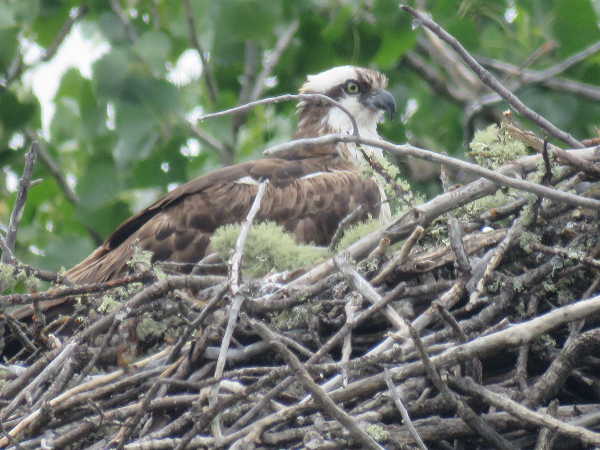
LAKE COUNTY, Calif. – Whether you call it a river hawk, fish hawk or osprey, the sighting of a magnificent bird of prey can transform the moment you view it from a run-of-the-mill, albeit delightful day, to a day of wonder and privilege.
After decades of living here, I can never get over the fact that all of this wildness is always right outside our doors here in Lake County.
Osprey can be viewed in many locations throughout the county. Watch them in action at Rodman Park, Clear Lake State Park and other locales.
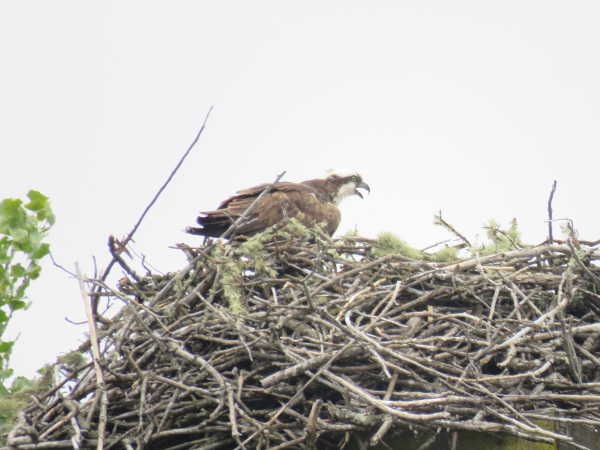
At first you hear a loud cry, and then, craning your neck upwards, you do a double-take at the size and height of the osprey 's nest, along with the impressive size of the bird – they range in size from 20 to 26 inches in length.
Nests, which can be constructed of twigs and bark, then lined with algae, grass and vines, can reach a tremendous size after generations of nesting. Some nests reach depths of 10 feet and diameters of 6 feet.
New nests constructed on artificial platforms are considerably smaller, at 2 feet in diameter and only 6 inches deep.
According to the Cornell Lab of Ornithology it's the male osprey who obtains the majority of the nesting material, while the female positions the objects just-so.
The clutch size ranges from one to four eggs, with only one brood. The eggs require a 36- to 42-day incubation period.
The osprey at Clear Lake State Park demonstrate skilled hunting techniques through circling over the creek, honing in on some flash or movement only it can see, then, transforming into a weapon, the osprey launches itself into the creek to spear its prey.
Nesting in the middle of a public park or along a highway gives the impression of a perilous move on the bird's part, but since they nest near bodies of water, such as creeks and lakes they make themselves completely at home there. Their diet consists mainly of fish, with the occasional rodent or reptile thrown in.
Osprey will dive up to 3 feet into water to catch their prey. Their vision has adapted to aid in these underwater fishing expeditions, and they can spot their prey while flying dozens of feet above the water.
An unusual factoid about osprey is that they can be found in a number of habitats, and live on every continent with the exceptions of Antarctica and Australia. Osprey found in South America are migrants, and do not breed there.
The latest osprey nesting pole was installed, as reported by the Lake County News on Aug. 21 at Lakeside County Park in Kelseyville. There you will find informative panels in both English and Spanish that educate the public about the osprey. The panels were commissioned by our local Audubon Society, Redbud Audubon.
For more information visit Redbud Audubon's Web site at https://www.redbudaudubon.org/.
Kathleen Scavone, M.A., is a retired educator, potter, freelance writer and author of “Anderson Marsh State Historic Park: A Walking History, Prehistory, Flora, and Fauna Tour of a California State Park” and “Native Americans of Lake County.”
Dogs available for adoption this week include mixes of Alaskan Malamute, American Staffordshire Terrier, Cane Corso mastiff, Chihuahua, husky, Labrador Retriever, pit bull, Rottweiler, shepherd and terrier.
Dogs that are adopted from Lake County Animal Care and Control are either neutered or spayed, microchipped and, if old enough, given a rabies shot and county license before being released to their new owner. License fees do not apply to residents of the cities of Lakeport or Clearlake.
If you're looking for a new companion, visit the shelter. There are many great pets hoping you'll choose them.
The following dogs at the Lake County Animal Care and Control shelter have been cleared for adoption (additional dogs on the animal control Web site not listed are still “on hold”).

Male Labrador Retriever
This male Labrador Retriever has a short tan coat.
He is in kennel No. 14a, ID No. 12950.

‘Lucy’
“Lucy” is a female Labrador Retriever with a short black and tan coat.
She is in kennel No. 14b, ID No. 12951.
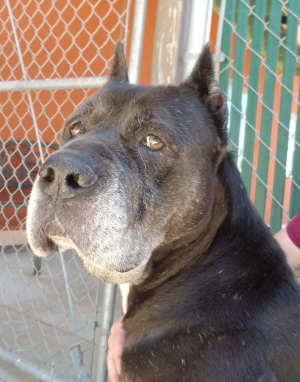
‘Nova’
“Nova” is a female Cane Corso mastiff with a short black coat.
She is in kennel No. 17, ID No. 6579.

‘Corn’
“Corn” is a male American Staffordshire Terrier with a short red coat.
He’s in kennel No. 18, ID No. 12967.

‘Boo’
“Boo” is a senior female terrier-pit bull mix with a short white and gray coat.
She has already been spayed.
She’s in kennel No. 19, ID No. 12902.
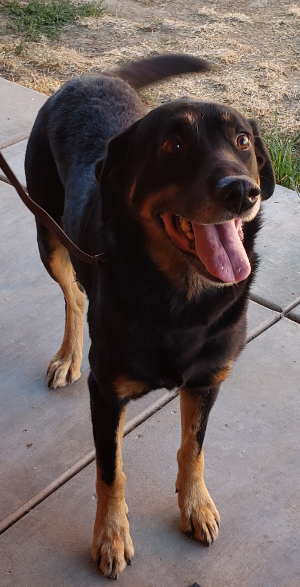
‘Ace’
“Ace” is a male Rottweiler-shepherd mix with a medium-length black and brown coat.
He already has been neutered.
He’s in kennel No. 20, ID No. 12899.
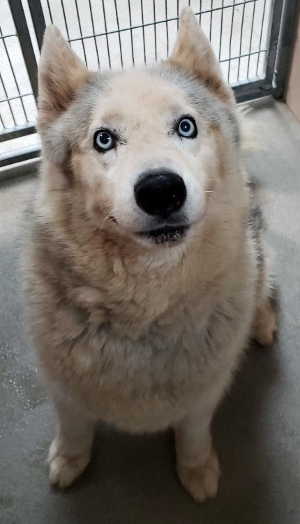
‘Kiko’
“Kiko” is a senior male Alaskan Malamute with a long white and gray coat and blue eyes.
He already has been neutered.
He’s in kennel No. 21, ID No. 12966.
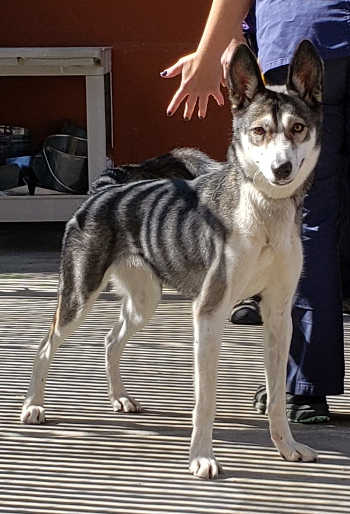
‘Leia’
“Leia” is a female husky with a short tricolor coat.
She is in kennel No. 22, ID No. 12938.

Female Chihuahua-terrier
This female Chihuahua-terrier mix has a short tan and white coat.
She is in kennel No. 24, ID No. 12885.

Male Labrador Retriever
This male Labrador Retriever has a short black and white coat.
He is in kennel No. 25, ID No. 12850.

‘Misty Marie’
“Misty Marie” is a young female pit bull terrier.
She has a short black coat.
She is in kennel No. 29, ID No. 12725.
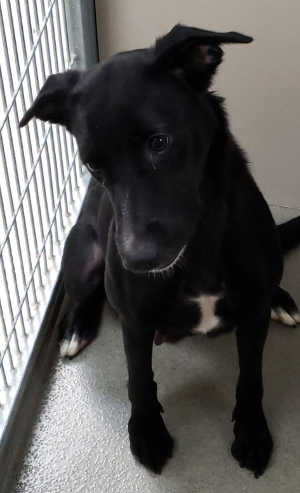
‘Coco’
“Coco” is a female Labrador Retriever with a short black and white coat.
Coco is in kennel No. 34, ID No. 12764.
Lake County Animal Care and Control is located at 4949 Helbush in Lakeport, next to the Hill Road Correctional Facility.
Office hours are Monday through Friday, 11 a.m. to 5 p.m., and 11 a.m. to 3 p.m., Saturday. The shelter is open from 11 a.m. to 4 p.m., Monday through Friday and on Saturday from 11 a.m. to 3 p.m.
Visit the shelter online at http://www.co.lake.ca.us/Government/Directory/Animal_Care_And_Control.htm.
For more information call Lake County Animal Care and Control at 707-263-0278.
Email Elizabeth Larson at