 How to resolve AdBlock issue?
News
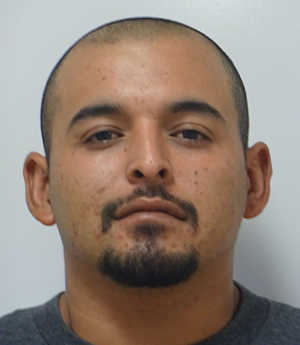
NICE, Calif. – Authorities arrested a Kelseyville man early Thursday morning after finding he was wanted on a felony arrest warrant and that he was in possession of a stolen firearm.
Leopoldo Bravo, 26, was arrested shortly after 1 a.m. Thursday, according to Lt. Corey Paulich.
Paulich said a Lake County Sheriff’s deputy responded to Robinson Rancheria Casino in Nice for an unrelated call and, while at the casino, the deputy contacted Bravo, Paulich said.
Paulich said a records check of Bravo was conducted and it was determined that he was on searchable probation and had a felony warrant for his arrest out of Los Angeles County related to narcotics. The deputy subsequently arrested Bravo.
Bravo directed deputies to his vehicle that was in the parking lot. Paulich said it was later determined that this vehicle was not associated with Bravo.
After reviewing surveillance video from the casino, deputies were able to locate a red Dodge pickup that Bravo had driven to the casino. Paulich said Bravo also had the key to the Dodge truck in his possession when he was arrested.
Deputies searched the Dodge truck and located a loaded .38-caliber semiautomatic handgun. The handgun had previously been reported stolen out of Lake County, Paulich said.
Paulich said Bravo admitted driving the Dodge truck to the casino, but claimed he did not know the gun was in the truck.
Bravo is a validated gang member with a history of weapons and narcotics violations, Paulich said.
Paulich said Bravo was booked into the Lake County Jail on charges of felon in possession of a firearm, carrying a loaded firearm in public, and an active participant in a criminal street gang carrying loaded a firearm in public.
He remains in custody with bail set at $25,000 and is due to appear in Lake County Superior Court for arraignment on Friday, according to jail records.
Bravo was arrested by a Lakeport Police officer in May following a traffic stop, with a search of his car yielding the discovery of an ounce of cocaine, 100 opioid tablets and approximately $1,968 in cash, as Lake County News has reported.

The bills build on the historic $1 billion investment made in the budget and new legal authority that make it easier for cities and counties to build emergency shelters.
The governor signed legislation that provides a California Environmental Quality Act, or CEQA, exemption for supportive housing and shelters in the city of Los Angeles.
The new laws announced on Thursday will also give Alameda County, Orange County, the cities within those counties, and San Jose, the ability to expedite the construction of emergency shelters upon declaring a shelter crisis.
“Homelessness is a national emergency that demands more than just words, it demands action," said Gov. Newsom. "State government is now doing more than ever before to help local governments fight homelessness, expand proven programs and speed up rehousing. And just this month, the Legislature passed the strongest package of statewide renter and anti-eviction protections in the country – a top priority for this Administration that will protect Californians from unfair evictions and rent gouging that have contributed to this crisis.”
He added, “I am pleased to sign these bills that give local governments even more tools to confront this crisis.”
Ahead of the meeting tomorrow of the Governor’s Council of Regional Homeless Advisors, the governor sent a letter to the council members urging them to focus their attention on chronic street homelessness, and to identify action steps for how local governments can more quickly distribute the historic funding provided through the budget.
“The council must identify public policy changes and best practices for local communities to spend the major infusion of state dollars to address the problem of street homelessness by providing immediate emergency shelter and services,” Gov. Newsom wrote in his letter. “This should be the focus of the task force over the next three months.”
The governor continued: “I ask you to spend your remaining meetings focusing on developing concrete short-term actions and longer-term recommendations for the state to partner with local communities and the private sector to: 1) end street homelessness, 2) break down barriers to building more housing, and 3) get more people into treatment. These three challenges demand our collective focus as the council proceeds in its work.”
The governor’s 2019-2020 budget included:
– $650 million to local governments for homelessness emergency aid;
– $120 million for expanded Whole Person Care services;
– $150 million for strategies to address the shortage of mental health professionals in the public mental health system;
– $25 million for Supplemental Security Income advocacy;
– $40 million for student rapid rehousing and basic needs initiatives for students in the University of California and California State University systems;
– $20 million in legal assistance for eviction prevention;
– More than $400 million to increase grants to families in the CalWORKs program;
– The budget more than doubles the investment in the Cal-EITC Working Families Tax Credit to $1 billion, which will increase the number of participating households from two million to three million, lifting some out of poverty.
Through the budget process, the governor also supported and signed a number of new laws that speed up shelter construction and make it easier for cities and counties to act.
The governor signed the following bills into law:
AB 58 (Rivas) – This bill requires the governor to appoint a representative from the California Department of Education, or CDE, to the Homeless Coordinating and Financing Council. Under the federal McKinney-Vento Act, which is implemented by CDE, schools are the first points of contact to identify, interface with, and assist homeless students and their families.
AB 139 (Quirk-Silva) – This bill updates the requirements of local governments’ housing plans to address the needs of the homeless crisis, specifically by changing the criterion for assessing the need for emergency shelters and housing to a regional level, and requiring that to be accounted for as part of the housing element of a city or county’s general plan.
AB 143 (Quirk-Silva) – This bill adds Alameda County, Orange County, all of the cities within those counties, and the city of San Jose to the list of jurisdictions authorized to declare a shelter crisis, which permits the suspension of state health, planning and zoning, and safety standards; those jurisdictions must then adopt a local ordinance for the design and operation of homeless shelters, which must be approved by HCD. The bill also requires these jurisdictions to develop plans to address the shelter crisis, including how to transition residents from homeless shelters to permanent supportive housing.
AB 728 (Santiago) – Previous legislation gave counties the authority to create multidisciplinary personnel teams for homeless adults and families to facilitate the expedited identification, assessment, and linkage of homeless individuals to housing and supportive services, and allow provider agencies to share confidential information for those purposes to ensure continuity of care. This bill creates a five-year pilot program in the following counties (Los Angeles, Orange, Riverside, San Bernardino, San Diego, Santa Clara and Ventura) to expand the scope of a multidisciplinary personnel teams to include serving individuals who are at risk of homelessness. The program would sunset on Jan. 1, 2025.
AB 761 (Nazarian) – This bill allows, at the sole discretion of the adjutant general, the use of any armory deemed vacant by the California Military Department throughout the year by the county or city in which the armory is located for the purpose of providing temporary shelter from hazardous weather conditions for homeless persons.
AB 1188 (Gabriel) – This bill creates a legal framework allowing a tenant, with the written approval of the owner or landlord, to take in a person who is at risk of homelessness. It includes a number of protections for both the landlord and tenant, including the ability for the tenant to remove the person at risk of homelessness on short notice.
AB 1197 (Santiago) – This bill provides a CEQA exemption for supportive housing and shelters in the city of Los Angeles.
AB 1235 (Chu) – This bill renames the runaway and homeless youth shelters run by the Department of Social Services as “youth homelessness and prevention centers,” expands the categories of youth for which the centers are required to provide services to also include youth at risk of homelessness and youth exhibiting status offender behavior, and expands the time a youth can stay in the center from 21 to 90 days.
AB 1745 (Kalra) – Earlier legislation authorized San Jose to build and operate emergency bridge housing for the homeless during a declared shelter crisis, and required that each person housed in the bridge housing be placed in an affordable housing unit. This bill extends the sunset date from Jan. 1, 2022, to Jan. 1, 2025, for San Jose to meet these obligations.
SB 211 (Beall) – This bill authorizes Caltrans to lease its property to local governments for the purpose of an emergency shelter or feeding program for $1 per month plus administrative fees.
SB 450 (Umberg) – This bill provides a CEQA exemption until January 2025 for hotels converted to supportive housing.
SB 687 (Rubio) – This bill requires the governor to appoint a representative of the state public higher education system to the Homeless Coordinating and Financing Council.
SB 744 (Caballero) – This bill provides a CEQA exemption for supportive housing and No Place Like Home projects.
CLEARLAKE, Calif. – Racers of all ages took turns speeding down Dam Road Extension on Saturday morning as part of Clearlake's newest – and speediest – event.
The inaugural Soap Box Derby offered a fun, creative and competitive outlet for racers and the community members who came to watch them.
The races got under way shortly after 9 a.m., with District 2 Supervisor Bruno Sabatier acting as the event announcer.
There were several divisions: the Little Turtles, ages 7 to 12; Turbo Teens, 13 to 17 years of age; Awesome Adults,18 years and older. In addition, there was a nonracing arts division for most creative car.
There were trophies for first, second and third places, and medals for all participants, who brought to the race, creative contraptions also built for speed.
In this inaugural event, adults outnumbered children, and by the end of the morning's races city officials said they already were hearing of others who planned to take part next year, either building cars for their children or themselves.
Hay bales provided by Rainbow Ag lined the race course and served as barriers beyond the finish line for those whose brakes didn’t stop them immediately. The racers controlled their cars well enough that no one crashed into the bales while coming through the course.
“I'm so happy,” City Manager Alan Flora said about the event afterward.
He said the work to create the derby started more than six months ago. However, the idea for the races came before that; When the Dam Road Extension grand opening took place in October someone noted that it would be a great soap box race track.

Flora said he and his predecessor, then-City Manager Greg Folsom, looked at each other and said, “Let's do it.”
Folsom has since gone on to take the Suisun City city manager's job, but keeps a home in Clearlake. Folsom and his wife, Georgianna, were on hand for the day's races and said it turned out great.
“I hope people stick with it,” said Flora of the event.
Flora himself got into the competitive spirit, working for the last few months to build his bright yellow car, a replica of the Marmon Wasp – the winning car in the inaugural Indianapolis 500 in 1911, driven by Ray Harroun – which he documented on his personal Facebook page.
He went full geek on the details: The mini Marmon Wasp Flora ran also featured a rearview mirror, hearkening to the original car which was the first race car to have one mounted on it.
As it turned out, Flora would take top honors in the “Awesome Adults” division, putting in the winning time of 28.44 seconds in his finals heat.
When Flora got his trophy and wreath, city staffer Tina Viramontes handed him a carton of milk.
“This is the way we win in Indiana!” Flora yelled before pouring milk over his own head as well-known race flagger Johnny Miskill looked on with amusement, waving a checkered flag over Flora’s head.
Josh Harris was the winner – and sole racer – in the Turbo Teens division, running a car that was built to resemble a grave, with astroturf, a headstone and plastic flowers.
The big winner in the children's division was 7-year-old Elizabeth Cook, who flew to victory in her sparkly unicorn car.
“They're my favorite,” she said of unicorns, her inspiration.
She was aided by her parents, including dad, Elvis, a police sergeant who was proudly donning unicorn gear during the event, and family friends such as Jacqueline Snyder who helped her adorn the car with its unicorn hair. The car, she added, took a few weeks to build.
Elizabeth came away with two large trophies – which were nearly as tall as she is – and a winner's wreath for winning not just the Little Turtles division for but also taking top honors for the art division.
Until Saturday, she hadn't driven the course – none of the competitors had – but afterward the first grader said she already had ideas for how to improve her car for next year.
Mayor Russ Cremer served as one of the judges along with Clear Lake Chamber President Denise Loustalot and Clearlake Police Chief Andrew White
Cremer said, “I think it went very well,” with fellow council member, Dirk Slooten adding, “For the first time.”
“I hope to see more things like this” said Cremer.
He and other city leaders are looking forward to what’s ahead for the city, including seeing the Austin Park plan becoming a reality next year.
He said the redeveloped park – with a band shell venue, trails and other offerings – will be the “jewel of Clearlake” and part of what he hopes will be a return to the spirit of the community in decades gone by when it was a popular resort area, filled with activities and known as “the place to be.”
After winning the 1911 Indianapolis 500, Ray Harroun never raced again. Flora said he's contemplating also retiring from the competition after his winning debut, but Cremer told him he couldn't.
The results are published below.

2019 Soap Box Derby final results
Little Turtles
1. Elizabeth Cook: 13.03 seconds
2. Brayden Weeks: 13.94 seconds
3. Ryder White Eagle: 26.90 seconds
4. Logan Sutch: 32.65 seconds
Turbo Teens
1. Josh Harris: 36.81 seconds
Awesome Adults
1. Alan Flora: 28.44 seconds
2. Daniel Constancio: 29.31 seconds
3. Marca Carmichael: 29.68 seconds
4. John Moretz: 31.28 seconds
Arts Division
1. Elizabeth Cook
2. Alan Flora
3. Elliott Naess
Email Elizabeth Larson at

The event will take place from 7 to 10 a.m. at Renee’s Café, 1005 N. Main St., Lakeport.
The mission of Coffee with a Cop is to break down barriers between police officers and the citizens they serve by removing agendas and allowing opportunities to ask questions and voice concerns.
Join them to get to know the officers in your neighborhood.
For more information contact Chief Brad Rasmussen at 707-263-5491 or visit the event’s Facebook page.
The data cover 449,358 positions and a total of nearly $21.42 billion in 2018 wages.
Users of the site can view compensation levels on maps and search by region; narrow results by name of the entity or by job title; and export raw data or custom reports.
The newly published data were reported by 11 UC institutions (306,007 employees), 51 CCC districts (122,826 employees), and 56 superior courts (20,525 employees).
California law requires cities, counties, and special districts to annually report compensation data to the state controller.
The state controller also maintains and publishes state and California State University salary data. No such statutory requirement exists for UC, CCC, superior courts, fairs and expositions, First 5 commissions, or K-12 education providers; their reporting is voluntary.
A list of entities that did not file or filed incomplete reports is available here. They include the Mendocino-Lake Community College District.
Since the Web site launched in 2010, it has registered more than 11 million pageviews. The site contains pay and benefit information on more than two million government jobs in California, as reported annually by each entity.

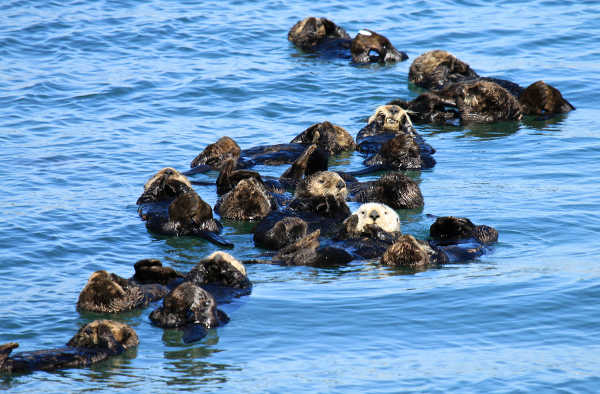
Southern sea otter numbers have declined off the coast of California since their most recent high in 2016.
According to data just released by the California Department of Fish and Wildlife and U.S. Geological Survey, the three-year average population index this year dropped to 2,962, which is 166 sea otters fewer than the 2018 survey.
Southern sea otters are a protected species under the federal Endangered Species Act and Marine Mammal Protection Act and listed as a fully protected species under California law.
Sea otters play a critical role in the nearshore marine ecosystem, serve as indicators of ocean health, and keep important elements of coastal ecosystems, like kelp forests and seagrass beds, in balance.
This year’s surveys found that the population of sea otters was largest in the central part of the species’ range, which is between Seaside and Cayucos, and that the five-year trend for this portion of the range remains positive.
The specific areas where the population trends are most negative, from Pigeon Point to north Monterey Bay and most areas south of Cayucos, coincide with the areas known for high shark bite mortality.
“One factor likely contributing to the positive trend in the central range is the recent increase in sea otter prey availability: sea urchins and mussels,” said Mike Harris, senior environmental scientist with CDFW.
Last year’s numbers were significant in that they marked the third consecutive year the three-year average of the population index had exceeded 3,090 – which is a condition of the U.S. Fish and Wildlife Service’s, or USFWS, Southern Sea Otter Recovery Plan to consider the species for delisting under the Endangered Species Act.
The U.S. Fish and Wildlife Service is currently reviewing the status of the southern sea otter, gathering the best available scientific and commercial data regarding the species, including population trends, distribution, demographics, genetics, habitat conditions, threats and conservation measures.
“By thoroughly reviewing the best available data, we’ll have a better understanding of all factors influencing the sustainability of the southern sea otters in the wild,” said Lilian Carswell, southern sea otter recovery coordinator for the USFWS. “These remarkable marine mammals continue to encounter hurdles, like shark bite mortality, that limit their ability to expand into areas where they historically thrived.”
Scientists from the CDFW, USGS, and Monterey Bay Aquarium have conducted a range-wide census of southern sea otter populations annually since the 1980s. Researchers compute the annual population index and evaluate population trends, providing the USFWS and other resource agencies with insight into southern sea otter abundance and distribution.
In addition to the sea otter population along the mainland California coast, which stretches from about Point Año Nuevo in San Mateo County to Gaviota State Beach in Santa Barbara County, USGS and partners also survey the sea otters at San Nicolas Island in the Southern California Bight.
This population, established by introducing sea otters back into the area in the late 1980s, struggled at low numbers through the 1990s. However, over the last decade, the population has grown rapidly at an average rate of about 10 percent per year.
The five-year average trend in the range-wide index, including both the mainland range and the San Nicolas Island populations, was flat at 0.12 percent growth per year.
The northern range was not calculated because of limitations in survey resources required to survey areas north of the range from the previous year (2018); however, the southern range expanded slightly by 0.5 kilometer, where a negligible trend in sea otter counts (0.55 percent growth per year) corresponded to the lack of meaningful population range expansion at the southern periphery.
“The total raw count of sea otters along the mainland coast was lower this year even though the survey was conducted under more favorable viewing conditions this year than the previous two years,” said Brian Hatfield, USGS wildlife biologist.
The sea otter survey and stranding programs are one part of a larger research program investigating sea otters and their role as predators in coastal ecosystems.
USGS researchers monitor changes in the kelp forest ecosystems that provide sea otters with suitable resting and feeding habitat and collaborates with CDFW, and the Monterey Bay Aquarium, The Marine Mammal Center, and others in implementing a sea otter stranding network.
These efforts inform and support effective management of sea otter populations, helping to guide them toward recovery.
Survey methodology
• The annual population index is calculated from visual surveys conducted via telescope observations from shore and via low-flying aircraft along the California coastline by researchers, students and volunteers from CDFW’s Office of Spill Prevention and Response, Monterey Bay Aquarium, USGS and USFWS.
• This year, the surveyed coastline spanned from Pigeon Point in San Mateo County, south to the Santa Barbara Harbor and included San Nicolas Island.
About the sea otter
• Sea otters were presumed extinct in California after the fur trade years. Although a small group of sea otters near Point Sur was known to locals and state employees when the state of California granted them “fully protected” status in 1913, they were rediscovered by the public in the late 1930s, when up to 150 animals were documented near Bixby Creek north of Big Sur.
• Sea otters are considered a keystone species of rocky subtidal ecosystems because they prey on sea urchins, which if left unchecked can decimate kelp beds, eliminating the habitat for the many species and systems that rely on them.
• Sea otters help to maintain the biodiversity of Pacific nearshore ecosystems, which support diverse wildlife species and provide economic support for coastal communities.
• Sea otters can give scientists clues on the state of nearshore ecosystems, since they feed and live near the coast and often are the first predators exposed to pollutants and pathogens washed down from coastlands.
• Southern sea otters are listed as a threatened species under the Federal Endangered Species Act and are also protected under the Marine Mammal Protection Act, which prohibits harassing, hunting, capturing or killing marine mammals. Approaching a sea otter so closely that it changes its behavior may constitute a violation of these laws and adds stress by causing responses that deplete critical energy reserves.
• The public can report sightings of stranded sea otters to institutions listed on this webpage.