 How to resolve AdBlock issue?
News
- Details
- Written by: Elizabeth Larson
The following cats at the shelter have been cleared for adoption.
Call Lake County Animal Care and Control at 707-263-0278 or visit the shelter online at http://www.co.lake.ca.us/Government/Directory/Animal_Care_And_Control.htm for information on visiting or adopting.

Domestic medium hair cat
This 3-year-old female domestic medium hair cat has a brown tabby coat.
She is in cat room kennel No. 58, ID No. LCAC-A-1029.

‘Marmalade’
“Marmalade” is a 5-year-old female domestic short hair cat with a calico and white coat.
She is in cat room kennel No. 68, ID No. LCAC-A-1444.

Female domestic short hair kitten
This female domestic short hair kitten has a black coat.
She is in cat room kennel No. 101, ID No. LCAC-A-1504.

Domestic short hair kitten
This male domestic short hair kitten has all-black coat.
He is in cat room kennel No. 101, ID No. LCAC-A-1502.

Domestic short hair kitten
A male kitten from this litter remains available for adoption.
He is in cat room kennel No. 125B, ID No. LCAC-A-1139.

Female domestic short hair
This 1-year-old female domestic short hair cat has a black coat.
She is in cat room kennel No. 135, ID No. LCAC-A-1133.

‘Goldie’
“Goldie” is a male domestic short hair kitten with a yellow tabby and white coat.
He is in cat room kennel No. 142, ID No. LCAC-A-1442.

‘Ophir’
“Ophir” is a male domestic short hair kitten with a red and white coat.
He is in cat room kennel No. 142, ID No. LCAC-A-1443.
Email Elizabeth Larson at
- Details
- Written by: Antoine Lentacker, University of California, Riverside

There’s a long history of U.S. courts being called upon to fix large-scale public health crises.
Lawyers and judges, for instance, were key in settling claims related to asbestos, lead paint, Agent Orange and tobacco. More recently, they have dealt with the fallout of the U.S. opioid epidemic, which is linked to the deaths of some 500,000 Americans over the past two decades.
This litigation can serve several important goals. It can identify wrongdoers and hold them accountable. It can repair damage by compensating the victims. And it can protect the public by producing evidence regarding dangerous products and practices.
When cases are settled, however, the litigation rarely accomplishes all three goals together. Settlements deny plaintiffs their day in court and can bypass admissions of guilt or allow companies to evade public scrutiny. They frustrate and disappoint almost by design.
Frustration and disappointment have been evident in the settlement reached on Sept. 1, 2021, that ended thousands of the lawsuits filed by states, cities, counties and native tribes against Purdue Pharma. Even as Robert Drain, a federal bankruptcy judge in White Plains, New York, approved the deal he observed that it would fail to fully hold Purdue’s owners, the Sackler family, accountable for their role in the opioid crisis.
Still, the deal is about more than a single family’s fate. As a historian of drugs and the pharmaceutical industry, I see promise in it.
Settling with the Sacklers
If the deal holds up, it will cap 20 years of litigation against Purdue Pharma, a privately held drugmaker. The company pleaded guilty twice to federal criminal charges in connection with its marketing of OxyContin. No lawsuit against Purdue ever advanced to trial. Cases were settled out of court and records were sealed. The company continued to promote OxyContin to doctors through 2018.
By that time, the Sacklers had reaped an estimated US$10.7 billion from sales of Purdue’s signature product. But the family denies that it bears any responsibility for the devastation wrought by the opioid crisis and has sought protection from lawsuits.
Under the terms of the settlement, the Sacklers will hand over a total of $4.5 billion over nine years provided they can be released of any liability for their role in the opioid crisis. This immunity would extend to members of the family as well as to hundreds of foundations, trusts, business associates, attorneys, lobbyists, Purdue subsidiaries and other entities.
The prospect of extensive immunity has attracted fierce criticism. The settlement may still face legal challenges, such as an appeal to a higher court.
Barring a successful appeal, however, the Sacklers will still retain most of the fortune they amassed from the sales of OxyContin fully insulated against future lawsuits brought in connection with Purdue’s opioids.

Compensating the plaintiffs
The abuse of prescription opioids costs the U.S. economy $78.5 billion every year, according to a Centers for Disease Control and Prevention estimate. The funds pledged by the Sacklers fall far short of paying this tab. However, the deal offers a creative way to help resolve the crisis.
The centerpiece of the deal is a plan to dissolve Purdue and reestablish it as a public benefit corporation. The new entity will continue to sell some of Purdue’s signature products – including opioid painkillers, opioid substitution therapies like buprenorphine and anti-overdose medications like naloxone – and use the profits of these sales to fund addiction treatment and prevention programs.
Members of the Sackler family will have no stake in the new entity. Resuscitated as a public trust, the new Purdue will be bound to refrain from the kind of pill-pushing methods that made its fortune.
If successful, this new arrangement would show that a different way of producing and distributing drugs is possible.
Informing the public
Lawsuits against the industry have produced millions of internal company documents that shed light on the origins of the opioid catastrophe. Together with other historians, I drafted an amicus brief in 2019 that made the case for the full disclosure of all the evidence unearthed in the course of the litigation.
When 46 U.S. states reached another sweeping settlement with the tobacco industry in 1998, we explained, the companies were asked to turn over their internal documents and pay for their collection and preservation.
Posted to the internet, these documents exposed how the tobacco industry misled the public about the consequences of smoking and the nature of nicotine addiction for decades after these risks were discovered.
Overall, more than 1,000 books, research papers and articles about the impact of corporate behavior on public health were written based on this trove of evidence. The same approach, we argued, needs to be taken with the opioid industry documents.
We filed our brief just as Purdue made its opening settlement bid. The Sacklers fought long and hard to guard their secrets, concealing some of the most incriminating evidence behind claims of attorney-client privilege. They were forced to relent to get more states on board.
As a result, 30 million documents – business plans, memos, emails, meeting minutes, legal records and even deposition videos – will be turned over to archivists and made available in text-searchable form through a user-friendly portal. Purdue’s inner workings will be exposed like those of few U.S. corporations before. This will help researchers, journalists and the public better understand the causes of the opioid epidemic.

Looking ahead
By a striking quirk of timing, the court order compelling the release of the tobacco industry documents expired on Sept. 1, 2021. The yearslong effort to collect the documents obtained from the tobacco industry will wind down just as the work to bring Purdue’s documents to the public begins.
Public access to industry documents altered the course of the litigation against Big Tobacco. For decades, cigarette makers beat back lawsuits with claims that the science about the risks of smoking remained unsettled and that the companies were sincerely trying to mitigate known harms. They also held that smokers were making a choice and denied knowing anything about nicotine’s addictive potential. These defenses crumbled when the documents came to light and more plaintiffs prevailed in court.
Given the broad immunity granted to the Sacklers, the disclosure of Purdue’s opioid litigation documents may not lead to new lawsuits against them. But it might strengthen future litigation against other defendants in opioid cases.
Drug distributors, pharmacies, other drugmakers and even some doctors are embroiled in their own lawsuits and negotiating their own settlements.
Historians like me, public health experts, journalists, lawyers, survivors and the public need access to the evidence underpinning all of that litigation too. If only Purdue’s opioid-related documents are made public, the world would be left with a distorted picture of what caused this catastrophe.
The Sacklers, I fear, would continue to play their role as useful villains, diverting attention from the broader systemic failures that allowed one company to cause so much damage.
Editor’s note: The descendants of Arthur Sackler, the brother of Mortimer and Raymond Sackler, sold their stake in Purdue before the launch of OxyContin. They aren’t involved in opioid-related litigation against the company or Purdue’s related settlements.
[Over 110,000 readers rely on The Conversation’s newsletter to understand the world. Sign up today.]
Antoine Lentacker, Assistant Professor of History, University of California, Riverside
This article is republished from The Conversation under a Creative Commons license. Read the original article.
- Details
- Written by: ESTHER OERTEL
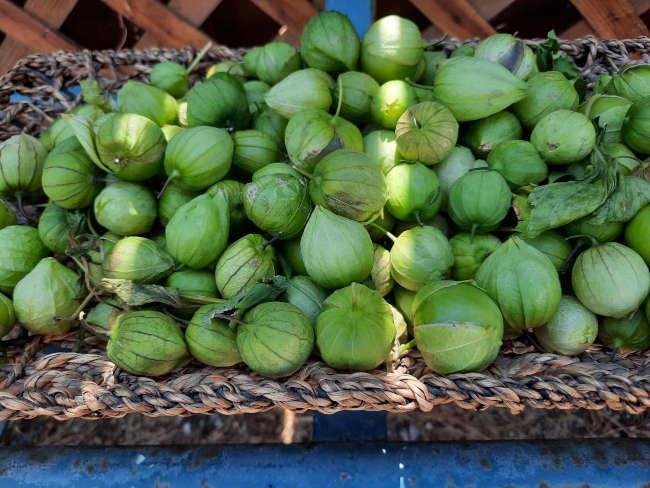
MIDDLETOWN, Calif. — Thanks to a generous literacy student, I found myself with a big bag of fresh tomatillos the other day.
They were just perfect — small, bright spheres of green covered with brownish papery husks. As a fan of salsa verde, this was pretty exciting for me.
The happy little fruits stared at me from the bag and my mind raced with ideas for their use. I’d turn some of them into salsa verde, of course, but other ideas popped up, too, like cooking them with a big batch of pinto beans for a vegetarian version of chili verde.
As it happened, I had limited time to put these plans into action, so I offered them to my son. This ended up being a great decision because he worked his magic to turn them into the best salsa verde I’ve ever tasted! It had a rich, smoky flavor, yet maintained the signature tartness expected from tomatillos.
I can let you in on the secret to his success in the recipe below. But first, a bit about this sassy little fruit.
Despite its name, which means “little tomato” in Spanish, tomatillos are not, in fact, little tomatoes. They’re members of the nightshade family like the tomato, so you might call them cousins, but they’re a species distinct from them.
The Cape gooseberry, which also grows encased in a thin husk, is another nightshade relative of the tomatillo.
Like many members of this family, parts of the plant are toxic. In the case of the tomatillo, the stems, leaves and husk are poisonous and should be avoided.
Other names for the tomatillo include husk tomato, Mexican husk tomato or, in Mexico, tomato verde. In Spain they’re known by a variety of names, my favorite being farolito, which translates to little lantern. Because of their papery husks, they do remind me of the paper lanterns strung everywhere during Chinese New Year celebrations.
Tomatillos are native to Mexico and parts of Central America. There’s evidence that they were cultivated in Mexico in pre-Columbian times, since at least 800 B.C., where they were eaten by the Aztecs and Mayans.
They’re still mostly associated with Mexican and Central American cuisine. (Think of delicious, tangy green salsa or the brightly flavored sauce served over pork or chicken enchiladas.)
Like tomatoes or cucumbers with internal seeds, they’re botanically considered a fruit, though in practice they’re used in savory cuisine like a vegetable.
Typically golf ball sized (though this can vary), each fruit has a thin husk that dries and recedes when they’re ripe. Depending on the variety, they can ripen to varying shades of yellow, red, or purple, just like their tomato cousins.
Tomatillos are most often harvested prior to maturity when bright apple green with a just-burst husk. This is when their tangy flavor is in full force and they still have their signature acidic edge. The flavor mellows as the fruit matures.
Heat-loving tomatillos have been cultivated in the U. S. since 1863. In California, they’re grown commercially on the central coast as well as in the Central Valley. Depending on the warmth of their location, harvesting can begin as early as late May and last through November.
If you’re in the market for tomatillos, look for those that have a husk that’s dry and not shriveled or damp. The husk should cover the fruit and be somewhat tight, though open at the end. This indicates that the tomatillos were picked just before ripening.
In addition, the fruit should be firm without much give, with no brown or soft spots, and be a vivid shade of green like a Granny Smith apple.
When you get them home, decide how long it will take you to use them. If right away, there’s no need to refrigerate, as they’ll store well on the counter for two to three days.
If you’d like to keep them around longer, place them in a partially open paper bag and store them in the refrigerator, where they’ll keep for two to three weeks.
Once the husks are removed, the sticky, protective residue on their skin will be revealed, and you’ll need to wash that off before working with them.
They’re really quite versatile and can be used in a variety of ways. Like tomatoes, the skin and seeds are edible and there’s no need to peel or seed them.
Despite the way they look and their relationship with tomatoes, tomatillos are too acidic to be subbed in recipes that feature green tomatoes.
Use them raw if you want to keep their flavor bright and to play up their bracing acidity. Raw tomatillos can be a component of ceviche, for example, or used in a salad with tomatoes, corn and avocado.
Raw tomatillos can also be used in vinaigrette dressings to provide additional brightness and acidity.
When tomatillos are cooked, their acidity is mellowed a bit (though they’ll still have that tang) and a subtle sweetness is brought out. This is particularly true when they’re roasted. Cooking of course softens them, and it mutes the color, as well.
There are a variety of ways to cook them.
Blanching tomatillos in boiling water for five minutes or so mellows the flavor and softens them for crushing or pureeing.
They can be fire roasted under the broiler, on the grill, or even with a propane torch. If using this method, be sure the heat is high to avoid mushyness before they’ve had a chance to char. The blackened skins will add smoky flavor to your dish.
They can be dry roasted with low heat for 20 to 30 minutes in the oven or in a cast iron pan on the stove. Turn them occasionally while they’re cooking.
They can be added directly to the pot to simmer with soups like pozole verde or braised with chicken or pork for stews like chili verde. They can be cooked with beans to add flavor and tang, or grilled with onions to make an accompaniment for steak or other hearty foods.
Or they can be smoked, which is what my son did to make his epic salsa verde. His recipe is below.
But before we go, here’s an interesting fact. A fossilized tomatillo was found in the Patagonia region of South America that dated to 52 million years ago. I wonder what that would taste like in a salsa?
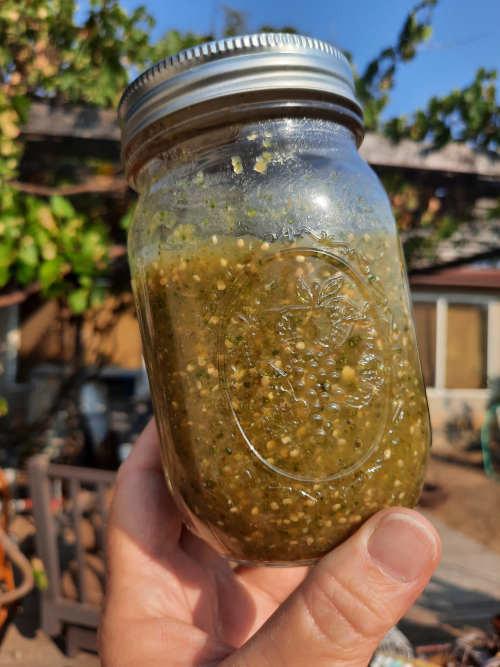
Bob’s Salsa Verde
6 or more cups tomatillos
3 jalapeno peppers
3 serrano peppers
2 pasilla peppers
2 bulbs (not cloves) of garlic
Olive oil
Red onion, roughly chopped
Cilantro, one bunch, leaves only
Juice of one lime
About ¼ cup red wine vinegar
Salt to taste
Smoke the peppers, tomatillos and garlic in an electric or wood smoker on low heat — about 250 to 275 degrees Fahrenheit — for 1 to 1 ¼ hours, until soft and smoky. Notes: Bob used a wood smoker fueled by oak and cherry logs. The tomatillos should be placed in a pan for smoking so the juices can be retained for the salsa. Garlic bulb tops should be cut off, then rubbed with oil and wrapped in aluminum foil for roasting.
Place the smoked peppers, tomatillos and garlic (without skins) in a blender or food processor and puree on the pulse setting with the red onion, cilantro, lime juice and vinegar. Notes: Garlic bulbs can be squeezed to release the smoked garlic cloves inside. Be sure to add the tomatillo juice in the pan to the puree, as well.
Add salt to taste, a pinch or so. Bob thinks the pinch he added is about half a teaspoon. Start with a quarter teaspoon, taste, and add more if needed.
Store in glass jars with lids in the refrigerator, where it should stay fresh for about two weeks.
Note that salsa verde can become a little gelatinous when cold. This can be remedied by bringing to room temperature or heating for a few seconds in the microwave.
Use as you would any salsa verde - over enchiladas, to flavor soups or stews, atop meats and vegetables, with chips. For a treat, mix it with guacamole for a flavorful dip!
Recipe by Bob Oertel.
Esther Oertel is a writer and passionate home cook from a family of chefs. She grew up in a restaurant, where she began creating recipes from a young age. She’s taught culinary classes in a variety of venues in Lake County and previously wrote “The Veggie Girl” column for Lake County News. Most recently she’s taught culinary classes at Sur La Table in Santa Rosa. She lives in Middletown, California.
- Details
- Written by: Elizabeth Larson
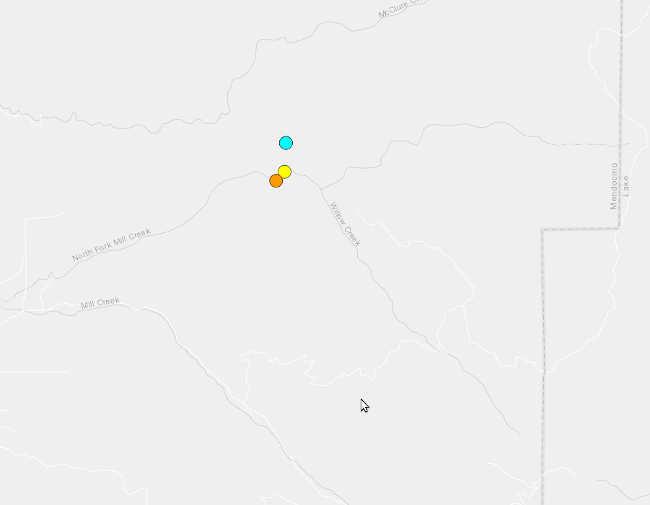
NORTH COAST, Calif. — A moderately sized earthquake that occurred on Saturday night in Mendocino County was the latest in a series of quakes near Talmage that Lake County residents have reported feeling over the past week.
The latest quake, measuring 3.7 in magnitude, occurred at 10:27 p.m. Saturday 2.7 miles east of Talmage and about two miles west of the Lake County line, according to the U.S. Geological Survey.
It was reported at a depth of 4.3 miles, the survey said.
As of 3 a.m. Sunday, there were 165 shake reports submitted from around Lake and Mendocino counties.
That quake was located a short distance away from two others earlier in the week.
A 3.8-magnitude quake occurred near Talmage at 10:44 p.m. Thursday, also at a depth of 4.3 miles, the U.S. Geological Survey reported.
The survey said 314 shake reports were submitted for that quake.
The first, and smallest, of the quakes occurred on Tuesday at 1:20 p.m. at a depth of 1.2 miles.
There were 122 shake reports submitted for that quake, the U.S. Geological Survey said.
Email Elizabeth Larson at