 How to resolve AdBlock issue?
News
- Details
- Written by: Elizabeth Larson
Dogs available for adoption this week include mixes of Australian kelpie, husky, Labrador retriever, mastiff, pit bull, rat terrier, Rhodesian Ridgeback, shepherd and terrier.
Dogs that are adopted from Lake County Animal Care and Control are either neutered or spayed, microchipped and, if old enough, given a rabies shot and county license before being released to their new owner. License fees do not apply to residents of the cities of Lakeport or Clearlake.
The following dogs at the Lake County Animal Care and Control shelter have been cleared for adoption (additional dogs on the animal control website not listed are still “on hold”).
Call Lake County Animal Care and Control at 707-263-0278 or visit the shelter online at http://www.co.lake.ca.us/Government/Directory/Animal_Care_And_Control.htm for information on visiting or adopting.
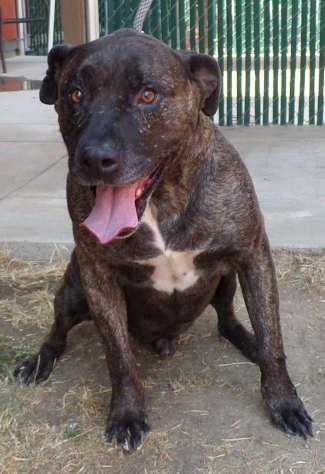
American pit bull terrier mix
This 5-year-old American pit bull terrier mix has a short brindle coat.
He is in kennel No. 12, ID No. LCAC-A-1483.
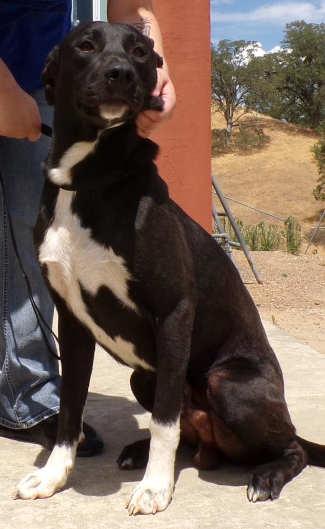
Male Labrador retriever
This 2-year-old male Labrador retriever has a short black coat with white markings.
He is in kennel No. 19, ID No. LCAC-A-1349.

‘Oliver’
“Oliver” is a 1-year-old Australian kelpie-rat terrier mix with a short tricolor coat.
He is in kennel No. 20, ID No. LCAC-A-1551.

‘Jim’
“Jim” is a 2-year-old pit bull terrier mix with a short black and white coat.
He is in kennel No. 23, ID No. LCAC-A-810.
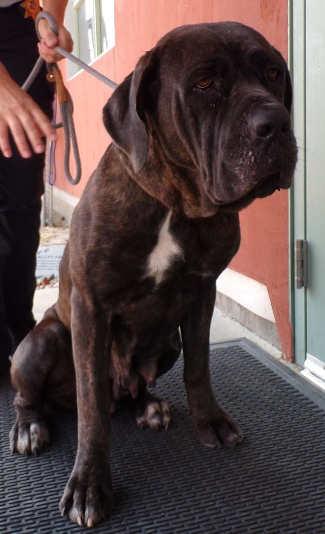
Female mastiff
This 2-year-old female mastiff has a short brindle and white coat.
She weighs 102 pounds.
She is in kennel No. 24, ID No. LCAC-A-1395.
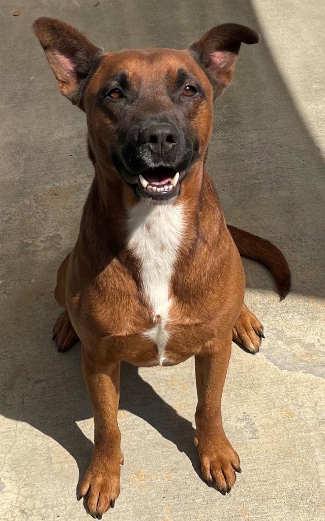
‘Rosco’
“Rosco” is 3-year-old a male Rhodesian Ridgeback-Shepherd mix with a short tan coat.
He is in kennel No. 25, ID No. LCAC-A-1205.
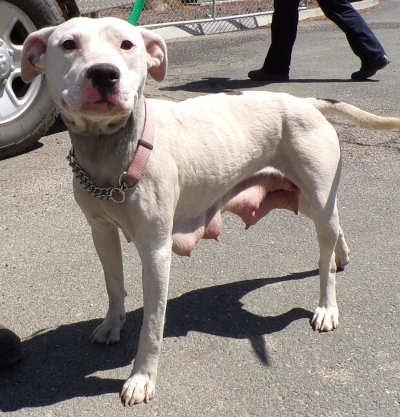
Female pit bull terrier
This 4-year-old female pit bull terrier mix has a short white coat.
She is in kennel No. 29, ID No. LCAC-A-812.
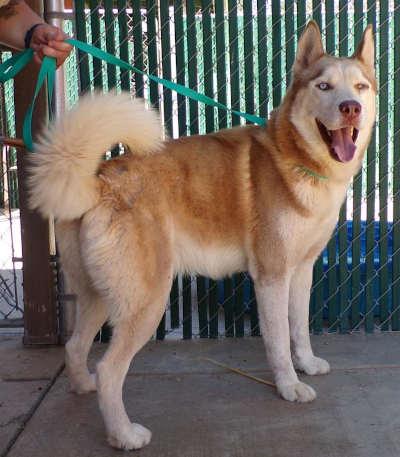
Male husky
This 2-year-old male husky has a red and cream coat.
He is in kennel No. 32, ID No. LCAC-A-1024.
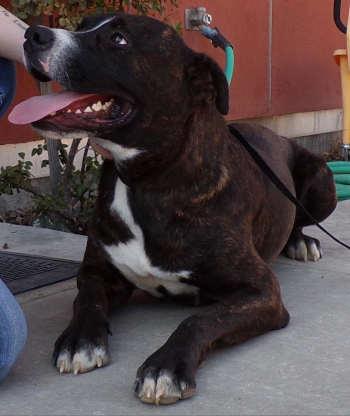
Male pit bull mix
This 2-year-old male pit bull terrier mix has a short brindle coat.
He is in kennel No. 33, ID No. LCAC-A-1528.
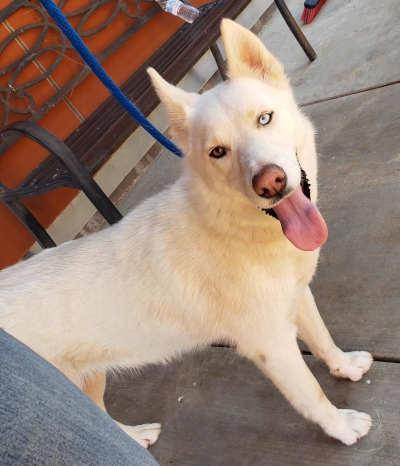
‘Ghost’
“Ghost” is a 2-year-old female husky with an all-white coat and blue eyes.
She is in kennel No. 34, ID No. LCAC-A-1167.
Email Elizabeth Larson at
- Details
- Written by: Patrick Rooney, IUPUI

The scramble to assist the thousands of refugees who fled Afghanistan is on as the humanitarian crisis in that country grows more dire. Haiti’s recovery from an earthquake on Aug. 14, 2021, is off to a rocky start. The recovery from damage Hurricane Ida wrought in Louisiana and northeastern states could take years. Wildfires are raging in California and at least nine other states.
All these disasters, plus many more, are unfolding while the toll of the COVID-19 pandemic continues to mount in both economic and health terms in the United States and around the world.
It’s reasonable that people who would normally chip in to alleviate suffering in any of these situations might not know how to help. The Conversation U.S. asked Patrick Rooney, an economist at the Lilly Family School of Philanthropy who has studied disaster giving for decades, three questions to clear up some of the concerns that many donors might have.
1. How long will donors give after disasters?
Generally, not long enough.
Given all of the disasters affecting the United States and the entire world at the same time, it’s reasonable for many people who want to donate to be unsure about what they should do. Whether you prefer to focus on the short run or the long run, I think it makes sense to donate now, but not necessarily to the most recent need that has come to your attention.
In the short run, refugees from Afghanistan and displaced people from Haiti, Louisiana and elsewhere all need “hots and cots” – disaster-speak for hot meals and somewhere to sleep.
In the long run, their needs will differ, but grow in terms of their significance and costs. Wherever refugees settle down, most families will need housing and their breadwinners will need jobs. Before becoming gainfully employed, many of those workers will require training and education.
Following these disasters, roads, bridges, utilities, schools and other infrastructure will need to be rebuilt, and people could take a long time to rebuild their lives. That’s why efforts to help with recovery need your help now and will need more help later this year, next year and possibly for a much longer period of time.
In studying disaster giving, my colleagues and I have generally found, with few exceptions, that roughly half of all the money raised through donations tends to be donated within the first four to six weeks after disasters. By the fifth or sixth month, donations usually slow to a trickle even as needs continue.
2. Do people who donate after disasters give less to their favorite causes?
Ample evidence indicates that this doesn’t usually happen.
My colleagues and I researched U.S. donations to causes tied to 9/11 disaster relief, as well as giving to other charities before and after the 2001 terrorist attacks. We found no evidence that giving related to 9/11 diminished support for other charities.
A team of philanthropy researchers has studied disaster relief giving in the United Kingdom using data garnered from more than 100,000 donors over a five-year period. They also found that disaster relief giving does not displace giving to other charities.
My IUPUI colleagues, the Center for Disaster Philanthropy and the philanthropy research group Candid collaborated on a survey of 1,243 households about their giving in 2017 and 2018. About 30% made donations annually that were tied to at least one disaster. Only 8% of these donors said that disaster giving led them to cut back on what they gave to other charities.
In other words, donors who support causes linked to disasters keep on supporting their local food pantry, favorite animal shelter, alma mater, congregation and other usual causes. And they generally do this in the same amounts as in other years.
However, things could be different this time around. There’s no precedent for so many disasters occurring simultaneously during a pandemic.
3. Did 9/11 change how people give?
Yes.
The estimated US$2.8 billion that Americans gave to causes related to the harm caused by the terrorists attacks marked the beginning of new patterns in disaster philanthropy that persist today.
First, the magnitude of disaster giving after most major national and international disasters has grown. Americans gave, for example, an estimated $20 billion for COVID-19 relief in 2020 and funding from private sources for Puerto Rico following Hurricanes Irma and Maria in 2017 totaled at least $375 million. Donations following Hurricane Floyd in 1999, for example, were on a much smaller scale.
Second, new charities tend to arise after major disasters that exist only to address needs related to one hurricane, earthquake or other devastating event. Most of these pop-up charities, which typically fold after a few years, are legitimate.
Unfortunately, this trend has created the temptation for abuse and fraud: Misleading websites can amass donations intended for urgent needs that instead line the pockets of people who don’t need the money. While the actual dollar amounts lost to fraud is unknowable, philanthropy scholars do not believe they represent a large share of the billions of dollars raised annually for disaster relief.
To avoid scammers, I recommend giving directly to reputable, well-established charities with experience in disaster relief and recovery. Also watch out for sound-alike and look-alike fraudulent names – such as branding that resembles a familiar charity but isn’t connected to that trusted organization.
What has not changed is the need for giving that lasts years rather than months following a major disaster. For example, I see the devastation in the wake of Haiti’s 2021 earthquake as a graphic reminder that many of the infrastructure needs from the 2010 earthquake remain unmet despite the $13.5 billion in government and private aid spent in its aftermath – amid chronic mismanagement and even abuse.
[Over 100,000 readers rely on The Conversation’s newsletter to understand the world. Sign up today.]
Charities and government aid agencies may need stronger oversight. Another hurdle to overcome: figuring out how to keep donations flowing after the media stops covering a disaster.
Patrick Rooney, Glenn Family Chair of Economics and Philanthropic Studies, IUPUI
This article is republished from The Conversation under a Creative Commons license. Read the original article.
- Details
- Written by: NATIONAL AERONAUTICS AND SPACE ADMINISTRATION
The study of active asteroids is a relatively new field of solar system science, focusing on objects that have asteroid-like orbits but look more like comets, with visual characteristics such as tails.
Because finding an active asteroid is such a rare event, fewer than 30 of these solar system bodies have been found since 1949, so there is still much for scientists to learn about them.
Roughly only one out of 10,000 asteroids are classified as active asteroids, so an enormous number of observations will be needed over the span of many years to yield a larger sample for study.
Through funding from a National Science Foundation (NSF) Graduate Research Fellowship Program award in 2018, doctoral student Colin Orion Chandler in Northern Arizona University’s Department of Astronomy and Planetary Science just launched an ambitious new project, Active Asteroids, which is designed to engage volunteers in the search for more of these enigmatic objects.
The highly competitive and prestigious program, awarded to only 15 percent of the more than 2,000 yearly applicants, provides three years of funding for Chandler’s research.
“With the generous help of Citizen Scientists,” said Chandler, project founder and principal investigator, “we hope to quadruple the number of known active asteroids and encourage study of an ambiguous population of solar system objects, knowledge of which is currently hampered due to a very small sample size.”
The implications of finding more active asteroids for science and engineering are far-reaching, including:
— Helping to answer key unsolved questions about how much water was delivered to Earth after it formed, and where that water originated.
— Advising searches for life about where water—a prerequisite for life as we understand it—is found, both in our own solar system and other star systems, too.
— Informing spaceflight engineers seeking more practical, inexpensive and environmentally responsible sources of fuel, air and water.
— Appraising volatile availability for prospective asteroid mining efforts and sample-return missions.
In preparation for the launch, Chandler, an NAU Presidential Fellow, conducted the beta review phase of the project, enlisting the help of more than 200 volunteers, who completed 4,798 classifications of 295 objects.
“I am very, very excited the project is finally launching,” he said. “The project has been years in the making, from selection by the NSF until this launch. Even during the preparations for the project launch, we have made several important discoveries, including discovering a new active object and uncovering information about several previously known objects. These discoveries have led to three publications in peer-reviewed scientific journals, with another one in the works right now.”
As part of the testing phase, the team noticed an unusual "smudge" kept showing up around one particular object.
The object was a Centaur, an icy body with an orbit between Jupiter and Neptune. The team carried out follow-up observations with other telescopes and discovered the object was active, one of only about 20 active Centaurs discovered since 1929, and published their findings in the Astrophysical Journal Letters (see related article).
Although it will depend on the number of volunteers participating and how quickly they complete classifications, the duration of the project could be up to one year.
Chandler hopes to recruit thousands of volunteers to participate. No previous astronomy experience is needed; training is provided online through the Zooniverse platform where the project is housed.
“We need to examine 5,000 square degrees of the sky in the Southern Hemisphere, which means there are many — more than 10 million — asteroid images to classify!” he said.
Co-founders of the project are Jay Kueny of Lowell Observatory and the University of Arizona, who began collaborating with Colin in creating the project when he was a senior at NAU — and who has since then also received a GRFP award from the NSF — and NAU associate professor Chad Trujillo, who serves as the project's Chief Science Advisor. Other contributors are graduate students Annika Gustaffson and William Oldroyd.
The project’s Science Advisory Board consists of several eminent scientists, including Henry Hsieh of the Planetary Science Institute, NAU professor David Trilling, NAU assistant professor Tyler Robinson and NAU assistant professor Michael Gowanlock.
Ready to classify objects? Visit the Active Asteroids project site on Zooniverse to get started.
This project was supported through NASA grants 80NSSC21K0114 and 80NSSC19K0869.
- Details
- Written by: Lake County News reports
The National Weather Service said temperatures are expected to rise into the 90s over the weekend across much of the county, with the hottest temperatures — near the century mark — in south Lake County.
The forecast also includes a prediction of widespread haze on Saturday and Sunday, with conditions starting to clear on Monday.
The Lake County Air Quality Management District said that stable atmospheric conditions together with light winds are expected to result in smoke levels increasing throughout the county this weekend.
Fires including the Monument, McCash, Dixie and Caldor continue to create regional smoke impacts throughout Lake County and the Western States, the Air Quality Management District reported.
The district said Lake County experienced good to moderate air quality on Friday.
However, the air quality forecast through Sunday will range from “moderate” (Air Quality Index of 51 to 100) to “unhealthy for sensitive groups” (AQI of 101 to 151) with areas at lower elevations expected to experience the most smoke impacts.
Current weather models indicate smoke building during the early morning hours with gradual clearing during the daytime.
Much of the smoke is expected to stay in the Highway 101 corridor on Saturday, while Lake County should experience mostly good to moderate air quality.
The district said to expect fluctuating periods of poorer air quality as the occasional wind gusts push that smoke into our area.
On Sunday, the district said Lake County will see a change with most areas of the county forecast to reach “unhealthy for sensitive groups” throughout the day.
On Monday the district anticipates some clearing of the smoke with air quality expected to reach moderate levels based on the current weather forecast.
For more information visit the district’s website and follow the quick links for air monitoring for current smoke and air quality conditions.