 How to resolve AdBlock issue?
News
- Details
- Written by: Dr. Glen Holstein
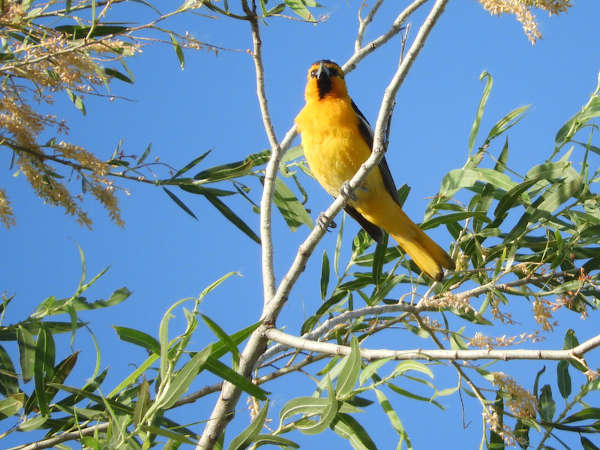
When Charles Darwin created modern biology with his theory of evolution he used the term “tree of life.”
For many years after, scientists speculated on how species were related and evolved by looking for similarities in looks and lifestyle.
Now, however, guessing is over since we can now read and follow changes in the DNA uniting living things. This supported some past speculation but there were big surprises.
Botany once included algae and mushrooms with higher plants, but we now know from DNA that mushrooms share a common ancestor with animals and are unrelated to plants while “algae” lumped plant related photosynthesizers with others unrelated including some bacteria. DNA even showed a surprising relation between hippos, dolphins, and whales.
Complete trees of life for large groups are now possible and we finally have one. A new book, “The Largest Avian Radiation” by Fjeldsa, Christidis, and Ericson provides just that for the 6,200 perching bird species, which are 60% of all birds.
Perching birds are tiny dinosaur descendants that survived the catastrophe that killed off their larger relatives, and their tree of life tells how that happened.
The big dinos were wiped out 66 million years ago when an asteroid hit what’s now Yucatan in the northern hemisphere.
Consequently, the southern hemisphere was where its devastation was least intense and where much more good habitat was present than exists there today because we know from fossils that large parts of Antarctica were forested then, rather than covered by ice.
No perching birds live there today but the most ancestral ones are in a suborder now confined to New Zealand, where the kind of southern hemisphere forests once present in Antarctica survive today.
Such forests are also present at the southern tip of South America, and that’s where evolution of the next most advanced perching bird suborder exploded into 1,350 species. Its two largest groups clearly evolved in South America, and while one of these extends only north to tropical Mexico, the other reaches Alaska and includes our flycatchers and kingbirds.
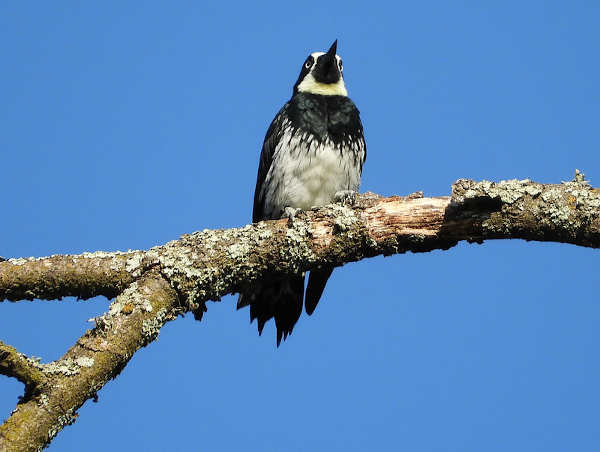
The suborder’s third and smaller group is most diverse in southeast Asia, but its most ancestral species is confined to South America’s wettest rainforest, and some intermediate species in Africa suggest this group may have reached Asia through there by crossing a then narrower south Atlantic.
That suborder is known as the suboscines because it lacks anatomy for producing complex songs. All other perching birds are in a more advanced suborder called oscines or songbirds, and its most ancestral members are 322 species found in and near Australia, which can proudly call itself the “continent where song began.” Families of these basal oscines likely most familiar to non-Australians are lyrebirds, bowerbirds, and honeyeaters.
New Guinea, a land mass north of Australia created when that continent collided with volcanic islands as it drifted north from Antarctica, gave rise to the first group of songbirds that invaded the rest of the world.
It consisted of around 800 species and even included three families that reached the Americas: shrikes, vireos, and the crow and jay family, which includes ravens, the biggest perching birds. One family in this group remained in New Guinea, however, the spectacular birds of paradise.
By far the largest group of perching birds are the 3,900 species of higher oscines that also spread from New Guinea to first the Old World and then the Americas. Older groups among them are less diverse and widely scattered around the world but some are familiar here: kinglets, waxwings, and phainopeplas.
More recent higher oscines are in several superfamilies, the smallest of which has just 2 families. The larger of these consists of tits and chickadees, and the smaller has only one American species, the verdin of our deserts.
A much larger superfamily, the Old World warblers, has few families that reach the Americas but exceptions are larks, swallows, bushtits, and wrentits.
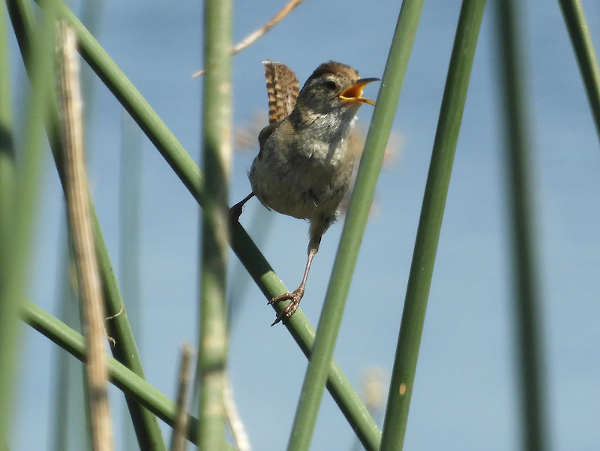
A smaller superfamily better developed in the Americas includes nuthatches, tree creepers, gnatcatchers, and wrens, but another large one, Old World warblers, includes starlings and 3 families that naturally reach the Americas: dippers, mockingbirds/thrashers, and thrushes.
The last of these superfamilies is the largest, with 1,500 species. It began in the Old World but achieved some of its greatest diversity in the Americas.
An innovation helping it reach this success was a conical bill enabling grass seeds to be cracked and eaten acquired 10 million years ago just when climate change caused grass to replace many forests. Its early members lacking this bill were all Old World except the olive warbler, a one species family living from Arizona to Nicaragua.
Early conical bill families began in the Old World and included our familiar introduced house sparrow, but two of them extended naturally to the Americas: pipits and finches.
Seven groups of the latter provide our finches, crossbills, and many of our grosbeaks and another that reached Hawaii provides its diverse honeycreepers.
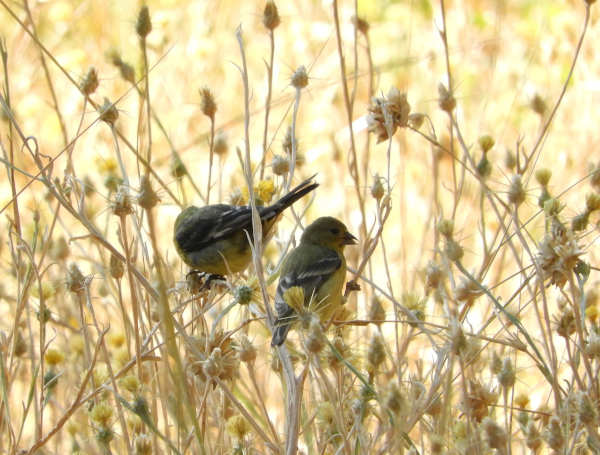
That superfamily has an advanced group of 16 families that includes 5 families providing much of our perching bird diversity: 142 species are our American sparrows; 111 are our wood warblers, which switched back to insects from grass; 108 are our blackbirds, orioles, and meadowlarks; 52 are our cardinals; and, largest of all, 327 are our tanagers.
Reading DNA finally sorted out this complex pattern and provided some surprises: yellow-breasted chats are with orioles, not wood warblers, and our tanagers, like the western, are actually cardinals.
The huge tanager diversity is mostly in South America, and a surprise inclusion are the Galapagos finches made famous by Darwin. The only true tanager reaching the United States and just barely is the white-collared seedeater.
In addition to 10 chapters constructing the perching bird tree of life in detail, the book has range maps of their many families, beautiful accurately colored paintings of many, and ten other chapters and two appendices on subjects explaining these birds’ evolution and often useful for other species.
The first appendix, for example, summarizes ecological information quite relevant to California as well as the rest of the world.
This is by far the best and most useful one volume biology book I’ve ever come across.
Dr. Holstein is a retired consulting ecologist who worked in much of California, a long-time conservation activist with the California Native Plant Society, and a board member of Tuleyome, a Woodland, California-based nonprofit conservation organization.
- Details
- Written by: Lake County News reports
In a Friday statement, Dr. Gary Pace, MD, who continues to offer interim Public Health officer services to the county, and the Lake County Health Services Department said the slowing of the surge on the statewide and local levels is encouraging, but the virus remains widespread in Lake County.
“Settings that bring together people from numerous households carry risk. On-site learning resuming at local schools has certainly led to an increase in circulation of the virus. Last weekend’s County Fair may likewise lead to some uptick in cases in the coming weeks,” they said in the Friday report.
As of Friday, 5,638 COVID-19 cases have been confirmed in Lake County, according to state statistics.
Of those, 79 Lake County residents have now died due to COVID-related illness; 16 since July 1.
Health officials said everyone must take the virus seriously, and protect those that are medically vulnerable or ineligible for vaccination.
They continue to urge people to be vaccinated and take precautions, including masking around others, avoiding crowded indoor settings and being cautious in outdoor settings, as they anticipate another surge once cold and flu season sets in.
Vaccination is free and widely available in Lake County. Thanks to the support of the Board of Supervisors, an OPTUM mobile vaccination van will be available locally for the next two months. They can administer up to 100 doses per day. Walk-ins are welcome, and Spanish-speakers are available.
Vaccination through OPTUM is now available in Nice, Clearlake, Lakeport, Lower Lake and Middletown. The OPTUM Mobile Van schedule and other opportunities for vaccination are listed here.
Vaccinations also will be available at the Sunday “Dia de la Independencia” event in Kelseyville, from 2 to 7 p.m. No appointments are necessary.
If you are unable to get to any vaccination site, or experiencing other barriers, contact us at 707-263-8174.
- Details
- Written by: Roberto Lucchini, Florida International University
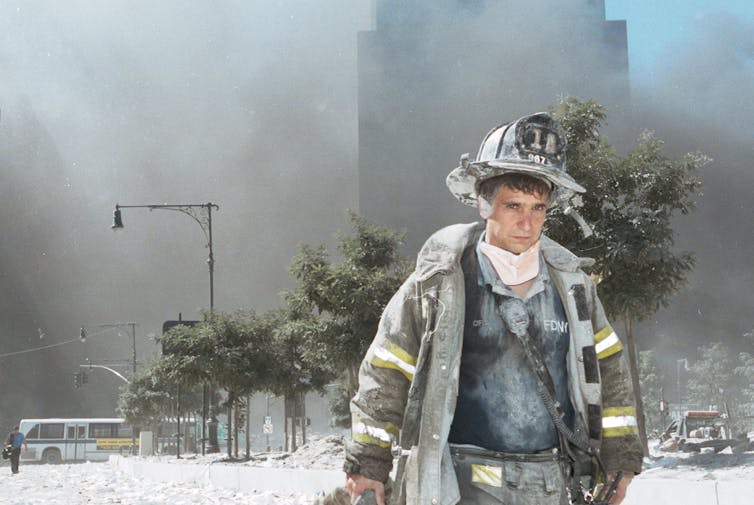
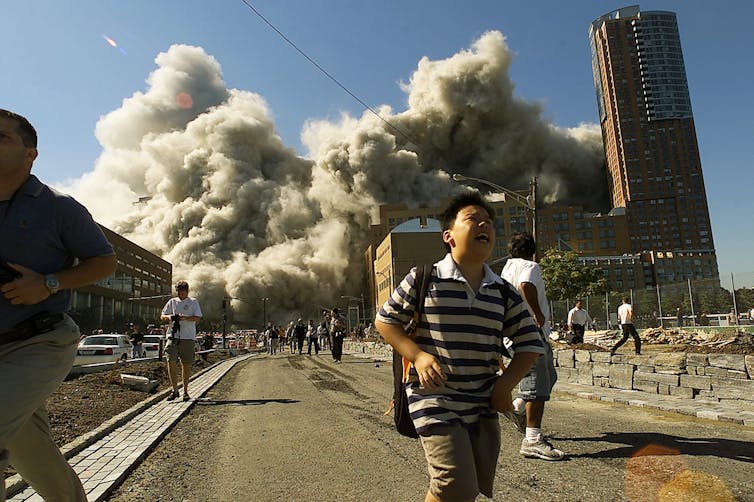
The 9/11 terrorist attack on the World Trade Center in New York resulted in the loss of 2,753 people in the Twin Towers and surrounding area. After the attack, more than 100,000 responders and recovery workers from every U.S. state – along with some 400,000 residents and other workers around ground zero – were exposed to a toxic cloud of dust that fell as a ghostly, thick layer of ash and then hung in the air for more than three months.
The World Trade Center dust plume, or WTC dust, consisted of a dangerous mixture of cement dust and particles, asbestos and a class of chemicals called persistent organic pollutants. These include cancer-causing dioxins and polyaromatic hydrocarbons, or PAHs, which are byproducts of fuel combustion.
The dust also contained heavy metals that are known to be poisonous to the human body and brain, such as lead – used in the manufacturing of flexible electrical cables – and mercury, which is found in float valves, switches and fluorescent lamps. The dust also contained cadmium, a carcinogen toxic to the kidneys that is used in the manufacturing of electric batteries and pigments for paints.
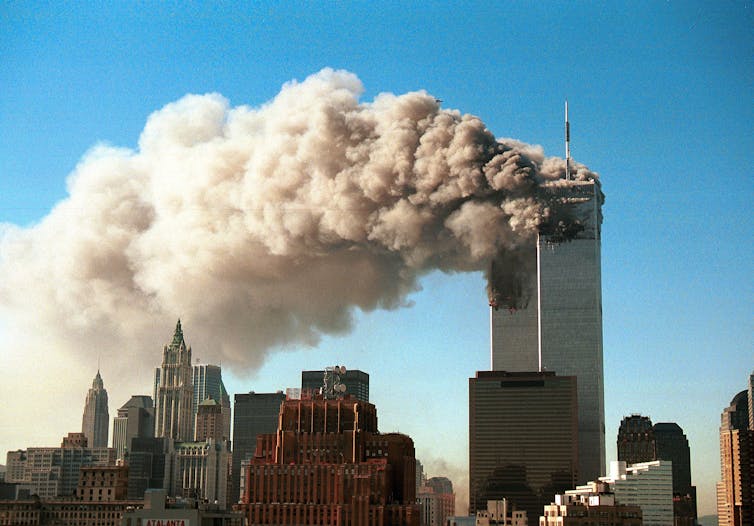
Polychlorinated biphenyls, human-made chemicals used in electrical transformers, were also part of the toxic stew. PCBs are known to be carcinogenic, toxic to the nervous system and disruptive to the reproductive system. But they became even more harmful when incinerated at high heat from the jets’ fuel combustion and then carried by very fine particles.
WTC dust was made up of both “large” particulate matter and very small, fine and ultrafine ones. These particularly small particles are known to be highly toxic, especially to the nervous system since they can travel directly through the nasal cavity to the brain.
Many first responders and others who were directly exposed to the dust developed a severe and persistent cough that lasted for a month, on average. They were treated at Mount Sinai Hospital and received care at the Clinic of Occupational Medicine, a well-known center for work-related diseases.
I am a physician specializing in occupational medicine who began working directly with 9/11 survivors in my role as director of the WTC Health Program Data Center at Mount Sinai beginning in 2012. That program collects data, as well as monitors and oversees the public health of WTC rescue and recovery workers. After eight years in that role, I moved to Florida International University in Miami, where I am planning to continue working with 9/11 responders who are moving to Florida as they reach retirement age.
From acute to chronic conditions
After the initial “acute” health problems that 9/11 responders faced, they soon began experiencing a wave of chronic diseases that continue to affect them 20 years later. The persistent cough gave way to respiratory diseases such as asthma, chronic obstructive pulmonary disease (COPD) and upper airway diseases such as chronic rhinosinusitis, laryngitis and nasopharyngitis.
The litany of respiratory diseases also put many of them at risk for gastroesophageal reflux disease (GERD), which occurs at a higher rate in WTC survivors than in the general population. This condition occurs when stomach acids reenter the esophagus, or food pipe, that connects the stomach to the throat. As a consequence of either the airway or the digestive disorders, many of these survivors also struggle with sleep apnea, which requires additional treatments.
Further compounding the tragedy, about eight years after the attacks, cancers began to turn up in 9/11 survivors. These include tumors of the blood and lymphoid tissues such as lymphoma, myeloma and leukemia, which are well known to affect workers exposed to carcinogens in the workplace. But survivors also suffer from other cancers, including breast, head and neck, prostate, lung and thyroid cancers.
Some have also developed mesothelioma, an aggressive form of cancer related to exposure to asbestos. Asbestos was used in the early construction of the north tower until public advocacy and broader awareness of its health dangers brought its use to a halt.
And the psychological trauma that 9/11 survivors experienced has left many suffering from persistent mental health challenges. One study published in 2020 found that of more than 16,000 WTC responders for whom data was collected, nearly half reported a need for mental health care, and 20% of those who were directly affected developed post-traumatic stress disorder.
Many have told me that the contact they had with parts of human bodies or with the deadly scene and the tragic days afterward left a permanent mark on their lives. They are unable to forget the images, and many of them suffer from mood disorders as well as cognitive impairments and other behavioral issues, including substance use disorder.
An aging generation of survivors
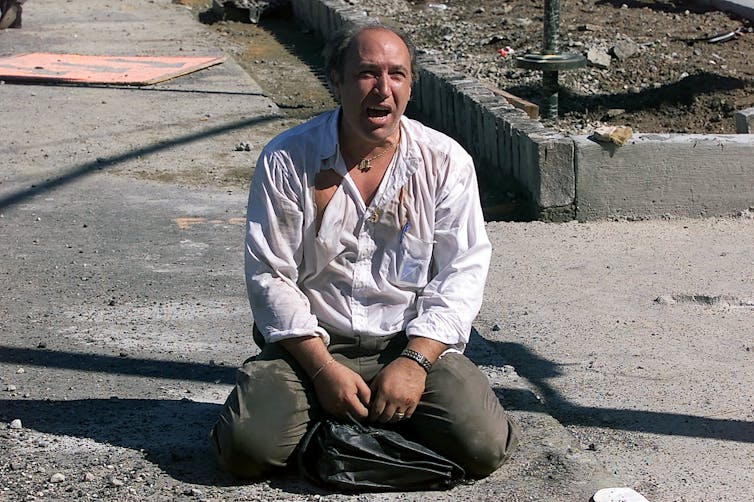
Now, 20 years on, these survivors face a new challenge as they age and move toward retirement – a difficult life transition that can sometimes lead to mental health decline. Prior to retirement, the daily drumbeat of work activity and a steady schedule often helps keep the mind busy. But retirement can sometimes leave a void – one that for 9/11 survivors is too often filled with unwanted memories of the noises, smells, fear and despair of that terrible day and the days that followed. Many survivors have told me they do not want to return to Manhattan and certainly not to the WTC.
Aging can also bring with it forgetfulness and other cognitive challenges. But studies show that these natural processes are accelerated and more severe in 9/11 survivors, similar to the experience of veterans from war zones. This is a concerning trend, but all the more so because a growing body of research, including our own preliminary study, is finding links between cognitive impairment in 9/11 responders and dementia. A recent Washington Post piece detailed how 9/11 survivors are experiencing these dementia-like conditions in their 50s – far earlier than is typical.
The COVID-19 pandemic, too, has taken a toll on those who have already suffered from 9/11. People with preexisting conditions have been at far higher risk during the pandemic. Not surprisingly, a recent study found a higher incidence of COVID-19 in WTC responders from January through August 2020.
[Get our best science, health and technology stories. Sign up for The Conversation’s science newsletter.]
Honoring the 9/11 survivors
The health risks posed by direct exposure to the acrid dust was underestimated at the time, and poorly understood. Appropriate personal protective equipment, such as P100 half-face respirators, was not available at that time.
But now, 20 years on, we know much more about the risks – and we have much greater access to protective equipment that can keep responders and recovery workers safe following disasters. Yet, too often, I see that we have not learned and applied these lessons.
For instance, in the immediate aftermath of the condominium collapse near Miami Beach in June, it took days before P100 half-face respirators were fully available and made mandatory for the responders. Other examples around the world are even worse: One year after the Beirut explosion in August 2020, very little action has been taken to investigate and manage the physical and mental health consequences among responders and the impacted community.
A similarly dire situation is occurring in the immediate aftermath of a July 2021 chemical fire in Durban, South Africa.
Applying the lessons learned from 9/11 is a critically important way to honor the victims and the brave men and women who took part in the desperate rescue and recovery efforts back on those terrible days.
Roberto Lucchini, Professor of Occupational and Environmental Health Sciences, Florida International University
This article is republished from The Conversation under a Creative Commons license. Read the original article.
- Details
- Written by: DENNIS FORDHAM
Many trusts say that “income” and/or “principal” are distributed for the beneficiary’s “Health, Education, Support and Maintenance,” or HEMS.
Why is the HEMS standard used, what does it mean, and how is it applied and enforced?
The HEMS standard is an “ascertainable standard”. It is an objective (measurable) standard. A non-ascertainable distribution standard — e.g., distributions for beneficiary’s comfort and happiness — is not measurable because distributions are measured by the beneficiary’s personal wishes.
Using the HEMS standard helps protect trust assets from creditors of the beneficiary, from the beneficiary’s spouse or partner, and from the beneficiary’s bad choices. The trust may allow, or require, the trustee to make distributions “for the benefit” of the beneficiary by paying such expenses directly.
The HEMS standard gives the beneficiary ascertainable and enforceable rights.
But how the HEMS standard applies depends on additional terms:
— Does the trust require HEMS distributions, i.e., the trustee “shall” make HEMS distributions — or does the trust authorize HEMS distributions at the discretion of the trustee, i.e., the trustee “may” make HEMS distributions?
— Does the trust require the trustee to consider the beneficiary’s other resources before making a HEMS distribution, i.e., the trustee “shall” first consider the beneficiary’s income and assets before making a distribution — or does the trust allow the trustee to consider the beneficiary’s other resources, i.e., the trustee “may” consider the beneficiary’s other income and assets before making a distribution?
— Does the trust give priority to some beneficiaries over other beneficiaries, e.g., the trustee shall first make distributions for the HEMS of minor children and only make HEMS distributions for adult children if there remains sufficient assets after taking into consideration the future needs of the minor children?
Saying that the trustee “may distribute” requires the trustee to exercise discretion.
In California, generally, “a discretionary power conferred upon a trustee is not left to the trustee’s arbitrary discretion, but shall be exercised reasonably (section 16080 Probate Code).
Moreover, subject to important exceptions, “if a trust instrument confers “absolute,” “sole,” or “uncontrolled” discretion on a trustee, the trustee shall act in accordance with fiduciary principles and shall not act in bad faith or in disregard of the purposes of the trust (section 16081 Probate Code).”
Next, what does “health, education, maintenance and support” include? It includes the beneficiaries “needs” — as opposed to “wants”. It is not necessarily limited to “basic needs.” The trust may define these terms, either expansively or narrowly.
Generally, “health” includes both mental and physical health. Education is often broad and may include private high school, vocational school, occupational training.
The trust may define the “education” to say whether it includes sports, room and board, computer, and a spending stipend. “Maintenance and support” means the beneficiary’s standard of living.
The trust may further define what standard of living applies. Is it limited to the “beneficiary’s accustomed manner of living” or may the trustee increase the beneficiary’s standard of living?
“Maintenance and support” includes rent, daily living expenses, transportation, utilities and vacations (amongst many others), but again may be defined.
The trustee owes a fiduciary duty to the beneficiary to faithfully and competently carry out the terms of the trust as written. The trustee must avoid conflicts of interest and may not favor one beneficiary over another (unless permitted by the trust). If the trustee breaches (violates) his or her “fiduciary duties,” the beneficiary may petition the court to require an accounting and hold the trustee accountable.
Alternatively, the beneficiary may petition the court for instructions to the trustee to order distributions.
The foregoing is a partial and simplified discussion of a larger and fact specific subject. It is not legal advice. Consult an attorney for guidance.
Dennis A. Fordham, attorney, is a State Bar-Certified Specialist in estate planning, probate and trust law. His office is at 870 S. Main St., Lakeport, Calif. He can be reached at