 How to resolve AdBlock issue?
News
- Details
- Written by: Elizabeth Larson
Following an hour-and-a-half-long closed session at a special meeting that began late Thursday afternoon, the board emerged and President Misha Grothe announced that it had selected Thad Owens to take on the superintendent’s role, pending contract approval.
The Thursday meeting was the second special meeting the board has held this week. During the first, on Tuesday night, the board accepted the resignation of Superintendent Tim Gill.
The board had said in a statement issued after the Tuesday meeting that it intended to look for an interim superintendent immediately.
However, based on the announcement at the Thursday meeting, Owens’ hiring does not appear to be on an interim basis.
Owens served a portion of a term on the school board before resigning, without giving a reason, in November. Allison Berlogar later was appointed to fill his seat.
He will succeed Gill, who resigned on Monday and left the following day after only four months on the job.
Gill has not given a public reason for his departure. However, on Wednesday the Lake County Sheriff’s Office reported that it had served a search warrant on a parent who is alleged to have recorded a conversation with Gill without his knowledge.
Owens is listed as a principal for the Konocti Unified School District’s Blue Heron Opportunity High School on that district’s website.
He’s also previously served as principal at Middletown Middle School and Minnie Cannon Elementary School, according to his LinkedIn page.
Email Elizabeth Larson at
- Details
- Written by: LAKE COUNTY NEWS REPORTS
The proposal, which must be approved by the Legislature, would require counties to provide comprehensive treatment to the most severely impaired and untreated Californians and hold patients accountable to their treatment plan.
“CARE Court is about meeting people where they are and acting with compassion to support the thousands of Californians living on our streets with severe mental health and substance use disorders,” said Gov. Newsom. “We are taking action to break the pattern that leaves people without hope and cycling repeatedly through homelessness and incarceration. This is a new approach to stabilize people with the hardest-to-treat behavioral health conditions.”
CARE Court does not wait until someone is hospitalized or arrested before providing treatment.
CARE Court will provide an opportunity for a range of people, including family members, first responders, intervention teams, and mental health service providers, among others, to refer individuals suffering from a list of specific ailments, many of them unhoused, and get them into community-based services.
Based on the initial information from the governor, the CARE Courts will be housed within each superior court.
However, Krista LeVier, court executive officer of the Lake County Superior Court, said they have no details yet about how the proposal will work and its impact on the local court.
“It’s time we face the painful, but obvious truth: our behavioral health system in California is broken. All of us see it every day on our streets — and it’s long past time we fix it,” said San Diego Mayor Todd Gloria, who called the proposal “a major step forward.”
CARE Court offers court-ordered individualized interventions and services, stabilization medication, advanced mental health directives, and housing assistance — all while remaining community-based. Plans can be up to 12 to 24 months.
In addition to their full clinical team, the client-centered approach also includes a public defender and a supporter to help individuals make self-directed care decisions.
“We need to stop trying to fix a failed system,” said Santa Clara County Superior Court Judge Stephen V. Manley. “We are rapidly moving back to where we were 100 years ago in using incarceration as the only alternative for those persons who are severely mentally ill. We need new ideas and a fresh approach and Gov. Newsom is offering us one.”
The CARE Court framework was created using the evidence that many people can stabilize, begin healing, and exit homelessness in less restrictive, community-based care settings.
The plan focuses on people with schizophrenia spectrum and other psychotic disorders, who may also have substance use challenges, and who lack medical decision-making capacity, and advances an upstream diversion from more restrictive conservatorships or incarceration.
The framework provides individuals with a clinically appropriate, community-based and court-ordered Care Plan consisting of culturally and linguistically competent county mental health and substance use disorder treatment services. These include short-term stabilization medications, wellness and recovery supports, and connection to social services, including a housing plan.
Services are provided to the individual through an outpatient model while they live in the community.
“After 30 years in the field serving vulnerable individuals and experiencing difficulty in getting these individuals the appropriate level of care, I welcome the discussion around a definitive evaluation process and look forward to participating in discussions to find solutions that better serve this population,” said California Professional Firefighters President Brian K Rice.
In the event that a participant cannot successfully complete a care plan, the individual may be referred for a conservatorship, consistent with current law, with a presumption that no suitable alternatives to conservatorship are available.
All counties across the state will participate in CARE Court under the proposal. If local governments do not meet their specified duties under court-ordered care plans, the court will have the ability to order sanctions and, in extreme cases, appoint an agent to ensure services are provided.
The California State Association of Public Administrators, Public Guardians, and Public Conservators called for increased resources to serve California’s most vulnerable populations.
“Gov. Newsom has proposed sweeping changes to the continuum of care to serve a growing number of Californians with severe mental illness and cognitive deficits, people who are seriously and persistently mentally ill and homeless, and adults who have been victimized and exploited,” said Scarlet Hughes, executive director of the California State Association of Public Administrators, Public Guardians, and Public Conservators.
“As experts on the front lines serving the most vulnerable Californians, we look forward to working with the governor and the Legislature to strengthen the CARE Courts proposal and address the significant impacts it will undoubtedly have on demand for local county public conservators and public guardian safety net programs,” said Hughes. “We share the governor’s goal to provide care and compassion for vulnerable individuals and ensure our guardians and conservators have the resources to meet both current demand and increasing needs.”
- Details
- Written by: LAKE COUNTY NEWS REPORTS
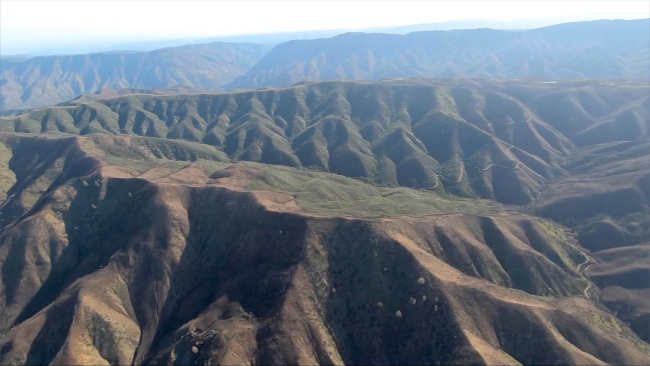
Congressman John Garamendi (D-CA) and the chairman of the Yocha Dehe Tribe of Capay Valley on Tuesday testified before the House Natural Resources Subcommittee on National Parks, Forests, and Public Lands on his bill, the “Berryessa Snow Mountain National Monument Expansion Act” (H.R.6366).
The legislation, which Garamendi introduced with Rep. Mike Thompson (D-CA), would expand the existing Berryessa Snow Mountain National Monument to include approximately 3,925 acres of adjacent public land administered by the federal Bureau of Land Management in Lake County, known previously as the “Walker Ridge” tract. The legislation would not impact privately owned, state, tribal, or non-federal land in any way.
“Conserving California’s special places has been a lifelong passion throughout my tenure in the state legislature, as deputy secretary of the Interior to President Clinton, and now as a member of Congress representing Lake County. Walker Ridge is one of those special places, and I am thrilled to continue working in Congress to conserve this unique landscape for future generations of Californians to enjoy,” Garamendi said.
“My ‘Berryessa Snow Mountain National Monument Expansion Act’ also ensures that federally recognized tribes are consulted throughout the process to ensure Native American voices play an active role in protecting public lands,” Garamendi continued.
“Thank you to the Subcommittee on National Parks, Forests, and Public Lands for allowing me to testify on this critically important legislation, and thank you to my colleague, Congressman Mike Thompson, for partnering with me to introduce the ‘Berryessa Snow Mountain National Monument Expansion Act.’ We will both work tirelessly to ensure this legislation becomes law,” Garamendi concluded.
Yocha Dehe Tribal Chairman Anthony Roberts also testified on Tuesday before Congress on behalf of protections for the Lake County area currently known as Walker Ridge.
Additionally, H.R. 6366 calls for Walker Ridge to be renamed “Molok Luyuk” (pronounced: `Mo.loke `Loy.uke) which means “Condor Ridge” in Yocha Dehe’s traditional Patwin language.
“With our long history in this area, we have a unique perspective on how this land should be managed, and we are willing to apply our historical practices with modern technologies to ensure that Molok Luyuk is preserved and healthy, a place for all to enjoy,” Chairman Roberts noted in his testimony.
California condors were once a common sight above the ridge and, according to Chairman Roberts, with proper environmental protections they could be reintroduced to the area.
Molok Luyuk is also home to endangered wildlife such as bald and golden eagles, badgers, ringtails, and peregrine falcons. In addition, the area is a recognized wildlife migration pathway for a multitude of species, including deer, elk, mountain lion, black bear, and bobcat.
“Proper management is necessary to preserve these unique lands and protect cultural resources, while also ensuring the availability of recreational opportunities for sightseers, mountain bikers, hikers, off-highway vehicle users, campers, and equestrians,” Roberts said.
Specifically, the “Berryessa Snow Mountain National Monument Expansion Act” (H.R.6366) would:
• Modify the boundary of Berryessa Snow Mountain National Monument to include the Lake County portion of Walker Ridge.
• Require a map of the National Monument expansion to be publicly available on BLM website.
• Direct the secretaries of Interior and Agriculture to complete the management plan within 1 year of enactment. To date, the management planning is still unfinished since the designation of the National Monument in 2015.
• Require federal land management agencies to consult with federally recognized tribes in developing the management plan and its implementation.
• Outline parameters for continued, meaningful engagement with federally recognized tribes for implementation of the management plan.
- Details
- Written by: Elizabeth Larson
The City of Clearlake Animal Association also is seeking fosters for the animals waiting to be adopted.
Call the Clearlake Animal Control shelter at 707-273-9440, or email
Visit Clearlake Animal Control on Facebook or on the city’s website.
The following dogs are available for adoption.
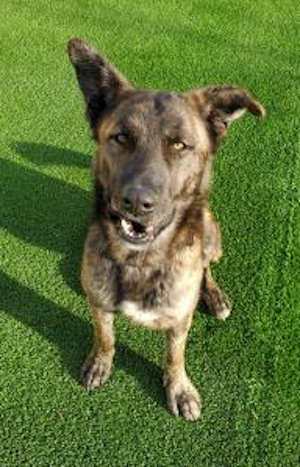
‘Terry’
“Terry” is a male shepherd mix with a short brindle coat.
He is dog No. 48443693.
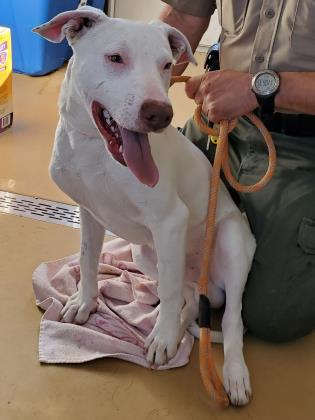
‘Snowball’
“Snowball” is a male American Staffordshire mix terrier with a white coat.
He has been neutered.
He is dog No. 49159168.
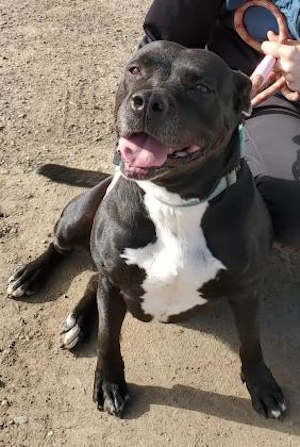
‘Sassy’
“Sassy” is a female American pit bull mix with a short black coat.
She has been spayed.
She is dog No. 48443128.
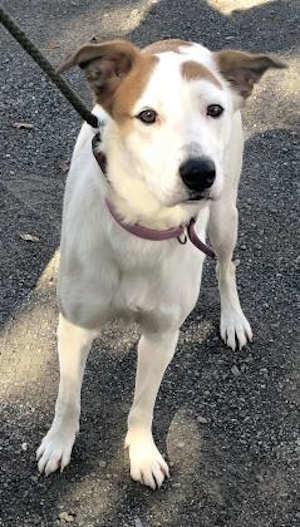
‘Priscilla’
“Priscilla” is a female Brittany spaniel mix with a white and copper coat.
She is dog No. 49089138.
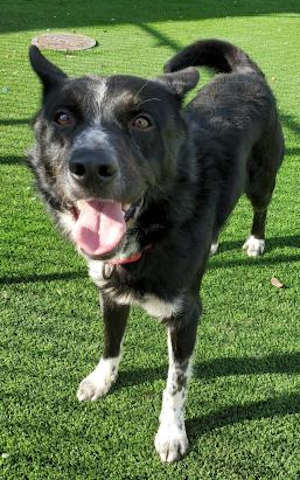
‘Fritz’
“Fritz” is a male Australian shepherd mix with a black and white coat.
He is dog No. 49278179.
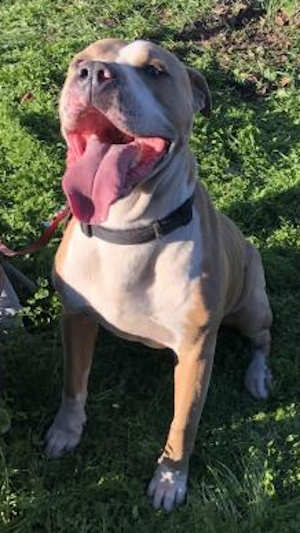
‘Ebenezer’
“Ebenezer” is a male American pit bull terrier mix with a short tan and white coat.
He is dog No. 49191651.
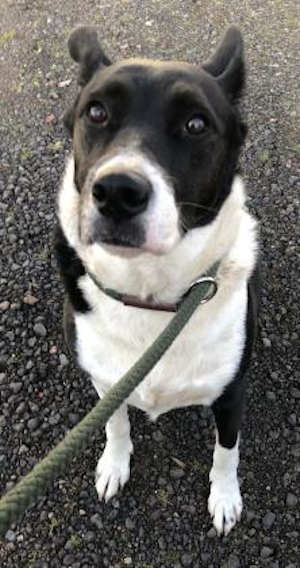
‘Claire’
“Claire” is a female border collie mix with a short black and white coat.
She has been spayed.
Claire is dog No. 49397880.
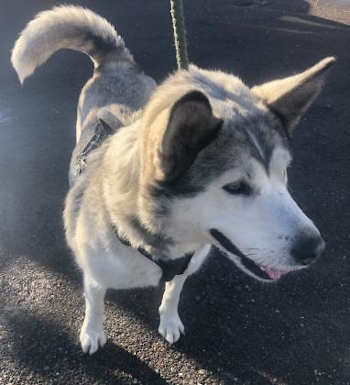
‘Chai’
“Chai” is a female Alaskan husky mix with a gray and white coat.
She has been spayed.
She is dog No. 49279552.

‘Bear No. 2’
“Bear No. 2” is a male American pit bull mix with a short tan coat.
He has been neutered.
He is dog No. 48731556.
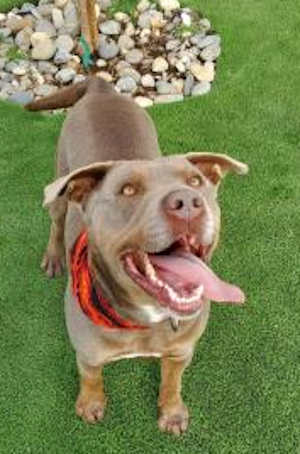
‘Bear’
“Bear” is a male Labrador retriever-American pit bull mix with a short charcoal and fawn coat.
He has been neutered.
He is dog No. 48443153.

‘Andy’
“Andy” is a male American pit bull mix with a short gray and white coat.
He is dog No. 48995415.
Email Elizabeth Larson at