 How to resolve AdBlock issue?
News
- Details
- Written by: Janine Smith-Citron
The event will take place Wednesday, March 16, from 10 a.m. to 2 p.m., at the American Legion Post 437, 14770 Austin Road.
The Stand Down offers immediate intervention support in the form of supplies and housing, employment services and other community resource information. A hot lunch will be provided. Veterans must provide their ID cards or DD Forms 214.
Resources will be offered covering a variety of topics including veterans’ services, housing and homeless assistance, employment, safe medication disposal, emergency preparedness, advance care planning, behavioral health, employment assistance and more.
“In the military, ‘Stand Down’ afforded battle-weary soldiers the opportunity to renew their spirits, enjoy warm meals, receive medical and dental care, mail and receive letters, and enjoy the camaraderie of friends in a safe environment,” said Vet Connect Chair Chris Taliaferro.
“Today, ‘Stand Down’ refers to grassroots, community-based intervention programs designed to help the nation’s homeless veterans ‘combat’ life on the streets. Homeless veterans are brought together in a single location and are provided access to the community resources needed to begin addressing their individual problems and start rebuilding their lives,” added Taliaferro.
The Lake County Veterans Council asks the public to spread the word regarding the event so that local homeless or near homeless veterans can be reached and may benefit from the assistance available.
The Veterans Stand Down will follow protocols recommended by the County of Lake Public Health Department to reduce the spread of COVID. Masks are required and will be provided.
For more information, contact Taliaferro at
Janine Smith-Citron is development director for Hospice Services of Lake County.
- Details
- Written by: Elizabeth Larson
Call Lake County Animal Care and Control at 707-263-0278 or visit the shelter online for information on visiting or adopting.
The following cats at the shelter have been cleared for adoption.
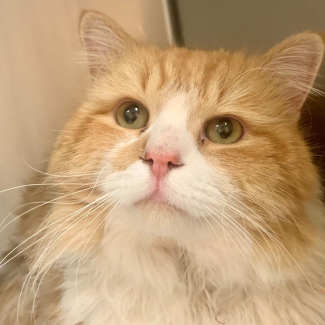
‘Joel’
“Joel” is a 3-year-old male domestic longhair with an orange tabby coat.
He is in kennel No. 24, ID No. LCAC-A-2466.
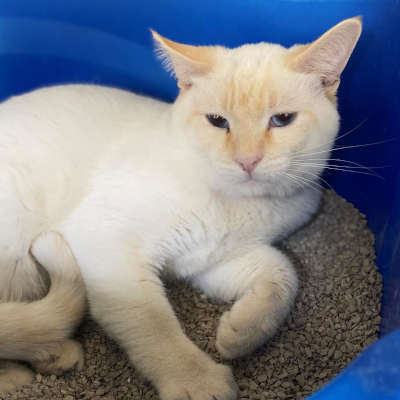
‘Bruno’
“Bruno” is a young male Siamese with red markings and blue eyes.
He is in kennel No. 255, ID No. LCAC-A-2828.

‘Sticks’
“Sticks” is a young male Siamese with red markings and blue eyes.
He is in kennel No. 255, ID No. LCAC-A-2829.
Email Elizabeth Larson at
- Details
- Written by: ESTHER OERTEL
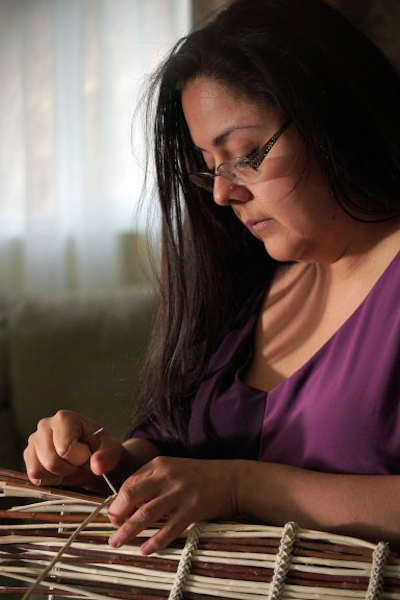
LAKE COUNTY, Calif. — When Pomo basket weaver Corine Pearce was just 9 years old, her great-grandmother came to her in a dream to tell her that she could weave baskets.
Pearce, who is a member of the Little River Band of Pomo Indians in Redwood Valley and has lineage in Lake County through her Pomo grandfather, was on a school camping trip at the time of her dream. A presenter had come to talk about baskets, and later, while Peace slept under a willow tree, she had the dream that changed her life.
As she slept, she dreamed that she walked to her great-grandmother’s house, where she sat on her lap. Touching the young Pearce’s hands, her great-grandmother said, “You can weave. You’ve got my hands, you can weave.”
Pearce says that when she awoke the next morning, she looked at the willow tree under which she slept in an entirely different way. She saw it through the eyes of a basket weaver.
That day she harvested willow and wove a little basket, and she’s been harvesting and weaving ever since.
Her great-grandmother was Mary Francisco, a highly skilled Pomo basket weaver, and though she wasn’t alive at the time of Pearce’s dream, through it a passion for basket weaving was infused into the heart of her great-granddaughter.
As a child, Pearce grew up with baskets surrounding her, and she always thought them beautiful. They instilled in her a sense of family pride, so much so, that someone once told her that she spoke about those baskets as though they were her siblings.
Despite the presence of the family heirloom baskets in her home, there were no basket weavers, family or otherwise, to pass on the tradition to her personally, and she was hungry to learn.
Renowned Pomo basket weavers Elsie Allen, Mabel MacKay, Laura Somersal and Pearce’s great-aunt Annie Lake provided inspiration for the young Pearce, but they were elderly when she was a child. Some were just months from death at the time of her dream.
Pearce knew that if she wanted to learn basketry, she’d have to teach herself.
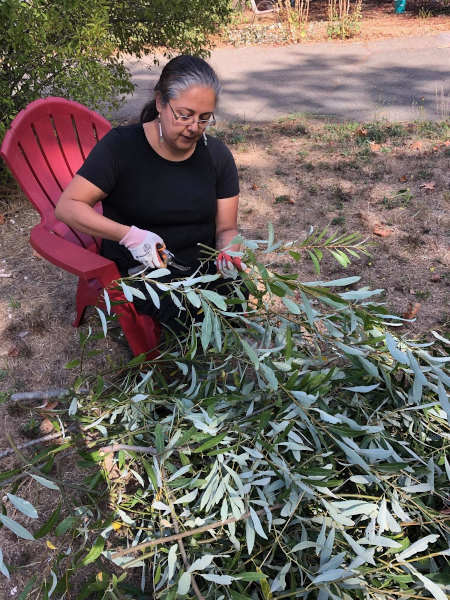
Thankfully, her mother, an avid researcher, had a huge library of books in their home, including many on basket weaving. Pearce read every one of them and learned not only the techniques of weaving, but how to tend and harvest the native plants needed for the art.
In addition to her passion for weaving the baskets of her ancestors, a pressing life goal for Pearce is to teach others the almost-lost art.
Pearce began teaching basketry to family members at the age of 12, and by age 14 was teaching outside of her community.
Much of her early teaching experience came through her mother, who at the time worked for the University of Oklahoma’s Native Wellness Program. The teenage Pearce taught basketry to adults throughout the United States and Canada at the various wellness conferences with which her mother was involved.
Between that experience and the classes taught since then, including in the Middle East and Europe, Pearce estimates that she’s introduced literally thousands of people to the art of Pomo basket weaving.
Through teaching internationally, Pearce came to believe that every person has a basket inside them, wherever they may live.
The best in the world
Pomo basket weavers were the best in the world, according to Sherrie Smith-Ferri, Ph.D., who has studied and written extensively about Pomo basketry. She recently retired after 30 years as executive director and curator of the Grace Hudson Museum in Ukiah.
Sophisticated environmental knowledge is needed to be a successful basket weaver, says Smith-Ferri. It’s a collaboration of weaver and plant working together.
Because of the botanical diversity of the area where the Pomo people lived — now Lake, Mendocino and Sonoma counties — they made baskets from more types of materials than anyone else in the world.
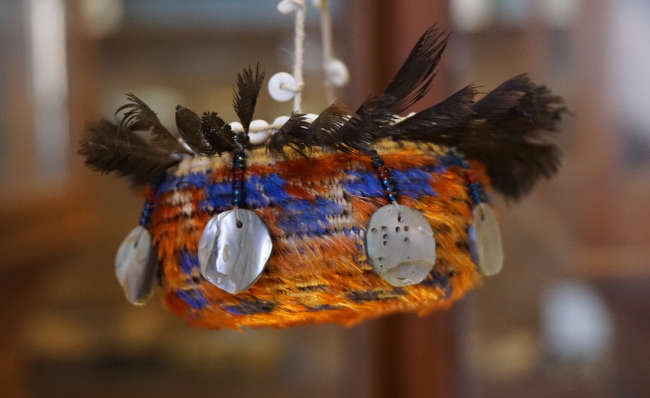
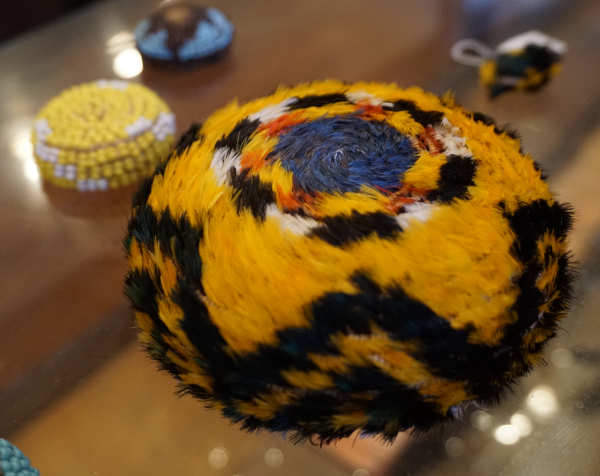
Pomo basket weavers also employed feathers and beads of clamshell or wood in their basket making. Some decorative Pomo baskets were completely covered in feathers, something unseen in the work of other tribes.
In addition, Pomo baskets display a high degree of technical virtuosity. More weaving techniques were employed when making Pomo baskets than in any other basket making culture worldwide.
Pearce enjoys employing a favorite Smith-Ferri quote in her basketry classes: “Pomo basket weavers were the best basket weavers at any time and in any space.”
Currently Pearce tends and harvests a variety of plants throughout Lake, Mendocino, and Sonoma counties, the traditional lands of the Pomo people.
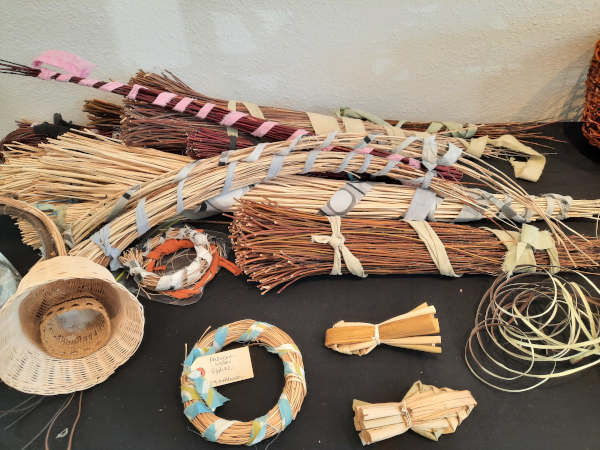
These include sedge root (which comprises most of the tan materials used in baskets), willow (an important component of cradle baskets), dogwood, hazel, bulrush root, tule (from which boats and mats are made), oak (a keystone in making cradle baskets) and redbud.
The color and characteristics of these native plants vary depending on the area. For example, Pearce says that the volcanic soil in Lake County makes our redbuds far more vibrant in color than those in Mendocino County.
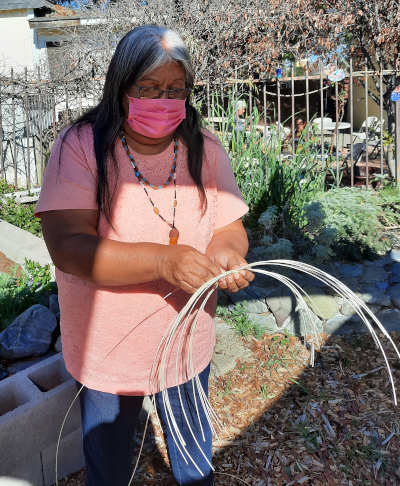
It takes a deft hand and years of experience to properly prepare plants for weaving. Something that’s imprecise must be made perfect for the task. Pearce splits redbud branches over and over to get the appropriate thickness and width for basket weaving.
One must also know the optimal harvest time for the varied plants. According to Pearce, climate change has made this task unpredictable, as plants are now blooming earlier than usual.
As intricate as weaving a basket is, it’s the tending, harvesting and preparing of the plants that makes up the bulk of the process.
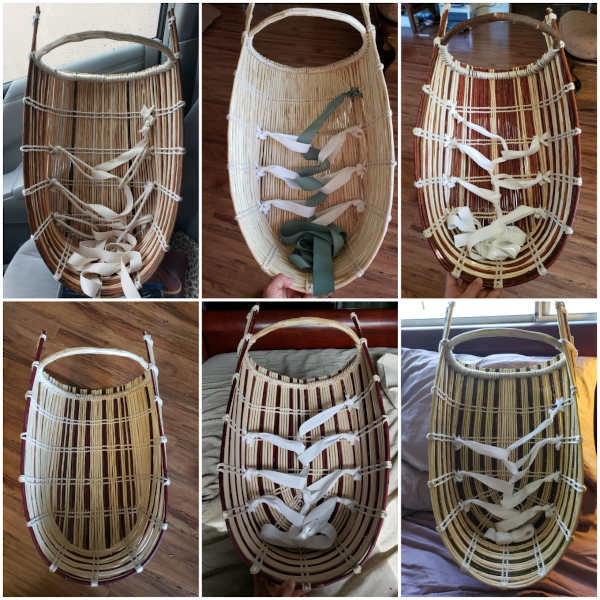
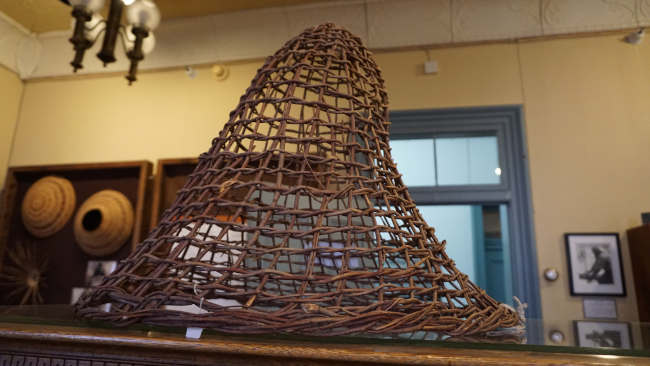
One of Pearce’s specialties is making cradle baskets, evidenced by the book she authored, “Pomo Cradle Baskets: An Introduction.” She made 16 full-size cradle baskets in 2020, more than one a month, which she feels might be a record for a single person.
Pearce uses oak, proven to be stronger than steel, for the round rim of the basket. It takes a lot of strength to bend the oak into a circle, which Pearce said made her shoulder feel like that of a major league pitcher in 2020, her marathon cradle-making year. She says it took 25 years for her to learn to bend the oak properly.
According to Pearce, materials for cradle baskets should be harvested from the area where the baby is born to give them a spiritual tie to the land. Oak is appropriate not just for its strength, but because acorns were a staple food for the Pomo people.
Historically, it was the job of the father to make a cradle basket for his child. Pearce says this tradition has been asleep for 80 years, so it particularly pleased her to teach a cradle-making class in Upper Lake to Pomo men in January. Ten men ranging in age from 13 to 72 took part in the class.
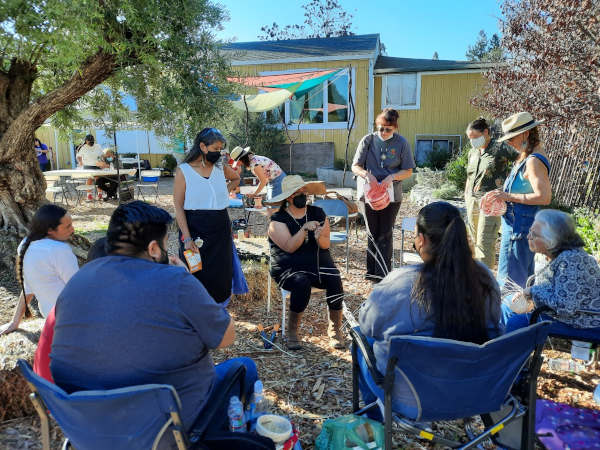
Currently Pearce is central to the ongoing Weaving Baskets, Weaving Bridges (“Weaving”) project at the Middletown Art Center, or MAC, where she’s taught several classes on Pomo basketry and has more on tap in upcoming months.
The program kicked off in November with “Speak of Who We Are,” a presentation by Pearce and Tribal Elder Millie Simon from the Middletown Rancheria of Pomo Indians.
According to Lisa Kaplan, director of the MAC, “Weaving” uses the art of basketry as a vessel for healing and understanding through the holistic practice of weaving, from native plant cultivation and preparation to weaving in community. Building (or weaving) bridges is a central goal of the project, she says, with baskets as a vehicle for cross-cultural engagement.
“I am in awe of the opportunity to have all of this ancient knowledge and sense of place shared with us,” Kaplan said. “I’m grateful, honored and humbled to be collaborating with Corine Pearce, Millie Simon, Rose Steele, Mary Wilson and others. At our last workshop, nearly 40 people were outside weaving. Indigenous and non-Indigenous people were working, talking, and meditating together on their weaving. Corine is the center of the spokes of this basket that we’re all weaving together.”
Millie Simon, who sits on the MAC board in addition to being involved with its “Weaving” project, said she’s honored to be part of the basket weaving program honoring her ancestors.
Pearce also enjoys working at the MAC. “The program has become something truly amazing,” Pearce said. “I’ve been weaving within tribal culture for quite a while, as well as outside of that, but to combine the two has been great. I hope even more people will become involved in the upcoming months.”
Pearce will teach another weaving workshop at the MAC on Saturday, March 12. To sign up or to learn more about other “Weaving '' events, visit the MAC’s website at www.middletownartcenter.org.
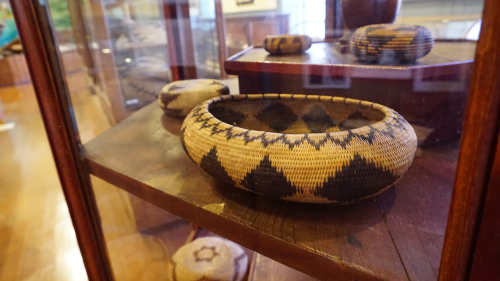
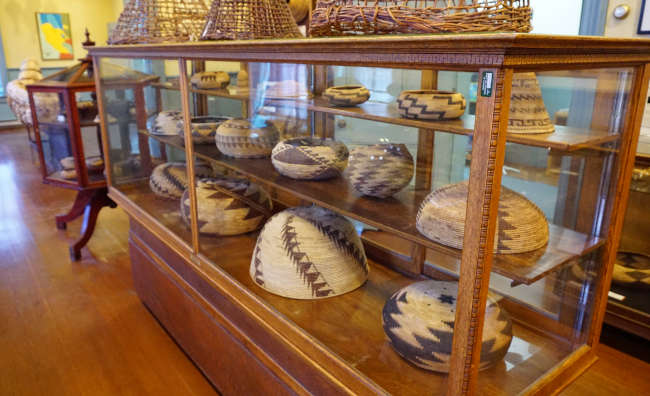
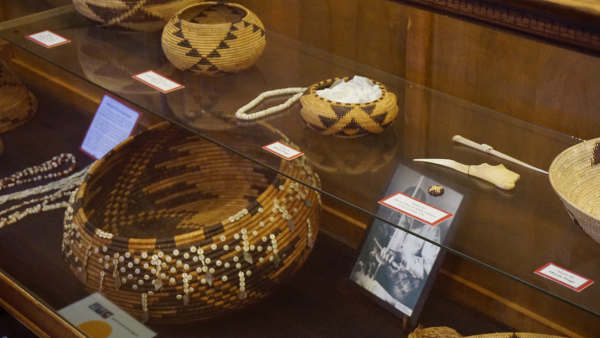
In addition to the program at the MAC, Pearce recommends viewing the permanent exhibit on Pomo culture at the Lake County Courthouse Museum in Lakeport, where a myriad Pomo baskets in all their diversity is on display. Included is a small basket covered in bright yellow feathers, an example of the artistry and intricacy of Pomo technique. Information on the Lake County museums and their hours of operation can be found at Lake County Museums (lakecountyca.gov).
Pearce, who was named the 2021 Arts Champion by the Mendocino County Board of Supervisors, is also a 2020 Jennifer Easton Community Spirit Award recipient and a 2020 Luce Indigenous Knowledge Fellow. She was featured in the PBS documentary series “Craft in America: California,” which aired in 2018.
Pearce is currently working with schools in the Ukiah area to teach basketry and assist with student native plant gardens. She’s thankful that she’s been able to connect students in every district school with their native roots through this program.
Pearce can be heard on KZYX, Mendocino County’s public radio station, where she hosts a monthly radio program. The show, “Good Ancestors and Local Treasures,” features Pomo art and culture and is aired from 9 to 10 a.m. the first Monday of every month.
To follow Corine Pearce and learn more about her work, please visit her website at www.corinepearce.com.
Esther Oertel is a freelance writer in Middletown who's contributed to Lake County News since 2010. She especially enjoys writing about the people and places that make Lake County unique. For comments, questions and story suggestions, she may be reached at
- Details
- Written by: Beth Gazley, Indiana University

When Russia invaded Ukraine, I responded like many Americans: by making charitable donations.
I was able to make my gift with confidence because I’m a scholar of nonprofits who has studied giving during disasters and other crises.
Mostly I’ve studied how charities help local communities after events like hurricanes and earthquakes, rather than war zones. But I’m also a human being, with friends and colleagues who are Ukrainian. Empathy and a personal connection to a cause are often what motivates donors to act.
You can wisely choose causes with the potential to do the most good in the middle of this humanitarian crisis by giving with your head as well as your heart. Here are the five guidelines I follow in my own giving decisions:
5 guidelines for donors
1) Send money to organizations, not strangers
Crowdfunding and social media fundraising campaigns have become so common that when I recently searched GoFundMe, it pointed me to 1,008 separate appeals for aid for individuals, families or causes related to Ukraine.
Most were posted by individuals, and I have no doubt that some will turn out to be fake.
2) Vet groups you’re unfamiliar with before donating to them
Verifying first that the cause is legitimate will make it easier to avoid funding scams.
A useful shortcut is to look for organizations that have been vetted by others. I tried a simple keyword search “Ukraine charities,” and that was enough to turn up some promising lists posted by media outlets.
A good place to start your sleuthing on U.S.-based registered charities is the Internal Revenue Service. It also ensures you’re giving to the right group, rather than another organization with a deceptively similar name. Many scammers abuse the name recognition of established nonprofits, hoping you won’t notice the difference.
3) Give to charities with a track record in Ukraine
Some examples include Razom for Ukraine, which leads a variety of cultural and democratization initiatives. Another is UNICEF, a United Nations agency that protects children worldwide and is in a good position not only to provide immediate relief but also to pressure Russia to allow unrestricted humanitarian access. Because these groups have already built local relationships, trust and infrastructure, they are likely to be more adept at operating in these dire circumstances than the charities popping up now or those that are still mobilizing from half a world away.
4) Dispatch cash, not goods
Don’t bundle up your spare clothing or other supplies and ship them to Eastern Europe, please. The fragile Ukrainian supply lines need to remain open for medicine and food. And while there is a time and place for restricting a gift to a specific purpose, a humanitarian crisis is not the right time. Trust the people that a charity has on the ground to know which needs are the highest priority.
5) Make gifts that reflect your values
Giving is a deeply psychological act. Effective – and satisfied – donors act on values important to them.
If helping refugees is your priority, consider organizations such as Fundacja Ocalenie, which means “the Rescue Fund” in Polish. About half a million Ukrainians had fled to Poland by March 3, 2022.
If a free press is what matters most to you, given the strength of the Russian disinformation machine, consider Zaborona or the Kyiv Independent, two Ukrainian media outlets.

Buck the overhead myth
A lot of guidance about what makes charities good or bad to support can be misleading.
One common piece of advice I recommend you ignore is that donors should always support charities that spend as little money as possible on their overhead costs – things like rent and administrative pay.
Even leading charity rating and assessment sites, such as Charity Navigator and the Better Business Bureau Wise Giving Alliance, continue to rely in part on the outdated assumption that nonprofits with low overhead spending are automatically more efficient and let donors’ dollars stretch further.
Researchers have been disproving this assumption for years.
Not only can reasonable amounts of overhead help nonprofits build their capacity, but many studies have demonstrated that pinching pennies to satisfy misguided donor assumptions can weaken nonprofits, especially in the long run.
Some charity-evaluation websites do provide valuable information. Charity Navigator has a helpful “advisory” page that alerts donors about nonprofit misconduct. But to research U.S. charities supporting the Ukraine crisis, I recommend Candid, formerly known as Guidestar. It evaluates charities on the basis of broader performance metrics, such as transparency, good governance practices and outcomes.

A better signal of effectiveness than low overhead will be a responsive organization with real humans who are ready to answer your questions. It should also have a track record of working well with others and clearly communicates how it spends donors’ dollars.
Groups worth supporting are also likely to emphasize their results in their annual reports and other materials. Especially if you intend to make a big gift, you may find that the charity’s 990 forms – paperwork the IRS requires – contain a lot of useful information.
Making a choice
In the end, I supported the International Committee of the Red Cross, the winner of several Nobel Peace Prizes. Based in Switzerland, it’s already operating in Ukraine, and can help today.
I hope that you will consider giving as well, and – like me – you’ll stick with your support. The need is going to continue long after Ukraine is out of the headlines.
[Get the best of The Conversation, every weekend. Sign up for our weekly newsletter.]
Beth Gazley, Professor of Public and Environmental Affairs, O'Neill School, Indiana University
This article is republished from The Conversation under a Creative Commons license. Read the original article.