 How to resolve AdBlock issue?
News
- Details
- Written by: Lake County Economic Development Corp.
“We are excited to partner with West Business Development Center and join the NorCal SBDC network. These partnerships will bring resources closer to Lake County businesses and strengthen the regional economy,“ states Stephanie Ashworth, Lake EDC Board president.
Lake EDC now offers additional client services to Lake County businesses in the form of one-on-one business technical assistance, business start-up assistance and access to capital.
Lake EDC is working on establishing physical offices in Lakeport and Clearlake. Until then, virtual appointments are available anytime, and in person meetings can still be arranged in both Cities.
“We know local businesses have been struggling, not just from the COVID pandemic, the wildfires prior to the pandemic crippled many businesses. We wanted to invest in a program with as many local experts as possible,” said Nicole Flora, Lake EDC’s new executive director. “This is a chance for businesses to get free assistance from experienced business advisors. We have local mentors to help with business basics as well as industry specific issues. We stand ready to help tackle the challenges your business is facing today.”
To learn more about Lake EDC and the Mendo-Lake SBDC program, sign up to attend the Lake County Business Funding Workshop, on March 23 at noon. The webinar will cover the specific types of business assistance available and a panel of local resources for business loans.
Guests can attend in person at the Clearlake City Hall Council Chambers, or via webinar. Sign up here.
Lake County businesses looking for assistance from the Mendo-Lake SBDC can contact them at www.mendosbdc.org/join/ or call 707-263-6217.
- Details
- Written by: Monica Dus, University of Michigan
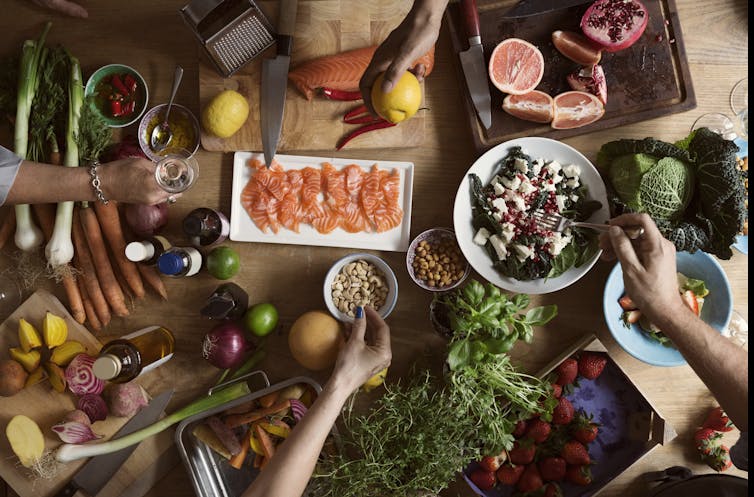
People typically think of food as calories, energy and sustenance. However, the latest evidence suggests that food also “talks” to our genome, which is the genetic blueprint that directs the way the body functions down to the cellular level.
This communication between food and genes may affect your health, physiology and longevity. The idea that food delivers important messages to an animal’s genome is the focus of a field known as nutrigenomics. This is a discipline still in its infancy, and many questions remain cloaked in mystery. Yet already, we researchers have learned a great deal about how food components affect the genome.
I am a molecular biologist who researches the interactions among food, genes and brains in the effort to better understand how food messages affect our biology. The efforts of scientists to decipher this transmission of information could one day result in healthier and happier lives for all of us. But until then, nutrigenomics has unmasked at least one important fact: Our relationship with food is far more intimate than we ever imagined.
The interaction of food and genes
If the idea that food can drive biological processes by interacting with the genome sounds astonishing, one need look no further than a beehive to find a proven and perfect example of how this happens. Worker bees labor nonstop, are sterile and live only a few weeks. The queen bee, sitting deep inside the hive, has a life span that lasts for years and a fecundity so potent she gives birth to an entire colony.
And yet, worker and queen bees are genetically identical organisms. They become two different life forms because of the food they eat. The queen bee feasts on royal jelly; worker bees feed on nectar and pollen. Both foods provide energy, but royal jelly has an extra feature: its nutrients can unlock the genetic instructions to create the anatomy and physiology of a queen bee.
So how is food translated into biological instructions? Remember that food is composed of macronutrients. These include carbohydrates – or sugars – proteins and fat. Food also contains micronutrients such as vitamins and minerals. These compounds and their breakdown products can trigger genetic switches that reside in the genome.
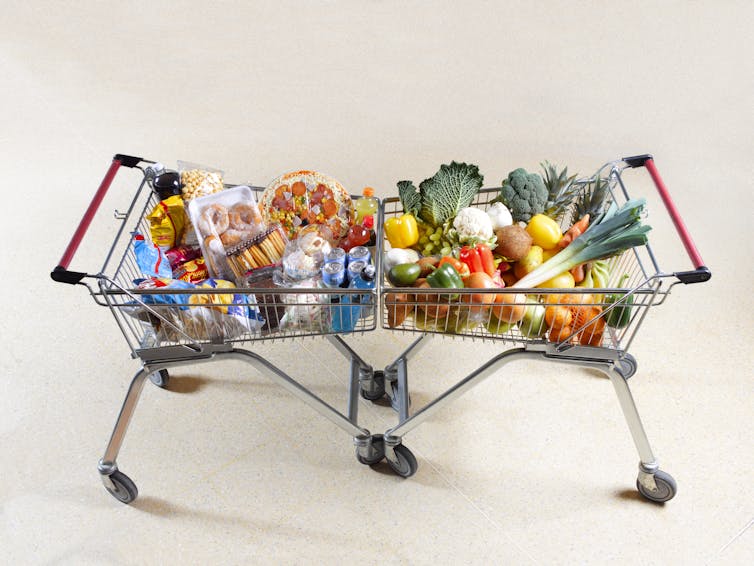
Like the switches that control the intensity of the light in your house, genetic switches determine how much of a certain gene product is produced. Royal jelly, for instance, contains compounds that activate genetic controllers to form the queen’s organs and sustain her reproductive ability. In humans and mice, byproducts of the amino acid methionine, which are abundant in meat and fish, are known to influence genetic dials that are important for cell growth and division. And vitamin C plays a role in keeping us healthy by protecting the genome from oxidative damage; it also promotes the function of cellular pathways that can repair the genome if it does get damaged.
Depending on the type of nutritional information, the genetic controls activated and the cell that receives them, the messages in food can influence wellness, disease risk and even life span. But it’s important to note that to date, most of these studies have been conducted in animal models, like bees.
Interestingly, the ability of nutrients to alter the flow of genetic information can span across generations. Studies show that in humans and animals, the diet of grandparents influences the activity of genetic switches and the disease risk and mortality of grandchildren.
Cause and effect
One interesting aspect of thinking of food as a type of biological information is that it gives new meaning to the idea of a food chain. Indeed, if our bodies are influenced by what we have eaten – down to a molecular level – then what the food we consume “ate” also could affect our genome. For example, compared to milk from grass-fed cows, the milk from grain-fed cattle has different amounts and types of fatty acids and vitamins C and A . So when humans drink these different types of milk, their cells also receive different nutritional messages.
Similarly, a human mother’s diet changes the levels of fatty acids as well as vitamins such as B-6, B-12 and folate that are found in her breast milk. This could alter the type of nutritional messages reaching the baby’s own genetic switches, although whether or not this has an effect on the child’s development is, at the moment, unknown.
And, maybe unbeknownst to us, we too are part of this food chain. The food we eat doesn’t tinker with just the genetic switches in our cells, but also with those of the microorganisms living in our guts, skin and mucosa. One striking example: In mice, the breakdown of short-chain fatty acids by gut bacteria alters the levels of serotonin, a brain chemical messenger that regulates mood, anxiety and depression, among other processes.
Food additives and packaging
Added ingredients in food can also alter the flow of genetic information inside cells. Breads and cereals are enriched with folate to prevent birth defects caused by deficiencies of this nutrient. But some scientists hypothesize that high levels of folate in the absence of other naturally occurring micronutrients such as vitamin B-12 could contribute to the higher incidence of colon cancer in Western countries, possibly by affecting the genetic pathways that control growth.
This could also be true with chemicals found in food packaging. Bisphenol A, or BPA, a compound found in plastic, turns on genetic dials in mammals that are critical to development, growth and fertility. For example, some researchers suspect that, in both humans and animal models, BPA influences the age of sexual differentiation and decreases fertility by making genetic switches more likely to turn on.
All of these examples point to the possibility that the genetic information in food could arise not just from its molecular composition – the amino acids, vitamins and the like – but also from the agricultural, environmental and economic policies of a country, or the lack of them.
Scientists have only recently begun decoding these genetic food messages and their role in health and disease. We researchers still don’t know precisely how nutrients act on genetic switches, what their rules of communication are and how the diets of past generations influence their progeny. Many of these studies have so far been done only in animal models, and much remains to be worked out about what the interactions between food and genes mean for humans.
What is clear though, is that unraveling the mysteries of nutrigenomics is likely to empower both present and future societies and generations.
Monica Dus, Assistant Professor of Molecular, Cellular, and Developmental Biology, University of Michigan
This article is republished from The Conversation under a Creative Commons license. Read the original article.
- Details
- Written by: Elizabeth Larson
Sheriff Brian Martin took the request from the California Governor’s Office of Emergency Services and Homeland Security’s request to the board as an extra item on Tuesday morning.
Martin’s report to the board included a letter to all California sheriffs, police chiefs and law enforcement executives from Cal OES Director Mark Ghilarducci and Donald O’Keefe, chief of the Cal OES law enforcement branch.
In the letter, Ghilarducci and O’Keefe explained that the state has been closely monitoring the ongoing situation in Ukraine and has been in constant contact with the Ukrainian Consulate in San Francisco.
The state also is working closely with the philanthropic community and nongovernmental organizations “on organizing and providing humanitarian assistance and commodities for individuals and families remaining in Ukraine and for refugees fleeing Ukraine into surrounding countries,” they reported.
The letter said the Ukrainian Consulate has specifically requested from the state the donation of ballistic helmets and vests, and other tactical safety equipment such as goggles and gloves.
“The intent of the Ukrainian Government is to provide this equipment to individuals simply as an additional layer of safety,” said Ghilarducci and O’Keefe.
They said this effort and other humanitarian assistance from California is being coordinated and facilitated by Cal OES and the California National Guard.
Supervisor Tina Scott said people are dying and so moved to add it to the agenda.
Supervisor Bruno Sabatier, who had concerns that the item didn’t meet the requirements of an extra item, voted no, and with Supervisor Moke Simon absent, the motion initially failed, as four votes were needed to add the extra item.
County Counsel Anita Grant asked Martin about the urgency of the item and whether Cal OES was asking for buy-in in order to arrange a shipment of the items, and he said yes. Martin also stated there were more than 400 dead and more than 1.5 million people evacuated.
“The nature of it speaks to the urgency of it,” said Martin.
The board went on to reconsider adding the request to the agenda, which passed unanimously, and then approved adding the item to the agenda, with Sabatier changing his vote to pass the motion.
Scott then moved to approve the surplus of the equipment as requested by Cal OES, which the board approved 4-0.
It was not reported on Tuesday how much surplus equipment from Lake County will be donated to help the people of Ukraine.
Email Elizabeth Larson at
- Details
- Written by: LAKE COUNTY NEWS REPORTS
LAKE COUNTY, Calif. — A Lake County resident said he is joining the race for the State Senate seat in District 2.
Former internet executive Gene Yoon has officially filed his candidacy for State Senate District 2, known as the North Coast district, which Yoon calls “the most American district in the United States.”
He will challenge Sen. Mike McGuire, who was elected in 2014 and named Senate majority leader in January.
“We have everything in this district," Yoon said. “We have a population of over a million people, and an area larger than the state of Maryland. We have more land than nine different states, and more people than six states. We have rural and suburban, agricultural and tech, rich and poor, families from the Mayflower, tribes with a thousand years on this land, and people who just immigrated here yesterday. We have serious issues with water, wildfire and our power grid. We have crime and homelessness and inflation and failing schools. And all of this is on some of the most beautiful landscape in all of the world. No other state district in America includes so much of our country's promise and problems.”
After growing up in New Jersey and working in high finance in New York, Yoon said he became disillusioned with Wall Street games. He moved to California in 1999 to help build the future.
Over a 20 year career in internet technology and business, he said he helped bring WiFi to millions of offices at Airespace, created the business model for the metaverse Second Life, and protected billions of users as the product head of ads integrity at Google.
At the same time, he raised three children, all born in California. With one in middle school, one in college, and one just graduating from college this year, Yoon said he knows firsthand the full cycle of challenges for parents in this state.
"Gene has seen it all," says Second Life founder Philip Rosedale, who also lives in the district. "He can tackle any problem, and he does it with real integrity, ferocious resolve, and a great sense of style that is just plain fun to work with. I would trust him with the hardest job in any company, and would be thrilled to see him represent my family in our state legislature.”
Yoon lives in Lake County, the center of a district that also includes Marin, Sonoma, Humboldt, Mendocino, Trinity, and Del Norte. Besides running for office, his other professional effort is in community interest law, where he puts his skills to use on behalf of the community.
"Cobb Mountain reminds me of the small town where I grew up, even though it's across the country and might look different to some people. Because of the recent wildfires, people here understand that we're all in it together. Whatever differences we have, they're unimportant compared to the fact that we all want to see our community succeed,” Yoon said.