 How to resolve AdBlock issue?
News
- Details
- Written by: Steve Calandrillo, University of Washington
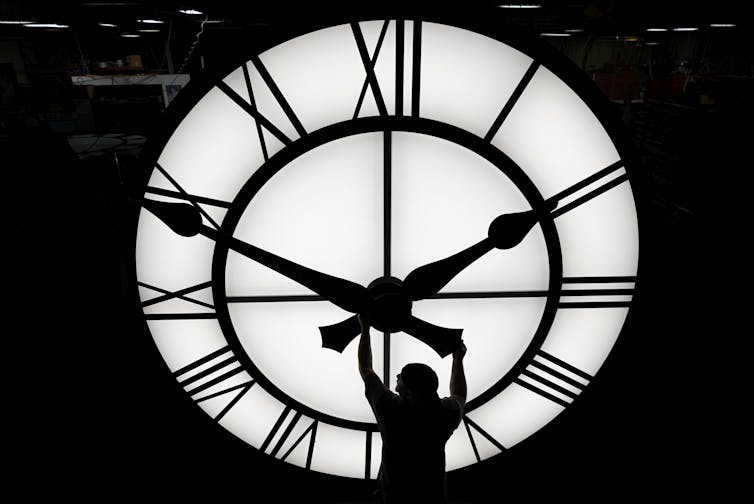

The U.S. Senate approved the Sunshine Protection Act in March 2022, with the goal of making daylight saving time permanent starting in November 2023. If that happens, the U.S. will never again “spring forward” or “fall back.”
Following the Senate’s vote and a recent hearing in the House Subcommittee on Consumer Protection and Commerce – at which I testified – the subcommittee is now considering the issue. The full House of Representatives will need to vote in support of permanent DST before the bill goes to President Biden’s desk for his signature.
In my research on DST, I have found that Americans don’t like Congress messing with their clocks. However, the move to DST year-round makes a lot of sense.
In an effort to avoid the biannual time change in spring and fall, some DST critics have suggested that returning to permanent standard time would benefit society.
But research shows that DST saves lives and prevents crime. Nearly 20 states have passed bills to make DST permanent, and the Senate unanimously passed the Sunshine Protection Act to allow those laws to take effect – since any one state can’t move to DST unilaterally on dates different from the rest of the country.
If Congress ultimately passes the measure to turn all clocks forward permanently, I see five ways that Americans’ lives will improve.
1. Lives would be saved
Simply put, darkness kills – and darkness in the evening is far deadlier than darkness in the morning.
The evening rush hour is twice as fatal as the morning for various reasons. Far more people are on the road, more alcohol is in drivers’ bloodstreams, people are hurrying to get home and more children are enjoying outdoor, unsupervised play. Fatal vehicle-on-pedestrian crashes increase threefold when the sun goes down.
DST brings an extra hour of sunlight into the evening to mitigate those risks. Standard time has the opposite impact, by moving sunlight to the morning.
A metastudy reviewing all of the available research on the topic demonstrated that 343 lives per year could be saved by moving to year-round DST, primarily in reduced vehicle on pedestrian accidents. Mornings would be riskier, but afternoons/evenings would be far more safe.
2. Crime would decrease
Darkness is also a friend of crime. Moving sunlight into the evening has a far greater impact on crime prevention than it does in the morning. This is especially true for crimes by juveniles, which peak in the after-school and early evening hours.
Criminals prefer to do their work in the darkness of evening and night. Crime rates are 30% lower in the morning hours, even when those morning hours occur before sunrise, when it’s still dark.
A 2013 British study found that improved lighting in the evening hours could reduce the crime rate by up to 20%.
3. Energy would be saved
Many people don’t know that the original justification for the creation of DST was to save energy – initially during World War I and II to prioritize energy for U.S. troops, and then later during the 1973 OPEC oil crisis. When the sun is out later in the evening, peak energy loads are reduced.
Having more sun in the evening requires not just less electricity to provide lighting, but reduces the amount of oil and gas required to heat homes and businesses, though it could increase cooling costs in the summer. DST resulted in 150,000 barrels of oil saved by the U.S. in 1973, which helped combat the effect of OPEC’s oil embargo.
Most people in our society are awake and using energy in the early evening when the sun sets. But a considerable portion of the population is still asleep at sunrise, resulting in significantly less demand for energy then.
This rationale motivated some in California to recommend permanent DST in the early 2000s, when the state experienced recurrent electricity shortages and rolling brownouts. The American Council for an Energy-Efficient Economy estimated that the U.S. would have seen an energy savings of more than US$4 billion and a decrease of carbon emissions by 10.8 million metric tons if we had enacted permanent DST more than decade ago.
4. Avoiding clock switches improves sleep
Critics of DST are correct about one thing: The biannual clock switch is bad for health and welfare.
It wreaks havoc with people’s sleep cycles. Heart attacks increase 24% in the week after the U.S. “springs forward” in March. There’s even an uptick during the week when clocks “fall back.”
If that’s not bad enough, a study from 2000 shows that major financial market indexes NYSE, AMEX and NASDAQ average negative returns on the Monday following both clock switches, presumably because of disrupted sleep cycles.
Critics of biannual clock switching sometimes use these points to argue in favor of permanent standard time. However, the same sleep benefits are available under year-round DST, too. Plus, standard time doesn’t offer the energy-saving, lifesaving or crime prevention effects of DST.
5. Recreation and commerce flourish in the sun
Recreation and commerce flourish in daylight and are hampered by evening darkness.
Americans are less willing to go out to shop in the dark, and it’s not very easy to catch a baseball in darkness either. These activities are far more prevalent in the early evening than they are in the early morning hours, so sunlight is not nearly so helpful then.
Not surprisingly, the U.S. Chamber of Commerce and organizations devoted to outdoor recreation favor extended DST. Brick-and-mortar stores, especially family-owned businesses, suffered during the pandemic. Having more daylight to shop helps to reverse the trend.
A note about the downsides of DST
It is important to note that some research highlights the downsides of DST.
The first concern is that DST creates sleep disruptions.
But most circadian rhythm dysfunction is created by the biannual clock shift itself. Either permanent standard time or permanent DST solves that problem. Standard time may be better for circadian rhythms overall because the sun sets and rises earlier; however, people’s evening activities and routines are unlikely to change in response. Earlier sunsets won’t force people to go to bed earlier, as might have been the case 150 years ago before electricity. “Prime time” is 8 to 11 p.m., not 5 to 6 a.m., for a reason.
Other research has associated living in western portions of time zones – which have longer evening sun – with an increased cancer risk compared with those living in eastern portions. The increased cancer risk may be partially explained by lifestyle choices, like diet and exercise, in different parts of time zones.
Further, Americans make decisions all the time that we know have health risks, like eating red meat instead of broccoli and drinking alcohol or soda instead of water. We do this because we enjoy the benefits of those products despite their risks. This is similar to sun exposure and later bedtimes; we enjoy and benefit from them even though we know they carry risks.
[Over 150,000 readers rely on The Conversation’s newsletters to understand the world. Sign up today.]
To address another downside – early morning winter darkness – any switch to permanent DST could be coupled with efforts to move school start times later, as long advocated by the American Academy of Pediatrics. This would be a good idea for kids’ circadian rhythms and mental health, regardless of DST or standard time. Stepped-up child safety measures for darker mornings, such as crosswalk lighting and more crossing guards, would also help.
Time will tell whether the U.S. adopts permanent DST, but either way, we should consider all of its benefits versus all of the costs.
This is an updated version of a story that was originally published on March 4, 2019, and updated on March 3, 2020.
Steve Calandrillo, Professor of Law, University of Washington
This article is republished from The Conversation under a Creative Commons license. Read the original article.
- Details
- Written by: LAKE COUNTY NEWS REPORTS

CLEARLAKE, Calif. — Another new mural has been completed in the city of Clearlake.
Violet and Michael Divine created the artwork on the Hope Center building on Emerson Street.
Hope Rising, which runs the center, is a resource for people experiencing homelessness and substance abuse issues.
They brought in the Lake County Rural Arts Initiative to help make an inspirational mural happen on the Hope Center building.
Michael and Violet Divine’s image, using the dragonfly to represent the Hope Center’s story of healing and renewal, was chosen for the mural.
In the mural, the dragonfly rises out of the muck and continues to evolve. The panels trace the life cycle of the dragonfly as it grows the eggs in the chaos on the left and follows its transition into the world and the light on the right side, leaving the river behind.
The Lake County Rural Arts Initiative has been working with organizations to facilitate murals as a part of their “arts destination for economic growth” goal for Lake County.
The Divines also created a bass mural at Redbud Park in Clearlake.
- Details
- Written by: Elizabeth Larson
LAKE COUNTY, Calif. — On Monday afternoon a Lake County Superior Court judge sentenced a Lakeport man to state prison in a child pornography case.
Judge Shanda Harry sentenced Jeffery Scott Cramer, 60, to two years in state prison for felony possession of child pornography.
The Lake County Sheriff’s Office arrested Cramer in May 2020 following an investigation that found he had used his social media accounts to upload child pornography on at least five occasions between August 2019 and February 2020.
Later in 2020, the District Attorney’s Office charged Cramer — then the owner of Main Street Bicycles, a business he has since sold — with felony possession of child pornography and bringing obscene materials that depict a minor in a sex act into the state.
In March of 2021, as part of an agreement with the District Attorney’s Office, Cramer entered a no contest plea to felony possession of child pornography. At that time, the second charge was dropped with a Harvey waiver, which allows that dismissed charge to still be considered for the purpose of sentencing.
In January, Cramer appeared before Judge Harry for sentencing. However, after having reviewed the case materials — including the photos and videos found in Cramer’s possession, most of which appeared to show children under age 12 — Harry rejected the plea agreement, which did not require prison time but instead gave him up to two years of probation, along with lifetime registration as a sex offender.
Harry said it was clear from her review that Cramer had not been engaged in a “passive exploration of pictures,” but had actually been using those images to create “tribute videos” in which Cramer filmed himself masturbating and then ejaculating on the images. Harry said he later uploaded those videos to porn sites, where they were distributed.
Following two additional continuations, during which it was reported that Cramer did not intend to withdraw from the plea agreement, the sentencing was back on Harry’s calendar on Monday.
During an afternoon hearing that lasted approximately 16 minutes, in which Cramer was present, Harry heard from Cramer’s attorney, Jane Gaskell of Santa Rosa who asked for a mitigated sentence.
It was reported on Monday that Cramer, who has been diagnosed with prostate cancer, had an MRI on March 22 which found that the disease has spread, requiring further testing and treatment into mid-May. It’s also anticipated that he will require surgery.
In explaining her reasons for seeking a mitigated sentence, Gaskell said Cramer has accepted responsibility for his actions. After seeing a therapist, Cramer wrote a letter to the court in which he said that he realized his internet porn usage was destructive not just to his family but to others.
“I realize that this is not a victimless crime, even though they are not known by name,” his letter said, as read by Gaskell.
Gaskell said Cramer’s therapist has reported that he is making progress and that he is utilizing psychotherapy effectively.
“I want the court to be reminded of that,” said Gaskell. “Mr. Cramer has stayed on that therapeutic path.”
She said the probation report concluded that Cramer was a suitable candidate for probation. Given that he had not pursued legal remedies that Gaskell said she made clear to him were available, she said she believed a mitigated sentence would be appropriate.
District Attorney Susan Krones said that in the same letter Gaskell quoted, Cramer talked about “slipping down a rabbit hole.”
“No matter what he said after that, he downplays the start of what he did when he was first starting to continue to review and watch child pornography,” Krones said, noting that’s the part of his letter to the court that is so concerning.
She said she doesn’t believe his use of child pornography happened accidentally. “He continued to seek it out.”
Krones said that in Cramer’s case, she believed the midterm offered in the probation report — for two years in state prison — was appropriate, adding that the mitigating term would not be appropriate because of the amount of child pornography involved.
In an interview earlier this year, Krones told Lake County News that Cramer had thousands of files — both videos and images — in his possession.
Harry noted that in an earlier hearing, she also had questioned the veracity of Cramer’s assertion about going down a rabbit hole, noting that looking for such images was not like getting off course while doing internet shopping.
She said she took his mental health treatment into consideration. “Once caught he has tried to improve himself.”
Harry then moved forward with passing sentence, noting she was not granting probation and that the mitigating factors were outweighed by the aggravating factors.
She gave Cramer the midterm of two years in state prison, with restitution fines totaling nearly $1,300. Cramer also gets one day of credit toward his prison sentence.
Understanding the ongoing issue with prostate cancer, Harry did not order Cramer remanded into custody. Rather, she set a date of July 27 for him to turn himself in at the Lake County Jail; from there he will be transferred to the California Department of Corrections and Rehabilitation.
Harry told Cramer and Gaskell that if, due to his treatment, that turn-in date needs to be moved, that she would be open to doing so.
Email Elizabeth Larson at
- Details
- Written by: Elizabeth Larson
The council will meet at 6 p.m. Thursday, April 7, in the council chambers at Clearlake City Hall, 14050 Olympic Drive.
The meeting will be broadcast live on the city's YouTube channel or the Lake County PEGTV YouTube Channel. Community members also can participate via Zoom or can attend in person.
The agenda can be found here.
Comments and questions can be submitted in writing for City Council consideration by sending them to City Clerk Melissa Swanson at
To give the council adequate time to review your questions and comments, please submit your written comments before 4 p.m. Thursday, April 7.
Each public comment emailed to the city clerk will be read aloud by the mayor or a member of staff for up to three minutes or will be displayed on a screen. Public comment emails and town hall public comment submissions that are received after the beginning of the meeting will not be included in the record.
During Thursday’s meeting, the Clearlake Police Department will hold an employee recognition.
The council also will present proclamations declaring April 10 to 16 as Public Safety Telecommunicators Week, and April as Child Abuse Prevention Month and Sexual Assault Awareness Month.
Under council business, staff is asking the council to award a contract for $53,439 to Chernoh Excavating for demolition of structures and abatement of a property at 14525 Lakeshore Drive, the former Sunflower restaurant.
The staff report explains that the property has been the subject of ongoing abatement actions and, despite new owners taking over last year, the property’s health and safety hazards have not yet been abated.
The council also will consider the Public Works construction project manager job description, authorization of amendments to the management benefit plan, and adoption of an amended 2021/22 salary schedule; and will discuss the sale of vacant land at 12121 Lakeshore.
On the meeting's consent agenda — items that are not considered controversial and are usually adopted on a single vote — are warrants; continuation of declaration of local emergency issued on Aug. 23, 2021, and ratified by council action on Sept. 16, 2021; continuation of declaration of local emergency issued on Aug. 18, 2021, and ratified by council action on Aug. 19, 2021; continuation of declaration of local emergency issued on March 14, 2020, and ratified by council action on March 19, 2020; continuation of authorization to implement and utilize teleconference accessibility to conduct public meetings pursuant to Assembly Bill 361; minutes of the February and March meetings; amendment to the construction administration services for the Burns Valley Development Project with California Engineering Co. for a not-to-exceed amount of $85,457.85; amendment to the contract for the construction administration services for the Sulphur Fire Roadway Improvement Project with California Engineering Co. in the amount of $32,190.43; approval of the contract and authorize the city manager to approve up to 10% for additional unforeseen contract amendments for the Austin Park Splash Pad Project; and consideration of AAR #6 to the 2021-2022 Budget; Resolution No. 2022-17; approval of a contract with SSA Landscape Architects for phase two schematic design for the Burns Valley Sports Complex.
After the public portion of the meeting, the council will hold a closed session to discuss litigation against the county of Lake and an evaluation of the city manager.
Email Elizabeth Larson at