 How to resolve AdBlock issue?
News
- Details
- Written by: Lake County Behavioral Health Services
Stress Awareness Month has been recognized since 1992 as a national, cooperative effort to inform people about the dangers of stress, successful coping strategies and harmful misconceptions about stress that are prevalent in our society.
Stress can be debilitating. It can cause and aggravate mental health concerns. Many report needing greater emotional support, of late, due to rising gas, grocery and energy costs and global uncertainty: https://www.apa.org/topics/stress
Stress is a normal part of life — no one is immune to it. It is important to equip ourselves with skills and knowledge, so we recognize stress when it rears its ugly head. Building coping strategies into our norms and routines can help each of us address this silent scourge:
• Practice meditation. Learning how to “train your attention” is one of the most effective ways to deal with stress head on. And it so happens, meditation is one of the most popular ways to achieve peace and quiet.
• Exercise. Exercise is another way to battle the debilitating effects of stress. Be sure to get out and breathe our beautiful Lake County air by walking, jogging, bicycling or any other physical activity you can enjoy outdoors.
• Avoid drugs and alcohol. Stress can increase vulnerability to addiction. Drug and alcohol use can also reduce resiliency to future stressors.
• Visit your doctor. Your physician is truly the best and most objective person to help you get started on the path to stress reduction and more effective management.
Short-term stress responses have been found to help people perform better, in some cases. Recent University of Rochester research suggests “stress reappraisal,” informing people of “functional benefits of stress” may reduce anxiety and even procrastination.
However, on the flip side, unmanaged stress can make individuals more susceptible to a host of ailments, like insomnia, headaches, high blood pressure, acute heart problems and even chronic cardiovascular disease.
A multitude of factors contribute to stress; relationships, economic outlook, family, work, and money, for example. In recent years, natural disasters have caused stress for many Lake County residents.
“Practicing self-care, and learning to cope with our own stress, can even help people around us,” attests Todd Metcalf, director of Lake County Behavioral Health Services. “This month, reach out to people you trust, talk about what you are experiencing and share healthy and effective coping strategies. You are not alone.”
Please join Lake County Behavioral Health Services in recognizing April as Stress Awareness Month.
For more information, please contact Lake County Behavioral Health Services at 707-994-7090 or 707-274-9101, and visit https://medlineplus.gov/stress.html or https://health.gov/myhealthfinder/topics/health-conditions/heart-health/manage-stress.
- Details
- Written by: California Department of Fish and Wildlife

Dog owners in Northern California are reminded to take precautions to protect their pets from salmon poisoning disease.
Salmon poisoning disease is a potentially fatal condition seen only in dogs after they eat certain types of raw or cold smoked fish like trout and salmon that are infected with a bacteria-like organism, Neorickettsia helminthoeca, which is transmitted by the parasitic flatworm (or “fluke”) Nanophyetes salmincola.
Nanophyetes salmincola occurs naturally in waters of Northern California and most of the north state can be considered the native range for the fluke.
Dog owners are advised to be cautious and to keep their dogs away from salmon, steelhead, trout and other freshwater fish carcasses.
The parasite cannot survive in cooked fish, is not harmful to humans and does not affect pets other than dogs.
If your dog has eaten or is suspected of eating raw fish, watch for signs of the disease.
Symptoms are similar to distemper and may include some or all of the following: a rise in body temperature, loss of appetite, vomiting, diarrhea, listlessness and/or rapid weight loss.
If signs of the disease appear, promptly take your dog to a veterinarian. Salmon poisoning disease is treatable if caught in time.
If untreated, death usually occurs within two weeks of eating the infected fish. Without treatment, 90% of dogs showing symptoms die.
While all fish caught or originating from streams in Northern California could potentially be infected, the California Department of Fish and Wildlife cautions that trout stocked in some waters in its North Central Region are more likely to be infected with the flukes that cause salmon poisoning disease.
Weekly fish stocking information is publicly available at the California Department of Fish and Wildlife’s Fish Planting Schedule web page.
- Details
- Written by: DENNIS FORDHAM

Two years into the 2020 SECURE Act, the Internal Revenue Service has issued its proposed regulations.
These regulations contain important changes to the required minimum distributions rules for beneficiaries of retirement plans. Distributions received from a retirement plan are taxed as ordinary income.
Under SECURE, a plan participant, or owner, must receive required minimum distributions starting April 1 of the year following his or her 72nd birthday, i.e., the “required beginning date,” an important concept.
Death beneficiaries generally want to delay how long they have to receive plan required minimum distributions after the owner’s death.
Delay means smaller annual required minimum distributions which lowers the recipient’s taxable income and allows undistributed assets to grow tax free.
Generally, under SECURE, a designated beneficiary — i.e., a natural person or certain trusts that meet special IRS rules — has 10 years to receive all plan assets.
Important exceptions, however, exist for five categories of special “eligible designated beneficiaries,” including the deceased owner’s surviving spouse, the deceased owner’s minor child (under age 21), and a chronically ill or disabled beneficiary.
Certain trusts where all the beneficiaries are eligible designated beneficiaries also qualify for the same treatment.
Before the new regulations, it was understood that a designated beneficiary did not have to receive any annual required minimum distributions from a decedent’s plan. Under the regulations that is no longer true.
Different required minimum distributions rules exist for different types of beneficiaries regarding both the annual distributions and the outer limit at which time the plan must be fully distributed.
Which rules apply generally depends on whether the plan owner died before he or she had to begin to receive required minimum distributions and whether or not a death beneficiary qualifies as either a designated beneficiary or an eligible designated beneficiary.
For a designated beneficiary, it was understood that he or she had until the 10th year after the decedent’s death, when all assets had to be withdrawn.
Now, however, if the deceased plan owner died after their required beginning date, the regulations require a designated beneficiary to receive annual required minimum distributions during years one to nine after the participant’s death.
Similarly, an eligible designated beneficiary must also take annual required minimum distributions that are often computed based on the beneficiary’s own actuarial lifetime and sometimes are computed based on the remaining hypothetical actuarial life expectancy of the deceased plan owner at death.
Eligible designated beneficiaries generally have up to their lifetime to completely withdraw all plan assets. A minor child of the deceased owner, however, has only 10 years from when the minor child attains age 21.
Annual required minimum distributions alone, however, can sometimes mean that the retirement plan assets are completely withdrawn sooner than the eligible designated beneficiary’s actuarial lifetime.
Conceptually the foregoing approach has a certain similarity to installment note payments. That is, the amount of annual payments are often amortized (computed) based on distribution over a much longer term of years (e.g., a 30 year amortization) with a final balloon payment at end of the installment note’s term (e.g., a 15 year note).
Lastly, important new rules exist regarding trusts as designated beneficiaries. Trusts have primary and alternative beneficiaries and are used to control distributions. Certain trusts can qualify as either a designated beneficiary or as an eligible designated beneficiary. Such trusts are either “conduit trusts” or “accumulation trusts.”
Conduit trusts require all retirement plan distributions, including required minimum distributions, to be distributed by the trustee to or for the benefit of the conduit trust beneficiaries.
Accumulation trusts allow the trustee to accumulate some or all plan distributions received by the trustee, including required minimum distributions.
How a trust is drafted depends on the goals and circumstances. That said, where possible the conduit trust is usually preferred when the primary beneficiary is an eligible designated beneficiary, such as the surviving spouse.
Planning with an accumulation trust is more complicated because both the primary and the secondary beneficiaries have an impact on which required minimum distribution rules apply.
The foregoing brief discussion of a complex and broad subject is not legal advice. Consult a qualified attorney or financial adviser for guidance.
Dennis A. Fordham, attorney, is a State Bar-Certified Specialist in estate planning, probate and trust law. His office is at 870 S. Main St., Lakeport, Calif. He can be reached at
- Details
- Written by: Vahe Peroomian, USC Dornsife College of Letters, Arts and Sciences
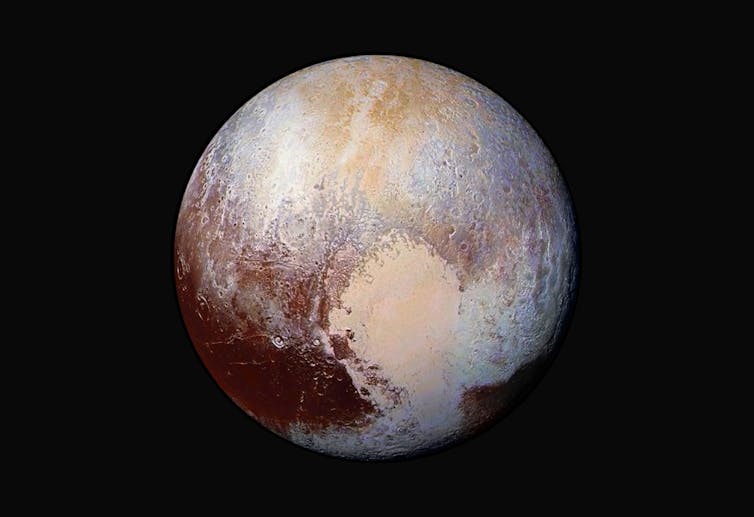

Curious Kids is a series for children of all ages. If you have a question you’d like an expert to answer, send it to
What is a dwarf planet? – Myranda, age 8, Knoxville, Tennessee
The word “planet” came from the ancient Greek words that mean “wandering star.” That makes sense, because for thousands of years, people have watched planets change position in the night sky – unlike stars, which appear fixed and unmoving to the naked eye.
That’s how the ancients discovered five of the planets: Mercury, Venus, Mars, Jupiter and Saturn. Astronomers using telescopes found Uranus in 1781, Neptune in 1846, and Pluto in 1930.
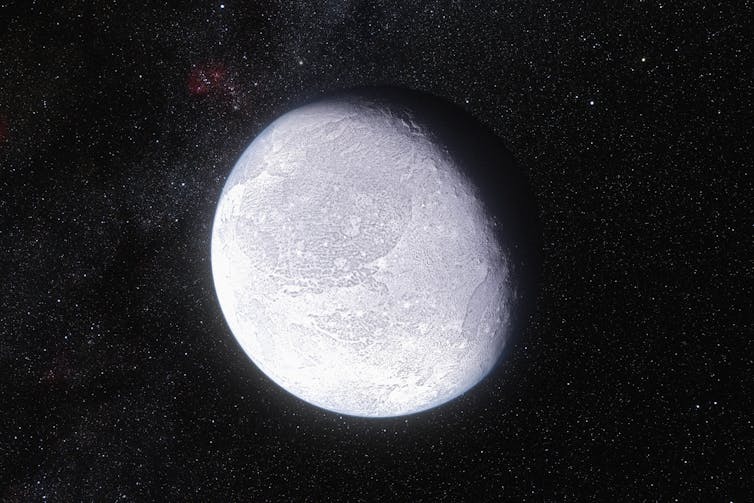
Solar system leftovers
I’m a space scientist with a passion for astronomy and the exploration of the Solar System. I received my Ph.D. in physics in 1994, about the time astronomers began to find more and more objects beyond Neptune, in the Kuiper belt. That’s a place in space that holds the “leftovers” of the solar system – particularly small icy bodies.
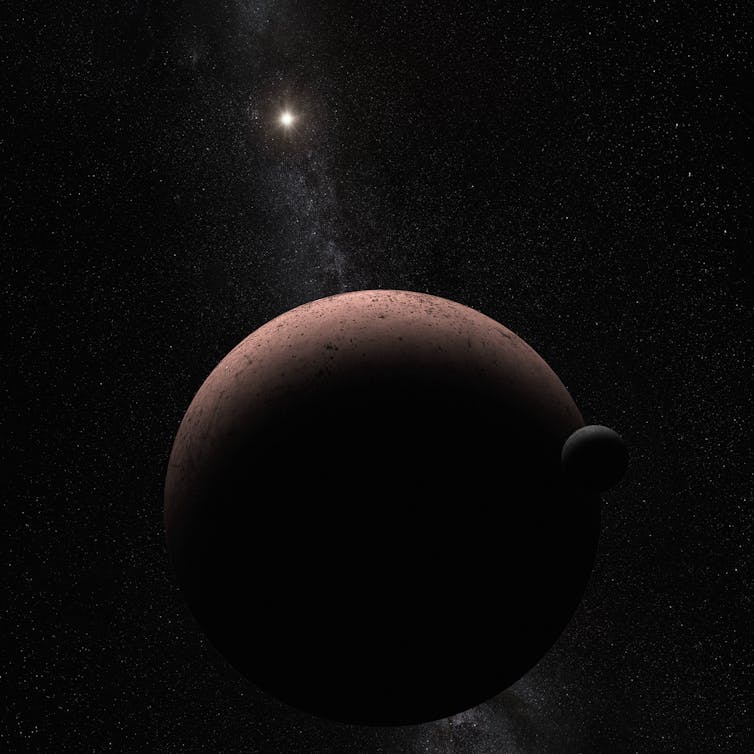
Three of those icy bodies – Eris, Haumea and Makemake – were discovered in the early to mid 2000s. They seemed large enough to be planets; all of them are roughly the same size as Pluto.
Astronomers then surmised that there were likely many more of these icy bodies in the Kuiper belt. They began to wonder: How many planets might we end up identifying in our solar system? Twenty? Thirty? A hundred? More?
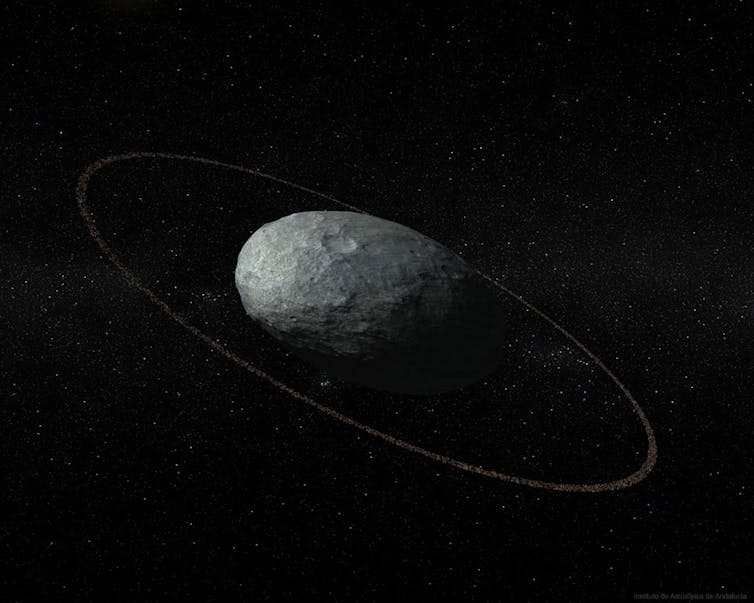
Dwarf planet defined
In 2006, and after much debate, the International Astronomical Union came up with a new definition for a planet. And for the first time, the term “dwarf planet” was used.
Here’s what the IAU said: A planet has to orbit the Sun directly. It also must be large enough to have a round, or spherical, physical shape.
And the planet must “clear its neighborhood.” That means, aside from any moons it might have, the planet can’t share its orbit with other objects of comparable size.
An object that satisfies only the first two criteria – but not the last – is now called a dwarf planet.

Pluto is demoted
That’s why Pluto lost its status as a planet and is now classified as a dwarf planet. It failed the final item on the checklist – other icy Kuiper belt bodies are within its orbital path. The decision, a controversial one to be sure, is debated by scientists to this very day.
At the same time Pluto got demoted, another solar system object was promoted. Ceres, once considered an asteroid, is now classified as a dwarf planet. It’s nowhere near the Kuiper belt; instead, Ceres is in the main asteroid belt, orbiting between Mars and Jupiter.
Add them up – Pluto, Ceres, Eris, Haumea and Makemake – and that brings the number of dwarf planets in our solar system to five. But that list is sure to grow. Already, hundreds of candidates, nearly all in the Kuiper belt, potentially satisfy the criteria to be a dwarf planet.
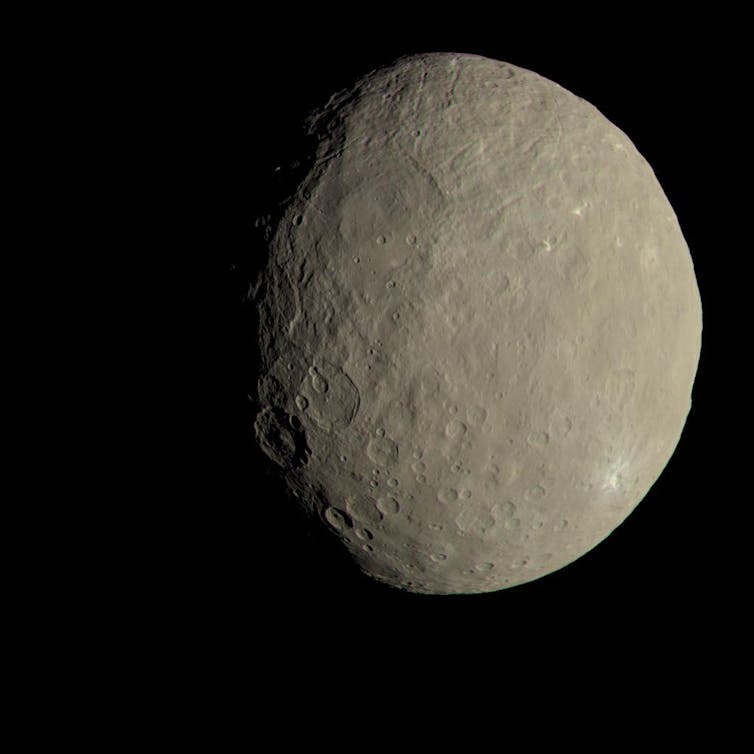
About the dwarf planets
Dwarf planets are nothing like Earth.
As their name implies, they are much smaller. Pluto and Eris, the largest of the dwarfs, have less than one-fifth the diameter of the Earth.
They have less mass, too. For example, Earth has about 6,400 times more mass than Ceres. That’s like comparing two killer whales to a guinea pig.
And dwarf planets are cold. Pluto’s average temperature is around minus 400 degrees Fahrenheit (minus 240 Celsius).

Could life exist on a dwarf planet?
Three things are needed for life: liquid water, an energy source and organic molecules – that is, molecules containing carbon.
More than 100 miles (161 kilometers) below Pluto’s surface, an enormous ocean of liquid water may exist; this might also be true for other Kuiper belt worlds. Ceres also has subsurface water, remnants of what might have been an ancient global ocean.
Organic molecules, in abundance everywhere in our solar system, have been found on Ceres and Pluto.
But the one missing ingredient for all the dwarf planets is a source of energy.
Sunlight won’t work, particularly for the Kuiper belt dwarfs; they are simply too far away from the Sun. To reach the belt, the light must travel more than 2.7 billion miles (4.4 billion km). By the time the sunshine arrives at these distant worlds, it’s too weak to significantly heat any of them.
And all the dwarf planets are too small to hold the inner heat that remains from the solar system’s formation.
Yet scientists have discovered life on Earth in the most hostile places imaginable – near the bottom of the ocean, miles deep in the soil and even inside an active volcano. When it comes to life in our solar system, never say never.
Hello, curious kids! Do you have a question you’d like an expert to answer? Ask an adult to send your question to
And since curiosity has no age limit – adults, let us know what you’re wondering, too. We won’t be able to answer every question, but we will do our best.
Vahe Peroomian, Professor of Physics and Astronomy, USC Dornsife College of Letters, Arts and Sciences
This article is republished from The Conversation under a Creative Commons license. Read the original article.