 How to resolve AdBlock issue?
News
- Details
- Written by: Richard Forno, University of Maryland, Baltimore County

President Joe Biden on March 21, 2022, warned that Russian cyberattacks on U.S. targets are likely, though the government has not identified a specific threat. Biden urged the private sector: “Harden your cyber defenses immediately.”
It is a costly fact of modern life that organizations from pipelines and shipping companies to hospitals and any number of private companies are vulnerable to cyberattacks, and the threat of cyberattacks from Russia and other nations makes a bad situation worse. Individuals, too, are at risk from the current threat.
Local governments, like schools and hospitals, are particularly enticing “soft targets” – organizations that lack the resources to defend themselves against routine cyberattacks, let alone a lengthy cyber conflict. For those attacking such targets, the goal is not necessarily financial reward but disrupting society at the local level.
From issuing business licenses and building permits and collecting taxes to providing emergency services, clean water and waste disposal, the services provided by local governments entail an intimate and ongoing daily relationship with citizens and businesses alike. Disrupting their operations disrupts the heart of U.S. society by shaking confidence in local government and potentially endangering citizens.
In the crosshairs
Local governments have suffered successful cyberattacks in recent years. These include attacks on targets ranging from 911 call centers to public school systems. The consequences of a successful cyberattack against local government can be devastating.

I and other researchers at University of Maryland, Baltimore County have studied the cybersecurity preparedness of the United States’ over 90,000 local government entities. As part of our analysis, working with the International City/County Management Association, we polled local government chief security officers about their cybersecurity preparedness. The results are both expected and alarming.
Among other things, the survey revealed that nearly one-third of U.S. local governments would be unable to tell if they were under attack in cyberspace. This is unsettling; nearly one-third of local governments that did know whether they were under attack reported being attacked hourly, and nearly half at least daily.
Ill-equipped
Lack of sound IT practices, let alone effective cybersecurity measures, can make successful cyberattacks even more debilitating. Almost half of U.S. local governments reported that their IT policies and procedures were not in line with industry best practices.
In many ways, local governments are no different from private companies in terms of the cybersecurity threats, vulnerabilities and management problems they face. In addition to those shared cybersecurity challenges, where local governments particularly struggle is in hiring and retaining the necessary numbers of qualified IT and cybersecurity staff with wages and workplace cultures that can compare with those of the private sector or federal government.
Additionally, unlike private companies, local governments by their nature are limited by the need to comply with state policies, the political considerations of elected officials and the usual perils of government bureaucracy such as balancing public safety with the community’s needs and corporate interests. Challenges like these can hamper effective preparation for, and responses to, cybersecurity problems – especially when it comes to funding. In addition, much of the technology local communities rely on, such as power and water distribution, are subject to the dictates of the private sector, which has its own set of sometimes competing interests.
[Get The Conversation’s most important coronavirus headlines, weekly in a science newsletter]
Large local governments are better positioned to address cybersecurity concerns than smaller local governments. Unfortunately, like other soft targets in cyberspace, small local governments are much more constrained. This places them at greater risk of successful cyberattacks, including attacks that otherwise might have been prevented. But the necessary, best-practice cybersecurity improvements that smaller cities and towns need often compete with the many other demands on a local community’s limited funds and staff attention.
Getting the basics right
Whether they are victimized by a war on the other side of the world, a hacktivist group promoting its message or a criminal group trying to extort payment, local governments in the U.S. are enticing targets. Artificial intelligence hacking tools and vulnerabilities introduced by the spread of smart devices and the growing interest in creating “smart cities” put local governments even more at risk.
There’s no quick or foolproof fix to eliminate all cybersecurity problems, but one of the most important steps local governments can take is clear: Implement basic cybersecurity. Emulating the National Institute of Standards and Technology’s national cybersecurity framework or other industry accepted best practices is a good start.
I believe government officials, especially at the local level, should develop and apply the necessary resources and innovative technologies and practices to manage their cybersecurity risks effectively. Otherwise, they should be prepared to face the technical, financial and political consequences of failing to do so.
Richard Forno, Principal Lecturer in Computer Science and Electrical Engineering, University of Maryland, Baltimore County
This article is republished from The Conversation under a Creative Commons license. Read the original article.
- Details
- Written by: ESTHER OERTEL

LAKE COUNTY, Calif. — Thanks to a $199,865 grant from the California State Library, a sleek new bookmobile is slated to traverse Lake County roads to bring library services to communities not currently served by a local branch.
Lake County Librarian Christopher Veach said it’s long been a goal of the library to better reach the differing and sometimes isolated regions of Lake County.
He believes that libraries are for everyone, wherever they live, and hopes to bring easier library access to more Lake County residents through the bookmobile.
Veach, a Lake County native who has served as its librarian since 2013, was inspired to apply for the grant as an extension of their desire to make libraries as accessible as possible during the COVID-19 pandemic.
He envisions that the bookmobile will be used to serve communities that are furthest from the four established branches in the county, the main branch in Lakeport, Redbud Library in Clearlake, and the branches in Upper Lake and Middletown.
The Riviera area and North Shore communities will be among the beneficiaries of the bookmobile’s visits, with regularly scheduled stops in areas where people tend to congregate.
Typically, a bookmobile stops at a venue for about an hour, so it’s likely it could make three or four stops a day based on a regular schedule. The plan is for the bookmobile to travel a prearranged route several times a week, with the other days devoted to visiting schools and making appearances at public events.

Most of the grant money will be used to cover the cost of the vehicle, which will be a Mercedes-Benz Sprinter van customized to the library’s specifications.
Some rural counties use larger vehicles as bookmobiles; Mendocino County, for example, has a camper-sized bookmobile. However, Veach feels the smaller size is more practical for Lake County’s narrow and sometimes mountainous roads, as well as easier for staff to commandeer.
Another benefit of a smaller vehicle is that it makes visits to schools and other venues, like farmers’ markets or festivals, much easier.
Customization can be a long process, and under normal circumstances can take up to a year. The mobile library may not be ready to hit the road until early 2023, particularly if supply challenges wrought by the pandemic wind up affecting the process.
The library is required to provide matching funds, and this will be met via the cost of operation, maintenance, and insurance over the period of the grant, which ends in 2024.
The bookmobile will be like a branch on wheels, where people can browse books, sign up for library cards and have access to the internet. Chromebooks and Wi-Fi hot spots — hockey puck-like portable devices that provide internet access — will be available for the public’s use on site or for checkout.
Immediate access to between 700 and 1,000 volumes will be possible via the bookmobile, and just like at current branches, books can be requested for pickup there.
The van will have shelves to house books both inside and outside, where open-air browsing can be done under a protective canopy. Depending on the weather, tables and chairs for patrons will be set up under the canopy outside.

The library, which currently employs 18 full-time and part-time employees across its four branches, will hire an additional part-time staff member to operate the bookmobile and serve as its library clerk.
According to Veach, who has a passion for expanding library services, the Lake County Library offers a broad array of programs and resources for children and adults that extend beyond access to books.
Children’s programming includes weekly story times, Lego clubs and special craft events, such as the wildly popular Leprechaun trap workshops offered last month in honor of St. Patrick’s Day.
Six new digital career resources for job seekers were launched at the end of last year. These are provided free of charge for patrons with library cards and can be accessed via the “job seekers and career sources” option on the library website.
The library has an Adult Literacy program which matches tutors with adults who need help with their reading, writing or language skills. Virtual tutor training is provided, and any interested in the program should contact the Lakeport branch at 707-263-7633.
According to Veach, April marks the launch of a “Book-to-Action” reading program for adults. Participants will have the opportunity to collectively read and discuss “The Blue Zones of Happiness” by Dan Buettner and put their newfound knowledge into action via a community service project. Free copies of the book are available at Lake County branches while supplies last.
As usual, the library will offer summer reading challenges for children and adults, along with prizes awarded when reading goals are met.
The library website, http://library.lakecountyca.gov, provides access to a plethora of online resources and information. Visitors to the site can sign up for a weekly email newsletter with information on special events, ongoing programs, volunteer opportunities and book recommendations.
News of the bookmobile’s launch will be announced via the newsletter, which is also available at any of the county’s library branches.
Esther Oertel is a freelance writer in Middletown who's contributed to Lake County News since 2010. She especially enjoys writing about the people and places that make Lake County unique. For comments, questions and story suggestions, she may be reached at

- Details
- Written by: National Center for Atmospheric Research
Such events can cause significant destruction, including debris flows, mudslides, and flash floods, because the denuded landscape cannot easily contain the drenching moisture.
A new study finds that, if society emits heat-trapping greenhouse gases at a high rate, the number of times that an extreme fire event is likely to be followed within one year by an extreme rainfall event will increase by more than eight times in the Pacific Northwest by the end of the century. It will more than double in California.
Overall, more than 90% of extreme fire events in the three regions that the research team focused on — which included Colorado along with California and the Pacific Northwest — will be followed by at least three extreme rainfalls within five years.
The study authors, including scientists at the National Center for Atmospheric Research, or NCAR, used advanced computer models of past and future climate, as well as an index of weather variables that contribute to wildfire risk, to reach their results.
Lead author Danielle Touma, who did much of the research at the University of California, Santa Barbara, before coming to NCAR, noted that previous research has shown that both wildfires and extreme rainfall will increase in the West with climate change. However, the increased frequency of extreme rainfall-after-fire events came as a surprise.
“It’s very concerning, given the destruction that comes with these kinds of events,” Touma said. “Clearly we need to understand the risks better, as this creates a major threat to people and infrastructure.”
The study is being published this week in Science Advances. Funding came primarily from the U.S. National Science Foundation, which is NCAR’s sponsor, and the Department of Energy.
Researchers from the University of California, Santa Barbara; the University of California, Los Angeles; the Nature Conservancy of California; and Washington State University contributed to the study.
Fires and rain on the rise
Heavy rainfall on burned areas is often hard to predict, but it can have devastating impacts. In 2018, debris flows in Montecito, California, caused by a brief and intense rainfall over an area that had burned just a month earlier, left 23 people dead and caused widespread property damage.
Torrential rains in Colorado’s Glenwood Canyon last year triggered a massive mudslide in a recently burned area, stranding more than 100 people and closing a portion of I-70 in the canyon for weeks.
Following a fire, the risk of debris flows persists for 3-5 years, and the risk of flash floods for 5-8 years, because of the time needed for ground cover and fine roots to recover followed by the regrowth of vegetation.
To study the frequency of extreme rainfall events after extreme wildfires in a warming world, Touma and her co-authors turned to an ensemble of simulations by a number of climate and weather models, including the NCAR-based Community Earth System Model, a powerful computer model that enabled them to project likely changes in climate in the western United States.
The results indicated that, by the end of the century, there will be a doubling or more of weather conditions that lead to the risk of extreme wildfires throughout much of the West, with some regions experiencing greatly elevated extreme wildfire risk within the next few decades. In addition, the climate models showed a pronounced increase in extreme rainfall events.
The researchers then looked at the number of cases in which extreme rainfall is likely to fall on the same region that recently experienced an extreme wildfire.
They found that more than half of extreme wildfire events will be followed within a year by an extreme rainfall event across much of the West, and virtually all extreme wildfires in the Pacific Northwest will be followed within five years by extreme rainfall.
Once every three years, drenching rains in western Colorado or much of the Pacific Northwest may be expected to inundate regions just three months after extreme wildfires — a scenario that was virtually unheard of in recent decades.
Part of the reason for the confluence of extreme fire and rainfall has to do with how climate change is altering the seasonality of these events.
For example, the study found more extreme rains occurring in the early fall in Colorado and the Pacific Northwest, close to the peak fire season of May to September.
“The gap between fire and rainfall season is becoming shorter,” Touma said. “One season of disasters is running into another.”
This material is based upon work supported by the National Center for Atmospheric Research, a major facility sponsored by the National Science Foundation and managed by the University Corporation for Atmospheric Research. Any opinions, findings and conclusions or recommendations expressed in this material do not necessarily reflect the views of the National Science Foundation.
“Climate change increases risk of extreme rainfall following wildfire in the western United States” was written by Danielle Touma, Samantha Stevenson, Daniel L. Swain, Deepti Singh, Dmitri A. Kalashnikov, Xingying Huang.
- Details
- Written by: Danielle Parsons, The Ohio State University and Bryan Carstens, The Ohio State University
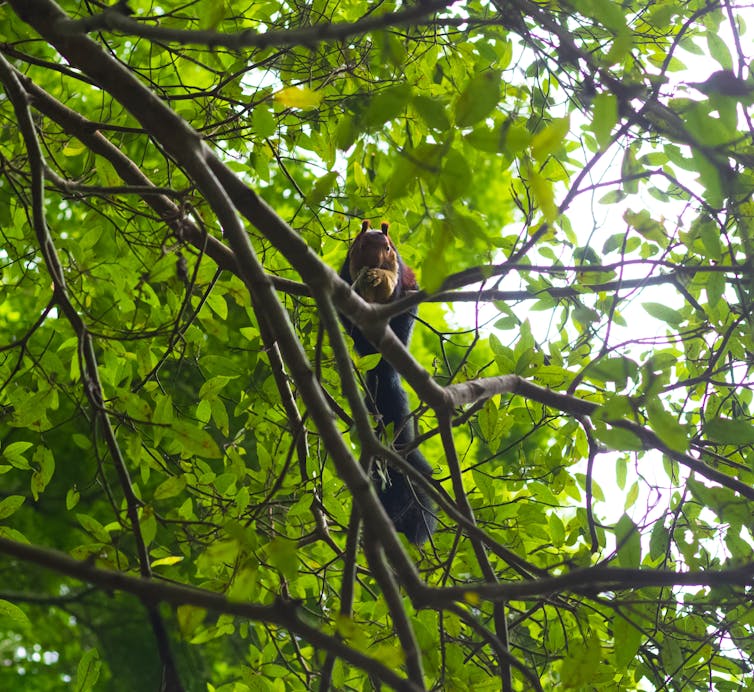
Taxonomy, the study of how living organisms relate to one another as species, has been around since the 1700s. Though scientists and philosophers have long debated what makes a species a species, taxonomists treat each species as a group of organisms that share common biological characteristics.
Discovering and describing new species is essential to biology researchers and conservationists because they use species as a unit of analysis. Species are also economically important to agriculture, hunting and fishing, and have special legal status, such as under the U.S. Endangered Species Act.
Despite this, scientists have been able to formally name and describe only an estimated 10% of species on the planet, based on discovery trends over the years.
This gap in knowledge is known as the Linnean shortfall. It remains unclear whether poor research methodology, disagreements on how to define a species, or other factors are to blame for this gap.
We are scientists in evolutionary biology, and figuring out ways to better identify species is central to our research. Using genetic analysis and artificial intelligence, we were able to disentangle hidden species that have been lumped together in a single group and predict where and what types they might be. Our findings also pinpoint a potential cause for this shortfall in species identification: an underinvestment in the science of taxonomy.
Hidden species remain to be discovered
For this study, we chose to focus on mammals. Because of their relatively large size and importance to people as a source of food, companionship and entertainment, we predicted that it was more likely that a large proportion of mammalian species have been already been identified.
Our first task was to identify known species that might actually contain two or more species. To do this, we analyzed 1 million gene sequences from 4,300 named species, identifying clusters of sequences that showed high genetic diversity and fitting the data to an evolutionary model.
We found potentially hundreds of hidden species that were previously classified as a single group. This finding was expected, as it mirrors results from previous studies, albeit on a larger scale.
Where and what are these hidden species?
Once we identified the presence of these potentially hidden species, our second task was to determine what specific traits they have in common. To do this, we used a data science technique called random forest analysis, a form of machine learning that draws information from a large number of different variables in order to make a prediction about a particular outcome. It’s similar to the technique that Netflix uses to suggest shows you might be interested in watching.
In our case, we wanted to predict whether a known species contained hidden species. The predictor variables we used spanned environmental factors, such as the climate of common mammalian habitats, and species-specific factors, such as physical traits, geographic range, reproductive and survival patterns. We also included research-based factors on the techniques scientists used to conduct their studies. In total, we collected some 3.8 million data points to build our model.
Based on our model, we found that three types of predictor variables stood out the most.
The first type comprised attributes of the species itself, such as body mass and geographic range. These results suggest that small mammals with relatively large ranges are more likely to have hidden species. This makes sense as, all things being equal, it is more difficult for scientists to recognize physical differences in smaller animals than larger ones.
The second type was climate – there are likely to be more hidden species in wet, warm areas with a large difference in day and night temperatures. This likely reflects the fact that tropical rainforests tend to have very high levels of mammalian diversity.
The third type was research effort, including the geographic dispersion of samples in museum collections and the number of recent publications mentioning the scientific name of a known species. This implies that researchers are generally effective in identifying new mammals, as how much attention the scientific community has focused on a specific mammal predicts whether that creature is identified. This is supported by how the general characteristics we’ve identified match new mammalian species described over the past 30 years, as well as the fact that our model recognizes areas that scientists are already investigating for hidden species.

Unknown species face extinction
At a time when Earth is facing its greatest extinction crisis since an asteroid killed off the dinosaurs, we believe that identifying and describing the many undiscovered species on Earth is crucial to aiding the preservation of its biodiversity.
Even though our study still found a large number of mammals waiting to be discovered, mammalian diversity is already relatively well captured compared with that of other species. We found that roughly 80% of existing mammal species have already been described, a proportion far higher than in nonmammal groups with even higher diversity such as beetles or mites.
Discovering and describing new species, as with all scientific research, takes a village. Natural history museums are largely responsible for collecting the raw data we analyzed, and genetic and biodiversity databases provided the infrastructure to make it accessible to us. A culture of information sharing among peers and large computer networks supported the thousands of hours of computation time we needed. Our work was made possible only by ongoing investments in taxonomic research.
Biodiversity scientists are racing to better understand the processes that create and maintain biodiversity while in the midst of the planet’s sixth mass extinction, one that is entirely caused by human actions. Taxonomists face the challenge of describing the species around us before they go extinct. As our findings suggest, there is still a long way to go.
Danielle Parsons, PhD Candidate in Evolutionary Biology, The Ohio State University and Bryan Carstens, Professor of Evolutionary Biology, The Ohio State University
This article is republished from The Conversation under a Creative Commons license. Read the original article.