 How to resolve AdBlock issue?
News
- Details
- Written by: Elizabeth Larson
Dogs available for adoption this week include mixes of Australian cattle dog, Australian Kelpie, Belgian malinois, border collie, boxer, Carolina dog, Chihuahua, Entlebucher mountain dog, French bulldog, husky, Jack Russell terrier, Labrador retriever, Pembroke Welsh corgi and pit bull.
Dogs that are adopted from Lake County Animal Care and Control are either neutered or spayed, microchipped and, if old enough, given a rabies shot and county license before being released to their new owner. License fees do not apply to residents of the cities of Lakeport or Clearlake.
The following dogs at the Lake County Animal Care and Control shelter have been cleared for adoption.
Call Lake County Animal Care and Control at 707-263-0278 or visit the shelter online for information on visiting or adopting.

Female Entlebucher mountain dog
This 3-year-old female Entlebucher mountain dog has a short tricolor coat.
She is in kennel No. 2, ID No. LCAC-A-3250.

This 1-year-old male pit bull has a short black coat with white markings.
He is in kennel No. 6, ID No. LCAC-A-3290.

Male pit bull terrier
This 1-year-old male pit bull terrier has a short white and tan coat.
He is in kennel No. 7, ID No. LCAC-A-2821.
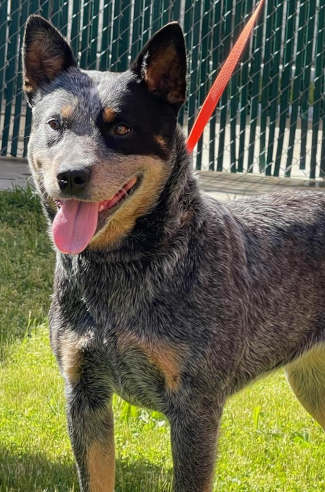
Female Australian cattle dog
This 2-year-old female Australian cattle dog has a short blue, black and tan coat.
She is in kennel No. 8, ID No. LCAC-A-3231.

Male pit bull
This 2-year-old male pit bull has a short black coat.
He is in kennel No. 9, ID No. LCAC-A-3278.

Male cattle dog
This 3-year-old male cattle dog has a short black coat with white markings.
He is in kennel No. 14, ID No. LCAC-A-3228.
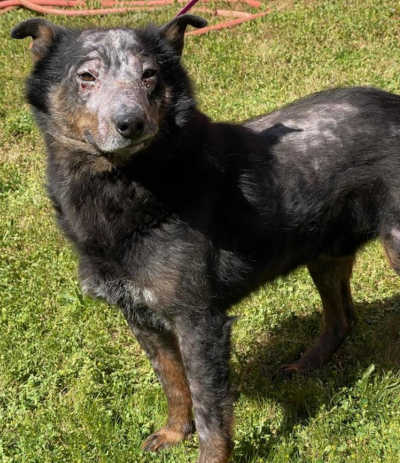
Australian cattle dog
This 3-year-old male Australian cattle dog has a black coat with tan markings.
He is in kennel No. 16, ID No. LCAC-A-3131.

Male pit bull
This 3-year-old male pit bull has a short black and white coat.
He is in kennel No. 18, ID No. LCAC-A-3288.

‘Cody’
“Cody” is a 7-year-old male French bulldog-pit bull terrier mix with a short brindle and white coat.
He is in kennel No. 19, ID No. LCAC-A-3284.

Male Belgian malinois
This 1-year-old male Belgian malinois has a short brown and black coat.
He is in kennel No. 20, ID No. LCAC-A-3270.

Male Pembroke Welsh corgi
This 3-year-old male Pembroke Welsh corgi has a short white and tan coat.
He is in kennel No. 22, ID No. LCAC-A-3271.

Husky-pit bull mix
This 1-year-old female husky-pit bull mix has a short black coat.
She is in kennel No. 23, ID No. LCAC-A-3289.

Carolina dog
This 2-year-old female Carolina dog has a short white coat.
She is in kennel No. 24, ID No. LCAC-A-3281.

‘Blue’
“Blue” is a 4-year-old female husky with a gray and white coat, and blue eyes.
She is in kennel No. 25, ID No. LCAC-A-2816.

Female husky
This 2-year-old female husky has a medium-length black and white coat, with one blue eye and one yellow eye.
She is in kennel No. 26, ID No. LCAC-A-3225.

‘King’
“King” is a 1-year-old American bulldog with a short brown and white coat.
He is in kennel No. 32, ID No. 3109.

Male Australian cattle dog
This 3-year-old male Australian cattle dog has a short black, tan and white coat.
He is in kennel No. 34, ID No. LCAC-A-3130.
Email Elizabeth Larson at
- Details
- Written by: NATIONAL AERONAUTICS AND SPACE ADMINISTRATION

NASA’s James Webb Space Telescope will see the first galaxies to form after the big bang, but to do that its instruments first need to get cold — really cold.
On April 7, Webb’s Mid-Infrared Instrument, or MIRI — a joint development by NASA and the European Space Agency – reached its final operating temperature below 7 kelvins (minus 447 degrees Fahrenheit, or minus 266 degrees Celsius).
Along with Webb’s three other instruments, MIRI initially cooled off in the shade of Webb’s tennis-court-size sunshield, dropping to about 90 kelvins (minus 298 F, or minus 183 C).
But dropping to less than 7 kelvins required an electrically powered cryocooler. Last week, the team passed a particularly challenging milestone called the “pinch point,” when the instrument goes from 15 kelvins (minus 433 F, or minus 258 C) to 6.4 kelvins (minus 448 F, or minus 267 C).
“The MIRI cooler team has poured a lot of hard work into developing the procedure for the pinch point,” said Analyn Schneider, project manager for MIRI at NASA’s Jet Propulsion Laboratory in Southern California. “The team was both excited and nervous going into the critical activity. In the end it was a textbook execution of the procedure, and the cooler performance is even better than expected.”
The low temperature is necessary because all four of Webb’s instruments detect infrared light – wavelengths slightly longer than those that human eyes can see.
Distant galaxies, stars hidden in cocoons of dust, and planets outside our solar system all emit infrared light. But so do other warm objects, including Webb’s own electronics and optics hardware.
Cooling down the four instruments’ detectors and the surrounding hardware suppresses those infrared emissions. MIRI detects longer infrared wavelengths than the other three instruments, which means it needs to be even colder.
Another reason Webb’s detectors need to be cold is to suppress something called dark current, or electric current created by the vibration of atoms in the detectors themselves.
Dark current mimics a true signal in the detectors, giving the false impression that they have been hit by light from an external source. Those false signals can drown out the real signals astronomers want to find.
Since temperature is a measurement of how fast the atoms in the detector are vibrating, reducing the temperature means less vibration, which in turn means less dark current.
MIRI’s ability to detect longer infrared wavelengths also makes it more sensitive to dark current, so it needs to be colder than the other instruments to fully remove that effect. For every degree the instrument temperature goes up, the dark current goes up by a factor of about 10.
Once MIRI reached a frigid 6.4 kelvins, scientists began a series of checks to make sure the detectors were operating as expected. Like a doctor searching for any sign of illness, the MIRI team looks at data describing the instrument’s health, then gives the instrument a series of commands to see if it can execute tasks correctly.
This milestone is the culmination of work by scientists and engineers at multiple institutions in addition to JPL, including Northrop Grumman, which built the cryocooler, and NASA’s Goddard Space Flight Center, which oversaw the integration of MIRI and the cooler to the rest of the observatory.
“We spent years practicing for that moment, running through the commands and the checks that we did on MIRI,” said Mike Ressler, project scientist for MIRI at JPL. “It was kind of like a movie script: Everything we were supposed to do was written down and rehearsed. When the test data rolled in, I was ecstatic to see it looked exactly as expected and that we have a healthy instrument.”
There are still more challenges that the team will have to face before MIRI can start its scientific mission.
Now that the instrument is at operating temperature, team members will take test images of stars and other known objects that can be used for calibration and to check the instrument’s operations and functionality.
The team will conduct these preparations alongside calibration of the other three instruments, delivering Webb’s first science images this summer.
“I am immensely proud to be part of this group of highly motivated, enthusiastic scientists and engineers drawn from across Europe and the U.S.,” said Alistair Glasse, MIRI instrument scientist at the UK Astronomy Technology Centre in Edinburgh, Scotland. “This period is our ‘trial by fire’ but it is already clear to me that the personal bonds and mutual respect that we have built up over the past years is what will get us through the next few months to deliver a fantastic instrument to the worldwide astronomy community.”
More about the mission
The James Webb Space Telescope is an international program led by NASA with its partners, the European Space Agency, or ESA, and the Canadian Space Agency.
MIRI was developed through a 50-50 partnership between NASA and ESA. JPL leads the U.S. efforts for MIRI, and a multinational consortium of European astronomical institutes contributes for ESA. George Rieke with the University of Arizona is the MIRI science team lead. Gillian Wright is the MIRI European principal investigator.
Laszlo Tamas with UK ATC manages the European Consortium. The MIRI cryocooler development was led and managed by JPL, in collaboration with Northrop Grumman in Redondo Beach, California, and NASA’s Goddard Space Flight Center in Greenbelt, Maryland.
For more information about the Webb mission, visit https://www.nasa.gov/webb.
- Details
- Written by: NORTH COAST OPPORTUNITIES
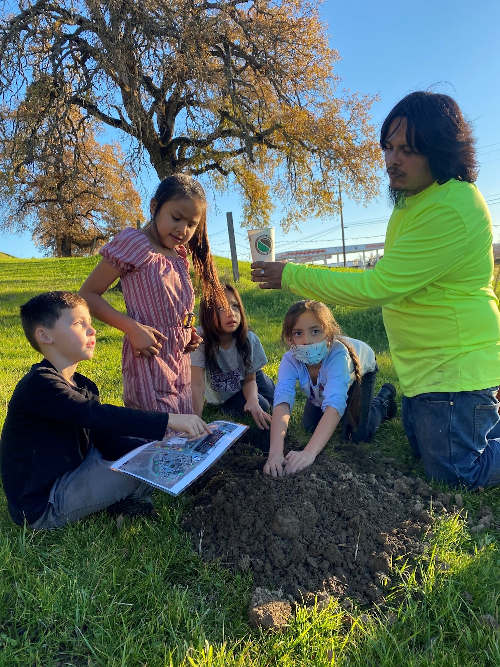
LAKE COUNTY, Calif. — This spring and throughout the seasons to come, 504 fruiting, flowering and shade-giving trees and nearly 100 specimens of native plants will be sprouting up in neighborhoods and communal spaces across Lake County.
The new flora is the result of Greening Lake County, a collaborative project between North Coast Opportunities, or NCO; Tribal EcoRestoration Alliance, or TERA; the city of Lakeport; and partner sites to revitalize and beautify communities in a region that has endured harrowing damage from recent wildfires.
According to the report Cumulative Impact of Lake County’s Disasters published by the County of Lake, fires have consumed more than two-thirds of Lake County’s land mass since 2015, claiming thousands of homes and structures, upending lives, and damaging much of the region’s natural landscape, including trees and forests that act as powerful carbon-capturing tools to combat climate change and contribute to the overall livability of communities.
“NCO has dispersed millions of dollars in fire assistance to support survivors’ needs for housing, food, and essentials in Lake County over the last 7 years,” said NCO Executive Director Patty Bruder. “So we were excited for the opportunity to support fire recovery efforts in a new way — through land regeneration and re-beautification--to help restore communities that have been impacted by years of disasters.”
The Greening Lake County project was funded by CalFire and the United States Forest Service through the California ReLeaf grant that supports community collaborations contributing to the livability of cities and the protection of the environment by planting and caring for trees.
NCO could not complete this massive project alone and sought out partners to survey Lake County communities and lead the planting activities while providing a matching grant, backbone coordination, and administration support for the project.
Through a collaborative effort, Greening Lake County partners identified 11 sites in Clearlake, Lakeport, Middletown and Nice and began planting in mid-2021.
The city of Lakeport signed on to plant and care for 53 trees in the public areas of Library Park, Main Street downtown, 11th Street and Westside Community Park. These trees will flower in the spring, beautifying the downtown corridor, and provide benefits to the city’s residents and visitors.
“Not only do trees help deflect sunlight reducing the heat island effect caused by pavement and commercial buildings, but they also create an aesthetically pleasing environment,” said Ron Ladd, Public Works superintendent for the city of Lakeport. “Working with NCO on the ReLeaf project has been a pleasure.”
NCO subcontracted with the land restoration nonprofit Tribal EcoRestoration Alliance to design and plant the additional 451 trees and 90 native plants at six partner sites across Lake County including Highland Senior Center in Clearlake, Hospice Services of Lake County in Lakeport, Jesus Christ Fellowship and Middletown Rancheria of Pomo Indians in Middletown, and Robinson Rancheria of Pomo Indians in Nice.
Specifically, TERA’s role was to select the species best suited for the local ecosystems, and to ensure the project promotes fire resilience, and provides maximum benefits to the community and to the land.
TERA is a cross-cultural, multi-organizational collaborative revitalizing ecology, economy, and culture through indigenous-led restoration seeking to un-do centuries of poor land stewardship policies. TERA had previously partnered with NCO’s fiscally sponsored program The Oak Granary and NCO was confident that they had the expertise and partnerships to carry out the planting activities in a way that was best for the land, culturally relevant, and engaging for the community.
Bringing together indigenous wisdom and practices of caring for the earth, TERA hires their crews from tribal communities to cultivate land stewardship, livelihood, and leadership skills that build bridges between tribal residents and the larger community.
“Lake is one of the most under-resourced counties in California,” said Alyson Sagala, TERA operations manager. “It’s important our staff also comes from the community it serves. It’s not someone from outside coming in to do this project. People who live here are being paid to help their neighbors and that’s what’s beautiful about the project.”
All trees and native plants under the Greening Lake County project have an intention and a purpose in the local ecosystem and community and provide holistic benefits.
Apple, walnut, peach, cherry, and mulberry trees will provide food access for residents of a tiny home village at Jesus Christ Fellowship, built in part by participants of Building Homes, Building Lives, an NCO program that provides paid training and job placement in general construction for unemployed or housing insecure residents.
TERA also plants Valley Oaks and Blue Oaks that when mature can reach up to 100 feet tall with a canopy of 40 feet in diameter, providing essential shade in the summer months and helping combat climate change. Wildfires, especially on the scale Lake County has experienced, emit massive amounts of greenhouse gasses further worsening carbon emissions.
Due to their size and long lifespan, oaks can capture substantial amounts of carbon from the air, offsetting greenhouse gasses for more than a century.
“[This work] is important for my kids, for everyone’s kids, and all the children that will come after us,” said Mark McCloud, TERA crew member and tribal member at Big Valley Rancheria Band of Pomo Indians.
When intentionally intermingled with the built environment, oaks can also help communities reduce their consumption of fossil fuels.
TERA placed plantings at Robinson Rancheria, Jesus Christ Fellowship, Middletown Hospice Thrift and Highland Senior Center within 60 feet from the buildings so their expansive canopies will create a cooling effect, reducing the energy required to keep the buildings comfortable in warmer months.
“I think people don’t realize how much they take away from the Earth,” said Lance McCloud, TERA crew member and tribal member at Robinson Rancheria of Pomo Indians of California. “Us giving back, it may be small, but will still make a big impact for everything in the long run.”
Oaks are vital to supporting biodiversity in the region, providing habitat and resources for a vast web of life, from the moth larva to the black bear, and are also culturally important to tribes in Northern California who utilize the acorns for food and many other parts of the tree for basketry, tools, and medicines.
TERA planted the oaks by collecting native acorns onsite, a practice that produces a resilient tree suited for the land.
In addition, TERA placed 90 specimens of native species and other culturally significant plants — such as elderberry, a native shrub with many medicinal uses and redbud, a material used for basket making — on the Pomo lands of Middletown and Robinson Rancherias.
NCO Project Coordinator Sarah Marshall said the Greening Lake County project was the first time California ReLeaf funded planting activities on tribal land. NCO and TERA made special efforts to advocate to California ReLeaf to use the funds in this way.
“It’s been great to work with California ReLeaf and to see how flexible they have been to allow us to work with the tribes and use their methods for regeneration,” said Marshall. “It is setting a precedent for all other organizations working with California ReLeaf. Now they may consider working with tribes in this way in the future.”
TERA hosts volunteer days at the project sites to engage the community around the Greening Lake County work.
They provide training on plant care, presentations on native and drought-resistant species, and information to encourage volunteers to plant trees in their own yards.
Each training is tailored to fit the community and provides opportunities for volunteers to learn about the cultural, historical, and ecological context of each species.
“Most places you need higher degrees or other resources to do this kind of work, but TERA is sharing this knowledge and passing that information along to anyone who wants to learn and is creating opportunities for people to do this work who haven’t always had the ability to,” said Stoney Timmons, TERA crew lead and tribal member at Robinson Rancheria of Pomo Indians of California.
The volunteer days garner an overwhelmingly positive response from the communities near the planting sites as those who live nearby show up to help and learn.
TERA Operations Manager Alyson Sagala said the response from the Robinson and Middletown Rancheria communities have been particularly inspiring, as they have participated on planting days and offered funds to support the project.
“The ability to extend this partnership and work with local tribes in our community is incredible,” said Sagala. “We are privileged to be able to partner with an organization like NCO.”
NCO is the Community Action Agency that serves Lake and Mendocino Counties, as well as parts of Humboldt, Sonoma, Del Norte, and Solano Counties. NCO reacts and adjusts to community needs, including disaster response and recovery. For more information visit www.ncoinc.org or call 707-467-3200.
Special thanks to Tribal EcoRestoration Alliance for their contributions to this article. To learn more about TERA, visit www.tribalecorestoration.org.
- Details
- Written by: LAKE COUNTY NEWS REPORTS
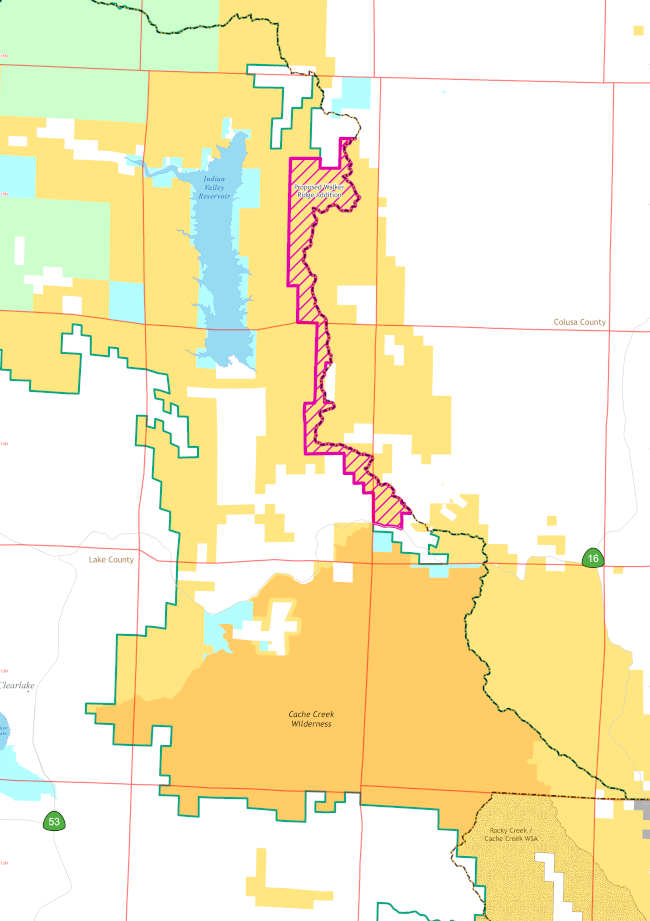
LAKE COUNTY, Calif. — The effort to add the Walker Ridge area to the Berryessa Snow Mountain National Monument took another step forward this week.
Sen. Alex Padilla (D-CA) has introduced the Berryessa Snow Mountain National Monument Expansion Act with Sen. Dianne Feinstein as co-sponsor.
The bill would accompany House Resolution 6366, introduced by Congressman John Garamendi, to expand Berryessa Snow Mountain National Monument.
The legislation would add an adjacent 3,925 acre area to the current monument, support tribal co-management, and change the name of the additional wildlands from “Walker Ridge” to Molok Luyuk — Patwin for “Condor Ridge” — a name the Yocha Dehe Wintun Nation provided.
In 2015, President Obama designated Berryessa Snow Mountain a National Monument, with Congressman Mike Thompson (D-CA05) introducing the original bill. The Monument, along with the proposed Molok Luyuk (Condor Ridge) addition, is culturally significant to local Native American tribes and notable for its varied habitats and wildlife, including imperiled animals. The ridge provides wildlife connectivity for many species including deer, mountain lions, and black bear.
“The Yocha Dehe Wintun Nation has a long and significant connection to Walker Ridge, which is steeped in thousands of years of rich history and is profoundly meaningful to the Patwin people,” said Tribal Chairman Anthony Roberts. “This bill will preserve and maintain the area’s cultural value while ensuring the general public can continue to enjoy it.”
Currently managed by the Bureau of Land Management, the area currently known as Walker Ridge is home to great biodiversity including over 30 species of rare plants, ancient blue oak woodlands, rugged rock outcrops, wildflower meadows, and extensive stands of McNab cypress.
“Renowned for fascinating geology, outstanding biodiversity, profound cultural significance, and views to die for, Molok Luyuk is eminently worthy of the permanent protection that Senator Alex Padilla and Representative John Garamendi have stepped forward to propose," said Sierra Club Redwood Chapter Chair Victoria Brandon.
For years, advocates called for lasting protection of Walker Ridge, helping to deter repeated development proposals for large-scale wind energy. The wind energy proposals persist, despite the California Energy Commission’s finding that the area had only moderate to low energy potential.
In 2005 and again in 2011, California Native Plant Society submitted proposals to designate the region an Area of Critical Environmental Concern over worries that the area’s irreplaceable habitats would be permanently altered.
"This legislation is the culmination of two decades of advocacy, so we’re truly inspired to see the groundswell of support for Molok Luyuk and the meaningful engagement with the Yocha Dehe Wintun Nation,” CNPS Conservation Program Director Nick Jensen said. “We thank Senators Padilla and Feinstein for their leadership in protecting Molok Luyuk and honoring its significance to our tribal partners."
Advocates said the proposed expansion act would provide much-needed, lasting protection for the land along with the requirement for a monument management plan within one year.
The legislation also would secure ongoing co-management with affected federally recognized tribes by requiring federal agencies to consult with tribes in the development of the management plan, subsequent management decisions, and “continued meaningful engagement” in the implementation of the plan.
"As neighbors of Molok Luyuk, we have witnessed both the beauty of, and threats to, this unique place,” said Sandra Schubert, executive director of Tuleyome. “This bill will safeguard Molok Luyuk, its natural beauty, wildlife, rare plants, and indigenous treasures, while respecting Tribal stewardship over the lands. We are excited that Senators Padilla and Feinstein have joined the fight to protect Molok Luyuk and look forward to working with them to pass this historic bill.”
Today, the area attracts a wide range of people who use the BLM property to hike, ride horses, cycle, birdwatch, and drive legal off-highway vehicles.
Don Amador, a long-time trail recreation and resource management professional, explained that Molok Luyuk’s management plan would make it easier for the BLM to designate routes that provide connectivity to increase public access and enhance recreation opportunities for all user groups.
"Since taking office, Sen. Alex Padilla has been a consistently strong champion for our nation's federal public lands," said Ryan Henson, senior policy director for CalWild. “We're deeply grateful to Sen. Padilla for taking up the cause of Molok Luyuk. The ridge is a public treasure that deserves permanent protection and improved management for the benefit of all. We're eager to work with Sen. Padilla and Rep. John Garamendi to get this critical measure through Congress as quickly as possible.”
The expanded monument also would mark an important step toward helping the state of California and the Biden Administration meet the critical goal of protecting 30% of U.S. lands and waters by the year 2030, added Elyane Stefanick, California program director for the Conservation Lands Foundation, in reference to California’s 30x30 Initiative and the federal America the Beautiful call-to-action.
"Conservation Lands Foundation supports Sen. Padilla’s goal to expand the Berryessa Snow Mountain National Monument and ensure this remarkable landscape has a robust management plan,” Stefanick said. “The history of public lands is complex. The addition of Molok Luyuk honors the original stewards and caretakers of these lands and will help protect the area’s rich biodiversity.”