 How to resolve AdBlock issue?
News
Climate change will transform how we live, but these tech and policy experts see reason for optimism
- Details
- Written by: Robert Lempert, Pardee RAND Graduate School and Elisabeth Gilmore, Carleton University
It’s easy to feel pessimistic when scientists around the world are warning that climate change has advanced so far, it’s now inevitable that societies will either transform themselves or be transformed. But as two of the authors of a recent international climate report, we also see reason for optimism.
The latest reports from the Intergovernmental Panel on Climate Change discuss changes ahead, but they also describe how existing solutions can reduce greenhouse gas emissions and help people adjust to impacts of climate change that can’t be avoided.
The problem is that these solutions aren’t being deployed fast enough. In addition to push-back from industries, people’s fear of change has helped maintain the status quo.
To slow climate change and adapt to the damage already underway, the world will have to shift how it generates and uses energy, transports people and goods, designs buildings and grows food. That starts with embracing innovation and change.
Fear of change can lead to worsening change
From the industrial revolution to the rise of social media, societies have undergone fundamental changes in how people live and understand their place in the world.
Some transformations are widely regarded as bad, including many of those connected to climate change. For example, about half the world’s coral reef ecosystems have died because of increasing heat and acidity in the oceans. Island nations like Kiribati and coastal communities, including in Louisiana and Alaska, are losing land into rising seas.
Other transformations have had both good and bad effects. The industrial revolution vastly raised standards of living for many people, but it spawned inequality, social disruption and environmental destruction.
People often resist transformation because their fear of losing what they have is more powerful than knowing they might gain something better. Wanting to retain things as they are – known as status quo bias – explains all sorts of individual decisions, from sticking with incumbent politicians to not enrolling in retirement or health plans even when the alternatives may be rationally better.
This effect may be even more pronounced for larger changes. In the past, delaying inevitable change has led to transformations that are unnecessarily harsh, such as the collapse of some 13th-century civilizations in what is now the U.S. Southwest. As more people experience the harms of climate change firsthand, they may begin to realize that transformation is inevitable and embrace new solutions.
A mix of good and bad
The IPCC reports make clear that the future inevitably involves more and larger climate-related transformations. The question is what the mix of good and bad will be in those transformations.
If countries allow greenhouse gas emissions to continue at a high rate and communities adapt only incrementally to the resulting climate change, the transformations will be mostly forced and mostly bad.
For example, a riverside town might raise its levees as spring flooding worsens. At some point, as the scale of flooding increases, such adaptation hits its limits. The levees necessary to hold back the water may become too expensive or so intrusive that they undermine any benefit of living near the river. The community may wither away.
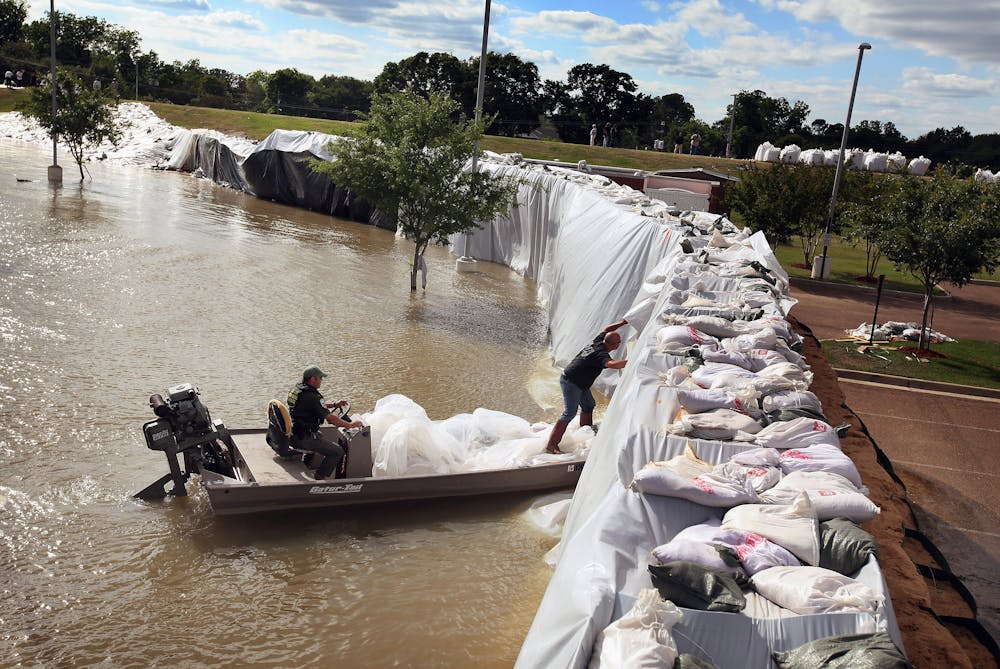
The riverside community could also take a more deliberate and anticipatory approach to transformation. It might shift to higher ground, turn its riverfront into parkland while developing affordable housing for people who are displaced by the project, and collaborate with upstream communities to expand landscapes that capture floodwaters. Simultaneously, the community can shift to renewable energy and electrified transportation to help slow global warming.
Optimism resides in deliberate action
The IPCC reports include numerous examples that can help steer such positive transformation.
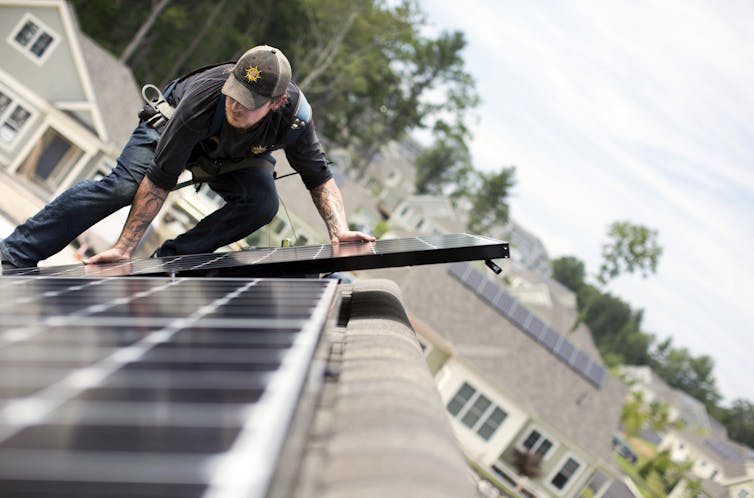
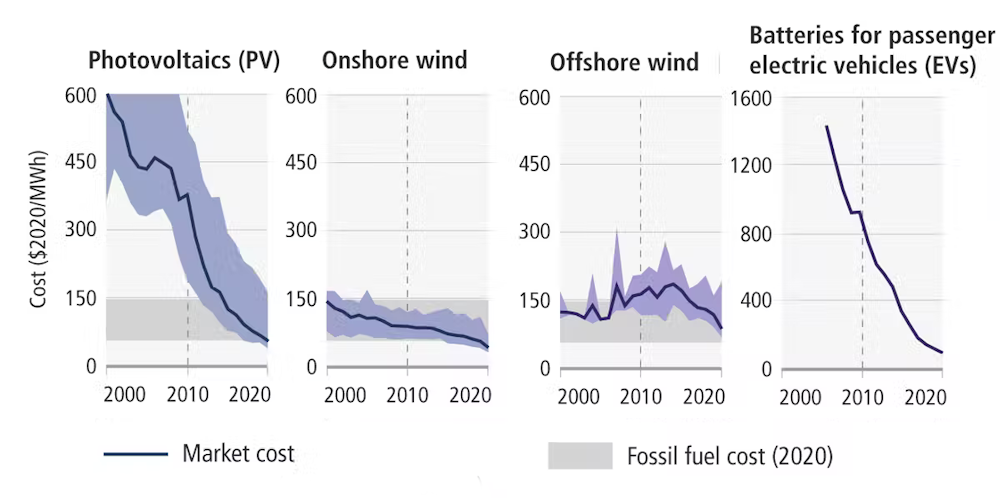
For example, renewable energy is now generally less expensive than fossil fuels, so a shift to clean energy can often save money. Communities can also be redesigned to better survive natural hazards through steps such as maintaining natural wildfire breaks and building homes to be less susceptible to burning.
Land use and the design of infrastructure, such as roads and bridges, can be based on forward-looking climate information. Insurance pricing and corporate climate risk disclosures can help the public recognize hazards in the products they buy and companies they support as investors.
No one group can enact these changes alone. Everyone must be involved, including governments that can mandate and incentivize changes, businesses that often control decisions about greenhouse gas emissions, and citizens who can turn up the pressure on both.
Transformation is inevitable
Efforts to both adapt to and mitigate climate change have advanced substantially in the last five years, but not fast enough to prevent the transformations already underway.
Doing more to disrupt the status quo with proven solutions can help smooth these transformations and create a better future in the process.
[Over 150,000 readers rely on The Conversation’s newsletters to understand the world. Sign up today.]
Robert Lempert, Professor of Policy Analysis, Pardee RAND Graduate School and Elisabeth Gilmore, Associate Professor of Climate Change, Technology and Policy, Carleton University
This article is republished from The Conversation under a Creative Commons license. Read the original article.
- Details
- Written by: Elizabeth Larson
The council will meet at 6 p.m. Thursday, April 21, in the council chambers at Clearlake City Hall, 14050 Olympic Drive.
The meeting will be broadcast live on the city's YouTube channel or the Lake County PEGTV YouTube Channel. Community members also can participate via Zoom or can attend in person.
The agenda can be found here.
Comments and questions can be submitted in writing for City Council consideration by sending them to City Clerk Melissa Swanson at
To give the council adequate time to review your questions and comments, please submit your written comments before 4 p.m. Thursday, April 21.
Each public comment emailed to the city clerk will be read aloud by the mayor or a member of staff for up to three minutes or will be displayed on a screen. Public comment emails and town hall public comment submissions that are received after the beginning of the meeting will not be included in the record.
On Thursday, Finance Director Kelcey Young will present to the council the options for Measure V road improvement projects financing.
Last month, Young presented a report to the council that looked at a plan to expedite the needed road work in the city through debt financing directly with a bank. The council directed staff to move forward with identifying financing options.
That financing plan will allow the city to do millions of dollars worth of work up front, rather than doing smaller projects yearly based on the $2.5 million in annual revenue from the Measure V sales tax that’s dedicated to road improvements.
Under business, council members will consider the first reading of the Clearlake Police Department’s military equipment policy ordinance and set a second reading and adoption for the May 5 meeting.
The council on Thursday also will get a presentation about an adoptable dog from the city shelter and hear a presentation from Local Initiative Support Corp. representatives regarding the Distressed Cities Technical Assistance Program regarding Clearlake projects.
On the meeting's consent agenda — items that are considered routine in nature and usually adopted on a single vote — are warrants; minutes of the March 16 and 28 Lake County Vector Control District Board meetings; review of the 2021 Annual Housing Element Progress Report; adoption and authorization to implement the Local Road Safety Plan; and authorization for the city manager to execute an amendment to the license with Mudslingers Coffee for a term from April 21, 2022 through April 22, 2032.
After the public portion of the meeting, the council will hold a closed session to discuss property negotiations with Burbank Housing Corp. regarding 6820 Old Highway 53, hold an evaluation of the city manager, hold a conference with legal counsel over a lawsuit against the county of Lake and the treasurer-tax collector, and discuss labor negotiations with the Clearlake Municipal Employees Association and Clearlake Police Officers Association.
Email Elizabeth Larson at
- Details
- Written by: Lake County Economic Development Corp.
The event will take place at The Mercantile, 4350 Thomas Drive, Kelseyville.
The program begins at 2 p.m. with networking at 5 p.m.
Presented by the Lake County Economic Development Corp., or Lake EDC, the Lake County Chamber of Commerce and the Lake County Tourism Improvement District, the Lake Leadership Forum is open to the public with tickets available at https://tinyurl.com/LakeForum22 for $20 per person which includes a glass of wine or other beverage.
The first leadership summits in 2014 and 2015, coordinated by the ad hoc Lake County Regional Economic Development Committee, were conducted at the then-Marymount California University in the Lucerne Hotel, with the third summit in 2019 at the same location under the auspices of the Lake EDC.
These early sessions were designed for Lake County’s small businesses, entrepreneurs, innovators and interested citizens to inspire, collaborate and envision a stronger economic climate.
The 2022 event will build on this framework with presentations about community initiatives and opportunities that are generating economic momentum.
A panel discussion regarding innovations in agriculture and tourism will include Joy Merrilees, vice president of production for Shannon Ridge, and Melinda Price, co-owner of Peace and Plenty Farm, growers of organic saffron.
Speakers will demonstrate the entrepreneurial spirit of Lake County through presentations by Catherine Reese, Reese Ranch Retreat, winner of the 2021 1Team1Dream competition, and Kejhana Taylor, a participant in the LCCC’s youth mentorship program.
Industry updates and discussion of a realistic path for cannabis in Lake County will be addressed by Bobby Dutcher, Wine Country Land and Ranches, and Alicia Russell, Lake County Cannabis Alliance.
Forward growth in energy technology and healthcare will be shared by Jenn Gregory of Downtown Strategies, who will discuss the latest information on developing a network of electric charging car stations, and by Jamey Gill, executive director of the Blue Zones Project in Lake County.
The presenting organizations represent people from all over Lake County who love our community and want to see it prosper. You are invited to participate in this leadership forum and connect with like-minded citizens.
Tickets may also be purchased with a check payable to and sent to Lake EDC, P.O. Box 1257, Lakeport, CA 95453. Shannon Family of Wines is the corporate sponsor for the event.
More information is available from Nicole Flora, executive director, Lake EDC,
- Details
- Written by: National Center for Atmospheric Research
The smoke is undermining clean air gains, posing potential risks to the health of millions of people, according to the study.
The research, led by scientists at the National Center for Atmospheric Research, or NCAR, found that levels of carbon monoxide — a gas that indicates the presence of other air pollutants — have increased sharply as wildfires spread in August.
Carbon monoxide levels are normally lower in the summer because of chemical reactions in the atmosphere related to changes in sunlight, and the finding that their levels have jumped indicates the extent of the smoke’s impacts.
“Wildfire emissions have increased so substantially that they’re changing the annual pattern of air quality across North America,” said NCAR scientist Rebecca Buchholz, the lead author. “It’s quite clear that there is a new peak of air pollution in August that didn’t used to exist.”
Although carbon monoxide generally is not a significant health concern outdoors, the gas indicates the presence of more harmful pollutants, including aerosols (airborne particulates) and ground-level ozone that tends to form on hot summer days.
The research team used satellite-based observations of atmospheric chemistry and global inventories of fires to track wildfire emissions during most of the past two decades, as well as computer modeling to analyze the potential impacts of the smoke. They focused on three North American regions: the Pacific Northwest, the central United States, and the Northeast.
Buchholz said the findings were particularly striking because carbon monoxide levels have been otherwise decreasing, both globally and across North America, due to improvements in pollution-control technologies.
The study was published this week in Nature Communications. The research was funded in part by the U.S. National Science Foundation, NCAR’s sponsor. The paper was co-authored by researchers from the University of Colorado, Boulder; Columbia University; NASA; Tsinghua University; and Colorado State University.
Increasing impacts on air pollution
Wildfires have been increasing in the Pacific Northwest and other regions of North America, due to a combination of climate change, increased development, and land use policies.
The fires are becoming a larger factor in air pollution, especially as emissions from human activities are diminishing because of more efficient combustion processes in motor vehicles and industrial facilities.
To analyze the impacts of fires, Buchholz and her collaborators used data from two instruments on the NASA Terra satellite: Measurements of Pollution in the Troposphere, or MOPITT, which has tracked carbon monoxide continually since 2002; and the Moderate Resolution Imaging Spectrometer, or MODIS, which detects fires and provides information on aerosols.
They also studied four inventories of wildfire emissions, which rely on MODIS data.
The scientists focused on the period from 2002, the beginning of a consistent and long-term record of MOPITT data, to 2018, the last year for which complete observations were available at the time when they began their study.
The results showed an increase in carbon monoxide levels across North America in August, which corresponded with the peak burning season of the Pacific Northwest.
The trend was especially pronounced from 2012 to 2018, when the Pacific Northwest fire season became much more active, according to the emissions inventories. Data from the MODIS instrument revealed that aerosols also showed an upward trend in August.
To determine whether the higher pollution levels were caused by the fires, the scientists eliminated other potential emission sources.
They found that carbon monoxide levels upwind of the Pacific Northwest, over the Pacific Ocean, were much lower in August — a sign that the pollution was not blowing in from Asia.
They also found that fire season in the central U.S. and the Northeast did not coincide with the August increase in pollution, which meant that local fires in those regions were not responsible.
In addition, they studied a pair of fossil fuel emission inventories, which showed that carbon monoxide emissions from human activities did not increase in any of the three study regions from 2012 to 2018.
“Multiple lines of evidence point to the worsening wildfires in the Pacific Northwest as the cause of degraded air quality,” Buchholz said. “It’s particularly unfortunate that these fires are undermining the gains that society has made in reducing pollution overall.”
Risks to human health
The findings have implications for human health because wildfire smoke has been linked to significant respiratory problems, and it may also affect the cardiovascular system and worsen pregnancy outcomes.
Buchholz and her co-authors used an NCAR-based computer model, the Community Atmosphere Model with a chemistry component, to simulate the movement of emissions from the Pacific Northwest fires and their impact on carbon monoxide, ozone, and fine particulate matter.
They ran the simulations on the Cheyenne supercomputer at the NCAR-Wyoming Supercomputing Center. The results showed the pollutants could affect more than 130 million people, including about 34 million in the Pacific Northwest, 23 million in the Central U.S., and 72 million in the Northeast.
Although the study did not delve deeply into the health implications of the emissions, the authors looked at respiratory death rates in Colorado for the month of August from 2002 to 2011, compared with the same month in 2012 to 2018.
They chose Colorado, located in the central U.S. region of the study, because respiratory death rates in the state were readily obtainable.
They found that Colorado respiratory deaths in August increased significantly during the 2012-2018 period, when fires in the Pacific Northwest — but not in Colorado — produced more emissions in August.
“It’s clear that more research is needed into the health implications of all this smoke,” Buchholz said. “We may already be seeing the consequences of these fires on the health of residents who live hundreds or even thousands of miles downwind.”
This material is based upon work supported by the National Center for Atmospheric Research, a major facility sponsored by the National Science Foundation and managed by the University Corporation for Atmospheric Research. Any opinions, findings and conclusions or recommendations expressed in this material do not necessarily reflect the views of the National Science Foundation.
About the article
Title: "New seasonal pattern of pollution emerges from changing North American wildfires"
Authors: Rebecca R. Buchholz, Mijeong Park, Helen M. Worden, Wenfu Tang,
David P. Edwards, Benjamin Gaubert, Merritt Deeter, Thomas Sullivan, Muye Ru,
Mian Chin, Robert C. Levy, Bo Zheng, and Sheryl Magzamen. Journal: Nature Communications.