 How to resolve AdBlock issue?
News
- Details
- Written by: Alessandro Ossola, University of California, Davis

As lockdowns went into effect in the spring of 2020 to slow the spread of the coronavirus, reports emerged of a global gardening boom, with plants, flowers, vegetables and herbs sprouting in backyards and on balconies around the world.
The data backs up the narrative: An analysis of Google Trends and infection statistics found that during the first few months of the COVID-19 pandemic, country-by-country interest in gardening, from Italy to India, tended to peak just as infections peaked.
Why did so many people find themselves being pulled toward the earth in a time of crisis? And what sort of effect did gardening have on them?
In a new study conducted with a team of environmental and public health scholars, we highlight the extent to which gardening became a coping mechanism during the early days of the pandemic.
Even as restrictions related to COVID-19 have eased, we see some real lessons for the way gardening can continue to play a role in people’s lives.
Dirt, sweat, tranquility
To conduct our study, we used an online questionnaire to survey more than 3,700 respondents who primarily lived in the U.S., Germany and Australia. The group included experienced gardeners and those who were new to the pursuit.
More than half of those we surveyed said they felt isolated, anxious and depressed during the early days of the pandemic. Yet more than 75% also found immense value in gardening during that same period. Whether done in cities or out in the country, gardening was almost universally described as a way to either relax, socialize, connect with nature or stay active.
More than half of the respondents reported a significant increase in the amount of time they were able to spend gardening. Other respondents found some value in growing their own food, but few felt financially compelled to do so.
Instead, most respondents saw gardening as a way to connect with their community and get some exercise.
People with more personal difficulties due to COVID-19, like the inability to work or struggling with child care, were more likely to spend more time gardening in their spare time than they had in the past.
The garden as a refuge
In our analysis of written responses to the survey, most gardeners seemed to either experience a heightened sense of joy and reassurance or feel more attuned to the natural world. This seemed to have positive therapeutic and psychological benefits, regardless of age or location.
To many people, gardening became a sort of safe space – a haven from daily worries. One German gardener started seeing their garden as a sanctuary where even “birds felt louder.”
“Gardening has been my salvation,” a respondent from the U.S. noted. “I’m very grateful I can surround myself with beauty as a buffer to the depressing news COVID brings each day.”
Another German gardener wrote that their garden became their “little safe universe in a very uncertain and somewhat dangerous time. … We have learned to appreciate the so far very high value of ‘own land, own refuge’ even more.”
A green prescription
As life returns to normal, work ramps up and obligations mount, I wonder how many pandemic gardens are already being neglected.
Will a hobby born out of unique circumstances recede into the background?
I hope not. Gardening shouldn’t be something that’s only taken up in times of crises. If anything, the pandemic showed how gardens serve a public health need – that they’re not only places of beauty or sources of food, but also conduits for healing.
In fact, several countries like New Zealand, Canada and some in Europe now allow “green prescriptions” to be issued as alternatives to medication. These are directives from doctors to spend a certain amount of time outdoors each day or month – an acknowledgment of the very real health benefits, from lowered stress to better sleep and improved memory, that venturing into nature can offer.
I also think of the people who never had a chance to garden in the first place during the pandemic. Not everyone has a backyard or can afford gardening tools. Improving access to home gardens, urban green spaces and community gardens could be an important way to boost well-being and health.
Making seeding, planting, pruning and harvesting part of your daily routine seems to open up more opportunities, too.
“I never previously had the time to commit to a garden,” one first-time gardener told us, “but [I’ve] found such satisfaction and happiness in watching things grow. It has been a catalyst for making other positive changes in my life.”
[Over 150,000 readers rely on The Conversation’s newsletters to understand the world. Sign up today.]
CSIRO principal research scientist Brenda Lin, Swinburne University of Technology Health Promotion Lecturer Jonathan Kingsley, UCCE Santa Clara County Urban Agriculture and Food Systems Advisor Lucy Diekmann, Technical University of Munich Urban Productive Ecosystems Professor Monika Egerer, University of Tasmania Rural Health Geographer Pauline Marsh, and University of California, Davis Urban and Regional Planning graduate student Summer Cortez contributed to this research.
Alessandro Ossola, Assistant Professor, University of California, Davis
This article is republished from The Conversation under a Creative Commons license. Read the original article.
- Details
- Written by: Elizabeth Larson
Dogs available for adoption this week include mixes of Australian cattle dog, basset hound, Belgian malinois, Cardigan Welsh corgi, Carolina dog, Catahoula leopard dog, French bulldog, German shepherd, husky, Labrador retriever and pit bull.
Dogs that are adopted from Lake County Animal Care and Control are either neutered or spayed, microchipped and, if old enough, given a rabies shot and county license before being released to their new owner. License fees do not apply to residents of the cities of Lakeport or Clearlake.
The following dogs at the Lake County Animal Care and Control shelter have been cleared for adoption.
Call Lake County Animal Care and Control at 707-263-0278 or visit the shelter online for information on visiting or adopting.
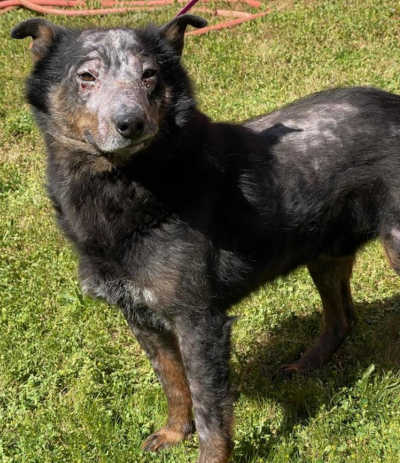
Australian cattle dog
This 3-year-old male Australian cattle dog has a black coat with tan markings.
He is in kennel No. 3, ID No. LCAC-A-3131.
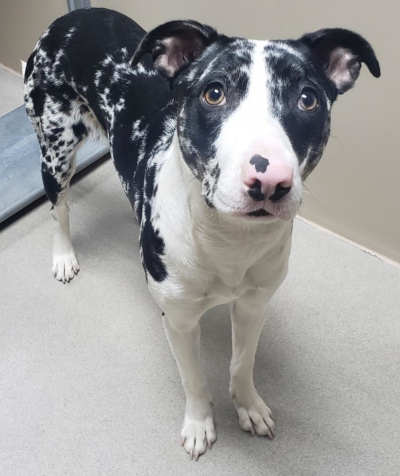
‘Bella’
“Bella” is a 2-year-old Catahoula leopard dog mix with a short black and white coat.
She is in kennel No. 4, ID No. LCAC-A-3245.
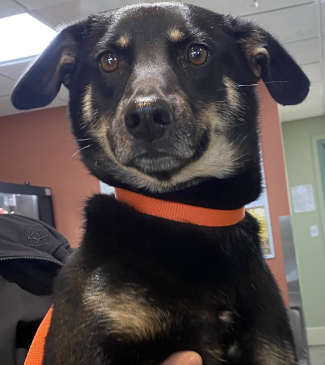
Corgi-basset hound mix
This 3-year-old male Cardigan Welsh corgi-basset hound mix has a short black and tan c coat.
He is in kennel No. 5, ID No. LCAC-A-3305.

Male pit bull
This 1-year-old male pit bull has a short black coat with white markings.
He is in kennel No. 6, ID No. LCAC-A-3290.

Male pit bull terrier
This 1-year-old male pit bull terrier has a short white and tan coat.
He is in kennel No. 7, ID No. LCAC-A-2821.
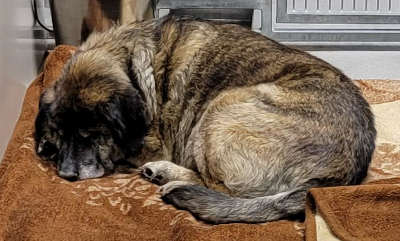
Male shepherd
This 10-year-old male shepherd mix has a black and tan coat.
He is in kennel No. 8, ID No. LCAC-A-3316.
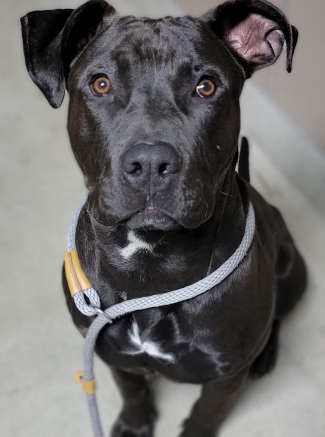
Male pit bull
This 2-year-old male pit bull has a short black coat.
He is in kennel No. 9, ID No. LCAC-A-3278.
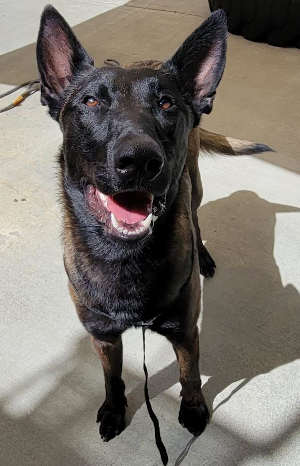
Male Belgian malinois
This 1-year-old male Belgian malinois has a short brown and black coat.
He is in kennel No. 17, ID No. LCAC-A-3270.
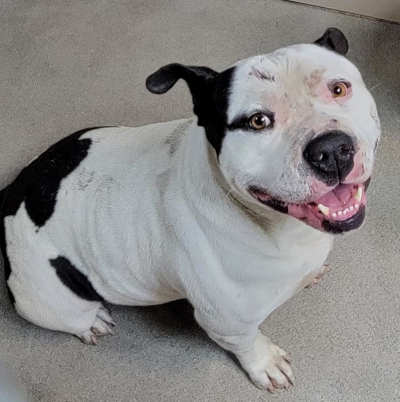
Male pit bull
This 3-year-old male pit bull has a short black and white coat.
He is in kennel No. 18, ID No. LCAC-A-3288.
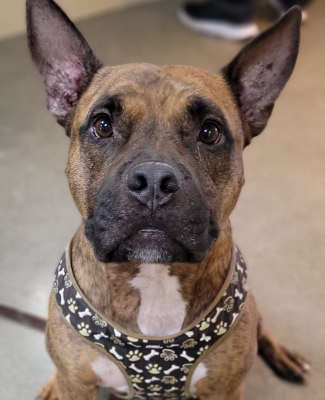
‘Cody’
“Cody” is a 7-year-old male French bulldog-pit bull terrier mix with a short brindle and white coat.
He is in kennel No. 19, ID No. LCAC-A-3284.
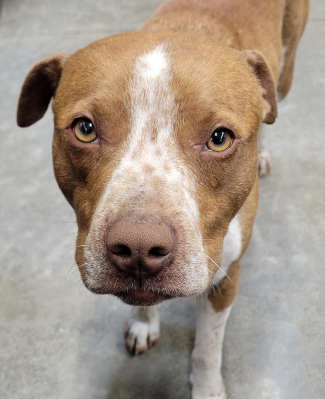
‘Willie’
“Willie” is a 1-year-old male pit bull terrier with a short brown and white coat.
He is in kennel No. 20, ID No. LCAC-A-3301.
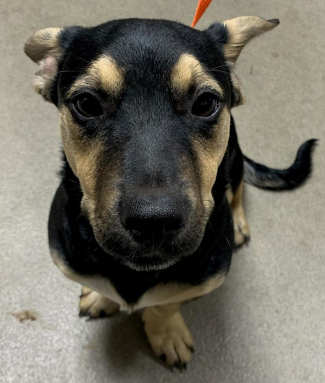
Male basset hound
This young male basset hound mix has a short black and tan coat.
He is in kennel No. 21, LCAC-A-3303.

Female German shepherd puppy
This female German shepherd mix puppy has a short black and tan coat.
She is in kennel No. 22a, ID No. LCAC-A-3312.
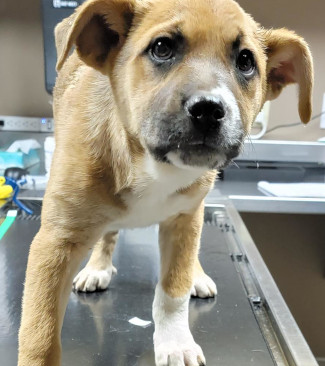
Female German shepherd puppy
This female German shepherd mix puppy has a short tan and white coat.
She is in kennel No. 22b, ID No. LCAC-A-3313.
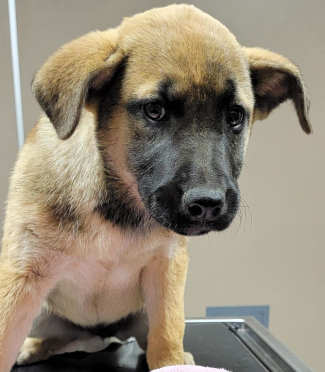
Female German shepherd puppy
This female German shepherd mix puppy has a short black and tan coat.
She is in kennel No. 22c, ID No. LCAC-A-3314.
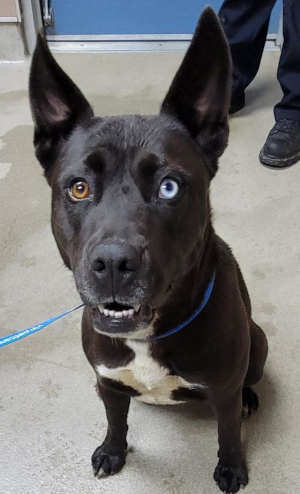
Husky-pit bull mix
This 1-year-old female husky-pit bull mix has a short black coat.
She is in kennel No. 23, ID No. LCAC-A-3289.
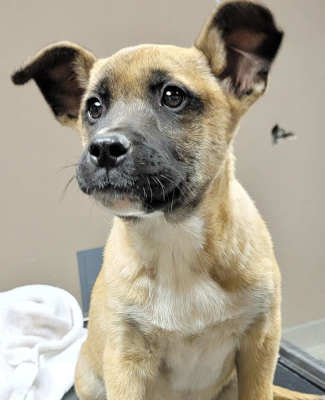
Male German shepherd puppy
This male German shepherd mix puppy has a short black, tan and white coat.
He is in kennel No. 24a, ID No. LCAC-A-3310.

Male German shepherd puppy
This male German shepherd mix puppy has a short black, tan and white coat.
He is in kennel No. 24b, ID No. LCAC-A-3311.

‘Blue’
“Blue” is a 4-year-old female husky with a gray and white coat, and blue eyes.
She is in kennel No. 25, ID No. LCAC-A-2816.

Female husky
This 2-year-old female husky has a medium-length black and white coat, with one blue eye and one yellow eye.
She is in kennel No. 26, ID No. LCAC-A-3225.
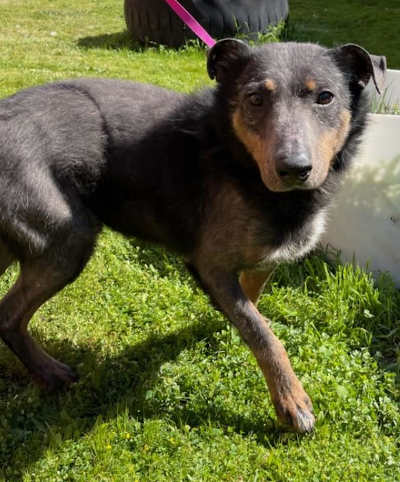
Male Australian cattle dog
This 3-year-old male Australian cattle dog has a short black, tan and white coat.
He is in kennel No. 27, ID No. LCAC-A-3130.
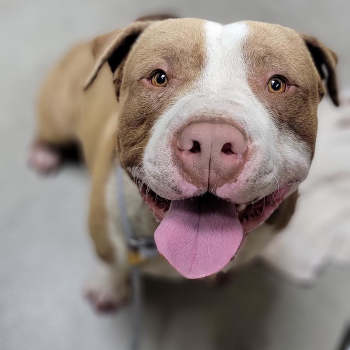
‘King’
“King” is a 1-year-old American bulldog with a short brown and white coat.
He is in kennel No. 29, ID No. 3109.

Carolina dog
This 2-year-old female Carolina dog has a short white coat.
She is in kennel No. 34, ID No. LCAC-A-3281.
Email Elizabeth Larson at
- Details
- Written by: NATIONAL AERONAUTICS AND SPACE ADMINISTRATION

Keeping NASA’s robotic explorers healthy takes smart software, especially in remote and harsh environments.
An initial investment by NASA’s Small Business Innovation Research, or SBIR, Program led to development of a new technology that may enable robotic exploration of distant destinations in our solar system.
Europa, an intriguing moon of Jupiter, has an icy surface and evidence of a liquid ocean underneath that likely contains more water than the Earth’s oceans. Arthur C. Clarke recognized its uniqueness in his novel 2010: Odyssey Two with the memorable passage “All these worlds are yours.
Except Europa. Attempt no landing there,” as a warning to future explorers to protect that world for possible evolution of life. Scientists believe life may be possible on Europa if liquid water and favorable chemical elements exist.
But we must get closer to confirm their presence – and exploring Europa is a formidable challenge. Given Europa’s distinctive characteristics, how can we not explore this fascinating destination?
To answer this call, NASA is developing concepts for robotic explorers that will land on Europa and search for signs of life by sampling the ice and possibly the ocean below. Europa’s surface is a forbidding place, with temperatures below –260°F and bathed in strong radiation that can disrupt electronics.
Europa also is so far from Earth that it would be difficult to manage a robot’s activities on an hourly or even a daily basis. (It will take approximately 50 minutes for a signal from Earth to reach any robotic explorer that NASA deploys there.)
One solution is to make our robotic explorers smarter and more autonomous, so that they can detect and handle issues without human intervention.
One crucial aspect of autonomy is the ability for a robot to check its hardware for problems, determine if something is not working properly, and pinpoint the faulty component.
NASA’s Jet Propulsion Laboratory, or JPL, is working with a small company called Okean Solutions, Inc. to develop this capability that could one day be used on missions to challenging space environments such as Europa.
Okean’s MONSID (Model-based Off-Nominal State Identification and Detection) software checks the health of a system by comparing onboard measurements to simulations or models of the expected behavior. MONSID verifies correct behavior, detects when something is amiss, and then identifies which piece of hardware is not operating properly.
This “model-based” approach uses the constraint suspension technique — an analytical approach developed for use on digital systems by Professors Randy Davis and Howie Schrobe at the Massachusetts Institute of Technology, or MIT.
While working on her dissertation at the University of California, Los Angeles, Lorraine Fesq extended this capability to work with analog values such as the temperatures, voltages, and currents that are found on robotic systems.
Ksenia Kolcio and Maurice Prather, Vice President and President of Okean Solutions respectively, subsequently developed and matured MONSID through several NASA and Air Force SBIR-funded efforts. MONSID has demonstrated its versatility through deployments on hardware testbeds at JPL, the California Institute of Technology, and the Air Force Research Laboratory.
In one MONSID application, an engineering team led by Ryan Mackey at JPL worked with Okean Solutions to model the mobility system of Athena, a JPL development rover used to prove new robotic technologies.
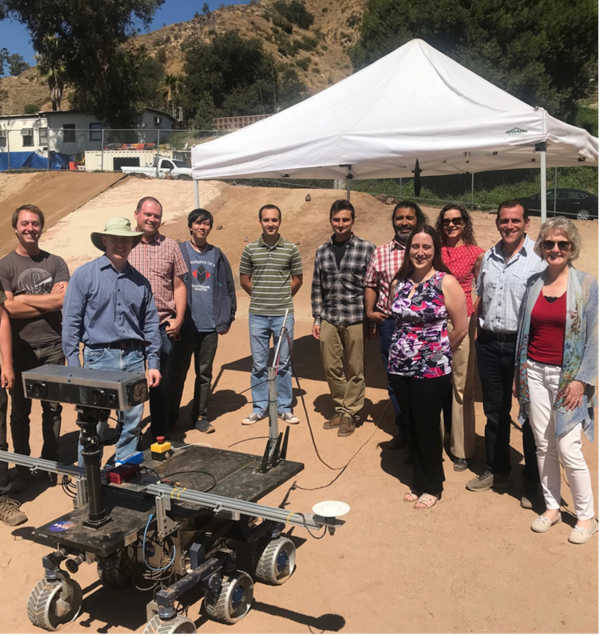
Modeling began as the rover was refurbished with new components, and tests with the upgraded rover yielded surprising results. The team conducted Athena rover test drives in the Mars Yard at JPL and compared data collected from the rover’s mobility system to predictions from the MONSID models.
Several discrepancies were observed. Initially, the team suspected that the discrepancies were due to modeling errors, but further analysis revealed several new issues with the rover itself.
These problems included mismatches in top-level motion commands versus position commands seen by the motor controllers; off-nominal responses to commands, resulting in arc motion when straight-line driving was commanded; and motor polarity mismatches between reported steer angle and commands, which resulted in having the motors sent back to the vendor for corrections.
The remaining issues were resolved by updating the software and motor controller firmware on the rover, as well as tuning motor controller parameters. This exercise demonstrates how the MONSID model-based approach offers smarter, more autonomous capabilities to assess hardware health and performance, even as systems are developed before deployment.
Once the Athena rover was completed and checked for correct behavior, the team injected faults to simulate motor stalls and incorrect wheel commands to test MONSID performance under real-world conditions.
For example, the team introduced a simulated bit flip that reversed the polarity of a command to one of the steering motors during a commanded drive along an arc.
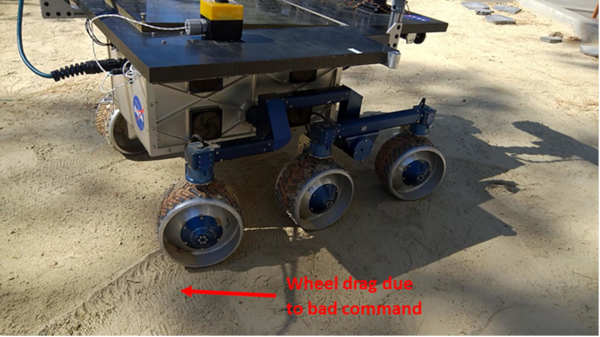
This condition resulted in one wheel turning to the right instead of the left, causing that wheel to drag across the Mars Yard. The rover telemetry data appeared fine despite the faulty command; in fact, the rover still reached its drive goal because the five other wheels compensated for the one that was dragging.
In the Mars Yard, the engineers were able to visually see the wheel being dragged, but if the rover was on the surface of another planetary body, the fault would not show up in the telemetry data, making it difficult to detect, let alone diagnose. Left undetected, a dragging wheel could lead to severe wheel damage.
Traditional limit-checking approaches would be challenged to detect this type of fault because all onboard measurements stayed within limits. By capturing the intended coordination between all six wheels, MONSID was able to detect and isolate this fault immediately, unlike traditional monitor-response methods for detecting faults.
These results highlight the benefits of MONSID’s model-based approach. Using MONSID, engineers can ensure not only that the right system is built before deployment on its mission to a distant location, but that the hardware health can be autonomously assessed throughout the mission.
Currently, the JPL team is building MONSID models for deployment on two new robotic systems. The first, funded by NASA PSD’s Concepts for Ocean worlds Life Detection Technology, or COLDTech, program, will diagnose the hardware of a robotic arm designed to scoop materials from the surface of icy worlds such as Europa and Saturn’s moon Enceladus.
On a COLDTech task titled REASIMO (Robust, Explainable Autonomy for Scientific Icy Moon Operations), MONSID will be deployed on two robotic arm testbeds funded by NASA’s Planetary Exploration Science Technology Office (PESTO): The Ocean Worlds Autonomy Testbed for Exploration Research and Simulation (OCEANWaters) software testbed developed at NASA Ames, and the Ocean Worlds Lander Autonomy Testbed (OWLAT) hardware testbed developed at JPL.
For the second task, funded by NASA SMD through JPL’s Type II office, the MONSID team will prototype diagnostic models of spacecraft power and attitude control subsystems for NASA’s Lunar Flashlight CubeSat, scheduled for launch later this year.
These models will support pre-launch testing of the spacecraft, with a vision to upload the MONSID models and engine during the extended mission after the primary mission goals have been accomplished. What began as an SBIR investment has now led to an opportunity for MONSID to truly spread its wings, as an in-space demonstration paves the way for autonomy to enable challenging and exciting new missions.
The research was carried out at the Jet Propulsion Laboratory, California Institute of Technology, under a contract with the National Aeronautics and Space Administration (80NM0018D0004).
- Details
- Written by: LAKE COUNTY NEWS REPORTS
Cyanobacteria — also known as blue-green algae — are microscopic organisms that naturally occur in all freshwater and marine aquatic ecosystems.
Usually, cyanobacteria concentrations are low and not harmful to humans and animals. But when conditions are favorable — high nutrients and warm weather — these organisms can rapidly grow, forming visible colonies or “harmful algal blooms.”
The toxic chemicals produced by these algal blooms are referred to as “cyanotoxins.” Exposure to these toxins causes sickness and other severe health effects in people, pets, and livestock. Sensitive individuals, including young children, the elderly, and people with compromised immune systems are most at risk of adverse health effects attributable to cyanotoxins.
Individuals are most often exposed while swimming or participating in other recreational activities in and on the water.
The most common routes of exposure are direct skin contact, accidental ingestion of contaminated water, or accidental inhalation of water droplets in the air, such as while water skiing.
Symptoms of exposure to cyanotoxins include rashes, hives, diarrhea, vomiting, coughing or wheezing. More severe symptoms may result from longer or greater amounts of exposure.
If you are concerned you have symptoms resulting from exposure to cyanotoxins, immediately contact your health care provider or call Lake County Health Services at 707-263-1090. Please inform them of the timing and details of this exposure.
If you see or think you see a cyanotoxin bloom, please contact Water Resources at 707-263-2344 or Environmental Health at 707-263-1164. Anyone can report a cyanotoxin bloom or receive additional information at the California Harmful Algal Blooms Portal here.
Cyanobacteria or blue-green algae is not to be confused with green algae (i.e., phytoplankton), which is beneficial, non-toxic, and always present in Clear Lake. Water testing is the best way to identify the type of algae that is in the lake at a specific time and location.
During warm seasons, water quality testing is conducted every two weeks at approximately 20 locations throughout Clear Lake.
Those who plan to recreate in or on Lake County waters should look for informational signs posted throughout the county and are advised to avoid contact with water that:
• looks like spilled, green or blue-green paint;
• has surface scums, mats, or films;
• has a blue or green crust at the shoreline;
• is discolored or has green-colored streaks; or
• has greenish globs suspended in the water below the surface.
The Big Valley Band of Pomo Indians, which maintains these water monitoring sites around the lake, is already seeing caution levels of cyanotoxins this season.
Additional signs are posted when cyanotoxins reach caution, warning or danger levels. These signs are brightly colored and affixed below the permanent informational signs to provide the public specific guidance to decide which activities are responsible to continue.
If you would like to post a sign at your beach or ramp, please contact Water Resources at 707-263-2344.
People are also advised to keep pets and livestock out of the water. Do not allow pets and livestock to drink from the water and do not allow them to lick their fur after swimming in water containing cyanobacteria.
If you or your pet has contact with water you suspect may have a cyanotoxin bloom, rinse off with clean, fresh water as soon as possible. If your pet experiences symptoms that may be the result of exposure, contact your veterinarian immediately and inform them of the timing and details of this exposure.
To find the most current information on Clear Lake’s water quality and if a cyanotoxin bloom is occurring, visit the Big Valley Band of Pomo Indians’ cyanotoxin monitoring webpage here.
For additional information about cyanobacteria and harmful algal blooms, please visit the websites for the Centers for Disease Control and Prevention, the Environmental Protection Agency and the county of Lake Cyanobacteria webpage.