How to resolve AdBlock issue?
Refresh this page
How to resolve AdBlock issue?
Refresh this page
Lake County News,California
  • Home
    • Registration Form
  • News
    • Education
    • Veterans
    • Community
      • Obituaries
      • Letters
      • Commentary
    • Police Logs
    • Business
    • Recreation
    • Health
    • Religion
    • Legals
    • Arts & Life
    • Regional
  • Calendar
  • Contact us
    • FAQs
    • Phones, E-Mail
    • Subscribe
  • Advertise Here
  • Login
How to resolve AdBlock issue?
Refresh this page

News

Mendocino College unveils $3 million automotive remodel with EV focus

Details
Written by: LAKE COUNTY NEWS REPORTS
Published: 27 September 2025
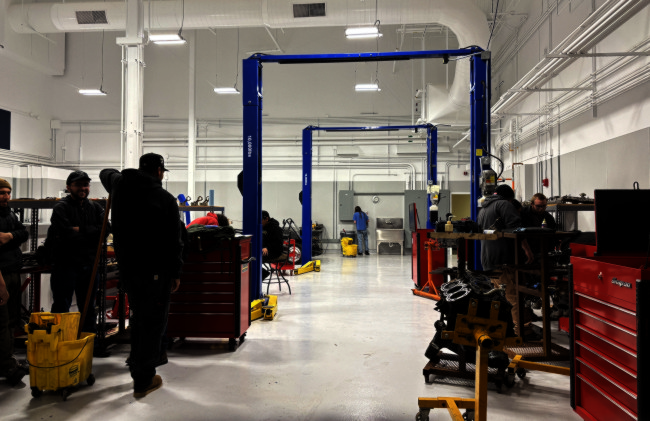
The remodeled space for Mendocino College’s Automotive Technology Program. Photo courtesy of Mendocino College.

Editor’s note: The college reported that the ceremony will begin at noon, not 11 a.m.

NORTH COAST, Calif. — Mendocino College announced the grand re-opening of its Automotive Technology Program following a transformative $3 million remodel designed to meet the demands of a rapidly evolving industry. 

The upgraded facility now includes expanded shop space, cutting-edge equipment for electric and hybrid vehicles, and a brand-new certificate program focused on EV technology.

The community is invited to celebrate this milestone at a ribbon-cutting ceremony on Friday, Oct. 3, at noon at the Ukiah Campus, hosted in collaboration with the Ukiah Chamber of Commerce. 

The event will feature remarks from faculty and industry partners, and tours of the newly renovated space.

“This remodel is more than a facelift — it’s a leap into the future,” said Michael Pratt, lead faculty for the Automotive Program. “We’ve created a cleaner, smarter, and more flexible learning environment that prepares students for careers in electric vehicle service, hybrid technology, and beyond. Our goal is to offer students in our rural community the same opportunities they’d find in major metro areas — and we’re proud to say we’ve done just that.”

Highlights of the remodel include:

• A dedicated EV and automotive electrical workshop;
• Two fully equipped classrooms for simultaneous instruction;
• Outdoor lifts for engine and transmission work;
• Expanded parking for student and project vehicles;
• A 12,000-pound lift to accommodate heavier EVs;
• New curriculum and certificate pathways in hybrid and electric vehicle systems.

The program now offers an Electric Vehicle Certificate, requiring foundational coursework in engine performance, electrical systems, and automatic transmissions. 

Students can also pursue an associate degree or stackable certificates in chassis, smog, and engine diagnostics.

With the remodel complete, Mendocino College stands as one of the few institutions in the region offering hands-on EV training — an essential step as California accelerates its transition to clean transportation.

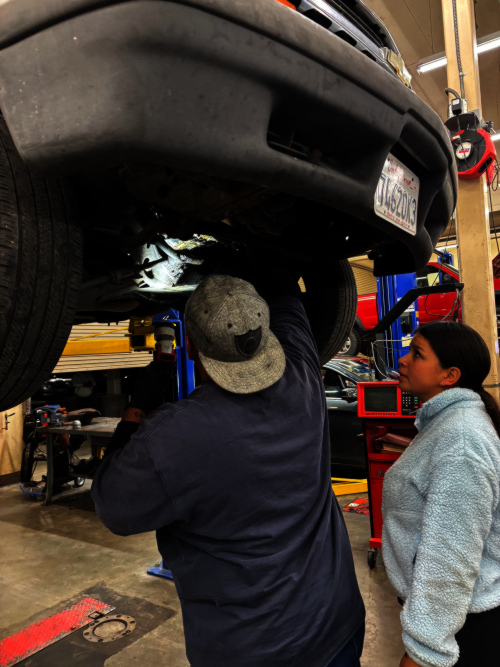
Students at work in class for the Automotive Technology Program. Photo courtesy of Mendocino College.

Governor signs three Native American issue bills on California Native American Day

Details
Written by: LAKE COUNTY NEWS REPORTS
Published: 27 September 2025

On Friday Gov. Gavin Newsom signed three important Native American bills on California Native American Day and proclaimed California Native American Day. 

One bill will strengthen high school students’ rights to wear tribal regalia at graduation ceremonies and limit school authorities’ ability to restrict those rights. 

Another will require the California State University, or CSU, system to identify available lands in CSU possession while consulting with Native American tribes that may use them to rebury Native remains returned to the tribes. 

The third will streamline gaming tribes’ ability to provide grants to other tribes with limited or nongaming resources. 

The three measures were introduced by Assemblymember James C. Ramos (D-San Bernardino), the first and only California Native American elected to the Legislature since statehood 175 years ago.

“I thank the governor for his signature on these bills that represent a turning of the page in how California writes its story with Native American tribes,” Ramos said. “Just acknowledging — once again — a student’s right to wear tribal regalia at high school graduation ceremonies is a far cry from early statehood when California’s first governor called for a ‘War of Extermination’ against the tribes.

“We also look forward to working with the CSU system to craft a state policy paving the way to bring the remains of our ancestors a step closer to proper reburial,” Ramos continued. “This would meet a decades-overdue obligation to repatriate Native American remains and funerary items wrongfully in possession of CSU campuses around the state. It is painful to think of our ancestors’ remains stored in boxes on shelves instead of in the earth. We also hope streamlining grants funded by gaming tribes will help fellow tribes without the same resources. Gov. Newsom’s approval of these measures is welcome, particularly on a day when we celebrate the contributions of our state’s tribes, their diversity, resilience and culture.”

In announcing his approval of the legislation, Gov. Newsom’s statement said, “This legislation builds on the efforts of the Newsom administration to examine and address historical wrongs and promote access and inclusion for California Native peoples. Earlier this year, the state released the Native American Studies Model Curriculum, developed in collaboration with California tribes, Native scholars, educators, and community leaders.”  

Newsom approved the following tribal bills:

AB 1369 (Wearing of tribal regalia at high school graduation ceremonies).

The bill prohibits school districts from banning the wearing of tribal regalia at graduation ceremonies. 

Clovis Unified School District 2025 graduate Bella Garcia said, “California sits on the traditional homelands of all California Indian people, and it is important to recognize California tribes’ sovereignty. Tribes and their members are the best informed and most appropriate persons to determine what is or is not appropriate cultural regalia. I want to thank all who have made this bill a reality including Gov. Newsom, Assemblymember Ramos and all who took the time to listen to tribal families and students. American Indian youth deserve to be recognized, celebrated and uplifted while honoring their ancestors who came before them. Graduation is one of the most momentous milestones for all students, especially for California Native Americans. It should be celebrated, not marred by misplaced and uninformed bureaucratic objections that prohibit cultural pride.”

AB 1369 is sponsored by California Indian Legal Services and the Tule River Indian Tribe. Supporters include various tribes, ACLU California Action, California Indian Nations College, Indigenous Justice, Los Angeles County Office of Education, San Bernardino City Unified School District and the San Bernardino County Superintendent of Schools.

AB 977 (CSU land and repatriation of Native American human remains)

The bill requires the CSU system, in consultation with Native American tribes, to develop a policy for the repurpose of land in its possession for the reburial of Native American human remains. 

The Native American Graves Protection and Repatriation Act of 1990, or NAGPRA, and the 2001 California counterpart, CalNAGPRA establishes requirements for the repatriation of Native American remains and cultural items to tribes by government agencies and museums that maintain collections of remains and cultural items, which includes the CSU system.

It is sponsored by the Santa Rosa Rancheria Tachi Yokuts Tribe and backed by the Habematolel Pomo of Upper Lake, Morongo Band of Mission Indians, Society for California Archaeology, Tule River Indian Tribe, the California Faculty Association and the CSU Office of the Chancellor. 
 
“The California State University is committed to addressing the painful legacy of Native ancestors and cultural items held within our system,” said Samantha Cypret (Mountain Maidu), executive director of the CSU Office of Tribal Relations. “AB 977 represents an important step in fulfilling our responsibility to work in true partnership with Tribal Nations to ensure their ancestors and cultural belongings are laid to rest with dignity and respect. We are deeply appreciative for Assemblymember Ramos’ leadership and look forward to working closely with Native voices across California as we move this work forward.” 

AB 221 (Streamlining grants to non- or limited-gaming tribes)

The bill streamlines the existing Tribal Nation Grant Fund, or TNGF, process to provide annual equal distribution grants, upon application, to federally recognized tribes that either have no gaming or operate limited gaming operations (less than 350 Class III gaming devices). 

Grants may only be used for tribal purposes. The Tribal Nation Grant Fund process was enacted in 2017. 

AB 221 would distribute annual grants of $600,000 or at least 85% of the available monies in the grant fund, whichever is greater, and finance projects such as housing, vocational training, water conservation and other programs. 

AB 221 is sponsored by the Tribal Alliance of Sovereign Indian Nations and the California Nations Indian Gaming Association. It is also supported by numerous tribes, the California Chamber of Commerce and the California Democratic Party Rural Caucus.

Another “win” for tribes this year was inclusion in the 2025-26 budget of $5 million to establish a three-year pilot program granting tribal law enforcement officers peace officer status to improve public safety on tribal lands and combat the Missing and Murdered Indigenous People, or MMIP, crisis.

California ranks among the fifth highest in the nation for unresolved MMIP cases in the nation. 

The state Department of Justice would oversee the pilot project that would grant tribal officers additional authority on tribal lands and in other places to be determined by tribes and the DOJ. 

Additionally, California Indian Nations College received $10 million to assist in its quest to become the first federally fully accredited tribal college in the state. 

California, with the highest population of Native Americans in the country, lacks such a higher education institution.

Mindfulness won’t burn calories, but it might help you stick with your health goals

Details
Written by: Masha Remskar, Arizona State University
Published: 27 September 2025

Meditation exists on a spectrum, from mindful moments and bursts of mindfulness to building up to a formal meditative practice. d3sign/Moment via Getty Images

Most people know roughly what kind of lifestyle they should be living to stay healthy.

Think regular exercise, a balanced diet and sufficient sleep. Yet, despite all the hacks, trackers and motivational quotes, many of us still struggle to stick with our health goals.

Meanwhile, people worldwide are experiencing more lifestyle-associated chronic disease than ever before.

But what if the missing piece in your health journey wasn’t more discipline – but more stillness?

Research shows that mindfulness meditation can help facilitate this pursuit of health goals through stillness, and that getting started is easier than you might think – no Buddhist monk robes or silent retreats required.

Given how ubiquitous and accessible mindfulness resources are these days, I have been surprised to see mindfulness discussed and studied only as a mental health tool, stopping short of exploring its usefulness for a whole range of lifestyle choices.

I am a psychologist and behavioral scientist researching ways to help people live healthier lives, especially by moving more and regulating stress more efficiently.

My team’s work and that of other researchers suggests that mindfulness could play a pivotal role in paving the way for a healthier society, one mindful breath at a time.

Mindfulness unpacked

Mindfulness has become a buzzword of late, with initiatives now present in schools, boardrooms and even among first responders. But what is it, really?

Mindfulness refers to the practice or instance of paying careful attention to one’s present-moment experience – such as their thoughts, breath, bodily sensations and the environment – and doing so nonjudgmentally. Its origins are in Buddhist traditions, where it plays a crucial role in connecting communities and promoting selflessness.

Over the past 50 years, however, mindfulness-based practice has been Westernized into structured therapeutic programs and stress-management tools, which have been widely studied for their benefits to mental and physical health.

Research has shown that mindfulness offers wide-ranging benefits to the mind, the body and productivity.

Mindfulness-based programs, both in person and digitally delivered, can effectively treat depression and anxiety, protect from burnout, improve sleep and reduce pain.

The impacts extend beyond subjective experience too. Studies find that experienced meditators – that is, people who have been meditating for at least one year – have lower markers of inflammation, which means that their bodies are better able to fight off infections and regulate stress. They also showed improved cognitive abilities and even altered brain structure.

But I find the potential for mindfulness to support a healthy lifestyle most exciting of all.

A senior couple sitting on the beach, pressing their feet together as the woman pulls the man's arms forward in a stretch.
Mindfulness meditation may enhance the psychological skills needed to follow through on exercise and other health habits. Maria Korneeva/Moment via Getty Images

How can mindfulness help you build healthy habits?

My team’s research suggests that mindfulness equips people with the psychological skills required to successfully change behavior. Knowing what to do to achieve healthy habits is rarely what stands in people’s way. But knowing how to stay motivated and keep showing up in the face of everyday obstacles such as lack of time, illness or competing priorities is the most common reason people fall off the wagon – and therefore need the most support. This is where mindfulness comes in.

Multiple studies have found that people who meditate regularly for at least two months become more inherently motivated to look after their health, which is a hallmark of those who adhere to a balanced diet and exercise regularly.

A 2024 study with over 1,200 participants that I led found more positive attitudes toward healthy habits and stronger intentions to put them into practice in meditators who practiced mindfulness for 10 minutes daily alongside a mobile app, compared with nonmeditators. This may happen because mindfulness encourages self-reflection and helps people feel more in tune with their bodies, making it easier to remember why being healthier is important to us.

Another key way mindfulness helps keep momentum with healthy habits is by restructuring one’s response to pain, discomfort and failure. This is not to say that meditators feel no pain, nor that pain during exercise is encouraged – it is not!

Mild discomfort, however, is a very common experience of novice exercisers. For example, you may feel out of breath or muscle fatigue when initially taking up a new activity, which is when people are most likely to give up. Mindfulness teaches you to notice these sensations but see them as transient and with minimal judgment, making them less disruptive to habit-building.

Putting mindfulness into practice

A classic mindfulness exercise includes observing the breath and counting inhales up to 10 at a time. This is surprisingly difficult to do without getting distracted, and a core part of the exercise is noticing the distraction and returning to the counting. In other words, mindfulness involves the practice of failure in small, inconsequential ways, making real-world perceived failure – such as a missed exercise session or a one-off indulgent meal – feel more manageable. This strengthens your ability to stay consistent in pursuit of health goals.

Finally, paying mindful attention to our bodies and the environment makes us more observant, resulting in a more varied and enjoyable exercising or eating experience. Participants in another study we conducted reported noticing the seasons changing, a greater connection to their surroundings and being better able to detect their own progress when exercising mindfully. This made them more likely to keep going in their habits.

Luckily, there are plenty of tools available to get started with mindfulness practice these days, many of them free. Mobile applications, such as Headspace or Calm, are popular and effective starting points, providing audio-guided sessions to follow along. Some are as short as five minutes. Research suggests that doing a mindfulness session first thing in the morning is the easiest to maintain, and after a month or so you may start to see the skills from your meditative practice reverberating beyond the sessions themselves.

Based on our research on mindfulness and exercise, I collaborated with the nonprofit Medito Foundation to create the first mindfulness program dedicated to moving more. When we tested the program in a research study, participants who meditated alongside these sessions for one month reported doing much more exercise than before the study and having stronger intentions to keep moving compared with participants who did not meditate. Increasingly, the mobile applications mentioned above are offering mindful movement meditations too.

If the idea of a seated practice does not sound appealing, you can instead choose an activity to dedicate your full attention to. This can be your next walk outdoors, where you notice as much about your experience and surroundings as possible. Feeling your feet on the ground and the sensations on your skin are a great place to start.

For people with even less time available, short bursts of mindfulness can be incorporated into even the busiest of routines. Try taking a few mindful, nondistracted breaths while your coffee is brewing, during a restroom break or while riding the elevator. It may just be the grounding moment you need to feel and perform better for the rest of the day.The Conversation

Masha Remskar, Psychologist and Postdoctoral Researcher in Behavioral Science, Arizona State University

This article is republished from The Conversation under a Creative Commons license. Read the original article.
Space News: 2 newly launched NASA missions will help scientists understand the influence of the Sun, both from up close and afar

Details
Written by: Ryan French, University of Colorado Boulder
Published: 27 September 2025

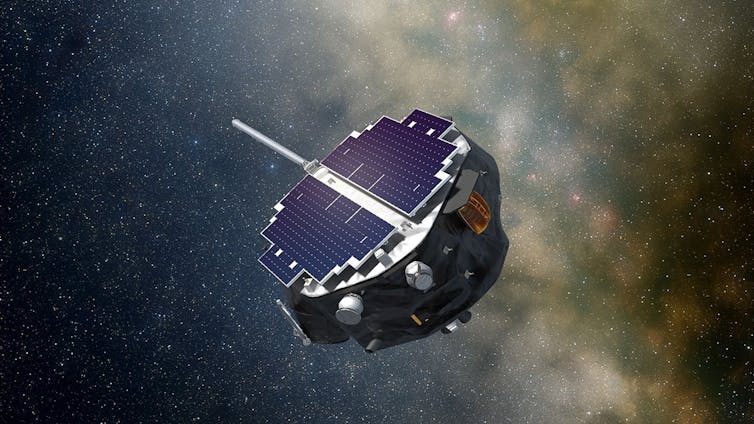
NASA’s IMAP mission is one of two launching in September 2025. NASA/Princeton University/Patrick McPike

Even at a distance of 93 million miles (150 million kilometers) away, activity on the Sun can have adverse effects on technological systems on Earth. Solar flares – intense bursts of energy in the Sun’s atmosphere – and coronal mass ejections – eruptions of plasma from the Sun – can affect the communications, satellite navigation and power grid systems that keep society functioning.

On Sept. 24, 2025, NASA launched two new missions to study the influence of the Sun on the solar system, with further missions scheduled for 2026 and beyond.

I’m an astrophysicist who researches the Sun, which makes me a solar physicist. Solar physics is part of the wider field of heliophysics, which is the study of the Sun and its influence throughout the solar system.

The field investigates the conditions at a wide range of locations on and around the Sun, ranging from its interior, surface and atmosphere, and the constant stream of particles flowing from the Sun – called the the solar wind. It also investigates the interaction between the solar wind and the atmospheres and magnetic fields of planets.

The importance of space weather

Heliophysics intersects heavily with space weather, which is the influence of solar activity on humanity’s technological infrastructure.

In May 2024, scientists observed the strongest space weather event since 2003. Several Earth-directed coronal mass ejections erupted from the Sun, causing an extreme geomagnetic storm as they interacted with Earth’s magnetic field.

This event produced a beautiful light show of the aurora across the world, providing a view of the northern and southern lights to tens of millions of people at lower latitudes for the first time.

However, geomagnetic storms come with a darker side. The same event triggered overheating alarms in power grids around the world, and triggered a loss in satellite navigation that may have cost the U.S. agricultural industry half a billion dollars.

However, this is far from the worst space weather event on record, with stronger events in 1989 and 2003 knocking out power grids in Canada and Sweden.

But even those events were small compared with the largest space weather event in recorded history, which took place in September 1859. This event, considered the worst-case scenario for extreme space weather, was called the Carrington Event. The Carrington Event produced widespread aurora, visible even close to the equator, and caused disruption to telegraph machines.

If an event like the Carrington event occurred today, it could cause widespread power outages, losses of satellites, days of grounded flights and more. Because space weather can be so destructive to human infrastructure, scientists want to better understand these events.

NASA’s heliophysics missions

NASA has a vast suite of instruments in space that aim to better understand our heliosphere, the region of the solar system in which the Sun has significant influence. The most famous of these missions include the Parker Solar Probe, launched in 2018, the Solar Dynamics Observatory, launched in 2010, the Solar and Heliospheric Observatory, launched in 1995, and the Polarimeter to Unify the Corona and Heliosphere, launched on March 11, 2025.

The most recent additions to NASA’s collection of heliophysics missions launched on Sept. 24, 2025: Interstellar Mapping and Acceleration Probe, or IMAP, and the Carruthers Geocorona Observatory. Together, these instruments will collect data across a wide range of locations throughout the solar system.

IMAP is en route to a region in space called Lagrange Point 1. This is a location 1% closer to the Sun than Earth, where the balancing gravity of the Earth and Sun allow spacecraft to stay in a stable orbit.

IMAP contains 10 scientific instruments with varying science goals, ranging from measuring the solar wind in real time to improve forecasting of space weather that could arrive at Earth, to mapping the outer boundary between the heliosphere and interstellar space.

IMAP will study the solar wind from a region in space nearer to the Sun where spacecraft can stay in a stable orbit.

This latter goal is unique, something scientists have never attempted before. It will achieve this goal by measuring the origins of energetic neutral atoms, a type of uncharged particle. These particles are produced by plasma, a charged gas of electrons and protons, throughout the heliosphere. By tracking the origins of incoming energetic neutral atoms, IMAP will build a map of the heliosphere.

The Carruthers Geocorona Observatory is heading to the same Lagrange-1 orbit as IMAP, but with a very different science target. Instead of mapping all the way to the very edge of the heliosphere, the Carruthers Geocorona Observatory is observing a different target – Earth’s exosphere. The exosphere is the uppermost layer of Earth’s atmosphere, 375 miles (600 kilometers) above the ground. It borders outer space.

Specifically, the mission will observe ultraviolet light emitted by hydrogen within the exosphere, called the geocorona. The Carruthers Geocorona Observatory has two primary objectives. The first relates directly to space weather.

The observatory will measure how the exosphere – our atmosphere’s first line of defense from the Sun – changes during extreme space weather events. The second objective relates more to Earth sciences: The observatory will measure how water is transported from Earth’s surface up into the exosphere.

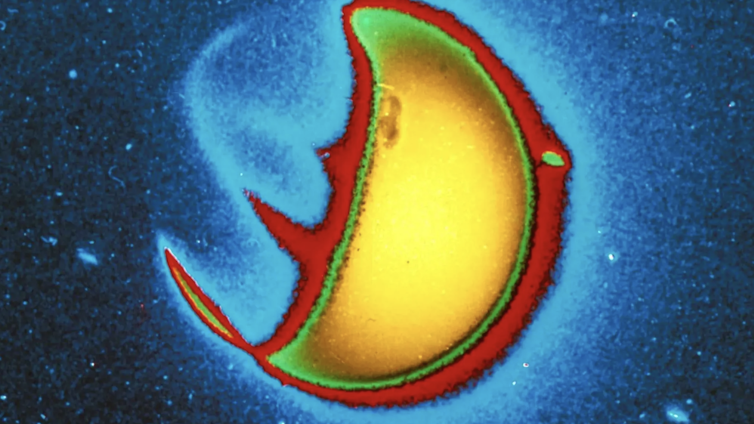
A radarlike image of a sphere, with a bright spot shown in yellow, with a green and red outline.
The first image of Earth’s outer atmosphere, the geocorona, taken from a telescope designed and built by the late American space physicist and engineer George Carruthers. The telescope took the image while on the Moon during the Apollo 16 mission in 1972. G. Carruthers (NRL) et al./Far UV Camera/NASA/Apollo 16, CC BY

Looking forward

IMAP and the Carruthers Geocorona Observatory are two heliophysics missions researching very different parts of the heliosphere. In the coming years, future NASA missions will launch to measure the object at the center of heliophysics – the Sun.

In 2026, the Sun Coronal Ejection Tracker is planned to launch. It is a small satellite the size of a shoebox – called a CubeSat – with the aim to study how coronal mass ejections change as they travel through the Sun’s atmosphere.

In 2027, NASA plans to launch the much larger Multi-slit Solar Explorer to capture high-resolution measurements of the Sun’s corona using a state-of-the-art instrumentation. This mission will work to understand the origins of solar flares, coronal mass ejections and heating within the Sun’s atmosphere.The Conversation

Ryan French, Research Scientist, Laboratory for Atmospheric and Space Physics, University of Colorado Boulder

This article is republished from The Conversation under a Creative Commons license. Read the original article.

  1. New roadmap supports Lake County’s at-risk populations during heat, algal blooms, natural hazards
  2. Clearlake Animal Control: ‘Biggie’ and the dogs
  3. East Region Town Hall meets Oct. 1
  • 147
  • 148
  • 149
  • 150
  • 151
  • 152
  • 153
  • 154
  • 155
  • 156
How to resolve AdBlock issue?
Refresh this page