How to resolve AdBlock issue?
Refresh this page
How to resolve AdBlock issue?
Refresh this page
Lake County News,California
  • Home
    • Registration Form
  • News
    • Education
    • Veterans
    • Community
      • Obituaries
      • Letters
      • Commentary
    • Police Logs
    • Business
    • Recreation
    • Health
    • Religion
    • Legals
    • Arts & Life
    • Regional
  • Calendar
  • Contact us
    • FAQs
    • Phones, E-Mail
    • Subscribe
  • Advertise Here
  • Login
How to resolve AdBlock issue?
Refresh this page

News

Clearlake Police seek missing 13-year-old

Details
Written by: LAKE COUNTY NEWS REPORTS
Published: 30 September 2025
Kahden Lormer. Courtesy photo.


UPDATE: Police said Kahden Lormer was located on Tuesday morning.

LAKE COUNTY, Calif. — The Clearlake Police Department is asking for the community’s help in locating a missing 13-year-old boy.

Kahden Lormer was last seen in the area of Old Highway 53 in Clearlake.

Police said he is a white male, 5 feet 6 inches in height and 160 pounds, with brown hair and brown eyes. 

He was last seen wearing a blue Obsidian school t-shirt, dark blue shorts and light blue shoes. 

If you have any information regarding his whereabouts, please contact the Clearlake Police Department at 707-994-8251, Extension 1.

Mendocino National Forest among recipients of off-highway motor vehicle grant

Details
Written by: LAKE COUNTY NEWS REPORTS
Published: 30 September 2025

California State Parks’ Off-Highway Motor Vehicle Recreation, or OHMVR, Division announced on Monday more than $23 million in final awards for the 2025 Grants and Cooperative Agreements program, with the Mendocino National Forest among the awardees.

Eighty-one local and federal agencies, districts and nonprofit organizations were awarded funding for their off-highway vehicle, or OHV, recreation activities. 

Supporting California’s Outdoors for All initiative to expand access to nature, these grants help maintain trails for OHV recreation and/or for motorized access to non-motorized recreation, educate the public on safe and responsible OHV recreation, protect wildlife and property including natural and cultural resources, and restore/repair habitat damaged from illegal or legal OHV use.

The Mendocino National Forest will receive the largest award, $967,718, for ground operations, the state reported.

“For more than 50 years, OHV grants have helped protect California’s public lands while supporting partners of every size,” said OHMVR Division Deputy Director Sarah Miggins. “These investments will support future generations of OHV enthusiasts to become stewards of these cherished lands so they can continue to enjoy this treasured form of recreation.”

The OHMVR Division evaluated more than 137 projects requesting $27 million in grant funding requests and awarded $23.6 million in grants to the successful recipients. 

Examples of other grant recipients and their projects include:

• The Bureau of Land Management will receive over $6.6 million for 31 projects, such as a planning project for the Eagle Lake field office to inventory, map and survey for potential development of new trailheads and trails for OHV use.
• Local agencies will receive more than $6.1 million to fund 48 projects, such as a restoration project for the Stanislaus County Parks and Recreation Department to restore specific areas damaged by authorized OHV use for ecological repair to their natural state, based off the agency’s Habitat Management Program.
• Nonprofits will receive over $2.4 million to fund eight projects, such as an education and safety project for Sierra Avalanche Center to provide motorized avalanche safety courses and daily avalanche advisories in the greater Lake Tahoe area.
• The U.S. Forest Service will receive over $9.3 million for 32 projects, such as a Ground Operation project for the San Bernardino National Forest, to maintain approximately 237 miles of green sticker routes.

The 119 projects awarded by project type include:

• Development: $713,648 (one project).
• Planning: $578,873 (five projects).
• Operations: $13,626,947 (32 projects).
• Restoration: $1,603,166 (4 projects).
• Education and Safety: $1,133,179 (15 projects).
• Law Enforcement: $6,000,000 (62 projects).

The OHMVR Division has awarded funding for grants and other assistance agreements totaling more than $833 million since the inception of the Grants program in 1974. 

The annual program provides state funding through the OHV Trust Fund for OHV recreation in California by providing financial assistance to eligible agencies and organizations that develop, maintain, operate, expand, support or contribute to well managed high-quality OHV recreation areas, roads and trails. 

In addition, the program seeks to responsibly maintain the wildlife, soils and habitat of project areas in a manner that will sustain long-term OHV recreation.

What parents need to know about Tylenol, autism and the difference between finding a link and finding a cause in scientific research

Details
Written by: Mark Louie Ramos, Penn State
Published: 30 September 2025

In cases where associations are found, researchers must consider dosage response, differences between siblings and other factors to determine a cause-and-effect relationship. Ronaldo Schemidt/AFP via Getty Images

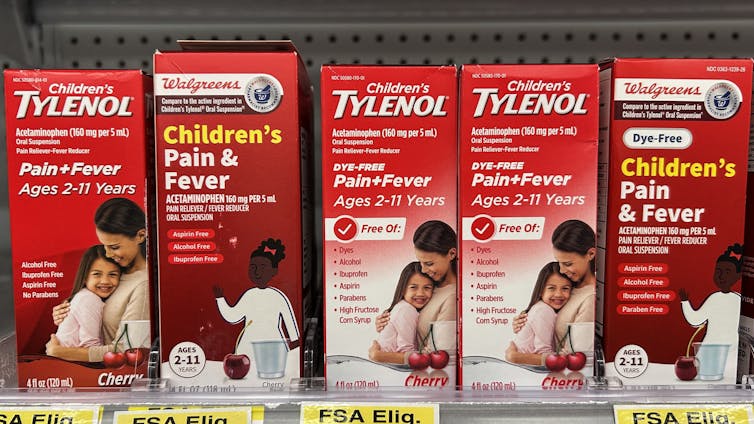
Claims from the Trump White House about links between use of the painkiller acetaminophen – often sold under the brand name Tylenol in the U.S. – during pregnancy and development of autism have set off a deluge of responses across the medical, scientific and public health communities.

As a father of a child with level 2 autism – meaning autism that requires substantial support – and a statistician who works with such tools as those used in the association studies cited by the White House, I find it useful to think about the nuances of association versus causation in observational studies. I hope that this explanation is helpful to parents and expecting parents who, like me, are deeply invested in the well-being of their children.

a bunch of white pills are shown with the words tylenol 500 on them in red
The painkiller acetominophen is often sold under the brand name Tylenol in the U.S. AP Photo/Jae C. Hong

Association is not causation, but …

Most people have heard this before, but it bears repeating: Association does not imply causation.

An often-cited example is that there is a very strong association between ice cream sales and incidents of shark attacks. Of course, it goes without saying that shark attacks aren’t caused by ice cream sales. Rather, in the summertime, hot weather drives more appetite for ice cream and beach time. The increased number of people at the beach does, in turn, cause the likelihood of shark attacks to increase.

Yet pointing this out on its own is neither intellectually satisfying nor emotionally appeasing when it comes to real-life medical concerns, since an association does suggest potential for a causal relationship.

In other words, some associations do end up being convincingly causal. In fact, some of the most consequential discoveries of the past century in public health, like the links between smoking and lung cancer or the human papillomavirus (HPV) and cervical cancer, started out as findings of very strong association.

So when it comes to the issue of prenatal acetaminophen use and autism development, it is important to consider how strong the association found is, as well as the extent to which such an association could be considered causal.

Establishing causal association

So how do scientists determine if an observed association is actually causal?

The gold standard for doing so is conducting what are called randomized, controlled experiments. In these studies, participants are randomly assigned to receive treatment or not, and the environment where they are observed is controlled so that the only external element that differs among participants is whether they received treatment or not.

In doing this, researchers reasonably ensure that any difference in the outcomes of the participants can be directly attributed as being caused by whether they received the treatment. That is, any association between treatment and outcome can be considered causal.

Yet oftentimes, conducting such an experiment is impossible, unethical or both. For instance, it would be highly difficult to gather a cohort of pregnant women for an experiment and extremely unethical to randomly assign half of them to take acetaminophen, or any other medication for no particular reason, and the other half not to.

So when experiments are simply infeasible, an alternative is to make some reasonable assumptions on how observational data would behave if the association was causal and then see if the data aligns with these causal assumptions. This can very broadly be referred to as observational causal inference.

Parsing what the studies mean

So how does this apply to the current controversy over the potential for acetaminophen use during pregnancy to affect the fetus in a way that could result in a condition like autism?

Researchers who try to understand causal roles and links between one variable and potential health outcomes do so by considering: 1) the size and consistency of the association across multiple attempts to estimate it, and 2) the extent to which such association has been established under observational causal inference frameworks.

As early as 1987, researchers have been working to measure possible associations between acetaminophen use during pregnancy and autism. A number of these studies, including multiple large systematic reviews, have found evidence of such associations.

For instance, a 2025 review of 46 studies that examined association between acetaminophen use and an array of neurodevelopmental disorders, including autism, identified papers with five positive associations between acetaminophen and autism.

In one of those studies, which examined 73,881 births, the researchers found that children who were exposed to acetaminophen prenatally were 20% more likely to develop borderline or clinical autism spectrum conditions. Another examined 2.48 million births and reported an estimated association of only 5%.

Both of those are weak associations. For context, estimations of increased lung cancer risk from smoking in the 1950s were between 900% to 1,900%. That is, a smoker is 10 to 20 times more likely than a nonsmoker to develop lung cancer. By comparison, in the two autism studies above, a pregnant woman who takes acetaminophen is 1.05 to 1.20 times more likely than one who does not take the drug to have a child who would be later diagnosed with autism.

It’s also important to keep in mind that many factors can affect how well a study is able to estimate an association. In general, larger sample sizes provide both greater power to detect an association if one does exist, as well as improved precision over estimating the value of the association. This does not mean that studies with smaller sample sizes are not valid, only that from a statistical perspective, researchers like me place greater confidence in an association drawn from a larger sample size.

Once an association – even a small one – is established, researchers then must consider the extent to which causation can be claimed. One way to do this is through what’s called dose-response. This means looking at whether the association is higher among women who took higher doses of acetaminophen during pregnancy.

The study mentioned above that looked at 2.48 million births shows an example of dose-response. It found that pregnant women who reported taking higher doses have higher autism risk.

Another way to examine possible causality in this context is to analyze sibling outcomes, which that same paper did. Researchers looked at whether associations between acetaminophen and autism persisted within families with more than one child.

For example, in a family with two children, if the mother used acetaminophen during one pregnancy and that child was later diagnosed with autism, but she did not use it during the other pregnancy and that child was not diagnosed, then this strengthens the causal claim. Conversely, if acetaminophen was used during the pregnancy of the child who was not diagnosed with autism and not used during the pregnancy of the child who was, then that weakens the causal claim. When this was included in the analysis, the dose-response disappeared, and in fact the overall 5% increased risk mentioned before likewise disappeared. This weakens the claim of a causal relationship.

Consult your doctor

At present, there is clearly not enough evidence to establish a causal association between prenatal acetaminophen use and autism.

Yet as a parent who wonders if my daughter will ever be able to write her name, or hold a job or raise kids of her own, I understand that such explanations may not appease the fears or concerns of an expecting mother who is suffering from a fever.

Naturally, all of us want absolute certainty.

But that’s not possible when it comes to acetaminophen use, at least not at this time.

Your doctor will be able to provide you with much sounder advice than any existing study on this topic. Your OB-GYNs are very likely aware of these studies and have much better judgment as to how these results should be considered in the context of your personal medical history and needs.

Researchers, meanwhile, will continue to dig deeper into the science of this critically important issue and, hopefully, provide greater clarity in the years to come.The Conversation

Mark Louie Ramos, Assistant Research Professor of Health Policy and Administration, Penn State

This article is republished from The Conversation under a Creative Commons license. Read the original article.

Three local governments to jointly explore power option with Sonoma Clean Power

Details
Written by: Lingzi Chen
Published: 29 September 2025

LAKE COUNTY, Calif. — The Board of Supervisors and the Clearlake and Lakeport City Councils will hold a joint discussion Tuesday evening to discuss a proposal for public power generation. 

The joint workshop on Tuesday will take place at 5 p.m. in the board chambers at 255 N Forbes St. The public is invited to attend.

Earlier this year, the three local governments asked Sonoma Clean Power, or SCP to consider extending service into Lake County. 

SCP, a community-owned organization, supplies renewable energy at lower rates. 

Starting in 2014, it has replaced PG&E’s power sources for most customers across Mendocino and Sonoma counties. According to a Lakeport City Council staff report, SCP now serves 87% of electric customers in those two counties.

In 2019, SCP determined it could not offer competitive rates in Lake County. But market and regulatory conditions have since improved, and a new feasibility study this year suggests potential bill savings of 4.2% to 12.9%, according to SCP’s presentations to local governments earlier this year. 

The county staff report said the meeting will cover:

• General background on Community Choice Aggregation; 
• Information on Sonoma Clean Power;
• SCP’s Offer for Service, and benefits for Lake County residents;
• The process to join SCP; 
• Customer support available through SCP; 
• Sonoma Clean Power’s state-level policy impact. 

The workshop is informational only; no decisions will be made. 

Actions are expected later: the Board of Supervisors and Lakeport City Council on Tuesday, Oct. 21, at their respective meetings, and the Clearlake City Council on Thursday, Oct. 2.

The‌ ‌meeting‌ ‌can‌ ‌be‌ ‌watched‌ ‌live‌ ‌on‌ ‌Channel‌ ‌8, ‌online‌ and‌ ‌on‌ ‌the‌ ‌county’s‌ ‌Facebook‌ ‌page. ‌Accompanying‌ ‌board‌ ‌documents, ‌the‌ ‌agenda‌ ‌and‌ ‌archived‌ ‌board‌ ‌meeting‌ ‌videos‌ ‌also‌ ‌are‌ ‌available‌ ‌at‌ ‌that‌ ‌link. ‌ ‌

To‌ ‌participate‌ ‌in‌ ‌real-time, ‌join‌ ‌the‌ ‌Zoom‌ ‌meeting‌ ‌by‌ ‌clicking‌ ‌this‌ ‌link‌. ‌ ‌

The‌ ‌meeting‌ ‌ID‌ ‌is‌ 865 3354 4962, ‌pass code 726865.‌ ‌The meeting also can be accessed via one tap mobile at +16694449171,,86533544962#,,,,*726865#. The meeting can also be accessed via phone at 669 900 6833.

Email staff reporter Lingzi Chen at This email address is being protected from spambots. You need JavaScript enabled to view it.. 

  1. September is Childhood Cancer Awareness Month
  2. New report looks at growth of U.S. centenarian population
  3. Even a brief government shutdown might hamper morale, raise costs and reduce long-term efficiency in the federal workforce
  • 144
  • 145
  • 146
  • 147
  • 148
  • 149
  • 150
  • 151
  • 152
  • 153
How to resolve AdBlock issue?
Refresh this page