How to resolve AdBlock issue?
Refresh this page
How to resolve AdBlock issue?
Refresh this page
Lake County News,California
  • Home
    • Registration Form
  • News
    • Education
    • Veterans
    • Community
      • Obituaries
      • Letters
      • Commentary
    • Police Logs
    • Business
    • Recreation
    • Health
    • Religion
    • Legals
    • Arts & Life
    • Regional
  • Calendar
  • Contact us
    • FAQs
    • Phones, E-Mail
    • Subscribe
  • Advertise Here
  • Login
How to resolve AdBlock issue?
Refresh this page

News

September is Childhood Cancer Awareness Month

Details
Written by: LAKE COUNTY NEWS REPORTS
Published: 29 September 2025

Acting Governor Eleni Kounalakis last week issued a proclamation declaring September 2025 as "Childhood Cancer Awareness Month."

The text of the proclamation follows.

PROCLAMATION

During Childhood Cancer Awareness Month, we honor the hundreds of thousands of children who have faced or continue to face the terrifying ordeal of cancer. We stand with families suffering the loss of children taken too soon by the disease and reaffirm our commitment to helping find a cure for cancer and ending childhood cancer as we know it.

Cancer is the second most common cause of death among children ages 1 to 14, and the rate of cancer incidence for children has been increasing since the 1970s. In that time, we have also seen huge improvements in both methods of treatment and survival rates – but we owe it to our children to do more.

California is home to some of the leading research hospitals in the country – including the University of California, San Francisco and University of California, Davis Medical Centers – that support ground-breaking research in treating childhood cancer. Even as the federal government slashes critical funding for cancer care and research, California has created essential funding streams for childhood cancer research that make it easier for the public to help.

In California, we have dramatically increased access to health care for families across the state. We work to protect our kids from toxic substances and pollution that can cause cancer and other diseases, including keeping synthetic food dyes out of school meals and working to better understand the risks of ultra-processed foods, both of which have been linked to cancer. We focus on preventative care and research, while offering some of the best care in the nation when the unimaginable happens.  

No child should have to worry about a cancer diagnosis, about balancing school or play dates with chemotherapy and recovery time. This month, we extend our gratitude to those searching for a cure and those supporting young patients through these heartbreaking times. We stand with families who fight and care for their kids. But above all, we honor the brave children, those lost and those still thankfully with us today – it is these kids who are the bravest and strongest among us. They are the reasons we cannot give up in the search for a cure, and this month, California recommits to doing all that we can to end this terrible disease.

NOW THEREFORE I, ELENI KOUNALAKIS, Acting Governor of the State of California, do hereby proclaim September 2025 as “Childhood Cancer Awareness Month.”

IN WITNESS WHEREOF I have hereunto set my hand and caused the Great Seal of the State of California to be affixed this 20th day of September 2025.
 
ELENI KOUNALAKIS
Governor of California

ATTEST:
SHIRLEY N. WEBER, Ph.D.
Secretary of State

New report looks at growth of U.S. centenarian population

Details
Written by: U.S. CENSUS BUREAU
Published: 29 September 2025

In 2020, centenarians — people who have reached the age of 100 — accounted for just 2 out of 10,000 people, according to the “Centenarians: 2020” special report released by the U.S. Census Bureau.

Though a small proportion of the total population, the centenarian population in the United States increased by 50% from 53,364 in 2010 to 80,139 in 2020. 

This percentage increase was also faster than the growth of other age groups among older adults since 2010.

The report provides an updated portrait of the centenarian population in the United States and is based on age, sex, race, Hispanic origin, living arrangements and geographic distribution information from the 2020 Census. 

The characteristic profile and geographic distribution of centenarians are compared with those of other age groups in the older population to illustrate how centenarians are distinct. 

Other highlights include:

Sex composition

• In 2020, centenarians were overwhelmingly female at 78.8%. This was a slight decline from 2010, when centenarians were 82.8% female.

• Between 2010 and 2020, the male centenarian population grew by 85.3% versus a 42.9% increase for female centenarians.

Racial and ethnic composition

• Centenarians, a largely white alone and female population, became slightly more racially diverse and male in 2020. The increase in racial diversity (i.e., about an 8 percentage-point decline in the white alone share) was on par with what was shown for other age groups among the older population, but it was less than the increase in racial diversity for the population under age 65 (i.e., about a 12 percentage-point decline in the white alone share). Black or African American alone centenarians were an exception to the general pattern. The percentage of centenarians who were Black or African American alone declined from 12.2% in 2010 to 10.3% in 2020.

Regional and state

• Compared with the national centenarian proportion of 2.42 per 10,000 people in the population, the Northeast had the highest centenarian proportion among regions at 3.19 centenarians per 10,000 people.

• Hawaii was the only state with more than 4 centenarians per 10,000 (4.44) people in 2020. Puerto Rico joined it, having 4.14 centenarians per 10,000 people. On the other end of the spectrum, no state had less than 1 centenarian per 10,000 people in 2020. Utah came the closest with 1.04, and Alaska was close behind with 1.28 centenarians per 10,000 people.

• States with the highest proportion of centenarians were similar in pattern to that for the population ages 85 to 99 (i.e., Midwest and Northeast concentration of the high-proportion states), but they were dissimilar from the pattern for the population ages 65 to 84 (i.e., high-proportion states were outside the central United States).

Living arrangements

• In 2020, female centenarians lived alone without familiar household members to a much greater extent than male centenarians.

• About half (49.7%) of male centenarians lived with others in a household, while only about a third (33.8%) of female centenarians lived with others in a household.

• When we focus on group quarters living, such as nursing homes, female centenarians were about twice as likely to experience this living arrangement than male centenarians. Among centenarians, 27.6% of females were living in a nursing home, while only 14.2% of males were living in a nursing home. 

• Putting the above two points together, about two-thirds (66.2%) of centenarian females were living alone or in a group living situation. In contrast, about half (50.3%) of centenarian males were in that living situation.

• The centenarian living arrangement with notably more racial and ethnic diversity in 2020 was “living with others in a household,” while the centenarian living arrangements with the least racial and ethnic diversity were nursing homes and “living alone in a household.”

• Centenarians who were Hispanic or Latino, Asian alone, and “All Other Races” were notably more likely to live with others in a household (i.e., each group having over 60% living with others in a household), while white alone and not Hispanic centenarians were much less likely to live with others in a household (i.e., each less than 35% living with others in a household). Black or African American alone centenarians were in the middle with about half living with others in a household.

Even a brief government shutdown might hamper morale, raise costs and reduce long-term efficiency in the federal workforce

Details
Written by: Gonzalo Maturana, Emory University; Andrew Teodorescu, Stanford University, and Christoph Herpfer, University of Virginia
Published: 29 September 2025

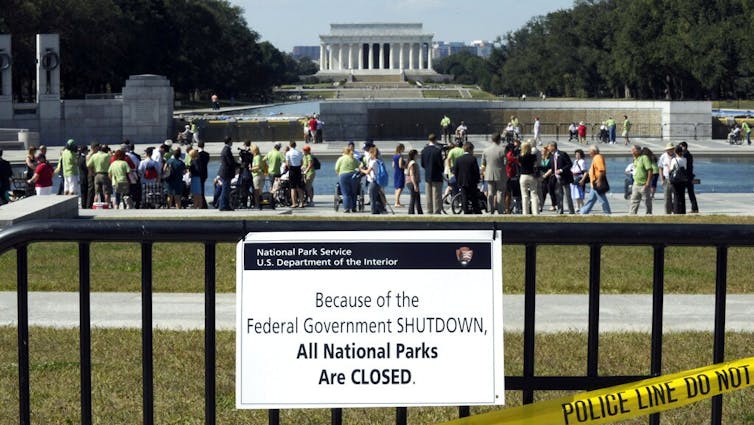
A sign indicates the closing of federal services during the government shutdown in 2013. AP Photo/Susan Walsh

As the federal fiscal year draws to a close, an increasingly familiar prospect is drawing near in Washington, D.C.: a possible government shutdown. And for federal workers, it couldn’t come at a worse time.

In the fractious and polarized political landscape of the United States, Democrats and Republicans have come to rely on short-term, stopgap funding bills to keep the government operating in the absence of elusive longer-term budget deals.

With the parties currently wide apart over the terms of even a short-term budget resolution, the government is set to shut down on Oct. 1, 2025, barring an 11th-hour deal that appears far off. If the shutdown does happen, it would mark another difficult moment this year for a federal workforce that has so far shed more than 300,000 jobs. This is largely due to ongoing Trump administration efforts to downsize parts of the federal government and restructure or largely eliminate certain government agencies with the stated aim of increasing efficiency.

With a government shutdown, hundreds of thousands of federal employees would be furloughed – sent home without pay until funding resumes.

As a team of financial economists who study labor markets and public sector employment and have examined millions of federal personnel records spanning such government shutdowns in the past, we have found that the consequences reach far beyond the now-familiar images of closed national parks and stalled federal services. Indeed, based on our study of an October 2013 shutdown during which about 800,000 federal employees were furloughed for 16 days, shutdowns leave an enduring negative effect on the federal workforce, reshaping its composition and weakening its performance for years to come.

What happens to workers

Millions of Americans interact with the federal government every day in ways both big and small. More than one-third of U.S. national spending is routed through government programs, including Medicare and Social Security. Federal workers manage national parks, draft environmental regulations and help keep air travel safe.

Whatever one’s political leanings, if the goal is a government that handles these responsibilities effectively, then attracting and retaining a talented workforce is essential.

Yet the ability of the federal government to do so may be increasingly difficult, in part because prolonged shutdowns can have hidden effects.

When Congress fails to pass appropriations, federal agencies must furlough employees whose jobs are not deemed “excepted” – sometimes commonly referred to as essential. Those excepted employees keep working, while others are barred from working or even volunteering until funding resumes. Furlough status reflects funding sources and mission categories, not an individual’s performance, so it confers no signal about an employee’s future prospects and primarily acts as a shock to morale.

Importantly, furloughs do not create long-term wealth losses; back pay has always been granted and, since 2019, is legally guaranteed. Employees therefore recover their pay even though they may face real financial strain in the short run.

A cynical observer might call furloughs a paid vacation, yet the data tells a different story.

An empty hallway in the U.S. Capitol.
An American flag is seen inside the U.S. Capitol Building on Sept. 23, 2025, ahead of a looming government shutdown. Photo by Anna Moneymaker/Getty Images

Immediate consequences, longer-term effects

Using extensive administrative records on federal civilian workers from the October 2013 shutdown, we tracked how this shock to morale rippled through government operations. Employees exposed to furloughs were 31% more likely to leave their jobs within one year.

These departures were not quickly replaced, forcing agencies to rely on costly temporary workers and leading to measurable declines in core functions such as payment accuracy, legal enforcement and patenting activity.

Further, we found that this exodus builds over the first two years after the shutdown and then settles into a permanently lower headcount, implying a durable loss of human capital. The shock to morale is more pronounced among young, female and highly educated professionals with plenty of outside options. Indeed, our analysis of survey data from a later 2018-2019 shutdown confirms that morale, not income loss, drives the exits.

Employees who felt most affected reported a sharp drop in agency, control and recognition, and they were far more likely to plan a departure.

The effect of the motivation loss is striking. Using a simple economic model where workers can be expected to value both cash and purpose, we estimate that the drop in intrinsic motivation after a shutdown would require a roughly 10% wage raise to offset.

Policy implications

Some people have argued that this outflow of employees amounts to a necessary trimming, a way to shrink government by a so-called starving of the beast.

But the evidence paints a different picture. Agencies hit hardest by furloughs turned to temporary staffing firms to fill the gaps. Over the two years after the shutdown we analyzed, these agencies spent about US$1 billion more on contractors than they saved in payroll.

The costs go beyond replacement spending, as government performance also suffers. Agencies that were more affected by the shutdown recorded higher rates of inaccurate federal payments for several years. Even after partial recovery, losses amounted to hundreds of millions of dollars that taxpayers never recouped.

Other skill-intensive functions declined as well. Legal enforcement fell in agencies that became short of experienced attorneys, and patenting activity dropped in science and engineering agencies after key inventors left.

Official estimates of shutdown costs typically focus on near-term GDP effects and back pay. But our findings show that an even bigger bill comes later in the form of higher employee turnover, higher labor costs to fill gaps, and measurable losses in productivity.

Shutdowns are blunt, recurring shocks that demoralize the public workforce and erode performance. These costs spill over to everyone who relies on government services. If the public wants efficient, accountable public institutions, then we should all care about avoiding shutdowns.

After an already turbulent year, it is unclear whether an upcoming shutdown would significantly add to the strain on federal employees or have a more limited effect, since many who were considering leaving have already left through buyouts or forced terminations this year. What is clear is that hundreds of thousands of federal employees are likely to experience another period of uncertainty.The Conversation

Gonzalo Maturana, Associate Professor of Finance, Emory University; Andrew Teodorescu, Ph.D. Candidate in Finance, Stanford University, and Christoph Herpfer, Assistant Professor of Business Administration, University of Virginia

This article is republished from The Conversation under a Creative Commons license. Read the original article.

Thousands turn out to enjoy annual Pear Festival

Details
Written by: Elizabeth Larson
Published: 28 September 2025
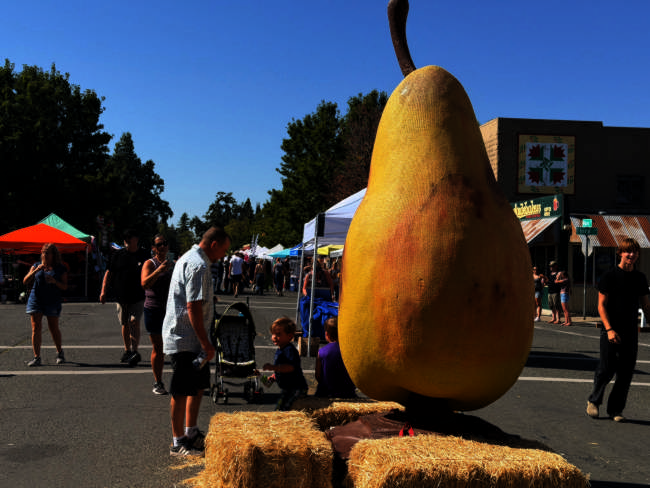
It was all about the pear during the 31st annual Kelseyville Pear Festival on Saturday, Sept. 27, 2025, in Kelseyville, California. Photo by Lingzi Chen/Lake County News.

KELSEYVILLE, Calif. — Beautiful fall weather and a day full of fun activities drew thousands of people to downtown Kelseyville on Saturday for the 31st annual Pear Festival.

The daylong event celebrated Lake County’s agricultural history and one of its most enduring crops.

Kicking off with a pancake breakfast and the morning parade, the day was filled with color, music, dance, art and great food.

In the Grande Pear Parade, Clear Lake State Park took top honors for its float, followed by Realtor Anne Mary Skeen, with Latinos United of Lake County and Kelseyville High School’s Homecoming float tying for third place.

Judges tasted 26 entries in the annual pear dessert contest on Friday, Sept. 26, 2025, at Kelseyville Presbyterian Church in Kelseyville, California. Photo by Elizabeth Larson/Lake County News.

Lining the town’s streets, there were vendors of every kind — from food to pear souvenirs — plus tractors and other farm equipment, and classic cars.

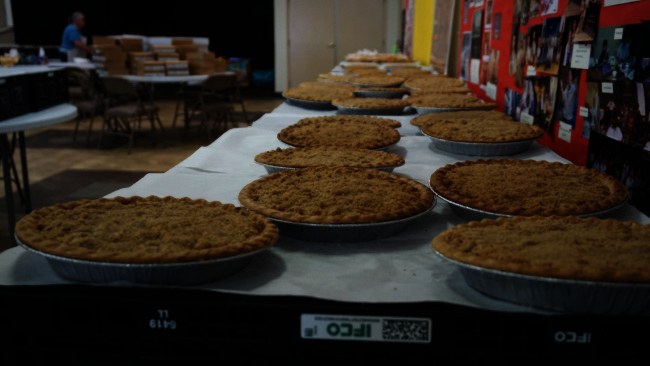
The California Women for Agriculture spent Friday baking 100 pear pies and more than 700 pear popovers, which people lined up to buy.

Some of the 100 pear pies baked by the California Women for Agriculture on Friday, Sept. 26, 2025, at Kelseyville Presbyterian Church in Kelseyville, California. Photo by Elizabeth Larson/Lake County News.

Across the way at Kelseyville Presbyterian Church, the Presbyterian Women once again presented their beloved cool treat — pear milkshakes. 

On Friday, judges in the pear dessert contest considered 26 entries, which organizers said was an increase over the previous year.

Emily Navarro won for her holiday pear cake balls. Rebecca Molloy took second place for her buttermilk-cheddar-pear biscuits with pear blend ice tea and pear jalapeno jam, Isabella Mays won third place for pear cream cheese danishes, fourth place went to Erin Malaspina for her “pearadise swirls” and the fifth place award went to Heather Brown for her “I can’t believe it’s not pears” dessert.

Email Elizabeth Larson at This email address is being protected from spambots. You need JavaScript enabled to view it.. Follow her on Twitter, @ERLarson, and on Bluesky, @erlarson.bsky.social. Find Lake County News on the following platforms: Facebook, @LakeCoNews; X, @LakeCoNews; Threads, @lakeconews, and on Bluesky, @lakeconews.bsky.social. 

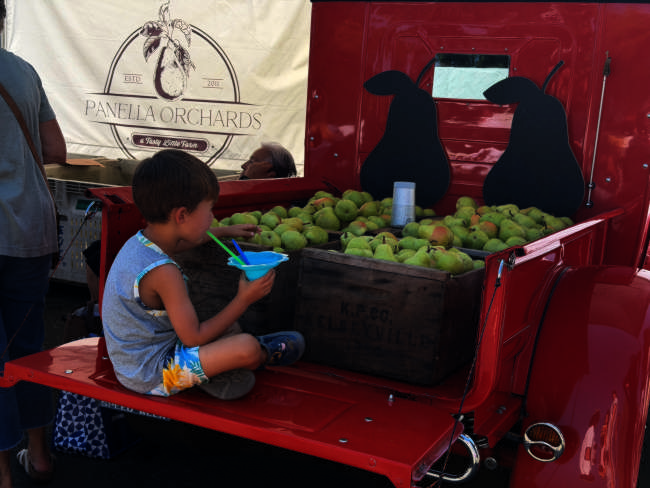
A youngster checks out fresh pears during the 31st annual Kelseyville Pear Festival on Saturday, Sept. 27, 2025, in Kelseyville, California. Photo by Lingzi Chen/Lake County News.


Attendees enjoy time downtown during the 31st annual Kelseyville Pear Festival on Saturday, Sept. 27, 2025, in Kelseyville, California. Photo by Lingzi Chen/Lake County News.


  1. First fall storms expected this week
  2. Helping Paws: More new dogs and puppies
  3. Birding by ear: How to learn the songs of nature’s symphony with some simple techniques
  • 145
  • 146
  • 147
  • 148
  • 149
  • 150
  • 151
  • 152
  • 153
  • 154
How to resolve AdBlock issue?
Refresh this page