 How to resolve AdBlock issue?
News
- Details
- Written by: Jeff Inglis, The Conversation
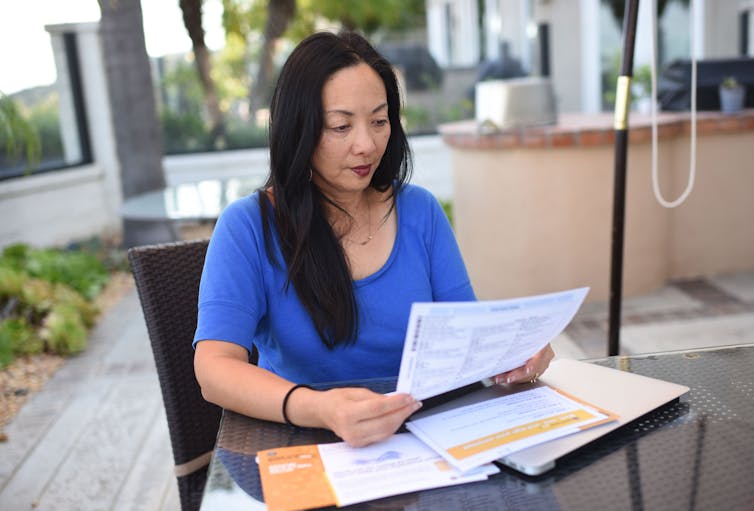
As the midterm elections approach, much of life has returned to its busy post-COVID-19 normal, even as the pandemic continues. Being busy and wary of sharing space with large numbers of strangers are among the many reasons people might consider skipping Election Day.
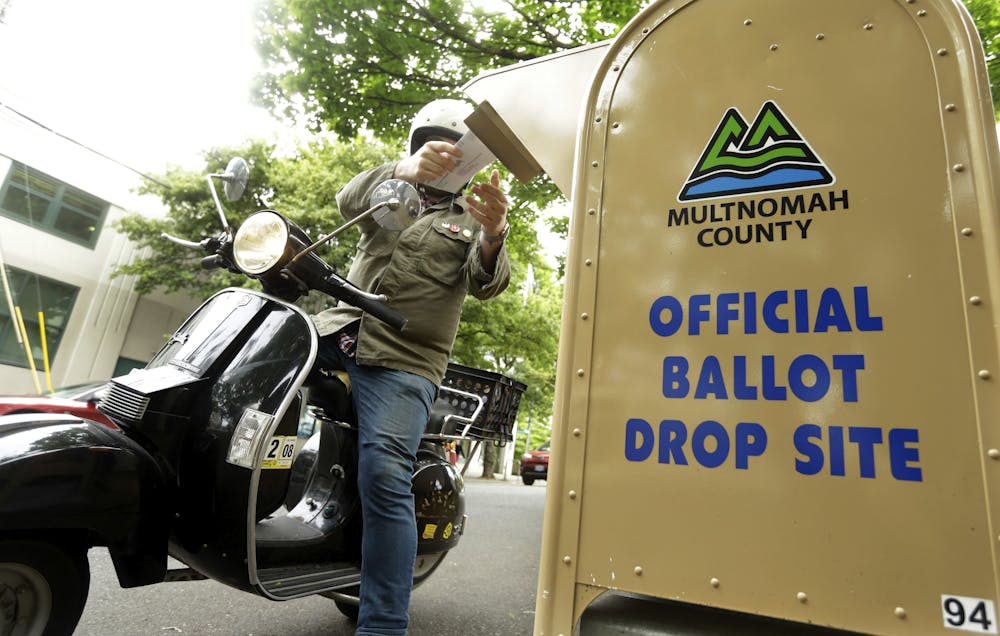
In most states, you can skip Election Day and still vote, though. In many ways, the most convenient way to vote is by mail – even if many states require you to file a form or use a website to request a ballot. You can examine the choices of candidates and questions, and consider your choices, as you would if you were to vote on Election Day. When you are ready, you can mark your ballot in your own time and either mail it back or drop it off at a local ballot drop box or government office – as long as you do it before your state’s deadline.
Many people have questions about the integrity of this process, how they can be sure their vote will be counted accurately and how they can make sure it is even counted at all. Several scholars have written articles for The Conversation U.S. describing aspects of this system and explaining why it’s trustworthy and safe.
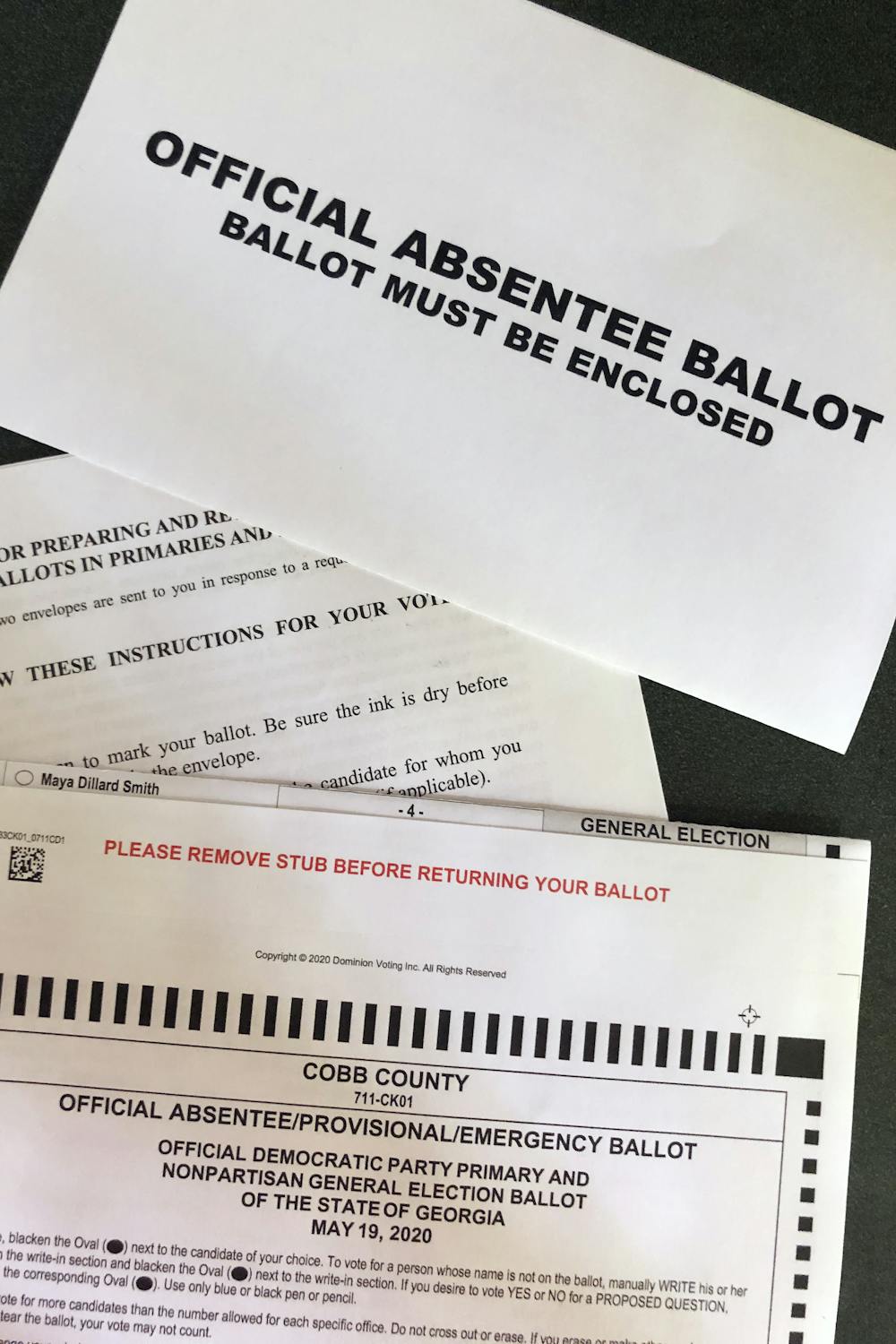
1. ‘Built-in safeguards’
Charlotte Hill, a former local election official in San Francisco who now studies voting laws at the University of California, Berkeley, and political scientist Jake Grumbach from the University of Washington write about six ways mailed ballots are protected from fraud. Those include the facts that it’s very hard to make a fake ballot and a fake envelope and that eagle-eyed postal and municipal workers are always on the lookout for irregularities.
“The mail-in voting process has several built-in safeguards that together make it hard for one person to vote fraudulently and even more difficult to commit voter fraud on a scale capable of swinging election outcomes,” Hill and Grumbach write.
2. Lessons from Oregon
Since 1998, all elections in Oregon have been held by mail. Over that entire time, Priscilla Southwell, a professor emerita of political science at the University of Oregon, has watched how the system has worked and how people have reacted to it, and then she has analyzed its integrity.
“Oregon’s experience shows that mail-in voting can be safe and secure, providing accurate and reliable results the public can be confident in,” she writes.
Her conclusion reflects broad public support of the system: “Perhaps the strongest evidence that the system is equitable, fair, reliable and safe is that in two statewide surveys I have conducted over the years, a nearly identical percentage of Oregon Republicans and Democrats strongly support voting by mail, and the same is true of elected officials in the state.”
3. One caution
In an article crediting the convenience and integrity of voting by mail, political scientists Susan Orr of The College at Brockport, State University of New York, and James Johnson at the University of Rochester note one potential pitfall: Because it happens outside an official polling place, the act of voting isn’t necessarily secret.
A person voting by mail may be more susceptible to the influence of a relative, friend or employer, or may even be observed while marking their ballot.
“The voter marks the ballot outside the supervision of election monitors – often at home. It’s possible to do so in secret,” they explain. “But secrecy is no longer guaranteed, and for some it may actually be impossible.”
4. Some ignore the evidence
There have been several lawsuits, especially in the wake of the 2020 presidential election, alleging that voting by mail is fraudulent or suspect. Rutgers University Newark law professor Penny Venetis has observed that some judges accept those claims:
“Without providing any explanation or evidence to the contrary, these decisions essentially erase scientific findings, cementing into law unsubstantiated and discredited claims linking voting by mail to fraud.”
5. Easy accountability
If you’ve decided to vote by mail, in most states you can keep tabs on your ballot and make sure it arrived safely at your local election office.
Law professor Steven Mulroy at the University of Memphis explained that many states have “a unified system [that] allows all voters to see when their request for a ballot by mail was received, when the ballot was mailed to them and when the completed ballot was received back at the local election office.”
Check to see if your state is one, and you can rest assured that your ballot is on the way, that you’ve successfully mailed it back and that it has been accepted and counted.
Editor’s note: This story is a roundup of articles from The Conversation’s archive.
Jeff Inglis, Freelance Editor, The Conversation
This article is republished from The Conversation under a Creative Commons license. Read the original article.
- Details
- Written by: LAKE COUNTY NEWS REPORTS
LAKE COUNTY, Calif. — The effort to expand the Berryessa Snow Mountain National Monument to include the Walker Ridge area took another step on Monday.
Congressman John Garamendi (D-CA) and U.S. Senator Alex Padilla (D-CA) led members of California’s Congressional delegation on Monday in a letter calling on President Joe Biden to use his authority under the Antiquities Act of 1906 to expand the Berryessa Snow Mountain National Monument to include adjacent federally owned land known as the Walker Ridge tract.
Garamendi and Padilla’s letter also requested that Secretary of the Interior Deb Haaland order the U.S. Board on Geographic Names to rename “Walker Ridge” to “Condor Ridge” and “Molok Luyuk” in the Patwin language of the Yocha Dehe Wintun Nation and other Native American peoples from the area.
Berryessa Snow Mountain National Monument stretches from Napa County in the south to Mendocino County in the north, encompassing 330,780 acres of public lands managed by the Bureau of Land Management and the U.S. Forest Service. Much of the monument is in Lake County.
President Barack Obama designated the national monument in 2015, responding to a call from Representatives Thompson and Garamendi, then-Senator Barbara Boxer, other Members of California’s Congressional delegation, and community leaders to permanently protect these lands.
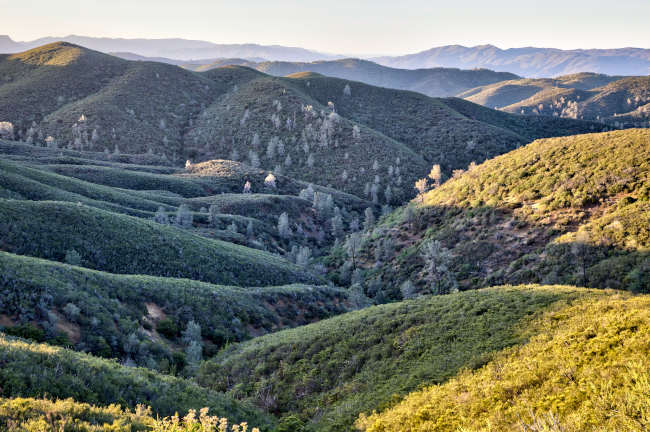
The proposed expansion area is located on the eastern edge of the existing monument. These BLM managed lands include oak woodlands, rocky outcroppings, wildflower meadows, the world’s largest stand of McNab cypress, and dozens of rare plant species.
“Molok Luyuk is a special and sacred place for area tribes and for many local residents who enjoy recreation activities like hiking and mountain biking,” said Lake County Supervisor E.J. Crandell, a member of the Robinson Rancheria tribe. “The natural beauty of our home also drives tourism, which is key to the economic vitality of the region. Protecting these beautiful lands would be a gift to future generations.”
“Molok Luyuk is a rare treasure of rich cultural heritage and sacred history, diverse wildlife and rare plants, and stunning natural beauty and accessible recreational activities,” said Sandra Schubert, Executive Director of Tuleyome, a local conservation organization. “We are deeply grateful to our Congressional champions Reps. Garamendi and Thompson and Sens. Padilla and Feinstein for shepherding this effort. We encourage President Biden to expand the existing monument and permanently protect Molok Luyuk.”
Garamendi and Padilla’s letter was cosigned by U.S. Senator Dianne Feinstein (D-CA) and Representatives Mike Thompson (D-CA05), Jared Huffman (D-CA02), Barbara Lee (D-CA13), Katie Porter (D-CA45), Doris O. Matsui (D-CA06) and Mike Levin (D-CA-49).
“Conserving California’s special places has been a lifelong passion throughout my tenure in the state legislature, as Deputy Secretary of the Interior to President Clinton, and now as a member of Congress representing Lake County. Walker Ridge, soon to be known as Molok Luyuk, is one of those special places. I am proud to work with Senator Alex Padilla and our Congressional colleagues from California in calling for President Biden and Secretary Haaland to use the powers bestowed upon them to protect and expand the Berryessa Snow Mountain National Monument for future generations to enjoy,” said Congressman Garamendi.
“The sacred lands within and around the Berryessa Snow Mountain National Monument are central to thousands of years of indigenous origin stories,” said Senator Padilla. “That’s why I’m leading calls with Representative Garamendi urging President Biden to use his existing authority to expand the Monument and permanently protect Molok Luyuk. It is our duty to protect the abundant natural resources and the rich history of Molok Luyuk for today’s children and for future generations.”
“Molok Luyuk is home to both profound natural beauty and deep cultural significance. It is a special place, so it's fitting that California’s tribes and the U.S. government create a special relationship to protect it,” said Yocha Dehe Wintun Nation Chairman Anthony Roberts. “We commend Representative Garamendi and Senator Padilla for their work to protect our homelands.”
Presidential proclamations under the Antiquities Act of 1906 only apply to federally owned land and do not affect privately owned or other non-federal land in any way.
Over 50 local and national organizations have endorsed the Berryessa Snow Mountain National Monument Expansion Act,” including: Lake County Board of Supervisors; Yocha Dehe Wintun Nation; Conservation Lands Foundation; Sierra Club; California Wilderness Coalition; The Wilderness Society; Lake County Land Trust; Backcountry Anglers & Hunters; California Native Plant Society; Hispanic Access Foundation; The Pew Charitable Trusts; Tuleyome (Woodland, CA-based nonprofit); Audubon California; Vet Voice Foundation; Native American Land Conservancy.
February 2014: Congressmen Mike Thompson, Garamendi and Huffman introduced bicameral legislation with then-Senator Barbara Boxer (D-CA) to establish the Berryessa Snow Mountain National Monument.
December 2014: Congressmen Thompson and Garamendi host then-Secretary of the Interior Sally Jewell and Obama Administration officials on a tour of Berryessa Snow Mountain Region, urging National Monument designation.
July 2015: President Obama declared the federal land surrounding Lake Berryessa as a National Monument, at the Congressmen’s urging.
May 2017: Garamendi defends Berryessa Snow Mountain National Monument against Trump Administration’s review to downsize national monuments designated by President Obama under the 1906 Antiquities Act.
July 2021: Garamendi sought public feedback on the proposed Berryessa Snow Mountain National Monument expansion and his draft legislation.
January 2022: Garamendi introduced the “Berryessa Snow Mountain National Monument Expansion Act” (H.R.6366) with Congressman Thompson.
March 2022: Garamendi testified before the House of Representatives’ Subcommittee on National Parks, Forests, and Public Lands on his “Berryessa Snow Mountain National Monument Expansion Act” with Tribal Chairman Anthony Roberts for the Yocha Dehe Wintun Nation.
April 2022: Senator Padilla introduced the companion legislation (S.4080) with Senator Feinstein.
June 2022: Senator Padilla testified before the U.S. Senate’s Subcommittee on Public Lands, Forests, and Mining on his companion legislation (S.4080).
July 14, 2022: U.S. House of Representatives passed Garamendi’s Berryessa Snow Mountain National Monument Expansion Act” as part of the “National Defense Authorization Act for Fiscal Year 2023” (H.R.7900).
July 21, 2022: U.S. Senate Committee on Energy and Natural Resources passed Senator Padilla’s companion legislation (S.4080) with bipartisan support.
In addition to the letter cosigners, the “Berryessa Snow Mountain National Monument Expansion Act” is also cosponsored in the House by Representatives Jerry McNerney (D-CA-9), Jim Costa (D-CA-16), and Ro Khanna (D-CA-17).
20221017 CA Members Antiquities Act Request for BSMNM by LakeCoNews on Scribd
- Details
- Written by: GOVERNOR’S OFFICE
This timeline gives the health care system needed flexibility to handle any potential surge that may occur after the holidays in January and February, in addition to providing state and local partners the time needed to prepare for this phaseout and set themselves up for success afterwards.
With hospitalizations and deaths dramatically reduced due to the state’s vaccination and public health efforts, California has the tools needed to continue fighting COVID-19 when the state of Emergency terminates at the end of February, including vaccines and boosters, testing, treatments and other mitigation measures like masking and indoor ventilation.
As the state of emergency is phased out, the SMARTER Plan continues to guide California’s strategy to best protect people from COVID-19.
“Throughout the pandemic, we’ve been guided by the science and data — moving quickly and strategically to save lives. The state of emergency was an effective and necessary tool that we utilized to protect our state, and we wouldn’t have gotten to this point without it,” said Gov. Newsom. “With the operational preparedness that we’ve built up and the measures that we’ll continue to employ moving forward, California is ready to phase out this tool.”
To maintain California’s COVID-19 laboratory testing and therapeutics treatment capacity, the Newsom Administration will be seeking two statutory changes immediately upon the Legislature’s return: 1) The continued ability of nurses to dispense COVID-19 therapeutics; and 2) The continued ability of laboratory workers to solely process COVID-19 tests.
“California’s response to the COVID-19 pandemic has prepared us for whatever comes next. As we move into this next phase, the infrastructure and processes we’ve invested in and built up will provide us the tools to manage any ups and downs in the future,” said Secretary of the California Health & Human Services Agency, Dr. Mark Ghaly. “While the threat of this virus is still real, our preparedness and collective work have helped turn this once crisis emergency into a manageable situation.”
Throughout the pandemic, Gov. Newsom, the Legislature and state agencies have been guided by the science and data to best protect Californians and save lives — with a focus on those facing the greatest social and health inequities — remaining nimble to adapt mitigation efforts along the way as we learned more about COVID-19.
The state’s efforts to support Californians resulted in:
•Administration of 81 million vaccinations, distribution of a billion units of PPE throughout the state and processing of 186 million tests.
•Allocation of billions of dollars to support hospitals, community organizations, frontline workers, schools and more throughout the pandemic.
•The nation’s largest stimulus programs to support people hardest hit by the pandemic – $18.5 billion for direct payments to Californians, $8 billion for rent relief, $10 billion for small business grants and tax relief, $2.8 billion to help with overdue utility bills, and more.
California’s pandemic response efforts have saved tens of thousands of lives, kept people out of the hospital and protected the economy:
• California’s death rate is the lowest amongst large states. If California had Texas’ death rate, 27,000 more people would have died here. If California had Florida’s rate, that figure jumps to approximately 56,000 more deaths.
• In only the first 10 months of vaccines being available, a study showed that California’s efforts saved 20,000 lives, kept 73,000 people out of the hospital and prevented 1.5 million infections.
• California’s actions during the pandemic protected the economy and the state continues to lead the nation in creating jobs and new business starts. “Lockdown” states like California did better economically than “looser” states like Florida, new COVID data shows,” with California's economy having contracted less than such states — economic output shrank 3.5% on average for the U.S., compared with 2.8% for California. Since February 2021, California has created 1,628,300 new jobs — over 16% of the nation’s jobs, by far more than any other state. By comparison, Texas created 1,133,200 jobs (11.3% of the nation’s) and Florida created 787,600 jobs (7.9% of the nation’s) in that same timeframe. Since the beginning of 2019, data from the Bureau of Labor Statistics shows that over 569,000 businesses started in California, by far more than any other state.
- Details
- Written by: CALIFORNIA DEPARTMENT OF INSURANCE
Commissioner Lara’s regulation is the first in the nation requiring insurance companies to provide discounts to consumers under the Safer from Wildfires framework created by the California Department of Insurance in partnership with state emergency preparedness agencies.
The regulation is now state law and enshrined in the California Code of Regulations.
"Protecting Californians from deadly wildfires means everyone doing their part, including insurance companies by rewarding consumers for being safer from wildfires," said Commissioner Lara. "The reality of climate change is driving my determination to help communities better prepare, help our firefighters save lives, and help more Californians find insurance they can afford. My Department will work diligently to increase discounts to reward the hard work that California consumers do to protect their families, homes, businesses, and communities.”
Commissioner Lara’s regulation requires insurance companies to submit new rate filings incorporating wildfire safety standards created by the department, and to establish a process for releasing wildfire risk determinations to residents and businesses within 180 days.
Transparency is an important benefit of this regulation, by requiring insurance companies to provide consumers with their property’s “wildfire risk score” and creating a right to appeal that score.
This regulation is part of a comprehensive solution that Commissioner Lara initiated after taking office to protect consumers from climate change-intensified wildfires.
When Commissioner Lara took office in 2019, insurance companies representing 7% of the residential market provided insurance discounts and, under his leadership, that figure has grown to 4%.
When this regulation is fully implemented, it will be 100% of the residential and commercial market aligned with the Safer from Wildfires framework.
Commissioner Lara directed the Department to write the regulation to protect consumers and improve market competition after hearing first-hand from consumers and business owners about their frustration with insurance companies that did not consider mitigation in their rating plans.
During town hall meetings in more than 38 counties and an extensive department investigatory wildfire hearing in 2020, many consumers testified that their homes and businesses were subject to “wildfire risk scores” that many did not know existed and had no right to appeal if inaccurate.
Regulation followed extensive public input and Safer from Wildfires partnership with Gov. Gavin Newsom’s Administration
Lara took what he learned from Californians to shape this rule that will promote a fair, transparent, and competitive insurance market.
In October 2021, Lara shared an initial version of the text of regulation. Following further public input, Lara formally proposed his regulations in February and held a public hearing to receive verbal and written comments before submitting the final regulation on Sept. 1 for approval by the California Office of Administrative Law, of which that approval has now been received.
The regulation incorporates the Safer from Wildfires framework, created in February by a first-ever partnership between the Department of Insurance and the emergency preparedness agencies in Governor Newsom’s Administration, including the California Department of Forestry and Fire Protection, the Governor’s Office of Emergency Services, the Governor’s Office of Planning and Research, and the California Public Utilities Commission.
“Home Hardening retrofits, along with Defensible Space significantly increase a home’s chance of surviving a wildfire,” said Chief Daniel Berlant, Cal Fire deputy director of Community Wildfire Preparedness & Mitigation. “Using the latest fire science and recent wildfire data, these retrofits and landscaping requirements provide a strong path to structure survivability. Cal Fire is currently funding over $300 million in local wildfire prevention projects to prepare communities against wildfire, but we know it will take every resident doing their part to ensure California is fully protected.”
Regulations will drive down costs and create transparency for consumers
The regulation requires insurance companies to submit new rates that recognize the benefit of safety measures such as upgraded roofs and windows, defensible space, and community-wide programs such as Firewise USA and the Fire Risk Reduction Community designation developed by the state’s Board of Forestry and Fire Protection, which currently includes the counties of Los Angeles, Santa Barbara, and Butte as well as cities and local districts.
“I applaud and welcome the new insurance pricing regulation developed by Commissioner Lara,” said Los Angeles County Supervisor Kathryn Barger, who represents approximately 2 million residents, including many who own properties in the county’s wildland urban interface. “Over the years, I’ve met with many wildfire survivors who were underinsured and, as a result, were financially ruined – left with a home that’s uninhabitable, that they can’t afford to repair, yet still liable for meeting their mortgage payments. The discounts offered to property owners who harden their homes and take action to mitigate wildfire threats are a financial reward that I believe will be embraced by many. This is a big step forward towards promoting community-driven preparedness and resilience.”
“Commissioner Lara’s proposed regulation will transform the insurance landscape by rewarding wildfire risk reduction, creating safer communities and restoring access to affordable coverage,” said Amy Bach, Executive Director of United Policyholders, a 31-year-old non-profit assisting California insurance consumers whose statewide Wildfire Risk Reduction and Asset Protection (WRAP) working group is working toward the goal of this regulation. “Giving people a financial incentive to do their part is a critical and fair step to getting ‘all hands on deck’ to save homes and lives. United Policyholders strongly supports this common-sense and sustainable solution to the property insurance problems millions of Californians are experiencing.”
“Communities have been engaging in wildfire risk reduction through the national Firewise USA program for two decades,” said Michele Steinberg, wildfire division director for the National Fire Protection Association (NFPA). “The Firewise USA process requires annual preparedness work across neighborhoods, and a long-term commitment. This ongoing effort has proven to reduce property losses from wildfire and should factor into risk evaluations and insurance rates.”
“My regulation is the result of listening closely to the needs of consumers and businesses and crafting common-sense, lasting solutions that strengthen our ability to protect Californians from the threat of climate change-intensified wildfires,” said Commissioner Lara.
The Safer from Wildfires regulation is part of a larger solution that Commissioner Lara is pursuing for consumers and wildfire survivors that includes working to increase insurance protections and market competition to help protect consumers. Commissioner Lara’s actions since taking office in 2019 include, among others:
Protecting more than 4 million homeowners from non-renewal or cancellation of insurance following declared wildfire emergencies, in order to speed up community recovery.
Sponsoring new insurance protections signed into law by Gov. Newsom — despite opposition from insurance companies — that will mean larger payouts for some consumer claims, less red tape from insurance companies, and more help for people under evacuation orders.
Ordering the FAIR Plan, the state’s insurer of last resort, to offer a more comprehensive homeowners policy as an option, which a judge upheld, as well as expanding residential and commercial coverage limits for the first time in 25 years to keep pace with increased costs.