 How to resolve AdBlock issue?
News
- Details
- Written by: Elizabeth Larson
Dogs available for adoption this week include mixes of border collie, boxer, German shepherd, German shorthaired pointer, Great Pyrenees, hound, Labrador retriever, mastiff, pit bull, shepherd, treeing walker coonhound and terrier.
Dogs that are adopted from Lake County Animal Care and Control are either neutered or spayed, microchipped and, if old enough, given a rabies shot and county license before being released to their new owner. License fees do not apply to residents of the cities of Lakeport or Clearlake.
The following dogs at the Lake County Animal Care and Control shelter have been cleared for adoption.
Call Lake County Animal Care and Control at 707-263-0278 or visit the shelter online for information on visiting or adopting.

Female pit bull terrier puppy
This 3-month-old female American pit bull terrier puppy has a short brindle coat.
She is in kennel No. 4a, ID No. LCAC-A-4787.

Female pit bull terrier puppy
This 3-month-old female American pit bull terrier puppy has a short black and white coat.
She is in kennel No. 4b, ID No. LCAC-A-4788.

This 1-year-old male Labrador retriever mix has a short black coat with white markings.
He is in kennel No. 6, ID No. 4841.

‘Able’
“Able” is a 6-year-old male coonhound mix with a short black and tan coat.
He is in kennel No. 7, ID No. LCAC-A-4773.

Male German shorthaired pointer puppy
This 5-month-old male German shorthaired pointer puppy has a short red and white coat.
He is in kennel No. 9, ID No. LCAC-A-4769.

‘AxxelRose’
“AxxelRose” is a 5-year-old male terrier with a long blond coat.
He is in kennel No. 10a, ID No. LCAC-A-4807.

‘Luigi’
“Luigi” is a 2-year-old male pit bull terrier with a short red and white coat.
He is in kennel No. 12, ID No. LCAC-A-4742.

‘Oreo’
“Oreo” is a 2-year-old male treeing walker coonhound with a short tricolor coat.
He is in kennel No. 13, ID No. LCAC-A-4738.

Male German shepherd mix
This 2-year-old male German shepherd mix has a red and white coat.
He is in kennel No. 16, ID No. LCAC-A-4835.
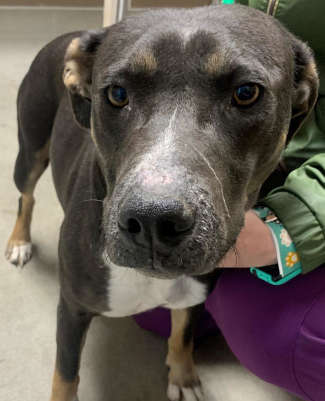
Female pit bull-Labrador retriever mix
This female pit bull-Labrador retriever mix has a short tricolor coat.
She is in kennel No. 17, ID No. LCAC-A-4692.

‘Bruno’
“Bruno” is a 9-month-old male mastiff-pit bull mix with a short tan coat.
He is in kennel No. 23, ID No. LCAC-A-4789.

Male boxer-pit bull mix
This 8-year-old male boxer-pit bull mix has a short brown brindle coat.
He is in kennel No. 26, ID No. LCAC-A-4678.
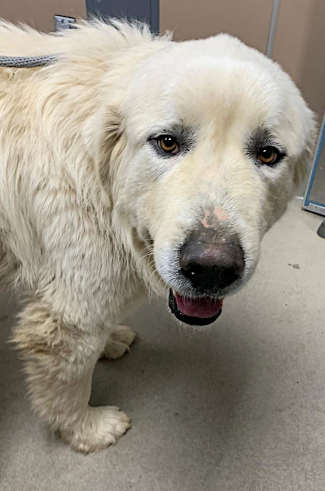
Male Great Pyrenees
This 2-year-old male Great Pyrenees has a long white coat.
He is in kennel No. 28, ID No. LCAC-A-4821.

Male German shepherd
This 1-year-old male German shepherd has a short black and tan coat.
He is in kennel No. 29, ID No. LCAC-A-4710.

Male border collie puppy
This 3-month-old male border collie puppy has a short black coat with white markings.
He is in kennel No. 32, ID No. LCAC-A-4783.
Email Elizabeth Larson at
- Details
- Written by: Cymie Payne, Rutgers University and Robert Blasiak, Stockholm University

It may come as a surprise to fellow land-dwellers, but the ocean actually accounts for most of the habitable space on our planet. Yet a big chunk of it has been left largely unmanaged. It’s a vast global common resource, and the focus of a new treaty called the biodiversity beyond national jurisdiction (BBNJ) agreement.
For 15 years, UN member states have been negotiating rules that will apply to the ocean lying more than 200 nautical miles from coastlines, including the seabed and the air space above, referred to as the “high seas”.
Covering nearly half the Earth’s surface, the high seas are shared by all nations under international law, with equal rights to navigate, fish and conduct scientific research. Until now, only a small number of states have taken advantage of these opportunities.
This new agreement is supposed to help more countries get involved by creating rules for more fairly sharing the rewards from new fields of scientific discovery. This includes assisting developing countries with research funding and the transfer of technology.
Countries that join the treaty must also ensure that they properly assess and mitigate any environmental impacts from vessels or aircraft in the high seas under their jurisdiction. This will be especially relevant for novel activities like removing plastic.
Once at least 60 states have ratified the agreement (this may take three years or more), it will be possible to establish marine protected areas (MPAs) in high sea locations of special value.
This could protect unique ecosystems like the Sargasso Sea: a refuge of floating seaweed bounded by ocean currents in the north Atlantic which offers breeding habitat for countless rare species. By restricting what can happen at these sites, MPAs can help marine life persevere against climate change, acidification, pollution and fishing.
There are obstacles to all nations participating in the shared enjoyment and protection of the high seas, even with this new treaty. Nations joining the new agreement will need to work with existing global organisations such as the International Maritime Organization (IMO), which regulates shipping, as well as regional fisheries management organisations.
The new treaty encourages consultation and cooperation with existing bodies, but states will need to balance their commitments with those made under other agreements. Already, some departments within governments work against each other when implementing broad, international treaties. For example, one division may chafe at greenhouse gas pollution regulations imposed at the IMO while a sister agency advocates for more stringent climate change measures elsewhere.
A new research frontier
A key element of the new treaty addresses the disproportionate ability of developed countries to benefit from the scientific knowledge and commercial products derived from genetic samples taken from the high seas. More than 40 years ago, when the law of the sea convention was being negotiated, the same issue arose over seabed minerals in areas beyond national jurisdiction.
Industrialised nations had the technology to explore and intended to eventually mine these minerals, while developing countries did not. At that time, nations agreed that these resources were part of the “common heritage of humankind” and created the International Seabed Authority to manage a shared regime for exploiting them.
The extreme conditions for life in the open ocean have nurtured a rich diversity of survival strategies, from the bacteria that thrive in the extremely hot hydrothermal vents of the deep sea to icefish that breed in the intense cold of the Southern Ocean off Antarctica. These life forms carry potentially valuable information in their genes, known as marine genetic resources.
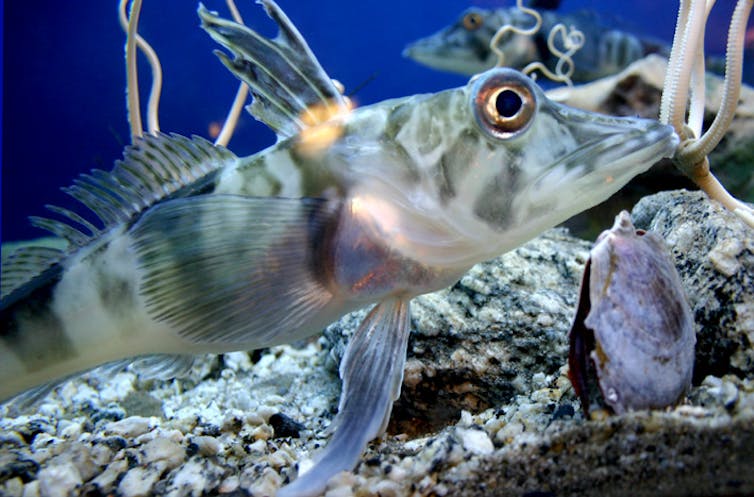
This new agreement provides developing states, whether coastal or landlocked, with rights to the benefits of marine genetic resources. It does not establish an administrative body comparable to that created for seabed mining, however. Instead, non-monetary benefits, such as access to samples and digital sequence information, will be shared and researchers from all countries will be able to study them for free.
Economic inequality between countries will still determine who can access these samples to a large extent, and sharing DNA sequencing data will be further complicated by the convention on biological diversity, another global treaty. The BBNJ agreement will establish a financial mechanism for sharing the monetary benefits of marine genetic resources, though experts involved in the negotiations are still parsing what it will eventually look like.
The best hope for robust marine protected areas and equitable use of marine genetic resources lies in rapid implementation of the BBNJ agreement. But making it effective will depend on how its provisions are interpreted in each country and what rules of procedure are established. In many ways, the hard work is beginning.
Although areas beyond national jurisdiction are remote for most people they generate the air you breathe, the food you eat and moderate the climate. Life exists throughout the ocean, from the surface to the seabed. Ensuring it benefits everyone living today, as well as future generations, will depend on this next phase of implementing the historic treaty.

Don’t have time to read about climate change as much as you’d like?
Get a weekly roundup in your inbox instead. Every Wednesday, The Conversation’s environment editor writes Imagine, a short email that goes a little deeper into just one climate issue. Join the 10,000+ readers who’ve subscribed so far.
Cymie Payne, Associate Professor of Human Ecology and Law, Rutgers University and Robert Blasiak, Research Fellow in Ocean Management, Stockholm University
This article is republished from The Conversation under a Creative Commons license. Read the original article.
- Details
- Written by: Keelin Haynes
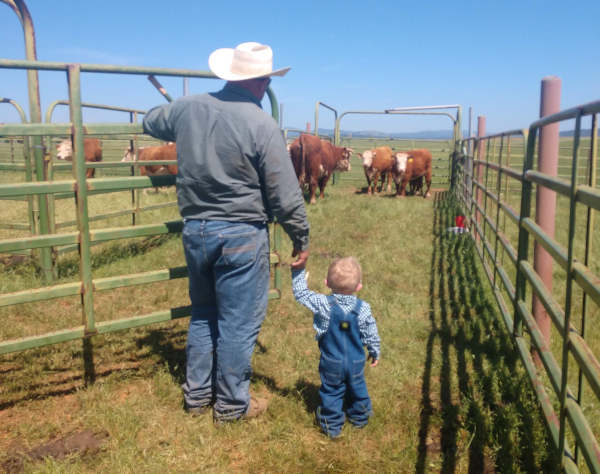
Since the launch of the first Landsat satellite in 1972, NASA and its partners have mapped agriculture worldwide and provided key input into global supply outlooks that bolster the economy and food security.
Now NASA is increasing its decades-long investment in U.S. agriculture through the launch of NASA Acres, a new consortium that will unite physical, social, and economic scientists with leaders in agriculture from public and private sectors.
They will have the shared mission of bringing NASA data, science, and tools down-to-Earth for the benefit of the many people working to feed the nation.
“For decades, NASA has collected data in space to improve life on planet Earth,” said NASA Administrator Bill Nelson. “Now these observations can be used not only to better understand our home, but to make climate data more understandable, accessible, and usable to help support agricultural business and benefit all humanity."
NASA Acres is commissioned under the agency’s Applied Sciences Program and led by the University of Maryland. The consortium approach brings together public and private stakeholders and allows rapid actions in delivering NASA Earth observation data into the hands of U.S. farmers.
“Farmers and ranchers are looking for information to help them make all sorts of decisions, from water use to what crops to plant and when," said Karen St. Germain, director of NASA’s Earth Science Division. "NASA is always looking for new ways to help people find and use science to inform their decisions, so we’re very excited about this new consortium to help America’s farmers use NASA Earth science data.”
Initial projects include aggregating and analyzing years of satellite data with state-of-the-art machine learning and artificial intelligence tools. Such efforts could help optimize scheduling for fertilizer application and irrigation, support early detection of pests and disease, monitor soil health, and provide information tools to support local food production.
Other projects will focus on using open science to improve mapping capabilities that support user-driven applications. The consortium will help us understand how U.S. agriculture is evolving and will shed light on effective management strategies to build economic, environmental, and productive resilience to global change.
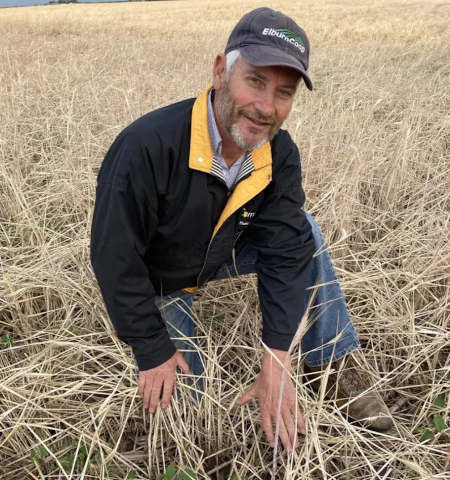
U.S. farmers and ranchers have their own space agency
“While we have seen enormous value in the use of NASA data and tools, we also know that what works in one place can’t just be picked up and dropped in a new place,” said Alyssa Whitcraft, the director of NASA Acres. “To bring the greatest value of satellite data to U.S. agriculture, we have to start with place-based knowledge. Pairing that with satellite data unlocks powerful insight.”
The United States is one of the world’s top agriculture producers and exporters. According to the U.S. Department of Agriculture, the nation's farms, orchards, ranches, and supporting industries provide more than 10% of U.S. jobs and 5.4% of the U.S. gross domestic product.
In recent years, NASA has been working to ensure that members of the U.S. agriculture industry are connected directly to the agency’s agriculture work, particularly through its Earth Applied Sciences program. In 2022, agency scientists including St. Germain made a “Space for Ag” tour across Nebraska and Kansas, and they have continued to have a presence at the nation’s largest farming convention, the Commodity Classic.
NASA Acres builds on the success of NASA Harvest, a globally focused consortium also based at the University of Maryland.
“We want farmers to know that their space agency has an agriculture program that is focused on understanding their needs and finding solutions with them," said Brad Doorn, who leads the NASA agriculture program area that oversees NASA Acres and Harvest.
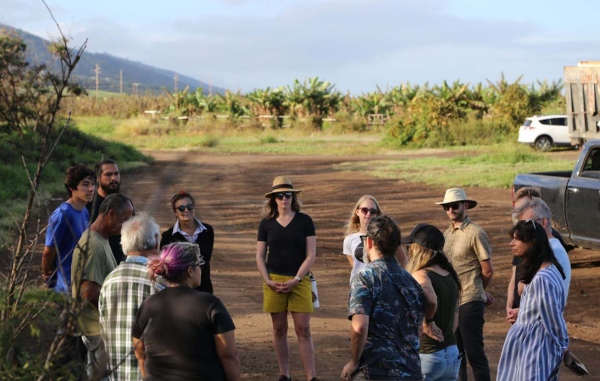
Whitcraft emphasizes that NASA Acres relies first and foremost upon those closest to the land. NASA Acres is already working with small-scale, independent farmers in Maui County, Hawaii; specialty crop growers in California and New York; ranchers in Colorado; and farmers regenerating marginalized and degraded agricultural lands across the country.
“My mission has always been to feed people—not just in my home, and not just today, but looking ahead for the many generations to come,” said Whitcraft. “U.S. agriculture is a cornerstone of the global food system, and it is awesome to have this opportunity with NASA to benefit my own ‘backyard.’”
Keelin Haynes works for NASA Acres.
- Details
- Written by: LAKE COUNTY NEWS REPORTS
Gov. Gavin Newsom on Friday announced that, within hours of California’s request, the White House has approved a presidential emergency declaration authorizing federal assistance to support the state and local response to continuous storms impacting much of the state.
“We are grateful for President Biden’s swift action to provide more resources and assistance to Californians reeling from back-to-back storms,” said Gov. Newsom. “We also thank all the heroic first responders working tirelessly to save lives in these dangerous and challenging conditions. California will continue to work day and night with local, state and federal partners to protect and support our communities.”
The presidential emergency declaration enables impacted counties to immediately access direct federal assistance to help protect public safety and property, including generators, road clearance equipment and sheltering or mass care assistance as needed.
With storms forecasted to continue through mid-March, the governor this week proclaimed a state of emergency in 21 counties — including Lake — to support disaster response and relief efforts, following the state of emergency he proclaimed in an initial 13 counties earlier this month.
California is mobilizing personnel and resources to storm-impacted communities throughout the state.
Details on the ongoing response and information on staying safe during the storms can be found here.
Ahead of more severe storms expected in the coming days, Caltrans is urging residents to avoid unnecessary travel in affected areas, more information is available here.